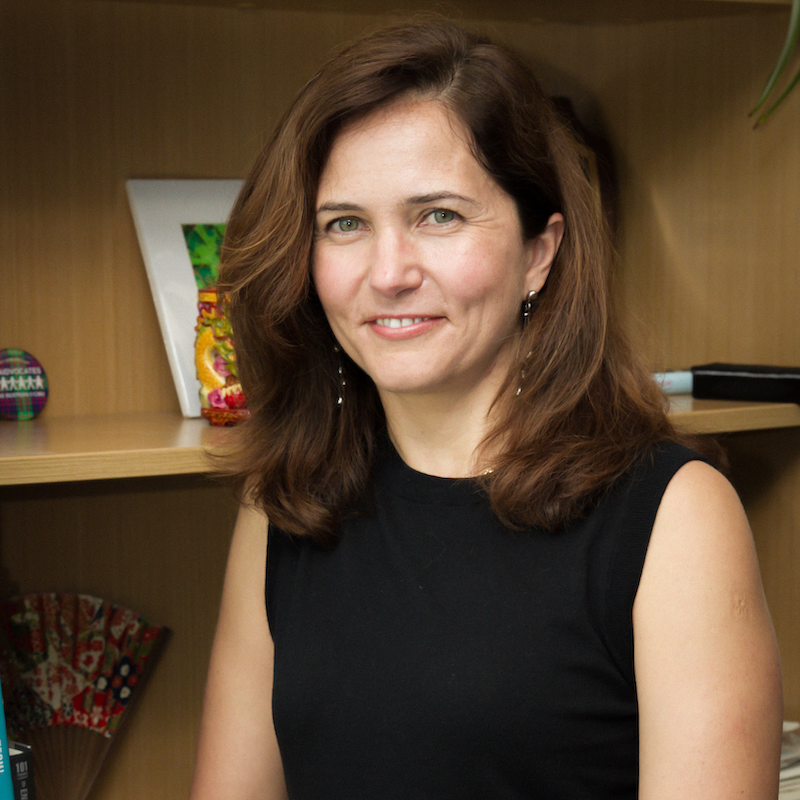
Dr. Jeanne-Louise Moys is an Associate Professor of Graphic & Communication Design at the University of Leeds' School of Design, part of the Faculty of Arts, Humanities and Cultures. She holds a PhD from the University of Reading and advanced degrees from Rhodes University (MA and BJourn). Her work bridges academia and practice, with expertise in inclusive design, typography, and design pedagogy. Moys has held roles at the University of Reading, University of Hertfordshire, and Rhodes University. Notably, she received a prestigious University Teaching Fellow lifetime award and contributed to the award-winning Breaking down Barriers inclusive design team at Reading. She has served as an external examiner for multiple institutions and guest-edited the Visible Language journal on inclusive design. Her research focuses on how visual design shapes identity, inclusion, and communication efficacy. Current projects include 'Talking about things' with Dr. Catherine Stones. Funded work spans EU Horizon 2020, NHS, and the Simplification Centre. She advises on PhD topics ranging from Arabic typography to Mhealth adoption. Moys' creative practice includes expressive paintings and art cards sold via her website , reflecting her dual identity as academic and artist.
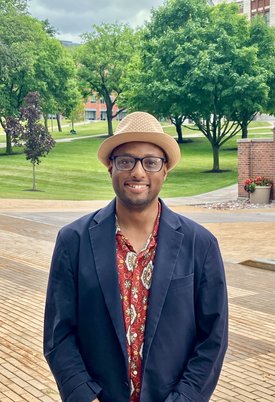
Matthew A. Smith is a Professor in the Department of Biomedical Engineering and the Carnegie Mellon Neuroscience Institute, where he serves as Co-Director of the Center for the Neural Basis of Cognition. His research bridges computational and experimental neuroscience to understand visual perception, cognition, and motor control. Dr. Smith's research focuses on neural engineering, visual perception, cognition, eye movements, and neural circuits . His laboratory investigates how groups of neurons interact to construct visual perception and translate it into cognitive processes and motor outputs. The lab employs a multi-scale approach combining single-neuron electrophysiology with global signals like EEG and near-infrared imaging, examining both normal and disease states of the brain. Analysis of his recent publications reveals strong trends in brain stimulation optimization (e.g., MiSO/OMiSO frameworks), neural population dynamics during cognitive tasks, visual cortex plasticity , and non-invasive neurotechnology development. His work spans fundamental neuroscience questions about working memory and perception while developing practical tools for brain monitoring and intervention. NIH K99/R00 Pathway to Independence Award Research to Prevent Blindness Career Development Award Dr. Smith has secured substantial funding from NIH, NSF, Research to Prevent Blindness, Schaffer Foundation for Glaucoma Research, and Hillman Foundation to support his research program. His laboratory actively develops novel methodologies for neural recording and stimulation while investigating fundamental mechanisms of visual processing and cognition. The lab maintains strong collaborative ties within Carnegie Mellon's neuroscience ecosystem through the Center for the Neural Basis of Cognition.
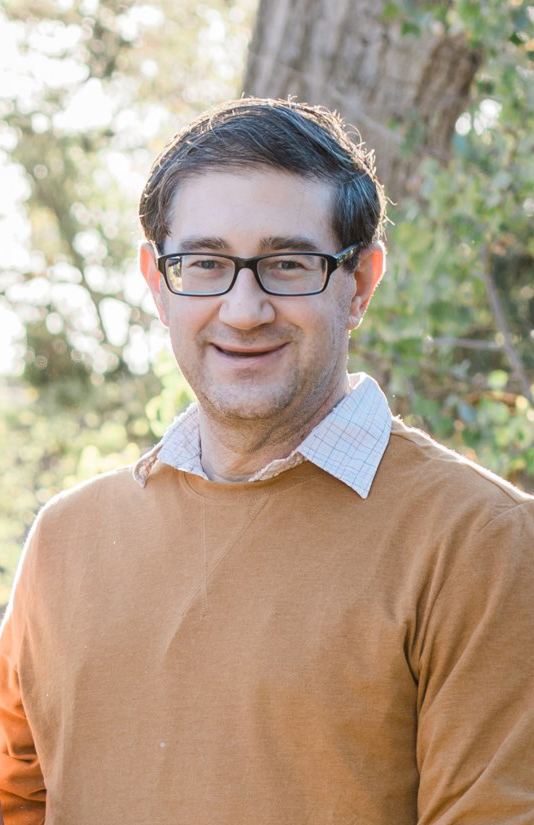
Dr. Burcu Akinci is the Paul Christiano Professor and Department Head of Civil and Environmental Engineering at Carnegie Mellon University (CMU), with a courtesy appointment in Electrical and Computer Engineering. She holds a BS from Middle East Technical University, an MBA from Bilkent University, and MS/PhD from Stanford University. Her research focuses on integrating BIM with 3D imaging/sensor data to create digital twins for construction and infrastructure management, emphasizing predictive operations and fault diagnosis in HVAC systems. She has secured over $16M in grants, authored 70+ journal papers, and pioneered methodologies for as-built BIM generation and infrastructure monitoring. Education : PhD 2000 - Stanford University (Civil & Environmental Engineering) MS 1995 - Stanford University MBA 1993 - Bilkent University BS 1991 - Middle East Technical University Research Interests : Dr. Akinci develops technologies to streamline construction and infrastructure operations through digital twins. Key areas include: BIM integration with IoT/sensor networks 3D imaging for asset management Fault detection in HVAC systems Autonomous environmental control for space habitats Predictive maintenance using AI Grants & Patents : $6M+ PI grants, $10M+ co-PI grants (federal/state/industry) 2 patents issued, 1 provisional patent Labs & Teams : Active in the Scott Institute for Energy Innovation, leading projects on smart buildings and infrastructure resilience.
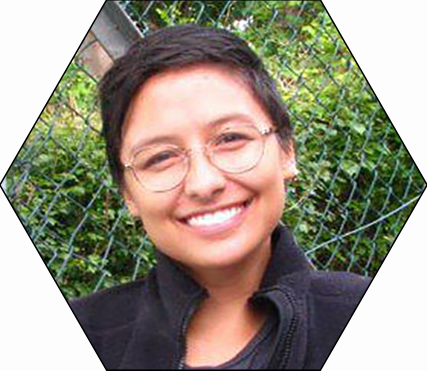
Robin Micah McCrary is an Associate Teaching Professor in the Department of Writing Studies, Rhetoric, and Composition at Syracuse University's College of Arts and Sciences, with formal affiliation in the Health Humanities Integrated Learning Major (ILM). His work bridges rhetoric, narrative medicine, and public health through innovative applications of graphic storytelling and cultural dexterity frameworks to address systemic healthcare inequities. McCrary's research centers on Critical Health Humanities and Graphic Public Health, with specific focus on narrative ethics in clinical settings, trust-building in marginalized communities, and visual storytelling as pedagogical intervention. His scholarship examines how comics and graphic narratives can transform public health communication, particularly regarding epidemics, racial justice, and the built environment's impact on community health. Recent projects emphasize cross-cultural care traditions and relational spaces for healing. His 2023-2025 publications reveal a cohesive trajectory applying graphic medicine to public health challenges, with increasing emphasis on institutional trust gaps and spatial determinants of health. Conference presentations consistently address structural barriers in healthcare through narrative and visual lenses, demonstrating interdisciplinary reach across medical education, library science, and community health initiatives. Scientific recognition includes: Fulbright Canada Research Chair Award (2024–2025) for healthcare trust-gap research McCrary actively contributes to academic service as Health Humanities ILM faculty (2022-present), manuscript reviewer for health journals, and community volunteer with refugee resettlement health programs. His Fulbright-funded work at the University of Waterloo involves developing humanities-based interventions for healthcare trust deficits through the Well-Link Lab partnership. Current collaborations include the Well-Link Lab at St. Jerome's University, University of Waterloo's School of Public Health Sciences, and the Proclaiming Our Roots knowledge mobilization project. These partnerships focus on graphic public health applications, neighborhood environment analysis, and community-centered narrative approaches to health equity.
Professor Zhiyong Wang is a faculty member at the School of Computer Science, University of Sydney, serving as Deputy Director of Sydney Informatics Hub and Director of the Multimedia Computing Laboratory. His research focuses on multimedia computing, including information retrieval, computer vision, AI, and applications in agriculture, healthcare, and environmental monitoring. He holds a B.Eng., M.Eng. from South China University of Technology, and a Ph.D. from The Hong Kong Polytechnic University. His work bridges theoretical advancements and real-world applications, with over 200 peer-reviewed publications. He is a member of IEEE and former President of Australia Pattern Recognition Society (APRS). Research Interests: Enabling computers to understand and create multimedia content, with emphasis on human-centric computing, remote sensing, and interdisciplinary applications. Notable areas include action recognition, medical image analysis, and environmental monitoring. Current Roles: Leads the Multimedia Computing Lab, collaborates with Sydney Institute of Agriculture and Brain and Mind Centre. Teaches COMP5216 (Mobile Computing), COMP5405 (Digital Media Computing), and COMP5425 (Multimedia Retrieval). Students: Supervises 9 Ph.D. students focusing on topics like precision agriculture, biomedical engineering, and AI-driven video analytics. Key projects include soil moisture forecasting, biomechanical risk analysis for knee osteoarthritis, and explainable machine learning.
David E. Low is a Professor in the Department of Literacy, Early, Bilingual and Special Education at California State University, Fresno's Kremen School of Education and Human Development. His research examines critical multimodal literacy practices of children and youth in diverse learning spaces, with particular expertise in comics, visual literacy, and critical pedagogy. Dr. Low previously served as Assistant Professor (2015-2020) before advancing to Associate Professor and ultimately Professor. Dr. Low earned his Ph.D. from the University of Pennsylvania, M.A. from New York University, and B.A. from the University of Arizona. His educational background in language, literacy, and culture informs his current research and teaching approaches which center on critical praxis and dismantling educational status quos that harm learners. Dr. Low's research focuses on intersections among multiliteracies, multimodality, racial and cultural identity, antideficit and antiracist pedagogies, popular culture/media, and critical multicultural education. His recent book "Transgressive Humor in Classrooms" (Routledge, 2024) explores humor as a form of social critique in secondary ELA classrooms. He has published extensively in top journals including Journal of Literacy Research, Research in the Teaching of English, Language Arts, and English Education, with over 30 scholarly publications to his name. Dr. Low's scholarly trajectory demonstrates consistent engagement with visual and multimodal literacies, particularly comics and graphic narratives, as tools for critical inquiry, social justice education, and identity exploration. His work spans teacher education, children's literature analysis, and critical examinations of representation across multiple disciplines including mathematics, gender studies, and cultural identity. Dr. Low has received significant recognition for his scholarship: Arthur Applebee Award for Excellence in Research on Literacy (2023) Divergent Publication Award (2023) Keynote speaker at NCTEAR (2025) As an academic leader, Dr. Low chairs the University Personnel Committee at Fresno State (2020-present) and serves on the Executive Committee of ELATE (2023-27). He previously served as the School of Education's Faculty Assembly President (2017-18), co-chaired the Research Committee (2016-19) and Dandoy Committee (2017-23), and convened the César Chávez Education Conference (2017). His teaching focuses on mentoring pre- and in-service teachers to develop frameworks that honor students' cultural and intellectual legacies. He oversees the College's ongoing partnership with the Fresno American Indian Health Project (2015-present). Dr. Low serves on the Editorial Review Boards of Research in the Teaching of English and English Journal. He previously served as Section Editor for Language Arts (vols. 97 and 98, 2019-21) and co-edited a special issue of English Teaching: Practice and Critique. He is past chair and program chair of the AERA Literature SIG (2015-19) and a past member of NCTE's Standing Committee on Research (2018-21).
Kevin Van Winkle is a Professor in the College of Science, Technology, Engineering, and Mathematics at Colorado State University Pueblo. His work focuses on technical communication, data visualization, and pedagogical innovation. He has been actively publishing since 2010, addressing issues such as faculty morale, process improvement, and visual rhetoric. University: Colorado State University Pueblo School: College of Science, Technology, Engineering, and Mathematics Academic Rank: Professor Research Interests include: Visual euphemism in technical communication Universal Design for Learning in rhetoric instruction Faculty experience optimization Historical data visualization analysis Article Trends show a consistent focus on: 2025: Critical analysis of visual communication 2024: Institutional process improvement 2023: Collaborative administrative systems 2022: Faculty satisfaction metrics 2017: Historical data representation
Mark Douglas is an Associate Professor in the Department of Fine Arts at Fontbonne University's College of Arts and Sciences. His artistic practice focuses on photography and graphic design, exploring themes of form, truth, and interpretation through abstract representations of books. He holds a position emphasizing both academic and creative contributions, with a studio practice that interrogates the documentary nature of photography and its capacity to convey ambiguous truths. His work investigates how photography, as a medium, presents evidentiary 'truths' while leaving room for viewer interpretation. Douglas's installations and photographs often feature contorted books presented edge-on in ambiguous spaces, challenging perceptions of narrative and information. Beyond his artistic output, he contributes to academic discourse through teaching and mentorship in visual arts disciplines.
Emanuele Taufer is a Full Professor of Statistics at the Department of Economics and Management of the University of Trento. His academic career includes roles as Vice Director of the Department of Computer Science and Business Studies and Faculty Delegate for International Relations. He holds a Ph.D. in Statistics from Cardiff University, an M.Sc. in Mathematical Statistics from George Washington University, and a Laurea in Economics from the University of Trento. His research focuses on statistical inference, stochastic processes, goodness-of-fit tests, and applications in ESG analysis. Notable contributions include work on exponentiality testing, graphical models, and financial dependence modeling. He has been recognized for his 2002 paper on mean residual life characterization at the SIS2002 conference. Recent research trends emphasize methodological advancements in ESG performance measurement, sparse network estimation for heavy-tailed data, and generalized precision matrices for financial risk modeling. His work spans theoretical statistics, applied econometrics, and interdisciplinary topics like environmental governance. Education: Ph.D. in Statistics, Cardiff University (UK) M.Sc. in Mathematical Statistics, George Washington University (USA) Laurea in Economics, University of Trento (Italy) Professional Roles: Full Professor of Statistics at University of Trento (2003–present) Associate Professor (2003–2003), Assistant Professor (1996–2002) Awards: 2002 SIS2002 Recognition for innovative statistical testing methodology Key Research Themes: Stochastic processes and estimation ESG methodology and financial reporting High-dimensional data analysis Goodness-of-fit tests and tail index estimation
Katherine Fu is an Associate Professor of Mechanical Engineering at the University of Wisconsin-Madison and holds an adjunct role as Adjunct Associate Professor at the Georgia Institute of Technology's Woodruff School of Mechanical Engineering. Her research focuses on design cognition, computational design tools, and fostering innovation through analogy-based methods. She has a Ph.D. in Mechanical Engineering from Carnegie Mellon University (2012), joined Georgia Tech in 2014, and moved to UW-Madison in 2021. Education: Ph.D., Mechanical Engineering, Carnegie Mellon University, 2012 M.S., Mechanical Engineering, Carnegie Mellon University, 2009 B.S., Mechanical Engineering, Brown University, 2007 Research interests emphasize cognitive studies of design processes, computational tools for creativity, and design-by-analogy methodologies. Notable contributions include frameworks for design heuristics extraction, functional analogy search algorithms, and studies on analogical distance effects. Awards include the 2019 GT LGBTQIA Leadership Award, 2018 ASME Reviewer of the Year, and 2015 ASME Early Career Engineer of the Year. Her work bridges engineering education and design science, with a focus on fostering ethical and socially impactful innovation. Labs and Teams: Active leadership in the Design Research Lab (EDRL) and collaborations with institutions like Jet Propulsion Laboratory (JPL). Teaching contributions include curriculum development in GD&T and ethics integration in design education.
Kasey Garrison is a Senior Lecturer and Associate Head of School-Research at the School of Information and Communication Studies, Charles Sturt University. She specializes in Teacher Librarianship and coordinates the Children's Specialisation for the Master of Information Studies. With a PhD in Education from Old Dominion University, her research focuses on social justice in children’s and young adult literature, inquiry-based learning, and culturally diverse library collections. She has extensive experience in school libraries, special archives, and teaching exceptional learners. Her research interests include the role of school libraries in supporting metacognition, global literature for teaching, and the availability of multicultural literature. She is actively involved in professional organizations like the International Association of School Librarianship and serves on editorial boards for journals such as School Libraries Worldwide . Kasey has received awards including the Bridgewater College Young Alumna Award (2017), Academic Excellence Award (2016), and the 2024 Charles Sturt Excellence Award for Social Responsibility. She leads initiatives like the Knowledge Bank of Australian and New Zealand School Libraries (KBANZSL) and has contributed to projects on social work integration in libraries and sustainability practices.
Dr. Umran Ali is a Senior Lecturer at the University of Salford's School of Arts, Media and Creative Technologies. He leads video game design programs and serves as a consultant for higher education institutions globally. His research focuses on virtual natural environment design, blending game design with geography, geology, and landscape architecture. Notable work includes the Virtual Amazon rainforest project (2019), an immersive educational tool for environmental engagement. He holds a PhD in Higher Education Research and Practice (2016) alongside qualifications in Creative Technology and Computer Games. Teaching expertise spans Game Design, Narrative Storytelling, Virtual Reality, and AI. He actively collaborates with organizations like the Landscape Institute and CIEEM, contributing to interdisciplinary projects at the intersection of gaming and environmental science. His research explores how virtual landscapes can reflect real-world ecological systems, with publications examining game ecosystems, architectural level design principles, and the cultural significance of digital landscapes across eras (1990s to modern). Dr. Ali’s work bridges academia and practice through exhibitions like the Virtual Landscapes Exhibition (2017) and conferences presentations on topics like 'Virtual Ecosystems & Video Games' (2018). He is affiliated with the Arts, Media and Communications Research Centre, advancing research into interactive technologies and their societal impacts.
Delfina Roca Marin is a Part-Time Lecturer at the University of Murcia, affiliated with the Faculty of Communication and Documentation's Communication Department. She leads the Scientific Dissemination Coordination Section at UMU and serves as General Secretary of RedDIVULGA (a national science communication network under CRUE). Her roles include membership in the University's Knowledge Transfer and Scientific Dissemination Commission. She holds degrees in Journalism, Advertising/Public Relations, and Tourism, with a PhD in Information Management (2017, Summa Cum Laude, awarded the Extraordinary Doctorate). Her research focuses on scientific dissemination strategies, media discourse on pseudosciences, and educational outreach. She has published 7 peer-reviewed articles (3 in JCR-indexed journals), 16 book chapters, and led over 50 research projects, including Spain's first FECYT-funded study on science communication strategies. She has presented at 30+ conferences and reviews for journals like Eureka and Prisma. Recognition includes awards like the Science in Action Prize, Audience Award at #LabMeCrazy, and honors for projects like LaboratoriUM and Gastrociencia. She contributes to two research groups: Journalism and Social Communication, and the Temporary R&D Laboratory on Heritage and Education.
Ulrike Felsing is a Senior Lecturer at the Lucerne School of Design, Film and Art (Lucerne University of Applied Sciences and Arts, HSLU), where she teaches in the BA Graphic Design and Data Design + Art programs. She leads the +RE course 'Wissensbilder in Medien und Gesellschaft' (Knowledge Images in Media and Society). Her research focuses on knowledge visualization in digital humanities and participatory archives. Education: Studied Visual Communication at the Leipzig University of Applied Sciences (HGB). Research Projects: Co-Principal Investigator (2021–2025): 'Participatory Knowledge Practices in Analog and Digital Image Archives' (Swiss National Science Foundation Sinergia grant, with Prof. W. Leimgruber & Dr. P. Fornaro, University of Basel). 'The Exploration of Design Methods in Transcultural Visual Communication' (SNF-funded, 2010–2015, with Dr. R. Baur). Publications include peer-reviewed articles on participatory archives and critical map visualizations, as well as monographs such as 'Reflexive Kataloge' (2021) and co-authored 'Visual Coexistence' (2020). Grants and Funding: Swiss National Science Foundation (SNF) grants for multiple projects. Her work bridges design, cultural studies, and digital humanities.
Tim Weingärtner is a Lecturer at Lucerne School of Computer Science and Information Technology, part of Lucerne University of Applied Sciences and Arts. He holds a Dr.-Ing. from the University of Karlsruhe (now KIT) and a Dipl. Inform. in Computer Science. His professional experience includes roles as a Product Manager, Managing Director, and Senior Manager in finance and IT sectors, alongside academic roles as a Research Assistant and Lecturer. His research focuses on Blockchain technology, Smart Contracts, Self-Sovereign Identity, Innovation Management, and FinTech. He leads projects like SSI 4 Sport and Environmental assessment of DLT solutions , and is involved with organizations like the Blockchain Lab and DEC Association. His academic contributions include books on Blockchain and cybersecurity, and peer-reviewed articles on decentralized finance risks and quantum mechanics education. Notable awards include a 2021 2nd Prize at the Blockchain International Scientific Conference. He actively promotes innovation through initiatives like Smart-up and serves as Vice President of DIDAS and President of DEC Association.