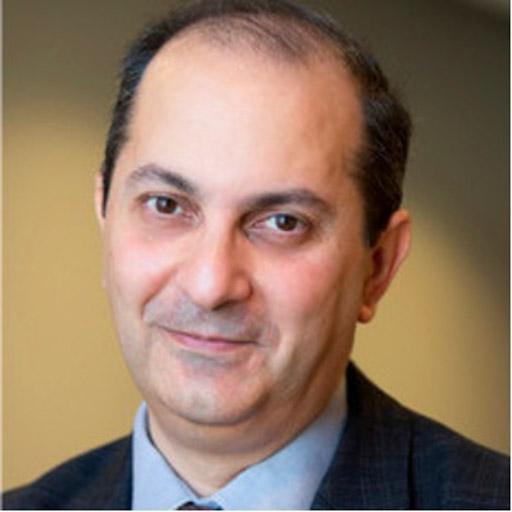
Joseph Millum serves as Senior Lecturer in Philosophy at the University of St Andrews, with additional roles as consultant to the World Health Organisation and Chairperson of the International Society for Priorities in Health. His 15-year tenure at the US National Institutes of Health informs his interdisciplinary approach to bioethics. Millum's research spans: Health care and research priority-setting frameworks Ethical dimensions of informed consent Theoretical foundations of bioethics Moral dimensions of parenthood His book publications include 'The Moral Foundations of Parenthood' and 'A Theory of Bioethics'. Recent publications focus on decision-making capacity assessment, truthfulness in parenting, and ethical frameworks for health research prioritization, consistently addressing justice and equity concerns in healthcare systems.
Amin Hammad is a Professor at the Concordia Institute for Information Systems Engineering, with an additional appointment as Affiliate Professor in Building, Civil, and Environmental Engineering at Concordia University. His research focuses on advancing construction technology through digital transformation, automation, and AI integration. He leads work in BIM applications, 4D simulation, robotic systems, and sustainable infrastructure management. His interdisciplinary approach bridges civil engineering with computer science and data analytics. Key research areas include: Automation and robotics in construction (Construction 4.0) BIM and digital twin lifecycle management AI-driven defect detection and inspection systems Occupational safety through exoskeleton performance evaluation Multi-purpose utility tunnel optimization Energy-efficient building systems Recent work emphasizes applying machine learning to construction equipment activity recognition, UAV path optimization for infrastructure inspection, and ontology development for integrated systems. His research addresses industry challenges in productivity, safety, and sustainability through data-driven solutions.
Thompson S.H. Teo is a Professor in the Department of Analytics and Operations (DAO) at the National University of Singapore (NUS) Business School. He holds editorial roles in top journals including European Journal of Information Systems, International Journal of Information Management, and Communications of the AIS. His research spans information systems strategy, business-IT alignment, e-commerce, sustainability, and AI's societal impacts. With over 200 publications, he ranked #143 globally in 2023 among business scientists (research.com) and was recognized in Stanford's top 2% global scientists (2021-2023). Awards include the Best Associate Editor Award (2017) and AIS Distinguished Membership. Thompson's research interests include IT adoption, cyberloafing, supply chain digitalization, and green innovation. He teaches courses on innovation, Industry 4.0, and strategic IT at undergraduate, masters, and executive levels. Notable contributions include frameworks for commute experience analysis and AI adoption market signals. His work bridges theory and practice, addressing challenges in sustainability, organizational behavior, and digital governance. Affiliations: NUS Business School, Distinguished Editorial Advisory Board (IJoIM), Senior Member (INFORMS) Grants & Leadership: Extensive editorial leadership, supervised China Scholarship Council PhD students, and executive programs on innovation design thinking. Key Contributions: Over 270 publications, four co-edited books on IT/e-commerce, and policy-relevant studies on environmental regulations and green tech adoption. His research often employs mixed methods (e.g., QCA for corruption analysis, PLS-SEM for cyberloafing models) and addresses global issues like fake news mitigation via ChatGPT and pandemic-era customer engagement in short videos.
Ali Mani is an Associate Professor of Mechanical Engineering at Stanford University and a faculty affiliate at the Institute for Computational and Mathematical Engineering. He earned his PhD in Mechanical Engineering from Stanford in 2009, following an M.S. (2004) and B.S. (2002) from Stanford and Sharif University of Technology, respectively. His research focuses on fluid mechanics, turbulence, and numerical simulations, with applications in multiphase flows, electrokinetic systems, and applied mathematics. His group develops high-fidelity simulation tools and reduced-order models to understand transport processes in turbulent and chaotic systems. Research interests include turbulence modeling, two-phase flow dynamics, and electrochemical transport. Recent work explores eddy viscosity operators, nonlocal transport phenomena, and computational methods for multiphase systems. The group's studies often bridge experimental validation and numerical analysis to improve predictive engineering models. Key contributions span electrokinetic transport in porous media, superhydrophobic surface slip effects, and phase field modeling. His lab’s work is supported by grants focusing on fluid dynamics, renewable energy systems, and advanced simulation frameworks.
Jishen Zhao is an Assistant Professor in the Department of Computer Science and Engineering at the University of California, San Diego (Jacobs School of Engineering). His research focuses on computer architecture, non-volatile memory systems, and deep learning acceleration. Dr. Zhao has published extensively in top venues including ISCA, MICRO, ASPLOS, and IEEE Transactions. He collaborates with researchers at UCSD and beyond to advance systems for emerging applications in AI and autonomous vehicles. Dr. Zhao's primary research areas include persistent memory systems, hardware/software co-design for deep learning, and safety-critical computing. He develops techniques for crash consistency, memory disaggregation, and efficient neural network deployment. His work on autonomous vehicles addresses scenario generation and perception-aware system design. Recent projects explore LLM applications for software engineering and hardware verification. Analysis of Dr. Zhao's 2024-2025 publications reveals a strong shift toward AI-integrated systems research. He applies large language models to tasks like RTL verification and software issue localization while continuing to innovate in memory systems for serverless computing. There is growing emphasis on safety-critical systems for autonomous vehicles and energy-efficient neural network training using novel hardware architectures. Information about Dr. Zhao's scientific awards, advising activities, grants, and laboratory facilities was not available in the provided documentation.
Susan Smith-Peter is a Professor of History at the College of Staten Island, City University of New York, specializing in Russian history beyond Moscow and St. Petersburg. Her research focuses on regional identity, civil society development, and imperial governance in 19th-century Russia, with particular attention to Siberia and provincial dynamics. She holds a Ph.D. from the University of Illinois at Urbana-Champaign and a B.A. from Ohio University. Her work analyzes how Tsarist administrative frameworks fostered subnational identities through statistical bureaus, agricultural societies, and provincial newspapers. Notable contributions include *Imagining Russian Regions* (2018), which argues that autocracy’s civil society initiatives inadvertently fueled revolutionary movements. Her research has been supported by grants from the Fulbright Program, American Historical Association, and IREX. Professor Smith-Peter’s publications span journals like *Slavic Review* and *Kritika*, exploring topics from sugar beet industries to colonial Alaska. She has translated key texts into Russian and edited historical documents such as *The Great Republic Tested by the Touch of Truth*. She serves on campus committees and previously chaired Columbia University’s Seminar on Slavic History and Culture. Key Awards: Fulbright Fellowship, American Historical Association Grant, IREX Grant Grants: Fulbright-Hays Fellowship, University of Illinois Grant, CUNY Grant Her interdisciplinary approach bridges economic, cultural, and political history, emphasizing regional agency within imperial contexts. Ongoing projects explore Siberian historiography and the legacy of 19th-century provincial activism.
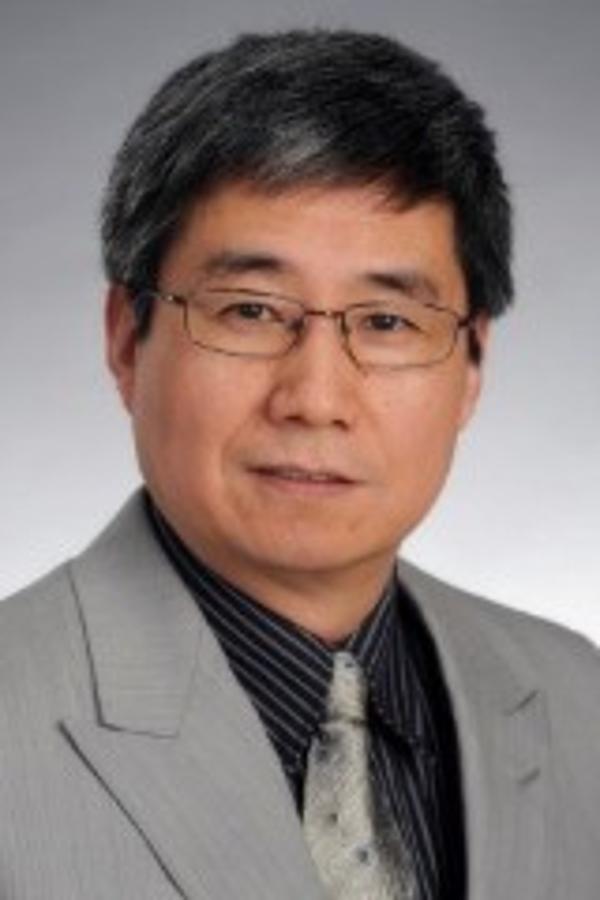
Yiyu Yao is a Professor in the Department of Computer Science at the University of Regina, Faculty of Science. He holds a B.Eng. from Xi'an Jiaotong University and earned both his M.Sc. and Ph.D. from the University of Regina. His office is located in College West 308.6, and he can be reached at Yiyu.Yao@uregina.ca or by phone at (306) 585-5226. Dr. Yao's research spans multiple interconnected domains in intelligent systems. His primary focus is on three-way decisions, which serves as a unifying framework for his work in granular computing, rough sets, and decision-theoretic models. He has developed significant theoretical contributions to decision-theoretic rough sets (DTRS) and probabilistic rough sets, creating bridges between uncertainty management and practical decision-making applications. His work extends to web intelligence, information retrieval systems, and multiview data analysis, where he applies his theoretical frameworks to real-world problems in data science and artificial intelligence. Analysis of Dr. Yao's recent publications reveals a strong continuing focus on three-way decision theory, with increasing applications across diverse domains. His work demonstrates evolution from foundational theoretical contributions to sophisticated applications in multi-criteria decision making, conflict analysis, and explainable AI. The research shows integration of granular computing principles with modern machine learning techniques, particularly in handling uncertainty and developing interpretable models. Recent publications indicate growing interest in the intersection of three-way decisions with fuzzy sets, shadowed sets, and cognitive approaches to data analysis. Dr. Yao has mentored numerous graduate students and has hosted many visiting scholars, primarily from Chinese institutions including Nanjing University Posts and Telecommunication, Harbin Normal University, Shaanxi Normal University, and others. He serves as Area Editor on Rough Sets for the International Journal of Approximate Reasoning and as Associate Editor for Information Sciences. He is also Associate Editor-in-Chief for the Journal of Emerging Technologies in Web Intelligence and serves on multiple editorial boards including LNCS Transactions on Rough Sets and Web Intelligence and Agent Systems. He has organized significant conferences including the International Joint Conference on Rough Sets (IJCRS 2017) and served on the Steering Committee for the International Symposium on Fuzzy and Rough Sets.
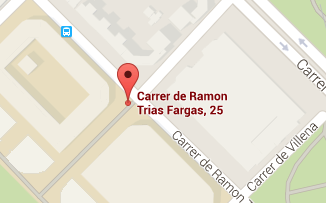
Jan Eeckhout is an ICREA Research Professor at Pompeu Fabra University (UPF) in Barcelona, specializing in macroeconomic theory, labor markets, and urban economics. His work focuses on market power dynamics, wage inequality, and technological impacts on labor and urban systems. He holds a PhD from the London School of Economics (LSE). Eeckhout has received a prestigious ERC Advanced Grant (€2.45M) for research on 'Macro Market Power and Distribution.' He authored the influential book The Profit Paradox (2021), exploring how dominant firms reshape labor markets and economies, translated into multiple languages. His research frequently appears in top journals like the Quarterly Journal of Economics and Review of Economic Studies. Research Interests: Macro-Labor Theory, Labor Markets, Urban Economics, Market Power, and Economic Inequality. Recent work examines technological origins of labor market stagnation, IT-driven urban polarization, and wealth effects on worker productivity. Advising and Grants: Supervises PhD students (e.g., Milena Djourelova, David Puig) and collaborates with institutions globally (CEMFI, EUI, Sciences Po). His team includes co-authors like Jan De Loecker and Philipp Kircher. Active in policy discussions via think tanks and media outlets like VoxEU and the NYT. Labs/Teams: Leads a diverse research group at UPF, with projects on market power, urban economics, and labor dynamics.
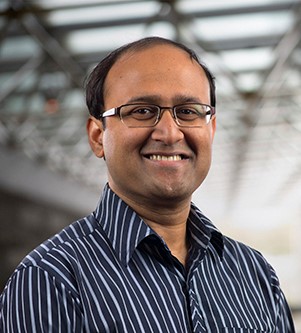
K. Rajibul Islam is an Associate Professor at the University of Waterloo, affiliated with the Institute for Quantum Computing (IQC) and the Department of Physics and Astronomy. He holds a joint appointment with the Perimeter Institute for Theoretical Physics and co-founded Open Quantum Design and Lightflow Optics Inc. His research focuses on quantum information processing, quantum simulation, and trapped ion systems, with applications in quantum computing and entanglement studies. Education: Ph.D. in Physics (2012, University of Maryland), M.Sc. in Physics (2007, Tata Institute of Fundamental Research), B.Sc. in Physics (2005, Jadavpur University). Postdoctoral research at Harvard University (2012–2015) and MIT (2015–2016). Research Interests : Quantum simulation of spin models, quantum computing with trapped ions, entanglement measurement, frustrated spin systems, and quantum materials. His lab, QITI (Quantum Information with Trapped Ions), develops scalable quantum simulators and open-access quantum computers like 'QuantumIon.' Awards : Fellow of the American Physical Society (2024), VAIBHAV Fellowship (2024), Excellence in Teaching Award (2024), Early Researcher Award (2019), and Distinguished PhD Dissertation Award (2012–13). Teaching : Courses include PHYS 701 (Graduate Quantum Physics), PHYS 234 (Quantum Physics I), PHYS 393 (Physical Optics), and PHYS 256 (Geometrical and Physical Optics). He emphasizes outreach via initiatives like Bigyan.org.in , a Bengali-language science platform. Lab and Collaborations : Active in developing trapped-ion quantum hardware, including ion trap designs, optical addressing systems, and holographic control methods. Collaborates on quantum algorithms, machine learning for quantum systems, and experimental quantum thermodynamics.
Dr. Hanbo Shim is an Assistant Professor in the Department of Management at The University of Texas at Arlington, College of Business. He holds a PhD in Industrial Relations and Human Resources from Rutgers University and a BA in Mathematics and Economics from the University of Illinois at Urbana-Champaign. His research and teaching focus on Human Resource Management, Organizational Behavior, and HR Analytics. PhD, Industrial Relations and Human Resources, Rutgers University (2022) MS, Industrial Relations and Human Resources, Rutgers University (2019) MA, Human Resource Management, Rutgers University (2016) BA, Mathematics and Economics, University of Illinois (2012) Dr. Shim's research explores the temporal dynamics of employee performance, compensation systems, emotional intelligence, and social networks in organizations. He uses longitudinal analysis, multilevel modeling, meta-analysis, and computer simulation to examine how individual and interpersonal factors influence organizational outcomes. His work bridges HR analytics with behavioral science. His recent publications span topics such as green HRM, pay policy dynamics, emotional intelligence, and HR analytics education. These works reflect a strong interdisciplinary approach integrating psychology, sustainability, data science, and strategic management. His research has been presented at leading conferences including the Academy of Management and European Reward Management Conference. Award highlights include: Ralph Alexander Best Dissertation Award (2024) Innovative Teaching Award, Academy of Management HR Division (2022) Best Student Convention Paper Award (2020) Best Doctoral Conference Paper Award, Samsung Economic Research Institute (2020) Dr. Shim actively advises students through capstone and honors projects and serves on PhD and graduate studies committees. He has collaborated with SL Corporation on HR analytics and developed open-source educational materials. His service includes editorial board membership for Compensation & Benefits Review and ad hoc reviewing for top journals. He is also engaged in professional development workshops and public speaking, including for the Society for Human Resource Management at UTA. His lab and research activities emphasize simulation-based methods and real-world HR analytics applications.
Valentina Mazzucato is Professor of Globalisation and Development at the Faculty of Arts and Social Sciences, Maastricht University, where she teaches and leads research in transnational migration and development. She founded and directed the research programme on Globalisation, Transnationalism and Development (2012–2020), co-founded the MA Globalisation and Development Studies, and led the development of the interdisciplinary BSc Global Studies. She is a member of the Royal Netherlands Academy of Arts and Sciences (KNAW) and has held leadership roles in major research initiatives including the ERC Consolidator Grant project MO-TRAYL. Her educational background includes a BA in Political Science and French Literature from Williams College, an MSc in Agricultural Economics from Michigan State University, and a PhD cum laude from Wageningen Agricultural University on indigenous soil and water conservation in Burkina Faso. Her research focuses on transnational migration between Africa and Europe, particularly the socio-economic and cultural impacts on migrants, their families, and communities. She employs mixed methods and multi-sited research designs, pioneering the simultaneous matched sample methodology. Her recent work explores transnational youth mobility, return visits, remittances, and temporalities of migration. The articles from 2024–2025 reveal a strong thematic consistency in migrant youth, transnational identity, methodological innovation, and policy implications, reflecting her leadership in interdisciplinary migration scholarship. ERC Consolidator Grant (2017–2023) for MO-TRAYL project Elected member of the Royal Netherlands Academy of Arts and Sciences (KNAW), 2019 Prof. Mazzucato has secured multiple international grants from NWO, NORFACE, and the ERC, enabling her to build transnational research teams and mentor PhD candidates and early-career researchers. She supervises Bachelor’s and Master’s theses and externally examines PhDs internationally. She is actively involved in policy engagement, having advised Queen Beatrix and participated in EU and NGO forums on migration and development. She also co-created a play with Ghanaian migrants to translate research into public dialogue. She leads the Transnational Links and Livelihoods Group and collaborates across institutions including Princeton University (Center for Migration and Development), African universities, and policy organizations. Her work bridges academic research, teaching innovation, and societal impact.
Xuezhe Ma is an Assistant Professor in the Department of Computer Science at the University of Southern California's Viterbi School of Engineering. Previously, he was a Ph.D. student at Carnegie Mellon University's Language Technologies Institute, where he worked under the supervision of Professor Eduard Hovy. His academic journey includes a Master's degree from Shanghai Jiao Tong University's Center for Brain-like Computing and Machine Intelligence and a Bachelor's degree in Computer Science from the same institution. Ph.D. in Computer Science, Carnegie Mellon University (completed ~2020) M.S. in Brain-like Computing, Shanghai Jiao Tong University B.S. in Computer Science, Shanghai Jiao Tong University Dr. Ma's research spans multiple areas at the intersection of Natural Language Processing and Machine Learning, with particular focus on structured prediction, syntactic and semantic parsing, machine translation, language generation, and deep generative models. His recent work has expanded into vision-language models, large language model architectures, and applications across computer vision tasks. His research combines theoretical foundations with practical implementations, as evidenced by his development of tools like NeuroNLP2 and MaxParser. His publication record shows a clear trajectory from foundational NLP work during his PhD (including papers on dependency parsing and sequence labeling) to more recent contributions in generative models and large language systems. The 15 most recent publications reveal a strong focus on addressing fundamental challenges in generative modeling, context handling, and multimodal integration, with applications spanning literary translation, medical imaging, and news diffusion analysis. AI2 Outstanding Intern Award (2018) Dr. Ma has secured research funding supporting his work in generative models and language technologies, with projects focusing on improving the efficiency and capabilities of large language models. His research group at USC is actively working on next-generation language understanding and generation systems, with particular emphasis on context-aware modeling and multimodal integration. He has established collaborations with industry partners including the Allen Institute for AI and has contributed to open-source projects like Texar. At USC, Dr. Ma leads research in the Information Sciences Institute, directing projects on efficient large language model architectures and multimodal reasoning systems. His lab focuses on developing novel approaches to context handling, model efficiency, and multimodal integration, with applications across diverse domains including healthcare, literary analysis, and news media.
Ahmed Hammad is an Associate Professor in the Department of Civil and Environmental Engineering at the University of Alberta's Faculty of Engineering, where he also serves as Director of Academic Integrity, ENG WIL, Co-op and Career Connections. With 25 years of industry experience as a Project Planning & Control Manager on global mega-projects (including Oil Sands, LNG, and Infrastructure across Canada, UAE, Australia, and Egypt), he brings extensive practical expertise to academia. Education: Doctorate of Philosophy, Construction Engineering & Management, University of Alberta (2009) Master of Science, Construction Engineering & Management, University of Alberta (1999) Master of Engineering, Construction Engineering and Management, Cairo University (1996) Bachelor of Science, Civil Engineering, Mansoura University (1989) Research Focus: Dr. Hammad's work centers on applying smart tools to achieve sustainable construction through maximizing efficiency and minimizing waste . His research employs Machine Learning , Multi-Criteria Decision Making , Knowledge-Based Decision Support Systems , and digital twin technologies to optimize project planning, resource allocation, and sustainable material selection. He investigates the integration of BIM and Augmented Reality to enhance construction processes while reducing environmental impact. Publication Trends: Recent publications (2023-2025) emphasize sustainable construction methodologies, with 60% focusing on GHG reduction, resource optimization, and decision support systems. Key themes include machine learning for labor estimation, TOPSIS/MCDM for sustainable material selection, and digital twins for production planning, reflecting his NSERC-funded projects on KBDSS and construction-oriented digital twins. Scientific Recognition: Best Paper Award at 8th International Conference on Industrial Engineering and Operations Management (2018) Best Paper Award at HBRC Green Smart Sustainable Buildings Conference (2024) Research Leadership: Dr. Hammad secures major industry-academic partnerships, including NSERC Mission Alliance Grants ($1.2M+) with 16 industry partners for GHG reduction projects and NSERC Alliance Grants with 9 partners for digital twin development. His completed projects include collaborations with the City of Edmonton and Alberta Ministry of Infrastructure on resource allocation models. Research Ecosystem: As leader of the Sustainable Construction Research Group (SCRG), he fosters industry-academia collaboration through regular workshops with construction firms and government agencies, focusing on translating research into practical tools for sustainable project delivery.
Prashant Mehta is a Professor of Mechanical Science and Engineering at the University of Illinois at Urbana-Champaign , affiliated with the Coordinated Science Laboratory . His research focuses on controlled interacting particle systems and machine learning applications , particularly in human activity recognition using motion sensors. Education: Ph.D. in Mathematics, Cornell University (2004) M.S. in Electrical & Computer Engineering, University of Massachusetts Amherst (1996) B.E. in Electrical & Electronics Engineering, Birla Institute of Technology & Sciences (1993) Mehta's work has pioneered the feedback particle filter (FPF) algorithm for nonlinear estimation, applied in robotic systems and gesture recognition. His research spans control of combustion instabilities in jet engines, mean-field games , and dynamical systems in aerospace engineering. His publications emphasize nonlinear control theory and stochastic filtering , with recent trends in sensor data pattern recognition and cyber-physical systems . He has received multiple scientific awards , including the MURI award for the Cyberoctopus project and Excellence in Undergraduate Advising Awards . Scientific Honors: MURI Award (2019) for Cyberoctopus Excellence in Undergraduate Advising (2010, 2008) Outstanding Teaching Assistant Award (1994) Senior Member, IEEE Control Systems Society Member, ASME Energy Systems Subcommittee Member, SIAM Dynamical Systems Group Mehta has supervised students like Jin Kim (IEEE CDC Best Student Paper, 2019) and co-founded the startup Rithmio , acquired by Bosch Sensortec . His laboratory develops gesture-detection filters for applications in soft robotics and human-machine interfaces .
Valerie Viet Triem Tong is a Research Professor at the Paris Institute of Electrical and Electronic Engineering, School of Electrical and Electronic Engineering. She has established herself as a leading researcher in cybersecurity with a particular focus on information flow control systems, Android security, and malware analysis. Her work spans both theoretical foundations and practical security tools development. Her research interests center on Information Flow Control , where she has developed frameworks for monitoring and enforcing security policies at both operating system and application levels. She has made significant contributions to Android Security , creating tools for detecting malicious behavior in mobile applications and addressing privacy concerns in smartphone environments. Her work in Malware Analysis includes developing advanced techniques for tracking and visualizing malware behavior, with emphasis on evasive Windows malware and Android malware in the wild. She also investigates Peer-to-Peer Network Security , focusing on Sybil attack resistance and distributed identity management. Analysis of her publication record reveals a consistent trajectory from foundational work in information flow theory to increasingly applied security research. Her recent work shows a strong emphasis on practical security tools (DaViz, GUI-Mimic, BAGUETTE), security evaluation methodologies (Digital twin, CERBERE), and addressing contemporary challenges in malware analysis (debiasing datasets, handling obfuscated applications). A notable trend is her integration of visualization techniques with security analysis to make complex security data accessible to both experts and machine learning systems. As an advisor, she has mentored numerous researchers who have become first authors on significant publications, including Radoniaina Andriatsimandefitra, Tomás Concepcion Miranda, and Cedric Herzog. Her research has been supported by multiple grants focused on cybersecurity infrastructure, though specific grant details are not provided in the available information. Dr. Tong is actively involved with the CIDre security research group in Rennes, contributing to collaborative projects that bridge theoretical security models with practical implementation challenges. Her work on information flow monitoring has evolved from basic research to applied systems that address real-world security concerns across multiple platforms.