Dr. Regina Enjuto Martinez is a Lecturer in International Development at King’s College London, based in the Department of International Development within the School of Global Affairs. She joined the university in 2021 and previously held positions at the London School of Economics (LSE), SOAS, and taught at Peking University. Her research focuses on welfare governance in China, particularly disability rights, HIV/AIDS policies, and migrant workers' welfare, examining state-society relations and NGO roles in welfare provision. Education: PhD in Development Studies (LSE, 2016), MSc in Sociology (National Chengchi University, Taiwan). Research Interests: Chinese politics, social welfare, civil society, migration, labor rights, project management and evaluation. Her work bridges international development theory and China’s unique policy contexts, analyzing how authoritarian governance structures influence welfare service delivery through contracting mechanisms. Collaborations with scholars like Yanchu Qu and Janet A. Howell highlight her engagement in cross-disciplinary research. She has contributed to debates on NGO autonomy, labor rights advocacy, and the convergence/divergence of China’s welfare practices with global models.
Professor Sara Baker is a Professor of Developmental Psychology and Education at the University of Cambridge's Faculty of Education and a Fellow at Darwin College, where she served as Vice Master from 2021-2024. She is also a 2022 Senior Fellow in the Science of Learning with UNESCO-IBE/IBRO. Her work bridges cognitive science and educational practice, focusing on how children develop executive functions and self-regulation skills. Baker leads the Early Years Library project, co-founded the Research Centre for Play in Education, Development and Learning (PEDAL), and is a founding member of the Global Executive Functions Initiative. Sara Baker specializes in the science of learning, with research aimed at improving children's lives by identifying factors at home and school that support their agency over learning. Her work emphasizes developing executive functions and self-regulation through playful learning approaches. She uses lab-based experiments and collaborates with educators to translate cognitive science research into educational contexts. Her research spans multiple countries including the UK, USA, Mexico, Denmark, Slovakia, South Korea, Ghana, Rwanda, Nigeria, Kenya, South Africa, and more, reflecting a strong commitment to culturally relevant and globally applicable educational practices. Analysis of Professor Baker's recent publications reveals a strong focus on executive functions, self-regulation, and playful learning across diverse cultural contexts. Her work increasingly addresses cultural adaptation of assessment tools and educational practices, particularly for Global Majority countries. There's a clear trajectory from basic cognitive research toward practical applications in educational settings, with growing emphasis on teacher training, culturally relevant assessment, and the role of play in early childhood development. Her interdisciplinary approach connects developmental psychology, educational theory, and practical classroom applications. 2022 Senior Fellow in the Science of Learning with UNESCO-IBE/IBRO Professor Baker leads the doctoral program in the Faculty of Education and serves as an Academic Project Director in the School of Humanities and Social Sciences. She is the Cambridge academic lead on the Close the Gap partnership between Cambridge and Oxford, focused on postgraduate widening participation. Her research has been funded by prestigious organizations including the Newton Trust, Cambridge Humanities Research Grant, Economic and Social Research Council, LEGO Foundation, Nuffield Foundation, and Office for Students/Research England. She actively supervises doctoral students and seeks highly motivated candidates for October 2026 entry whose research aligns with her focus areas. Professor Baker co-founded and is actively involved with the Research Centre for Play in Education, Development and Learning (PEDAL), which investigates how children's play affects their development. She leads the Early Years Library project, a curated collection of evidence-based practices for early years educators, and is a founding member of the Global Executive Functions Initiative. Her work with the Connections international professional learning network focuses on self-regulation, while the Close the Gap project addresses widening participation in postgraduate education between Oxford and Cambridge.
Yusuf Sayed is a Professor of Education at the University of Cambridge 's Faculty of Education. His expertise spans global education policy, equity, inclusion, and social justice, with over 40 years of international experience as a scholar, policy practitioner, and education rights activist. He holds qualifications including a PhD in Comparative Education and Policy from the University of Bristol and an MBA from the University of Brighton. Former roles include Professor at the University of Sussex, South African Research Chair in Teacher Education, and Founding Director of the Centre for International Teacher Education (CITE) at CPUT, South Africa. Professional memberships: Visiting Professor at Sussex, Honorary Professor at CITE, Editorial Board Member of key journals, and active in BAICE, CESI, SACHES, and SAERA. His research focuses on equity in education systems , particularly in the Global South, analyzing barriers to social and cognitive justice. Key areas include teacher education, public-private partnerships, inclusive pedagogy, and decolonizing education. Current projects address teacher pedagogy in South Africa, equity in PPP schooling, and the role of international development agencies. Yusuf has authored/co-authored over 20 books and 200+ academic works, engaging with diverse contexts across Africa, Asia, and beyond. His work critiques policy implementation gaps and advocates for marginalized voices in educational decision-making. Advising & Grants: Supervised over 40 doctoral students to completion, currently guiding postgraduates on education governance and policy. Teaches MPhil modules on globalization and education, and leads the Research Methods program. Labs/Teams: Affiliated with the Research in Education, Assessment, and Learning (REAL) Centre at Cambridge and the Centre for International Teacher Education (CITE).
Charles Rahal is an Associate Professor in Data Science and Informatics at the University of Oxford, with additional affiliations as an Associate Member of Nuffield College and Researcher at the Gradel Institute, New College. He serves as a Co-Investigator at the ESRC Centre for Care and sits on the Steering Group of Reproducible Research Oxford. His academic career includes previous roles as a Senior Departmental Research Lecturer at the Leverhulme Centre for Demographic Science and a British Academy Postdoctoral Fellow. Dr. Rahal completed his PhD in 2016 and has established himself as a prominent social science methodologist and applied social data scientist with expertise in high-dimensional econometrics. His research spans multiple domains, focusing particularly on unique Big Data origination processes and their relationship to social inequality, mobility, and stratification. He is deeply engaged in machine learning methods, civic technology, spatial and time series econometrics, model uncertainty, and scientometrics. His recent publications reveal a strong trend toward computational social science, with significant contributions to understanding prediction limits, pandemic impacts, healthcare systems, and environmental sustainability. The articles demonstrate his interdisciplinary approach, bridging traditional social science with cutting-edge computational methods, particularly in the analysis of large-scale datasets and development of novel metrics like the InterModel Vigorish for model comparison. Dr. Rahal is actively involved in teaching and mentoring, co-convening courses in Demographic Analysis, Life Course Research, and the Oxford Partner site of the Summer Institute in Computational Social Sciences. He has developed workshops on machine learning, command line interfaces, and LaTeX, reflecting his commitment to methodological training in social science. He leads the Metrics and Models lab and maintains several open-source projects including the GWAS Diversity Monitor and RobustiPy. His editorial roles include Associate Editor-in-Chief at the Journal of Social Computing and Associate Editor at ACM Transactions on Social Computing, highlighting his influence in shaping computational social science methodology.
Dr. Hillary Briffa is a Senior Lecturer in National Security Studies and Assistant Director of the Centre for Defence Studies at King’s College London. She holds a Ph.D. in War Studies from King’s College London, focusing on small states’ grand strategy. Her roles include teaching National Security Studies, Small States and International Security at MA level, and leading BA3 Dissertation training. Research interests span small states’ security, climate security, grand strategy, and First World War propaganda. She leads the Climate Change and International Order portfolio at the Centre for Grand Strategy and co-organizes the annual U.S.-U.K. World Order summer school. Grants include maritime security for small states (with Georgetown University Qatar), national energy transitions, and foresight with the Estonian Defence Forces. Briffa advises the UK government on strategic reviews, international organizations, and defense policy. Awards include the U.S. State Department’s Emerging Young Leaders Award (2016), Hans J. Morgenthau Fellowship (2020/21), and Fellow of the Higher Education Academy (2023). She serves on King’s Academic Board, EDI committees, and chairs the Circle-U Climate Knowledge Hub. Her work bridges academia and policy, emphasizing small states’ strategic agency in global challenges. Publications include analyses of Maltese neutrality, Indo-Pacific maritime security, and small states’ pandemic responses. She co-authored sections in volumes on war studies, climate policy, and international order. Briffa’s research and outreach aim to enhance small states’ resilience and influence in evolving security landscapes.
John Ferguson is a Professor in Accounting at the School of Management, University of St Andrews. He serves as Co-Director of the Centre for Social and Environmental Accountability Research (CSEAR) and the Centre for the Study of Philanthropy & Public Good. His work significantly contributes to the United Nations Sustainable Development Goals, particularly in areas related to responsible consumption and production, and peace, justice and strong institutions. His academic qualifications include BA (Hons), BA, MAcc, Ph.D, CertTHE, and professional designations FHEA, FRSA, CMBE. Professor Ferguson's research focuses on accountability and corporate governance, with particular emphasis on the social and organizational impact of different governance models and corporate accountability for human rights. His work explores how businesses can be held accountable for human rights violations and how governance structures influence corporate behavior. He has made significant contributions to understanding the implementation of the United Nations Guiding Principles on Business and Human Rights (UNGPs) in Scotland through his work with the Scottish Government on the National Baseline Assessment. His research demonstrates strong trends in business ethics, corporate social responsibility, and the intersection of human rights with corporate governance, with recent publications exploring forward-looking responsibility frameworks, translation of human rights principles into corporate contexts, and national action plan implementation. Winner of the British Accounting Association Accounting Education Special Interest Group Annual Prize (2008) for the paper 'Accounting Textbooks: Exploring A Cultural and Political Artifact' Professor Ferguson has supervised multiple postgraduate students and currently serves on the editorial boards of Accounting, Auditing and Accountability Journal and Human Relations. He previously served as Editor of the Social and Environmental Accountability Journal (SEAJ) from 2011-2015. He has led significant research projects including 'The In-Betweeners: Examining the role and impact of 'experts' in business and human rights' funded by The Royal Society of Edinburgh (2023). He is active in several research networks and advisory groups, including the International Corporate Accountability Roundtable (ICAR), and has organized numerous academic conferences and workshops on business and human rights implementation.
Chris Millora is a Lecturer in the Department of Educational Studies at Goldsmiths, University of London. He serves as Head of Programme for the MA Social Justice in Education and leads critical modules such as Introduction to Social Justice in Education and Global Education: Power, Practice and Policy . His work bridges youth learning, social justice, and international development, with a focus on grassroots activism. Education: PhD in Education and Development (2021), MA in Lifelong Learning Policy and Management (2016) Research Focus: Youth activism, volunteerism, and educational equity in Global South contexts Key Research Areas: Millora investigates youth-led social movements as informal learning spaces, employing ethnographic and participatory methods. His work examines how volunteering, activism, and dissent intersect with development agendas, SDGs, and systemic inequalities. Article Trends: Recent publications analyze bureaucratic literacies in Philippine volunteering, pandemic-era youth organizing, and criminalization of dissent in Southeast Asia. These works emphasize power structures, policy implications, and transformative learning. Scientific Awards: Leverhulme Trust Early Career Fellowship Grants & Collaborations: He has secured funding from UKRI/GCRF and collaborated with organizations like UN Volunteers, International Association for Volunteer Effort, and Global Campaign for Education. His research engages with UNESCO Chairs and BALID associations.
Professor Kern Alexander is the Co-Director of the Oxford Bank Governance Programme at the University of Oxford's Saïd Business School and holds the Chair in Law and Finance at the University of Zurich. His expertise lies in banking regulation, systemic financial risk, and environmental sustainability in financial markets. He advises global banks, governments, and international organizations on governance, risk management, and regulatory frameworks. His research focuses on integrating environmental risks into banking regulation, influencing debates on Basel III reforms and post-Brexit financial policies. He has authored influential works such as Principles of Banking Regulation (2019) and provided evidence to UK parliamentary committees on financial services and sustainability. Professor Alexander has advised the G20, United Nations, European Parliament, and European Commission on financial regulation and sustainability. He teaches executive education programs for major banks and serves as a Specialist Advisor to the UK Parliament's Financial Services Act 2012 Committee.
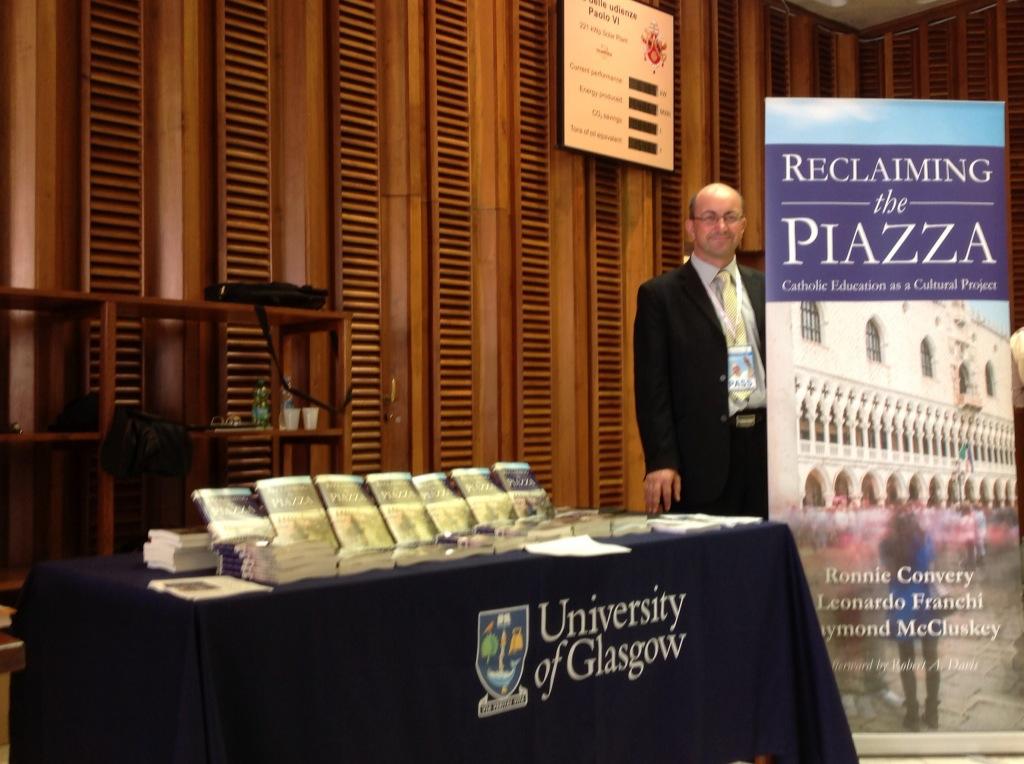
Dr. Leonardo Franchi serves as a Senior Lecturer in Pedagogy, Praxis & Faith at the University of Glasgow's School of Education. He is an internationally recognized scholar in Catholic education, holding significant editorial roles including Series Editor for both Catholic Education Globally - Challenges and Opportunities (Springer) and Education and Integral Human Development (Catholic University of America Press). In September 2024, he was appointed co-convenor of the Scottish Catholic Historical Association and maintains an active role as Executive Member of the Association of Catholic Institutes of Education. Franchi's educational background includes a Master of Arts (Hons), Post Graduate Certificate in Education, Master of Education, Post Graduate Certificate in Academic Practice, and a PhD. His academic journey reflects both theoretical depth and practical teaching experience in educational settings. His research interests center on Catholic education with particular focus on religious education, teacher formation, and the integration of liberal arts in higher education. Franchi has made significant scholarly contributions through the Reclaiming the Piazza series and numerous publications exploring how Catholic educational philosophy can address contemporary challenges while maintaining theological integrity. His work consistently examines the intersection of faith, culture, and educational practice, with increasing attention to character formation, intercultural dialogue, and the application of Catholic social teaching to educational policy. Analysis of his recent publications reveals a consistent trajectory examining Catholic educational identity in pluralistic contexts, with growing emphasis on character formation, teacher professional identity, and the integration of Catholic intellectual tradition with contemporary educational challenges. His 2023-2025 work shows increased focus on Scottish Catholic educational history, the application of papal encyclicals to educational practice, and the role of music and arts in religious formation. Series Editor for Catholic Education Globally - Challenges and Opportunities (Springer) Series Editor for Education and Integral Human Development (Catholic University of America Press) Co-convenor of Scottish Catholic Historical Association (since 2024) Executive Member of Association of Catholic Institutes of Education (since 2016) Academic Adviser to Academic Advisory Forum for Religious Education Reform in England and Wales (2019-2022) Franchi actively supervises doctoral students on diverse topics including professional identity of Catholic school teachers, music and religious education, Jesuit educational charism, and solidarity in Jesuit higher education. His supervision portfolio demonstrates his commitment to both theoretical exploration and practical application in religious educational contexts. He has received grant funding, including £10,000 from Porticus UK to support academics from developing countries attending the ACISE 2018 conference. Franchi also serves on multiple editorial boards including Review of Religious Education, Formation and Theology, and Studia Pedagogica Ignatiana. His professional activities extend to international presentations, with keynotes at institutions including Australian Institute of Theological Education and Radboud University, demonstrating his global influence in Catholic educational discourse. Franchi also serves as Director of Mater Christi Multi Academy Trust in Lancaster and holds a 0.5 FTE position as Professor of Catholic Education at the University of Notre Dame Australia.
Dr. Shari Sabeti is a Senior Lecturer in Arts and Humanities Education at the Moray House School of Education and Sport, University of Edinburgh. She holds a PhD in English Literature from the University of Cambridge and is a Senior Fellow of the Higher Education Academy (SFHEA). Her research focuses on arts, cultural heritage, and decolonizing education, with projects in museums, schools, and Pacific Island communities. She has led initiatives in the Marshall Islands, Samoa, and Hawaii, emphasizing participatory and arts-based methodologies. Education: MA (Hons) English (Cambridge, 1994), MA English and American Literature (UCL, 1995), PhD English Literature (Cambridge, 1999), PGCE Secondary English (IOE, 2002). She has taught at the University of Stirling and the University of Edinburgh, where she currently organizes courses on anthropology of education, creative pedagogies, and literacy. Research interests include museum education, decolonizing approaches, Pacific Island education, and creative writing pedagogy. Her work bridges anthropology, ethnography, and arts-based methods, exploring community resilience and identity formation. Recent projects include 'Remediating Stevenson' (AHRC-funded, 2022–2025) and studies on Marshallese displacement through arts education. Awards and grants include a £1M AHRC Standard Grant for decolonizing Pacific literature and multiple GCRF awards for education in the Marshall Islands. She has supervised over a dozen PhD students on topics like museum pedagogy, diaspora education, and creative writing practices. Labs/Networks: Centre for Creative Relational Inquiry, Digital Cultural Heritage Network, Atelier Creative Arts and Social Sciences Network. Her work often involves partnerships with museums, NGOs, and international communities.
Abhinav Goyal is a Professor of Finance and Director of Global Engagement at Birmingham Business School, University of Birmingham. He is affiliated with the Department of Finance and plays a leadership role in shaping the school's international strategy. His research is widely published in premier finance journals, and he serves on editorial boards including as Associate Editor for British Accounting Review . Education: PhD in Banking and Finance, University College Dublin, Ireland (2013) MA in Financial Risk Management, Simon Fraser University, Canada (2007) BE (Hons) in Computer Science, India (2006) His research focuses on corporate finance , particularly IPOs, corporate governance, privatization, and dividend policy, with a strong emphasis on institutional and emerging market contexts. His work explores how legal, political, cultural, and media factors influence corporate financial decisions, especially in initial public offerings and payout policies. Using empirical methods, he investigates global patterns in financial markets, often drawing on cross-country datasets to assess the impact of governance reforms, ownership structures, and socio-political events. The recent articles reflect a consistent focus on IPO pricing dynamics, influenced by democracy, media, terrorism, board reforms, and legal frameworks. His research integrates insights from political economy, behavioral finance, and institutional theory, demonstrating a multidisciplinary approach to understanding financial markets. A recurring theme is the role of transparency, governance, and external shocks in shaping corporate financial behavior. Scientific Awards and Editorial Roles: Associate Editor, British Accounting Review Area Editor (Frontier Markets), Research in International Business and Finance Dr. Goyal has advised doctoral and postdoctoral researchers in finance, though specific names are not listed. He has secured research funding through collaborative projects reflected in his co-authored publications with international scholars. His past academic appointments include positions at University College Cork and the University of Liverpool, along with visiting roles at Monash University, Xi’an Jiaotong-Liverpool University, and Manipal University, indicating a strong global academic network. He teaches advanced courses such as Contemporary Topics in Banking and Finance (MBA) and Private Equity and Venture Finance (MSc), contributing significantly to graduate education. He leads no named research lab or center in the provided text, but his editorial roles and global engagement position suggest active participation in research communities and international academic collaborations.
Dr. Artin Backtash-Rad is a Senior Lecturer in Global Strategy & International Business at the Surrey Business School, University of Surrey, where he also serves as the Director of the MSc International Business Management programme. He holds a PhD in Global Strategic Management from Royal Holloway, University of London, an MBA in International Management from Carleton University, Canada, and a BSc in Industrial Management from the University of Tehran, Iran. He has held academic positions at University College London, Royal Holloway, Cardiff Metropolitan University, and the University of South Wales. BSc in Industrial Management, University of Tehran, Iran MBA in International Management, Carleton University, Canada PhD in Global Strategic Management, Royal Holloway, University of London Artin's research focuses on Global Strategic Management, with a particular emphasis on strategy implementation. His doctoral research involved a large-scale comparative study across 20 sectors in 20 countries, resulting in a comprehensive model for corporate-level strategy execution. His work integrates resource-based, industry, and institutional perspectives to develop a holistic theory of strategy implementation. He has conducted extensive research on barriers to implementation, supply chain strategies, manufacturing strategies, and transcontinental investments. His recent publications reflect a strong trend in developing taxonomies and theoretical models in strategic management, particularly in international and cross-sectoral contexts. He frequently presents at top-tier conferences such as the Academy of International Business (AIB), British Academy of Management (BAM), and Euro-Asia Management Studies Association (EAMSA), with recent work focusing on organizational culture transfer, research populations, and Europeanization of strategy. Artin is actively involved in academic service and leadership: Director of MSc International Business Management Member of the Doctoral Programmes Review Committee Personal Tutor for 22 students Work Placement Programme Tutor He supervises postgraduate research, currently guiding two PhD students, and has previously supervised numerous master’s and MBA dissertations across multiple institutions. His teaching spans strategic management, international business, entrepreneurship, research methodology, and operations management at undergraduate and postgraduate levels. Artin is affiliated with leading academic organizations: Academy of International Business British Academy of Management Euro-Asia Management Studies Association
London School of Economics and Political Science (LSE)United Kingdom
Dr Tanya Harmer is a Lecturer in the Department of International History at the London School of Economics and Political Science (LSE). She is a leading scholar in Latin American Cold War history, with a focus on Chile, transnational revolutionary movements, and gender politics. She is closely associated with the LSE’s Latin America and Caribbean Centre (LACC) and convenes the Latin America-Europe Cold War Research Network. BA, University of Leeds MA and PhD, London School of Economics and Political Science Dr Harmer specializes in the international and transnational dimensions of Cold War struggles in Latin America. Her research emphasizes the global dynamics of revolutionary movements, particularly in Chile and their connections to Cuba and broader solidarity networks. She explores themes such as women and gender in revolutionary politics, exile, resistance, and inter-American diplomacy. Her work bridges diplomatic, social, and cultural history to offer a nuanced understanding of the Cold War beyond superpower confrontation. Her recent publications include the acclaimed biography Beatriz Allende: A Revolutionary Life in Cold War Latin America (2020) and the co-edited volume Toward a Global History of Latin America’s Revolutionary Left (2021). Her articles examine topics such as the 'Cuban Question,' Kissinger’s diplomacy in Latin America, and transnational militant networks. Her research consistently highlights the agency of Latin American actors and the interconnectedness of regional and global histories. Luciano Tomassini International Relations Book Award (2013) LSE Major Review Teaching Prize (2014) Student-led Teaching Excellence Award for Research Support and Guidance (2015) LSE Excellence in Education Award (2016–17, 2019–20) British Academy Newton Mobility Award (2015) Michael Dockrill Memorial Thesis Prize (supervised student, 2021) Dr Harmer supervises PhD students working on twentieth-century Latin American history and has directed the MA in History programme at LSE. She has received grants from the British Academy to support international collaborative research and has organized major conferences on the global history of Latin America’s revolutionary left. She has held visiting teaching positions at Columbia University and the Pontificia Universidad Católica de Chile, where she was appointed Visiting Professor in 2023. She is actively involved in public engagement, having contributed to BBC Newsnight, Jacobin Magazine, and the Historias podcast. She also leads educational initiatives such as the 'Diversifying the Curriculum' project at LSE and has hosted interdisciplinary workshops on memory and resistance.
Susan Robertson holds the Chair in Sociology of Education at the Faculty of Education, University of Cambridge, where she serves as Director of the Doctoral Programme and Editor-in-Chief of Globalisation, Societies and Education . She joined Cambridge in 2016 after academic appointments at the University of Auckland and University of Bristol, bringing over three decades of international expertise in critical education studies. Her educational foundation includes doctoral research in Sociology/Policy at the University of Calgary (1990), preceded by professional experience in the Research Division of Western Australia's Ministry of Education. This trajectory established her cross-sectoral perspective on education systems and policy implementation. Robertson's research critically examines state-education relationships through governance frameworks that determine educational equity and outcomes. She investigates how global and regional actors mediate the social contract between states and citizens, with particular focus on geopolitical shifts, OECD influence, and neoliberal transformations in higher education. Her work bridges sociology, political economy, and decolonial perspectives to address social justice imperatives in education. Analysis of her 2024-2026 publications reveals sustained engagement with higher education geopolitics, digital transformation challenges, and global governance mechanisms. Key thematic clusters include critiques of OECD-driven policy frameworks, analyses of ordinal citizenship in education systems, and examinations of how digitalization reshapes university missions while exacerbating existing inequalities. As Director of the Doctoral Programme, Robertson oversees comprehensive PhD training while convening the Culture, Politics and Global Justice research cluster that fosters interdisciplinary collaboration on transnational education challenges. Her service on the ESRC funding council positions her at the nexus of research strategy and resource allocation in UK social sciences. The Culture, Politics and Global Justice cluster under her leadership functions as a dynamic hub for critical scholarship, hosting regular seminars and collaborative projects that connect Cambridge researchers with global partners to address emergent issues in education governance and social transformation.
Professor Inderjeet Parmar is a distinguished academic at City St George's, University of London, where he serves as Associate Dean for Research (2023-2026). He is a leading scholar in international relations, political science, and US foreign policy studies with a particular focus on Anglo-American relations, elites, and the role of race and empire in shaping global power structures. Professor Parmar completed his undergraduate studies in Sociology at the London School of Economics and pursued Political Sociology at the University of London. He earned his doctorate from the University of Manchester in political science and international relations. Prior to joining City, University of London in 2012, he taught at the University of Manchester from 1991 to 2012, where he served as Head of the Department of Government from 2006 to 2009. His research interests center on the history, politics and sociology of Anglo-American foreign policy elites over the past century, with particular attention to organizations such as philanthropic foundations, think tanks, policy research institutes, and university foreign affairs institutes. Professor Parmar has authored three books, including Foundations of the American Century: Ford, Carnegie, and Rockefeller Foundations in the Rise of American Power (2012), which critically examines how major American foundations shaped US foreign policy and global power structures. He is currently working on Presidents and Prime Ministers at War: Race, Empire and Elitism in Anglo-American Wars from Korea to the Wars on Terror , a critical analysis of the post-1945 liberal international order. Professor Parmar's scholarly output demonstrates a consistent focus on the intersections of race, empire, and elite power structures in international relations. His recent publications examine the crisis of the US-led world order, Trump's impact on global politics, transnational elite knowledge networks, and the racial dimensions of international relations theory, reflecting his commitment to challenging conventional narratives about American power. He has held significant leadership roles including past president, chair, and vice chair of the British International Studies Association. His scholarly influence extends through prestigious visiting positions at LSE (2019-2022), Oxford's Rothermere American Institute (2019-20), and Princeton University (2013-2014), as well as earlier fellowships at Princeton and Oxford (1998, 1999, 2010). As an educator, Professor Parmar teaches undergraduate courses on US Foreign Policy, Theories of Global Politics, and Foreign Policy Analysis, as well as postgraduate courses on US Foreign Policy. He supervises doctoral students working on topics related to American elite networks, US-Latin American military relations, and the political incorporation of Black America. Professor Parmar is actively engaged with the public through frequent media appearances on Al Jazeera, CNN, BBC, RT, TRT, TalkRadio, and Sputnik. He is also a regular columnist for The Wire, where he provides critical analysis of contemporary political issues from his distinctive scholarly perspective.