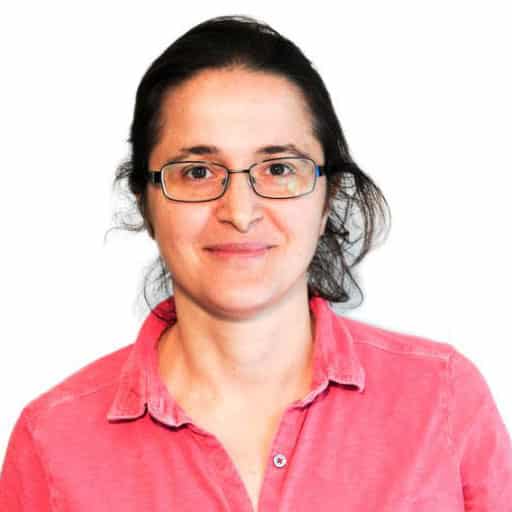
Professor Jo Barraket is a leading academic and researcher in social equity, social innovation, and public policy. As Director of the Melbourne Social Equity Institute and member of the Dilun Duwa Centre for Indigenous Business Leadership, she focuses on improving social equity through organizational innovation, cross-sector collaboration, and policy design. Her research addresses social procurement, health equity, digital inclusion, and employment pathways for marginalized groups. Her work includes landmark projects such as the Australian Digital Inclusion Index and evaluations of Commonwealth Social Enterprise Development Funds. She has secured over $11M in research grants, including multiple ARC grants, and produced over 75 scholarly publications. Her current projects compare social procurement policies in Australia and Scotland, and study youth unemployment in construction via employment-focused procurement. Key research themes include: social enterprise scaling strategies, cross-sector partnerships for policy implementation, and the role of philanthropy in equitable housing. She advises governments and OECD on inclusive employment policies and chairs major research initiatives like the Social Enterprise Impact Lab. Prof Barraket’s transdisciplinary approach combines rigorous academic research with practical outputs like policy guides and digital tools to maximize societal impact. She previously founded the Centre for Social Impact Swinburne, now a global leader in social economy research.
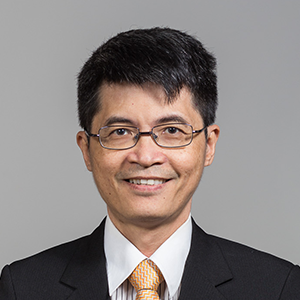
Kian-Lee Tan is a Tan Sri Runme Shaw Senior Professor and Professor of Computer Science at the School of Computing, National University of Singapore (NUS). He holds a Ph.D. (1994), M.S. (1992), and B.Sc. (1st Class Honours) from NUS. His academic career spans decades of contributions to database systems and data analytics. Ph.D. in Computer Science, National University of Singapore (1994) M.S. in Computer Science, National University of Singapore (1992) B.Sc. in Computer Science (1st Class Honours), National University of Singapore As a leading researcher in database systems, Tan focuses on query processing and optimization in multiprocessor/distributed systems, database performance, security, and multimedia information retrieval. His work extends to computational biology applications like genome databases and real-time influence analysis on social streams. His recent publications highlight trends in GPU-accelerated graph analytics, trajectory pattern mining, and computational journalism. These works emphasize parallel processing, performance optimization, and social/media data analysis. IEEE Technical Achievement Award (2013) President Science Awards, Singapore (2011) NUS Graduate School Excellent Mentor Award (2010/2011) Outstanding University Researchers Award (1997/1998) Tan has supervised numerous research projects and mentored students contributing to database systems. He secured significant grants including a US$1 million Ripple Foundation grant (2024) for financial technology education. His editorial roles include ACM Transactions on Database Systems and IEEE Transactions on Knowledge and Data Engineering. He leads the FinTech Lab at NUS Computing and has served on the VLDB Endowment Board (2012-2017). His work bridges database foundations with emerging applications in AI, fintech, and computational journalism.
Ali H. Sayed is the Dean of the School of Engineering (Faculté des sciences et techniques de l'ingénieur - STI) at École Polytechnique Fédérale de Lausanne (EPFL), Switzerland, where he also directs the Adaptive Systems Laboratory (Laboratoire de systèmes adaptatifs). Previously, he served as an emeritus professor and chair of the Electrical Engineering Department at UCLA. He is a highly cited researcher and a member of the US National Academy of Engineering and the World Academy of Sciences. Sayed served as president of the IEEE Signal Processing Society in 2018 and 2019. Professor Sayed's research focuses on adaptation and learning theories, data and network sciences, statistical inference, multi-agent systems, adaptive networks, and optimization. His work bridges theoretical foundations with practical applications in signal processing, machine learning, and network science. He has made significant contributions to distributed learning algorithms, social learning over networks, and adaptive signal processing techniques that have influenced both academic research and practical implementations. His recent publications demonstrate a strong focus on multi-agent systems, distributed learning, privacy-preserving techniques, and social learning over networks. The research trends show increasing emphasis on federated learning with privacy guarantees, graph-based learning approaches, and the intersection of social dynamics with information processing. His work consistently addresses fundamental theoretical questions while maintaining relevance to practical applications in communication networks, social media analysis, and distributed artificial intelligence systems. Professor Sayed has received numerous prestigious awards throughout his career, including: IEEE Fourier Award (2022) Norbert Wiener Society Award (2020) IEEE Signal Processing Society Education Award (2015) Papoulis Award from the European Association for Signal Processing (2014) Technical Achievement Award from IEEE Signal Processing Society (2012) Terman Award from the American Society for Engineering Education (2005) IEEE Donald G. Fink Prize (1996) Multiple Best Paper Awards from IEEE and EURASIP Sayed has authored or co-authored over 570 publications and six monographs. He has mentored numerous PhD students and researchers in the fields of signal processing and adaptive systems. His editorial leadership includes serving as Editor-in-Chief of IEEE Transactions on Signal Processing (2003-2005) and EURASIP Journal on Advances in Signal Processing (2006-2007), as well as Founding Editor-in-Chief of the Open Access Book Series on Information and Learning Sciences. At EPFL, Professor Sayed leads the Adaptive Systems Laboratory, which focuses on developing theoretical frameworks and practical algorithms for adaptive systems, networked learning, and distributed signal processing. The lab's research encompasses both fundamental theoretical investigations and applications to real-world problems in communications, social networks, and computational biology.
**Dr. JIN Chen** is an **Associate Professor** in the **Department of Information Systems and Analytics** at the **National University of Singapore (NUS) School of Computing**. He holds a PhD in Industrial Engineering and Management Science from Northwestern University (U.S.) and joined NUS in 2018 after postdoctoral work at the Wharton School, University of Pennsylvania. His research focuses on **online platforms**, **information systems operations**, and **digital transformation**, with a particular interest in addressing challenges like fake information dissemination and platform competition. His work bridges **operations management** and **information systems**, emphasizing practical applications in e-commerce and fintech. **Education**: B.Sc. (Shanghai Jiao Tong University) M.Sc. & Ph.D. (Northwestern University, U.S.) **Research Interests**: Platform design and competition Information bundling and pricing strategies Consumer search behavior Right-to-repair policies and environmental impacts **Awards & Recognition** (selected): Finalist, MSOM Service Management SIG Best Paper Award (2024) Nomination for NUS Young Researcher Award (2022–2024) Winner, INFORMS ENRE Young Researcher Prize (2022) Teaching Excellence Awards (2021–2023) **Key Projects**: Optimal information structure design to combat fake orders/reviews Environmental and welfare implications of right-to-repair laws Strategic bundling and pricing in multi-service platforms
Abigail Scholer is a Professor specializing in self-regulation and motivation. Her research explores how motivational orientations influence decision-making, self-control conflicts, and adaptive change. She holds a BA from Gettysburg College and a PhD from Columbia University. Her work bridges educational, social, and cognitive psychology, with a focus on understanding the mechanisms behind human triumphs and failures in facing life's demands. Key research themes include metamotivational processes, goal pursuit dynamics, and the interplay between motivation and emotional regulation. Her lab, the Self-Regulation and Motivation Lab , investigates practical applications of these theories in academic and organizational settings. Publications span topics like motivational affordance, risk preferences, and the impact of threat on stereotyping. While no awards are listed, her contributions to motivational science are reflected in high-impact journals such as Journal of Personality and Social Psychology and Psychological Science . No advising or grant details are provided, though her lab's activities suggest active research participation.
Pedro Ferreira is a Full Professor at Carnegie Mellon University (CMU), holding a joint appointment in the School of Information Systems & Management at the Heinz College and the Department of Engineering and Public Policy within the College of Engineering. His research focuses on how technology influences education, media consumption, and peer effects, leveraging large datasets from randomized experiments. Ferreira has been recognized with the 2018 INFORMS Early Career Award and Top 17th worldwide research scholar ranking (2020–2022). He co-founded CMU's Initiative for Teaching and Education Analytics (iTEA) and advises numerous students in areas like AI/ML in education and media analytics. Education: BSc in Computer Science (IST), MSc in Electrical Engineering and Computer Science & Technology Policy (MIT), PhD in Telecommunications Policy (CMU). He has taught at MIT, IST, and invited roles at Católica-Lisbon and the University of Cambridge. Research Interests: Impact of digital technologies on education outcomes (e.g., smartphones in classrooms, video analytics), peer influence in media industries (e.g., binge-watching, recommender systems), and empirical methods using randomized experiments. Current projects include AI-driven education improvement and policy implications of AI/ML technologies. Notable Achievements: Over 15 peer-reviewed articles in top journals like Management Science and MIS Quarterly. Key grants include Gates Foundation funding for video-based education research and Koch Foundation support for online certification studies. He serves as Associate Editor for Management Science and previously for MIS Quarterly. Advising & Grants: Advised 23 PhD students, many now in academia and industry. Current students research facial recognition in education and hybrid recommender systems. Ferreira has led grants totaling millions, including studies on GDPR's impact on piracy tracking and worldwide VoD availability. Professional Service: Organized conferences like the Symposium on Statistical Challenges in eCommerce Research (SCECR). Served on NSF review panels and CMU’s Portugal PhD program steering committee.曾参与葡萄牙知识社会局(UMIC)的国家级政策制定,推动宽带学校项目。
Prof. Dr. Ingo Scholtes is Chair of Machine Learning for Complex Networks at Julius-Maximilians-Universität Würzburg's Center for Artificial Intelligence and Data Science (CAIDAS). His research spans network science, graph machine learning, and computational social science, with applications in software engineering, ecology, biology, and physics. He received a Juniorfellowship from the German Informatics Society (2014) and an SNSF Professorship (CHF 1.5Mio, 2018). Current affiliations: JMU Würzburg (since 2021), University of Zurich (2018-2024), Bergische Universität Wuppertal (2019-2021) Research focus: Higher-order network modeling, temporal graph analysis, AI for collaborative systems, causality-aware machine learning His recent publications demonstrate strong trends in temporal network analysis , graph neural networks for time-series, and higher-order models across software engineering and social science domains. He co-chairs multiple international workshops on complex networks and serves as associate editor for EPJ Data Science and Advances in Complex Systems. Key scientific contributions: Foundational work on higher-order network models published in Nature Physics Methodological innovations in temporal network visualization (HOTVis) and path-based analysis (pathpy) As both educator and organizer, he leads the Computational Social Science Section at GI e.V., mentors across disciplines, and develops tools like git2net for collaboration analysis. His work bridges theoretical foundations with practical applications in network science.
Tamer Başar is a Maybelle Leland Swanlund Endowed Chair Emeritus and Professor Emeritus of Electrical and Computer Engineering at the University of Illinois' College of Engineering. He leads research in game theory, control systems, and networked systems through the Coordinated Science Lab. His work focuses on stochastic processes, multi-agent systems, and optimization under uncertainty. Research interests include Nash equilibrium analysis, mean-field theory, and reinforcement learning applications in dynamic systems. Recent publications explore strategic incentives in large population games, nonstationary reinforcement learning, and coupled bi-virus models. Notable honors include the IEEE Control Systems Award (2014), American Academy of Arts and Sciences Membership (2023), and honorary doctorates from multiple institutions. His work bridges theoretical foundations with practical applications in socio-technical networks and edge computing systems. Basar's contributions span over 900 publications, focusing on distributed control algorithms, network security, and strategic information design. His research lab at Illinois addresses challenges in timely computation, resilient systems, and decentralized decision-making frameworks.
Marco Brogna is an Associate Professor of Economic Geography at the Department of Methods and Models for Economy, Territory, and Finance at Sapienza University of Rome. He has been serving in this capacity since March 2007, following his position as a Confirmed Researcher of Economic Geography from 2001 to 2007. His academic work is deeply rooted in the Faculty of Economics, where he has held significant administrative roles including Delegate of the Dean for Teaching and President of the Coordination Committee for Degree Programs. Professor Brogna's research interests span Tourism Development , Sustainable Tourism , Local Economic Development , Economic Geography , Territorial Planning , and Accessible Tourism . His work consistently focuses on the intersection between tourism, regional development, and sustainable practices. He has particular expertise in analyzing tourism dynamics in the Lazio region and Rome, examining how tourism impacts local economies and how territories can be developed to maximize tourism potential while maintaining sustainability. His recent publications reveal a clear trend toward analyzing post-pandemic tourism recovery, sustainable development models, and the evolving relationship between tourism and local communities. His research demonstrates a progression from traditional tourism studies toward more complex analyses of tourism's role in territorial development, with increasing focus on digital influences, accessibility, and sustainable practices. His work spans both theoretical frameworks and practical applications, often using case studies from Rome and the Lazio region to illustrate broader principles of tourism development. Professor Brogna has been actively involved in thesis supervision for undergraduate and graduate students, encouraging students to apply one semester before their expected completion date. He has led numerous research projects funded by the Lazio Region, including innovative research on tourist industry management, tourism training, and sustainable tourism development. His most significant projects include being responsible for the 2021 research on 'Innovative Management of the Tourist Industry' and the 2020 National Report on Open-Air Tourism. Professor Brogna has also been instrumental in organizing academic events, including the 'Giovedì del Turismo' conference series at Sapienza University since 2015, as well as numerous other conferences on tourism development, sustainable tourism, and territorial planning. His work extends beyond academia into practical applications through his involvement with Rome's strategic tourism planning and various governmental advisory roles.
Dr. Yanqing Hu is an Associate Professor at the Department of Statistics and Data Science, School of Science, Southern University of Science and Technology (SUSTech). With a Ph.D. in Systems Theory from Beijing Normal University (2011) and postdoctoral experience at the Levich Institute, City University of New York (2011-2013), his work focuses on big data analysis of complex systems, particularly in social media dynamics, network resilience, and graph neural network applications. Ph.D.: Beijing Normal University (Systems Theory, 2011) Postdoctoral: Levich Institute, CUNY (2011-2013) Research spans complex network analysis, information spreading mechanisms, and predictability of network structures. His work combines theoretical frameworks with real-world applications in social networks, infrastructure systems, and brain connectivity. Recent publications explore information percolation in social media, resilience quantification in interdependent networks, and intrinsic structure predictability. These studies appear in high-impact journals like Nature Human Behaviour (IF: 24.3), Nature Communications (IF: 17.7), and PNAS (IF: 10). World AI Conference Youth Outstanding Paper Nomination Beijing Outstanding Doctoral Dissertation Award Guangdong Special Support for Young Talents Guangdong Outstanding Youth Fund Collaborations include leading researchers from Boston University, King's College London, and Shenzhen-Hong Kong Institute of Microelectronics. His work informs network defense strategies and efficient navigation mechanisms in complex systems.
Professor Bing-Jie (Bruce) Ni is an Adjunct Professor at the University of Technology Sydney (UTS) within the School of Civil and Environmental Engineering and a full Professor at UNSW Sydney. He is an internationally recognised leader in environmental engineering, wastewater treatment, greenhouse-gas mitigation, microplastics fate, electrocatalysis and sustainable energy systems. Education PhD in Environmental Engineering, University of Science and Technology of China, Hefei (2005–2009) Research Interests Professor Ni’s research integrates process engineering, microbial biotechnology, materials science and mathematical modelling to develop sustainable technologies for high-efficiency pollutant removal, minimal carbon footprint and maximal energy recovery from wastewater. He is a global pioneer in: Modelling and control of nitrous oxide (N₂O) and methane (CH₄) emissions from wastewater systems, Micro- and nano-plastics ecotoxicity and mitigation in anaerobic digestion, Transforming sewage sludge into high-value liquid bio-energy (medium-chain fatty acids and long-chain alcohols), Designing cost-effective electrocatalysts from natural minerals for green hydrogen production and wastewater electrolysis. Research Output & Impact Over the last decade he has published 2 research books, 30 book chapters and >400 refereed journal papers , including 35 in Environmental Science & Technology and 85 in Water Research . His work has influenced global policy: the IPCC adopted his nitrous-oxide-emission model in 2019 to revise national greenhouse-gas inventories for the first time in 13 years. Awards & Recognition ARC Future Fellowship & ARC DECRA Fellowship Clarivate Analytics Highly Cited Researcher (Web of Science) Royal Society of Chemistry Highly Cited Researcher (2020–present) Mendeley Data Top 2 % Cited Researchers worldwide Listed among “Australia’s Most Innovative Engineers” (Engineers Australia, 2018) 50+ additional awards including Scopus Young Researcher Award, South Australian Water Awards, UQ Research Excellence Awards, and Outstanding Doctoral Dissertation Awards. Research Funding & Leadership He has secured ≈ AUD $10 million in competitive funding (six major ARC grants plus >20 government, university and industry projects). He serves as: Lead Guest Editor, Water Research Editorial Advisory Board, Environmental Science & Technology Associate Editor for Journal of Cleaner Production , Environmental Chemistry Letters , Environmental Research , Journal of Environmental Management Editorial Board member for five additional high-impact journals. Teaching & Supervision At UTS he teaches Renewable Energy Technologies , Environmental and Sanitation Engineering , Process Dynamics and Control , and Water and Wastewater Treatment . He is available to supervise Masters and PhD students in environmental biotechnology, process modelling and sustainable energy systems. Laboratory & Commercial Translation He heads active research teams at both UNSW and UTS and is the inventor of >10 granted patents , some of which are currently being commercialised to deliver real-world impacts in greenhouse-gas-neutral wastewater treatment and renewable energy production.
Maxim Kontsevich is a permanent professor at the Institut des Hautes Études Scientifiques (IHÉS), holding the AXA Chair for Mathematics since 1995 and a visiting chair at Rutgers University (one month annually since 1997). Born in 1964 in Khimki, USSR, he earned his PhD from Bonn University in 1992. His career includes visiting positions at Harvard, the Institute for Advanced Study, and Berkeley, where he was a professor from 1993 to 1995. His research spans mathematical physics, algebraic geometry, and non-commutative geometry. Notable contributions include deformation quantization, mirror symmetry, and motivic integration. His work bridges algebraic structures with geometric and physical concepts, influencing areas like topological field theories, string theory, and integrable systems. Awardees of Fields Medal (1998), Crafoord Prize (2008), and Breakthrough Prize (2014), he also holds editorial roles at Compositio Mathematica and Publications Mathématiques IHÉS. His over 50 publications explore advanced topics such as quantum cohomology, Hodge theory, and categorical structures in geometry.
Michela Becchi is an Associate Professor in the Department of Electrical and Computer Engineering at North Carolina State University. She specializes in computer architecture, systems software, and applications, with a focus on heterogeneous systems, parallel algorithms, and acceleration techniques for bioinformatics, pattern recognition, and quantum computing. Her work spans multi-core CPUs, GPUs, FPGAs, and distributed clusters, emphasizing the boundary between hardware and software design. Dr. Becchi holds a Ph.D. and Master’s degree in Computer Engineering from Washington University in St. Louis (2009) and a Bachelor’s degree in Computer Engineering from Politecnico di Milano, Italy (2000). Her research has been recognized with prestigious awards, including the NSF CAREER Award (2015) and the University of Missouri System President Award for Early Career Excellence (2016). Her research interests include compiler and runtime techniques for heterogeneous systems, acceleration of bioinformatics algorithms, and high-speed networking applications. She has pioneered frameworks for efficient data transformation, GPU-accelerated compression, and memory-efficient graph algorithms for quantum computing. Her work also explores thread coarsening, mixed-precision auto-tuning, and secure multi-core processor design. Key contributions include the PILOT runtime system for GPU memory management, the GPU-FPtuner auto-tuner for floating-point applications, and innovative approaches to automata processors for genomic analysis. Her publications emphasize reproducible accuracy in scientific simulations and the optimization of irregular applications on many-core platforms.
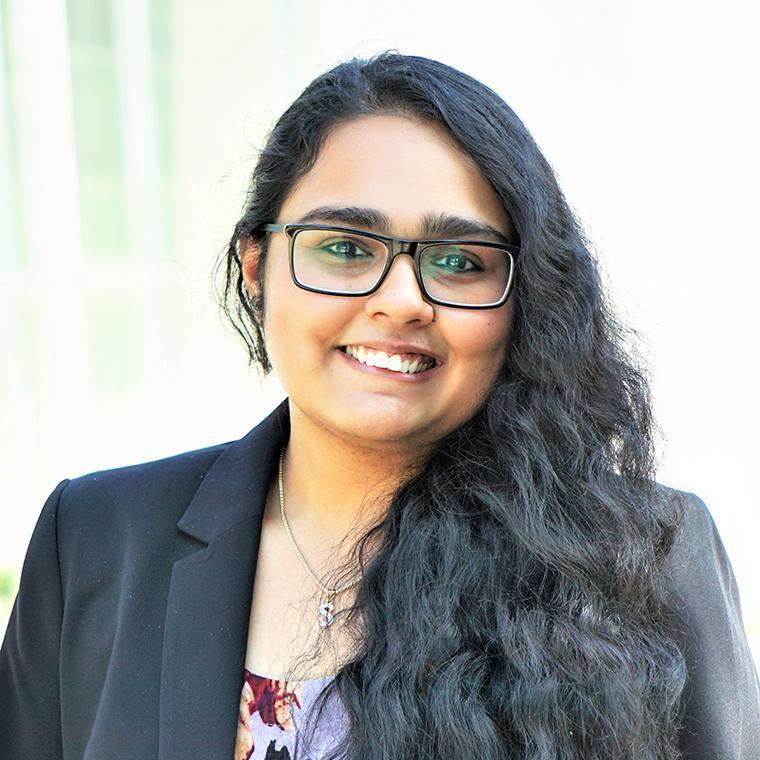
Smita Ghosh is an Assistant Professor in the Department of Mathematics and Computer Science at Santa Clara University, part of the College of Arts and Sciences. Her research focuses on social network analysis, algorithms for information diffusion, and applications in cybersecurity, disaster management, and machine learning. She holds a B.Tech. from the West Bengal University of Technology, India, and an M.S. and Ph.D. from the University of Texas, Dallas. Her work addresses challenges in rumor containment, clickbait detection, and optimizing network models for social media content analysis. Recent publications include studies on hypergraph-based solutions for rumor blocking and stochastic models for emergency response in social networks. She also explores cross-modal topic modeling for enhancing content detection algorithms. Notable contributions include developing data-driven strategies for identifying hate speech spreaders and improving wildfire severity predictions using environmental features. Her research bridges theoretical computer science with real-world applications in public health, education, and disaster management. Her academic contributions include organizing conference proceedings like the 18th International Conference on Algorithmic Aspects in Information and Management (AAIM 2024). She actively contributes to educational initiatives such as the Classroute project, creating multilingual educational content for Punjabi and Urdu speakers.
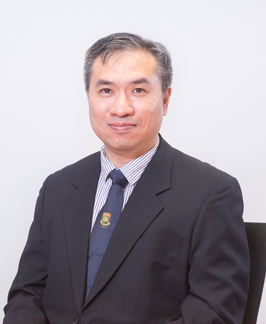
Professor Reynold Cheng is a faculty member at the University of Hong Kong (HKU), specifically within the Department of Computer Science in the School of Computing and Data Science (CDS). He currently serves as the Division Head of the AI & Data Science Division at CDS and is part of the Steering Committee of the Musketers Foundation Institute of Data Science. His academic journey includes a BEng and MPhil from HKU (1998–2000) and an MSc and PhD from Purdue University (2003–2005). Prior to HKU, he was an Assistant Professor at the Hong Kong Polytechnic University (HKPU) from 2005 to 2008. Cheng’s research focuses on data science, big graph analytics, and uncertain data management. He has received numerous awards, including the SIGMOD Research Highlights Reward 2020, HKICT Awards 2021, and HKU Knowledge Exchange Award (Engineering) 2021. His work has been recognized through grants such as the HKU-TCL Joint Research Centre for AI-funded project (HKD 1M, 2020–2022) and a CRF-funded project for real-time monitoring of infectious diseases (HKD 6.5M, 2021–2022). Cheng actively contributes to academic service, including serving as PC co-chair for IEEE ICDE 2021 and editorial roles in journals like IS and DAPD. His publications span top venues like SIGMOD, VLDB, and KDD, emphasizing algorithm design for large graphs and probabilistic data systems.




.jpg)