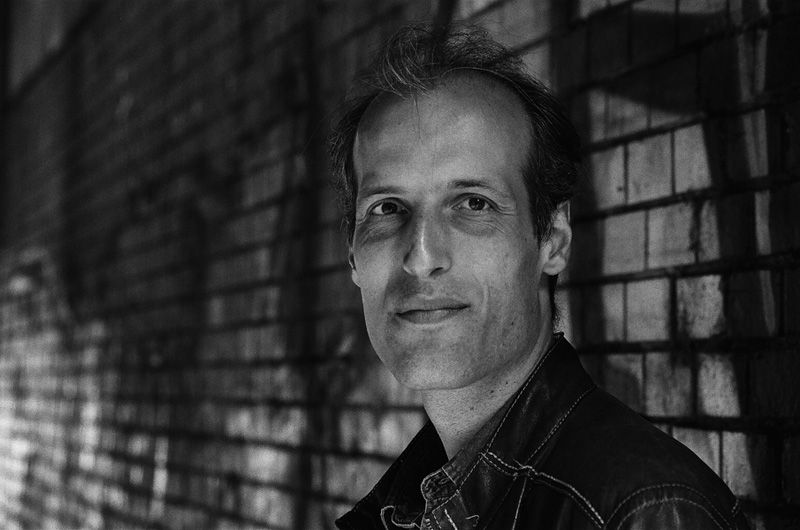
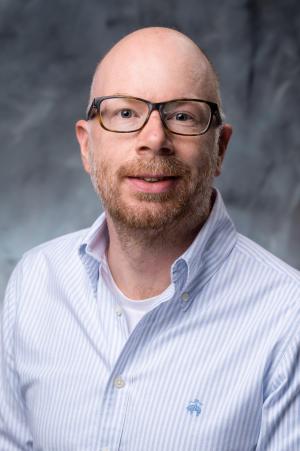
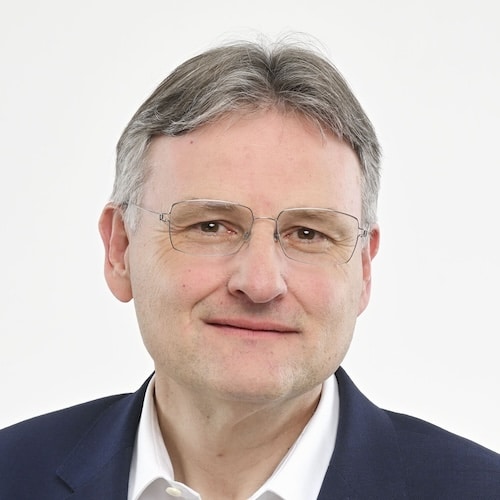
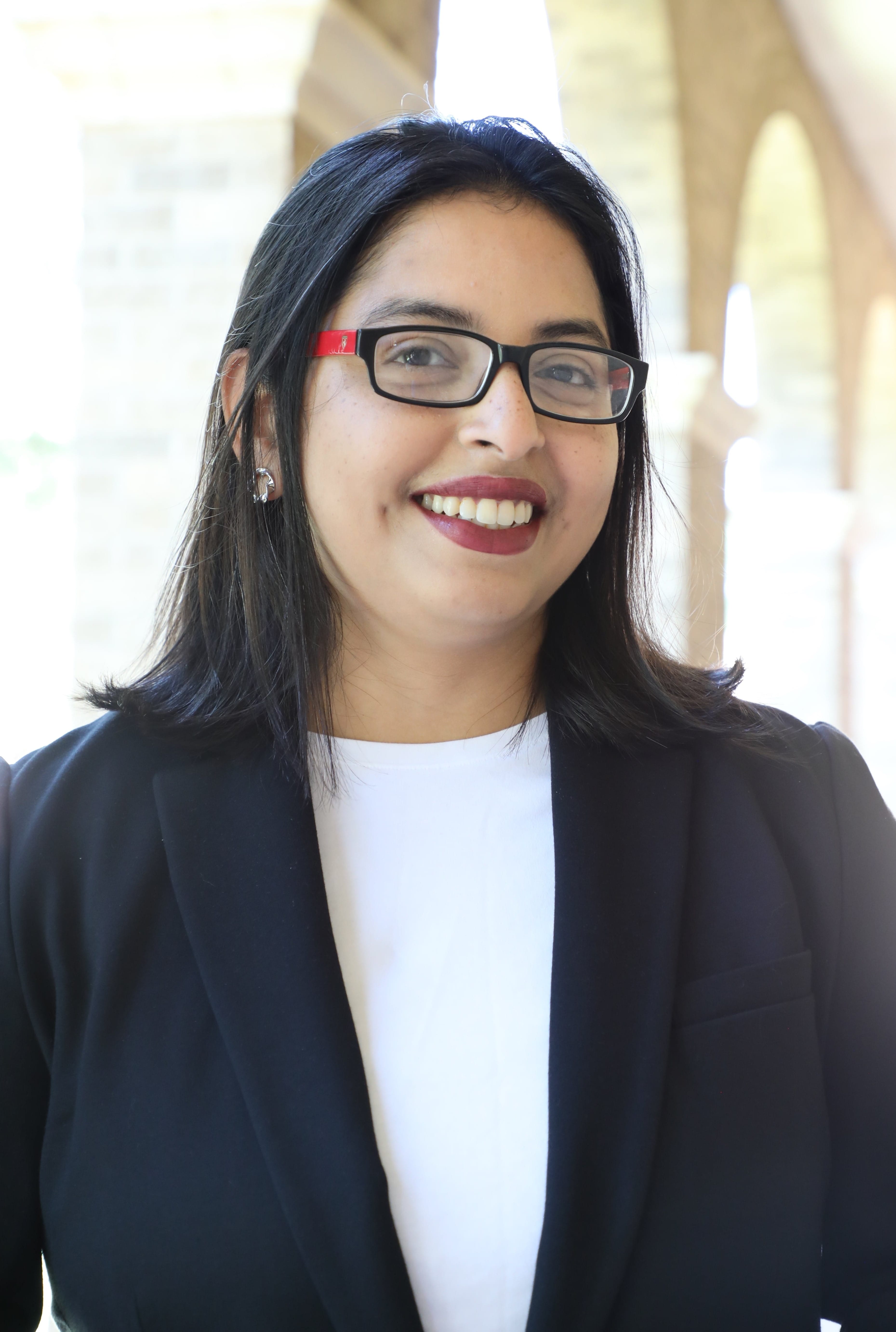
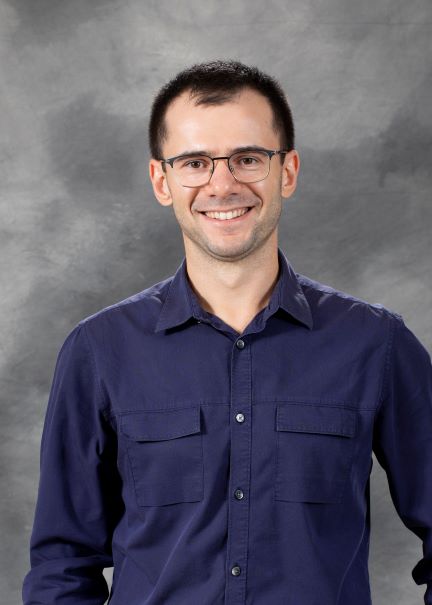
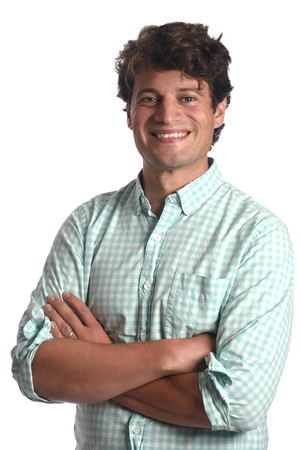
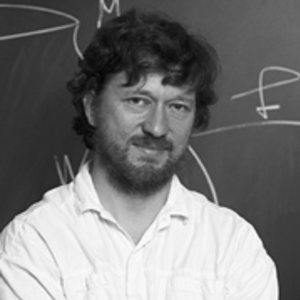
Martin Hairer is a Professor of Pure Mathematics at Imperial College London and EPFL (École Polytechnique Fédérale de Lausanne). He has held significant academic positions, including Regius Professor at the University of Warwick and Professor at the Courant Institute, NYU. His research focuses on stochastic analysis, probability theory, and partial differential equations. Education: B.Sc., M.Sc., and Ph.D. in Physics from the University of Geneva (1998-2001) Martin Hairer’s research interests span Stochastic Partial Differential Equations (SPDEs), Rough Path Theory, and Regularity Structures, with applications in mathematical physics and statistical mechanics. His recent publications emphasize stochastic analysis and SPDEs, particularly the development of Regularity Structures and Rough Path Theory, enabling the rigorous understanding of singular SPDEs and nonlinear dynamics. Scientific Awards: Breakthrough Prize in Mathematics (2021) Fields Medal (2014) Fermat Prize (2013) Royal Society Wolfson Research Merit Award (2009) LMS Whitehead Prize (2008) Martin Hairer actively contributes to education through lecture notes and seminars, including courses on SPDEs and stochastic analysis. He also develops mathematical software.
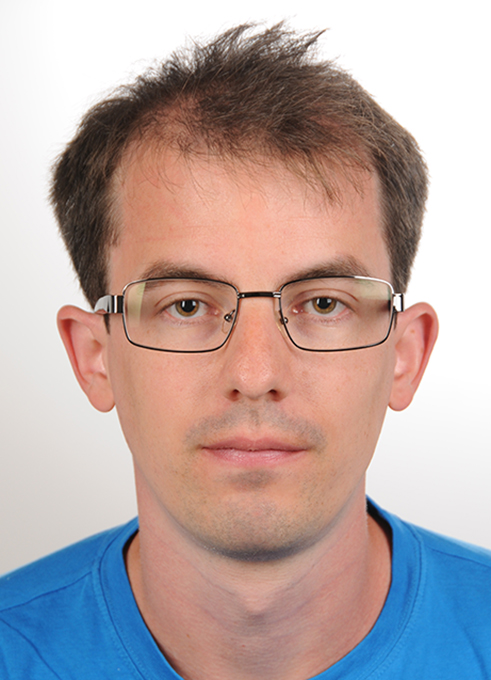
Tony Stillfjord is an Associate Professor at the Centre for Mathematical Sciences, Lund University, Sweden. He previously held postdoctoral positions at the Max Planck Institute for Dynamics of Complex Technical Systems and Chalmers/University of Gothenburg. Ph.D. and MSc in Numerical Analysis from Lund University Funded by WASP (Wallenberg AI, Autonomous Systems and Software Program) Research Interests : Numerical methods for partial differential equations, splitting schemes, stochastic optimization, and large-scale differential Riccati equations. His work focuses on developing low-rank approximations and robust optimization algorithms. Recent Publications highlight advancements in Lie/Strang splitting for operator-valued Riccati equations, stochastic descent methods, and GPU-accelerated splitting schemes. Software Contributions : Developed DREsplit (MATLAB package for differential Riccati equations) and BST20_CODE for stochastic optimization experiments. Contact : Office at MH:562E, Lund University. Email: tony.stillfjord@math.lth.se . URL: tonystillfjord.net
Dr. Greis Julieth Kim Reyes serves as Assistant Professor of Physics in the Department of Physics and Astronomy at SUNY New Paltz, where she conducts computational research on semiconductor materials and defects. Her work bridges theoretical physics and practical materials design for energy applications. Her educational journey includes a Ph.D. in Physics from University at Buffalo (2024), Master's in Physics from Universidad Nacional de Colombia (2014), and Bachelor's in Physics-Education from Universidad Distrital Francisco José de Caldas (2010). This international background informs her interdisciplinary approach to materials science. Dr. Reyes specializes in computational exploration of intermediate band semiconductors, defect engineering, and magnetic materials using density functional theory (DFT) and machine learning. Her research reveals how atomic-scale defects create novel electronic properties, particularly in 2D materials like C 3 N/C 3 B bilayers and perovskite oxides. She employs iterative Kohn-Sham methods to simulate electronic behavior and optical responses, with recent work focusing on excitonic effects for solar energy applications. Analysis of her 15 most recent publications shows consistent emphasis on computational discovery of materials with tailored optical and electronic properties. Key trends include defect-enabled photocatalysis, interlayer exciton engineering in van der Waals heterostructures, and Jahn-Teller effects in doped semiconductors - all targeting next-generation energy technologies. Her scholarly recognition includes: Bahethi Scholarship (SUNY Buffalo, 2022) Silvestro Scholarship (SUNY Buffalo, 2022) Marshall Plan Foundation grant (Johannes Keppler Universität, 2018) As an educator, Dr. Reyes develops interactive quantum mechanics curricula using Mathematica simulations, as evidenced by her GitHub repository. She teaches General Physics and Quantum Physics courses while integrating computational tools to build student intuition for quantum materials. Though specific research students aren't listed, her teaching philosophy emphasizes critical thinking through problem-solving sessions and real-world applications. Her computational laboratory work focuses on first-principles simulations of materials, with active development of educational resources for quantum mechanics instruction. Current projects explore machine learning pipelines for materials discovery and defect-property relationships in emerging semiconductor systems.
Minshuo Chen is an Assistant Professor in the Department of Industrial Engineering and Management Sciences at Northwestern University. He previously served as an Associated Research Scholar in the ECE department at Princeton University, collaborating with Prof. Mengdi Wang. His research focuses on developing methodologies and theoretical foundations in generative AI, reinforcement learning, and optimization. He holds a Ph.D. from Georgia Tech (supervised by Prof. Tuo Zhao and Wenjing Liao), a Master's from UCLA, and a Bachelor's from Zhejiang University. Key research areas include diffusion models for distribution estimation, foundations of learning (approximation and optimization), and reinforcement learning applications in complex systems. He has presented at major conferences like INFORMS 2024 and NeurIPS 2023, and serves as an area chair for NeurIPS 2023. His recent work emphasizes theoretical guarantees for diffusion models, including statistical rates and optimization perspectives. He has received awards such as the ARC-TRIAD Student Fellowship and William S. Green Fellowship. Collaborations include studies on POMDPs, policy evaluation, and manifold learning.
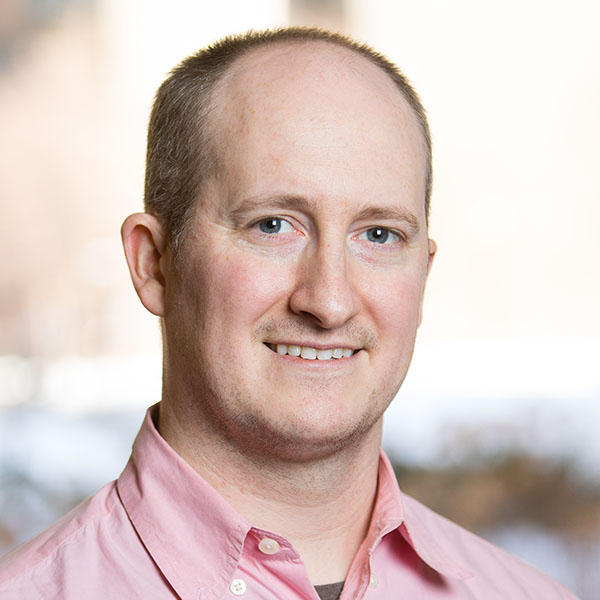
Christopher Thomas Ryan is an Associate Professor in the Operations and Logistics Division at the UBC Sauder School of Business. He holds a PhD and BA from UBC in Management Science and Mathematics, respectively. His research spans optimization theory, game theory, theoretical economics, video game design, and pedagogy for business education. He has held positions at the University of Chicago Booth School of Business and is affiliated with the Colibri Learning Foundation. Education: BA (Mathematics) and PhD (Management Science) from UBC; BA (Sociology and Economics) from University of Guelph. He has authored numerous textbooks and case studies, including works on research careers, operations management, and teaching methodologies. His work integrates human-centric approaches to operations and education systems. Research Interests include small business operations, education operations, theoretical economics, and the design of video games. He has published in top journals like Management Science, Econometrica, and Mathematical Programming. His grants include SSHRC and NSERC awards. Ryan advises students across multiple institutions and has mentored prominent faculty in marketing, operations, and MIS fields. Teaching focuses on core operations management for MBA programs and pedagogical innovation. He has developed cases on AI in education, early childhood development, and small business sustainability. Ryan’s work bridges academic research with practical applications in business and education sectors.
Eric F. Lock is an Associate Professor in the Division of Biostatistics & Health Data Science at the University of Minnesota's School of Public Health. He is also a Member of the Masonic Cancer Center (MCC) and has been at the University of Minnesota since 2014, after completing his PhD in Statistics from the University of North Carolina in 2012 and a postdoctoral fellowship in Statistical Genomics at Duke University in 2014. Lock's research focuses on developing methods for the analysis of multi-faceted high-dimensional data, particularly in "omics" fields such as genomics, metabolomics, and proteomics. His work emphasizes the integrated analysis of data from multiple sources (e.g., gene expression, metabolomics, imaging) or measured in multiple dimensions (e.g., multiple tissue types or body regions). He also specializes in exploratory factorization and clustering methods, and Bayesian nonparametric inference. His recent publications demonstrate significant contributions to tensor data imputation (BAMITA), matrix decomposition (EV-BIDIFAC), and methods for handling complex genomic data. His work bridges statistical theory with practical applications in molecular biology, addressing challenges in data integration across multiple biological measurement platforms. Delta Omega, Honorary Society in Public Health (2019) As an active researcher and educator, Lock serves on dissertation committees, including for Mykhaylo M. Malakhov who recently defended his PhD at the University of Minnesota School of Public Health. He is involved in organizing and participating in major conferences such as STATGEN 2025, demonstrating his leadership in the biostatistics community.
Nils-Christian Detering is an Associate Professor in the Department of Statistics & Applied Probability at the University of California, Santa Barbara (UCSB). He also serves as the Undergraduate Diversity, Equity, and Inclusion Officer. His research focuses on financial mathematics, probability theory, and their applications in systemic risk analysis, energy markets, and machine learning. Detering has contributed to understanding default contagion in financial systems, stochastic processes in energy derivatives, and neural network applications in functional data analysis. Research Interests : Financial systemic risk: Analyzing default contagion using random graphs and systemic stability metrics Infinite-dimensional stochastic analysis: Modeling energy markets via stochastic PDEs and forward curves Machine learning: Developing neural network frameworks for functional spaces and financial applications Teaching includes courses on stochastic processes, mathematical finance, and probability theory at both undergraduate and graduate levels. His work has been recognized with awards such as the Best Paper Award at the ACM International Conference on AI in Finance (2023). Key Publications address topics like reinforcement learning in banking networks, neural network calibration of energy curves, and integrated fire sales models. His research bridges theoretical probability with applied financial engineering challenges.
Alain Bensoussan is the Lars Magnus Ericsson Chair Professor of Operations Management at the University of Texas at Dallas and Director of the International Center for Decision and Risk Analysis. His work spans stochastic control, mathematical finance, and mean field games. He holds a PhD from the University of Paris (1969) and advanced degrees from École Polytechnique (1962) and École Nationale de la Statistique et de l’Administration Economique (1965). Research interests include inventory control under uncertainty, risk management frameworks, and applications of mean field theory to control problems. Recent work focuses on stochastic control in financial systems, machine learning integration with control theory, and optimal policies in dynamic environments. Notable awards: Legion d’Honneur (Officier), NASA Distinguished Public Service Medal, Member of French Academies of Sciences/Technology, and SIAM Charter Fellowship. Key grants: NSF-funded projects on mean field control theory (2016–2019) and mean field games (2023–present). Teaches advanced courses: Game Theory, Risk Analysis, Stochastic Dynamic Programming. His 2023–2025 publications emphasize theoretical advancements in stochastic control, mean field games, and machine learning applications. Ongoing work addresses infrastructure investment, wind farm optimization, and multi-agent system dynamics.
Andreas Kugi is the Scientific Director at the AIT Austrian Institute of Technology and a full professor of Complex Dynamical Systems at TU Wien (Vienna University of Technology) in the Faculty of Electrical Engineering and Information Technology, Institute of Automation and Control. He has held significant academic and leadership roles across Europe, including professorships at Saarland University and offers from TU Dresden and KIT. His research focuses on the modeling, control, and optimization of complex dynamical systems , with strong applications in mechatronics, robotics, and industrial automation . He has led major research centers such as the Christian Doppler Laboratory for Model-Based Process Control in the Steel Industry and the Center for Vision, Automation & Control at AIT. His work bridges theoretical control design and real-world industrial implementation. The recent publications reflect a consistent focus on nonlinear, hybrid, and distributed parameter systems , with applications in robotics, manufacturing, energy, and process industries. His research integrates advanced control theory with practical engineering challenges, emphasizing real-time optimization, robustness, and system efficiency. Scientific Awards: Mechatronic Systems Outstanding Investigator Award (IFAC, 2022) Goldene Stefan-Ehrenmedaille (OVE, 2023) 16 best paper awards Andreas Kugi has supervised over 50 completed PhD dissertations and has been deeply involved in research leadership, including serving as Editor-in-Chief of Control Engineering Practice (2010–2017) and Vice President of the OVE Austrian Electrotechnical Association (2017–2023). He has secured and led numerous research grants, particularly through industrial collaborations in automation and process control. He leads and contributes to major research initiatives, including the Center for Vision, Automation & Control at AIT and the Christian Doppler Laboratory , fostering interdisciplinary teams focused on industrial digitalization and smart systems.
Dr. Tanushree Roy serves as an Assistant Professor in the Department of Mechanical Engineering at Texas Tech University's Whitacre College of Engineering and is an Affiliate Faculty member at the National Wind Institute. Her research pioneers resilient human-centric smart city infrastructures through the integration of control theory, mathematical modeling, and machine learning to address critical challenges in safety, security, and resource optimization for urban systems. Her academic foundation includes: Ph.D. in Mechanical Engineering from The Pennsylvania State University (2022) M.S. in Mathematics from University of Central Florida (2015) M.E. in Electrical Engineering from Indian Institutes of Engineering Science and Technology, India (2011) B.Tech in Applied Electronics and Instrumentation from Maulana Abul Kalam Azad University of Technology, India (2009) Dr. Roy's research centers on cybersecurity , fault diagnostics , and socio-technical systems with specialized applications in smart transportation networks and battery energy storage systems. She develops innovative frameworks that merge human-centric sensing with technical measurements to combat cyberattacks and physical faults in cyber-physical-social systems, emphasizing safety-critical resilience for urban citizens. Her methodology uniquely combines model-based control with data-driven machine learning to address challenges like social data integrity, human behavior modeling, and multi-scale anomaly characterization. Analysis of her 15 most recent publications (2021-2025) reveals dominant trends in cyberattack detection for connected vehicles, thermal fault tolerance in battery systems, and socio-technical traffic modeling. Key technical approaches include Koopman operator theory for secure estimation, control barrier functions for safety certification, and redundancy-based data fusion techniques. These works consistently bridge theoretical control systems with practical smart city implementation, demonstrating strong interdisciplinary connections between transportation engineering, energy systems, and cybersecurity. No scientific awards are documented in the provided information. Dr. Roy actively mentors three PhD students—Sanchita Ghosh (since 2022), Faysal Ahamed, and Soumyoraj Mallick (both since 2024)—alongside undergraduate researcher Mercedes Hernandez. Her research is executed through the Smart Human-centric Automation Resilience (SHARE) Lab, which has secured projects including the secure autonomous mobility testbed and participates in workforce development via Texas Tech's Engineering Research Internship Experience (ERIE) program for high school students. The SHARE Lab operates at the intersection of transportation and energy systems, maintaining two primary research thrusts: resilient human-centric transportation networks and safeguarding battery energy storage infrastructure. Current projects include SUMO-based cyberattack validation for connected vehicle platoons, self-learning voltage estimation under sensor attacks, and thermal fault-tolerant battery management. The lab maintains active collaborations with national conferences (ACC, CCTA) and industry partners to advance real-world implementation of resilient smart city technologies.
Christa Cuchiero is a Professor at the Department of Statistics and Operations Research, Faculty of Business, Economics and Statistics, University of Vienna. Her research spans Mathematical Finance, Stochastic Processes, and Machine Learning applications in finance. She has over 48 publications, including recent work on signature-based models for SPX/VIX options, polynomial McKean-Vlasov SDEs, and infinite-dimensional Wishart processes. Her projects include 'Dynamic Uncertainty Modeling in Finance' and a long-term study on 'Universelle Strukturen in Finanzmathematik' (2020–2028). Research Interests: Signature methods for financial modeling Affine and polynomial processes Machine learning in finance Measure-valued stochastic differential equations Volterra equations and rough path theory Portfolio optimization and risk management Scientific Awards: Bruti-Liberati Visiting Fellowship (2018) Fellow at the Center for Advanced Study (CAS), Norwegian Academy of Science and Letters (2024) ETH Medal for Ph.D. thesis (2012) Recent Publications (2023–2025) focus on signature methods, stochastic portfolio theory, energy markets, and robust calibration techniques. Her work integrates advanced mathematical theory with practical financial applications, emphasizing nonlinear SPDEs, polynomial models, and machine learning frameworks.
Oleksandr Tsymbaliuk is an Associate Professor of Mathematics at Purdue University, specializing in Representation Theory, Quantum Algebra, and Integrable Systems. His research focuses on quantum affine and toroidal algebras, shuffle algebras, Yangians, and their connections to algebraic geometry and mathematical physics. He has held positions at Yale University and the Simons Center for Geometry and Physics. Tsymbaliuk earned his PhD from MIT in 2014 and has been supported by NSF grants DMS-2302661 and others. His research interests include Cherednik algebras, Coulomb branches, and Toda systems. He has mentored students in programs like PRIMES and Yulia’s Dream, leading to collaborative publications. Notable contributions include works on Lyndon words, R-matrices, and orthogonal bases in quantum groups. Teaching roles span courses such as Infinite-Dimensional Lie Algebras and Linear Algebra at Purdue. He actively participates in academic conferences and seminars, with notable talks at Temple University and Northeastern University. Grants and collaborations include NSF funding and partnerships with researchers like Michael Finkelberg and Andrei Neguț. His work bridges algebra, geometry, and physics, emphasizing integrable systems and categorification.
Jan Rosinski is a Professor in the Department of Mathematics at the University of Tennessee. He holds a Ph.D. from Wrocław University (Poland). His research focuses on Probability and Stochastic Processes, particularly Stable and Infinitely Divisible Processes, Stochastic Analysis, and High-Dimensional Probability. He has held editorial roles at journals such as Probability and Mathematical Statistics and Discussiones Mathematicae - Probability and Statistics . His service includes managing editor roles and editorial board memberships across multiple international journals. Rosinski has contributed extensively to stochastic processes, Lévy processes, and infinitely divisible distributions, with a focus on theoretical developments and applications. Education: Ph.D., Wrocław University, Poland. Research Interests: Probability Theory, Stochastic Processes, Stable Processes, Infinite Divisibility, and High-Dimensional Probability. His work explores spectral representations, stochastic integrals, and applications in theoretical and applied probability. Editorial Contributions: Managing Editor of Probability and Mathematical Statistics (2008–present), and Editorial Board Member of Discussiones Mathematicae (2000–present), among others.
Jesse Wolfson is an Associate Professor and Vice-Chair for Inclusive Excellence in the Department of Mathematics at the University of California, Irvine. His research focuses on the interplay of arithmetic, geometry, and topology, with notable contributions to arithmetic topology, resolvent degree, and algebraic geometry. He co-directs the Southern California Geometry and Topology Center (SCGTC), an NSF Research Training Group (RTG) program actively recruiting graduate students in geometry and topology. He holds a PhD and has expertise spanning algebraic structures, homological algebra, and interdisciplinary applications such as fractals in music. His work bridges pure mathematics with educational outreach, including public lectures and collaborations with institutions like St. John’s College, Santa Fe. His email is wolfson@uci.edu , and he maintains an active research blog detailing his projects and collaborations. Wolfson’s research emphasizes foundational questions in mathematics, including Hilbert’s 13th problem and the epistemic role of proofs in AI. His recent talks and articles explore topics like prismatic cohomology, modular functions, and geometric gauge theories, reflecting his commitment to advancing both theoretical and applied mathematical frontiers.
Stephan Stolz is a Professor in the Department of Mathematics at the University of Notre Dame, affiliated with the College of Science. His research focuses on geometric and algebraic topology, differential geometry, and questions related to positive scalar curvature and moduli spaces. He holds a Vardiplom from the University of Bielefeld (1975), a Diplom from the University of Bonn (1979), and a Ph.D. from Mainz University (1984). Stolz has made significant contributions to understanding the interplay between topology and geometry, particularly in the classification of manifolds with specific curvature properties. His work often bridges algebraic topology with geometric analysis, including studies on elliptic cohomology, supersymmetric field theories, and the Gromov-Lawson conjecture. He has organized initiatives like the RTG: Geometry and Topology (2016) and contributed to conferences such as the Topology and Field Theories summer school (2012). His research outputs span over four decades, addressing topics like spinor bundles on loop spaces, factorization algebras, and the relationship between differential forms and supersymmetric field theories. While no formal awards are listed, his extensive publication record reflects sustained academic impact in his fields. Stolz collaborates actively with institutions like UC San Diego and has supervised projects involving algebraic structures in quantum field theories. His office is located in 166A Hurley Bldg, and he remains a key figure in geometric topology and related mathematical physics areas.