Funda Yildirim is an Assistant Professor at the Digital Society Institute and the Cognition, Data and Education department, focusing on interdisciplinary research at the intersection of technology, cognition, and societal impact. With an ORCID ID of 0000-0003-4310-809X and an h-index of 41, her work spans virtual reality, cognitive neuroscience, and machine learning. She actively contributes to global initiatives like the UN Sustainable Development Goals (SDGs) through expertise in environmental resilience and human-AI interaction. Co-founder of the Open Behavioral Architecture network Chair in the European Innovation Council (2022) Chair in European Cooperation in Science and Technology (COST) (2021–2025) Her research explores how virtual reality and AI can address misinformation, sensory perception anomalies, and neurological diagnostics. Recent publications highlight her work on: VR-based climate change education Emotion-specific attention patterns Sensory integration in auditory perception AI-driven epilepsy diagnosis Human-robot interaction dynamics
Zhou Fan is an Associate Professor in the Department of Statistics and Data Science at Yale University, specializing in mathematical statistics, probability theory, and computational algorithms with applications in statistical genetics and computational biology. Education: Ph.D. in Statistics, Stanford University, 2018 His research spans Random matrices and free probability , Statistical physics and inference , High-dimensional statistics and machine learning , and Applications in genetics and computational biology . He develops theoretical frameworks for complex data analysis, focusing on inferential problems in scientific contexts through advanced computational methods. Recent publications demonstrate leadership in Approximate Message Passing algorithms, empirical Bayes methods, and group orbit estimation, with significant contributions to high-dimensional statistics and biological applications. His work bridges statistical theory with practical computational solutions for modern data challenges. As Co-Director of Graduate Studies, Professor Fan provides academic leadership for the department's graduate program while teaching advanced courses in high-dimensional probability, statistical theory, and random matrix applications.
Adam Moore is a Senior Lecturer in Psychology at the University of Edinburgh's School of Philosophy, Psychology and Language Sciences. He holds office in the Psychology Building at 7 George Square, Edinburgh. His teaching includes undergraduate courses on Thinking and Reasoning and postgraduate modules on statistics and methodology with R. He actively supervises PhD students in areas like moral psychology and political behavior. Moore's research examines the intersection of morality, power, and politics, focusing on moral judgment consistency, political identity biases, and self-serving moral disengagement. Methodologically, he integrates computational modeling, neuroimaging, and advanced statistical analyses. Recent work explores AI's role in moral decision-making, political polarization dynamics, and empathy's cognitive foundations. His publication trends reflect interdisciplinary approaches to moral psychology, with emphasis on agent-based modeling, Bayesian analysis, and social neuroscience. While no specific awards are listed, his extensive supervision record and diverse grant participation (implied through advisor roles) highlight sustained academic engagement. He advises on honors dissertations and collaborates on topics like social identity's impact on risk-taking at mass gatherings.
Agustina Paglayan is an Associate Professor in the Department of Political Science and the School of Global Policy and Strategy at UC San Diego. She is also a non-resident fellow at the Center for Global Development and affiliated with the Policy Design and Evaluation Lab (PDEL). Her research focuses on the political economy of education and human capital, exploring how political systems influence education policies conducive to economic development. Education: PhD in Political Science, Stanford University MA in Education Policy, Stanford University MPP, Georgetown University Licenciatura en Economia, Universidad de San Andres, Argentina Research Interests: Political economy of education and human capital Democracy vs. authoritarianism dynamics in education systems Historical origins of mass education Policy design and evaluation Notable Work: Her 2024 book Raised to Obey: The Rise and Spread of Mass Education challenges conventional views on education's origins, arguing that mass schooling emerged as a tool for political control rather than democratic ideals or industrialization needs. This work has been featured in media outlets like The Economist and NPR. Affiliations & Activities: Consultant for UN, World Bank, and Inter-American Development Bank Founding President (2020–21) of the APSA Education Politics and Policy Section Teaches courses on political institutions, American politics, and quantitative methods
Sam Cumming is a Professor in the Department of Philosophy at the University of California, Los Angeles. His research spans philosophy of language, semantics, and the philosophical analysis of film and narrative structures. With a Ph.D. from Rutgers University (2007), he has established himself as a significant contributor to contemporary debates in linguistic reference, truth conditions, and nominalist approaches to semantics. Dr. Cumming's research interests focus on foundational questions in the philosophy of language, particularly concerning reference, truth, and meaning. His work examines how language connects to reality through semantic content, with special attention to problematic cases like fictional entities, indefinite descriptions, and reportative constructions. He has made notable contributions to understanding the semantics of film, exploring how cinematic techniques create coherent narrative viewpoints and convey meaning through visual representation. His interdisciplinary approach bridges analytic philosophy with cognitive science and film studies, revealing how linguistic structures parallel audiovisual cognition in storytelling. Analysis of Cumming's publication record reveals a consistent trajectory from formal semantic theory toward broader applications in narrative and film. His early work focused on technical aspects of reference and indefinites, while more recent publications demonstrate increasing engagement with moral philosophy in narrative contexts and the cognitive foundations of film perception. A unifying thread throughout his career is the examination of how meaning is constructed across different representational systems, whether linguistic or audiovisual. His articles frequently address the relationship between semantic content and cognitive processing, suggesting an underlying interest in how humans make sense of complex representational structures. Dr. Cumming actively mentors graduate students, as evidenced by his students Gabe, Rory, and Koby Leff who have presented research at academic conferences. His advising appears focused on the intersection of philosophy of language with film and narrative studies, guiding students through technically rigorous analyses of cinematic representation and narrative structure. While specific grant information isn't provided in the available materials, his sustained publication record in prestigious journals suggests successful research funding throughout his career.
Charles Lassiter is an Associate Professor in the Department of Philosophy at Gonzaga University, College of Arts and Sciences. He holds a Ph.D. from Fordham University (2013) and specializes in philosophy of mind and language, with strong interdisciplinary ties to cognitive science, ethics, and epistemology. Research Interests: His work centers on 4E cognition (embodied, embedded, enactive, extended), causal powers realism, extended mind, linguistic pragmatics, perlocutionary acts, implicit bias, and machine autonomy. He integrates Aristotelian metaphysics with empirical findings in cognitive science to develop non-representational models of mind and language. Recent Research Trends: His recent publications emphasize ontological foundations for extended cognition, particularly advocating for causal powers realism over new mechanism. He explores arational belief convergence in social epistemology, the epistemic status of beliefs from sham authorities, and the social dimensions of language use through simplexity and distributed cognition. His work on robot flirting applies Strawsonian reactive attitudes to machine autonomy. Email: lassiter@gonzaga.edu Phone: (509) 313-6761 Scientific Contributions: Co-developer of a powers-based ontology for encultured minds with Joseph Vukov. Collaborator with Aaron Kagan on the coupling-constitution fallacy and extended cognition. Pioneer in applying ecological and affordance-based models to perlocutionary speech acts. Advocate for environmental interventions to mitigate epistemic harms of implicit bias. Teaching & Service: He teaches ethics, symbolic logic, philosophy of mind, philosophy of language, and theory of knowledge. He serves as the administrator of the logic requirement for the philosophy graduate program.
Markus Paulus is a Professor of Developmental Psychology and Educational Psychology of Early Childhood at the Ludwig Maximilian University of Munich, where he has held a professorship since 2013. His research focuses on the development of social understanding, particularly how humans come to recognize that others have individual goals, desires, and beliefs different from their own. He investigates the neurocognitive mechanisms underlying social cognition and how these capacities develop from early childhood through adulthood. Paulus's research interests center on the development of social understanding, empathy, morality, and prosocial behavior in early childhood. His work examines how children develop the ability to understand others' mental states, how this relates to their own action capabilities, and how neurocognitive mechanisms support the emergence of prosocial behaviors like helping, sharing, and comforting. He is particularly interested in the interplay between action experience and inferential reasoning in social understanding. Analysis of his recent publications reveals a strong focus on moral development, with particular attention to children's moral self-concept, resource allocation, and normative understanding. His work frequently examines how children develop concepts of fairness, justice, and prosocial behavior, often using cross-cultural comparisons and neurocognitive methods. A significant portion of his recent work explores the relationship between moral identity and behavior in early childhood. 2013 George Butterworth Young Scientist Award of the European Association for Developmental Psychology (EADP) 2016 Distinguished Early Career Award, International Conference on Infant Studies (ICIS) 2017 Understanding Human Cognition Scholar Award, James S. McDonnell Foundation Professor Paulus has supervised numerous students, including current GSN student Nina-Alisa Hinz. His research has been supported by prestigious funding sources, including the James S. McDonnell Foundation. In the 2024-2025 academic year, he is leading a CAS Research Group on the Ontogeny of Normativity, investigating how normative attitudes emerge during human development. His work bridges multiple disciplines, connecting developmental psychology with neuroscience, education, and moral philosophy to understand the foundations of human social cognition.
Peter Martin Paschke is a Senior Researcher at the Department of Comparative Linguistic and Cultural Studies , Ca' Foscari University of Venice. His research focuses on German as a Foreign Language (DaF) , particularly in the areas of L2 pronunciation , foreign accent perception , and language teaching methodologies . Position: Researcher Department: Comparative Linguistic and Cultural Studies Key Research Areas: Applied Linguistics, Second Language Acquisition, Pronunciation Studies Paschke's recent publications analyze phonetic challenges in Italian learners of German , including studies on prosody , focus accent placement , and cross-linguistic comparisons . He frequently collaborates with scholars like David Newbold and Ignacio Arroyo Hernández, contributing to edited volumes and journal special issues on language acquisition and teaching. His academic work spans over four decades, with notable contributions to German-Italian linguistic contrasts , didactic resources , and empirical studies on language learners . While no specific awards or student supervision details are mentioned in the provided texts, his publications highlight expertise in language teaching , phonetic analysis , and cross-cultural communication .
Dr. Elisa Back is an Associate Professor in the Department of Psychology at Kingston University, within the School of Law, Social and Behavioural Sciences. She directs the Developing Minds Lab and is a Chartered Psychologist (CPsychol) affiliated with the British Psychological Society. Her academic credentials include a First Class BSc in Psychology from Staffordshire University (2002) and a PhD in Psychology from the University of Nottingham (2006). Her research program examines social-cognitive development across neurotypical and neurodiverse populations, with specialized focus on autism spectrum disorder. Current investigations utilize eye-tracking and behavioral methods to understand how autistic individuals perceive and interpret social information, aiming to translate findings into real-world applications for daily functioning and support strategies. Publications (2019-2023) demonstrate sustained focus on autism interventions, neurodevelopmental conditions like Williams syndrome, and mental state attribution mechanisms. Recent work analyzes predictors of treatment utilization in autism families while methodological studies explore how perceptual variations influence social cognition assessments across populations. Awards and Honors: Neil O'Connor Prize (2007): Awarded by the British Psychological Society's Developmental Section for research excellence in developmental disorders She leads the Developing Minds Lab, conducting developmental psychology research through community engagement initiatives like Young Scientist Days. The lab disseminates updates via its Facebook presence. Between 2012-2018, she contributed to the British Psychological Society's Developmental Section committee, influencing national research standards and priorities.
Victoria Escandell-Vidal is a Full Professor of Linguistics at the Complutense University of Madrid and former Full Professor at the National University of Distance Education (UNED) since 2007. Her research focuses on the grammar/semantics/pragmatics interface , particularly in Spanish, Catalan, and Italian, covering topics like interrogative sentences , copular constructions , and evidentiality . She has served as Editor-in-chief of Revista Española de Lingüística and co-editor of the AKAL Linguistics book series . Research Focus: Procedural Meaning, Information Structure, Social Cognition, L2 Acquisition International Engagement: Invited professorial roles at universities in Argentina, Belgium, Germany, Italy, Sweden, and the Netherlands Scientific Recognition: Emile Lorand Chair (2014) Humanistisk Samhällsvetenskapliga Forskningsrådet Award (1996) Extraordinary Doctorate & Degree Awards (Universidad Complutense de Madrid) Publications : 123+ academic works including 12 Q1 journal articles and 20 publications with top 10 international publishers in the SPI ranking. Her recent work examines prosodic marking , verum focus , and tautological constructions across languages.
Johan Strandberg is an Associate Professor in the Department of Statistics at the Umeå School of Business, Economics and Statistics (USBE), Umeå University. His research focuses on functional data analysis, spatial statistics, and their applications in biomechanics and sports medicine. He specializes in analyzing complex data structures such as electroencephalography (EEG) signals and kinematic curves to study movement-related anxiety, sensorimotor control following injuries, and long-term outcomes of anterior cruciate ligament (ACL) ruptures. Key research areas include: Functional data analysis methodologies Nonparametric statistical clustering techniques EEG-based evaluation of movement-related fear Biomechanical analysis of human movement Climate reconstruction using functional kriging Strandberg is affiliated with the Functional Data Analysis and Spatial Statistics Group and the U-Motion Laboratory Research Group. His recent projects include investigating sensorimotor control post-ACL injury and exploring functional data approaches to human movement assessment. He has collaborated on studies involving ACL injury rehabilitation, EEG applications in sports medicine, and statistical modeling of spatial-temporal processes. His research outputs emphasize methodological advancements in handling dependent functional data, with applications ranging from clinical biomechanics to environmental science. He has contributed to over 10 peer-reviewed articles, focusing on inferential frameworks, clustering methods, and functional kriging techniques.
Shira Elqayam is Professor of Cognitive Psychology & Cognitive Science at De Montfort University, affiliated with the School of Applied Social Sciences within the Faculty of Health and Life Sciences. Her research critically examines the role of normativity in human reasoning and decision-making, advocating for a descriptivist approach over normativist frameworks. Her research interests center on higher cognitive processes, particularly reasoning, decision-making, rationality, dual-process theories, disjunctive thinking, and the linguistic aspects of inference. A major focus is the critique of normativism—the idea that human cognition should be judged against normative standards—highlighting methodological flaws such as the 'is-ought' inference. Her empirical work explores how people infer normative conclusions from descriptive premises, influenced by causal links and outcome valuations. Shira Elqayam’s recent publications reveal a strong focus on the interplay between logic, probability, and human judgment. Her work spans conditional reasoning, moral cognition, clinical decision-making, and the psychology of rationality. Trends in her research include challenging normative models in psychology, developing alternative theories like Grounded Rationality, and exploring the mechanisms behind inferential connections in conditionals. Keynote speaker at the Sixth Annual Meeting of the New Frameworks of Rationality Program (2017) Associate Editor, Frontiers in Psychology: Cognitive Science and Theoretical and Philosophical Psychology Guest editor for special issues in Thinking & Reasoning and Frontiers in Cognitive Science Regular and ad hoc reviewer for leading journals including Cognition , Behavioral and Brain Sciences , and Synthese She has secured significant research funding, including a Leverhulme Trust grant on the generative capacity of norms and grants from the Experimental Psychology Society and EURO-XPRAG. She supervises PhD students, including Ashleigh Jeffries, and collaborates with prominent scholars such as David Over, Jonathan Evans, and Valerie Thompson. She has organized international workshops and convened symposia at major conferences, contributing actively to the global academic community in cognitive science and psychology.
Kevin D. Wu serves as Associate Professor of Clinical Psychology in the Department of Psychology at Northern Illinois University, where he directs the NIU Anxiety and Obsessive-Compulsive Disorders Lab. He teaches undergraduate courses including PSYC 316 (Introduction to Psychopathology) and PSYC 413 (Clinical Laboratory), alongside graduate courses such as PSYC 641 (Psychopathology), PSYC 642 (Personality Assessment), and PSYC 654 (Clinical Practicum). Dr. Wu earned his Ph.D. from the University of Iowa in 2004, establishing his research foundation in dimensional psychopathology models. His educational trajectory reflects specialized training in clinical assessment and experimental methodology. His research program fundamentally investigates psychopathology as continuous dimensions rather than discrete categories, with obsessive-compulsive disorder (OCD) as the primary focus. Key research thrusts include: Cognitive mechanisms underlying OCD symptoms through laboratory-based behavioral tasks Cross-cultural equivalence in psychopathology assessment across diverse populations Transdiagnostic processes like intolerance of uncertainty and experiential avoidance Experimental modification of dysfunctional cognitive interpretations Current projects specifically target cognitive processes in OCD and validation of assessment instruments across racial groups. Analysis of Dr. Wu's publication record (2013-2025) reveals consistent methodological evolution from questionnaire-based studies to sophisticated experimental paradigms. His work demonstrates growing emphasis on diversity factors in psychopathology assessment while maintaining core focus on OCD symptom structures. The research portfolio shows strong integration of cognitive models with clinical applications, particularly in behavioral approach tasks and cognitive bias modification. Dr. Wu has secured research funding including a Dissertation Grant as Principal Investigator from the University of Minnesota Press: Minnesota Assessment Instruments (2001-2003) for "Obsessive-Compulsive Disorder: Symptom structure and relations to personality assessed with the SNAP." He mentors lab members conducting projects spanning social anxiety, depression rumination, mindfulness, pathological gambling, thought-action fusion, perfectionism, and hoarding. The NIU Anxiety and Obsessive-Compulsive Disorders Lab operates from PM 311 Education, utilizing dual-method approaches combining self-report questionnaires with experimental behavioral tasks to investigate OCD mechanisms. The lab maintains active collaborations reflected in multi-author publications across clinical psychology journals.
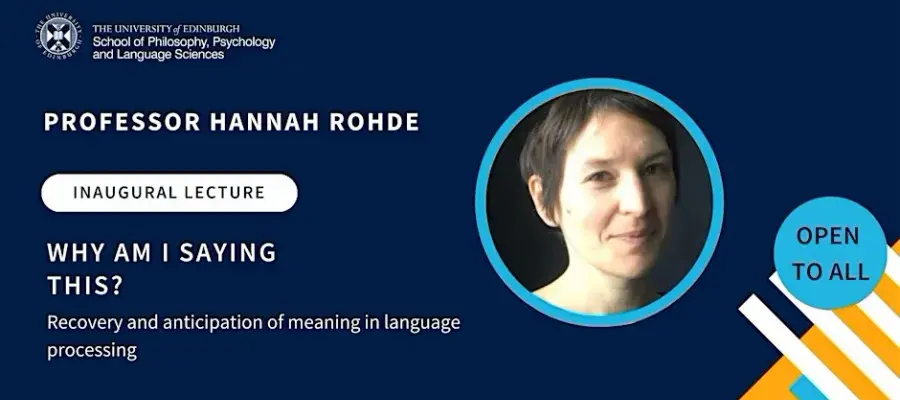
Professor Hannah Rohde is a faculty member at the University of Edinburgh within the College of Arts, Humanities and Social Sciences . Her research focuses on psycholinguistics , language processing , and pragmatic considerations in discourse coherence and informativity. Research Interests : Discourse-level pragmatic influences on language processing Speaker-listener alignment in cooperative communication Contextual prediction and lexical anticipation Publications : Recent work includes studies on discourse markers, informativity expectations, and cognitive strategies in referential choice. Teaching & Supervision : No explicit details provided in the scraped text.
Dr. Ziyang Lyu is a Lecturer (tenure track assistant professor) in Statistics at the School of Mathematics and Statistics, UNSW Sydney. He completed his Ph.D. in Statistics at the Australian National University in 2020, followed by postdoctoral research at the University of Queensland (2020-2021) and University of New South Wales (2021-2024). His research spans asymptotic analysis, mixed models with crossed random effects, finite Gaussian mixture models, and machine learning from a statistical perspective with emphasis on semi-supervised learning. Education: Ph.D. in Statistics, Australian National University (2020) Previous Positions: Postdoctoral Research Fellow at University of Queensland (2020-2021), University of New South Wales (2021-2024) His scholarly contributions focus on: Asymptotic theory for mixed effects models Crossed random effects modeling Finite mixture model analysis Statistical approaches to semi-supervised learning Missing data mechanisms in Gaussian mixture models Research trends from his 12 publications (2018-2025) show sustained focus on asymptotic theory, mixed effects modeling, and statistical machine learning with applications to high-dimensional data analysis. His methodological work bridges theoretical statistics with practical implementation in R software. Teaching responsibilities include: 2025 Course Convenor for Data Management for Statistical Analysis and Probability/Stochastic Processes 2024 Course Convenor for Statistics Fundamentals and Applied Regression Analysis