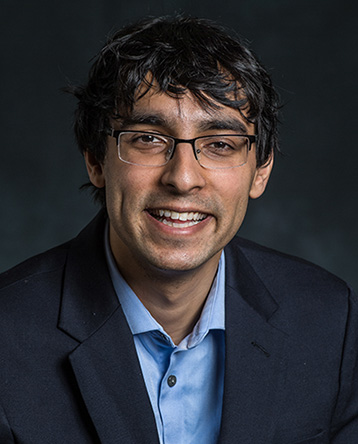
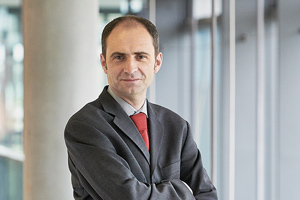
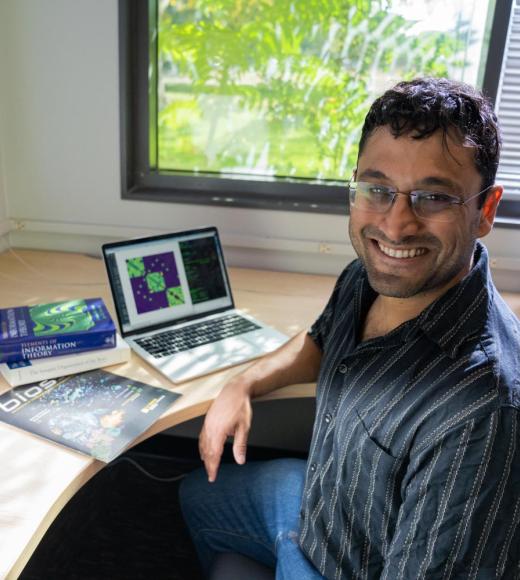
Tunye Qiu is a recent PhD graduate in Economics from the Crawford School of Public Policy at the Australian National University (ANU) . He is currently on the job market and holds roles as a Senior Tutor and Associate Lecturer in the Research School of Economics (RSE) at ANU, where he has taught courses in microeconomics, macroeconomics, game theory, and policy impact evaluation since 2021. He also serves as the Program Manager of the China Economy Program and an Assistant Editor for the Journal of Chinese Economic and Foreign Trade Studies. Education : PhD in Economics (2024) at Crawford School, ANU; BEcon (ANU); MEcon (ANU). Research Interests : His work focuses on labor economics, urban economics, demographic economics, and development economics. He explores causal impacts of government policies on China’s housing market, fertility rates, land supply behavior, and housing demand, alongside international trade, labor markets in South Pacific countries, and educational outcomes in Australia. Teaching & Roles : Senior Tutor, Microeconomics 1 (2021-2024), Macroeconomics 1 (2024), Business Economics (2024), Strategic Thinking (2021-2023) at RSE, ANU. Teaching Quantitative Policy Impact Evaluation (2022-2024), Issues in Development Policy (2023-2024), and The Economic Way of Thinking (2023) at the Crawford School. Research Trends : His publications address housing affordability (2024), marriage delay (2024), policy impacts on housing prices (2024), land supply dynamics (2024), trade dynamics with China (2022), and migration patterns in China (2020). These works integrate causal inference methods and policy evaluation frameworks. Email : tunye.qiu@anu.edu.au
Akshaya Jha is an Associate Professor of Economics and Public Policy at Carnegie Mellon University’s Heinz College of Information Systems and Public Policy , as well as a Faculty Research Fellow at the National Bureau of Economic Research (NBER) . His work combines economic modeling with causal inference to analyze energy and environmental policy impacts on electricity markets. Education: Ph.D. in Economics, Stanford University B.S. in Economics and Statistics, Carnegie Mellon University Research Interests span energy economics , environmental economics , industrial organization , and public policy , focusing on quantifying economic and environmental trade-offs in electricity supply policies. Recent work includes financial trading in California’s electricity market, Germany’s nuclear phase-out, rooftop solar growth in Western Australia, and electricity blackout determinants in India. Scientific Contributions appear in American Economic Review , Management Science , and PNAS . Article trends reveal expertise in regulatory distortions , market design , environmental externalities , and policy communication . Scientific Awards: Hicks-Tinbergen Award (best paper in Journal of the European Economic Association ) Heinz College Martcia Wade Teaching Award (2023) USAEE Young Professional Research Award (2021)
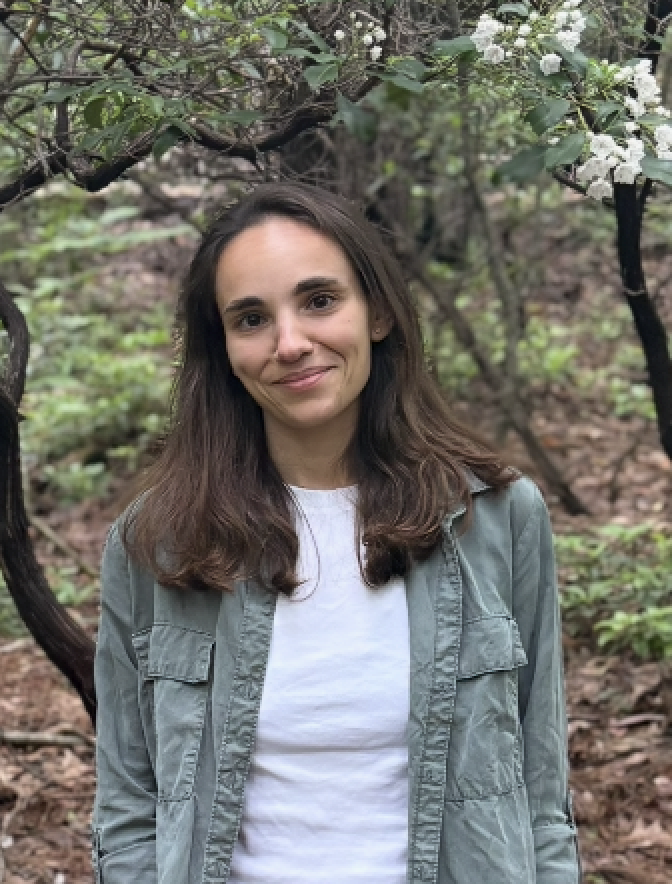
Anna Weissman is a Political Scientist completing her PhD at the University of California, Berkeley in 2025. She will join the Center for the Study of Democratic Politics at Princeton University as a Postdoctoral Fellow starting September 2025. Her academic home is within the Department of Political Science in the College of Letters and Science at UC Berkeley. PhD, Political Science, University of California, Berkeley (2025) B.A., Political Science, Philosophy, and German, Tufts University Weissman's research focuses on representation, local political economy, and political geography, with specific attention to who holds power in American local governments and how this drives policymaking. Her work examines municipal officials' embeddedness in their communities and the implications for policy outcomes, particularly relating to land use, with special interest in small-town and rural America. Another significant branch of her research investigates attitudes about descriptive representation at the national level. She employs diverse methodological approaches including causal inference designs for observational data, text analysis, and original surveys and survey experiments. Her publication record shows a strong focus on representation and local politics, with articles appearing in top political science journals including the Journal of Politics and the Journal of Political Institutions and Political Economy. Her work demonstrates consistent attention to how representation functions across different political contexts and scales. Research Associate, Political Science Department, MIT (prior to graduate school) Weissman has served as a Graduate Student Instructor and Tutor at UC Berkeley for multiple courses including Decision Analysis and Quant Methods, Politics of Public Policy, Introduction to American Politics, and research methods courses. Her teaching experience spans both graduate and undergraduate levels, demonstrating her commitment to political science education. Her research portfolio includes significant work on local government dynamics, representation, and political behavior, with several publications in prestigious journals and multiple works in progress examining the relationship between place-based attachment and political attitudes.
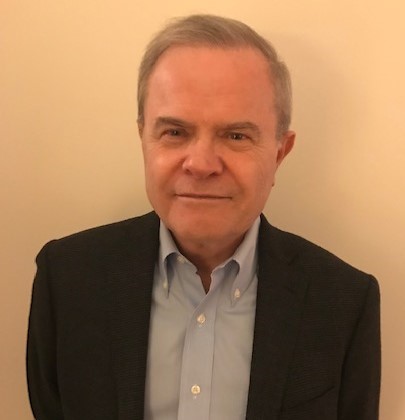
Professor Michael Evans is a faculty member at the University of Toronto , affiliated with the Department of Statistical Sciences (St. George campus) and the Department of Computer and Mathematical Sciences at the Scarborough Campus . His research focuses on statistical inference , Bayesian methods , and measuring statistical evidence through his work on the relative belief ratio . He has contributed to ROC analysis , linear models , and stochastic processes , with recent work addressing biases in statistical reasoning and connections to frequentist criteria. Research Themes : Defining and measuring statistical evidence Bayesian inference and prior-data conflict resolution Monte Carlo methods and stochastic process theory Recent Publications explore statistical evidence in scientific practice, medical diagnostics, and Bayesian frameworks. His 2024 Encyclopedia article critiques frequentist criteria, while the 2022 Entropy paper introduces relative belief in ROC analysis. Awards : ASA Fellow (American Statistical Association) Teaching : He teaches advanced courses like STAC62 (Probability and Stochastic Processes) and STAC63 (Probability and Stochastic Processes II), emphasizing theoretical rigor and applications in fields like mathematical finance and machine learning .
Jennifer Pfeifer is a Professor at the University of Oregon and co-Director of the Center for Translational Neuroscience within the College of Arts and Sciences, Department of Psychology. Her research spans developmental cognitive neuroscience, focusing on adolescence, puberty, self-concept, social cognition, emotion, motivation, and mental health. Her work integrates neuroimaging with behavioral and hormonal data to examine normative and atypical brain development, particularly how social processes and early adversity influence neurobiological models of adolescence. She has secured funding from NIMH, NICHD, NIDA, NSF, and other institutions. Recent publications analyze adolescent social reorientation, pubertal timing, self-disclosure mechanisms, and affective reactivity. Awards and student lists are not explicitly mentioned in the provided text. Her lab emphasizes translational neuroscience applications for mental health prevention and well-being promotion across the lifespan.
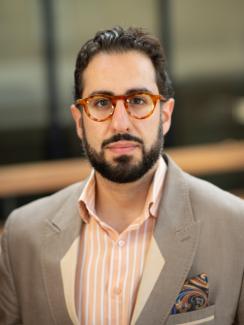
Assistant Professor of Sociology at the University of California, Santa Barbara, Masoud Movahed conducts research at the intersection of social stratification, economic sociology, and political sociology using advanced computational and quantitative methodologies. Education: Ph.D., University of Wisconsin–Madison M.A., New York University Postdoctoral Fellowship, University of Pennsylvania His research program integrates spatial econometrics, machine learning (including unsupervised clustering and supervised algorithms), and comparative-historical methods like event structure analysis to investigate income/wealth inequality across national contexts and within the United States. Recent work examines neighborhood dynamics related to gun violence, intergenerational mobility through racial-spatial lenses, and the relationship between political power structures and economic inequality. Publications appear in leading journals including Social Science Research , Journal of Industrial Relations , and Spatial Demography , with additional commentary featured in Foreign Affairs , World Economic Forum , and Al Jazeera . His methodological approach consistently bridges computational rigor with sociological theory. Scientific Awards: Mathematical Sociology section award, American Sociological Association Political Economy of the World-System Section award, American Sociological Association Sociology of Development section award, American Sociological Association Sabina Avdagic Early Career Scholar Prize, Society for the Advancement of Socio-Economics Dr. Movahed teaches advanced statistics courses including Social Statistics and Capstone in Data Analysis, while directing collaborative projects involving survey experiments and computational text analysis. His research program examines institutional determinants of inequality through both U.S.-focused and cross-national comparative frameworks.
Amol Deshpande is a Professor in the Department of Electrical Engineering and Computer Sciences at the University of California, Berkeley, College of Engineering. With over 160 publications spanning from 2000 to 2025, his research has significantly impacted the database systems community. His work bridges theoretical foundations with practical systems, evidenced by numerous publications in top-tier venues including SIGMOD, VLDB, and ICDE. Professor Deshpande's research focuses on database systems, with particular expertise in graph databases, data management, probabilistic databases, query optimization, and data provenance. His work addresses fundamental challenges in managing complex data, including efficient graph analytics, dataset versioning, streaming data processing, and privacy-preserving data management. Recent research directions include entity-relationship abstractions beyond traditional relations, standalone catalog engines for large data systems, and graph theoretical approaches to dataset versioning. His publication trends show a consistent focus on evolving database technologies, with early work on probabilistic databases and query optimization, transitioning to graph analytics and data provenance, and more recently addressing modern challenges in data cataloging, privacy-first data management, and serverless stream processing. His research spans both theoretical contributions (e.g., approximation algorithms for stochastic optimization) and practical systems building (e.g., RStore, TreeCat). Professor Deshpande has mentored numerous PhD students who have become active researchers in the database community, including Hui Miao, Souvik Bhattacherjee, and Konstantinos Xirogiannopoulos. His collaborative work spans across institutions, with frequent collaborations with researchers from MIT, University of Maryland, and other leading institutions. His research has been supported by major funding agencies and has influenced both academic research and industry practices in data management. The evolution of his work reflects the changing landscape of data management, from traditional relational systems to modern graph and streaming data challenges.
Panagiotis Zervopoulos is an Associate Professor at the Department of Business Organization and Administration within the School of Economics, Business and International Studies at the University of Piraeus. Previously, he served as Associate Professor and Director of the PhD Program in Business Administration at the School of Business Administration of the University of Sharjah in the UAE. His research interests focus on operations research, efficiency and performance measurements, optimization methods, and econometrics. Specifically, he specializes in developing new data envelopment analysis (DEA) techniques, Bayesian methods, parametric and non-parametric econometric models, with innovative applications across multiple disciplines. His methodological contributions have been applied in diverse fields including supply chain management, financial systems, environmental efficiency, and corporate governance. Zervopoulos has published extensively in top-tier journals such as European Journal of Operational Research, Journal of the Operational Research Society, Annals of Operations Research, Journal of Financial Stability, and Journal of Cleaner Production. His recent work (2023-2024) demonstrates continued innovation in efficiency measurement techniques, particularly in network DEA models with bias correction, environmental efficiency analysis, and systemic risk measurement. His publications show strong international collaboration patterns, frequently working with researchers from different countries and institutions. He has served as Guest Editor for journals including Socio-Economic Planning Sciences and IMA Journal of Management Mathematics, demonstrating recognition of his expertise by the academic community. Zervopoulos has held research fellowships at prestigious institutions worldwide, including Peking University (China), the London School of Economics (United Kingdom), the Academy of Athens (Greece), and the Foundation for Economic and Industrial Research (Greece). He also participates in the World Economic Survey and the Economic Expert Group of the Ifo Institute (Germany). Professionally, he has served as Senior Consultant Modeling Statistician at IRi Worldwide and as Project Manager and Expert in Quantitative Analysis and Public Sector Reform through technical support projects with the European Public Law Agency.
Peter Kondor is an Assistant Professor affiliated with the London School of Economics & Political Science (LSE) and Central European University (CEU). His research focuses on finance, asset pricing, liquidity risk, market microstructure, and arbitrage dynamics. Research Interests: Asset pricing with heterogeneous agents Liquidity risk and intermediary capital Over-the-counter market structures Behavioral finance and sentiment analysis Global financial cycles and investment waves Information diffusion and market stability Key Publications Trends: 2011-2025: Explores causal inference in asset pricing, hedge fund impacts on idiosyncratic risk, and liquidity risk dynamics. 2018: Investigates arbitrage capital and liquidity risk in global markets. 2020-2025: Analyzes rational sentiments, narrative momentum, and aggregate earnings.
Hyuck Jin Park is a Full Professor in the Department of Energy Resources and Geosystems Engineering at Sejong University, South Korea, where he has been teaching and conducting research since 2003. With a Ph.D. in Engineering Geology from Purdue University, his expertise spans geotechnical engineering, landslide analysis, and geospatial technologies. Professor Park has built a distinguished career in landslide hazard assessment, combining traditional geotechnical approaches with modern machine learning techniques to improve prediction accuracy and risk management. His educational background includes: B.S. in Geology from Yonsei University (1990) M.S. in Geophysics from Yonsei University (1993) Ph.D. in Engineering Geology from Purdue University (2011) Professor Park's research focuses on the spatial and temporal probability of landslide occurrence, utilizing fuzzy logic, probabilistic analysis, GIS, Monte Carlo simulation, and machine learning for landslide hazard assessment. His work integrates physically based models with statistical approaches to better understand landslide mechanisms and improve prediction capabilities. He has made significant contributions to the development of methodologies that account for geological uncertainties in hazard assessment, with applications ranging from rock slope stability to rainfall-induced shallow landslides. His recent publications demonstrate a clear trend toward integrating explainable artificial intelligence with traditional geotechnical approaches for natural hazard assessment. Professor Park's work increasingly focuses on making machine learning models transparent and interpretable while maintaining high predictive accuracy. The research spans multiple hazard types including landslides, earthquakes, and floods, with a growing emphasis on climate change impacts and data-scarce environments. With an h-index of 28 and over 3,421 citations, Professor Park has established himself as a leading researcher in his field. His work has been published in high-impact journals including Engineering Geology, Landslides, and Catena, reflecting the significance and quality of his contributions to geotechnical engineering and natural hazard assessment. Professor Park has mentored numerous researchers through collaborative projects and has secured funding for his innovative work in landslide prediction and hazard assessment. His research has involved significant international collaboration, particularly with researchers from Malaysia, Australia, and Yemen, addressing landslide and flood risks in diverse geographical contexts. He leads research activities within the Department of Geoinformation Engineering at Sejong University and has contributed to the development of specialized tools like DEWS (Distance, Elevation, Watershed, and Slope unit) for landslide early warning systems.
Molly Maleckar is a Research Professor at the Computational Physiology Department of Simula Research Laboratory , Oslo, Norway. Her work bridges computational modeling, cardiac electrophysiology, and biomedical applications, with a focus on arrhythmia mechanisms, fibrosis modeling, and machine learning integration in cardiac risk prediction. Research Interests include: Computational Cardiology Ion Channel Dynamics Machine Learning in Medicine Excitable Tissue Modeling Cardiac Fibrosis Analysis Biomedical Simulation Scientific Contributions span 15+ publications (2018-2024) addressing atrial fibrillation, calcium handling, and AI-driven ECG analysis. Key collaborative projects involve patient-specific ventricular modeling and educational initiatives like the Simula Summer School in Computational Physiology .
Prof. Dr. Harald Tauchmann is a Professor of Health Economics at Friedrich-Alexander University Erlangen-Nuremberg (FAU), where he has held a faculty position since 2013. He is affiliated with the School of Business, Economics and Social Sciences, specifically within the Department of Economics. Prof. Tauchmann also participates in multiple research focus areas at FAU, including 'Insurance and Risk' and 'Work in Transition,' demonstrating his interdisciplinary approach to health economics. Prof. Tauchmann received his education at Heidelberg University and the University of Manchester, UK, where he studied economics, political science, and sociology. He graduated in 1998 and completed his doctorate at the Interdisciplinary Institute for Environmental Economics (University of Heidelberg) in 2003. Prior to joining FAU, he worked as a research associate at the Rhineland-Westphalian Institute for Economic Research (RWI) in Essen from 2003 to 2012 and headed a junior research group at the health economics research center CINCH at the University of Duisburg-Essen. His research expertise lies in empirical health economics, with a particular emphasis on health insurance choice and competition, as well as individual health behavior. He has made significant contributions to understanding obesity, health shocks, mental health care payment systems, and thyroid diagnostics through his extensive publication record. His methodological work includes developing specialized Stata modules for econometric analysis, which have been widely adopted by researchers in the field. Prof. Tauchmann's scholarly work demonstrates a consistent focus on applying rigorous econometric methods to pressing health policy questions. His research portfolio shows particular strength in causal analysis of health behavior, especially regarding obesity interventions, health insurance market dynamics, and the economic consequences of health shocks. His recent publications (including several forthcoming in 2025) indicate continued scholarly productivity and relevance to current health policy debates. From March 2021 to April 2022, Prof. Tauchmann served as chairman of the German Society for Health Economics, highlighting his leadership and recognition within the national health economics community. His email contact is harald.tauchmann@fau.de for professional inquiries.
Rishidev Chaudhuri is an Associate Professor at the University of California, Davis in the Department of Neurobiology, Physiology and Behavior within the College of Biological Sciences. His research focuses on computational neuroscience and neural dynamics, employing mathematical models to investigate how neural circuits generate cognitive processes such as memory, perception, and decision-making. His work explores neural dynamics through models of memory systems, attentional mechanisms, and probabilistic inference. Recent publications highlight advances in understanding hippocampal memory scaffolds, parietal-frontal interactions, and neuromorphic computing inspired by brain architecture. Education: BA in Physics (Amherst College), PhD in Applied Mathematics (Yale University) Centers: Center for Neuroscience; affiliated with Applied Mathematics and Neuroscience Graduate Groups Scientific awards and honors are not explicitly mentioned in the provided materials.
Haipeng Shen is a Professor of Innovation and Information Management at HKU Business School, The University of Hong Kong, serving as Associate Dean (EMBA and IMBA) and holding the Patrick S C Poon Professorship in Analytics and Innovation. He chairs the Business Analytics and Innovation program and joined HKU in 2015 after previously holding a professorship at the University of North Carolina at Chapel Hill. His academic credentials include: PhD in Statistics, The Wharton School of Business, University of Pennsylvania, 2003 MA in Statistics, The Wharton School of Business, University of Pennsylvania, 2000 BS in Mathematics, School of Mathematical Sciences, Peking University, 1998 Professor Shen's research focuses on data-driven decision making under uncertainty, with expertise spanning big data analytics, business analytics, healthcare analytics, and service engineering. He develops advanced statistical and machine learning methodologies to solve complex operational problems in call centers, optimize stroke care protocols, and enhance financial risk modeling, emphasizing real-time applications in high-stakes environments. Analysis of his recent publications reveals a consistent interdisciplinary approach bridging operations research, statistics, and domain-specific knowledge. His work demonstrates strong methodological innovation in time-series forecasting for service systems, risk assessment frameworks for medical complications, and covariance structure analysis for financial markets, with direct translational impact on business operations and clinical outcomes. His scientific contributions have been recognized with prestigious awards including: Most Influential Publication Award from China Stroke Association (2018) Fellow of the American Statistical Association (2015) Best Advisor of the Year Award from Academy of Asian Business (2018) Elected Member of International Statistical Institute (2015) Cluster Chair for Big Data Analytics at INFORMS International (2015) As an academic leader, Professor Shen has secured significant research funding from organizations including The Xerox Foundation and National Institute on Drug Abuse. He serves as Associate Editor for Management Science, Journal of the American Statistical Association, and Technometrics, while mentoring graduate students in statistical methodology and applied analytics. His current initiatives position HKU Business School at the forefront of healthcare innovation through big data analytics, driving collaborations with medical institutions to transform stroke care and hospital operations in Asia.
Matt Nassar is an Associate Professor of Neuroscience and Assistant Professor of Cognitive and Psychological Sciences at Brown University. He leads the Learning, Memory and Decision Lab, which is part of the Department of Neuroscience and the Robert J. & Nancy D. Carney Institute for Brain Science. His research focuses on understanding how the brain flexibly processes information to achieve complex and adaptive behaviors through computational approaches that bridge cognitive psychology and neuroscience. Education: PhD, University of Pennsylvania (2012) BA, Colgate University (2004) Nassar's research examines how different cognitive systems—learning, memory, and perception—leverage common computational principles to optimize decision-making. His work particularly focuses on how the brain balances stability and flexibility in processing information, how uncertainty is represented and utilized in learning, and how neural computations underlie complex behaviors. Through computational modeling and empirical research, he investigates how modular information-processing systems impact decisions and complex behavior in dynamic environments. His research integrates methods from cognitive psychology, neuroscience, and computational modeling to address fundamental questions about human cognition. Analysis of Nassar's recent publications (2020-2024) reveals a strong focus on computational neuroscience applied to decision-making, learning, and psychiatric conditions. His work frequently employs Bayesian modeling approaches to understand belief updating, uncertainty processing, and structure learning. Key themes include the neural basis of flexibility in learning, computational mechanisms underlying psychiatric symptoms, and age-related changes in cognitive processing. His research bridges cognitive psychology, neuroscience, and computational modeling to provide insights into both healthy cognition and disorders such as depression and schizophrenia. Scientific Contributions: Developed computational models of belief updating and learning under uncertainty Investigated neural mechanisms of stability-flexibility tradeoffs in cognition Examined age-related differences in learning and memory processes Explored computational mechanisms underlying psychiatric conditions Studied the role of noise correlations in neural learning systems Investigated how prefrontal cortex representations shape decision processes Nassar actively mentors researchers in his lab, with recent announcements highlighting postdocs joining from prestigious institutions like Max Planck UCL and Freie Universität Berlin. His lab appears to receive significant research funding, supporting multiple postdoctoral positions and research projects. Collaborations span multiple departments at Brown University, particularly with researchers in Cognitive and Psychological Sciences, Neurology, and Psychiatry. The lab has produced numerous high-impact publications in top journals including Nature Human Behaviour, Brain, and eLife. The Learning, Memory and Decision Lab, led by Nassar, is an active research group that uses computational models to understand how the brain represents and stores information for effective decision making. Recent lab announcements (as of February 2025) indicate the lab is expanding with new postdoctoral researchers joining from Harvard, Max Planck UCL, and Freie Universität Berlin, suggesting strong research momentum and funding support. The lab appears to be well-integrated within Brown's neuroscience community, with collaborations spanning multiple departments and research centers.