
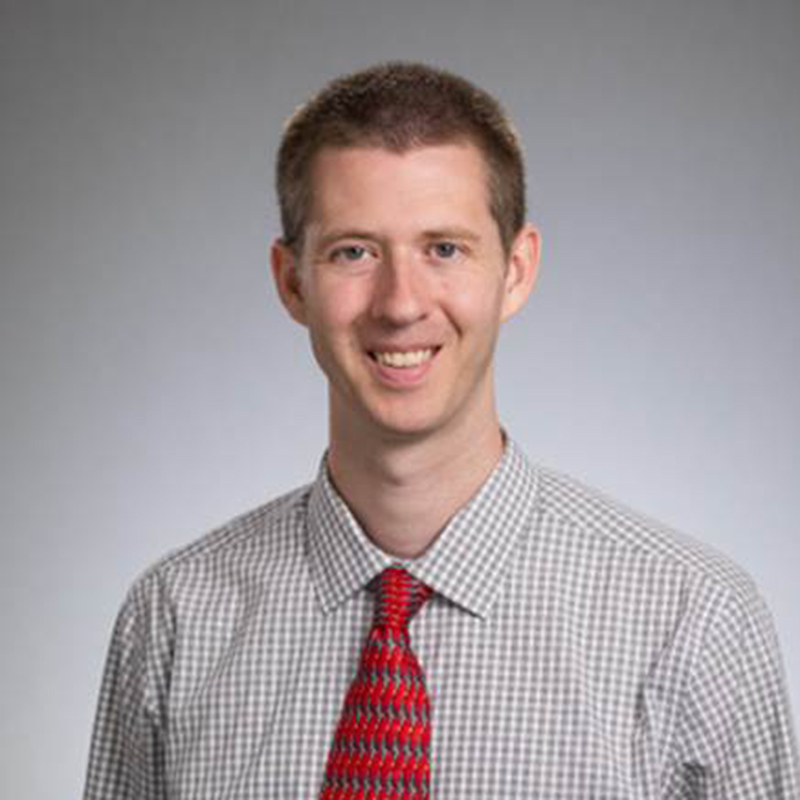
Will TownesView profile
Assistant Professor
Will Townes is an Assistant Professor in the Department of Statistics and Data Science at Carnegie Mellon University's Dietrich College of Humanities and Social Sciences. He joined CMU in 2022 after completing a postdoctoral fellowship in computer science at Princeton University with Barbara Engelhardt. His academic journey includes a Ph.D. in biostatistics from Harvard University under Rafael Irizarry's supervision, an M.S. in math and statistics from Georgetown, and earlier work in tropical ecology fieldwork in the Philippines. Dr. Townes specializes in applied statistics with primary focus areas in biomedical and public health domains. His research centers on wastewater-based epidemiology, wearable devices, and auxiliary signals for infectious disease tracking and forecasting as part of the Delphi research group. He has developed normalization, feature selection, and dimension reduction methods for single cell RNA-Seq and spatial transcriptomics data analysis. His broader research interests span biostatistics, epidemiology, genomics, time series forecasting, and theoretical aspects of Tweedie distributions. His recent publications reveal a strong emphasis on wastewater surveillance methodologies, single-cell data analysis techniques, and infectious disease forecasting models. The research demonstrates a consistent focus on computational scalability and efficiency through approximate inference techniques. Dr. Townes approaches statistical problems with a pragmatic perspective, comfortable with probabilistic (Bayesian) models while drawing inspiration from diverse statistical perspectives. Member of DELPHI Lab Group at CMU Active contributor to genomics and biostatistics research Focus on computational efficiency in statistical methods Dr. Townes mentors several students including Gabrielle Thivierge (PhD candidate working on infectious disease forecasting methods), Julia Elrod, and Anna Rosengart. He teaches data science courses at CMU, including a field course in Costa Rica where students work with community partners on real-world data projects involving water quality indicators, spring flow rates, and ecological monitoring.