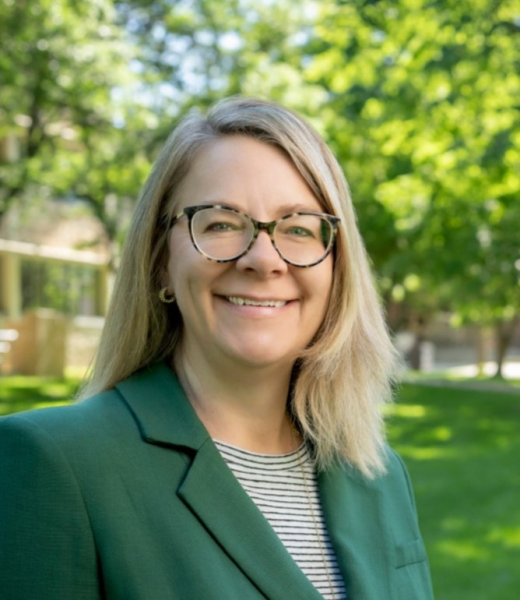
Claire Maxwell is a Professor in the Department of Sociology at the University of Copenhagen, affiliated with the Faculty of Social Sciences. She joined the department in 2018 from University College London. Her research focuses on elites, global mobility, education systems, and social inequality, with a particular emphasis on how internationalization and mobility shape class dynamics and family practices. Education: PhD in Sociology (University of London, 2005) MSc in Applied Social Studies and Social Work (University of Oxford, 1999) MA(Hons) in Politics, Philosophy and Economics (2005) Research Interests: Maxwell’s work examines global middle-class families, elite education systems, and the interplay between mobility and nationalism. She pioneered the concept of 'cosmopolitan nationalism' to analyze how global agendas are re-purposed by elites. Current projects include SkillsINCORP (funded by the Independent Research Fund Denmark), studying high-skilled professionals' incorporation into Danish workplaces, and Onboard Denmark (Innovation Fund Denmark), developing tools for SMEs to recruit international talent. Grants & Projects: SkillsINCORP (2022-2025): Investigating professional integration in Danish firms Onboard Denmark (2021-2024): Digital tools for SMEs Israeli Science Foundation-funded study on mobile Israeli families (2020-2023) Labs/Teams: Leads cross-disciplinary teams collaborating with industry partners on global mobility challenges. Co-edits the International Studies in Sociology of Education (until 2024) and the Education in Global Perspectives book series.
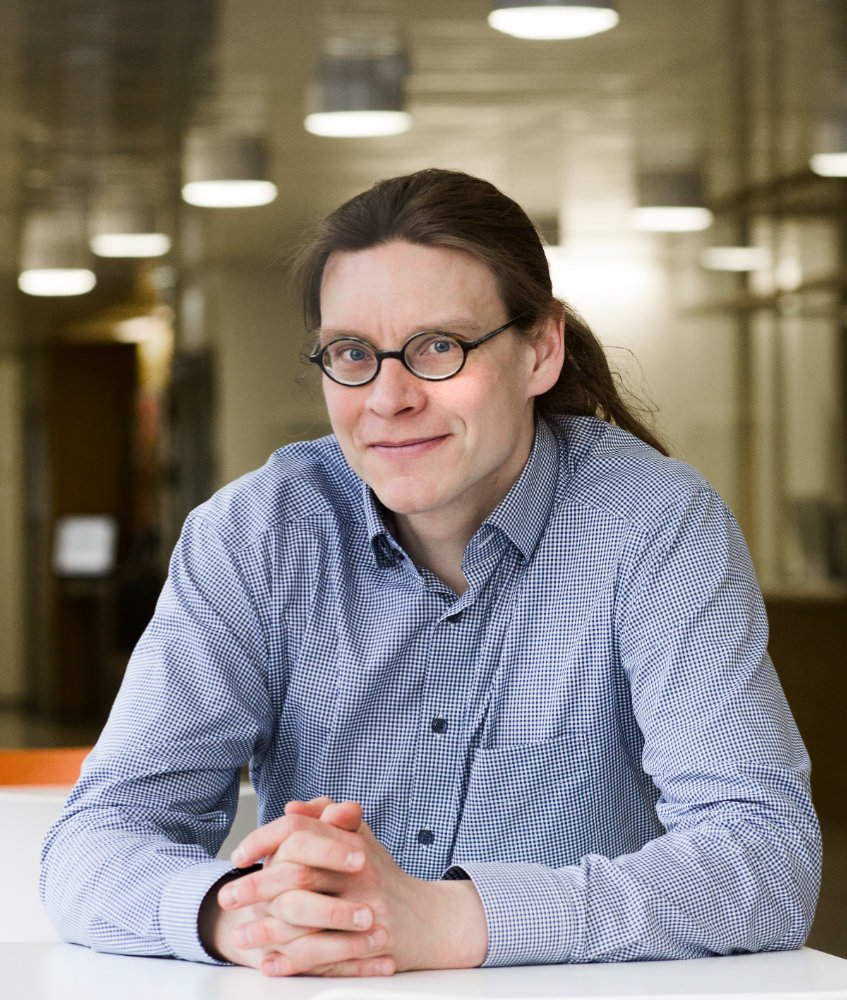
Professor Dmitri Panov is a Professor of Geometry at King's College London, part of the Faculty of Natural, Mathematical & Engineering Sciences. He holds a PhD from École Polytechnique (2005) and has held academic positions including Royal Society Research Fellow (2010–2012), Senior Research Fellow (2012–2015), and Reader (2015–2020) at King’s College. His research focuses on complex, symplectic, and hyperbolic geometry, with a particular emphasis on polyhedral Kahler structures and definite connections. Education: Bachelor’s degree from Moscow State University (1998) PhD from École Polytechnique, France (2005) Research Interests: Panov studies geometric structures such as polyhedral Kahler manifolds and definite connections. His work bridges algebraic, differential, and symplectic geometry, with applications to moduli spaces, spherical metrics, and geometric analysis. Grants & Projects: EPSRC Grant: Kaehler manifolds of constant curvature with conical singularities (2019–2023) Royal Society Grant: Polyhedral Kahler Geometry (2017–2018) Geometric structures on manifolds (2015–2018) Events: Panov has participated in events like the Mathematics Inaugural Lecture (2023) and PhD program introductions, emphasizing his role in academic leadership and outreach.
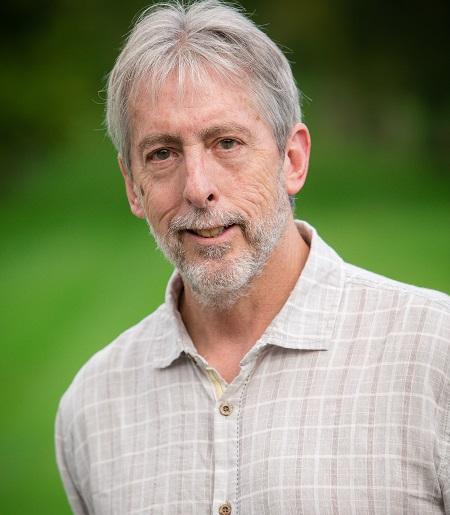
Ben Rampton is a Professor of Applied and Socio-Linguistics at King's College London, affiliated with the School of Education, Communication & Society and the Centre for Language, Discourse & Communication. He previously directed the Centre for Language Discourse & Communication (founded by him) and the King’s Interdisciplinary Social Science Doctoral Training Centre (2011-2014). He is an Honorary Doctorate recipient from the University of Copenhagen and a Fellow of the Academy of Social Sciences and Royal Anthropological Institute. His research focuses on ethnographic and interactional discourse analysis, addressing topics such as urban multilingualism, youth culture, securitisation, language education, and research methodology. He has held editorial roles in journals like Journal of Sociolinguistics and Applied Linguistics , and edits the Working Papers in Urban Language & Literacies series. His work frequently intersects with anthropology, sociology, and cultural studies. Rampton supervises PhD students in areas including multilingualism, language policy, and sociolinguistic citizenship. His recent publications explore linguistic citizenship in England, securitisation discourse, and interdisciplinary approaches to memory studies. He has contributed to projects on language education coalitions and the methodological challenges of linguistic ethnography. Education: PhD (1987), MA (1978), and BA (1976) from the University of London, University of London, and University of York, respectively. Grants/Projects: Includes research on memory politics, language socialization in diasporas, and sociolinguistics and security funded by the British Academy and Leverhulme Trust. Rampton leads initiatives like the Hub for Education and Language Diversity (HELD), collaborating with academic and third-sector organizations. His teaching spans undergraduate and postgraduate courses in sociolinguistics, language and power, and research methodology.
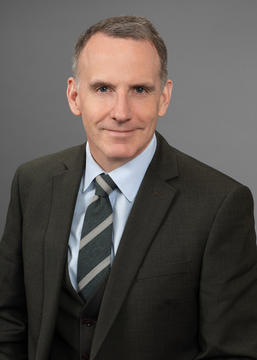
Susanne M. Jaeggi is a Professor of Psychology at Northeastern University, with additional affiliations in the Bouve College of Health Sciences and the College of Arts, Media, and Design. Her research focuses on cognitive training, executive functions, and individual differences in cognition across the lifespan. She holds PhDs in Cognitive Psychology and Neuroscience from the University of Bern (Switzerland), and completed postdoctoral work in Cognitive Neuroscience at the University of Michigan. Her work has been funded by NIH, NSF, IES, ONR, and the Advanced Education Research and Development Fund (AERDF). She leads the Working Memory & Plasticity Lab , which develops interventions to improve working memory and executive functions, and co-leads the Brain Game Center for Mental Fitness and Well-Being , creating evidence-based brain fitness tools. Jaeggi’s research emphasizes understanding mechanisms of cognitive improvement through training, including neuroplasticity and individual variability. Key areas include cognitive aging interventions, gamification, sensory-cognitive interactions, and the impact of socioeconomic factors on academic achievement. Her work integrates behavioral experiments, neuroimaging, and digital health technologies to address real-world challenges in education and healthcare. Recent studies explore music/art-based interventions, brain stimulation (e.g., tDCS), and scalable cognitive assessments. Collaborations span disciplines, with publications addressing topics like neural correlates of training, motivational features in interventions, and cross-modal perception. Her labs emphasize translating findings into public-facing tools, such as freely accessible brain fitness apps. Current projects include optimizing interventions for ADHD populations and leveraging digital platforms for global mental fitness.
Niall Winters is a Visiting Fellow at the University of Oxford's Department of Education, previously serving as Professor of Education and Technology and an Official Fellow. His research focuses on socially-just technology innovations, particularly in healthcare and education, supported by over €7 million in funding. He holds a PhD in Computer Science from Trinity College Dublin. Key roles include co-convenor of the Critical Digital Education Research Group, director of the MSc Education (Digital and Social Change), and mentor to Kellogg students. Prior to Oxford, he was a Reader in Learning Technologies at UCL Institute of Education and Deputy Head of the Department of Culture, Communication and Media. His research integrates global health challenges with digital solutions, emphasizing community health workers' training in low-resource settings. Collaborations include the Global Centre on Healthcare and Urbanisation at Kellogg and projects with UNESCO, WHO, and the NHS. He has held fellowships at institutions like Sciences Po and MIT Media Lab Europe. Publications span mobile health technologies, gamification in medical education, and policy frameworks for digital equity. His work bridges theory and practice, advocating for ethical technology design that addresses systemic inequalities in education and healthcare systems.
Patrick Präg serves as an Associate Professor of Sociology at CREST/ENSAE (part of the Institut Polytechnique de Paris) and holds an associate faculty position at Oxford University’s Nuffield College. His research integrates quantitative methods and survey data to address social stratification, demography, health, and work-family dynamics. He earned his PhD in Sociology from the ICS/University of Groningen in 2015. His work has been recognized with the Aage B. Sørensen Award (2014). Education: PhD in Sociology, ICS/University of Groningen (2015) Master’s Thesis: Nonresponse to Items on Self-Reported Delinquency, University of Hamburg Research Interests: Patrick’s work explores the interplay between social structure and individual wellbeing. Key topics include: Intergenerational mobility and health outcomes Work-life balance and gender inequalities Pandemic-driven societal changes Algorithmic bias in social science Subjective socioeconomic status measurement Grants & Collaborations: He contributed to the EU-funded ‘Families and Societies’ project, producing deliverables on assisted reproduction and demographic consequences. His research often involves cross-national datasets and methodological innovation, with replication materials shared via Open Science Framework (OSF). Labs & Teams: He is affiliated with CREST (Center for Research in Economics and Statistics) and collaborates with institutions like the Max Planck Institute for Demographic Research (MPIDR) and the Nuffield College. His work frequently intersects with interdisciplinary teams addressing health, education, and labor market policies.
Gauthier Gidel is an Associate Professor at the Department of Computer Science and Operations Research (DIRO) within the Faculty of Arts and Science at Université de Montréal, where he also holds the prestigious Canada CIFAR AI Chair position. He is a core faculty member of Mila, Quebec's AI research institute, and maintains active research collaborations with leading institutions. His academic journey includes a PhD in Computer Science under the supervision of Simon Lacoste-Julien, with internships at Sierra, ElementAI, and DeepMind during his doctoral studies. Dr. Gidel's research spans multiple critical areas in machine learning, with particular emphasis on generative modeling , adversarial machine learning , and variational inequalities for machine learning. His work explores the intersection of optimization theory and practical AI systems, focusing on challenges like LLM safety alignment, multi-agent cooperation, and robustness against adversarial attacks. He is particularly known for his contributions to understanding the theoretical foundations of generative adversarial networks through variational inequality frameworks. His recent publications reveal a strong trend toward addressing critical challenges in large language model safety and alignment, with numerous 2024-2025 papers focusing on adversarial robustness, safety evaluation methodologies, and alignment techniques for LLMs. Simultaneously, his foundational work continues in optimization theory, particularly in variational inequalities and performative prediction, demonstrating his dual focus on practical AI safety concerns and theoretical machine learning foundations. Canada CIFAR AI Chair Core member of Mila Organizer of popular NeurIPS workshops on smooth games Co-founder of the ICLR blog post track Dr. Gidel actively supervises an extensive research group with approximately 10 current graduate students and numerous alumni who have secured positions at leading institutions including Inria Lyon, Oxford, and industry research labs. His research is supported by multiple substantial grants from CRSNG, MITACS, and IVADO, including the prestigious CRSNG Discovery Grant program and MITACS Acceleration Québec projects focused on fraud detection in music streaming and conditional generation. His laboratory maintains strong connections with both academic and industry partners, fostering a collaborative environment focused on advancing AI safety and theoretical understanding.
Overview Professor Mile Terziovski is a Professor of Entrepreneurship and Innovation at Swinburne University of Technology's School of Business, Law and Entrepreneurship. He previously held leadership roles including Dean of Curtin Graduate School of Business, Head of UniSA's International Graduate School of Business, and Director of the Masters of Entrepreneurship and Innovation program at Swinburne. His academic journey spans over 25 years across multiple Australian universities, alongside a 17-year industrial career at Rio Tinto Group. Education PhD in Quality and Innovation Management (Melbourne Business School, University of Melbourne) MBA (RMIT University) BEng and MEng (University of Wollongong) GAICD (Australian Institute of Company Directors) Research Focus Terziovski's research focuses on innovation strategy, SME innovation practices, quality management systems, and sustainable business practices. His work bridges theory and practice, addressing challenges in manufacturing, healthcare, and energy sectors. He has published 60+ peer-reviewed articles, including in Strategic Management Journal and Journal of Operations Management , and authored books on innovation capability development. Grants & Awards He has secured $3M+ in research grants, including ARC Discovery and Linkage grants. Recognitions include the 2023 Stanford Top 2% Cited Scientists award, two Best Paper Awards from the Academy of Management, and multiple teaching excellence awards. His leadership extends to advisory roles with ACEM, SEAANZ, and Macedonian community organizations. Professional Contributions Terziovski advises global corporations like Motorola, Dow Chemical, and Eurocopter. His visiting professorship at the University of Versailles highlights international academic engagement. He currently supervises doctoral research on AI in entrepreneurship education, leadership in emergency medicine, and cross-border entrepreneurial ecosystems.
Dr. Timothy Fraser is a Computational Social Scientist serving as Ezra Systems Research Associate in Cornell University's Systems Engineering Program and Coordinator for the Center for Transportation, Environment, & Community Health (CTECH). Holding a PhD in Political Science from Northeastern University (2022), he focuses on climate change adaptation, disaster resilience, and energy policy using big data analytics, GIS, and AI. His work bridges computational methods with societal challenges, emphasizing community engagement and policy impact. Education: PhD in Political Science, Northeastern University (2022) MA in Political Science, Northeastern University BA in International and Global Studies, Middlebury College Research Interests: Fraser’s research integrates computational social science with environmental policy, exploring how social networks and governance structures influence cities' climate adaptation strategies. Key areas include renewable energy adoption, disaster evacuation dynamics, and pandemic response mechanisms. He employs mixed methods such as network analysis, statistical modeling, and fieldwork. Grants & Awards: Fulbright Fellowship (2016), Kyushu University Japan Foundation Doctoral Fellowship (2020) USDOT Multimillion Grant Administrator (2022-2023) Teaching & Mentorship: Fraser teaches statistical methods and research design at Cornell, advising over 30+ students in projects published in leading journals. He coordinates capstone teams and mentors researchers in data science and policy analysis. Labs & Projects: Leads the Climate Action in Transportation dashboard initiative (Gao Labs), developing tools for emissions visualization. Collaborates on UNDP social capital mapping projects in Mexico and Paraguay, applying spatial analysis techniques for vulnerable communities.
Kjerstin Thorson serves as the Dean of the College of Liberal Arts at Colorado State University, a position she assumed on August 1, 2024. Previously, she was the Brandt Endowed Professor of Political Communication and Associate Dean for Strategic Initiatives at Michigan State University’s College of Communication Arts & Sciences. An internationally recognized scholar, her research centers on digital platforms and their impact on civic life and culture. Her educational background includes: BA in English from Macalester College MA in Journalism from the University of Missouri-Columbia PhD in Mass Communication from the University of Wisconsin-Madison Thorson's research explores the intersection of digital media, political communication, and civic engagement. She investigates how social media platforms shape political participation, news consumption, and civic discourse, with a particular focus on young adults and historically marginalized communities. Her work addresses critical issues such as equity in digital civic infrastructure, the role of algorithms in political exposure, and the dynamics of online moderation and community governance. She examines both the empowering potentials and the challenges of digital media for democratic participation. Her recent publications (2023-2025) reveal a sustained investigation into platform governance, volunteer moderation, and the urban-rural divide in digital civic engagement. She also delves into Gen Z's civic behaviors, the spread of misinformation, and the evolving landscape of political learning on social media. Her work often employs mixed-methods approaches, combining digital trace data with surveys to understand complex media effects. Thorson has received notable recognition for her contributions: Michigan State University’s Teacher-Scholar Award 2022-2023 Fellow of the Big 10 Academic Alliance Leadership Program Her research has been supported by prestigious organizations including the National Science Foundation (NSF), the Social Science Research Council, and the Spencer Foundation. In her administrative roles, she has prioritized student success through initiatives like the Ignite the Future program, which supports first-generation and marginalized students, and has championed faculty development through the creation of a Center for Teaching and Learning. While specific advisees are not listed, her leadership in student success programs underscores her commitment to mentoring. Under her leadership at Michigan State University, the College of Communication Arts & Sciences expanded its revenue-generating partnerships, created a college-wide Center for Teaching and Learning, launched the Ignite the Future family of programs, and grew the esports initiative. She has also focused on improving culture and climate through promotion pathways for non-tenure track faculty, climate surveys, and community-building events.
Max Planck Institute for Demographic ResearchGermany
Mikko Myrskylä is Director at the Max Planck Institute for Demographic Research (MPIDR) and Professor of Social Data Science at the University of Helsinki. Previously, he served as Professor of Demography at the London School of Economics. His academic training includes a PhD in Demography from the University of Pennsylvania and a PhD in Statistics from the University of Helsinki. His research focuses on population health, fertility dynamics, and demographic forecasting. Key areas include: Low fertility determinants through the ERC Synergy project BIOSFER Social inequalities in health via the Max Planck-University of Helsinki Center Labor demography and population aging He leads MPIDR's Laboratory of Population Health, Laboratory of Fertility and Well-Being, and Research Group Labor Demography. Myrskylä's recent publications show strong emphasis on: Fertility trends under economic uncertainty Health disparities across migration/life course stages Family dynamics and aging societies Methodological innovations in demographic analysis Work frequently employs large-scale register data and cross-national comparisons, particularly in Nordic contexts. He leads major collaborative initiatives including: ERC Synergy project BIOSFER (low fertility causes) MaxHel Center (social inequalities in health) with extensive interdisciplinary teams across Europe.
Professor John Piggott AO FASSA is Scientia Professor of Economics at the University of New South Wales, where he serves as Director of the Australian Research Council Centre of Excellence in Population Ageing Research (CEPAR). He has held significant leadership roles at UNSW including three terms as Head of School of Economics, Associate Dean Research for the Business Faculty for 7 years, and Interim Dean of the Faculty. His expertise spans retirement economics, pension systems, and population ageing issues, with particular focus on Asia-Pacific region. His educational background includes: BA from University of Sydney MSc from London School of Economics PhD from University of London Professor Piggott's research focuses on retirement and pension economics, population ageing, and public finance. His work examines pension system designs across different countries, with particular emphasis on emerging Asian economies. He has conducted extensive research on retirement income systems, long-term care financing, and the economic implications of demographic change. His research has significant policy relevance, having informed government reviews and international organizations' work on ageing populations. He has published widely in leading international economics and actuarial academic journals, with recent work analyzing pension reforms in Indonesia, Thailand, and China. His recent publications demonstrate a strong focus on population ageing in the Asia-Pacific region, particularly examining pension systems and long-term care in emerging economies. His work bridges economics, public policy, and health services research, with increasing attention to the interconnections between demographic change, economic development, and social policy in aging societies. His research has directly influenced policy discussions through participation in the Henry Tax Review and Australian Ministerial Superannuation Advisory Committee. Professor Piggott has received numerous prestigious awards and honors: Fellow of the Academy of the Social Sciences in Australia (1992) Scientia Professor at UNSW (2011-present) ARC Australian Professorial Fellow (2011-2015) UNSW Business School's Staff Excellence Global Impact Award (2020) Officer of the Order of Australia (AO) (2020) Professor Piggott has supervised numerous PhD students including Rafal Chomik, Hoang Hoyen, and T Le Trang. He has secured substantial research funding including multiple ARC grants totaling over $27 million for the CEPAR Centre, Japan Economic and Social Research Institute projects, and Rockefeller Foundation support. His research has directly informed policy discussions through participation in the Henry Tax Review and Australian Ministerial Superannuation Advisory Committee, and he was appointed co-chair of the Think20 Task Force on Aging Population during Japan's G20 Presidency. As Director of CEPAR, Professor Piggott leads a major research center focused on population ageing research, bringing together interdisciplinary expertise to address the challenges of aging societies. The center collaborates with international partners including the US National Academy of Medicine and OECD, and has played a key role in establishing the International Pension Research Association. His work has significant real-world impact, with his research on JobKeeper transition proposals during the COVID-19 pandemic receiving widespread media attention.
Professor Helen Bao is a faculty member in the Department of Land Economy at the University of Cambridge, part of the Faculty of Economics. She holds the position of Professor of Urban Economics & Public Policy and is Director of the Lab of Interdisciplinary Spatial Analysis. Her research focuses on government policies to mitigate market failures in urban settings, behavioral insights in land and housing markets, and sustainable urbanization. She has led major grants, including projects on nudging financial systems in rural China and spatial governance in two countries. Her work bridges economics, policy, and behavioral sciences. Education: PhD in Statistics, City University of Hong Kong (2004) MA in Statistics, Dongbei University of Finance and Economics (2000) BA in Finance, Dongbei University of Finance and Economics (1997) Research Interests: She explores housing affordability, urban policy, behavioral interventions, and land-use efficiency. Recent studies include mitigating racial/gender discrimination in housing markets, micro-mobility adoption, and the political economy of carbon trading. Grants & Projects: Current grants include Royal Society funding for spatial governance and Horizon Europe projects on rural sustainability. Past grants include ESRC-NSFC funding on financial systems in rural China and land use policies in smart cities. Students: Current PhD advisees include He Tang and Yangfanqi Liu, with recent graduates such as Gong Haotong Li. She has supervised over 10 students in topics like carbon emission trading and rural homestead reforms. Labs & Teams: Leads the Lab of Interdisciplinary Spatial Analysis and collaborates internationally, including with institutions in China and the EU. Her work emphasizes cross-disciplinary approaches to urban challenges.
Kenneth M. Roberts is the Richard J. Schwartz Professor of Government at Cornell University, affiliated with the College of Arts and Sciences. He specializes in comparative democracy, Latin American political economy, and the intersection of populism, social movements, and inequality. Roberts holds leadership roles including former Senior Associate Dean for the Social Sciences and directorships in Cornell’s Latin American and Caribbean Studies program and the Institute for the Social Sciences. Roberts earned his Ph.D. in comparative and Latin American politics from Stanford University. His research focuses on democratic resilience, polarization, and crises of democracy globally, with a regional emphasis on Latin America. Notable works include Democratic Resilience: Can the United States Withstand Rising Polarization? (Cambridge 2021) and Changing Course in Latin America: Party Systems in the Neoliberal Era (Cambridge 2014). His academic engagements include visiting fellowships at institutions like the Institute for Advanced Study (Princeton) and the Scuola Normale Superiore (Florence). Roberts contributes actively to global democracy initiatives through the American Democracy Collaborative, analyzing threats to democratic institutions in the U.S. and beyond.
Edward L. Glaeser is the Fred and Eleanor Glimp Professor of Economics at Harvard University, where he has taught since 1992. He leads the Urban Economics Working Group at the National Bureau of Economic Research (NBER) and co-leads the Cities Programme of the International Growth Centre (IGC). His research focuses on urban economics, public policy, and economic growth. He has held leadership roles, including Director of the Taubman Center for State and Local Government, the Rappaport Institute for Greater Boston, and Chair of Harvard’s Economics Department. Education: A.B. in Economics from Princeton University (1988), Ph.D. in Economics from the University of Chicago (1992). Research interests include urban development, housing policy, infrastructure, and the role of cities in economic growth. His work examines topics like housing affordability, construction productivity, and the social and economic impacts of urbanization. Notable publications include Triumph of the City and Survival of the City . Scientific awards include fellowships from the National Academy of Sciences, American Academy of Arts and Sciences, and the Econometric Society, along with the Albert O. Hirschman Prize. Advising and grants: Glaeser has directed major research centers and advised on urban policy. His work integrates empirical analysis with policy recommendations, addressing issues like zoning regulations, public procurement, and pandemic-era urban challenges. Labs/Teams: Active in the NBER Urban Economics Working Group and IGC Cities Programme, collaborating on global urban development strategies.