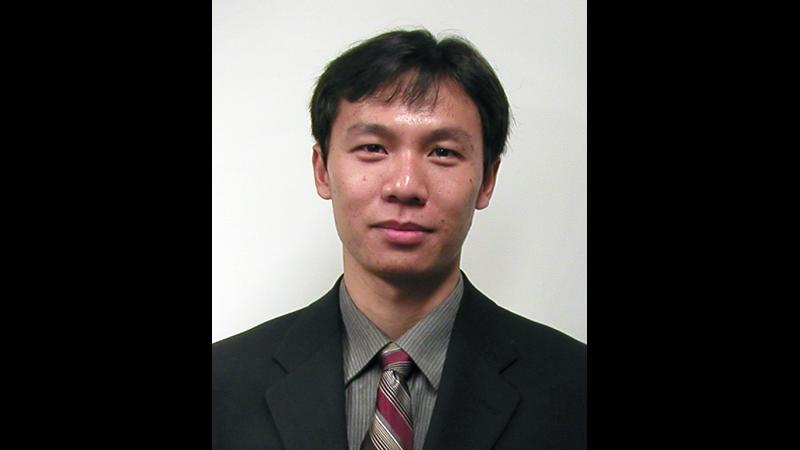
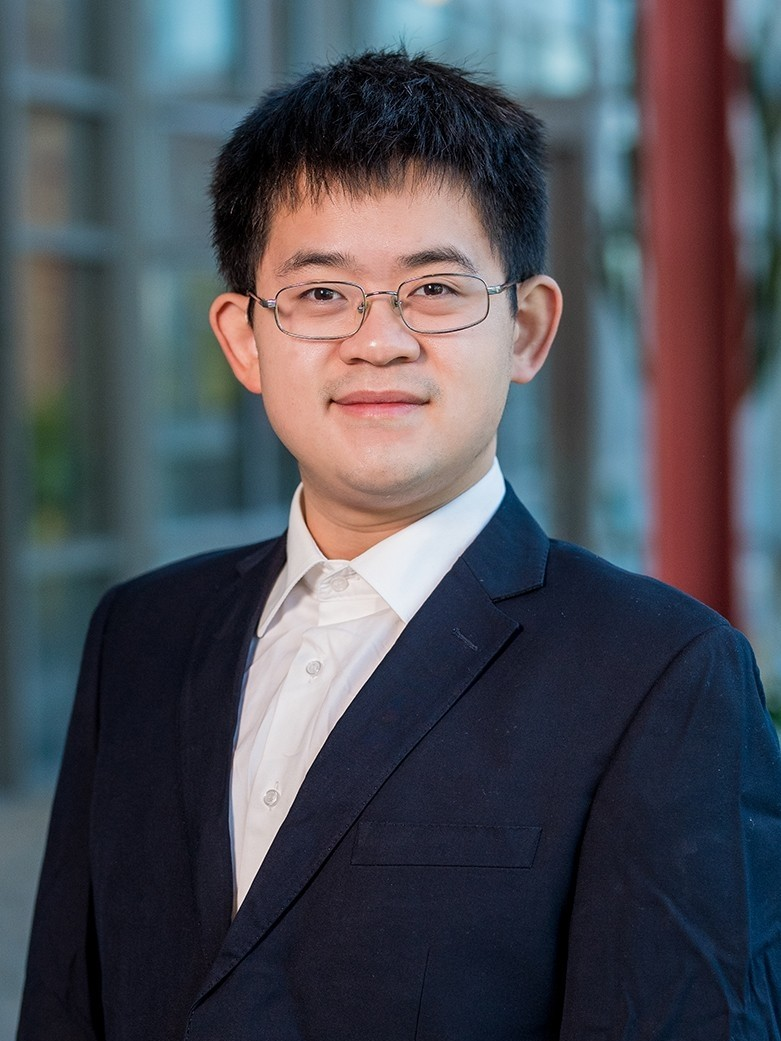
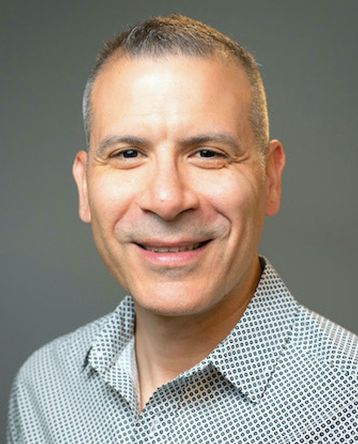
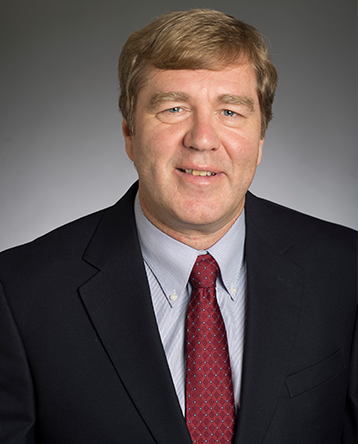
Xiangyu Zhang is the Samuel D. Conte Professor of Computer Science at Purdue University. He specializes in AI security, software analysis, and cyber forensics, with a focus on detecting vulnerabilities in traditional software and AI systems. His research includes dynamic slicing, program profiling, and securing AI models against backdoors. He has led projects funded by DARPA, IARPA, NSF, and industry, securing over $13 million in grants. He has mentored 30+ PhD students and postdocs, many of whom hold academic positions or industry roles. His work has been recognized with awards like the ACM SIGPLAN Distinguished Dissertation Award and NSF Career Award. Education: PhD, Computer Science, University of Arizona (2006) MS & BS, Computer Science, University of Science and Technology of China (2000 & 1998) Research Interests: AI Security: backdoor detection, adversarial attacks, model integrity Program Analysis: dynamic slicing, static/dynamic debugging Cyber Forensics: log analysis, attack investigation Software Reliability: fault localization, vulnerability detection Key Projects: DARPA V-SPELLS: domain-specific program analysis IARPA TrojAI: AI backdoor detection competitions NSF-funded research on model debugging and co-reasoning of software/NL artifacts Awards & Recognition: Top performer in IARPA TrojAI competitions (13/18 rounds) ACM SIGPLAN Distinguished Dissertation Award (2006) NSF Career Award (2009) Ranked 8th globally in systems research productivity (2024) Career Contributions: Secured over $13M in research funding Guided 25 PhDs and 8 postdocs Published 89+ top-tier papers (2014–2024)
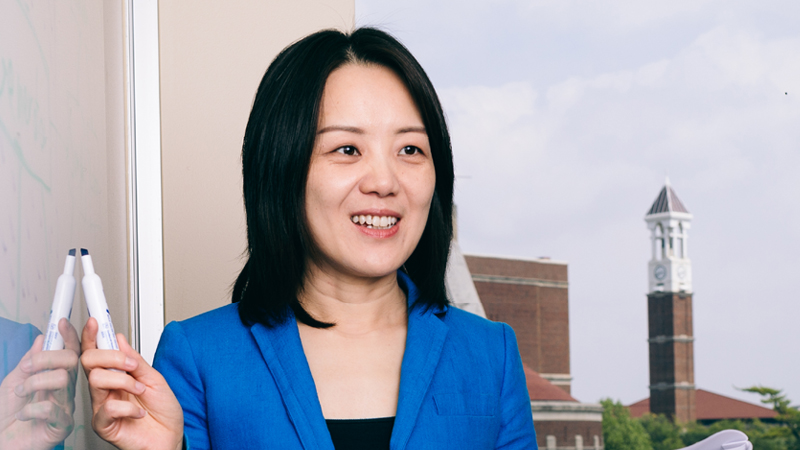
Lin Tan is a Professor of Computer Science at Purdue University , holding the Mary J. Elmore New Frontiers Professorship . She joined Purdue in 2019 after serving as a Canada Research Chair and associate professor at the University of Waterloo. She is an ACM Distinguished Member and IEEE Senior Member . Education: PhD in Computer Science, University of Illinois Urbana-Champaign BS in Computer Science and Technology, Zhejiang University Research Interests: Professor Tan’s research lies at the intersection of software engineering , artificial intelligence , and security . Her work focuses on software-AI synergy , software dependability , defect detection & repair , and software text analytics . She leverages machine learning and natural language processing to enhance software reliability, and conversely uses software techniques to improve the dependability of AI systems. Her recent projects include building binary foundation models (Nova), evaluating large language models for code generation and repair, and developing interactive debugging tools that reduce debugging time by one-third. She also explores robot task planning with LLMs and automated front-end development . Awards & Honors: Best Paper Award Finalist, ICRA 2025 ELATES Fellow, 2024-2025 ACM SIGSAC Distinguished Paper Award, CCS 2024 J.P.Morgan AI Faculty Research Awards (2020, 2021, 2022) ACM SIGSOFT Distinguished Paper Awards (ASE 2020, MSR 2018, FSE 2016) Canada Research Chair (2017) Ontario Early Researcher Award (2015) NSERC Discovery Accelerator Supplements Award (2015) Google Faculty Research Awards (2010, 2014) IEEE Micro Top Picks (2006) Advising & Funding: Professor Tan currently advises eight PhD students and has graduated 20+ PhD and Master’s students now thriving in academia (York University, Concordia University, University of Alberta) and industry (Microsoft, Meta, Amazon, Google). Her group is generously supported by NSF , Meta/Facebook Research Awards , J.P.Morgan AI Faculty Awards , and NSF REU programs. Labs & Teams: She leads the Software Reliability & AI Lab at Purdue, recruiting postdocs, PhD, MS, and undergraduate researchers year-round. Lab interests span binary recovery , LLM-based program repair , testing deep-learning libraries , and data-free model extraction .
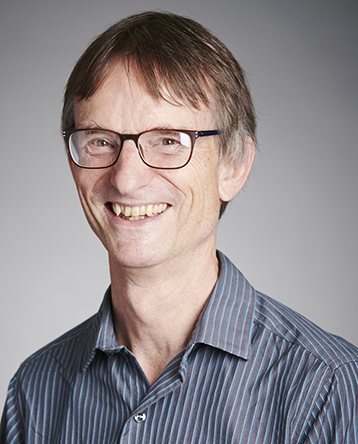
Jouni Partanen is a Professor at Aalto University's Department of Energy and Mechanical Engineering within the College of Engineering. His research focuses on advanced production technologies including Additive Manufacturing (3D-Printing), modern laser processing, and micromachining. Research Group: Materiaaleista tuotteiksi Specialization: Integration of AI in manufacturing processes Sustainability emphasis: Biochar-reinforced materials and carbon footprint reduction His work spans from fundamental material behavior analysis to industrial applications, particularly in metal additive manufacturing and composite fabrication. Recent research explores corrosion resistance in lattice structures and multiscale photopolymerization techniques. Publications highlight interdisciplinary approaches combining mechanical engineering with biomedical applications (e.g., patient-specific implants) and environmental health studies on industrial 3D printing emissions.
Anthony Rollett is a Professor in the Department of Materials Science and Engineering at Carnegie Mellon University , where he has been a faculty member since 1995. He serves as the Principal Investigator and Co-Director of the NASA-supported Institute for Model-Based Qualification & Certification of Additive Manufacturing (IMQCAM) and co-director of the Next Manufacturing Center . Prior to CMU, he held leadership roles at Los Alamos National Laboratory (1991-1995). Education: Ph.D., Materials Engineering, Drexel University (1987) MA, Metallurgy and Materials Science, Cambridge University (1977) Research Interests: Rollett’s work focuses on microstructural evolution and microstructure-property relationships in 3D using experiments and simulations. His expertise spans additive manufacturing , metal 3D printing , materials for energy systems , grain growth , recrystallization , and stereology , with techniques like high-energy diffraction microscopy (HEDM) and dynamic x-ray radiography (DXR) . Scientific Contributions: He has over 320 peer-reviewed publications and an h-index >80 . His recent articles highlight machine learning for laser processing , fatigue analysis of additively manufactured alloys, and design optimization for heat exchangers in supercritical CO2 and solar thermal applications . Scientific Awards: Fellow of ASM International (1996) Fellow of the Institute of Physics (UK) (2004) Fellow of The Minerals, Metals & Materials Society (TMS) (2011) Cyril Stanley Smith Award (TMS, 2014) Member of Honor, French Metallurgical Society (2015) US Steel Professor (2017) Francqui International Professor (2020-2021) International FAME Award (2023) Leadership & Impact: Rollett co-led the development of a NASA Space Technology Research Institute for additive manufacturing and established a new master’s program in additive manufacturing (2018). His research group is funded by industry , federal agencies , and Pennsylvania state grants . He also serves on the Basic Energy Science Advisory Committee and Defense Programs Advisory Committee for the Department of Energy.
Bernhard J. Berger is a Lecturer in the Department of Computer Engineering at the Institute of Embedded Systems, Hamburg University of Technology (TUHH). His research focuses on software security, static code analysis, machine learning, optimization, and research data management. He has held significant roles such as Program Committee member for ICPC 2025 and MSR 2025, and has received awards including the Best Reviewer Award (ICPC 2023) and Best Engineering Paper Award (SCAM 2019). His work spans interdisciplinary applications including maritime systems security, GPU-accelerated AI, and evolutionary algorithms. Recent studies emphasize AI-driven security tools (e.g., ML-SAST) and domain-specific language approaches to optimization (EvoAl). He has contributed to over 30 peer-reviewed publications, with notable work in IEEE Transactions on Software Engineering and Science of Computer Programming. Berger collaborates closely with industry through DAAD review committees and serves on artifact evaluation boards for ISSTA and ARES conferences. Education: Doctoral Thesis (2022), Diploma in Computer Science (2007) Key Projects: ArchSec tool suite, Threat Modeling Frameworks, Bauhaus static analysis methodology Lab Affiliation: Embedded Systems Design Group His advisory roles include Deputy of TUHH's Election Verification Committee and Session Chair at IEEE Congress on Evolutionary Computation 2023. Current research trends integrate machine learning with static analysis for automated vulnerability detection, while also exploring explainable AI techniques for neural network optimization.
Albert Lau is an Associate Professor of Civil and Environmental Engineering at the Norwegian University of Science and Technology (NTNU), located in Trondheim, Norway. He specializes in railway engineering, structural dynamics, and transportation systems. Lau holds leadership roles as the Study Program Leader for the MSc in Road, Railway, and Transportation Engineering, overseeing curriculum development and program coordination. His research focuses on railway track design, dynamic modeling of train-track interactions, and infrastructure maintenance, with projects such as the MeTinT initiative (Measurement with Train in Regular Traffic). He has extensive experience supervising master’s and PhD students, and his work emphasizes innovation in rail infrastructure and sustainable transportation solutions. Education and Professional Background: Lau earned his PhD from NTNU in 2018, focusing on numerical simulations of railway turnouts. Prior roles include Postdoc (2018–2020) and Assistant Professor (2017–2018) at NTNU, and teaching at Oslo Metropolitan University (2020). His industry experience includes roles as a Design Engineer (2010–2012) and Project Engineer (2013–2014) in Malaysia, where he managed construction projects and structural design. Research Interests: Lau’s work spans railway track dynamics, infrastructure health monitoring, and machine learning applications in transportation. Key projects include developing digital twins for railway test sites and analyzing ground displacement impacts on track anomalies. His contributions to the Road, Railway and Transport Group at NTNU aim to advance rail safety and efficiency through interdisciplinary approaches. Teaching and Outreach: Lau coordinates courses such as TBA4225 (Railway Engineering) and BA6012 (Fundamental Railway Technology). His outreach includes expert commentary on railway incidents, such as an interview on NRK (2024) discussing potential causes of a train accident. Current initiatives focus on revitalizing regional rail services and optimizing train positioning systems.
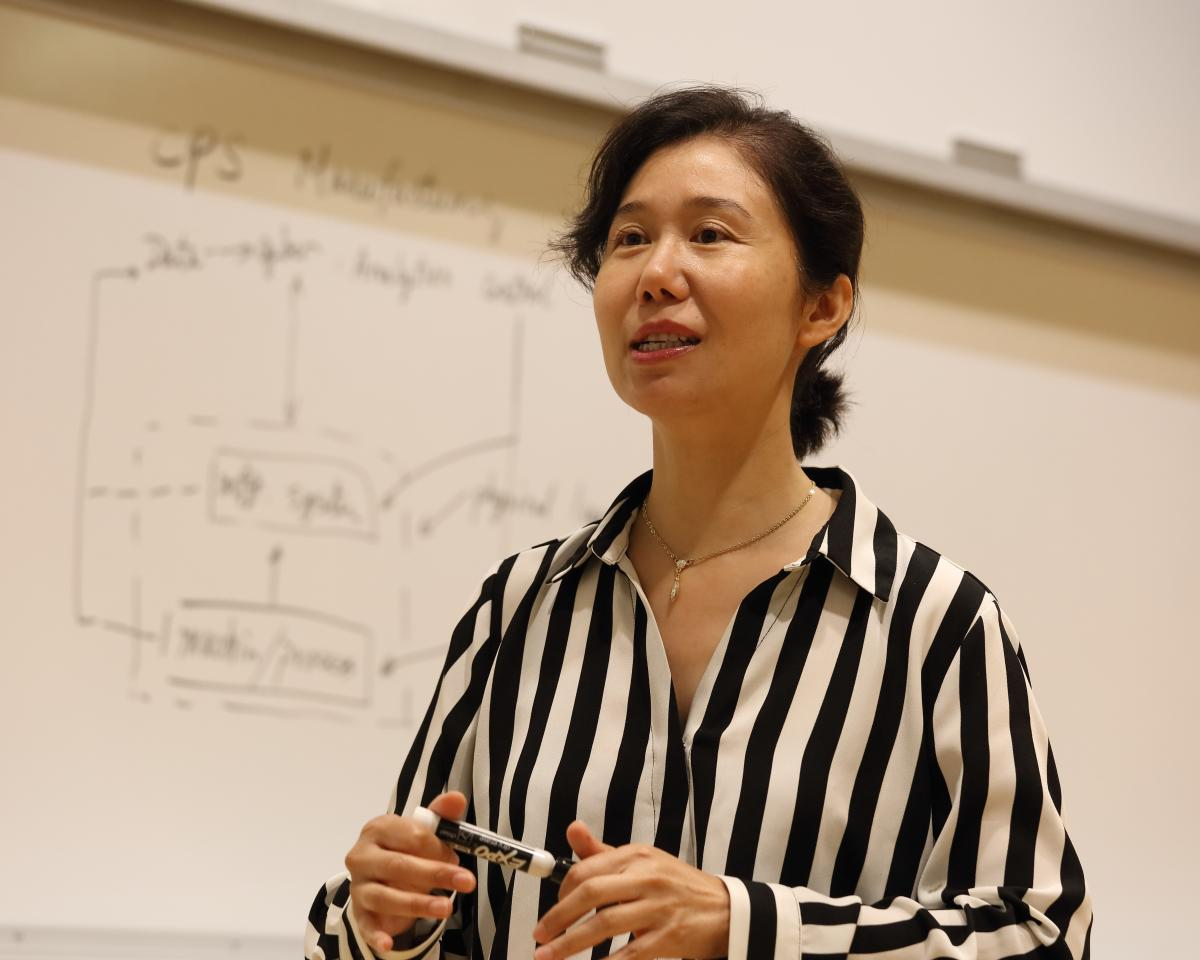
Qing (Cindy) Chang is a Professor in the Department of Mechanical and Aerospace Engineering at the University of Virginia, where she directs the Intelligent Systems Lab. She joined UVA in 2019 after serving as an associate professor at Stony Brook University. Prior to academia, she spent a decade at General Motors R&D, receiving their highest innovation awards. Education: M.S. from University of Wisconsin-Madison Ph.D. in Manufacturing from University of Michigan Research Focus: Chang's work integrates math-based modeling and data-driven methods to optimize manufacturing systems. Key areas include: Adaptive control and machine learning for production efficiency Human-robot collaboration frameworks Sustainable manufacturing through energy management Real-time control of cyber-physical production systems Reinforcement learning applications in industrial automation Research Trends: Her recent publications (2024-2025) demonstrate strong focus on AI-driven manufacturing optimization, with 80% leveraging reinforcement learning/LLMs for robotic control. Key themes include multi-agent coordination (67% of papers), energy efficiency (53%), and flexible production systems (47%). Awards & Recognition: Inducted as SME Scholar (2024) 20 Most Influential Professors in Smart Manufacturing - SME (2020) NSF CAREER Award (2014) Three-time GM Boss Kettering Award winner (2005,2006,2008) ASME and SME Fellow Leadership & Funding: Serves on NAMRI/SME Board of Directors with editorial roles across ASME/IEEE/SME journals. Research supported by NSF (including CAREER), Department of Energy, and multiple industry partners. Leads projects on human-robot collaboration and sustainable manufacturing. Lab & Collaboration: Directs the Intelligent Systems Lab at UVA, focusing on industrial AI applications. Collaborates with automotive and energy sectors to translate research into practical solutions for smart factories.
Prof. Dr.-Ing. Rüdiger Daub serves as Professor and Chair of Production Engineering and Energy Storage Systems at the Technical University of Munich (TUM), operating within the Department of Mechanical Engineering. His leadership encompasses research direction, academic supervision, and strategic development of battery production technologies at TUM's Garching campus (Boltzmannstr. 15), with active industry collaborations driving innovation in sustainable manufacturing. Daub's research program pioneers advanced production methodologies for lithium-ion and solid-state batteries, focusing on electrode manufacturing, electrolyte filling, and cell assembly processes. His work investigates critical parameter interdependencies affecting battery safety and performance, developing inline monitoring systems and digital twin technologies for real-time process optimization. Key contributions include moisture control in electrode production, electrochemo-mechanical characterization of solid-state systems, and robotics solutions for deformable object assembly, all integrated with machine learning for quality assurance in industrial settings. Analysis of his 2023-2025 publications reveals a dominant research trajectory toward solving production bottlenecks in next-generation energy storage. The work demonstrates increasing integration of computational modeling with empirical validation, particularly in solid-state battery manufacturing and high-voltage electrolyte systems. A notable trend is the cross-pollination of robotics, computer vision, and uncertainty quantification techniques to address complex assembly challenges and distribution shifts in quality monitoring, reflecting industry's urgent need for adaptable, data-driven production systems. Leading TUM's specialized laboratories for battery cell production, Daub's team maintains comprehensive facilities for electrode calendering, electrolyte filling, and cell assembly with integrated tracking and tracing capabilities. The research infrastructure supports collaborative projects with automotive OEMs and battery manufacturers to develop scalable production processes, emphasizing environmental sustainability through water-based electrode production and footprint optimization. Current initiatives focus on digital factory modeling and prelithiation technologies for next-generation battery systems.
Dr. Md Manjurul Ahsan serves as a Research Assistant Professor in the Department of Industrial & Systems Engineering at the University of Oklahoma, where he develops AI-driven solutions for healthcare diagnostics and advanced manufacturing optimization. His work bridges theoretical AI advancements with practical industrial and medical applications. Education: Ph.D. in Industrial and Systems Engineering, University of Oklahoma M.S. in Industrial Engineering, Lamar University B.S. in Industrial and Production Engineering, Shahjalal University of Science and Technology Research Focus: Dr. Ahsan specializes in Artificial Intelligence with technical depth in Machine Learning , Deep Learning , and Computer Vision to solve critical challenges in healthcare diagnostics and additive manufacturing . His research emphasizes Explainable AI to enhance model trustworthiness and deployment efficiency across Cyber-Physical-Social Systems, with significant contributions to Aerospace and Defense applications. Publication Trends: Recent work (2023-2025) reveals a strategic expansion from core manufacturing applications into medical AI (diffusion models for diagnostics), cultural preservation (NLP for Dravidian languages), and geopolitical AI analysis. His publications consistently address data imbalance challenges while advancing digital twin integration in quality control systems. Scientific Recognition: GCOE Dissertation Excellence Award (2023) International Student Scholarship (2022) Outstanding Academic Achievement in Engineering (2022) IEEE IEMCON Best Paper Award (2020) Netti Vincent Boggs Engineering Excellence Award (2020) Research Leadership: As director of the Sooner Additive Manufacturing Laboratory , Dr. Ahsan leads cross-disciplinary teams developing real-time monitoring systems using FARO arms and CMM metrology. His postdoctoral work at Northwestern University (2023-2024) advanced AI deployment frameworks, resulting in 60+ peer-reviewed publications with multiple papers ranking in engineering's top 1% for citations.
Linyi Li is an Assistant Professor in the School of Computing Science at Simon Fraser University (SFU), leading the Trustworthy Artificial Intelligence (TAI) Lab. His research focuses on certifiably trustworthy deep learning systems, combining machine learning and computer security. He holds a PhD from the University of Illinois Urbana-Champaign (UIUC) and a B.Eng. from Tsinghua University. Affiliations: Simon Fraser University, TAI Lab Education: PhD in Computer Science, UIUC, 2023 B.Eng (Cum Laude), Tsinghua University, 2018 His research interests include deep learning , trustworthy machine learning , large language models , and software engineering . He emphasizes rigorous certification of robustness, fairness, and numerical reliability in AI systems. Recent work includes the InfiBench benchmark for evaluating code LLMs and advancements in neural network verification. Recent Research Trends: His publications span certified robustness, fairness guarantees, and scalable verification techniques for deep learning models. He also explores scientific evaluation of foundation models and adversarial defense mechanisms. Awards: Rising Stars in Data Science AdvML Rising Star Award Wing Kai Cheng Fellowship Finalist: Qualcomm Innovation Fellowship (2022) Winner: VNN-COMP'23 Competition (Team α, β-CROWN) Advising & Grants: As a PI, he oversees the TAI Lab's research. Though no specific grants are listed, his work is funded through competitive awards and university resources. Labs/Teams: Leads the TAI Lab at SFU, focusing on foundational and applied research in trustworthy AI.
Levent Burak Kara is a Professor in the Department of Mechanical Engineering at Carnegie Mellon University (CMU), with a courtesy appointment in the Robotics Institute. He is a leading researcher in AI-driven computational design, additive manufacturing, and intelligent engineering systems, leading the Visual Design and Engineering Lab (VDEL) at CMU. Education: B.S., Mechanical Engineering, Middle East Technical University (1998) M.S., Mechanical Engineering, Carnegie Mellon University (2000) Ph.D., Mechanical Engineering, Carnegie Mellon University (2005) His research focuses on integrating machine learning, optimization, and geometric modeling to revolutionize engineering design and manufacturing. Key areas include topology optimization, CAD intelligence, digital twins, generative design, bioengineering, and electronic design automation. His work enables automation of traditionally labor-intensive design processes using deep learning and reinforcement learning. His recent publications reveal a strong trend toward physics-informed surrogate modeling, real-time simulation, manufacturability prediction, and AI-driven automation in mechanical, biomedical, and electronic systems. These works frequently appear in top journals such as Journal of Mechanical Design and Journal of Applied Mechanics , and at premier conferences like NeurIPS and DAC. Scientific Awards: National Science Foundation CAREER Award ASME Design Automation Society Young Investigator Award Google AI for Social Good Impact Scholar Kara advises several Ph.D. students and has secured significant funding from federal agencies such as the NSF and the U.S. Army Research Laboratory, as well as collaborations with industrial leaders including Cadence Design Systems and NVIDIA. His research is also supported by CMU’s NextManufacturing Center and the Critical Technology Initiative. He is actively involved in developing intelligent design systems that leverage AI to automate product design, optimize manufacturing processes, and improve medical diagnostics, particularly in oral cancer screening and organ preservation. His lab, VDEL, is a hub for innovation in AI-enabled engineering.
Dr. Baijian "Justin" Yang serves as the Associate Dean for Research at Purdue Polytechnic Institute and is a Professor in the Department of Computer and Information Technology at Purdue University. He earned his Ph.D. in Computer Science from Michigan State University, with Master's and Bachelor's degrees in Automation (EECS) from Tsinghua University. Dr. Yang has established himself as a leader in multiple interdisciplinary research domains. Dr. Yang's educational background includes: PhD in Computer Science, Michigan State University (2002) MS in Automation (EECS), Tsinghua University (1998) BS in Automation (EECS), Tsinghua University (1995) His research interests span multiple cutting-edge domains with practical applications: Cybersecurity : Developing novel approaches for threat intelligence, security education, and network defense Big Data : Creating innovative algorithms for dimension reduction, regression with categorical variables, and tensor decomposition Applied Machine Learning : Implementing AI solutions in healthcare, manufacturing, and forestry applications Digital Forestry : Using UAV imagery and remote sensing for forest management and tree species classification Dr. Yang's publication record demonstrates significant impact across multiple disciplines, with recent work focusing on spatial transcriptomics analysis (SiGra), delirium detection using limited-lead EEG, and visual localization technologies. His research bridges theoretical advances with practical applications in healthcare, manufacturing quality control, and environmental monitoring. The interdisciplinary nature of his work is evident in collaborations spanning computer science, healthcare, forestry, and manufacturing domains. His scientific achievements have been recognized with numerous awards: 2023 HRSA Building Bridges to Better Health Competition Winner (Phase 1) and 2nd place ($100,000 prize) in Phase 3 2023 Outstanding Faculty Award in Engagement, Department of Computer and Information Technology, Purdue University 2021 Leadership in Manufacturing Award, Manufacturing Times Digital (MxD) 2021 Good to Great Award, Purdue Polytechnic 2020 Outstanding Faculty Award in Discovery, Department of Computer and Information Technology 2019 University Faculty Scholars, Purdue University As an educator and mentor, Dr. Yang has advised numerous graduate students through their PhD and Master's research. His leadership extends to significant service roles including serving as Faculty Champion for the Holistic Safety and Security research impact area at Purdue Polytechnic from 2018 to 2021, board membership with ATMAE (2014-2016), and participation in the IEEE Cybersecurity Initiative Steering Committee (2015-2017). He holds valuable industry certifications including CISSP, MCSE, and Six Sigma Black Belt, demonstrating his commitment to bridging academic research with industry practice. Dr. Yang leads multiple research projects including "Digital Forestry" for developing tools to quantify forest function, "CHEESE" (Cyber Human Ecosystem of Engaged Security Education), and "CICI" (Supporting Controlled Unclassified Information with a Campus Awareness and Risk Management Framework). His work on "Applied Machine Learning" focuses on solving real-world problems, while his "Dimension Reduction and Memory Amnestic Big Data Regression" project innovates computational algorithms for large-scale data analysis.
Professor Hala Zreiqat AM is a leading biomedical engineer at The University of Sydney , serving as the Director of the ARC Training Centre for Innovative BioEngineering . A Fellow of all major Australian academies (AAS, ATSE, FAHMS, FRSN), she develops 3D printed bioceramics for bone regeneration while championing diversity through initiatives like the IDEAL Society and BIOTech Futures mentorship program. Her work bridges academia, clinical practice, and industry in musculoskeletal research . Research Focus: Her lab creates synthetic bone scaffolds that mimic natural bone architecture, strength, and porosity, enabling non-rejected bone regeneration via patient-matched implants. Key applications include orthopaedic, dental, and maxillofacial repair , with over $18M in competitive funding and multiple patents. Current projects explore AI-driven scaffold performance prediction and anti-senescence strategies for aging-related bone loss. Scientific Trends: Recent publications highlight 3D printed nanovoxelated ceramics , antisenescence biomaterials , and multifunctional theranostic platforms . Her team integrates machine learning for scaffold design, atom probe tomography for interface analysis, and two-photon imaging for cellular monitoring in 3D environments. 2021-2022 Fulbright Senior Scholar 2018 NSW Premier's Woman of the Year 2019 Eureka Prize for Innovative Use of Technology Fellow of Australian Academy of Science (2021) Over $18M in research funding Teaching & Leadership: She designed core courses like Tissue Engineering and Nanomaterials in Medicine , mentoring 158 students in 2020 alone. As Chair of CAAR (2020-2023), she strengthens Australia-Arab collaborations. Her lab trains early-career researchers , with alumni now in academia and industry.
Oswald Lanz is a tenured full professor at the Faculty of Engineering of the Free University of Bozen-Bolzano , leading the Visual Computing Lab . He holds a Ph.D. in Computer Science and a Mathematics degree from the University of Trento. Prior to his current role, he was a researcher and head of research at FBK Trento. He is an endowed professor collaborating with Covision Lab , an AI hub in Bressanone, and coordinates the board of professors for the PhD in Computer Science program since 2025. His research focuses on Computer Vision, Deep Learning, and Video Analytics , with applications in sports technology, medical imaging, and industrial automation. Key achievements include the Amazon AWS Machine Learning Research Award (2020) , ACM Multimedia Best Paper (2015) , and Best Student Paper at ICIAP (2007) . He co-organized the ELLIS-VISMAC Winter School (2025) and chaired ICIAP 2019 . His work spans novel view synthesis, action recognition, and anomaly detection, supported by patents in video tracking and detection. He teaches courses like Deep Learning and Artificial Intelligence in undergraduate and graduate programs. Recent projects such as 5VREAL integrate 5G, edge computing, and AI for sports analysis. His collaborations bridge academia and industry, exemplified by his role in Covision Lab and multidisciplinary initiatives like DSS4LCO for food supply chains. Lanz’s publications emphasize spatiotemporal modeling, neural architecture search, and hybrid machine vision systems.
Jack Beuth is a Professor of Mechanical Engineering at Carnegie Mellon University (CMU), affiliated with the College of Engineering. He has been on the faculty since 1992 and leads the NextManufacturing Center, focusing on additive manufacturing (AM) research. His work emphasizes process mapping for AM, material science, and machine learning integration in manufacturing processes. Key affiliations include the Engineering Research Accelerator and the Manufacturing Futures Institute. Education: Ph.D. in Engineering Sciences, Harvard University (1992) M.S. in Engineering Sciences, Harvard University (1989) M.S. in Engineering Science and Mechanics, Virginia Tech (1987) B.S. in Engineering Science and Mechanics, Virginia Tech (1984) Research Interests: Additive Manufacturing (process modeling, material characterization, and defect analysis) Melt pool dynamics and thermal modeling Machine learning for process optimization and quality control Advanced materials for AM (e.g., Ti-6Al-4V, Inconel 718) His research has led to innovations like 'process map' approaches for AM, enabling better control over variables such as melt pool geometry and microstructure. Awards and Recognition: Ralph R. Teetor Educational Award (1998) George Tallman and Florence Barrett Ladd Development Professorship (2000) ASME Curriculum Innovation Award (2005) Benjamin Richard Teare Teaching Award (2009) Grants and Collaborations: $3.5M cooperative agreement with the U.S. Army Combat Capabilities Development Command’s Army Research Laboratory (ARL) for AI-driven AM process optimization. Collaborations with Westinghouse Electric Company on 3D-printed nuclear components, such as spacer grids for pressurized water reactors. Labs and Teams: NextManufacturing Center: A research hub for AM innovation, emphasizing industrial partnerships and applied research. Beuth’s Additive Lab: Specializes in melt pool analysis, process mapping, and material behavior under AM conditions.