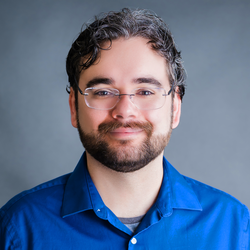
Isaac Sheff is a Senior Research Scientist at Heliax and former Postdoctoral Researcher at the Max Planck Institute for Software Systems. His research focuses on distributed systems, consensus protocols, and formal verification, with applications to blockchain technology. He leads development of Typhon, a next-generation heterogeneous consensus protocol enabling fast finality and multi-chain atomic transactions. His work combines theoretical foundations with practical implementations in Haskell and Coq. Publications demonstrate his contributions to program logics (Iris, Melocoton), consensus algorithms (Heterogeneous Paxos), and distributed data structures (Charlotte). His research consistently bridges formal methods, distributed systems, and security. He has collaborated on projects including ProLoc and CoVault that develop privacy-preserving location proofs and secure analytics platforms using distributed systems principles.
Prof. Dr. Pascal Bohleber is a Professor for Cryospheric Sciences at the Alfred Wegener Institute (AWI) in Bremerhaven, Germany. His primary affiliation is with the Glaciology department under the Geosciences school. His research focuses on paleoclimate reconstruction using polar and alpine ice cores, signal preservation in ice cores, ice chemistry, and advanced analytical techniques like laser ablation inductively-coupled plasma mass spectrometry (LA-ICP-MS). He contributes to ice core laboratories and related infrastructure at AWI, including work on ice core chemistry and environmental signal interpretation. His expertise spans glaciological fieldwork, laboratory analysis, and climate modeling applications. Prof. Bohleber is based at the AWI’s main campus in Bremerhaven, contributing to both research and education in polar and marine sciences. His work intersects with long-term observational programs and international collaborative projects in cryospheric sciences.
Sebastian Wilczek is a researcher at Technische Hochschule Georg Agricola (THGA) in Bochum and works part-time at enaDyne GmbH in Leipzig. He completed his PhD in plasma technology at Ruhr University Bochum and serves as a visiting researcher there, teaching Numerical Methods in Electrodynamics . His academic work spans research and teaching in plasma modeling, CO₂ conversion, and simulation techniques. Research Focus: Wilczek’s research centers on plasma technology , particularly radio-frequency (RF) plasma systems , with emphasis on non-thermal plasma catalysis for greenhouse gas conversion . His work includes detailed studies of electron dynamics in low-pressure capacitively coupled plasmas (CCPs), sheath behavior , and ionization mechanisms using advanced simulation tools like PIC/MCC and nonPDPSIM . Publications & Conferences: Wilczek has contributed to multiple peer-reviewed conference papers and simulations on topics such as CO₂ dissociation , electron temperature dynamics , and waveform tailoring for plasma optimization. His recent work compares microwave plasma torches with other sources for carbon recycling and investigates non-neutral discharge regimes at atmospheric pressure. Simulation Tools: He co-developed eduPIC , an educational PIC/MCC code for plasma simulation , available in multiple programming languages including Rust and C/C++. This tool is designed to help students and researchers understand and extend particle-in-cell methods for their own applications.
Dr. Alexander Stottmeister is a researcher and group leader at the Institute of Theoretical Physics within the Faculty of Mathematics and Physics at Leibniz University Hannover. His primary research focuses on theoretical and mathematical aspects of quantum theory at the intersection of quantum information theory and quantum field theory. His group explores foundational concepts such as operator-algebraic renormalization, quantum simulation algorithms with error bounds, and applications of classical probability methods to the renormalization group. They also investigate mathematical frameworks for quantum theory, including Schmidt rank, embezzlement, and semi-group theory. Key research areas include: Renormalization group approaches using operator algebras and functional analysis Quantum simulation of conformal field theories Entanglement embezzlement in relativistic quantum fields Mathematical structures in quantum information and quantum field theory Notable achievements include the development of operator-algebraic renormalization techniques and contributions to understanding entanglement properties of quantum fields. His work is supported by the Stay Inspired program of Lower Saxony's Ministry of Science. Students advised include doctoral candidate Lauritz van Luijk and master's student Tobias Pahlke. Recent publications highlight advancements in entanglement embezzlement, lattice Green functions, and mathematical foundations of quantum systems.
Fangfang Liu is an active researcher with an extensive publication record spanning from 2005 to 2025, demonstrating significant contributions across multiple domains in computer science and engineering. Their work shows consistent collaboration with researchers including Weimin Li, Caili Guo, Zhimin Zeng, and Chunyan Feng, suggesting strong institutional ties within their research community. Fangfang Liu's research spans several key areas including wireless communications, knowledge graph completion, semantic communications, and fake news detection. Their work demonstrates expertise in applying machine learning techniques to solve complex problems in network security, IoT systems, and multimedia analysis. The research portfolio shows a progression from foundational work in wireless communications and polarization techniques toward more recent applications in AI-driven security and knowledge representation. The publication trends reveal a strategic expansion from traditional communications engineering into cutting-edge AI applications. Early work focused on polarization techniques and wireless channel modeling, while recent publications emphasize knowledge graphs, multimodal fake news detection, and semantic communications. This evolution demonstrates adaptability to emerging research frontiers while maintaining technical depth in signal processing and network analysis. Fangfang Liu has made substantial contributions through numerous publications in prestigious venues including IEEE Transactions, Expert Systems with Applications, and Knowledge-Based Systems. Their collaborative approach is evident through extensive co-author networks across academia and research institutions. While specific advising information isn't detailed in the publication record, Fangfang Liu appears to lead research groups working on precision assembly, knowledge graph applications, and IoT security. The research program demonstrates strong connections between theoretical foundations and practical implementations in communication systems and AI applications.
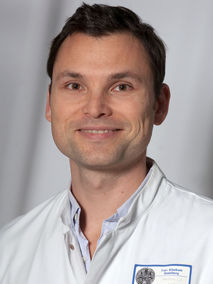
Prof. Dr. med. Florian Leuschner is a Senior Consultant at Heidelberg University Hospital, holding the Heisenberg Professorship for Immunocardiology (W3). He leads the Carditis Team (Epi-, Peri-Myocarditis) and the TAVI program, focusing on interventional cardiology and immune modulation in cardiovascular disease. Department of Cardiology, Angiology, and Pulmonology Institute for Cardiomyopathies Heidelberg Research Interests : Dr. Leuschner specializes in cardiac inflammation , particularly its role in cardiomyopathies, myocarditis, and heart failure. His work bridges clinical interventional cardiology with translational immunology, using single-cell transcriptomics and fibrosis mechanisms to advance therapies for conditions like TAVI and myocardial infarction. Article Trends : His recent publications emphasize immune-fibroblast interactions , epigenetic drivers of fibrosis , and translational models for heart failure and valve interventions. Studies span preclinical rodent models , human cardiac recovery , and cytokine signaling post-infarction. Scientific Awards : Best Poster Award, Gordon Research Conferences® 'Atherosclerosis' (2019) Wissenschaftspreis in Silber, Walter Siegenthaler Gesellschaft (2016) Publikationspreis, Deutsche Gesellschaft für Kardiologie (2015) Grants & Memberships : He has received funding from Deutsche Forschungsgemeinschaft (DFG), Deutsche Herzstiftung, and DZHK. Dr. Leuschner is a member of the Deutsche Gesellschaft für Kardiologie and the Walter Siegenthaler Gesellschaft, with roles in doctoral committee governance since 2014.
Dr. med. Tobias Holderried is a senior physician and clinician scientist at the University of Bonn, Faculty of Medicine, within the Department of Hematology, Oncology, Immuno-Oncology, Stem Cell Transplantation and Rheumatology at the University Hospital Bonn. He serves as the clinical lead of the Center for Cellular Therapy and Stem Cell Transplantation Bonn (ZZSB) and heads the Laboratory for Experimental Stem Cell Transplantation and Cellular Therapy, driving innovation in cellular immunotherapies and stem cell transplantation. His research focuses on cellular and humoral immunoregulatory mechanisms, particularly the role of CD8+ regulatory T cells in graft-versus-host disease (GvHD) and cancer immunotherapy. He investigates immune cell dysfunction, rejection reactions, and novel therapeutic targets, with recent work expanding into dietary effects on cellular therapies and nanobody-based immunotherapies. His long-term goal is to translate these findings into novel, in-house manufactured cellular therapies. The recent publications of Dr. Holderried span high-impact clinical trials in multiple myeloma, CAR T-cell therapy, and TCR-transgenic T-cell treatments for solid tumors, reflecting a strong translational focus. His work appears in top journals such as Nature Medicine , The Lancet Haematology , and New England Journal of Medicine , covering areas like bispecific antibodies, CAR T-cell efficacy post-relapse, and first-in-human TCR trials. He is actively involved in multi-center clinical studies and investigator-initiated trials through the Center for Integrated Oncology Aachen Bonn Köln Düsseldorf (CIO ABCD) and the German Cooperative Transplant Study Group. He successfully implemented the CAR T-cell program at University Hospital Bonn and secured infrastructural funding from Miltenyi for in-house manufacturing. He also explores the integration of eHealth tools to improve patient outcomes in cellular therapy. Principal Investigator in numerous clinical trials Head of Laboratory for Experimental Stem Cell Transplantation and Cellular Therapy Recipient of infrastructural funding from Miltenyi Active in national and international collaborative research networks Dr. Holderried's work bridges clinical practice and pre-clinical research, with a mission to enhance patient outcomes through innovative, scientifically grounded therapies in hematology-oncology and cellular immunology.
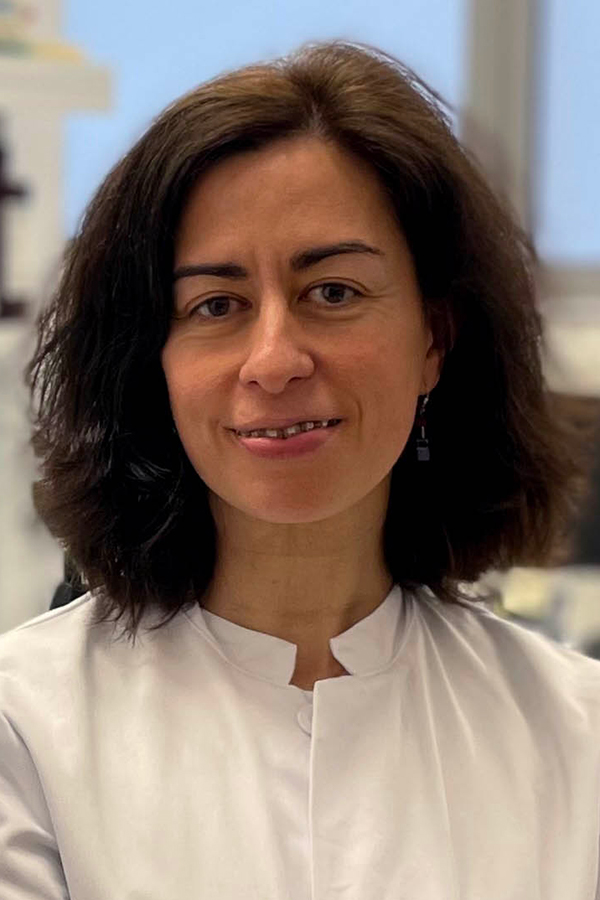
Dr. Silvia Vega-Rubín-de-Celis is a Junior Research Group Leader at the Institute of Cell Biology (Tumor Research) , part of the Medical Faculty at the University of Duisburg-Essen , based at the University Hospital Essen . She leads the research group Autophagy in Cancer , focusing on the molecular mechanisms of autophagy in tumorigenesis and therapy resistance. Her research interests lie at the intersection of cancer biology and cellular metabolism , particularly the dual role of autophagy in cancer progression and suppression. She investigates how autophagy is regulated by oncogenic signals such as receptor tyrosine kinases and tumor suppressors like BAP1 and TFEB, and how these pathways can be targeted therapeutically. Her work spans from basic molecular studies in cell lines to translational research using patient samples. Dr. Vega-Rubín-de-Celis's recent publications reveal a strong trend in understanding autophagy modulation as a response to targeted therapies (e.g., tyrosine kinase inhibitors, MEK inhibitors) and its impact on drug resistance across cancers including mesothelioma, pancreatic, breast, and liver cancers. Her research also explores novel therapeutic strategies such as antibody-drug conjugates and metabolic targeting. Her scientific recognition includes: Appointment to the Council of International Rising Stars at the Autophagy, Inflammation and Metabolism (AIM) Center, University of New Mexico, USA. She is actively mentoring the next generation of scientists and has received competitive research funding from major agencies including the DFG (Deutsche Forschungsgemeinschaft) and German Cancer Aid . Her team includes doctoral students and postdoctoral researchers, indicating an active research program with ongoing projects in autophagy and cancer signaling. Dr. Vega-Rubín-de-Celis is embedded within a vibrant research environment at the University Hospital Essen, contributing to the ZMB (Zentrum für Molekulare Biomedizin) and participating in oncology-focused research programs. Her lab operates within the Institute of Cell Biology, collaborating with clinical and translational researchers to bridge the gap between bench and bedside.
Steve Awodey is a Professor in the Department of Philosophy at Carnegie Mellon University, holding the Dean's Chair in Logic. He serves as an external member of the Munich Center for Mathematical Philosophy (MCMP) at Ludwig Maximilian University (LMU), spending several months annually in Munich. His research spans Category Theory, Logic, and Foundations of Mathematics, with groundbreaking work in Homotopy Type Theory (HoTT) and the Univalent Foundations Program. Education: University of Marburg (Philosophy, Mathematics), University of Chicago (Graduate degrees). Awodey's research interests include: Homotopy Type Theory and its applications to logic Modal Logic and topological interpretations Algebraic Set Theory Philosophy of Mathematics Formalization of mathematical structures via category theory His recent publications focus on HoTT, model categories, and categorical logic. Key awards include the Dean's Chair in Logic and editorship of Rudolf Carnap's Collected Works. He has advised numerous PhD students across Philosophy, Mathematics, and Computer Science, shaping research in synthetic homotopy theory and type theory. Awodey's work bridges abstract mathematics with philosophical inquiry, emphasizing structuralism and invariance in mathematical foundations.
Prof. David Keays serves as Chair of Organismal and Developmental Neurobiology within the Faculty of Biology at Ludwig Maximilian University of Munich (LMU). He leads the Keays Lab, a core component of the Munich Center for Neurosciences (MCN) and Graduate School of Systemic Neurosciences (GSN), where he also holds a Scientific Board position. His research integrates advanced methodologies including 2-photon imaging, electrophysiology, and CRISPR/Cas9 genome editing to address fundamental questions in sensory and developmental neuroscience. Keays' research focuses on three interconnected domains: the biophysical mechanisms of animal magnetoreception, the role of microtubule mutations in neurodevelopmental disorders, and the evolutionary neurobiology of monotremes. His lab employs reductionist experimental approaches to investigate how magnetic fields are detected, how tubulin mutations disrupt neuronal migration, and why egg-laying mammals possess unique neural architectures. This work spans molecular genetics, cellular imaging, and comparative neuroanatomy. Analysis of Keays' recent publications (2019-2025) reveals dominant research trajectories in avian magnetoreception mechanisms and tubulin-related neuropathologies. Key themes include cryptochrome protein function, iron-based magnetic sensing structures, and the developmental consequences of tubulin mutations. His work bridges quantum biology, clinical neurology, and evolutionary neuroscience, demonstrating consistent innovation in both conceptual frameworks and technical methodologies. Scientific awards and honors are not documented in the available source materials. Keays mentors doctoral candidates including Patrick Heisterkamp, Carolina Duro, Alexandra Vilceanu, and Thamari Kapuruge. His research program receives competitive funding, though specific grant details are not provided in the source texts. The lab actively contributes to graduate training through the GSN and maintains rigorous standards for data integrity and publication ethics. The Keays Lab operates within LMU's Neurobiology department, maintaining specialized facilities for 2-photon imaging, single-cell sequencing, and transgenic model development. The team collaborates extensively with MCN and GSN affiliates, utilizing cerebral organoid systems and quantum magnetic imaging to advance understanding of sensory processing and neurodevelopment. Current infrastructure supports high-resolution in vivo imaging and molecular manipulation of neural circuits.
Prof. Dr. Frieder Schwenk is a Professor at Westfälische Hochschule since 2003, specializing in Biomedical Research. He serves as Subject Advisor for the Master's program "Molecular Biology," Biological Safety Officer (BBS), and Timetable Officer in the Department of Engineering and Natural Sciences (FB 8) at the Westphalian Institute of Health. His educational background includes: Biology Diploma (1987-1991) at Universität zu Köln Diploma thesis (1992) on MHC Class II-associated Invariant Chain at Universität Bonn PhD (1993-1997) on conditional mutagenesis technologies at Universität Köln Prof. Schwenk's research focuses on Molecular Biology , particularly stem cell differentiation, gene targeting, conditional mutagenesis, genome editing, and RNA interference. His work centers on developing genetic model organisms for biomedical research, with applications in pharmaceutical development including pluripotent stem cell differentiation as models for natural regeneration processes and technologies for targeted gene modification. His teaching encompasses Molecular Biology, Molecular Physiology, Pathophysiology, and Drug Development across Bachelor's and Master's programs. His extensive publication record demonstrates consistent contributions to genetic engineering techniques, particularly in mouse models. His work spans molecular biology, genetics, epigenetics, neuroscience, and immunology, with a strong emphasis on developing and refining gene targeting and editing technologies for biomedical applications. The evolution of his research shows progression from fundamental molecular techniques to sophisticated applications in disease modeling and therapeutic development. Scientific recognition includes: Boehringer-Ingelheim-Fonds scholarships (1993-1996) Prof. Schwenk has supervised numerous Bachelor's and Master's theses at prestigious institutions worldwide including Harvard Medical School, University of Edinburgh, and University of Cologne. He maintains a consulting role at Taconic Biosciences GmbH in Köln, advising on technology development and patents. His collaborative network spans multiple continents, reflecting the international significance of his research in genetic engineering and biomedical applications. His laboratory focuses on developing and applying advanced genetic techniques using mouse models, with particular emphasis on conditional gene expression systems and stem cell differentiation pathways for modeling human diseases and developing therapeutic approaches.
Susan Kennedy is a Postdoctoral Researcher and Laboratory Manager at the University of Trier, Department of Biogeography within the Faculty of Spatial and Environmental Sciences. Her research focuses on island biology, arthropod community ecology, molecular gut content analysis, and spider biodiversity and systematics, utilizing DNA metabarcoding and other advanced molecular techniques. University: University of Trier School: Spatial and Environmental Sciences Department: Biogeography Email: kennedy@uni-trier.de Education: Ph.D. in Environmental Science, Policy and Management from UC Berkeley (2018) B.A. in Biology from Earlham College (2008) Research Interests: Susan's work explores the intersection of molecular ecology and island biogeography, with a focus on spider biodiversity and arthropod community dynamics. She employs DNA metabarcoding to analyze predator-prey interactions and ecosystem structure, particularly in Pacific island systems affected by anthropogenic disturbance. Recent Publications: Her research contributes to understanding biodiversity patterns through high-throughput DNA sequencing, including studies on spider gut microbiomes, genome evolution, and environmental DNA sampling. She has developed protocols for cost-effective metabarcoding and has investigated the role of habitat fragmentation in microallopatric differentiation. Scientific Awards: NSF Graduate Research Fellowship Program (2012-2017) NSF Graduate Research Internship Program (2016-2017) Outstanding Graduate Student Instructor Award (UC Berkeley, 2018) Bob Lane and Sandy Purcell Graduate Summer Award (UC Berkeley, 2017) Harvey I. Magy Memorial Scholarship (UC Berkeley, 2016) California Scholarship Fund (2016) Robert L. Usinger Memorial Award (UC Berkeley, 2015) Phi Beta Kappa induction (2008) Departmental and College Honors at Earlham College (2008) Millard S. Markle Award for Field Biology (Earlham College, 2008) Teaching Experience: She has served as Graduate Student Instructor for Spider Biology and Field Entomology at UC Berkeley, and as an SAT Instructor and Undergraduate Teaching Assistant at PowerScore and Earlham College, respectively. Her project 'Pacific Scanner' involves international collaboration across Germany, Japan, and the USA.
Prof. Dr. Siavosh Mahboobi is a faculty member at the University of Regensburg , affiliated with the Institute of Pharmacy and working in the Pharmaceutical/Medicinal Chemistry I department. His research focuses on molecular mechanisms of cancer and the development of targeted therapies. Signal transduction pathways in cancer FLT3 and PDGFR tyrosine kinase inhibitors HDAC and tubulin inhibition strategies EGFR-targeted therapies 5-HT receptor agonists/antagonists His work emphasizes the design of small molecules that disrupt cancer-related signaling. He has received the PHOENIX Pharmaceutical Sciences Award (2011) for his contributions to anticancer drug development.
Pierre Castéran is a Professor at the University of Bordeaux, affiliated with the LaBRI (Laboratoire Bordelais de Recherche en Informatique). He is a co-author of Coq'Art , the first book on the Coq Proof Assistant, and has contributed extensively to its development through tutorials, technical papers, and research projects. His work includes exploring Hydra Battles and ordinal notations in Coq, as well as foundational contributions to type classes, inductive definitions, and epsilon operators. ACM Software System Award (2013) for Coq development His research interests span formal verification, mathematical logic, proof assistants, and the intersection of computer science with discrete mathematics. He has led projects like A3PAT (Assisting Proof Assistants) to enhance automation in formal methods. His technical work includes defining recursive path orderings, denumerable sets, and axiomatic presentations of ordinals. Collaborations include Yves Bertot ( Coq'Art ), Evelyne Contéjean (rpo termination proofs), and Matthieu Sozeau (type classes). He has created educational materials for Coq, including tutorials for Type Classes and inductive types, with examples updated across Coq versions.
Jérôme Leroux is a Directeur de Recherche (DR CNRS) at the Laboratoire Bordelais de Recherche en Informatique (LaBRI) , affiliated with the University of Bordeaux , France. His research focuses on formal verification of infinite-state systems, vector addition systems, Presburger arithmetic, and acceleration techniques for symbolic computation. Key research themes include: Vector Addition Systems (VASS) and Petri Nets Automata-based representations for Presburger arithmetic Abstract interpretation and CEGAR frameworks Verification of asynchronous distributed systems His recent publications highlight work on acceleration techniques for convex binary relations, serialized digit automata, and regular acceleration methods for number decision diagrams. These contributions are implemented in tools like the Talence Presburger Arithmetic Suite (TAPAS) and the FAST tool for symbolic verification. Scientific awards include a Best Paper Award at TURING'100 . He has advised several Ph.D. students and postdoctoral researchers, including Alexander Heußner and Thibault Hilaire (current Ph.D. candidate). Leroux is actively involved in organizing conferences like MFCS'23 and serving on program committees for venues such as VMCAI'26 .