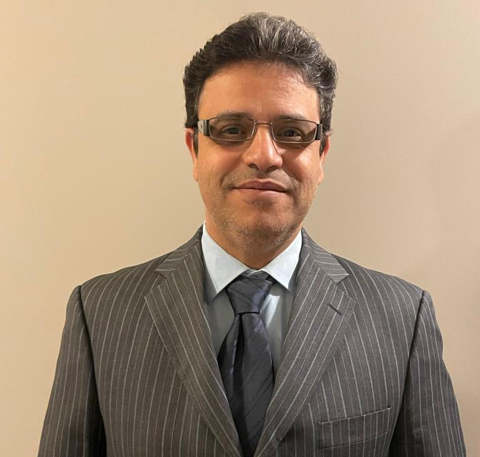
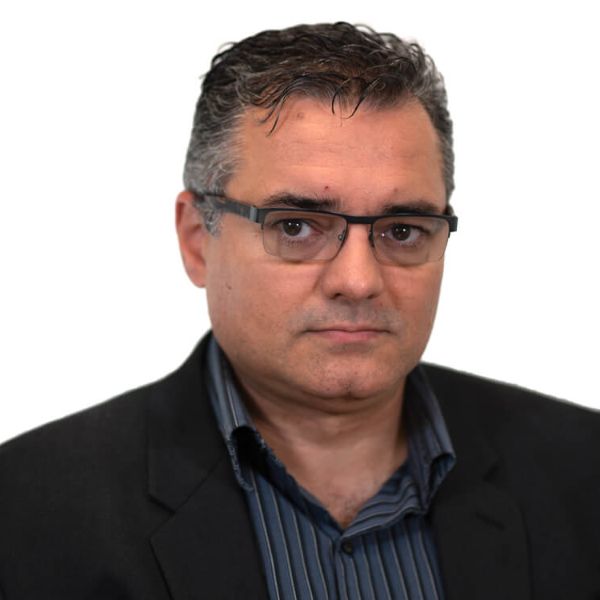
Prof. Dr. Malte Oppermann is a full Professor at the University of Basel , leading the Ultrafast Chiral Dynamics Laboratory within the Department of Chemistry. His group specializes in developing cutting-edge time-resolved spectroscopic techniques to probe molecular transformations on femtosecond to microsecond timescales, focusing on chirality and structural dynamics in complex systems. Research Focus: Ultrafast Chiral Spectroscopy : Using circularly polarized laser pulses to resolve structural changes in chiral systems. Molecular Motors & Protein Dynamics : Capturing conformational changes in synthetic motors and proteins in native environments. Photoactive Materials : Investigating light-energy conversion mechanisms in chiral photochemical systems. His research bridges physics and chemistry, employing state-of-the-art laser technology and collaborating internationally across synthesis, spectroscopy, and theory. Publications & Impact: Prof. Oppermann’s work (2011–2025) spans ultrafast spectroscopy , chiral dynamics , nanomaterials , and biomolecular photophysics . Key themes include spin-crossover dynamics, DNA photodamage, and plasmonic nanoparticles, with techniques like transient X-ray absorption and deep-UV circular dichroism. Team & Opportunities: The group actively recruits MSc/PhD students and postdocs in physics, chemistry, and materials science. Interested candidates are encouraged to contact Prof. Oppermann directly.
Dr. Xinan Zhang is an Associate Professor in the School of Engineering at The University of Western Australia (UWA), specializing in Electrical, Electronic, and Computer Engineering. He holds a BEng from Fudan University (2008) and a PhD from Nanyang Technological University (2014). Before joining UWA in 2019, he held roles as a Lecturer and Research Fellow in Singapore and Australia. His research focuses on power electronics, electrical machine drives, and renewable energy, with over 60 top-tier publications. He is the Portfolio Lead for Industry Engagement in UWA's School of Engineering and co-leads the Power and Clean Energy (PACE) research group. Education: BEng in Electrical Engineering, Fudan University (2004–2008) PhD in Electrical Engineering, Nanyang Technological University (2010–2014) Research Interests: Dr. Zhang’s work spans power electronics, renewable energy systems, energy storage, and smart grid technologies. He emphasizes practical applications, such as battery management systems for vanadium redox flow batteries and adaptive control strategies for microgrids. His contributions address challenges in energy efficiency, grid stability, and sustainable power solutions. Articles & Trends: Recent publications focus on advanced control algorithms for inverters, battery modeling, and renewable energy integration. His work combines data-driven methods with traditional control theory to enhance system efficiency and reliability. Notable areas include DC microgrid control, vanadium redox flow battery optimization, and model predictive control for power electronics. Awards: Listed in Stanford University’s Top 2% Scientists (2020–2022) Grants & Collaborations: He leads or co-leads projects funded by the Australian government and industry partners, including the GenX Betavoltaic Battery Pilot Manufacturing Process and Mine Electrification . These projects aim to advance clean energy technologies and industrial applications. Labs & Teams: As co-lead of the PACE group, he fosters interdisciplinary collaboration to tackle global energy challenges, aligning with UN Sustainable Development Goals for affordable and clean energy (SDG 7).
Hadi Esmaeilzadeh is an Associate Professor at the University of California, San Diego in the Department of Computer Science and Engineering . He previously served as an Assistant Professor at Georgia Tech (2013-2017) and holds the Halicioğlu Chair in Computer Architecture . As founder/director of the Alternative Computing Technologies (ACT) Laboratory and associate director of UCSD's Center for Machine Integrated Computing and Security (MICS) , his research drives cross-stack solutions for next-generation computer systems. Early tenure recipient at UCSD Coined the term "dark silicon" in computer architecture Developed Tabla/DnnWeaver open-source frameworks Research Interests span: Approximate Computing Neural Acceleration FPGA/ASIC Hardware Design Machine Learning Systems Dark Silicon Challenges Security/Privacy in Accelerated Systems Scientific Recognition : 4 CACM Research Highlights 4 IEEE Micro Top Picks Distinguished Paper Award (HPCA 2016) Inducted to ISCA Hall of Fame (2018) Teaching : Developed courses on accelerator design (CSE 240D) and alternative computing (CS 8803 ACT) Advocates for hands-on FPGA-based learning in Processor Design with FPGAs courses
Frede Blaabjerg is a Professor at Aalborg University (AAU Energy) , affiliated with the Faculty of Engineering and Science . Since 1998, he has pioneered power electronics research in applications such as wind turbines , photovoltaic (PV) systems , reliability engineering , and Power-2-X technologies. Education : PhD in Electrical Engineering (1995, Aalborg University) Honorary Degrees : Honoris Causa at University Politehnica Timisoara (2017) and Tallinn Technical University (2018) His research focuses on power electronics control , system optimization , and reliability for renewable energy and electric mobility . Recent work includes grid-forming converters , virtual synchronous generators , and smart EV charging systems. Key publication trends span 15+ years , with over 3,733 peer-reviewed articles and 900+ journal papers in power electronics , renewables , and energy storage . Notable book series: Control of Power Electronic Converters and Systems (4 volumes, Elsevier). Scientific Awards : 46 IEEE Prize Paper Awards 2020 IEEE Edison Medal 2019 Global Energy Prize 2014 IEEE William E. Newell Power Electronics Award Leadership Roles : Editor-in-Chief, IEEE Transactions on Power Electronics (2006–2012) Chairman, Danish Council for Research and Innovation Policy (2020–) President, IEEE Power Electronics Society (2019–2020)
Srdjan Lukic is the Deputy Director of the FREEDM Systems Center and a Distinguished Professor in the Department of Electrical and Computer Engineering at North Carolina State University. His research focuses on power electronics, power systems, and electric vehicle infrastructure. He holds a Ph.D. in Electrical Engineering from the Illinois Institute of Technology (2007). His work emphasizes high-power converters, DC microgrids, and extreme fast charging (XFC) technologies for electric vehicles. Recent projects include the development of a 13.2 kV solid-state transformer for EV XFC stations and resilient distributed control frameworks for smart grids. He has contributed to wireless charging systems and modular medium-voltage fast chargers. Key Awards: University Faculty Scholars (2022) Grants: DOE-funded XFC projects, modular EV charging infrastructure Labs/Teams: FREEDM Systems Center, RIAPS control architecture development Publications highlight innovations in microgrid control, power electronics modeling, and privacy-preserving distributed systems. His work addresses grid resilience, cyber-physical integration, and high-efficiency energy conversion.
Shubho Banerjee is a Professor of Physics at Rhodes University, where he has been affiliated since 2002. He teaches both introductory and advanced physics courses, and his research focuses on electrostatics, mathematical physics, and material science. A native of India, he earned his BS and MS from the Indian Institute of Technology, Kanpur, and his PhD from Carnegie Mellon University, following a post-doctoral appointment at the University of Maryland, College Park. Education : BS and MS from Indian Institute of Technology, Kanpur; PhD from Carnegie Mellon University His research explores fundamental aspects of electrostatic interactions, including analytical solutions for conducting spheres and orbital stability. He has contributed to mathematical physics through asymptotic expansions and zeta function analysis. Recent publications span electrostatics, mathematical physics, and statistical mechanics, with a focus on analytical modeling and asymptotic methods. His work combines theoretical physics with applications in electrical engineering and material science.
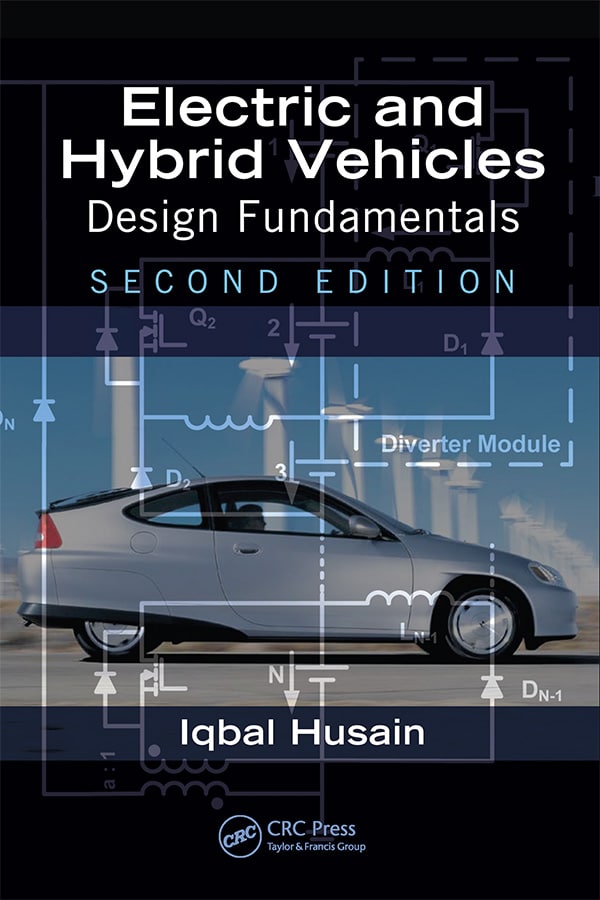
Dr. Iqbal Husain is the Director of the FREEDM Center and an ABB Distinguished Professor in the Department of Electrical and Computer Engineering at North Carolina State University. Previously, he served at the University of Akron for 17 years before joining NC State. He holds a Ph.D. (1993), M.S. (1989), and B.S. (1987) in Electrical Engineering from Texas A&M University and Bangladesh University of Engineering and Technology, respectively. His research focuses on power electronics, electric drives, and renewable energy systems, with applications in transportation, automotive, and aerospace. Notable contributions include advancements in electric machine design, inverter controls, and grid synchronization. He authored the textbook *Electric and Hybrid Vehicles: Design Fundamentals*, now in its third edition. Dr. Husain’s awards include the NSF CAREER Award (1997), SAE Vincent Bendix Award (2006), and IEEE Fellow (2009). His recent work includes developing AI-enabled tools for power grid cybersecurity and medium-voltage solid-state transformers for EV fast charging. He leads interdisciplinary projects at the FREEDM Systems Center, addressing challenges in clean energy and smart grid technologies.
Dr. Kaushik Rajashekara is a Distinguished Professor of Engineering at the University of Houston, affiliated with the Department of Electrical & Computer Engineering. He holds leadership roles in academic and industry research, including prior positions at the University of Texas at Dallas, Rolls-Royce, and Delphi Corporation. His expertise spans power electronics, transportation electrification, and renewable energy systems. Education: MBA, Indiana Wesleyan University, 1992 Ph.D., M.S., B.S. in Electrical Engineering, Indian Institute of Science, 1984, 1977, 1974 B.S. in Science & Maths, Bangalore University, 1971 Research Interests: Power electronics and drive systems, subsea electrical systems, electric/hybrid vehicles, aircraft electrification, renewable energy, and microgrids. His work emphasizes sustainable energy solutions and advanced propulsion technologies. Awards: 2022 Global Energy Prize (highest international energy award) Member of U.S. National Academy of Engineering (2012) IEEE Medal for Environmental and Safety Technologies (2021) Multiple fellowships from IEEE, NAI, and SAE Grants & Advising: Extensive industry collaborations, including roles as Chief Technologist at Rolls-Royce and Chief Scientist at Delphi. His research focuses on cutting-edge technologies like flying cars and subsea power systems. Labs/Teams: Active in the PEMSEC lab at UH, advancing power electronics and energy systems. Collaborates globally on projects like offshore renewable energy integration and aircraft electrification.
Dr. Prasanth Venugopal is an Associate Professor specializing in Power Electronics with a focus on advanced energy transfer systems and battery technology. His research spans wireless power transfer, electric vehicle charging, and electrochemical impedance spectroscopy for battery diagnostics. Primary research areas: Wireless Power Transfer (100%), Harmonics (88%), Inductive Power Transfer (87%), Battery Engineering (48%) Recent publications demonstrate expertise in transformerless converter designs, multi-level architectures, and AI-driven battery capacity estimation. He has pioneered meander coil topologies for harmonic mitigation and developed computation-light models for battery aging analysis. His work includes collaborations on Li-ion battery degradation, onboard chargers for electric vehicles, and hybrid power systems for electric aircraft. Despite significant output in IEEE Transactions, no explicit awards or student mentoring data appears in the provided texts.
Thiago Batista Soeiro serves as a Full Professor with exceptional scholarly impact, evidenced by over 200 research publications and an h-index of 27. His work fundamentally advances power electronics applications in transportation and energy systems, particularly through innovations in electric vehicle infrastructure and sustainable power conversion technologies. Despite the absence of explicit institutional affiliation in source materials, his research permeates critical IEEE journals and conferences. Professor Soeiro's research portfolio centers on: Power converter design for electric vehicle charging systems AI-driven battery health estimation using electrochemical impedance spectroscopy Wireless power transfer optimization for automotive applications High-efficiency topologies for more electric aircraft Hydrogen energy system integration Advanced semiconductor utilization in grid-connected systems Analysis of his 2023-2025 publications reveals accelerating innovation in wide-voltage-range converters, predictive battery management, and fault-tolerant power systems. His work increasingly bridges machine learning with power electronics, notably through computation-light AI models for battery diagnostics, while maintaining strong focus on practical implementation challenges in EV charging and aircraft electrification. No scientific awards or honors were documented in the available materials. Similarly, information regarding student supervision, research grants, laboratory facilities, or collaborative teams was not provided in the source texts.
Francisco Camara Pereira is a Professor and Head of Section at the Department of Technology, Management and Economics at the Technical University of Denmark (DTU). His research focuses on Intelligent Transportation Systems, Machine Learning, and Data-Driven Decision-Making in transportation contexts. He actively contributes to advancing transportation science through interdisciplinary approaches combining simulation, optimization, and AI techniques. His work addresses challenges in public transport analysis, charging infrastructure planning, and multimodal demand prediction. Recent projects include developing graph-based optimization methods for electric vehicle networks and causal discovery frameworks for transportation systems. He supervises multiple PhD students in areas like federated learning for cyclist safety, causal graph neural networks, and socially aware AI models. Key contributions include publications on smart card data analysis for travel surveys, stochastic infrastructure expansion models, and transfer learning for bike-share systems. His research aligns with UN Sustainable Development Goals related to sustainable cities and innovation. Dr. Pereira collaborates internationally on transportation policy and infrastructure projects. His lab focuses on translating theoretical advancements into practical solutions for urban mobility challenges.
Dr. Victoria C. P. Chen is a Professor in the Industrial, Manufacturing, and Systems Engineering (IMSE) department at The University of Texas at Arlington (UTA), where she has served since 2002. She previously held positions at the Georgia Institute of Technology from 1993-2001. Dr. Chen has held several leadership roles at UTA, including Interim Department Chair (2012-2014), Director of the Center on Stochastic Modeling, Optimization, & Statistics (COSMOS) (2008-2012, and again from 2017-present), and Director of Doctoral Studies (2019-present). She was also the George & Elizabeth Pickett Professor from 2015-2017 and was inducted into the UT Arlington Academy of Distinguished Teachers in 2019. Dr. Chen is actively involved with INFORMS (Institute for Operations Research and the Management Science), where she currently serves as Secretary on the Executive Board. Dr. Chen earned her B.S. in Mathematical Sciences from The Johns Hopkins University, and her M.S. and Ph.D. in Operations Research and Industrial Engineering from Cornell University. Her academic journey includes visiting professorships at the University of Genoa, Italy, and Iowa State University. Dr. Chen's research utilizes statistical perspectives to create new methodologies for operations research problems appearing in engineering and science. Her expertise includes the design of experiments, statistical modeling, and data mining, particularly for computer experiments and stochastic optimization. Through her statistics-based approach, she has developed computationally-tractable decision-making methods for many high-dimensional complex systems. Her work spans multiple domains including sustainability, energy, water management, healthcare, and law enforcement. Specific application areas include inventory forecasting, airline optimization, water reservoir networks, wastewater treatment, air quality monitoring, green building design, nurse assignment systems, and pain management programs. Her recent publications demonstrate continued innovation in mixed integer programming for electric vehicle charging stations, vacuum ultraviolet spectroscopy prediction, and sustainable building education. Senior Member, Institute for Operations Research and the Management Sciences (INFORMS) (2024) Data Mining Prize (Lifetime Achievement Award), INFORMS Society on Data Mining (2023) College of Engineering Teaching Award, UT Arlington (2021) Third Place Award, C3.ai COVID-19 Grand Challenge (2020) Academy of Distinguished Teachers, University of Texas at Arlington (2019) George & Elizabeth Pickett Professorship (2015-2017) As an educator and mentor, Dr. Chen has advised over 25 doctoral students across diverse research topics in operations research and systems engineering. She has secured substantial research funding from multiple sources including the National Science Foundation (over $1.5 million in active projects), Environmental Protection Agency, National Institute of Justice, and industry partners like Luminant and Dallas-Fort Worth International Airport. Her current research projects focus on decision analytics for sustainable urban environments, optimization for Texas water management, and statistical methods for pain management programs. She has served as Principal Investigator or Co-PI on more than 20 externally funded research projects totaling over $3 million in funding. Dr. Chen co-founded the Center on Stochastic Modeling, Optimization, & Statistics (COSMOS) at UTA with Dr. H. W. Corley. This research center brings together faculty and students from multiple disciplines to address complex problems through advanced statistical and optimization methods. She also leads interdisciplinary research teams working on projects related to sustainable infrastructure, energy systems, and healthcare optimization, frequently collaborating with researchers from civil engineering, environmental science, and medical fields.
Dr. Mohamed Youssef is an Associate Professor in the Department of Electrical, Computer and Software Engineering at Ontario Tech University. He holds a PhD (Electrical and Computer Engineering) from Queen’s University (2005). His primary affiliation is the Faculty of Engineering and Applied Science, with research focusing on propulsion systems, power electronics, railway systems, and renewable energy technologies. Education: PhD, Electrical and Computer Engineering, Queen’s University (2005) MSc, Power Electronics, Concordia University (2001) MSc, Electric Power and Machines, Ain Shams University (1999) BSc, Electric Power and Machines, Ain Shams University (1995) Research Interests: Dr. Youssef’s expertise spans propulsion systems for automotive and hyperloop technologies , power electronics for IoT and renewable energy , railway electromagnetic compatibility , and power system stability . His work emphasizes practical applications in electric vehicles, smart grid integration, and sustainable energy systems. He leads the PEDAL (Power Electronics and Drives Laboratory) at Ontario Tech. Awards and Recognition: Recipient of the NSERC Post-doctorate Scholarship (2006) Best Paper Award at IECON 2004 Award of Merit from Ontario Center of Excellence (2006) Nominated for the Howard Alper Prize (2007) Professional Activities: He serves as a reviewer for IEEE Transactions on Power Electronics , IEEE Transactions on Industrial Electronics , and others. He has held roles as Technical Chair at IEEE SEGE 2015 and Track Chair at IEEE SEGE 2016. Current affiliations include Senior Member of IEEE and Chair of the IEEE Power Electronics Chapter in Toronto. Labs and Teams: He directs the PEDAL Lab , focusing on advanced power electronics and electric vehicle technologies. Collaborations include Bombardier Transportation and Armstrong Pumps.
Zeljko Pantic is an Associate Professor in the Department of Electrical and Computer Engineering at North Carolina State University. He holds a Ph.D. from NC State (2013) and B.S./M.S. degrees from the University of Belgrade (1998/2007). Before joining NC State in 2019, he served as an Assistant Professor and Associate Director of the Electric Vehicle and Roadway Research Facility at Utah State University. He is actively involved in editorial roles for IEEE Transactions on Transportation Electrification and serves on the IEEE IAS Transportation Systems Committee. Education: Ph.D., Electrical Engineering, North Carolina State University (2013) M.S., Electrical Engineering, University of Belgrade (2007) B.S., Electrical Engineering, University of Belgrade (1998) Research: Dr. Pantic specializes in electrified transportation systems, wireless power transfer (WPT), power converter design, and DC microgrid technologies. His work addresses challenges in EV charging infrastructure, magnetic circuit optimization, and energy conversion principles for transportation electrification. Recent projects include autonomous wireless charging systems for UAVs, marine DC microgrids, and road-embedded DWPT solutions. Awards & Recognition: 2019 IEEE JESTPE Second Prize Paper Award 2017 Outstanding Teacher of the Year (USU) 2012 NC State Mentored Teaching Assistantship Award Advisees & Grants: While specific student names are not listed, Dr. Pantic has advised graduate students on projects spanning WPT systems, EV infrastructure, and battery management. His work has been supported by grants focusing on dynamic charging, magnetic materials, and autonomous observatory nodes. Labs & Facilities: He leads research at NC State's Electric Vehicle and Roadway facility, focusing on roadway-integrated wireless charging and high-power WPT systems. Collaborations include ocean observatory development and autonomous system integration.
Zeinab Karami Hassan Abadi is a PhD candidate at the Department of Engineering Cybernetics, Norwegian University of Science and Technology (NTNU), under Professors Jon Are Wold Suul and Marta Molinas. Her research focuses on Control of Wireless Power Transfer Systems for Public Transport Applications, supported by SINTEF Energi's collaboration with Dr. Giuseppe Guidi. Academic Background: 2015-2021: Research Associate at University of Kurdistan, Sanandaj, Iran. 2015-2017: M.Sc. in Power Systems Engineering (University of Kurdistan). 2011-2015: B.Sc. in Electrical Engineering (University of Kurdistan). Research Interests span Optimal Control of Power Converters, Model Predictive and Robust Control, Wireless Power Transfer Systems, and Microgrid Dynamics. She specializes in advanced control strategies for power electronics in renewable energy and EV charging applications. Her work emphasizes stability and efficiency in power systems, with contributions to Model Predictive Control (MPC) for DC microgrids and inductive power transfer. Notable collaborations include projects with SINTEF Energi, focusing on practical implementations of control algorithms in real-world systems. Labs/Teams: Active in NTNU’s Power Electronics and Drives group, collaborating with SINTEF on applied power systems research.