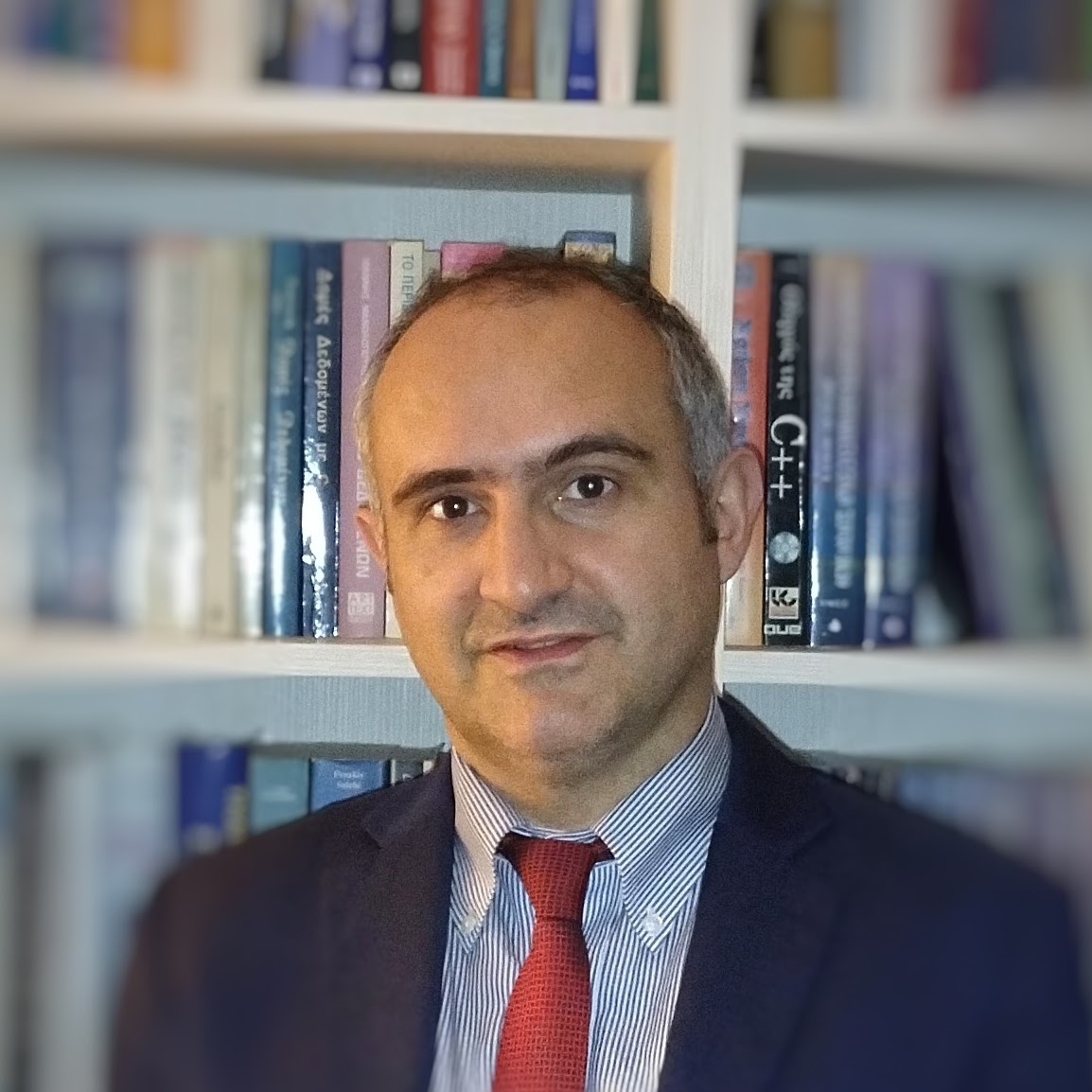
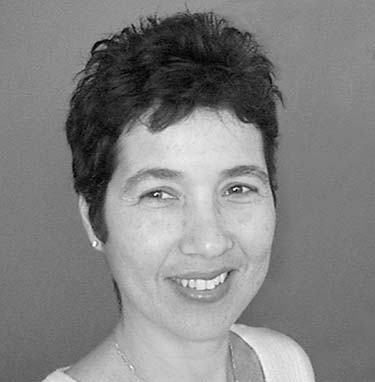
Oge Marques is a Professor in Computer Science with expertise in machine learning, image processing, and multimedia systems. Their research focuses on applying computer vision to medical diagnostics, biometric recognition, and healthcare data analysis. Key research areas include: Deep learning for skin cancer and tuberculosis diagnosis Bias assessment in medical AI models Biometric systems for fingerprint and iris recognition Wearable healthcare technologies 3D video coding and autostereoscopic displays Marques has contributed to 15+ journal articles and book chapters since 2002, collaborating with researchers in Austria, India, and the US. Their work appears in journals like Multimedia Tools and Applications and Journal of Digital Imaging , covering topics from spiking neural networks to compound figure separation in scientific publications.
Alexis Boegli is a Professor at Haute Ecole Arc Ingénieur - HES-SO since 2018. He holds a PhD in Science from the University of Neuchâtel and has extensive expertise in analog, digital, and RF electronics with a focus on energy-constrained systems. His work emphasizes applications in wearable devices, biomedical engineering, and IoT localization systems. Affiliations: HE-Arc Engineering School (HES-SO), EPFL collaborations Education: PhD in Science (Neuchâtel), Microengineering (EPFL) Research interests include RF localization (BLE-based systems), energy-efficient power electronics, and dielectric elastomer actuators. His work bridges theory and applied research, with notable contributions to ultra-high-voltage converters and BLE direction finding algorithms. Recent articles focus on real-time indoor localization, energy-recovering actuators, and hybrid camera-RF access control systems. Research trends emphasize practical implementations of low-power, scalable solutions for IoT and biomedical applications. Patents include a BLE-based access control system (2022) and wireless transmitter compliance methods (2013). He has advised multiple doctoral candidates and collaborates with CSEM and industry partners on technology transfer initiatives.
Lukas Gnam holds the position of Lecturer and Researcher at the University of Applied Sciences Burgenland's Energie-Umweltmanagement department. His work focuses on energy transition challenges, particularly in renewable energy integration, district heating optimization, and smart energy systems. He has co-authored over 49 publications, emphasizing interdisciplinary approaches to energy system modeling, user-centric energy management, and decarbonization strategies. Key projects include studies on wind power utilization in district heating networks, socially-accepted home energy management systems, and P2P energy trading models. His research combines technical innovation with socio-economic analysis, addressing both infrastructure upgrades and end-user behavior. Collaborations involve institutions like 4ward Energy Research GmbH and TU Wien, focusing on projects such as BEYOND, Empower Citizens, and Hybrid DH DEMO. Gnam's work often employs mixed-integer linear programming and co-simulation tools (e.g., MATLAB/IDA-ICE) to evaluate energy system performance under diverse scenarios. Publications highlight advancements in thermal storage pooling, fossil fuel reduction via PV integration, and long-term heating demand forecasting considering demographic shifts. His projects aim to bridge gaps between technical feasibility and societal acceptance in achieving climate-neutral energy systems.
Dr. Andreas Menychtas is an Assistant Professor at the Department of Digital Systems, School of Information Technology and Communications, University of Piraeus. He holds a Ph.D. in Electrical and Computer Engineering from the National Technical University of Athens (2009), specializing in distributed systems and cloud computing. His research focuses on IoT, Edge Computing, eHealth, and AI-driven healthcare solutions. Key research areas include: Medical IoT security (MedSecurance project) AI applications in telemedicine AR-enhanced healthcare systems Wearable sensor networks for patient monitoring He has published over 100 peer-reviewed works, with 2,318 citations. Current projects include: AI4Work: Human-centric digital twins for healthcare/education crowdHEALTH: Big data analytics for public health policies Teaching responsibilities include courses on: Object-Oriented Programming Cloud Computing Web/Mobile Information Systems Research collaborations span European/National projects in: Smart city infrastructure eHealth platforms Health informatics
Dr. Andreas E. Fousteris is an Assistant Professor in the Department of Business Organization and Administration at the University of Piraeus. He contributes to academic and professional discourse in business management, sustainability, and innovation, with active teaching and research responsibilities. His office is located in the Main Building, and he holds regular office hours on Wednesdays and Thursdays. Education: Bachelor's Degree in Economics, University of Piraeus Master's Degree in Organization and Management of Industrial Systems (specialization in Energy & Environmental Management), National Technical University of Athens & University of Piraeus Executive MBA, University of Piraeus PhD in Organization and Management of Business, University of Piraeus Qualified Chartered Accountant (ACCA) Dr. Fousteris' research focuses on the intersection of economic analysis, environmental sustainability, and technological innovation in business. His work explores corporate governance, public finance, and sustainable development, particularly in the context of Greek enterprises and public institutions. He investigates how digital transformation, including machine learning and digital twins, can enhance decision-making in built environments and public services. His interests extend to entrepreneurship, feasibility studies, and the impact of crises such as the economic downturn and the pandemic on business resilience. His recent publications reveal a strong trend toward interdisciplinary research, combining data analytics with sustainability and public policy. Themes include climate stress testing in finance, urban health planning, digital transformation in industry, and the role of EU instruments in circular economy transitions. His work spans maritime economics, tourism, and environmental management, often with a focus on Greece. Scientific Awards: No awards listed in the provided text. Dr. Fousteris has extensive professional experience in the private sector, having held management roles in finance, consulting, infrastructure, and renewable energy. This background enriches his academic work, particularly in applied fields such as business planning and feasibility studies. While no formal advising or grant information is provided, his collaborative research suggests active engagement in academic teams and projects. He is involved in conferences such as ICBAP and HSSS, contributing to the advancement of business analytics and systemic transformation in contemporary economies.
Lino Marques is an Associate Professor at the Department of Electrical and Computer Engineering , University of Coimbra, with a Senior Researcher position at the Institute for Systems and Robotics (ISR-UC) . He leads the Field Robotics group and has supervised 8 PhD students and over 60 MSc students. 1994–Present: Faculty at University of Coimbra 2005: PhD in Electrical and Computer Engineering 2023: Habilitation in Robotics His research focuses on mobile robot olfaction , multi-robot systems , sensor data fusion , and hazardous environment robotics . Recent projects emphasize UV-C disinfection robots , precision agriculture , and energy-efficient path planning . Key applications include pollutant monitoring , maritime surveillance , and mine detection . He has participated in major projects like FP7-TIRAMISU (mine removal) and FP6-GUARDIANS (scent-based navigation). His editorial roles include Editor-in-Chief for Mobile Robots and Multi-Robot Systems in the International Journal of Advanced Robotic Systems. With an h-index of 33 , he has published 16 book chapters, over 40 journal articles, and 150+ conference papers. His work spans robotic clusters , wireless sensor networks , and cyber-physical systems .
Slawomir Sander (formerly known as Slawomir Grzonka) is a researcher at the Department of Computer Science at Albert-Ludwigs-University of Freiburg, working in the Autonomous Intelligent Systems Group led by Professor Wolfram Burgard. His research focuses on robotics, particularly in the areas of aerial robotics, navigation systems, and agricultural applications. Dr. Sander's primary research interests include Quadrotors, SLAM (Simultaneous Localization and Mapping), Navigation, Machine Learning, Human Motion Tracking, and Agricultural Robotics. His work bridges theoretical robotics with practical applications, especially in precision farming where robotic systems can reduce herbicide usage through targeted weed detection and removal. His research demonstrates a strong progression from fundamental navigation algorithms to applied agricultural robotics. An analysis of his publication history shows a clear evolution from indoor navigation and SLAM techniques (2007-2012) toward agricultural robotics applications (2013-2016). His earlier work focused on quadrotor navigation, place recognition, and state estimation, while his more recent publications center on precision farming applications, particularly weed detection in sugar beet fields and integration of UAV-UGV systems for crop management. His notable scientific achievements include: Wolfgang-Gentner-Award (Wolfgang-Gentner-Nachwuchsförderpreis) for his PhD thesis Best Conference Paper Award for "Towards Palm-Size Autonomous Helicopters" Finalist for Best Student Paper Award and Best Paper Award in Cognitive Robotics for "Mapping Indoor Environments Based on Human Activity" Best Conference Paper Award for "Towards a Fully Autonomous Indoor Helicopter" Dr. Sander has been actively involved in several major robotics projects including the BoniRob platform development, RemoteFarming.1, and the Flourish project. His work often involves interdisciplinary collaborations with agricultural scientists and engineers. While specific grant information isn't detailed in the provided materials, his involvement in multiple substantial projects suggests successful grant acquisition for robotics research. He has been a key contributor to the Autonomous Intelligent Systems group's work on agricultural robotics, particularly in developing the BoniRob platform and its various applications (BoniRob-Apps) for field robotics. His work connects fundamental robotics research with practical agricultural applications, demonstrating the real-world impact of robotics technology in addressing challenges in modern farming.
Dr. Ian D. Marsland is an Associate Professor in the Department of Systems and Computer Engineering at Carleton University, Faculty of Engineering and Design. He holds a Ph.D. in Electrical Engineering from the University of British Columbia and has been a faculty member since 1999. His research is centered on wireless digital communications, with a focus on error control coding, noncoherent detection, iterative decoding, and indoor localization. B.Sc.Eng. (Honours) in Mathematics and Engineering, Queen's University, 1987 M.Sc. in Electrical Engineering, University of British Columbia, 1994 Ph.D. in Electrical Engineering, University of British Columbia, 1999 His research interests span wireless digital communications , including indoor localization using wireless networks , error control coding (LDPC, turbo, polar codes) , noncoherent receiver design , and applications of iterative decoding . His work bridges theoretical communication systems with practical implementation in modern wireless networks. The analysis of his recent publications (2020–2024) reveals a strong trend toward advanced modulation and coding schemes such as SCMA , faster-than-Nyquist signaling , and polar codes , often integrated with machine learning (e.g., neural network-aided detection) and high-resolution localization techniques. His work frequently appears in high-impact IEEE journals like IEEE Transactions on Communications and top conferences including ICC and GlobeCom . Dr. Marsland has not been explicitly mentioned as receiving scientific awards in the provided texts. He actively advises graduate students and has collaborated extensively with researchers including H. Yanikomeroglu , R.H. Gohary , and T. Shehata . His research has been supported through academic grants and industrial partnerships, though specific grant details are not listed. He supervises work in areas such as MIMO systems, SCMA, polar coding, and indoor positioning. Dr. Marsland leads a research group focused on wireless communications and signal processing, with active projects in next-generation multiple access, low-latency detection, and robust communication in fading and interference-prone environments. His lab contributes to both theoretical advancements and practical implementations in modern wireless systems.
Prof. Dr. Bernd Ludwig is a faculty member at the Institute for Information and Media, Language and Culture (I:IMSK) within the Faculty of Languages, Literature and Cultural Studies at the University of Regensburg. He has held the Professorship for Information Linguistics since August 2011, following a visiting role in the summer semester of that year. His academic journey began at Friedrich-Alexander-Universität Erlangen-Nürnberg, where he earned his PhD in 2004 and completed his habilitation in 2010. His research spans the interdisciplinary domains of natural language processing, human-computer interaction, and artificial intelligence, with a focus on spoken dialogue systems, user modeling, and context-aware assistive technologies. He leads projects like URWalking and ROSE, contributing to advancements in indoor navigation and intelligent mobile assistance. His recent publications reflect a diverse portfolio, combining AI and NLP with health informatics, social media analysis, and industrial applications. Trends show a growing emphasis on large language models, health recommendation systems, and the societal impact of AI. Scientific Awards: Zeitschrift für Medizinische Physik (ZMP) Autorenpreis 2022 AMiner Most Influential Scholar Award 2018 Nomination for Best Paper Award at MUM 2016 Nomination for Best Paper Award at KI 2010 SEW-EURODRIVE-Stiftung Studienpreis for Diploma Thesis (1997) Advising and Grants: Prof. Ludwig has supervised multiple doctoral candidates to completion, including Dr. Karema Al Subari and Dr. Robert Jackermeier, and currently mentors PhD students. He has secured research funding, notably a BMBF grant for the OPTAPEB project (2018–2021), and contributes to academic service as co-editor of Künstliche Intelligenz and organizer of major conferences such as CHIIR 2022 and COSIT 2019. Labs and Teams: He is a core member of the research team at the University of Regensburg, collaborating closely with Prof. Udo Kruschwitz, Prof. David Elsweiler, and others. His workgroup focuses on intelligent user interfaces, multimodal interaction, and practical applications of AI in everyday contexts.
Claudio Ettore Casetti is a Full Professor in the Department of Control and Computer Engineering (DAUIN) at the Polytechnic University of Turin. He is a member of the FULL Interdepartmental Center - Future Urban Legacy Lab and serves as Scientific Advisor for partnership agreements with FiberCop and TIM. His research spans mobile and vehicular networks, telecommunications, and next-generation mobile systems. Full Professor, DAUIN, Polytechnic University of Turin Member, FULL Interdepartmental Center Scientific Advisor, FiberCop & TIM Partnerships Research Lead, NETGROUP & TNG His research interests include mobile ad hoc networks, vehicular ad hoc networks, mobile telecommunication systems, 5G/6G networking, edge-cloud continuum, and AI/ML applications in connected vehicles. He actively contributes to sustainable urban mobility and smart city technologies, aligning with SDG Goals 9 and 11. The most recent publications reflect a strong trend toward intelligent vehicular systems, leveraging AI, edge computing, and advanced networking for autonomous driving, crowd monitoring, and 6G integration. His work combines theoretical innovation with real-world deployment in urban living labs and industrial collaborations. AI/ML for Connected and Autonomous Vehicles 6G Programmable Networking Edge Intelligence and Cloud Continuum Vehicular Telemetry and Testing Privacy-Preserving Urban Sensing Resource Management in UAV Networks Claudio Casetti supervises multiple PhD students including Giuseppe Perrone, Diego Gasco, and Riccardo Rusca. He leads numerous research grants funded by the EU (Horizon 2020, Horizon Europe, PNRR), national programs (PRIN), and industry partners such as FiberCop, TIM, Intel, and Stellantis. These projects focus on digital mobility transformation, resilient CCAM, vehicular edge computing, and future telecommunications. He is actively involved in research groups NETGROUP - Computer Networks Group (DAUIN) and TNG (DET) , and contributes to the FULL (DAD) center. His leadership in initiatives like ToMove, HD-MOTION, and PREDICT-6G underscores his role in shaping future urban mobility and networked intelligent systems.
Mariana Rodrigues is an Assistant Professor in the Department of Applied Digital Technologies at Iscte – University Institute of Lisbon and an Associate Researcher at the Institute of Telecommunications – IUL, where she contributes to the Instrumentation and Measurements Group. Her work bridges academic research and practical applications in smart healthcare and environmental monitoring. Research Interests: Her research spans a multidisciplinary domain focusing on Internet of Things (IoT) , smart sensors , ambient assisted living (AAL) , wireless sensor networks , and cardiorespiratory activity monitoring . She explores the integration of artificial intelligence in software modules for adaptive environments and investigates the impact of environmental factors (like lighting and air quality) on human physiology through serious games and virtual reality. Publication Trends: Her recent publications (2019–2024) reveal a strong focus on wearable sensing platforms, physiological monitoring (especially HRV and autonomic nervous system assessment), and environmental sensing for both healthcare and agriculture. She frequently collaborates with researchers like Octavian Postolache and Francisco Cercas, publishing in IEEE conferences and journals such as IEEE Transactions on Instrumentation and Measurement and IEEE Sensors Journal. Academic Leadership: Chair, IEEE Women in Engineering (WIE) Affinity Group at Iscte Chair, IEEE Instrumentation and Measurement Society Chapter at Iscte Advising and Grants: While specific students and grants are not listed in the provided texts, her active research output and leadership roles suggest involvement in research projects and potential student supervision within her lab and department. Her PhD completion in 2024 indicates she is in an early-career phase with a rapidly growing research portfolio. Labs and Teams: She is a key member of the Instrumentation and Measurements Group at the Institute of Telecommunications – IUL, which likely serves as her primary research lab environment, focusing on sensor development, data acquisition, and measurement systems for healthcare and environmental applications.
Katia Obraczka is a Professor of Computer Science and Engineering at UC Santa Cruz and the director of the Center for Information Technology Research in the Interest of Society (CITRIS) and the Banatao Institute. She leads interdisciplinary research focused on societal and economic impacts of IT, particularly in IoT, edge computing, and cyber-physical systems. Her work emphasizes technology for social good, including environmental monitoring and healthcare applications. Education: B.S. and M.S. in Electrical and Computer Engineering from the Federal University of Rio de Janeiro M.S. and Ph.D. in Computer Science from the University of Southern California Research Interests: IoT and Edge Computing – Developing energy-efficient, decentralized systems for smart agriculture and healthcare monitoring. Cyber-Physical Systems – Designing resilient networks for autonomous vehicles and industrial control. Machine Learning – Applying ML to improve network performance and user mobility modeling. Healthcare Technology – Innovations in pressure injury prevention and real-time patient monitoring. Articles Trends: Recent publications emphasize IoT multipath routing, edge intelligence architectures, and energy-harvesting smart systems. Over 80% of her 2023-2025 work addresses healthcare and environmental applications, with notable contributions to autonomous vehicle platooning and QoS-aware quantum networks. Labs & Initiatives: Directs CITRIS UCSC programs like the CITRIS Initiative for Drone Education and Research and oversees the Internet Research Group , which explores edge computing and network security. Grants & Collaborations: Active in cross-campus and industry partnerships, including drone-based wildfire monitoring and solar-powered IoT deployments with UC Berkeley and Merced.
Jan H. Mikkelsen is an Associate Professor at Aalborg University's Department of Electronic Systems, part of the Technical Faculty of IT and Design. His research focuses on antennas, propagation, millimeter-wave systems, RF sensors, and biomedical engineering applications such as bone fracture monitoring. He has contributed to projects like the MARS2 satellite service system and the SOFT transceiver initiative, emphasizing software-defined radio and satellite communication. Key technical areas include power amplifiers, UWB technologies, RFID systems for cryogenic environments, and adaptive antenna designs using liquid metal. His work bridges theoretical research with practical applications, addressing challenges in mixed-signal circuit design, noise suppression, and 5G systems. Research interests span from fundamental material characterization (e.g., ferromagnetic resonance in hexaferrite crystals) to applied technologies like wearable Bluetooth earbud optimization and cryogenic RFID systems. His projects often involve collaboration with industry and government grants, such as the Danish Council for Independent Research. He has published extensively on topics ranging from spin-wave RF applications to biomedical impedance measurement techniques, reflecting his interdisciplinary expertise in RF engineering and biomedical systems. Notable contributions include reconfigurable Yagi-Uda antennas using liquid metal and advancements in nonlinear amplifier characterization. Despite no listed awards, his work has been cited in fields like wireless sensor networks and satellite communication. He advises on projects involving UWB localization and has a lab focus on antenna design and millimeter-wave systems.
Jesper Ødum Nielsen is an Associate Professor at the Department of Electronic Systems, Aalborg University. His primary affiliations include the Technical Faculty of IT and Design. He focuses on experimental investigations of wireless radio systems, particularly mobile radio channel properties influenced by user interactions. His work spans MIMO channel sounding, millimeter-wave 5G measurements, and OTA testing for LTE terminals. Key research areas include propagation channel modeling, antenna design, and reconfigurable intelligent surfaces for 6G networks. Collaborative projects include RISE-6G (2021-2023) and VIRTUOSO (2014-2018), emphasizing practical system development and channel modeling advancements. His publications from 2024 demonstrate ongoing work in RIS applications and indoor propagation analysis. No formal student advisees or awards are listed in the provided data. His lab activities involve anechoic chambers and large-scale antenna array setups for field measurements. Current projects continue exploring 6G environments and sustainable wireless systems.
Xiaodai Dong is a Professor in the Department of Electrical and Computer Engineering at the University of Victoria. She holds a Canada Research Chair (Tier II) in Ultra-Wideband Communications (2005-2015). Her research focuses on wireless communications, signal processing, and control systems, with expertise in 5G, mmWave, IoT, and machine learning applications. Education: BSc in Information and Control Engineering, Xi'an Jiaotong University (1992) MSc in Electrical Engineering, National University of Singapore (1995) PhD in Electrical and Computer Engineering, Queen's University (2000) Research Interests: Dr. Dong's work spans high-capacity wireless systems, including 5G/6G technologies, mmWave communications, and smart grid solutions. She pioneers machine learning applications in channel prediction and localization. Her contributions include advancements in UWB systems, energy harvesting, and secure wireless protocols. Professional Activities: Senior Member of IEEE Associate Editor for IEEE Transactions on Vehicular Technology and other journals Key Contributions: Her publications address hybrid MIMO systems, UAV network feasibility, and indoor localization via recurrent neural networks. She has developed hardware designs for 5G user equipment and contributed to terahertz communication models.