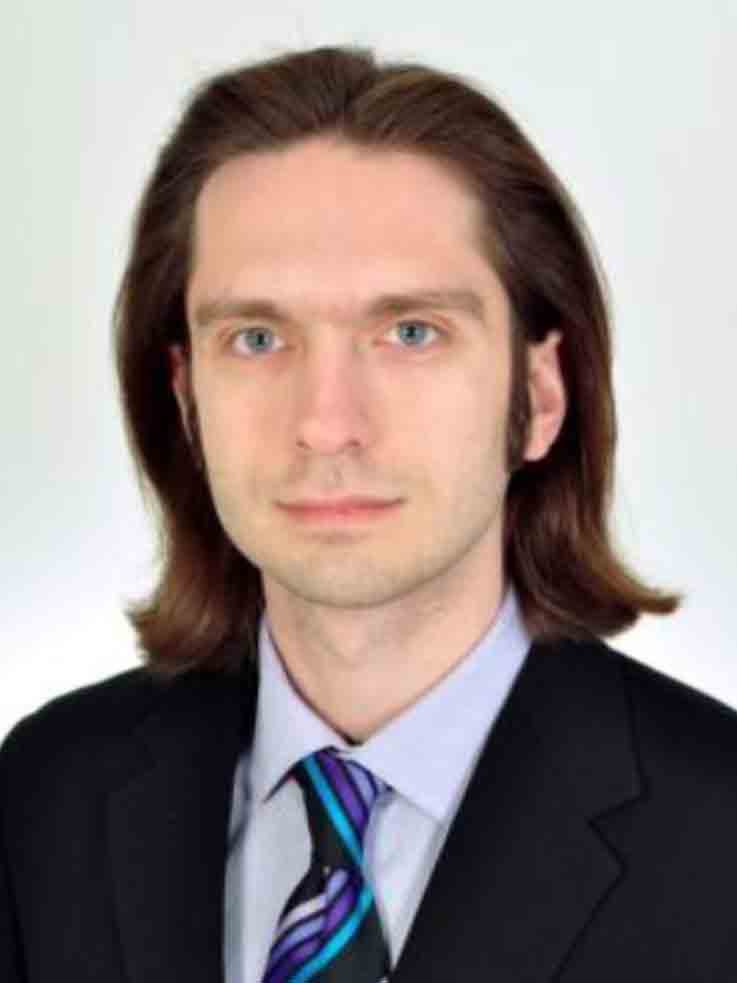
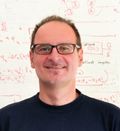
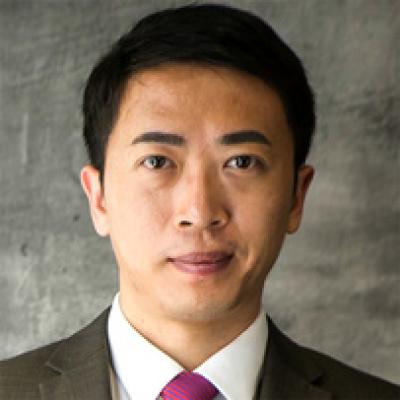
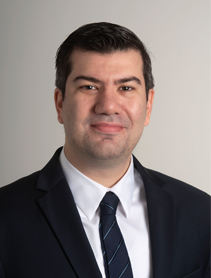
Kevin Chetty is a Professor of Wireless Sensing at University College London (UCL), leading the Urban Wireless Sensing Lab within the Department of Security and Crime Science. His work bridges radar technology, machine learning, and healthcare applications, with a focus on passive sensing systems. Education: PhD in Medical Ultrasound Physics (Imperial College London, 2004-2007), MRes in Image and X-Ray Physics (King's College London, 2003), BSc in Physics (King's College London, 1999) Research spans radar micro-Doppler signature analysis for human behavior classification, software-defined radar development, and integrated communication-sensing systems, with applications in security, healthcare, and smart environments. Recent work emphasizes privacy-preserving technologies and edge processing for real-time operations. Scientific awards include the 2022 IET Radar Systems Best Paper Runner-Up, 2022 IEEE Radar Conference 2nd Place, and 2015 National Instruments Engineering Impact Award. He has received funding from government and industry sectors in telecommunications, IoT, security, and healthcare. Teaching roles: Programme Convener for MSc Crime Science and IEP Minor in Crime and Security Engineering; Module Convener for Security Technologies and Crime Mapping & Spatial Analysis Consultancy: Huawei Technologies (2020-2022), Metropolitan Police Service (2019)
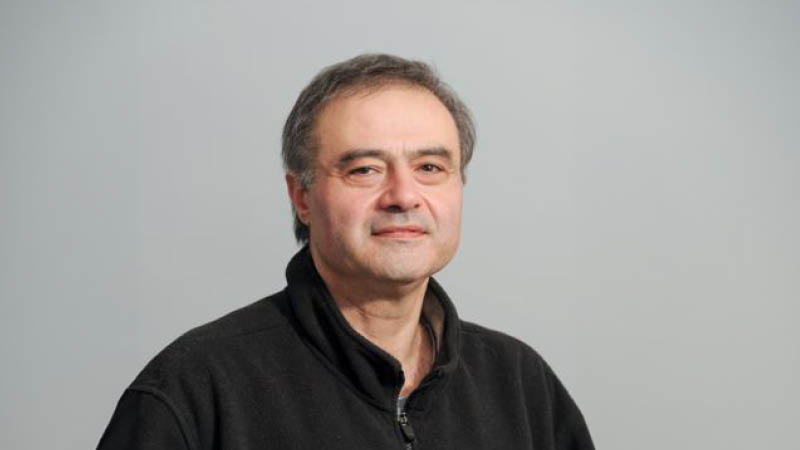
Dr. Dimitrios Koutsonikolas is an Associate Professor in the Electrical and Computer Engineering Department at Northeastern University, leading the WiNS Lab. Previously, he held a tenured position at the University at Buffalo. His research focuses on experimental wireless networking and mobile computing, particularly millimeter-wave systems, 5G/6G networks, energy-efficient protocols, and high-bandwidth applications like VR/AR. He has published over 80 papers in top venues (e.g., MobiCom, INFOCOM), received NSF CAREER and IEEE awards, and led major grants including an NSF-funded $3M project for an open 5G/6G testbed. His lab explores cutting-edge technologies like O-RAN, beam management, and edge computing for latency-critical applications. Education: PhD in Electrical and Computer Engineering from Purdue University (2010). Research Interests: Experimental validation of wireless protocols, mmWave networking, latency-optimized edge computing, and cross-layer design. Current projects include TARGET (5G/6G latency solutions) and the X5G testbed for open spectrum utilization. Recent Trends in Articles: Focus on 5G deployment maturity, mmWave beam management, and 6G-ready technologies like autonomous space networks. Work bridges theoretical contributions with practical implementations, leveraging testbeds for real-world validation. Awards: Notable honors include IEEE Region 1 Innovation (2019), NSF CAREER (2016), and multiple best paper awards at MobiCom, WCNC, and Globecom. Recognized for both research and teaching excellence. Grants & Labs: Principal investigator on NSF grants ($3M+), leading collaborations with IMDEA Networks and industry partners. WiNS Lab develops open-source tools for 5G testing and explores sub-THz channels. Advises over 15 students, many advancing to top tech firms (e.g., Apple, HP Labs).
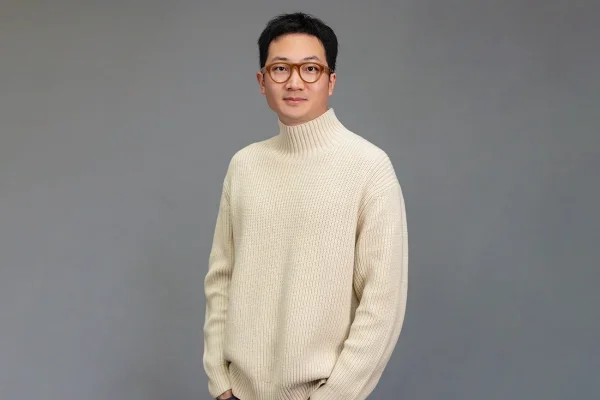
Dr. Ramsey Faragher is a Senior Research Associate at the Computer Laboratory , University of Cambridge, and a Bye-Fellow at Queens' College. His work focuses on infrastructure-free indoor positioning systems, sensor fusion, and improvements to smartphone sensing capabilities. Academic Affiliation : University of Cambridge (Computer Laboratory) Professional Roles : Bye-Fellow at Queens' College, Senior Research Associate His research spans multiple disciplines within computer science and engineering, emphasizing innovative navigation solutions and signal processing techniques. Key areas include GNSS robustness, wireless security, and machine learning applications for positioning systems. Recent publications highlight advancements in supercorrelation for automotive GNSS, sensor data calibration, and motion-compensated signal processing. Articles frequently address challenges such as spoofing mitigation, urban navigation, and infrastructure-free localization. Scientific Recognition Fellow of the Royal Institute of Navigation Chartered Physicist (CPhys)
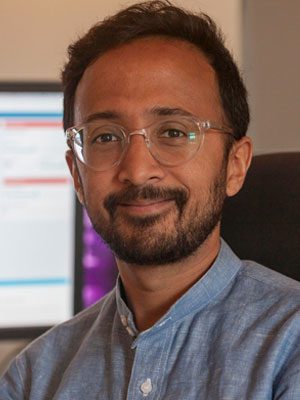
Professor Mihran Tuceryan is a Professor of Computer Science at Purdue University Indianapolis, affiliated with the Department of Computer Science within the College of Science. He holds a PhD from the University of Illinois at Urbana-Champaign (1986) and a BS from MIT (1978). His expertise spans Computer Vision, Image Processing, Pattern Recognition, and Augmented Reality. Recent research focuses on crime prediction via video analysis, forensic imaging, and distributed tracking systems. He is a Senior Member of IEEE and ACM. Key research interests include augmented reality integration for industrial training, real-time illumination modeling, and monocular SLAM algorithms. His work addresses challenges in photorealistic AR, dynamic object labeling, and medical imaging applications such as hepatic fibrosis detection. He has contributed to projects like the e-DOTS indoor tracking system and forensic 3D impression acquisition. His publications span over three decades, emphasizing real-world applications in security, healthcare, and robotics. Education: Bachelor of Science in Computer Science and Engineering, MIT, 1978 PhD in Computer Science, University of Illinois at Urbana-Champaign, 1986 Awards: Senior Member, IEEE Senior Member, ACM Labs/Teams: Focus on AR, SLAM, and medical imaging applications Collaborative frameworks for distributed visual SLAM
Jingxian Wang is an NUS Presidential Young Professor and Assistant Professor in the Department of Computer Science at the National University of Singapore's Faculty of Computing. His research builds next-generation wireless systems and satellite networks, with primary focus on integrating AI with wirelessly networked devices from WiFi to satellites. He earned his PhD from Carnegie Mellon University and previously served as a research scientist at Microsoft Research in Redmond, where he led the Smart Surface for 6G and Space initiative. His educational journey includes: PhD, Carnegie Mellon University Wang's research spans Wireless Systems , Satellite Networks , Artificial Intelligence , and Internet of Things , emphasizing AI-augmented wireless systems. His interdisciplinary work bridges robotics , materials science , and AI to develop sustainable sensing methods, robust communication networks, and multimodal AI techniques. Key projects include Multimodal AI for IoT (funded by Microsoft's Accelerate Foundation Models Program) and Satellite IoT Networks. His publication trends reveal accelerating integration of AI into wireless systems, with recent focus on satellite networking, soft robotics actuation, and generative models for IoT. The research consistently targets real-world deployment challenges in battery-free systems and space networks. His scientific contributions have earned prestigious recognition: ACM SIGMOBILE Doctoral Dissertation Award 2023 Communications of the ACM Research Highlights (2021, 2022) ACM SIGMOBILE Research Highlights 2021 Best Paper Awards at IPSN 2021 and UbiComp 2020 Microsoft Research Fellowship 2020 Emerging Rockstar in IEEE Pervasive Computing 2024 Wang actively mentors doctoral students and postdoctoral researchers through his AIoT Group. His grant portfolio includes Microsoft's Accelerate Foundation Models Research Program funding for multimodal AI projects, with ongoing work targeting satellite IoT infrastructure and wireless-powered soft robotics. Future directions emphasize foundation models for space networks and battery-free IoT systems. He leads the AIoT Group, fostering cross-disciplinary collaboration between computer scientists, roboticists, and materials engineers to pioneer wireless sensing and actuation technologies.
Ajay Pillarisetti is an Assistant Professor at the University of California, Berkeley's School of Public Health, Department of Environmental Health Sciences. His research focuses on the interplay between household energy use, air pollution exposure, health outcomes, and climate change in low- and middle-income countries. A graduate of UC Berkeley (PhD) and Emory University (MPH, BS), he has led global projects in India, Mongolia, Nepal, Guatemala, Peru, and Rwanda. PhD – Environmental Health Sciences, UC Berkeley MPH – Global Environmental Health, Emory University BS – Biology, Emory College His work employs low-cost air quality sensors, longitudinal surveys, and randomized controlled trials like the HAPIN study to assess health impacts of clean fuel interventions. Key subfields include exposure assessment, implementation science, pollution's metabolic effects, and policy-driven energy transitions. He collaborates with teams across four continents and has published extensively on household air pollution's multi-scale health burdens. Recent articles (2023–2025) highlight trends in quantifying PM2.5's health effects, optimizing sensor networks, and evaluating LPG interventions for maternal/child health. His studies span Guatemala's RESPIRE cohort, Rwanda's HAPIN trial, and India's community monitoring systems, addressing gaps in exposure-response modeling, biomarker analysis, and policy advocacy.
Luis Merino Cabañas is a Professor at the Universidad Pablo de Olavide , affiliated with the Deporte e Informática department and leading the SRL Service Robotics Laboratory . His research focuses on robotics, systems engineering, and automation, with a specialization in human-robot interaction and path planning. Education : PhD in Systems Engineering from the Universidad de Sevilla (2007), where his thesis explored cooperative perception techniques for multiple unmanned aerial vehicles in forest fire detection. Research Trends : Recent work (2023–2025) emphasizes 3D path planning, sensor fusion (LiDAR, radar, inertial systems), neural distance fields for safe navigation, and socially aware robotics. His studies integrate AI, genetic programming, and multi-modal perception for applications in construction, healthcare, and GNSS-denied environments. Labs & Teams : He leads the SRL Service Robotics Laboratory , contributing to projects like the Skyeye team and BIM2ROS integration for construction robotics.
Saverio Mascolo is a Full Professor at the Polytechnic University of Bari , Department of Electrical and Information Engineering. He leads the Control of Computing and Communication Systems Lab (C3Lab) and contributes to IEEE/ACM Transactions on Networking as an Associate Editor. His research focuses on Future Internet, network congestion control, and real-time communication systems. Laurea in Electronic Engineering, Politecnico di Bari (1991) PhD in Electronic and Automatic Control, Politecnico di Bari (1995) Visiting researcher roles at UCLA (1995, 1999), INRIA (2004), and FTW (2004) Research spans network congestion control , adaptive video streaming , and real-time communication . His lab develops protocols like TCP Westwood+ and contributes to WebRTC standards. Current projects include low-delay protocols for immersive video streaming and autonomous systems control. Recent publications emphasize adaptive threshold mechanisms in congestion control, millimeter-wave radar datasets , and immersive teleoperation systems . Projects integrate nonlinear control , time-delay analysis , and cloud-based multimedia delivery . Scientific recognition includes: Elevated to IEEE Fellow (2018) for congestion control contributions Google Faculty Award (2014) for WebRTC research Cisco Research Award (2013) for video streaming control Best paper awards at MMSYS (2025, 2024, 2016) Grants fund research in cloud-based video platforms (MISE, 2017-2020), WebRTC optimization (MIUR, 2012-2015), and network control algorithms. His lab collaborates with institutions like Uppsala University (since 2001) and industry partners.
Dr. Jonathan Buonocore is an Assistant Professor in Environmental Health at the Boston University School of Public Health and Core Faculty at the Institute for Global Sustainability (IGS). His research evaluates health impacts of energy systems, focusing on climate mitigation strategies' co-benefits, equity, and unintended consequences. He holds a Sc.D. and MS from Harvard School of Public Health and a BS from Clarkson University. Education: Sc.D., Environmental Science & Risk Management, Harvard School of Public Health MS, Environmental Health, Harvard School of Public Health BS, Environmental Science & Policy, Clarkson University Research Interests: Dr. Buonocore examines energy systems through integrated frameworks combining health impact assessment, risk modeling, and energy policy analysis. Key areas include: Health co-benefits of renewable energy expansion Air pollution consequences of fossil fuel infrastructure Environmental justice in energy transitions Geoengineering health risks Recent work analyzes electrification policies, methane leakage risks, and extreme climate interventions. Articles emphasize spatial equity in exposure to oil/gas development and transportation policies. Grants & Advising: His research is supported by grants focusing on energy-climate-health linkages. He advises on projects related to decarbonization pathways and environmental justice. Labs & Collaborations: Associated with IGS and prior work at Harvard's Center for Climate, Health, and Global Environment. Collaborates with environmental justice organizations on policy-relevant research.
Gökhan Seçinti is an Assistant Professor in the Department of Computer Engineering at Istanbul Technical University, Faculty of Computer and Informatics. He currently serves as Vice Dean and has previously held the role of Vice Department Head. His research focuses on next-generation wireless networks, UAV communications, semantic communication, and AI-driven networking solutions. Research Interests: His work spans Unmanned Aerial Vehicles (UAVs) , Semantic and Task-Oriented Communication , Software-Defined and Cognitive Networks , 6G Communications , and AI in Networking . He develops practical testbeds for deep learning-based communication architectures and explores digital twin applications in aerial networks. Publication Trends: Recent publications emphasize decentralized UAV service deployment, beam alignment using UWB localization, TDMA scheduling for aerial swarms, and semantic flow control. These reflect a strong trend toward intelligent, adaptive, and context-aware communication systems for IoT and mobility. Best Paper Award, IEEE, 2022 Best Conference Paper, IEEE, 2016 Best Poster Paper Award, IEEE, 2015 Advising and Grants: He has supervised 4 academic works and leads multiple funded research projects, including TÜBİTAK and SRP grants on federated learning in flying networks, semantic VANETs, AI-based intrusion detection, and UAV-assisted IoT for crisis management. Labs and Teams: His work is supported by active research teams at ITU, focusing on testbed development using SDRs, digital twins, and real-world deployment of UAV networks. He collaborates internationally, including past affiliations with Northeastern University.
Bernardo Tellini is a Full Professor of Electrical and Electronic Measurements at the Department of Energy, Systems, Land, and Construction Engineering (DESTEC) at the University of Pisa, where he also serves as Vice-Rector for Doctoral Research. He has held this institutional role since 2020, overseeing doctoral program planning, accreditation, and admission procedures. Previously, he chaired the doctoral program in Energy, Electrical, and Thermal Engineering from 2012 to 2016 and served on the Leonardo da Vinci Doctoral School in Engineering from 2008 to 2016. Education: PhD in Electrical Engineering, University of Pisa (1999) Degree in Electrical Engineering, University of Pisa (1993) Postdoctoral research at Karlsruhe Research Center for Technology and Environment Industry experience at ABB Tellini's research focuses on electrical and magnetic measurement methodologies for high-power pulsed applications, characterization of electrical and magnetic properties of materials, aging processes in battery cells, and electromagnetic emissions from power circuits. His work spans from fundamental measurement theory to practical industrial applications, particularly in railway technologies where he represents the University on the Steering Committee of the District for Railway Technologies, High-Speed, and Network Safety in Tuscany. He has served as president of the European Pulsed Power Laboratories agreement and chaired major IEEE conferences including I2MTC 2015 and MELECON 2020. His recent publications reveal a strong emphasis on RFID-based localization systems , nanoparticle-enhanced optical sensors , and advanced battery characterization techniques . The research trajectory shows increasing integration of measurement science with emerging technologies like plasmonic sensing, microwire-based transducers, and smart systems for industrial monitoring. His team has developed innovative approaches for battery health monitoring under vibration stress, temperature sensing using magnetic materials, and precise localization methods using phase-based RFID systems. Professional Service: President of Italian Section of IEEE (2019-2021) Scientific director of Pisa research unit in Association of Electrical and Electronic Measurements (GMEE) Member of Certification Committee of Italcertifer SpA (since 2019) Representative on District for Railway Technologies Steering Committee (since 2013) Tellini has authored approximately 200 publications in international journals and conference proceedings. His leadership extends to academic governance through roles on the DESTEC Department Human Resources Committee and various university committees overseeing scientific qualifications and doctoral programs. His research bridges theoretical measurement principles with practical engineering solutions for energy systems, transportation infrastructure, and industrial monitoring applications.
Jie Xiong is an Associate Professor at the University of Massachusetts Amherst, affiliated with the Department of Computer Science within the College of Information and Computer Sciences. He holds a PhD from University College London (2015) and has been a faculty member since 2018. His research focuses on wireless sensing, mobile health, and IoT, with notable contributions to sensor-free systems and long-range sensing. He leads the Center for Smart and Connected Society and has been recognized with awards like the SIGMOBILE Test-of-Time Award (2024) and MobiCom Best Paper Award (2024). Education: PhD in Computer Science, University College London (2015) Research Interests: His work spans wireless sensing (e.g., acoustic, RF, LoRa), mobile health monitoring, and IoT applications. He explores sensor-free techniques, long-range through-wall sensing, and leveraging ambient signals for novel applications. Grants & Awards: NSF CAREER Award NIH R01 Grant (Smart and Connected Health) Google European Doctoral Fellowship BCS Distinguished Dissertation Award (Runner-Up) MobiCom '22 Best Paper Award (Runner-Up) Advising & Students: Supervises PhD students including Minhao Cui, Yuda Feng, Binbin Xie, and Dong Li. His students have received accolades like the Google Ph.D. Fellowship (Binbin Xie, 2022). Labs & Teams: Leads research in the Center for Smart and Connected Society, focusing on wireless systems and health applications. Collaborates with industry and academia on projects like EVLeSen (in-vehicle sensing) and SoilCares (agricultural monitoring).
Shiwei Fang is an Assistant Professor in the Department of Computer & Cyber Sciences within the School of Computer and Cyber Sciences at the University of North Georgia. He holds a Ph.D. in Computer Science from the University of North Carolina (2021) and a B.E. in Computer Science from the State University of New York (2015). His research focuses on IoT systems, cybersecurity, sensor networks, and edge computing, with notable contributions to multimodal analytics, privacy visualization tools, and geospatial tracking datasets. He advises the Graduate Student Organization and serves on the SCCS Academic Web Oversight Committee. Education: Ph.D., Computer Science, University of North Carolina, 2021 B.E., Computer Science, State University of New York, 2015 Research interests include IoT security, context-aware systems, and sensor fusion. His work on IoBT-MAX and GDTM datasets highlights expertise in experimentation frameworks and geospatial tracking. Recent publications explore privacy risks in IoT, AR-based privacy visualization, and efficient inference models for edge computing. He has contributed to over 25 peer-reviewed articles since 2015, with a focus on real-world IoT applications and hardware-software co-design. Service roles include faculty advising and committee participation. He teaches courses like CSCI 3170/5170 on Computer Organization, bridging theoretical computer science with practical hardware concepts.
Dr. Hakki Erhan Sevil is an Associate Professor in the Department of Intelligent Systems and Robotics at the University of West Florida, within the Hal Marcus College of Science and Engineering. He holds a Ph.D. in Mechanical Engineering from the University of Texas at Arlington and has extensive research experience in robotics, intelligent systems, and autonomous control. His work spans theoretical and applied domains, focusing on resilient and intelligent robotic systems. Ph.D., Mechanical Engineering, University of Texas at Arlington M.S., Mechanical Engineering, Izmir Institute of Technology B.S., Mechanical Engineering, Izmir Institute of Technology Dr. Sevil's research interests lie at the intersection of robotics, artificial intelligence, and control systems. He specializes in autonomous navigation, fault detection and isolation (FDI), multi-agent coordination, computer vision, and bio-inspired computational methods. His work emphasizes real-world implementation in unmanned and self-sustained systems, particularly in challenging environments. His recent publications and projects highlight a strong trend toward intelligent, resilient, and distributed robotic systems. Themes include entropy-based behavior modeling for UAV swarms, assistive robotics for household tasks, post-disaster damage assessment using aerial vision, and advanced guidance for GPS-denied navigation. These reflect a multidisciplinary approach combining machine learning, control theory, and robotics engineering. 2024 Faculty Excellence in Teaching Award, UWF 2024 Faculty Excellence in Undergraduate Research Mentoring Award, UWF DURIP Grant ($478,000) from ONR (with IHMC) USDA Grant ($728,000) with New Mexico State University US Air Force SBIR/STTR Grant ($110,000) with Catalano Aerospace AFWERX Funding for Distributed Behavior Research Dr. Sevil actively mentors Ph.D. and M.S. students and leads the Sevil Research Group, which has secured multiple internal and external grants from NSF, NASA, ARL, ONR, and USDA. He has served as PI and Co-PI on funded projects and advises student teams that have won national awards. His lab, the Intelligent Systems and Robotics Lab, is highlighted in university communications and national challenges. The group collaborates with IHMC, NMSU, and industry partners, fostering innovation in autonomous systems. The Sevil Research Group operates within the Intelligent Systems and Robotics Lab at UWF, conducting cutting-edge research in autonomous navigation, swarm intelligence, and resilient robotics. The lab collaborates with the Institute for Human and Machine Cognition (IHMC), New Mexico State University, and private aerospace firms. It supports student-led projects, participates in national robotics challenges, and maintains active GitHub repositories for open research dissemination.
Dr. Clark N. Taylor is an Associate Professor of Computer Engineering and Director of the ANT Center at the Air Force Institute of Technology (AFIT), located at Wright-Patterson Air Force Base, Ohio. He is actively engaged in research and education within the Graduate School of Engineering and Management, focusing on advanced navigation and sensor fusion technologies for autonomous systems. Ph.D., Electrical and Computer Engineering (Computer Engineering), University of California, San Diego, 2004 M.S., Electrical and Computer Engineering, Brigham Young University, 1999 B.S., Electrical and Computer Engineering, Brigham Young University, 1995 Dr. Taylor's research spans computer engineering, navigation systems, and autonomous robotics, with a strong emphasis on sensor fusion, state estimation, and robust uncertainty modeling. His work integrates vision, inertial, magnetic, and pressure sensors for navigation in GPS-denied environments, particularly for unmanned aerial vehicles (UAVs). He is a leading expert in factor graph-based estimation, visual-inertial odometry, cooperative localization, and magnetic navigation. His publications demonstrate a consistent trend toward robust, uncertainty-aware estimation frameworks. Over the past decade, his research has evolved from early work on visual stabilization and pose estimation to advanced topics such as conservative covariance estimation, invariant filtering, and machine learning for spacecraft pose estimation. His recent articles focus on factor graphs, multi-agent fusion, and deep learning, indicating a trajectory toward intelligent, resilient navigation systems for defense and aerospace applications. Scientific awards include a Best Presentation in Session award at the ION GNSS+ conference in 2021. His research is supported by the U.S. Air Force and related defense agencies, with applications in surveillance, autonomous refueling, and on-orbit inspection. Dr. Taylor has advised numerous MS and PhD students, particularly in the areas of UAV navigation, sensor fusion, and cooperative localization. His lab, the ANT Center, focuses on advanced navigation and tracking, bringing together students and researchers to develop cutting-edge solutions for real-world operational challenges. The team conducts both simulation and experimental work, often integrating novel sensor modalities and estimation algorithms for improved system performance.