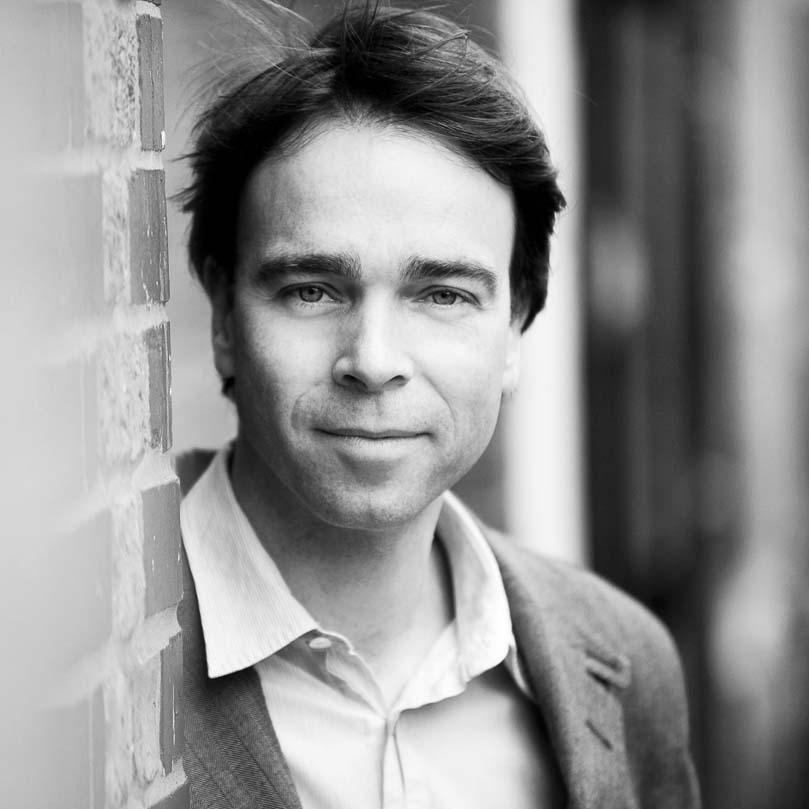
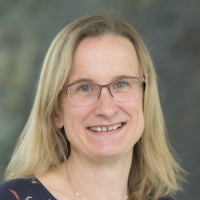
William Hurst is the Chong Hua Professor of Chinese Development in the Department of Politics and International Studies (POLIS) at the University of Cambridge . He is a Governing Body Fellow at Wolfson College and is affiliated with the Centre for Development Studies and the Centre for Geopolitics . Hurst has been a faculty member at the University of Cambridge since 2013. Prior to this, he held positions as a postdoctoral fellow at the University of Oxford and as an assistant professor at the Universities of Texas and Toronto. His research spans four major themes: labor politics , contentious politics , political economy , and the politics of law and legal institutions , with a regional focus on China and Indonesia . He is currently completing a book manuscript on the comparative politics of law and legal institutions in China and Indonesia since 1949, based on over a year of fieldwork in each country since 2006. Hurst’s publications reflect a deep engagement with the evolution of Chinese and Indonesian governance, labor rights, urban development, and legal reform. His work critically examines how authoritarian regimes manage legal institutions, labor unrest, and urban transformation, offering comparative insights into state-society relations in East and Southeast Asia. While no specific students or awards are listed in the provided text, Hurst’s academic trajectory and publication record indicate a strong commitment to both research and pedagogy in development studies and comparative politics.
Professor Masooda Bano serves as William Golding Senior Research Fellow at Brasenose College and Professor of Development Studies at the University of Oxford's Department of International Development. She leads the five-year ERC-funded Changing Structures of Islamic Authority (CSIA) project examining Islamic scholarly debates and their societal impacts. Her academic credentials include an MPhil in Development Studies from Cambridge and a DPhil from Oxford. These qualifications underpin her expertise in development theory and field research methodologies. Bano's research centers on the interplay between ideas, beliefs, and material incentives in development processes . She investigates how psycho-social factors shape individual choices and collective outcomes, with particular focus on Islamic authority structures, female education movements, and aid effectiveness. Her work combines large-scale comparative studies using ethnographic and survey data across Muslim-majority contexts. Recent publications reveal a concentrated focus on education policy in developing nations , especially Pakistan, Nigeria, and Indonesia. Key themes include decentralized education planning, low-fee private tuition markets, community participation models, and Islamic education systems. The research consistently examines religion-development intersections and institutional responses to social change. Her scientific recognition includes: Two competitive ESRC Fellowships A 1.4 million euro ERC Starting Grant for the CSIA project ESRC Best Social Science Impact award for Nigeria education interventions Bano supervises MPhil/DPhil theses at Oxford and has advised major development agencies, notably designing DfID's education reforms in northern Nigeria. Her CSIA project coordinates a multinational team conducting textual analysis, surveys, and ethnographic fieldwork to map evolving Islamic authority structures.
London School of Economics and Political Science (LSE)United Kingdom
John T. Sidel Summary Professor John T. Sidel is the Sir Patrick Gillam Chair in International and Comparative Politics at the London School of Economics and Political Science (LSE), holding joint appointments in the Government and International Relations Departments. He is also Director of the Saw Swee Hock Southeast Asia Centre. His career spans over three decades of research on Southeast Asia, with a focus on the Philippines, Indonesia, and Vietnam. Education B.A. and M.A. in Political Science from Yale University Ph.D. in Government from Cornell University Research Interests Sidel specializes in Southeast Asian politics, including local power dynamics, comparative historical sociology, Islam in politics, reform advocacy campaigns, and infrastructure politics. Key themes include: Local Politics: Analysis of political bossism, dynasties, and subnational governance in the Philippines and beyond. Comparative History: Long-term patterns of state-building, nationalism, and colonial legacies in Southeast Asia. Islam & Politics: Study of religious violence, political mobilization, and transnational Islam in Indonesia. Reform Advocacy: Advising development initiatives like the Philippines' Coalitions for Change program. Infrastructure Politics: Urban transport reforms and their socio-political implications in Metro Manila. Key Publications Major works include Republicanism, Communism, Islam: Cosmopolitan Origins of Revolution in Southeast Asia (2021), Riots, Pogroms, Jihad (2006), and Capital, Coercion, and Crime (1999). His recent research explores transport policy reforms and the political economy of development in the Philippines. Teaching Sidel teaches courses on Southeast Asian politics, comparative historical sociology, and Islam in world politics at LSE. Notable courses include GV4D3 (Local Power in Globalization) and IR461 (Islam in International Relations). Public Engagement He advises international organizations such as The Asia Foundation and UNHCR, contributing reports on Indonesia's refugee policies and Philippine development initiatives. Active in public lectures and podcasts, he promotes Southeast Asian studies through platforms like the LSE's 'Dialogues on Southeast Asia' series.
London School of Economics and Political Science (LSE)United Kingdom
Professor Catherine Allerton is a faculty member in the Department of Anthropology at the London School of Economics and Political Science (LSE). She specializes in the materialities and mobilities of everyday life, with a focus on place, kinship, childhood, migration, and temporalities in island Southeast Asia. Her fieldwork spans a two-placed village in Flores, Indonesia, and Kota Kinabalu, Sabah, East Malaysia. Her research emphasizes interdisciplinary ethnographic methods, particularly involving child participants to challenge adult-centric approaches. She launched the 'Childhood in the Migrant City' exhibition using child-taken photographs from her ESRC-sponsored research. Current projects include exploring discordant temporalities between migration systems and childhood development, as well as completing a book manuscript on moral economies of belonging. Key research interests include the social and political dimensions of landscapes, the anthropology of children, and the impacts of legal status on marginalized youth. She teaches an LSE course on 'Children and Youth in Contemporary Ethnography' and actively supervises PhD students focusing on childhood, migration, citizenship, and Southeast Asian studies. Her work addresses exclusionary practices tied to race, religion, and legal frameworks in Malaysia and Indonesia. Languages spoken include Bahasa Manggarai, English, Indonesian, and Malay. No part-time status is mentioned, indicating full-time faculty commitment.
Dr. Davies Banda is a Lecturer in Sport Policy and Deputy Director of the Academy of Sport at the Moray House School of Education and Sport, University of Edinburgh. He holds a PhD in Sport Policy and Political Science Analysis from Loughborough University, alongside certifications in academic practice and teaching methodologies. His research focuses on sport-for-development interventions, youth social inclusion, and legacy strategies from sport mega-events. Notable projects include his role as Academic Advisor to FIFA's Generation Amazing Foundation during the 2022 World Cup and leadership in curriculum development partnerships with Zambian universities. He has secured significant grants, including £298,000 from Comic Relief for child miner education projects in Burkina Faso and £60,000 via the British Council's DelPHE initiative. Banda supervises PhD students exploring topics such as SDP in South Africa, Paralympic governance, and sport policy in Indonesia. His teaching spans sport management, policy analysis, and advanced research methods at both undergraduate and postgraduate levels.
Iza Hussin serves as Associate Professor of Asian Politics in the Department of Politics and International Studies (POLIS) at the University of Cambridge. She maintains additional affiliations as an Associate Research Fellow at the Joint Centre for History and Economics and as a member of Cambridge's Faculty in World History. Her academic credentials include: PhD from the University of Washington MA from Georgetown University AM and AB from Harvard University Dr. Hussin's research examines intersections between religious frameworks and political systems, with concentrated expertise in Southeast Asian contexts. Her work integrates historical, sociological, and legal perspectives to analyze contemporary governance structures within Muslim societies, emphasizing decolonial approaches to political theory and institutional development. She has secured major research funding from the National Science Foundation, Social Science Research Council, Woodrow Wilson Foundation, American Council of Learned Societies, L’Ecole des Hautes Etudes en Sciences Sociales, and European Commission (Horizon2020). Currently leading the 'Unboxing Skeat' project, she coordinates cross-institutional research connecting Malayan archival collections through interdisciplinary frameworks and Southeast Asian academic networks. Dr. Hussin contributes to scholarly discourse through editorial leadership as General Editor of Cambridge University Press's 'Asian Connections' series and service on the Editorial Boards of 'Indonesia and the Malay World', 'Bijdragen tot de Taal-, Land- en Volkenkunde / Journal of the Humanities and Social Sciences of Southeast Asia (BKI)', and the International Books Board of 'Law and Social Inquiry'.
Dr. Roberto Stefan Foa is an Assistant Professor in Politics and Public Policy at the University of Cambridge, specializing in comparative survey research and democratic legitimacy. He holds a BA from the University of Oxford and a PhD from Harvard University. His research spans Democratic deconsolidation in developed democracies Authoritarianism’s global ascent Public opinion dynamics during crises Historical state formation Political economy of development Recent publications analyze democratic norm erosion, pandemic-induced political shifts, and cross-national survey methodologies. His work combines empirical rigor with theoretical insights, often leveraging digital tools for data collection in authoritarian contexts. Scientific achievements include Fellowship at the Electoral Integrity Project Principal Investigator for World Values Survey rounds in Indonesia and Bangladesh Contributions to debates on democratic decline and populist economics Previously affiliated with the World Bank, United Nations, and OECD, Foa bridges academic research and policy application. His full profile integrates extensive publications, methodological innovations, and global collaborations.
Ach Fatayillah Mursyidi is a Researcher at the Center for Religious and Cross-cultural Studies, Gadjah Mada University, and a PhD candidate in Islamic Studies and Christian-Muslim Relations at the University of Edinburgh. His research focuses on the intersection of Islam and modern science, religious authority in digital spaces, and the role of religious organizations in state-building and democracy. Education: PhD Candidate, Islamic Studies and Christian-Muslim Relations, University of Edinburgh (ongoing) MA, Center for Religious and Cross-cultural Studies, Gadjah Mada University BA, Financial Management, Sunan Kalijaga State Islamic University Research Interests: Islamic Studies, Religion and Modern Science, Religion-State dynamics, Human Rights, and Ethnographic Analysis of Religious Practices. Recent Trends in Publications: His work explores digital religion’s impact on religious authority, modern fatwa development, and the role of traditional Islamic institutions like pesantren in Indonesian governance. He also examines minority rights and citizenship issues through case studies of marginalized religious communities. Grants/Awards: Recipient of the Education Endowment Fund (Indonesian Ministry of Finance) and DIKTIS Scholarship (Indonesian Ministry of Religious Affairs).
Dr. Ahmad Rizky M. Umar is a Marie Sklodowska-Curie Fellow at the Department of International Politics, Aberystwyth University, where he conducts research on transregionalism, Indonesia’s foreign policy, and the evolving global order. He holds a PhD from the University of Queensland, an MSc from the University of Sheffield, and a Bachelor’s from Universitas Gadjah Mada. Prior to joining Aberystwyth, he taught at the University of Queensland and Griffith University (2022–2024). His academic expertise lies in International Relations , particularly focusing on transregional cooperation in the Indo-Pacific , Indonesia’s role in global politics , and the historical construction of 'Asia' in world politics . He is currently leading the TransRWP project, funded by Horizon Europe via the UKRI Guarantee, which analyzes transregional initiatives like the Belt and Road Initiative and the Quad. He is also finalizing a book on the history of the idea of Asia, under advanced contract with a U.S. publisher. Dr. Umar’s recent publications span high-impact journals such as International Affairs , Alternatives , and The International Journal , covering topics including ontological security in Southeast Asia, decolonization, and Indonesia’s evolving foreign policy. His work reflects a strong interdisciplinary approach, bridging political theory, history, and policy analysis. Marie-Curie Sklodowska Postdoctoral Fellowship (2024) ASAA Postdoctoral Writing Grant (2023) Best Paper Award, ISA English School Section (2022) Asia Study Grant, National Library of Australia (2020) Dr. Umar has been funded as a principal investigator on externally funded research and has served as a mentor and educator, teaching courses in International Ethics, Human Rights, and International Relations Theory. He has contributed policy commentary to The Conversation , The Interpreter , and 9DashLine , and his analysis has been cited by major media outlets including BBC Indonesia , The Straits Times , and Nikkei Asia . He previously worked at the ASEAN Studies Center, Universitas Gadjah Mada, where he served as Executive Secretary (2016–2017).
Dr. Alexander Supartono is a Lecturer at the School of Arts and Creative Industries, Edinburgh Napier University. He holds a PhD in Photography History from the University of St Andrews (2015), MA in Southeast Asian Studies from Ohio University (2010), and BA in Social Philosophy from Driyarkara School of Philosophy (2001). His research focuses on colonial/postcolonial visual culture, particularly photography’s role in decolonizing art history, and collective art activism. He is a member of the Indonesian art collective Taring Padi, renowned for political banner art. As an educator, he has supervised doctoral projects on photographic memory, landscape photography, and seafaring literature. His editorial roles include advisory boards for Photographies , Southeast Asia Now , and Trans-Asia Photography Review . Awards include the Ground-Breaking Subject Matter Accolade and Scottish Overseas Research Student Awards. Recent work explores Documenta 15 controversies, colonial photographic traditions, and Southeast Asian museum practices. Key projects include Customised Postures, (De)colonising Gestures (2024) and Othering Studio Portraiture (2024), examining decolonial aesthetics and photographic legacies. He has delivered over 30 invited lectures globally on topics like Taring Padi’s political art and postcolonial archives.
Dr Adam J Fenton is an Assistant Professor at Coventry University’s Centre for Peace and Security (CPS), with his work spanning security, resilience, technology, and governance. He is currently leading a project with the Alan Turing Institute to assess socio-technical aspects of digital twins in building UK transport network resilience, alongside NATO-funded research on subsea cable cyber-physical security and UKRI-funded studies on AI’s impact on religious faith and cultural resilience. His 2024 Marie Sklodowska-Curie fellowship focused on maritime cybersecurity governance, and he holds legal qualifications from Monash University, with admission to practice in Australia’s Northern Territory Supreme Court and prior border security experience. Assistant Professor, Coventry University Centre for Peace and Security (CPS) Alan Turing Institute collaboration NATO Science for Peace and Security Programme awardee UKRI SALIENT Hub grant recipient Marie Sklodowska-Curie fellowship (2024) Monash University BA/Law (Hons), Australian legal practitioner His research interweaves security studies, AI ethics, maritime cybersecurity, and legal frameworks. Key projects include Digital Twinning for Crisis Response (DTBOC) and CYBERCABLE for underwater infrastructure protection. His work addresses hybrid threats in strategically vital shipping lanes like the Straits of Malacca, blending technical rigor with policy analysis. The Chancellor's Medal - Higher Education (2010) recognizes his early academic excellence. His publications span digital twinning, AI ethics, maritime cybersecurity, Indonesian law reform, and religious freedom, reflecting a multidisciplinary approach to global security challenges. Digital Twinning for transport resilience Cyber-Physical Security of critical infrastructure AI Ethics and religious/cultural impacts Hybrid Maritime Threats in Southeast Asia Legal Reform in Indonesian anti-terrorism As Principal Investigator for CYBERCABLE and STRAITSECURITY , and Co-Investigator for DTBOC , his research bridges academia with practical policy. He actively contributes to media discourse on maritime technology and geopolitical conflicts.
Professor Barley Norton is a distinguished ethnomusicologist and filmmaker at Goldsmiths, University of London, where he serves as Director of the Asian Music Unit (AsMU), convenor of the MA in Music (Ethnomusicology), and leader of the Goldsmiths Gamelan Group. His academic career focuses on the music and culture of Southeast Asia, particularly Vietnam, where he has conducted extensive field research. His research interests span ethnomusicological filmmaking and theory, the cultural politics of musical practice, discourse on cultural heritage and music revival, music and religious experience, music and emotion, music and gender theory, music censorship, improvisation, and performance and modal theory. Norton's academic work is deeply informed by his practical musical engagement; during his field research in Vietnam, he learned to play the dan day and dan nguyet lutes, and he also performs Sundanese music from Indonesia on the kacapi zither and in the gamelan degung orchestra. Norton's scholarly output reveals significant trends in Southeast Asian music studies, particularly focusing on the intersection of traditional musical practices with contemporary political and social contexts. His work consistently examines how musical traditions navigate processes of canonization, heritage safeguarding, and creative innovation within rapidly changing cultural landscapes. A notable thread throughout his research is the relationship between music, ritual, and identity in Vietnamese cultural contexts, with increasing attention to environmental concerns and climate change impacts on musical heritage in his most recent work. American Musicology Society's 2014 Ruth A. Solie Award for 'Music and Protest in 1968' Commendation - Intangible Culture Film Prize at the Royal Anthropological Institute's 12th International Festival of Ethnographic Film for 'Hanoi Eclipse: The Music of Dai Lam Linh' Professor Norton has supervised numerous doctoral students including Christopher Hanby (Applied Ethnomusicology and Jèrriais language revitalization), Lin Lin (Creative Realization in the Compositional Process), Clare Salaman (Reimagining the trumpet marine), and Jasmine Hornabrook (Transnational networks in London's Tamil diaspora). His research has been generously funded by the Getty Foundation, Arts and Humanities Research Council, British Academy, and ASEASUK, supporting projects on Vietnamese music revival and audiovisual archiving. He has also undertaken consultancy work with UNESCO, the British Council, and Vietnamese cultural institutions on music heritage projects. As a key figure in the field, Norton directs Goldsmiths' Asian Music Unit, which serves as a hub for research, performance, and teaching focused on Asian musical traditions. The unit facilitates cross-cultural musical dialogue and supports field research in Asia, while the Goldsmiths Gamelan Group provides hands-on experience with Indonesian musical traditions. His leadership extends to international scholarly organizations, having served as Chair of the British Forum for Ethnomusicology (2015-2018) and as a member of the Society for Ethnomusicology Council (2017-2020).
Professor Ashley Thompson holds the Hiram W. Woodward Chair in Southeast Asian Art at SOAS University of London, where she also serves as Department Doctoral Studies Convenor in the Department of History of Art and Archaeology within the School of Arts. A specialist in Southeast Asian Art Histories with particular expertise on Cambodia, Professor Thompson's academic journey began with undergraduate studies at Harvard and continued with graduate work at Université de Paris, where she was profoundly influenced by Hélène Cixous. Her educational background includes a BA from Harvard, MA from Université de Paris 3, and PhD from Université de Paris 8. Prior to her academic career, she spent ten years working in post-war reconstruction in Cambodia and Thailand across education, art, archaeology and cultural heritage fields. Her professional experience spans multiple institutions including Phnom Penh's Royal University of Fine Arts, University of California, Berkeley, University of Paris 8, and University of Leeds. Professor Thompson's research maintains a sustained focus on premodern Cambodian arts and literatures, complemented by work on contemporary Southeast Asian arts. Informed by deconstruction and psychoanalysis, her work revolves around memory, political and cultural transition, sexual difference, and subjectivity, with explicitly decolonizing critical perspectives playing an increasing role. Her research examines Hindu and Buddhist sculpture, ritual practices and texts, and other forms of fine and performing arts, with particular attention to the intersections of art, politics, and cultural identity in Southeast Asia. Her recent publications reveal a strong trend toward cultural restitution, decolonizing frameworks, and the political dimensions of artistic representation in Southeast Asia, particularly Cambodia. She has produced significant scholarly work on Theravadin Buddhist arts, post-genocide memory, and the complex legacies of Angkorian civilization. Her research demonstrates a consistent engagement with questions of cultural sovereignty, memory politics, and the ethical dimensions of art historical practice. Professor Thompson currently leads the collaborative research project 'Circumambulating Objects: on Paradigms of Restitution of Southeast Asian Art,' funded by the Getty Foundation's Connecting Art Histories Scheme, and another project expanding her contribution to the restitution of looted Cambodian antiquities. She supervises numerous PhD students working on diverse topics across Southeast Asian art history, archaeology, and cultural heritage. Her doctoral students include Pim Fitzpayne (on Khmer art markets), Panggah Ardiyansyah (on Hindu-Buddhist materials in Indonesia), Conan Yongneng Cheong (on Buddhist memory in Luang Prabang), and several others working on diverse topics across Southeast Asian art history. Her research funding includes support from the Getty Foundation and SOAS Impact and Knowledge Exchange with funding from Research England. Professor Thompson directs research initiatives focused on the restitution of looted Cambodian antiquities and collaborates closely with the Cambodian Ministry of Culture and Fine Arts Restitution Team. Her work connects academic research with practical applications in cultural heritage management, museum studies, and community-based interpretation of restituted artifacts.
Juanita Elias is a Professor of International Political Economy at the University of Warwick's School of Politics and International Studies (PAIS). She previously held academic roles at Griffith University, Adelaide, Manchester, and Cardiff Universities. Her leadership roles include interim Head of Department (2018–19) and Deputy Head/Director of Equality, Diversity & Inclusion (2022–24). She is an editor of the Review of International Political Economy and co-founder of the I-PEEL teaching platform. She serves as Vice Chair of the British International Studies Association (BISA). Elias' research focuses on gendered political economy, global household dynamics, Southeast Asian development, and migrant labor. Key projects include analyzing multinational corporations' gender impacts, domestic work regulation, and corporate codes of conduct. Her work has been supported by grants from Innovate UK, British Council, ESRC, and ARC. Major publications include Gender Politics and the Pursuit of Competitiveness in Malaysia (2020) and the I-PEEL: International Political Economy of Everyday Life textbook (2022, OUP). Her 2024 Innovate UK-funded project with Reall aims to create gender-accountable affordable housing tools. Recent outputs include analyses of environmental crisis impacts on everyday lives and gendered vulnerabilities in austerity Britain. She co-leads the 'Global Groupwork' teaching initiative with Monash University, fostering cross-institutional student collaboration. Awards: 2022 ISA Online Media Award, Newton Prize shortlist (2019) Grants: Innovate UK, ESRC, ARC, British Council Labs/Teams: Warwick's PAIS Research Group, Monash-Warwick Alliance Education Fund
London School of Economics and Political Science (LSE)United Kingdom
Nicholas Long is a Research Fellow in the Department of Anthropology at the London School of Economics (LSE). His work focuses on psychological anthropology, with regional expertise in Indonesia, the Malay World, and Aotearoa New Zealand. He has conducted extensive fieldwork on hypnosis and hypnotherapy in Indonesia, exploring how these practices intersect with social and political change. His research also encompasses pandemic studies, particularly through the CARUL Collective’s analysis of lockdown policies during the COVID-19 pandemic. PhD Studentship: British Academy Postdoctoral Fellow (University of Cambridge) Language Proficiency: English, Indonesian Key Projects: Hypnosis ethnography (ESRC-funded), CARUL Collective pandemic research His theoretical interests include achievement, consciousness studies, and the anthropology of intellectual exchange. He has published widely in journals like Medical Anthropology Theory and Journal of the Royal Anthropological Institute . He has received the 2019 Stirling Prize for his article on Indonesia’s hypnosis boom. His work bridges academic theory with practical policy analysis, particularly in pandemic response and healthcare ethics.