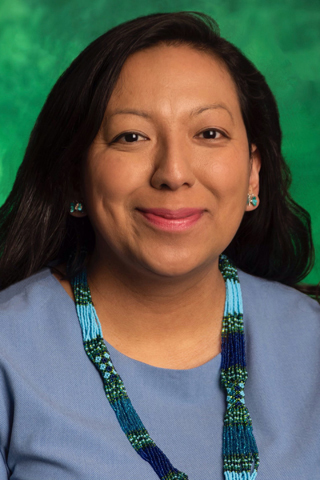
Jennifer Gómez Menjívar is Professor and Director of the M.A. in Media Industries and Critical Cultural Studies at the University of North Texas. Her research examines historical and ethno-linguistic movements influencing text production, circulation, and reception across print media, screen cultures, and digital communities. With over 18 years of teaching experience, she previously held positions at international organizations including the UNECE and UNDP. Her scholarly interests span media linguistics, film adaptation, digital activism, hemispheric animation histories, Indigenous sovereignty media, and Spanish-language media. Her publications demonstrate interdisciplinary work bridging media studies, cultural history, and postcolonial theory. Her extensive publication record includes books such as Tropical Tongues: Language Ideologies, Endangerment, and Minority Languages in Belize (2018) and Black in Print: Plotting the Coordinates of Blackness in Central America (2023), as well as co-edited volumes on Indigenous technology and hemispheric Blackness. She received a Senior Research Fellowship at Freie University Berlin for her upcoming work on Indigenous sovereignty media. Gómez Menjívar teaches courses including Introduction to Graduate Studies in Media Arts, Women in Film, and Global Media. She also mentors students in critical media analysis and serves as faculty advisor for media research projects.
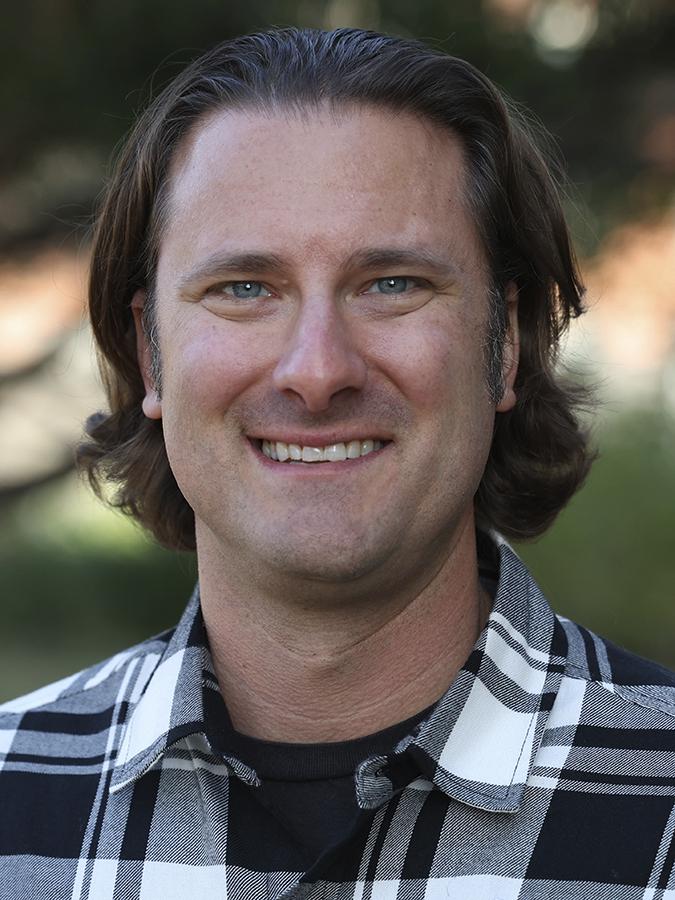
Andrew R. Meyer is an Associate Professor in the Department of Health, Human Performance, and Recreation at Baylor University, where he teaches courses in Sport Psychology and Religion and Sport. His academic work bridges the fields of sport sociology, cultural studies, and theology, with a particular focus on the enduring influence of muscular Christianity in American sports. His research interests include: Contemporary American Sport Culture and Religion Muscular Christianity and its modern manifestations Hero-celebrity athletes in popular culture Character development through sport and education Traditional and contemporary Indigenous sport cultures Sport's cultural impact on communities The themes across his publications reveal a consistent exploration of the moral, spiritual, and cultural dimensions of sport. His work analyzes how religious values, particularly those rooted in Christian traditions, shape athlete identity, media narratives, and public perception of sports figures. He has developed the Contemporary Muscular Christian Instrument (2017, 2020) to measure these values across global sport contexts. His articles appear in interdisciplinary journals spanning religion, sociology, public health, and cultural studies, reflecting the broad relevance of his research. Scientific awards and recognitions include: Baylor Teaching Fellow (2017) Dr. Meyer has been active in academic and public discourse, serving as a keynote speaker at international conferences on sport and Christianity and being featured on media outlets such as NPR and the Sport, Faith, Life podcast. His teaching emphasizes character formation in the classroom, aligning with his research on moral development through sport. While specific grant funding is not mentioned, his extensive publication record in peer-reviewed journals and edited volumes indicates sustained scholarly productivity. He has contributed to discussions on mega-sport events, cycling culture, and the redemption narratives of fallen athletes like Lance Armstrong. He is affiliated with the College of Health, Human Performance, and Recreation at Baylor University, contributing to both graduate and undergraduate education in sport studies.
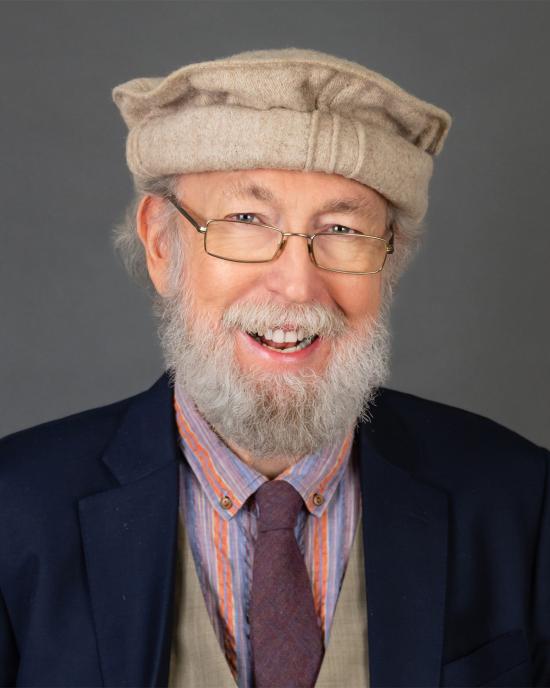
Michael R. Dove is the Margaret K. Musser Professor of Social Ecology and Professor of Anthropology at Yale University, where he also serves as Curator of Anthropology at the Peabody Museum and Co-Coordinator of the Combined YSE/Anthropology Doctoral Program. With over forty years of research experience, his work focuses on environmental anthropology, particularly the environmental relations of local communities in South and Southeast Asia. Dove earned his B.A. from Northwestern University and his M.A. and Ph.D. from Stanford University. His academic journey has spanned decades of field research in Asia, including more than a dozen years conducting long-term studies on human ecology in Borneo and Java, developing government research capacity in Indonesia, and advising the Pakistan Forest Service on social forestry policies. Professor Dove's research interests encompass the anthropology of climate change, cultural and political aspects of natural hazards and disasters, indigenous environmental knowledge and practice, environmental institutions and movements, history of environment-related sciences, and multispecies ethnography. His work often examines how local environmental systems interact with national and global markets, politics, and ideologies, with a focus on problematizing orthodox approaches to conservation and development. He has made significant contributions to understanding human-environment relations through both theoretical frameworks and practical applications. Dove's recent scholarly output demonstrates a progression toward more integrated approaches to environmental challenges, blending historical perspectives with contemporary issues. His publications increasingly focus on the intersections of climate change, social justice, and indigenous knowledge systems, while maintaining his longstanding interest in Southeast Asian environmental relations. The work shows a growing emphasis on post-humanist approaches and multispecies ethnography, reflecting broader trends in environmental anthropology while maintaining his distinctive focus on political ecology and institutional analysis. As an educator, Professor Dove has supervised numerous doctoral and master's students, many of whom have gone on to win research awards and secure prestigious positions. He organizes separate research labs for doctoral students from Yale School of the Environment and other departments, as well as for joint YSE/Anthropology doctoral students. His advisees typically conduct international research and have excellent records of obtaining research support both within and beyond Yale. The Dove Lab at Yale School of the Environment serves as a hub for environmental anthropology research, focusing on topics including natural resource management, property rights, power struggles, household energy transitions, and human-wildlife interactions. The lab fosters a collaborative environment with 30-50 students working on related issues each year, characterized by supportive peer dynamics rather than competition. It also contributes to policy and social change through its research and the work of its alumni.
Timo Kaartinen serves as Professor of Social and Cultural Anthropology and Vice Dean for Research and Doctoral Education at the University of Helsinki 's Faculty of Political Science . Since 1992, he has conducted extensive research in Southeast Asia with a focus on Indonesia, exploring communicative practices, narratives, and cultural responses to uncertainty. His teaching spans social change in bachelor's, master's, and doctoral programs, covering environmental anthropology, political anthropology, cosmologies, religions, and linguistic anthropology. PhD in Anthropology, University of Chicago (2001) Docent (Adjunct Professor), University of Helsinki (2011) Research interests center on ethical discourse in Indonesian Islamic universities, resource politics in oil palm estates, and linguistic anthropology with emphasis on storytelling, folk poetry, and minority language revitalization. His work combines ethnographic focus on Southeast Asia with theoretical contributions to frontier studies and postcolonial anthropology. Recent publications examine frontier temporalities (2020-2025), Islamic transformations (2019), and oral narrative structures (2017-2013). Key projects include ARCTIC Research Centre (2025-2029), Diversity in Society and Life (DIVSOL) (2025-2030), and Religious Movements in Ethical Life (2019-2023). Grants from the Academy of Finland and University Profiling Funding support these initiatives. Academic activities include keynote speeches at international conferences (e.g., Empowering Local Wisdom 2014, Labor Migration in Asia-Pacific 2013) and editorial roles. He has conducted fieldwork in Indonesia since 1992, focusing on Bandanese cultural heritage and Maluku religious dynamics . His methodological approach combines ethnographic fieldwork with historical document analysis .
Mariane C. Ferme is a Professor in the Department of Anthropology at the University of California, Berkeley. Her research focuses on sociocultural dynamics in West Africa, particularly Sierra Leone, with expertise in political anthropology, legal studies, and material culture. She holds a PhD in Anthropology from the University of Chicago and has taught at prestigious institutions including the University of Cambridge and École des Hautes Études en Sciences Sociales. Education : PhD in Anthropology (University of Chicago), MA in Political Science (University of Milano), BA in Anthropology (Wellesley College). Ferme’s research spans the political imagination in conflict zones, agrarian transformations, and the interplay between humanitarian law and local justice systems. Her work has been supported by major grants from the National Science Foundation and the France-Berkeley Fund. She has published extensively on Sierra Leone’s post-war societies and the socio-cultural dimensions of the Ebola outbreak. Scientific awards include funding from the National Science Foundation, Hellman Family Faculty Fund, France-Berkeley Fund, Harvard Academy for International and Area Studies, and the Carter Woodson Institute for African and African-American Studies.
Jim Sykes is an Associate Professor of Music at the University of Pennsylvania's School of Arts & Sciences. His research focuses on ethnomusicology, sound studies, and the cultural histories of the Indian Ocean world. He specializes in examining sonic practices across Afro-Asiatic seascapes, colonial surveillance systems, and postcolonial music theory. His work bridges disciplines like anthropology, history, and cultural studies, emphasizing decolonial methodologies. Recent scholarship explores governmental acoustic surveillance in maritime contexts, the politics of area studies, and the role of music in labor and value systems. He has contributed to rethinking sound studies through global south perspectives, including projects on sonic cartography and indigenous acoustic knowledge systems. Sykes has published extensively on topics such as Sri Lankan post-war musical generosity, Dalit liberation theology through Tamil folk music, and colonial sound regulations in British Ceylon. His interdisciplinary approach addresses intersections between sound, power, and cultural memory in contexts ranging from Southeast Asia to the Indian Ocean trade networks.
Margaret Robinson is an Associate Professor at Dalhousie University, holding dual appointments in the Department of English and Department of Sociology and Social Anthropology within the Faculty of Arts and Social Sciences. She is a bisexual two-spirit scholar from Eski'kewaq, Nova Scotia, and a member of the Lennox Island First Nation. Her interdisciplinary work bridges Indigenous studies, queer theory, and intersectional feminism, with a focus on decolonizing methodologies and Indigenous oral traditions. Robinson’s research explores representation of Indigenous peoples and sexual/gender minorities in creative works, including fanfiction and popular culture. She holds a Tier 2 Canada Research Chair in Reconciliation, Gender, & Identity (2019-2023) and leads the Mi’kmaw Cultural Research Lab funded by the Canadian Foundation for Innovation (2021-2024). Her education includes a BA from Saint Mary’s University and MA/PhD from the University of Toronto. Key research areas include Indigenous New Wave literature, Mi’kmaw spirituality, and Two-Spirit feminism. Recent grants focus on reconciliation frameworks and LGBTQ2S+ health equity. She has published widely on topics like queer mental health, animal personhood in Mi’kmaw cosmology, and decolonizing pedagogies.
Joanna Grela is a Professor at the Department of Comparative Civilization Studies within the Faculty of Philosophy at Jagiellonian University (UJ) in Kraków, Poland. She holds habilitation in cultural studies (2016, SWPS University, Warsaw), a doctorate in religious studies (2004, Jagiellonian University), and is a certified Tibetologist (2000, INALCO, Paris). Her academic credentials also include an MA in philosophy (1996, Jagiellonian University) and postgraduate studies in gender (2009, Jagiellonian University). Her educational background includes: 2004: PhD in Humanities in religious studies, Jagiellonian University 2000: Diplôme Unilingue de Langue et Civilization Orientales de Tibétain, Institut National des Langues et Civilizations Orientales (INALCO), Paris 1996: Master of Philosophy, Jagiellonian University 2009: Postgraduate studies in gender, Jagiellonian University Professor Grela's research focuses on Tibetan, Himalayan, and Mongolian cultures, with particular emphasis on pre-Buddhist cults and their contemporary representations in popular culture, societal transformations, Tibetan ethnic and cultural identity, cultural stereotypes, and the comparative anthropology of Buddhism. Her work bridges religious studies, cultural anthropology, and Tibetan studies, examining both historical traditions and their modern adaptations. She has made significant contributions to understanding how traditional Buddhist practices interact with contemporary social contexts, digital technologies, and global cultural flows. Her scholarly output reveals consistent engagement with Tibetan religious culture, Buddhist textual traditions, and the adaptation of Buddhist practices in modern contexts. She has extensively explored the relationship between pre-Buddhist traditions and contemporary religious practices, the role of deities in Tibetan Buddhism, and the transformation of Buddhist thought in different cultural settings including Thailand and Poland. Her more recent work addresses how Buddhism is adapting to digital environments and contemporary social challenges. Her notable achievements include: 2017: Pro Arte Docendi Award from the Rector of Jagiellonian University Multiple teaching awards (2011/12, 2012/13, 2014/15) Membership in the International Association of Buddhist Universities (IABU) Collaboration with the Centre d'Etudes Himalayennes CNRS Professor Grela has led significant research projects including 'The impact of secularization and schooling on socio-religious relations between ritual specialists and the lay community in the Rebkong region' (2018-2020) and 'The Common Buddhist Text Project' (2009-2016). Her work demonstrates a strong commitment to both scholarly research and teaching excellence, with numerous publications spanning academic journals, edited volumes, and encyclopedia entries. She maintains active international collaboration and has presented her research at conferences across Europe and Asia.
Kelly Askew is a Professor of Anthropology and Afroamerican & African Studies at the University of Michigan’s College of Literature, Science, and the Arts. She holds a PhD in Anthropology (Harvard, 1997) and a BA in Music and Anthropology (Yale, 1997), with over three decades of fieldwork in Tanzania and Kenya. Education PhD in Anthropology, Harvard University (1997) BA in Music and Anthropology, Yale University Key Roles Chair of the Department of Anthropology Niara Sudarkasa Collegiate Professor Her research bridges three primary domains: Postsocialist transitions (e.g., property rights formalization and land conflicts), art and political aesthetics (e.g., Swahili music, African visual arts, ethnographic filmmaking), and indigenous political movements (e.g., Maasai and Parakuyo pastoralists). She has produced award-winning documentaries like The Chairman and the Lions (2013) and Maasai Remix (2019), which examine cultural resilience and land rights. Scientific awards include being a finalist for the African Studies Association Herskovits Award (2002). Recent publications analyze land dispossession mechanisms, postsocialist cultural production, and media’s role in political identity. She has secured grants from the National Science Foundation, National Endowment for the Humanities, and Ford Foundation.
Dr. Joseph Bosco Bangura is a Senior Researcher in Religious Studies & Missiology at the Evangelical Theological Faculty (ETF Leuven) and Senior Researcher in Intercultural Theology at the Protestant Theological University, Groningen. He serves as a Part-Time Lecturer at Aachen University and has held roles at institutions in Sierra Leone, Germany, South Africa, and Uganda. His work bridges Pentecostalism, missiology, and intercultural theology across Africa and Europe. Education: Ph.D. in Theology and Religious Studies (ETF Leuven & Vrije Universiteit Amsterdam, 2013) M.Th. (ETF Leuven, 2007) M.Phil. (Fourah Bay College, 2004) Post-Graduate Certificate in Ecumenical Studies (Ecumenical Institute Bossey, 2001) B.Th. (Evangelical College of Theology, 1997) Research Interests focus on African Pentecostalism, contextual theology, secularization in Africa and Europe, interfaith engagement, and the cultural adaptation of migrant churches. His work explores the intersection of religion with environmental disasters, gender dynamics, and digital media in African Christianity. Selected Articles highlight eco-theology in Sierra Leone, gender and leadership in diaspora churches, and the impact of secularization on Pentecostal communities. His publications also address urban missiology, transnational practices, and the historical evolution of African churches. Academic Memberships: European Academy on Religion and Society American Society of Missiology GloPent Research Network Lamin Sanneh Institute (University of Ghana)
Dr. Hongxuan Lin serves as an Assistant Professor in the Department of Southeast Asian Studies at the National University of Singapore (NUS), Faculty of Arts and Social Sciences. His academic work centers on the complex relationship between Islam and Marxism in Indonesia, with broader interests in progressive Islamic discourses across the Muslim world. As a faculty member at one of Asia's premier research universities, Dr. Lin contributes significantly to Southeast Asian studies through his research, teaching, and publications. Dr. Lin earned his Doctor of Philosophy in History from the University of Washington, Seattle, between 2015 and 2020. His doctoral research focused on Indonesian intellectual history, examining how Muslim identity and Marxist analytical frameworks coexisted in the minds of Indonesian nationalists during the anti-colonial struggle and early republic period. His supervisors were Laurie J. Sears, Christoph Giebel, and Vicente L. Rafael, all prominent scholars in Southeast Asian studies. Dr. Lin's research primarily investigates the intersection of Islam and Marxism in Indonesia from 1915 to 1965, exploring conciliatory discourses where Marxist ideas were theorized as compatible with Islam within frameworks of anti-colonial resistance. He examines how Indonesian intellectuals adapted global political currents to local contexts, challenging state-driven narratives that position Islam and Marxism as mutually exclusive. His work also considers women's contributions to these discourses and is expanding to study the circulation of progressive Islamic ideas across the Indian Ocean region connecting Egypt, Arabia, Iran, South Asia, and the Malay Archipelago. His research reveals how progressive Islamic thinkers addressed socio-economic inequity, women's rights, intercommunal tolerance, and religious governance. Dr. Lin's publications demonstrate a consistent focus on Southeast Asian political history, particularly Indonesia's intellectual landscape during the colonial and post-colonial periods. His scholarship reveals patterns of creative adaptation where Indonesian thinkers engaged with global political currents while transforming them for local contexts. A notable trend across his work is the examination of transnational intellectual networks that connected Southeast Asia with broader global movements, showing how ideas traveled and were transformed across borders. His research challenges simplistic narratives about religious and political identity, revealing instead complex intellectual traditions that defy easy categorization. Dr. Lin is multilingual with proficiency in Indonesian (reading, writing, speaking, and understanding), Chinese (Mandarin) (reading, writing, speaking, and understanding), Dutch (reading), and French (reading). This linguistic capability supports his research across multiple archives and sources in different languages, enhancing the depth and authenticity of his historical analysis. His work bridges multiple disciplinary approaches including history, political science, religious studies, and post-colonial theory.
David Pratten is an Associate Professor in the Social Anthropology of Africa at the University of Oxford, where he is also a Fellow of St Antony's College. His work bridges social anthropology and African studies, focusing on themes of history, violence, and the state through long-term fieldwork with Annang communities in Nigeria. His research spans colonial-era ritual murders, post-colonial vigilantism, and contemporary masquerade traditions. He has led the African Studies Centre (2009-2013) and served as Director of Graduate Studies, while co-editing the prestigious journal AFRICA since 2010. Key Publications include the award-winning monograph The Man-Leopard Murders (2007) and co-edited volumes like Global Vigilantes (2007). His recent work involves a French National Research Agency (ANR) project on xenophobic exclusion in Africa. Scientific Awards Amaury Talbot Prize (2007) Teaching Excellence Award (2009) He supervises DPhil students and collaborates on research initiatives like the African Print Culture Network, supported by the John Fell Fund. His sabbatical (2024-2025) reflects ongoing commitment to ethnographic fieldwork and cross-disciplinary dialogue.
Katherine Swancutt is Reader in Social Anthropology at King's College London, where she serves as Director of the Religious and Ethnic Diversity in China and Asia Research Unit (REDCARU) and Project Lead for the ERC Synergy Grant 'Cosmological Visionaries: Shamans, Scientists, and Climate Change at the Ethnic Borderlands of China and Russia' (2020-2026). She has conducted anthropological fieldwork for over two decades across Asia, focusing on Southwest China (among the Nuosu), Mongolia, Inner Mongolia, and Buryat regions of Russia. Her research centers on the anthropology of religion, with particular emphasis on shamanism, animism, dreams, and the relationship between cosmology and the environment. Her fieldwork explores how religious innovations are used to manage conflict and shape everyday life among diverse ethnic communities. She has established herself as a leading scholar in indigenous knowledge systems and their relevance to contemporary environmental challenges. Dr. Swancutt's extensive publication record reveals consistent thematic focus on ritual practices, divination systems, and cosmological frameworks, particularly among the Nuosu people of Southwest China. Her recent work examines how spiritual practices intersect with environmental change, social renewal, and cultural memory, bridging anthropology, religious studies, and environmental humanities to create innovative frameworks for understanding indigenous cosmologies in the context of climate change. ERC Synergy Grant 'Cosmological Visionaries' (£6m project connecting shamans, scientists, and rural communities) Author of four major publications including 'Fortune and the Cursed' (2012) and 'Crafting Chinese Memories' (2021) Founder of REDCARU, now an international network with branches in Chinese universities Recipient of significant research funding including ERC Synergy Grant As an educator, Dr. Swancutt teaches anthropology of religion at all levels and supervises PhD students focusing on long-term ethnographic fieldwork among ethnic minorities in China, Mongolia, or Russia. She actively engages with public audiences through exhibitions like 'Vital Signs: Another World is Possible' at the Science Gallery London, which showcases indigenous visions of climate change.
Dr Crispin Branfoot is a Reader in the History of South Asian Art and Archaeology at SOAS University of London, affiliated with the School of Arts and the Department of History of Art and Archaeology. He holds a BA in Ancient History and Archaeology from Manchester University, and an MA and PhD in Art and Archaeology from SOAS. His research focuses on the arts of southern India from the 14th to 20th centuries, with emphasis on Hindu temple architecture, colonial-era renovations, and the intersection of photography, archaeology, and conservation. He has supervised four PhD students examining topics ranging from temple iconography to colonial paper-making practices. His work explores how sacred spaces like the Minakshi-Sundareshvara temple in Madurai were reconfigured through colonial and post-colonial interventions, while also analyzing pilgrimage routes, portraiture traditions, and the legacy of the Vijayanagara Empire. He has contributed to major publications such as India: A History in Objects (2022), and his research bridges material culture studies with postcolonial theory. He previously worked at De Montfort University and the British Museum, where he gained expertise in South Asian art curation and historical documentation.
Joel Palka is an Associate Professor in the School of Human Evolution and Social Change at Arizona State University (ASU). His research focuses on Maya archaeology, ethnohistory, and cultural interaction in Mesoamerica, particularly in Chiapas, Mexico. He leads long-term collaborative projects with Lacandon Maya communities, emphasizing ritual landscapes, pilgrimage routes, and subsistence strategies. His work integrates archaeological, ethnographic, and historical methodologies. Key research areas include Mesoamerican warfare, sacred landscapes, and Lacandon Maya cultural resilience. He investigates how ritual practices, such as pilgrimage and cremation, reflect socio-religious dynamics. His projects at sites like Mensabak explore overland trade networks, fortified sanctuaries, and ecological adaptations like aquaculture. Recent studies highlight Lacandon Maya knowledge systems, including indigenous conservation practices and artifact repatriation. His interdisciplinary approach bridges archaeology with contemporary community engagement, addressing themes of identity, environment, and colonial impact. Publications span 30 years, with a focus on ritual symbolism, ethnohistory, and archaeological site analysis. He has collaborated with international scholars and institutions on projects such as the Paso de la Amada ceremonial center and the repatriation of Maya artifacts.