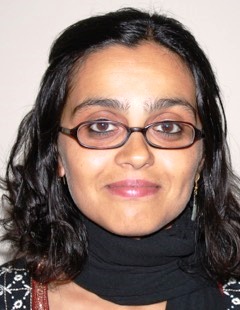
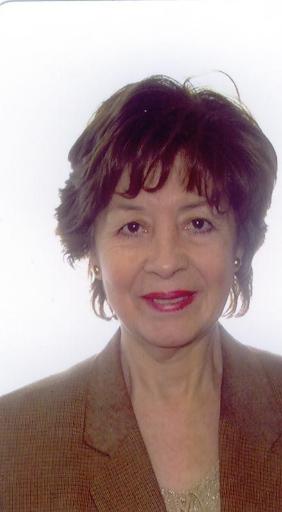
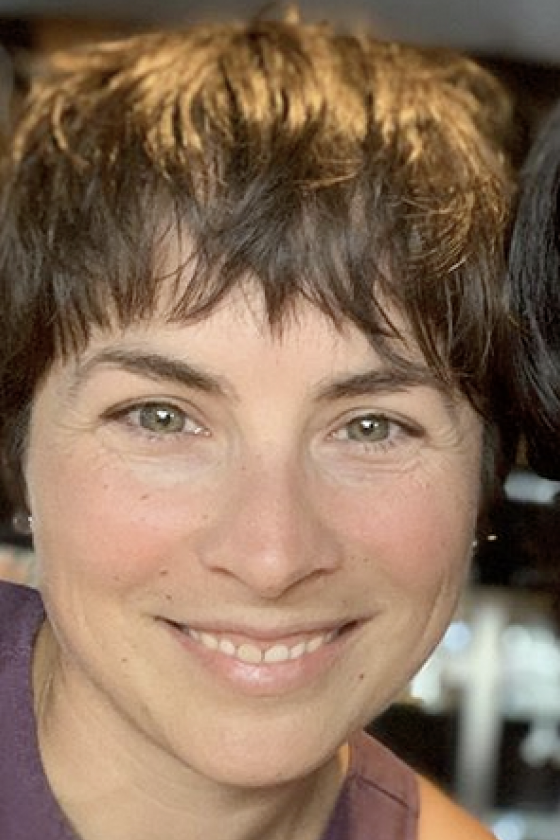
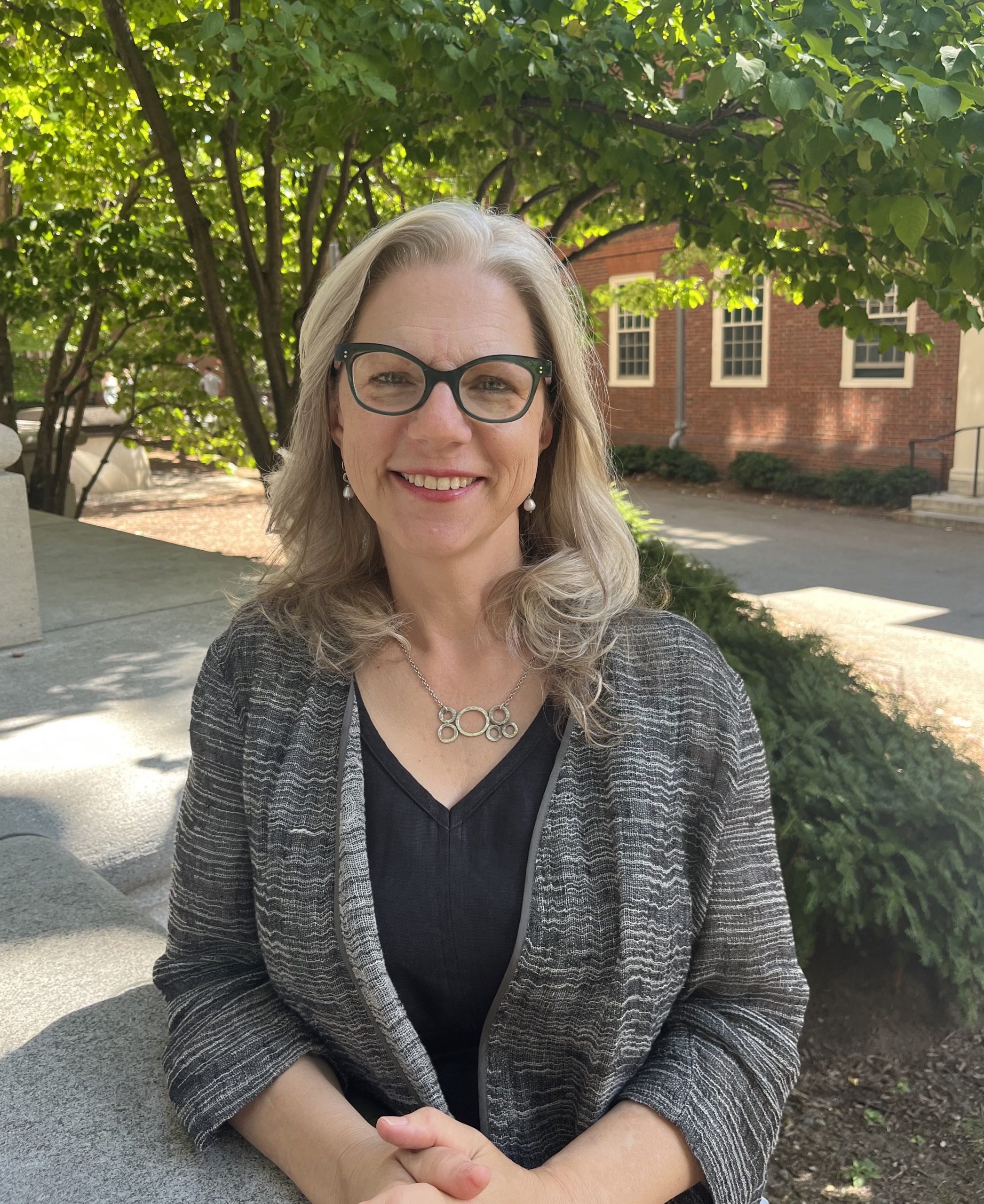
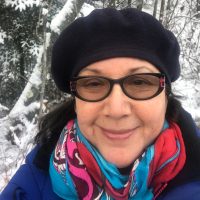
Anup Grewal is an Assistant Professor at the University of Toronto Scarborough (UTSC) within the Department of Historical and Cultural Studies and affiliated with the Tri-Campus Graduate Department of History at the University of Toronto. She teaches courses in History, Women’s Studies, and Global Asia Studies, integrating interdisciplinary perspectives into her pedagogy and research. Education: PhD in East Asian Languages and Civilizations, University of Chicago (2012) MA in History, Trent University BA in History, McGill University Her research focuses on modern Chinese cultural history, gender studies, and transnational leftist movements. She explores intersections of literature, film, and political activism, particularly examining Chinese women's roles in leftist movements of the 1920s-30s. Additional projects include comparative analyses of socialism in Indian and Chinese literature, and studies of minority films in contemporary China. Prior to her current position, she held roles as a Lecturer in Chinese and Comparative Literature at King’s College London (2013–15) and a Postdoctoral Fellow at Leiden University (2012–13).
Julie Rak is the HM Tory Chair and Professor in the Department of English and Film Studies at the University of Alberta. She holds a BA and PhD from McMaster University and an MA from Carleton University. Her research focuses on auto/biography, life writing, and nonfiction in North America, with specialties in gender, Canadian literature, and publishing studies. She has authored or co-edited numerous books, including False Summit: Gender in Mountaineering Nonfiction (2021) and The Routledge Introduction to Auto/biography in Canada (2023). Rak’s academic roles include interim Chair of the EFS Department (2023–2024) and leadership in the Stories of Change research group. She has received prestigious awards such as the J. Gordin Kaplan Award (2023) and the Killam Annual Professorship (2017–2018). Her research explores marginalized narratives, including Inuit literature and digital life writing, with a commitment to inclusivity and community engagement. Her teaching spans undergraduate and graduate courses on autobiography, gender theory, and Canadian literature. She actively supervises research projects and supports student initiatives like the Roger Smith Undergraduate Research Award. Rak’s work bridges academic rigor with public scholarship, with over 90 media engagements. Education: PhD in English, McMaster University MA in Canadian Studies, Carleton University BA in English, McMaster University Grants & Projects: SSHRC Insight Grant for Government Agents, Literary Agents: Inuit Books and Government Intervention, 1968–1985 Leadership in the Stories of Change initiative Awards & Honors: Fellow of the Royal Society of Canada (2022) Henry Marshall Tory Chair (2019–2025) 2024 Visiting Professor at Merton College, Oxford
Wendy Gay Pearson serves as Associate Professor in the Department of Gender, Sexuality, and Women's Studies at Western University. Her academic work spans multiple interdisciplinary fields with a particular focus on identity, citizenship, and belonging through the lenses of gender and sexuality. Professor Pearson's research interests encompass gender and sexuality studies, queer theory, feminist theory, critical race theory, and cultural studies. She approaches these topics through postmodernist and postcolonial theoretical frameworks, with emerging intersectional approaches to race, ethnicity, and diaspora. Her work specifically investigates these issues within science fiction, Canadian literature and film, and Indigenous film, examining connections between seemingly disparate areas such as analyzing Eden Robinson's Monkey Beach through both science fiction and Indigenous studies perspectives. Professor Pearson's scholarly output demonstrates a clear trajectory toward increasingly intersectional analyses, particularly in the most recent publications that bridge Indigenous studies with gender and sexuality frameworks. Her work consistently explores how science fiction functions as a space for imagining alternative gender and sexual possibilities, while simultaneously examining how Canadian cultural production engages with queer identities. The publications reveal a growing emphasis on Indigenous perspectives in film and literature, with multiple forthcoming 2024 contributions to the Routledge Handbook of Indigenous Film . As evidenced by her extensive editorial work including The Routledge Companion to Gender and Science Fiction (2023) and Reverse Shots: Indigenous Film and Media in an International Context (2014), Professor Pearson has established herself as a significant contributor to scholarly conversations at the intersection of gender studies and speculative fiction. Her book Zero Patience (2011) with Susan Knabe demonstrates long-standing engagement with queer cinema. Professor Pearson's academic supervision extends across multiple disciplines, reflecting her interdisciplinary approach. Her work has been supported through various academic channels that enable her to explore connections between Indigenous film, queer Canadian culture, and science fiction, though specific grant details are not provided in the available information. Her research methodology combines close textual analysis with theoretical frameworks from queer studies, feminist theory, and critical race theory, creating innovative approaches to understanding how cultural texts negotiate complex identity formations. This integrative approach is particularly evident in her examination of works by authors like Hiromi Goto, Nalo Hopkinson, and Larissa Lai, where she simultaneously considers sexuality, gender, race, and science fiction elements.
Ahmed Hammad is an Associate Professor in the Department of Civil and Environmental Engineering at the University of Alberta's Faculty of Engineering, where he also serves as Director of Academic Integrity, ENG WIL, Co-op and Career Connections. With 25 years of industry experience as a Project Planning & Control Manager on global mega-projects (including Oil Sands, LNG, and Infrastructure across Canada, UAE, Australia, and Egypt), he brings extensive practical expertise to academia. Education: Doctorate of Philosophy, Construction Engineering & Management, University of Alberta (2009) Master of Science, Construction Engineering & Management, University of Alberta (1999) Master of Engineering, Construction Engineering and Management, Cairo University (1996) Bachelor of Science, Civil Engineering, Mansoura University (1989) Research Focus: Dr. Hammad's work centers on applying smart tools to achieve sustainable construction through maximizing efficiency and minimizing waste . His research employs Machine Learning , Multi-Criteria Decision Making , Knowledge-Based Decision Support Systems , and digital twin technologies to optimize project planning, resource allocation, and sustainable material selection. He investigates the integration of BIM and Augmented Reality to enhance construction processes while reducing environmental impact. Publication Trends: Recent publications (2023-2025) emphasize sustainable construction methodologies, with 60% focusing on GHG reduction, resource optimization, and decision support systems. Key themes include machine learning for labor estimation, TOPSIS/MCDM for sustainable material selection, and digital twins for production planning, reflecting his NSERC-funded projects on KBDSS and construction-oriented digital twins. Scientific Recognition: Best Paper Award at 8th International Conference on Industrial Engineering and Operations Management (2018) Best Paper Award at HBRC Green Smart Sustainable Buildings Conference (2024) Research Leadership: Dr. Hammad secures major industry-academic partnerships, including NSERC Mission Alliance Grants ($1.2M+) with 16 industry partners for GHG reduction projects and NSERC Alliance Grants with 9 partners for digital twin development. His completed projects include collaborations with the City of Edmonton and Alberta Ministry of Infrastructure on resource allocation models. Research Ecosystem: As leader of the Sustainable Construction Research Group (SCRG), he fosters industry-academia collaboration through regular workshops with construction firms and government agencies, focusing on translating research into practical tools for sustainable project delivery.
Lady Rojas Benavente is an Associate Professor in the Department of Classics, Modern Languages and Linguistics at Concordia University, where she has been teaching since her appointment as Assistant Professor in 1996, with promotion to Associate Professor in May 2003. Prior to joining Concordia, she served as an Assistant Professor at the University of Ottawa and as a lecturer at the Faculty of Education at The University of Western Ontario, where she taught second language methodology, French and Spanish. Dr. Rojas Benavente received her PhD in Hispanic Literature from the University Laval in 1991, following an MA in Spanish Literatures (Cum Laude, 1985) and BA in History and Spanish (1983), both from the University of Ottawa. She also holds a Diploma qualifying as a Secondary School teacher specializing in Spanish Language and Literature, Psychology and Philosophy from the National Pedagogic University of Women in Lima, Peru (Cum Laude, 1968). Her research focuses on Critical Feminism in Peruvian & Latin-American Women Writers, with special emphasis on contemporary Peruvian and Mexican narrative, drama, poetry and essay. Her work encompasses Cultural Studies and Literary and Critical Theories, Latin American History, Post-colonialism, Human Rights, Women Studies, Feminist Theories, Gender Issues, Latin America Black History, Indigenous and Minorities Studies, and Comparative Studies in Education. She has published nine books (two poetry collections and seven critical interpretations) and over 50 refereed papers in Latin American Women's literary work, particularly focusing on Peruvian and Mexican authors. Dr. Rojas Benavente's scholarly output demonstrates consistent engagement with themes of gender, ethnicity, and power structures in Latin American literature. Her recent publications explore the works of contemporary Peruvian women writers, examining how they address issues of violence, racism, and gender in post-independence national contexts. Her research trajectory reveals a deepening focus on decolonial perspectives, indigenous resistance, and the intersection of gender with other social categories. Hispanic Literary and Cultural Institute's Honor Diploma (2010) Publication Award from the University of New Brunswick for the Anthology, Constructing Memory: Latino-Canadian Women Writers in the New Millennium Recognition by Mouvement Desjardins in celebration of International Women's Day (2008) As president of the Society for Literary Criticism of Spanish American Women Writers' work (CCLEH), Dr. Rojas Benavente has facilitated connections between Concordia colleagues, local artists, international writers, and the Latino-Montreal community. She serves on the editorial boards of Alba de America, a literary magazine from the United States, and Voces, a Peruvian cultural magazine. Her leadership extends to organizing numerous conferences on Latin American women writers across Canada, Latin America, and Montreal, including multiple meetings of Hispano-Canadian Women Writers and events commemorating significant figures in Latin American literature.
Martha Stiegman is an Associate Professor at the Faculty of Environmental and Urban Change, York University. Her research integrates Indigenous knowledge, food sovereignty, and arts-based methodologies to address issues of social, environmental, and disability justice. She is actively engaged in community-based research and public scholarship in Toronto and Mi’kma’ki (Nova Scotia). Her educational background includes a PhD from Concordia University’s Special Individualized Program and a BA in English Literature & Political Science from McGill University. This interdisciplinary foundation supports her work at the intersection of activism, research, and art. Stiegman’s research focuses on three interconnected domains: Indigenous/settler treaty relations, food sovereignty and justice movements, and participatory video and arts-based research. She emphasizes decolonizing methodologies and community-led knowledge production. Her work explores how arts-based approaches can deepen dialogues across communities and strengthen collective action for justice. Her recent publications and multimedia projects demonstrate a strong trend toward interdisciplinary, community-engaged scholarship that bridges Indigenous epistemologies, environmental justice, and disability justice. She frequently uses film, digital storytelling, and public art to mobilize knowledge and challenge colonial narratives. Co-creator of A Treaty Guide for Torontonians (2022) Lead on the Polishing the Chain project exploring Toronto’s treaty relationships Editor of the forthcoming Anti Colonial Food Systems (Routledge) Active collaborator with Indigenous scholars and artists including Dr. Sherry Pictou, Ange Loft, and Elder Kerry Prosper Stiegman has been involved in significant research grants such as the Atlantic Aboriginal Health Research Program. While specific advisees are not listed, her collaborative projects suggest active mentorship and supervision. She does not appear to lead a formal lab but works within research collectives and community partnerships.
Margaret Robinson is an Associate Professor at Dalhousie University, holding dual appointments in the Department of English and Department of Sociology and Social Anthropology within the Faculty of Arts and Social Sciences. She is a bisexual two-spirit scholar from Eski'kewaq, Nova Scotia, and a member of the Lennox Island First Nation. Her interdisciplinary work bridges Indigenous studies, queer theory, and intersectional feminism, with a focus on decolonizing methodologies and Indigenous oral traditions. Robinson’s research explores representation of Indigenous peoples and sexual/gender minorities in creative works, including fanfiction and popular culture. She holds a Tier 2 Canada Research Chair in Reconciliation, Gender, & Identity (2019-2023) and leads the Mi’kmaw Cultural Research Lab funded by the Canadian Foundation for Innovation (2021-2024). Her education includes a BA from Saint Mary’s University and MA/PhD from the University of Toronto. Key research areas include Indigenous New Wave literature, Mi’kmaw spirituality, and Two-Spirit feminism. Recent grants focus on reconciliation frameworks and LGBTQ2S+ health equity. She has published widely on topics like queer mental health, animal personhood in Mi’kmaw cosmology, and decolonizing pedagogies.
Nicholas Ng-A-Fook is a Full Professor in the Faculty of Education at the University of Ottawa, where he has served as former Associate Dean of Graduate Studies and Director of Teacher Education and Indigenous Teacher Education Programs. His work is deeply engaged with the Truth and Reconciliation Commission's 94 Calls to Action, working in partnership with Indigenous communities and school boards to disrupt colonialism, systemic racisms, and inequalities in educational curricula. Dr. Ng-A-Fook's educational background includes a Ph.D. in Curriculum and Instruction from Louisiana State University (2006), an M.A. in Education (Multicultural Education) from York University (2001), a Graduate Diploma in Education (Secondary Science and History) from the University of Western Sydney (1998), and a B.A. in Classical Studies from the University of Ottawa (1996). His research interests span Curriculum Studies, History of Education (particularly oral history), Life-writing research (autobiography and narrative inquiry), Critical Youth Studies (focusing on first-generation immigrant and Indigenous youth), Community-based research, and Contemporary perspectives in philosophy, science and technology including AI, genomic education, and anti-racist science education. Dr. Ng-A-Fook approaches his work as a curriculum theorist who draws on life writing research methodologies to co-create culturally responsive, relevant, and relational curriculum with educators. Dr. Ng-A-Fook's publications reveal a strong focus on reconciliation education, decolonizing curriculum, and addressing systemic racism in educational contexts. His work increasingly engages with digital technologies and artificial intelligence from a critical, decolonial perspective, examining how these technologies intersect with historical and ongoing colonial structures. His research shows a clear evolution toward more interdisciplinary work connecting curriculum studies with Indigenous knowledge systems, technology studies, and social justice movements. Among his notable honors are the 2024 Coutts Prize, the Ted T. Aoki Distinguished Service Award (2018), and the R.W.B. Jackson Award for an outstanding article in the Canadian Journal of Education. He also serves as Director of the EdCan Network and was Past-President of the Canadian Society for the Study of Education. As a supervisor, Dr. Ng-A-Fook currently mentors several graduate students including Melissa Daoust, Lisa Ambaye, Bahareh Samsamiardekani, and Madelaine McCracken. He created the FooknConversation podcast to address educational challenges with colleagues, community activists, artists, education leaders, teachers, and politicians, and maintains the Canadian Curriculum Theory Project website as a resource for his research.
Sophie McCall is a Professor in the Department of English at Simon Fraser University (SFU), specializing in Indigenous literatures. Her research focuses on decolonization, resurgence, and the ethics of collaborative authorship, particularly examining how Indigenous writers challenge settler colonialism through storytelling. She holds a BA from Queen’s University, an MA from UBC, and a PhD from York University. McCall is the author of First Person Plural: Aboriginal Storytelling and the Ethics of Collaborative Authorship (2011), which received critical acclaim, and editor of foundational texts like Devil in Deerskins: My Life with Grey Owl (2014). She co-edits Read, Listen, Tell: Indigenous Stories from Turtle Island (2017) and directs SFU’s Masters of Arts for Teachers of English (MATE) program. Her work bridges literary criticism and activism, addressing residential school narratives, Indigenous-Black solidarity, and the politics of reconciliation. She co-chairs the Indigenous Voices Awards and leads SSHRC-funded projects exploring Indigenous-led literary collaborations. Key themes in her scholarship include textualizing orality, ethical representation, and multidisciplinary Indigenous arts. Awards: Gabrielle Roy Prize finalist (2011), Canada Prize finalist (2011) Projects: SSHRC-funded collaboration with NunatuKavut scholar Kristina Bidwell Roles: Director of MATE, Co-chair Indigenous Voices Awards McCall’s publications span scholarly articles, edited collections, and anthologies, emphasizing Indigenous agency in storytelling. Her teaching and research prioritize decolonizing methodologies and amplifying Indigenous voices across disciplines.
Nicole Latulippe is an Associate Professor in the Department of Human Geography at the University of Toronto Scarborough (UTSC), with a cross-appointment in the Department of Physical and Environmental Sciences. She focuses on Indigenous environmental governance, anticolonial research methodologies, and relational geographies through community-engaged practices. Ph.D. in Geography from University of Toronto M.A. in Geography from University of Guelph B.A. (Hons) in Geography from Nipissing University Her research explores Indigenous knowledge systems in environmental governance, settler-Indigenous relations in urban spaces, and decolonizing methodologies. Current projects include land/water stewardship in Toronto, treaty citizenship, and pathways to just futures through Indigenous placemaking. Her recent publications emphasize fisheries policy alternatives rooted in Indigenous relationality, co-creative research with Toronto Islands communities, and Indigenous-led environmental governance frameworks. Themes include knowledge sovereignty, colonial-disruption strategies, and land-based relational ethics. Scientific Awards: Connaught New Researcher Award (2022), SSHRC Insight Development Grant (2021), SSHRC Connection Grant (2019) Community Collaborations: Nipissing First Nation fisheries stewardship, Indigenous Environmental Justice Project, Mississaugas of the Credit First Nation partnerships
Pamela Klassen is Professor and Chair in the Department for the Study of Religion at the University of Toronto, cross-appointed to Anthropology. She is a Fellow of the Royal Society of Canada and has held distinguished positions including William Lyon Mackenzie King Chair at Harvard University and Distinguished Visiting Professor at the University of Tübingen. Professor Klassen's research focuses on the anthropology of religion with particular attention to: Colonialism, treaties, and public memory in North America and Turtle Island Global Christianities and their relationship to Indigenous lands Religion, ritual, and museum studies Digital humanities approaches to religious history Gender, spirituality, and religious authority Her scholarly work demonstrates a consistent engagement with how religion shapes and is shaped by colonial histories, public memory, and contemporary political struggles. Klassen's research bridges academic inquiry with public-facing projects that collaborate with Indigenous communities, particularly the Rainy River First Nations. Among her notable awards are the American Academy of Religion Award of Excellence (2012), the Northrop Frye Award of Excellence (2015), and the Anneliese Maier Research Award from the Humboldt Foundation (2015-2020). She was elected as a Fellow of the Royal Society of Canada in 2019. Professor Klassen actively mentors graduate students and has supervised numerous PhD candidates working at the intersection of religious studies, anthropology, and Indigenous studies. Her current research includes a book on the public memory of gold rushes in settler colonies and ongoing collaborative work with the Kay-Nah-Chi-Wah-Nung Historical Centre. She leads several major collaborative projects including "Kiinawin Kawindomowin Story Nations," a digital storytelling initiative focused on restorying colonial documents about Manidoo Ziibi (Rainy River), and "Treaty Conversations," an educational resource about treaty relationships in Ontario.
Patricia D. McGuire is an Associate Professor at the School of Social Work , Carleton University , with a PhD in Sociology from the University of Saskatchewan (2013). Her academic work centers on Indigenous knowledge systems, community-based research methodologies, and decolonizing practices within Canadian sociological and social work frameworks. Doctor of Philosophy (Sociology) , University of Saskatchewan (2013) Master of Arts , Lakehead University (2003) Bachelor of Arts (Political Science) and Honours Bachelor of Social Work , Lakehead University (1988) McGuire's research focuses on Indigenous resilience , decolonizing methodologies , and community-driven solutions , particularly examining Anishinaabe societies. She has contributed extensively to sociology and social work literature through book chapters and peer-reviewed articles addressing Indigenous epistemologies, structural barriers in education, and reconciliation processes. Her publications explore topics like urban Indigenous youth safety , land-based education , and Indigenous women's leadership . McGuire has collaborated with the Ontario Native Women’s Association (ONWA) on CIHR-funded projects, including land-based camps and restorative justice practices. Supervision & Education : Supervised PhD and MSW students on CIHR projects (2019–2020), including eight MSW research assistants and one practicum student. Her teaching emphasizes Indigenous community engagement and structural analysis.
Camille Owens is an Assistant Professor in the Department of English at McGill University, affiliated with the Faculty of Arts. Her research focuses on race, childhood, disability, and archival methodologies, with a particular emphasis on African American literature and Black feminisms. She holds a Ph.D. from Yale University and a B.A. from Harvard University, where she graduated summa cum laude. Owens’ work challenges historical narratives about childhood’s universality by centering Black children’s experiences and contributions. Her book Like Children: Black Prodigy and the Measure of the Human in America (2024) rethinks the intersections of race, developmental schemas, and ableism in 19th-century America. Education Ph.D., M.Phil., M.A., Yale University (African American Studies and American Studies) B.A., summa cum laude, Harvard University (History & Literature and Women, Gender, Sexuality Studies) Awards & Honors Junior Fellow, Harvard Society of Fellows (2020–2023) 1921 Prize in American Literature (2022) Ralph Henry Gabriel Dissertation Prize (2020) Sylvia Ardyn Boone Dissertation Prize (2020) Owens teaches courses on Black studies, Indigenous literatures, disability studies, and archival theory. Her research bridges literary analysis with historical critique, emphasizing marginalized voices in archives and cultural production.
Steven Hijmans is a Professor in the Department of History, Classics, & Religion at the University of Alberta's Faculty of Arts. His research focuses on Roman art and religion, with a particular emphasis on solar symbolism, Mithraic studies, and the intersection of art and religious practices. He holds a PhD and has authored numerous scholarly works analyzing ancient iconography, imperial imagery, and religious syncretism. His work often bridges archaeological evidence with textual analysis to explore cultural, political, and religious dynamics in antiquity. Key research areas include the role of art in religious expression, the evolution of imperial portraiture, and the material culture of Roman cults. His recent publications (2010–2024) address topics ranging from solar deities in Greco-Roman contexts to the reinterpretation of ancient urban spaces. Hijmans is also engaged in interdisciplinary projects examining the reception of classical antiquity in modern scholarship. His academic contributions are marked by meticulous attention to iconographic detail and contextual analysis. He has participated in archaeological fieldwork in Greece and Turkey, contributing to site documentation and interpretation. Hijmans' work is frequently cited in studies of late antique religion, Hellenistic art, and the socio-political dimensions of Roman religious practices.
Pierre Beaucage is an anthropologist and Professor at the Department of Anthropology, University of Montreal. His work focuses on Indigenous peoples in Mexico, particularly the Nahuas, exploring themes like ethnohistory, cultural preservation, and social movements. He has collaborated extensively with organizations such as the Tosepan Titataniske cooperative and the PRADE A.C. NGO, analyzing issues of land rights, economic development, and cultural autonomy. His research critiques institutional and state interventions in Indigenous communities, emphasizing participatory methodologies and ethical engagement. Beaucage's research interests span economic anthropology, political activism, and the intersection of culture and power. He has authored seminal works on Indigenous oral traditions, cooperative structures, and the impact of global economics on rural communities. Key publications include studies on Nahua ethnohistory, Garifuna-Yanomami cultural exchange, and the ethical dilemmas in applied anthropology. His work highlights the tension between academic research and community-driven initiatives, advocating for Indigenous self-determination. Collaborations with NGOs and grassroots movements have shaped his approach to anthropological practice, emphasizing equitable partnerships and knowledge-sharing.