Réjean Dion is a Clinical Adjunct Professor at the School of Public Health (ESPUM), Université de Montréal, affiliated with the Department of Social and Preventive Medicine . He works as a Public Health Physician at the Institut national de santé publique du Québec (INSPQ), specializing in infectious disease surveillance and epidemiology. Role: Public Health Physician (Infectious Diseases) Institution: INSPQ/ESPUM Expertise: Epidemiology, Biostatistics, Surveillance Systems Teaching: SPU6600 - Principles and Challenges of Public Health Research Focus: Dr. Dion’s work centers on infectious disease epidemiology, with emphasis on SARS-CoV-2 variant tracking , antibiotic resistance , zoonotic pathogens , and environmental health risks . His studies span foodborne illnesses (e.g., Salmonella, Campylobacter), waterborne diseases (Cryptosporidium, Legionella), and population-level interventions (tuberculosis screening in Nunavik). Publications highlight multidisciplinary approaches integrating molecular techniques, biostatistics, and public health policy. Key themes include infectious disease modeling , outbreak investigation , and health equity in chronic and infectious diseases. Professional Affiliations: Member of the Collège des médecins du Québec and Association Épiter , with active participation in knowledge translation through Statlabo (laboratory surveillance bulletin) and applied training in epidemiology and biostatistics.
Professor Tamsin Jillian Meaney serves as a faculty member in the Department of Language, Literature, Mathematics and Interpretation at the University of Bergen, where she maintains an active research profile with over 100 peer-reviewed publications in mathematics education. Her current teaching responsibilities include MGBMA101 (Mathematics 1) and MGUMA550 (Master's Thesis) courses. Her research specializes in indigenous education, early childhood mathematics development, and teacher training methodologies, with particular emphasis on multilingual classroom dynamics. As research leader for the Norwegian Research Council-funded project "Learning about teaching argumentation for critical mathematics education in multilingual classrooms" (2018-2021), she examines how linguistic diversity shapes mathematical reasoning. She also contributes to the Kindergarten Knowledge (Kindknow) center's systemic research on sustainable educational futures. Recent 2024 publications reveal consistent thematic focus across five key areas: multilingual task design for algebraic understanding, digital competence in kindergarten mathematics, teacher perspectives on technological tools, children's narrative approaches to numeracy, and advocacy frameworks in teacher education. These works collectively advance critical pedagogy in diverse educational settings while addressing practical classroom challenges. Professor Meaney has supervised postgraduate students across four countries (New Zealand, Australia, Sweden, and Norway) and directs significant research funding through the Norwegian Research Council. Her international recognition includes keynote presentations worldwide on mathematics education equity. She currently leads the "Learning about teaching argumentation" project and participates in the Kindknow research center, where her team develops systemic approaches to sustainable early mathematics education in multicultural contexts.
Jennifer Harmon serves as an Associate Professor in the Department of Family and Consumer Sciences within the College of Agriculture, Life Sciences & Natural Resources at the University of Wyoming. Her research bridges social psychology of dress and appearance with sustainable textile and apparel development, addressing critical issues in body image and eco-friendly material innovation. Her academic credentials include: Ph.D. in Human Sciences (Fashion and Retail Specialization) with Sociology Minor from The Ohio State University M.S. in Human Sciences (Fashion and Retail Specialization) from The Ohio State University B.S. in Family and Consumer Sciences with Business Minor from Illinois State University Dr. Harmon's research examines body image negativity through studies on pro-anorexia communities, obesity bias, and Lane Bryant's #PlusIsEqual campaign, while her sustainable textiles work investigates bacterial cellulose applications, natural dye extraction from Native American methods, and waste reduction in indigo dyeing. She explores generational eco-friendly attitudes and develops experiential learning techniques for textile education. Analysis of her 15 most recent publications reveals three dominant research trajectories: groundbreaking investigations into nonbinary body image experiences (accounting for 40% of recent work), innovative sustainable material development focusing on bacterial cellulose and natural dyes (35%), and pedagogical research on experiential learning in textile science (25%). Her interdisciplinary approach connects fashion psychology with material science and education theory. Dr. Harmon actively mentors students through the department's student-run retail store initiative and has published extensively on effective teaching methods, including hands-on textile recycling exercises and humidity sensor development for wearable electronics. Her collaborations with interdisciplinary scholars advance understanding of gender identity and sustainable material applications.
Haley Rains is a President's and Andrew W. Mellon Foundation Postdoctoral Fellow in the Department of Film and Digital Media at the University of California, Santa Cruz, specializing in Native American visual sovereignty and deconstruction of frontier mythology. Her educational background includes: B.A. in Indigenous and American Indian Studies from Haskell Indian Nations University M.A. in Native American Studies from University of California, Davis Ph.D. in Native American Studies from University of California, Davis Rains' research critically examines how the American frontier myth perpetuates Native American marginalization, ecological destruction in Montana, and social disparities through visual media. Her work integrates Indigenous knowledge systems with documentary filmmaking to address environmental sustainability and the opioid epidemic in Indian Country, advocating for culturally grounded solutions that center tribal sovereignty and traditional ecological practices. Haley Rains has received notable recognition including: President's and Andrew W. Mellon Foundation Postdoctoral Fellowship Stanford's recognition as one of 40 global innovators in environmental sustainability (2025) Her documentary project "WE ARE NOT YOUR SAVAGES" is funded by the UC President's Postdoctoral Fellowship Program, Mellon initiatives, Muscogee (Creek) Nation, and Western Heritage Center. Collaborating with historians like Lauren Hunley and scholars including Terry L. Anderson of Stanford's Hoover Institution, Rains develops media that challenges destructive frontier narratives while highlighting Indigenous perspectives on land stewardship and community resilience.
Associate Professor Riza Yosia Sunindijo serves as Deputy Head of School (Research) at UNSW School of Built Environment, where he has been a full-time academic since 2013 after joining as sessional staff in 2009. A top 2% scientist according to Stanford University, he holds PhD and Master's degrees from UNSW and Petra Christian University, along with professional memberships in the Australian Institute of Building (MAIB) and Chartered Institute of Building (MCIOB). His career spans significant administrative roles including Undergraduate Coordinator (2014-2017) and Director of Postgraduate Research (2018-2020). Sunindijo's research focuses on construction safety, mental health, gender diversity, and disaster management—particularly in developing countries. His work examines psychosocial hazards, women's empowerment in construction, and health/safety integration in procurement processes. He has developed frameworks for positive mental health in construction workers and safety climate improvement in Indonesian contexts. Analysis of his recent publications reveals strong trends in construction mental health (35% of output), gender diversity (25%), and safety culture (20%), with growing emphasis on AI applications and pandemic-related stressors. His work spans global contexts but maintains strong focus on Indonesia and developing nations. Research, Development and Technology Professional Excellence award (AIB NSW Chapter, 2025) Social Impact Award for PsycheGuard project (UNSW Founders, 2024) Exemplary Teaching Practice Award (UNSW, 2022) Australian Institute of Building Teaching Excellence Award (2019) Built Environment Staff Excellence Award (2016, 2014) As Director of Postgraduate Research (2018-2020), Sunindijo supervised numerous HDR candidates while securing major grants including a $2.3M Department of Prime Minister and Cabinet project on women in construction and $140k from NSW WHS Centre for small business safety frameworks. His current research includes the PsycheGuard mental health initiative and Indigenous procurement policy evaluations. Through UNSW-Indonesia collaborations and fieldwork in Jakarta, Sunindijo leads projects addressing hospital disaster preparedness and construction safety in developing economies, maintaining strong industry connections through organizations like the Australian Institute of Building.
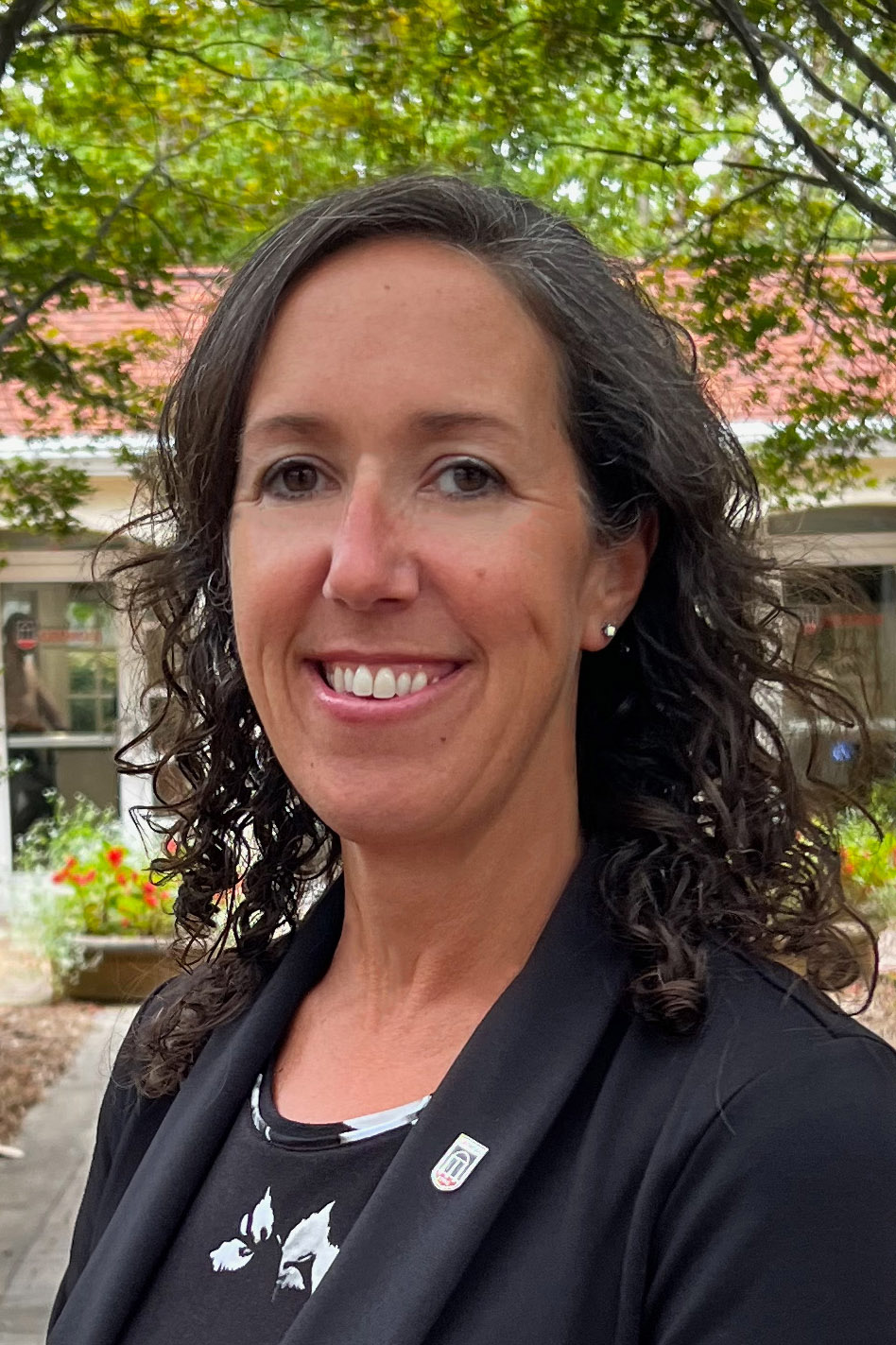
Dr. Alexa Lamm is a Professor in the Agricultural Leadership, Education & Communication department at the University of Georgia's College of Agricultural & Environmental Sciences. Her work focuses on science communication, environmental issues, community development, and agricultural extension services. PhD in Agricultural Education and Communication , University of Florida (2011) Masters in Extension Education , Colorado State University (2000) Bachelor's in Equine Sciences , Colorado State University (1999) Research interests span science communication, social media analysis, community development through extension programs, environmental sustainability, and systems thinking in agricultural education. Current projects examine topics like: Public perception of agricultural technologies Environmental communication strategies Graduate student recruitment dynamics Combating agricultural misinformation Climate change adaptation in community gardens Integration of indigenous and scientific knowledge Scientific awards include: 2021 ACE Distinguished Poster Award Mentoring award for Dennis Baffour-Awuah's 2025 Western Region AAAE competition success Advising and collaborations: Mentored over 15 graduate researchers Collaborates with UC Davis CLEAR Center, AgNext, and international institutions Secured grants from USDA and CDC
Nicolas Tanchuk serves as Assistant Professor in the Education Policy, Organization & Leadership department within the College of Education at the University of Illinois at Urbana-Champaign. His office is located in 0368 Education Building at 1310 S. Sixth Street, Champaign, IL, where he teaches graduate-level courses in educational philosophy, ethics, and technology integration. Dr. Tanchuk's research spans multiple interconnected domains with increasing emphasis on the philosophical implications of artificial intelligence in education. His primary interests include educational ethics, social justice pedagogy, critical policy analysis, and the evolving relationship between educational theory and emerging technologies. Recent scholarship demonstrates a significant pivot toward examining AI's role in educational contexts, particularly regarding epistemic trustworthiness in AI tutoring systems and literacy frameworks for potential artificial superintelligence. His work consistently bridges theoretical philosophical inquiry with practical educational concerns, maintaining strong connections to social justice frameworks and Indigenous educational perspectives. Analysis of his recent publications reveals a clear trajectory from foundational work in educational ethics and social justice toward increasingly technology-focused philosophical inquiry. While maintaining his commitment to critical approaches to educational policy and teacher ethics, approximately 40% of his 2024-2025 publications directly address AI's role in education. His scholarship demonstrates methodological diversity, employing critical policy analysis, philosophical argumentation, and empirical validation approaches across his publications in journals spanning educational theory, philosophy, and policy. Dr. Tanchuk teaches several advanced courses including ERAM 551 (Philosophy and History of Educational Research), EPOL 506 (Contemporary Philosophy of Education), EPOL 480 (Technology and Educational Reform), and ERAM 572 (Case Studies in Educational Ethics). His course descriptions emphasize interdisciplinary approaches that integrate philosophical, historical, and social perspectives on education, with particular attention to normative and policy issues raised by technological developments in educational contexts. His teaching appears designed to equip graduate students with both theoretical frameworks and practical ethical decision-making tools for contemporary educational challenges.
Sun Yee Yip is a Lecturer in Teacher Education at Monash University's Faculty of Education, specializing in the School of Curriculum Teaching & Inclusive Education. With extensive prior experience as a secondary science teacher, policy officer, and school leader in Singapore's education sector, she brings practical insights to her academic work. Her research centers on educational equity and diversity , specifically examining: Strategies to expand teacher diversity through improved initial teacher education Leveraging generative AI for inclusive pedagogical practices School reform models promoting equitable outcomes for marginalized students Her work appears in leading journals including the Journal of Further and Higher Education, where she serves as Associate Editor. Analysis of her recent publications reveals consistent focus on immigrant teacher adaptation , teacher status dynamics , and intersectional identity formation within multicultural educational contexts. The research employs primarily qualitative methodologies with strong emphasis on autoethnography and narrative analysis. Her scientific recognition includes: Australian Teacher Education Association Early Career Researcher Award (2022) Monash Education CTI Research Excellence Award (2024) Association for Supervision and Curriculum Development Gold Award (2012) As an active supervisor, she leads six current research projects including: Supporting master’s course students to become early career researchers Professional Learning Program for Zhejiang Teacher Educators Enhancing teacher diversity: attracting culturally diverse candidates into initial teacher education Her community engagement spans the Australia Teacher Education Association Executive Committee and editorial roles for multiple international journals.
Vedrana Glavaš serves as Associate Professor in the Department of Archaeology at the University of Zadar, Croatia, teaching undergraduate and graduate courses including Introduction to Field Research, Field Exercises, and Geographic Information Systems. Her academic foundation was established through primary and secondary education in Senj, followed by dual graduate qualifications in archaeology and history from the University of Zadar (2009), and a PhD in Eastern Adriatic Archaeology from the same institution (2015). Educational milestones: Graduate Archaeologist and Professor of History, University of Zadar (2009) PhD in Archaeology (Eastern Adriatic Archaeology), University of Zadar (2015) Her research pioneers the integration of aerial archaeology and GIS technologies to decode karst cultural landscapes, particularly across northern and central Velebit. This work examines prehistoric and Roman settlement patterns, cultural transformations, and landscape formation processes within the challenging Dinaric karst terrain, with significant contributions to understanding indigenous civitates and their Romanization through methodological innovation. Analysis of her 2021-2024 publications reveals dominant themes in cultural landscape archaeology, emphasizing aerial reconnaissance applications, Romanization dynamics, ceramic studies for trade reconstruction, and multi-period site identification along the Velebit coast and Adriatic hinterland. Her scholarship consistently bridges advanced geospatial techniques with regional historical questions, establishing new frameworks for karst archaeology. No scientific awards were documented in available sources. While specific student advisement records remain unreported, her professional trajectory includes significant project leadership including the ArcLand initiative and international collaborations exemplified by Cambridge University training under Rog Palmer. Current research activities demonstrate active grant engagement through ongoing field projects. She co-founded the Junior Aerial Archaeology Research Group (YAARG) and maintains active membership in the Aerial Archaeology Research Group (AARG), driving methodological advancements in aerial reconnaissance for karst environments through field validation and international knowledge exchange.
Jussi Eronen is a Professor of Socio-ecological Systems at the University of Helsinki , affiliated with the Faculty of Biological and Environmental Sciences and the Ecosystems and Environment Research Programme . He also serves as Vice-Dean for Societal Interaction and maintains an external affiliation with the BIOS Research Unit . His research focuses on three main areas: (1) long-term biotic interaction changes due to human influence, (2) socio-ecological system analysis in Northern Fennoscandia, and (3) policy path-dependencies affecting sustainability transitions. The Past Present Sustainability Research Unit (PAES) he leads employs transdisciplinary approaches combining natural science perspectives with social science collaborations. Recent work examines reindeer herding futures using wild logic scenarios, policy implementation challenges in forest industries, and cultural transmission patterns through string figure analysis. His publications span journals like Journal of Land Use Science , Anthropocene Review , and Ecological Economics , reflecting his integrative approach to sustainability science. Current projects include EU-funded research on regional sustainability pathways (2023-2025) and Academy of Finland initiatives for university profiling (2025-2030). He maintains active roles in scientific networks like the Scientific Consensus on Maintaining Humanity's Life Support Systems .
Astrid Bredholt Stensrud is an Associate Professor at the Department of Global Development and Planning, University of Agder, specializing in social anthropology. Her work bridges development issues, Latin American studies, and crisis response, with a focus on the Peruvian Andes. PhD in Social Anthropology (2011), University of Oslo Master's in Social Anthropology (2004), University of Oslo Her research explores how communities navigate crisis, inequality, climate change, and water management, interrogating neoliberalism, decolonization, and human-nature relations. She employs ethnographic methods to analyze precarious labor, gender dynamics, and environmental governance. Recent publications highlight the interplay of climate change and world-making practices in Peru. She has also contributed to debates on water extractivism, hydrosociality, and the moral economies of care in crisis contexts. Scientific awards: Feature articles in Fædrelandsvennen (2019, 2021), Khrono.no (2020), and Klassekampen (2021) Stensrud's advisory and collaborative work extends to interdisciplinary teams, including CIEM (Centre for Integrated Emergency Management) and climate change research groups, emphasizing community resilience and policy relevance.
Rob Morrison is a researcher at National-Louis University, focusing on digital information literacy, culturally responsive pedagogy, and the integration of information literacy into higher education curricula. His work explores innovative teaching models for academic librarians, stakeholder engagement in open access initiatives, and the intersection of technology with learning frameworks. Key research areas: Digital Information Literacy, Indigenous Knowledge, Educational Technology Collaborative projects: Co-authoring with Larissa Garcia, Deana Greenfield, and Jack Fritts Notable trends in publications: Embedded instruction, culturally relevant curriculum design, open access repositories
Julianne Walsh is a researcher at the University of Hawai‘i at Mānoa 's Center for Pacific Islands Studies. Holding a PhD in Cultural Anthropology (2003), she develops digital educational resources while working with Marshallese communities in Hawaii. Her roles include undergraduate advisor , service-learning coordinator , and curriculum committee chair . PhD, University of Hawai‘i at Mānoa (2003) MA, Louisiana State University (1995) Research focus includes: Marshallese leadership models Compact of Free Association migration Indigenizing education Public anthropology US-Marshall Islands adoptions Recent publications show emphasis on: Pacific Islander digital storytelling Historical narrative construction Gender and environmental policy in Oceania Indigenous education frameworks Teaching roles include: PACS core courses in public policy High-impact pedagogy development Writing-intensive curriculum design
Stephanie Chitpin is a Full Professor at the Faculty of Education, University of Ottawa , specializing in Educational Leadership . Her research challenges inductive methodology, advocating for Popperian critical rationalism through the Objective Knowledge Growth Framework (OKGF) . She has secured grants from the SSHRC and Ontario Ministry of Education , focusing on international leadership decision-making and neoliberal policy impacts. Research Interests: Decision-Making in Educational Leadership, Professional Development, Epistemology, Social Justice in Education, Neoliberal Policy Critique Books: Series Editor of Transforming Education Through Critical Leadership, Policy and Practice , author of Decision Making in Educational Leadership (2015), and memoir Keep My Memory Safe: Fook Soo Am, The Pagoda (2023) Scientific Awards: 2020 Faculty of Education Research Excellence Award Her 15 most recent publications (2015-2023) explore topics ranging from neoliberal restructuring to crisis leadership during the pandemic , consistently applying Popperian falsifiability criteria to educational contexts. She founded the Equitable Leadership Network and established the Ah Feeti Memorial Scholarship for racialized students. Supervising PhD student Olfa Karoui, she bridges academic theory with lived experiences, having earned her PhD in Popper's Philosophy from the University of Toronto in 2003.
Louise Boronyak serves as an Industry Fellow and Senior Research Consultant at the Institute for Sustainable Futures (ISF) at the University of Technology Sydney. She also holds the position of General Manager at the Centre for Compassionate Conservation at UTS, where she leads initiatives focused on conserving biodiversity without compromising the welfare of individual wild animals. Previously, she managed THINKK, the think tank for kangaroos, which conducted independent research on kangaroo welfare, ecology, law, and economics in Australia. Boronyak's research spans environmental sustainability, natural resource management, and the intersection of animal welfare with conservation biology. Her work emphasizes stakeholder engagement and community-based approaches to climate change adaptation. She has developed expertise in human-wildlife coexistence, particularly regarding large carnivores like dingoes, and advocates for compassionate conservation approaches that recognize animal personhood. Her research integrates social-ecological systems perspectives, focusing on how communities can adapt to climate change while protecting biodiversity. Analysis of Boronyak's publication record reveals a clear trajectory from climate adaptation and natural resource management toward compassionate conservation and human-wildlife coexistence. Her early work focused on climate adaptation in Pacific Island nations and Australian communities, while her more recent publications center on ethical approaches to wildlife management, particularly regarding dingoes and kangaroos. A unifying theme across her work is the emphasis on participatory processes, community engagement, and the integration of multiple knowledge systems to address complex environmental challenges. Scientific Recognition: Received a highly commended award in the Resilient Australia Awards 2013 for her work on the Bushfire Partnership project, which engaged Sydney communities in bushfire preparedness while protecting local biodiversity Boronyak has managed significant research projects including the Bushfire Partnership, work with the North East Greenhouse Alliance (NEGHA) to strengthen community capacity for climate change adaptation in Northern Victoria, and the CSIRO Intelligent Grid Research Cluster promoting distributed energy technologies. Her project management experience spans both Australian and international contexts, with a focus on green technology and community-based adaptation initiatives. She has secured funding from various sources including NSW Environmental Protection Agency and the NSW Office of Environment and Heritage. As General Manager of the Centre for Compassionate Conservation and former manager of THINKK, Boronyak leads research teams focused on innovative approaches to wildlife management that prioritize animal welfare. Her work with the Centre for Compassionate Conservation represents a dedicated team effort to develop conservation strategies that avoid harming individual animals while protecting biodiversity. Her research often involves collaboration with government agencies, community organizations, and academic partners across multiple disciplines.