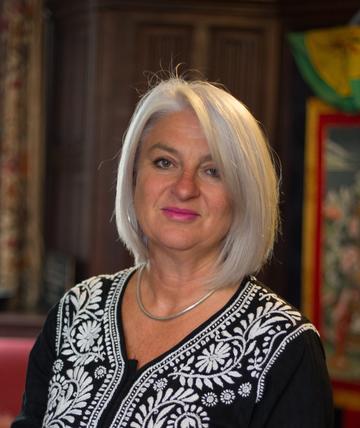
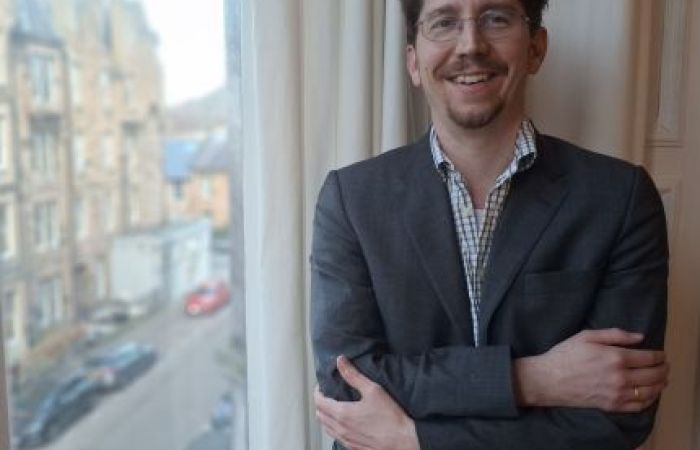
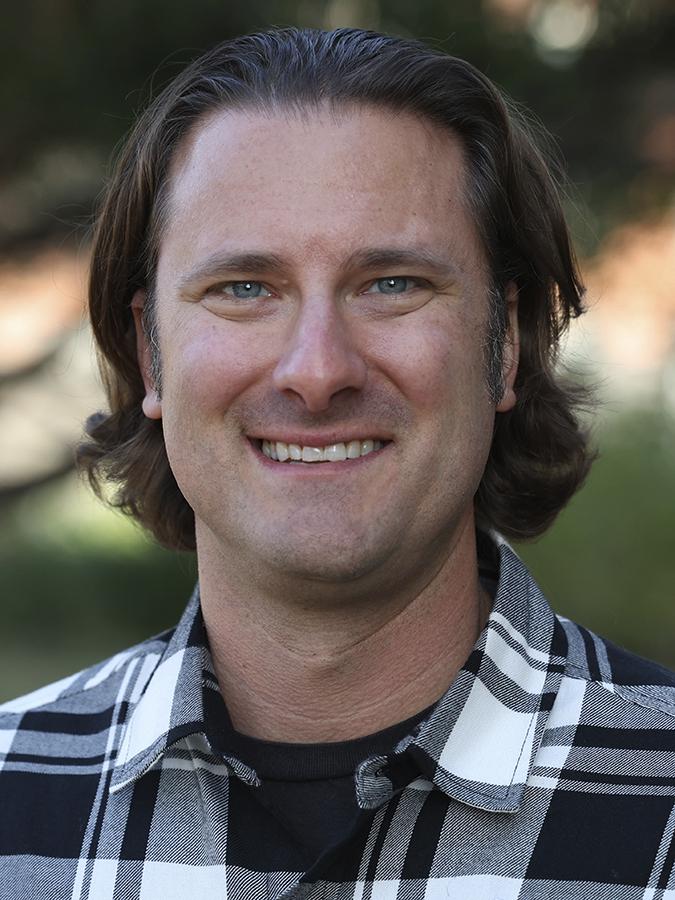
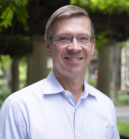
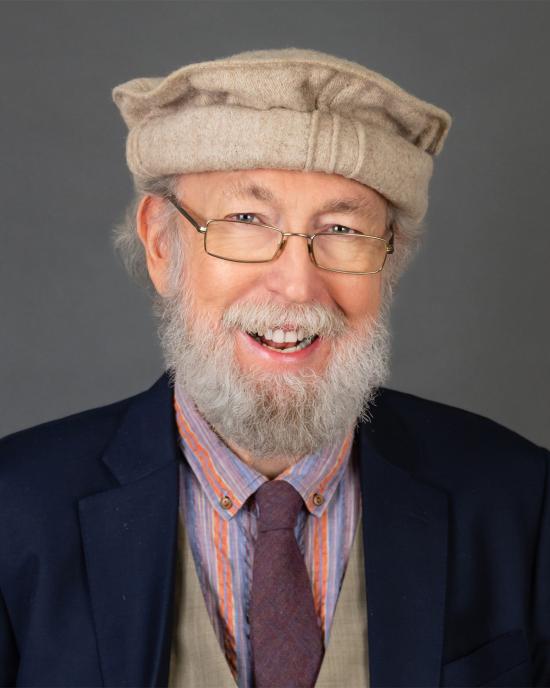
Robyn Fox is an Associate Lecturer in the School of Education and Tertiary Access at the University of the Sunshine Coast (UniSC), Australia, teaching in Bachelor of Education (Secondary)/Bachelor of Recreation and Outdoor Environmental Studies programs with emphasis on foundational outdoor studies and paddling-based engagement methods. Her educational qualifications are: MAIntEd, Endicott College MA, DipEd, LaTrobe University BA, LaTrobe University Her research centers on sustainability integration and ecological literacy in outdoor education, driven by her planned PhD investigating embedded sustainable practices. She champions experiential learning through natural environments to foster environmental consciousness and climate-responsive pedagogy. Analysis of her 2022-2025 publications reveals dominant themes in climate change education within outdoor contexts, featuring innovative approaches like near-peer teaching and nature journaling while addressing eco-anxiety and Indigenous knowledge systems. Her scholarship consistently advocates for curriculum transformation toward ecological stewardship and climate action. Robyn actively involves students in community initiatives: Collaborated with Thai army and Regent’s School students to rebuild tsunami-damaged homes in Thailand (2004) Established sports programs between Khartoum International Community School and local institutions in Sudan Coordinated orphanage library setup with Luanda International School in Angola Current participant in Alexandra Headland Community Association’s foreshore regeneration projects
Carol Smith is an Associate Professor in the Department of Soil & Physical Sciences at Lincoln University, New Zealand, where she serves as Head of Department since 2017. She has been an elected academic staff member of the Lincoln University Council from 2018-2022. Dr. Smith holds a PhD from the University of Aberdeen, an MSc from the University of Reading, and a BSc(Hons) from the University of Portsmouth, forming the foundation of her expertise in soil science and physical geography. Her research spans both fundamental and applied aspects of pedology. On the fundamental side, she investigates Quaternary pedology and paleoenvironmental reconstruction using loess stratigraphy, geomorphology, and micromorphology, which provides critical data for verifying future climate change predictive models. Applied research focuses on sustainable use of recycled organic matter and rehabilitation of degraded soils. She collaborates internationally on multidisciplinary projects involving paleoclimate reconstruction, paleoliquefaction, Antarctic soils, and viticulture. Dr. Smith is passionate about teaching and science communication, employing experiential learning methods to develop practical field skills in soil science through 'soil judging competitions' in New Zealand and Australia. Her research addresses UN Sustainable Development Goals including Life on Land (15), Climate Action (13), and Quality Education (4). Among her notable recognitions are the Norman H Taylor Memorial award 2020 from the New Zealand Society of Soil Science for outstanding contributions to soil science in New Zealand and Fellowship in the Royal Geographical Society, London. She serves as Associate Editor of Natural Sciences Education and was previously editor of Quaternary Australasia. Dr. Smith has supervised numerous graduate students through research-based supervision, with completed projects covering diverse topics from soil patterns in Southland to Antarctic soil ecology. She teaches advanced courses in field research, soil science, and physical landscapes, and has developed innovative approaches to teaching during the pandemic, including virtual field trips.
John McDonagh is an Associate Professor in Global Development and the Environment at the School of Global Development, University of East Anglia. His academic journey began with a BSc in Botany (University of Bristol, 1987), followed by an MSc in Tropical Soil Fertility Management (Imperial College, 1988) and a PhD in Tropical Agronomy (University of London, 1993). He joined UEA in 1997 and is a member of the Tyndall Centre for Climate Change Research. His research focuses on tropical soil management, sustainable farming systems, and land degradation assessment across Africa, Asia, and Latin America. Notable projects include GEF-funded ecosystem carbon assessment tools and DFID-supported biochar studies in Ghana and China. He has also contributed to FAO’s LADA project on dryland degradation. McDonagh has extensive field experience in Thailand, Madagascar, Tanzania, and Namibia, blending scientific research with community-based approaches. His interdisciplinary work addresses the nexus of agriculture, environment, and livelihoods, aligning with UN SDGs related to climate action and zero hunger.
Clare Harris serves as Professor of Visual Anthropology and Head of the School of Anthropology and Museum Ethnography at the University of Oxford, concurrently holding curatorship of Asian Collections at the Pitt Rivers Museum and a Fellowship at Magdalen College. Her academic leadership spans institutional administration, museum curation, and doctoral supervision within Oxford's anthropological ecosystem. Her educational foundation includes a BA from the University of Cambridge and MA/doctorate from SOAS, University of London. Early career roles comprised Lecturer in Anthropology of Art at the University of East Anglia (1994-1998) before her Oxford appointment. Harris pioneers research at the intersection of visual anthropology, Tibetan studies, and museum decolonization. Her work critically examines Himalayan visual culture, colonial/post-colonial photography, and museum representation politics, evolving toward digital repatriation and community-centered curation. She integrates anthropological fieldwork (conducted in Tibetan diaspora communities since the 1990s) with art historical analysis and archival research. Her 13 recent publications (2004-2022) reveal a progressive trajectory from Tibetan art history toward urgent museum decolonization debates, with consistent focus on photographic practices and cross-cultural representation. Key thematic developments include the shift from historical analysis to active digital repatriation projects and increased engagement with contemporary artists. Harris's accolades include: Fellowship of the British Academy (2019) E. Gene Smith Prize for The Museum on the Roof of the World (2014) Visual Anthropology Prize for In the Image of Tibet (2000) She currently supervises five DPhil students while examining over 25 completed doctorates globally. Research funding spans British Academy personal grants, Leverhulme Trust support, and major collaborative projects including AHRC, Wenner-Gren Foundation, and EU grants—most notably the current AHRC-funded Decolonising the Museum: Digital Repatriation of the Gaidinliu Collection . At the Pitt Rivers Museum, Harris leads high-impact curatorial initiatives including the Abramović collaboration ( Gates and Portals ), Nyema Droma's Performing Tibetan Identities , and community projects like My Tibet Museum , establishing innovative frameworks for museum-public engagement.
Dr. Federico Cammelli is a Researcher at the Department of Environmental Systems Science (ETH Zurich) within the Professorship for Sustainable Agroecosystems. His work focuses on environmental sustainability, deforestation mitigation, and equitable policy design in tropical regions. He investigates the effectiveness of supply chain policies, fire management strategies, and smallholder livelihood challenges in regions like the Amazon, West Africa, and Indonesia. Key research areas include zero-deforestation commitments in cattle and soy sectors, cocoa sustainability in West Africa, and the interplay between fire use, poverty, and conservation. He employs experimental methods and interdisciplinary approaches to address complex environmental governance challenges. Based at ETH Zurich’s Sonneggstrasse 33 campus, Dr. Cammelli collaborates with international institutions to advance sustainable agroecosystems and climate-resilient development. His research bridges environmental science, policy analysis, and socioeconomic dimensions of conservation.
Josiah Hester is Associate Professor of Interactive Computing and Computer Science at Georgia Tech's College of Computing, where he also directs the Center for Advancing Responsible Computing and the Ka Moamoa – Ubiquitous and Mobile Computing Lab . His research focuses on sustainable, battery-free computing systems for health, conservation, and education, informed by his Native Hawaiian heritage. Education: Ph.D. in Computer Science, Clemson University, 2017 B.S. in Computer Science, Clemson University Honors College, 2011 Research Interests: Hester’s group pioneers intermittent computing —devices that harvest ambient energy (solar, radio, thermal, microbial) and operate reliably despite frequent power loss. Applications span: Large-scale conservation sensing with Indigenous communities Battery-free health wearables (smart masks, implantables) Educational tools for sustainable design Carbon-aware IoT and recyclable robotics Recent Work & Trends: His 2024–2025 publications unveil soil-powered sensors, recyclable electronics, and culturally-grounded CS education tools. A consistent theme is co-design with underserved communities and embedding sustainability metrics at every layer—from hardware to curriculum. Scientific Awards: Presidential Early Career Award for Scientists and Engineers (PECASE) – 2025 Alfred P. Sloan Fellowship – 2022 NSF CAREER Award – 2022 Popular Science “Brilliant 10” – 2021 3M Non-Tenured Faculty Award – 2021 Multiple best-paper & best-presentation awards Grants & Teams: Hester’s lab is supported by >$50 million in active funding from NSF, NIH (ARPA-H), DARPA, DoD, Sloan, VMware, and 3M. He leads interdisciplinary teams on projects such as: $35 million ARPA-H bioelectronics initiative for diabetes and cancer $5 million NSF “Coastlines and People” Hub for Manoomin conservation $2 million NSF-DELPHI sustainable edge device design Laboratory & Mentorship: The Ka Moamoa Lab (named with Hawaiian meaning “lamp of the moamoa fish”) hosts graduate, undergraduate, and post-doctoral researchers. Hester actively recruits Native and Indigenous students and has mentored award-winning advisees such as Nivedita Arora (ACM Doctoral Dissertation Award 2024).
Carol Carpenter is a Senior Lecturer and Associate Research Scholar at Yale University's School of the Environment. She has held teaching and research positions at Syracuse University, the University of Hawaii, and Hawaii-Pacific University, and a research role at the East-West Center. Her expertise spans environmental anthropology, conservation, sustainable development, and gender in agrarian systems. She earned a B.A. from SUNY Binghamton and M.A./Ph.D. from Cornell University. Her research focuses on the social science of conservation, economic anthropology in agriculture, and gender dynamics in ecological systems. Notable fieldwork includes four years in Indonesia studying rituals and social networks, followed by four years in Pakistan as a development consultant on social forestry and women's issues for USAID, the World Bank, and the Asia Foundation. She joined Yale in 1998 and published Power in Conservation: Environmental Anthropology Beyond Political Ecology (2020) and co-edited Environmental Anthropology: An Historical Reader (2007). Her recent work critiques conservation practices through an anthropological lens, emphasizing cultural contexts and gender roles. Earlier studies explored resource management in Pakistan, including women’s labor in agriculture and afforestation impacts. Her articles span decades, addressing topics from ritual ethnobotany to development surveillance in Bolivia. While no specific grants or lab affiliations are detailed, her consultancy roles highlight applied research in development sectors. No awards are explicitly mentioned, though her academic contributions are substantial.
Aaron Kappeler is a Lecturer in Anthropology of Development at the University of Edinburgh's School of Social and Political Science, Department of Social Anthropology. He teaches core courses in the MSc International Development program and MA Social Anthropology, including Anthropology and Environment and Social Development. Education: PhD, University of Toronto Graduate studies, University of Heidelberg and University of Leipzig Undergraduate, University of Arizona Research Focus: Kappeler specializes in Latin American political economy with emphasis on agricultural development , petro-populism , and rural livelihoods . His fifteen-year ethnographic fieldwork in Venezuela examines state enterprises, agrarian reform under Chávez, and the interplay of race, nature, and capital in socialist policy implementation. Current work analyzes oil rent redistribution mechanisms. Publication Trends: Recent scholarship (2021-2025) reveals consistent focus on Venezuelan political economy , bridging anthropology and political science . Key themes include petro-populism's impact on rural cooperatives (2024), racialized sovereignty production (2023), and neo-structural socialism in state enterprises (2025). His work critically engages with dependency theory while documenting grassroots responses to resource nationalism. Scientific Awards: None documented in source material. Academic Supervision: Kappeler annually supervises MSc dissertations in International Development and MA dissertations in Social Anthropology. He has served as Director of Admissions for graduate development programs and coordinates departmental open-day events.
Andrew R. Meyer is an Associate Professor in the Department of Health, Human Performance, and Recreation at Baylor University, where he teaches courses in Sport Psychology and Religion and Sport. His academic work bridges the fields of sport sociology, cultural studies, and theology, with a particular focus on the enduring influence of muscular Christianity in American sports. His research interests include: Contemporary American Sport Culture and Religion Muscular Christianity and its modern manifestations Hero-celebrity athletes in popular culture Character development through sport and education Traditional and contemporary Indigenous sport cultures Sport's cultural impact on communities The themes across his publications reveal a consistent exploration of the moral, spiritual, and cultural dimensions of sport. His work analyzes how religious values, particularly those rooted in Christian traditions, shape athlete identity, media narratives, and public perception of sports figures. He has developed the Contemporary Muscular Christian Instrument (2017, 2020) to measure these values across global sport contexts. His articles appear in interdisciplinary journals spanning religion, sociology, public health, and cultural studies, reflecting the broad relevance of his research. Scientific awards and recognitions include: Baylor Teaching Fellow (2017) Dr. Meyer has been active in academic and public discourse, serving as a keynote speaker at international conferences on sport and Christianity and being featured on media outlets such as NPR and the Sport, Faith, Life podcast. His teaching emphasizes character formation in the classroom, aligning with his research on moral development through sport. While specific grant funding is not mentioned, his extensive publication record in peer-reviewed journals and edited volumes indicates sustained scholarly productivity. He has contributed to discussions on mega-sport events, cycling culture, and the redemption narratives of fallen athletes like Lance Armstrong. He is affiliated with the College of Health, Human Performance, and Recreation at Baylor University, contributing to both graduate and undergraduate education in sport studies.
Dr. Farha Sattar is a Lecturer in Education (Mathematics) at the Faculty of Arts and Society, Charles Darwin University. With over thirty years of teaching experience in Mathematics, Science education, GIS, Remote Sensing, and e-Learning technologies at undergraduate and postgraduate levels, Dr. Sattar brings extensive expertise to her academic role. She holds a PhD in Geospatial Science from Charles Darwin University, focusing on Spatial Mathematical Modelling for 3D Gully Mapping and Erosion Quantification. Her educational background includes: PhD in Geospatial Science (Three Dimensional Gully Mapping and Erosion Quantification within a Geoinformatics Framework), Charles Darwin University (2012) Prior academic experience at several Asian and European universities Dr. Sattar's research spans multiple interdisciplinary fields with a strong focus on the intersection of education and technology. Her primary research interests include Mathematics Education, STEM Education, Geoscience Education, Spatial Mathematical Modelling, Drone Technology, Remote Sensing, Geographic Information Systems, and Innovative Pedagogies such as experiential learning and inquiry-based approaches. She has developed expertise in cognitive development, particularly in fostering critical and creative thinking skills through iSTEM approaches. An analysis of Dr. Sattar's recent publications reveals a consistent trajectory toward integrating emerging technologies like drones, augmented reality, and geospatial artificial intelligence into educational contexts. Her work demonstrates a progression from foundational geospatial research on erosion mapping to innovative applications in STEM education. Recent publications increasingly focus on drone technology for educational purposes, spatial data infrastructure for policy development, and computational thinking development through technology-enhanced learning. Dr. Sattar has received numerous accolades for her contributions to education and research: NT Science Week Awards – Inspired NT STEM Hero of the Year award (2021) Long Service Recognition Award (2023) Finalist, CDU Alumni Award (2023) Multiple Best Presentation Awards (2008, 2010, 2017) Australian College of Educators - 2021 College Medal Nominee As a supervisor, Dr. Sattar mentors postgraduate research students including Ayesha Farhan, who is working on "A Framework for Cognitive Development: Fostering Critical and Creative Thinking Skills, Using iSTEM Approach." She actively secures research funding through various projects such as "DBELaSTEM: Drone-Based Experiential Learning and STEM Education," "STEM_D & VR: Youth STEM Learning and Empowerment with Drones and VR," and "CodProg Drone Lab." Her research is supported by grants from NT Government projects and other external funding sources. Dr. Sattar leads the CodProg Drone Lab, an innovative research space exploring drone technology applications in education. She is a certified drone pilot and aeronautical radio operator, which enables her to bridge theoretical knowledge with practical applications. Her work with the "Flying Forward: Drones, STEM Equity, and Indigenous Empowerment" initiative demonstrates her commitment to community engagement and addressing educational disparities through technology.
Mauro Barelli is Professor of International Law at The City Law School, City, University of London. He holds a PhD from Cardiff University and an LLM from the University of Bristol, and has been a faculty member at City since 2009, progressing from Lecturer to Professor in 2024. He teaches Advanced Issues of International Law, International Human Rights Law, and a course on Minority and Indigenous Peoples' Rights. He has held visiting positions at the University of Cambridge (Lauterpacht Centre), Nanjing University, the University of Iceland, and the University of Trento. His research focuses on: Rights of ethno-cultural and indigenous peoples Law on the use of force Chinese perspectives on international law Soft law and normative development Minority rights and litigation His publications include four books and numerous articles in leading journals such as Journal of Conflict and Security Law , Human Rights Quarterly , and Asian Journal of International Law . His recent work analyzes China’s engagement with international law, the UK’s relationship with the ICJ, and the synchronization of biodiversity protection with indigenous rights. Key scientific recognitions include: Higher Education Academy Fellow (since 2012) He is an experienced PhD supervisor, having chaired and served on numerous doctoral committees, including as PhD Programme Director. His advisee Engin Firat is currently a research student at City. He has also served in administrative roles such as Assistant Dean (Research). His expertise has been sought by national governments, parliaments, and international NGOs. He is an active participant in international academic events, particularly through the European China Law Studies Association.
Witold J. Henisz serves as Vice Dean and Faculty Director of the Impact, Value, and Sustainable Business Initiative at The Wharton School, University of Pennsylvania, holding the Deloitte & Touche Professorship in Management. His research centers on political and social risk identification, ESG impact materiality, and corporate diplomacy frameworks that transform stakeholder relationships into strategic assets. His educational background includes a Ph.D. in Business and Public Policy from UC Berkeley's Haas School and an M.A. in International Relations from Johns Hopkins SAIS. Henisz has served as Departmental Editor at Journal of International Business Studies and Associate Editor at Strategic Management Journal , reflecting his scholarly influence. Research interests converge on geopolitical risk quantification, stakeholder engagement optimization, and sustainable business model innovation. His work demonstrates how political hazards materially impact firm valuation and how corporate diplomacy can mitigate conflict through strategic stakeholder alignment. Recent publications leverage massive media datasets (4+ billion articles) to model populism dynamics, indigenous land conflicts, and ESG-credit risk linkages. Award highlights include the Aspen Institute Ideas Worth Teaching Award (2020), Iron Prof recognition (2019), and Academy of International Business Fellowship. His geostrategy framework Geostrategy by Design (2024) provides executives with actionable methods for navigating geopolitical volatility. Aspen Institute Ideas Worth Teaching Award (2020) Iron Prof recognition (2019) Academy of International Business Fellow (2014-present) Multiple Wharton Excellence in Teaching Awards (2006-2021) Industry Studies Association Best Paper Award (2019) Henisz consults through PRIMA LLC for multinational firms (Rio Tinto, Shell), financial institutions (Eaton Vance, World Bank), and NGOs. His executive education programs train leaders in ESG integration and geopolitical risk management, while his KEROVKA crisis simulation develops real-time strategic response capabilities. Media frequently cites his expertise on ESG controversies, with 50+ major publications featuring his analysis since 2022 including Financial Times , Bloomberg , and Wall Street Journal .
Emily A. Gasser is an Associate Professor in the Linguistics Department at Swarthmore College , specializing in Austronesian languages , Wallacea & northwest New Guinea , and language documentation . Her research spans phonology, morphology, typology , and language contact , with a focus on endangered languages and computational phylogenetics . She is currently on sabbatical for the 2025-26 academic year, conducting fieldwork in Manokwari, writing a Wamesa grammar, and developing new courses. Research Interests include: Language documentation and fieldwork in Austronesian and Papuan-speaking regions Phonological variation and vowel harmony systems Typological surveys of adnominal possession and morphological structures Interaction between prosodic features in media speech and socio-phonetics Computational tools for historical linguistics and classifier system analysis Recent publications focus on vowel harmony , prosodic perception , and possessive constructions across Wallacea and Northwest New Guinea. She edits volumes on Austronesian-Papuan language contact and contributes to open-access research initiatives.
Prof. Dr. Thomas Duve is a Director at the Max Planck Institute for Legal History and Legal Theory and holds the Professorship for Comparative Legal History at Goethe University Frankfurt am Main. His research focuses on global legal history, particularly the interplay between secular and religious knowledge in the Iberian empires of the early modern period, and the method of legal history and comparative law. Director, Max Planck Institute for Legal History and Legal Theory Professor of Comparative Legal History, Goethe University Frankfurt Co-editor of 'The School of Salamanca Working Paper Series' Duve’s research explores normative knowledge production, colonial law, and the glocalization of legal norms. He has led projects such as 'Glocalizing Normativities' and 'Mapping Conflicts in Iberian Worlds', emphasizing cross-cultural legal exchange and historical normativity regimes. His recent publications (2018–2025) address global legal history, transnational legal practices, and the role of canon law in colonial settings. Key themes include legal pluralism, indigenous rights, and the translation of legal norms across cultures, with methodological innovations in comparative and transnational legal studies. Duve collaborates extensively with international scholars and institutions, including the Max Planck Partner Group and the Oxford Handbook of Legal History. His work bridges European and Latin American legal traditions, offering critical insights into legal globalization and postcolonial legal analysis.
Michael R. Dove is the Margaret K. Musser Professor of Social Ecology and Professor of Anthropology at Yale University, where he also serves as Curator of Anthropology at the Peabody Museum and Co-Coordinator of the Combined YSE/Anthropology Doctoral Program. With over forty years of research experience, his work focuses on environmental anthropology, particularly the environmental relations of local communities in South and Southeast Asia. Dove earned his B.A. from Northwestern University and his M.A. and Ph.D. from Stanford University. His academic journey has spanned decades of field research in Asia, including more than a dozen years conducting long-term studies on human ecology in Borneo and Java, developing government research capacity in Indonesia, and advising the Pakistan Forest Service on social forestry policies. Professor Dove's research interests encompass the anthropology of climate change, cultural and political aspects of natural hazards and disasters, indigenous environmental knowledge and practice, environmental institutions and movements, history of environment-related sciences, and multispecies ethnography. His work often examines how local environmental systems interact with national and global markets, politics, and ideologies, with a focus on problematizing orthodox approaches to conservation and development. He has made significant contributions to understanding human-environment relations through both theoretical frameworks and practical applications. Dove's recent scholarly output demonstrates a progression toward more integrated approaches to environmental challenges, blending historical perspectives with contemporary issues. His publications increasingly focus on the intersections of climate change, social justice, and indigenous knowledge systems, while maintaining his longstanding interest in Southeast Asian environmental relations. The work shows a growing emphasis on post-humanist approaches and multispecies ethnography, reflecting broader trends in environmental anthropology while maintaining his distinctive focus on political ecology and institutional analysis. As an educator, Professor Dove has supervised numerous doctoral and master's students, many of whom have gone on to win research awards and secure prestigious positions. He organizes separate research labs for doctoral students from Yale School of the Environment and other departments, as well as for joint YSE/Anthropology doctoral students. His advisees typically conduct international research and have excellent records of obtaining research support both within and beyond Yale. The Dove Lab at Yale School of the Environment serves as a hub for environmental anthropology research, focusing on topics including natural resource management, property rights, power struggles, household energy transitions, and human-wildlife interactions. The lab fosters a collaborative environment with 30-50 students working on related issues each year, characterized by supportive peer dynamics rather than competition. It also contributes to policy and social change through its research and the work of its alumni.