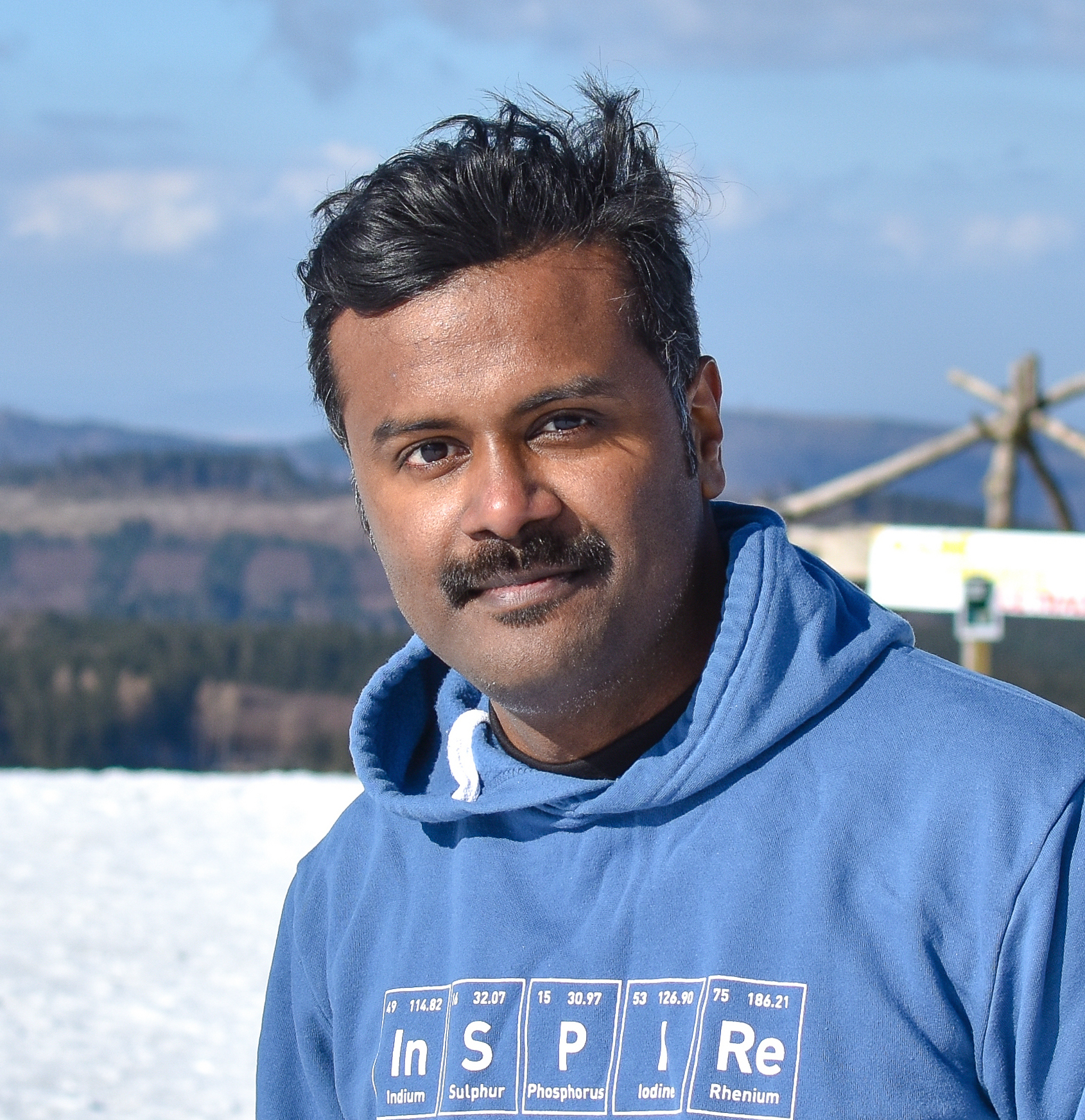
Jayasankar C B is a Research Fellow at the Center for Ocean-Atmospheric Prediction Studies (COAPS), Florida State University, specializing in regional climate modeling and monsoon dynamics. His research focuses on high-resolution climate projections, extreme weather events, and dynamical downscaling techniques to assess climate change impacts. Education: Ph.D. in Atmospheric Sciences (Regional Climate Modeling & Climate Change Projections), AcSIR/CSIR-4PI, Bangalore, India (2013–2019) M.Sc. in Meteorology, Cochin University of Science and Technology (2010–2012) B.Sc. in Physics, University of Calicut (2007–2010) Research Focus: Jayasankar investigates climate variability, monsoon systems, and extreme events using advanced regional coupled models (e.g., WRF-ARW, RSM-ROMS). His work emphasizes improving seasonal forecasts and climate projections for regions like India, Florida, and Central America, with applications in agriculture, hydrology, and disaster preparedness. Awards & Honors: Postdoc Five Minute Research Finalist, FSU (2022) INSPIRE Fellowship, DST India (2013) University First Rank in M.Sc. Meteorology, CUSAT (2012) International Travel Support, SERB India (2019)
Yangxing Zheng serves as an Associate Research Scientist (Courtesy) at the Center for Ocean-Atmospheric Prediction Studies (COAPS) within Florida State University. His research mission centers on unraveling physical climate system dynamics through observational data analysis and modeling, with specialized focus on oceanic influences in atmospheric phenomena and climate variability. Research Focus: Dr. Zheng investigates ocean-atmosphere-land surface interactions across multiple scales. His current work prioritizes Asian monsoon mechanisms and impacts, building on foundational research in Pacific climate variability and Indian Ocean dynamics. Recent expansion into environmental applications includes oil spill transport modeling and Gulf of Mexico ecosystem studies. Publication Trends: Analysis of his 2018-2023 output reveals dual concentration: monsoon-climate relationships (60% of work) and oil spill/ocean surface processes (40%). This evolution demonstrates adaptive scholarship bridging fundamental climate science with urgent environmental response needs, particularly relevant to coastal and monsoon-affected regions. Collaborative Framework: Working within COAPS' interdisciplinary environment, Dr. Zheng maintains a productive partnership with Dr. Mark Bourassa and contributes to Florida State University's leadership in climate prediction research through integrated modeling approaches.
Abdin Chande is an Associate Professor in the Department of History at Adelphi University's College of Arts and Sciences, where he teaches courses on African history, world civilizations, and the Indian Ocean in global history. He has been teaching in the United States since 1994 after completing his Ph.D. at McGill University in the early 1990s. His research and teaching focus on African and Islamic studies , with an emphasis on historical narratives, epics, and the role of geography in shaping historical developments. His interdisciplinary approach connects regional histories with broader world historical processes, particularly in pre-modern and early modern periods. While no recent publications or research awards are listed in the available profile, his long-standing engagement with historical education and curriculum development suggests a strong commitment to pedagogy and student mentorship. African History Islamic Studies World Civilizations Indian Ocean History Historical Geography Epics and Legends in History He advises students in history and related fields, though specific advisees are not listed. There is no mention of grants, research funding, or formal research teams or labs in the provided information.
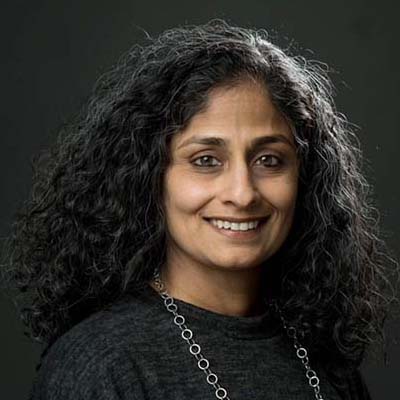
Nisha Garud Patkar is an Assistant Professor in the School of Journalism and Mass Communication at San José State University, part of the College of Humanities and the Arts. She is actively engaged in research on digital diplomacy, visual communication, and media framing, particularly in South Asian and global contexts. Her research interests include: Digital and Public Diplomacy Visual Framing in State Media Disinformation and Media Effects Social Media and Political Communication Soft Power and National Reputation Online Harassment of Journalists Dr. Patkar's recent scholarly work focuses on how governments and media use platforms like Instagram to shape narratives during crises, such as the portrayal of healthcare workers in China’s Xinhua coverage of COVID-19 and India’s digital diplomacy in South Asia. Her publications also explore the framing of conflicts, including U.S.-Pakistan relations and the Syrian crisis, as well as visual propaganda by extremist groups like ISIS. She has conducted cross-national studies on television news engagement on Instagram and the portrayal of sexuality in Bollywood. Her research output demonstrates a strong trend toward analyzing visual and narrative strategies in mediated public diplomacy, especially through social media platforms, with a regional emphasis on Asia and the Global South. While no scientific awards are listed in the available text, her body of work suggests significant scholarly impact in the fields of journalism and international communication. Dr. Patkar advises students in journalism and mass communication, though specific advisees are not listed. Her work likely involves media consumption habits, particularly among college students, and the evolving landscape of digital news engagement. She may be involved in projects related to online learning and transactional distance during emergency remote teaching, as indicated by her 2022 publication. There is no mention of specific labs or research teams in the provided text, but her focus on digital media and visual analysis suggests potential engagement with digital storytelling or media analysis initiatives.
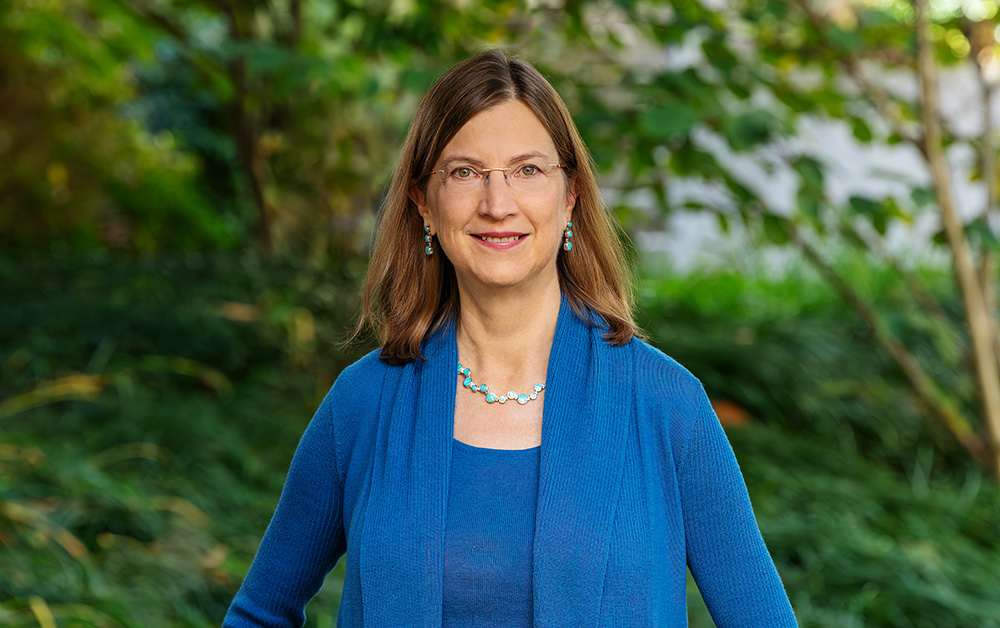
Denise L. Mauzerall is a Professor at Princeton University with dual appointments at the Princeton School of Public and International Affairs (SPIA) and the Department of Civil and Environmental Engineering. She serves as Core Faculty at the Center for Policy Research on Energy and the Environment (C-PREE) and holds Associated Faculty roles at the Andlinger Center for Energy and the Environment, High Meadows Environmental Institute, Geosciences Department, Atmospheric and Oceanic Sciences program, Princeton Institute for International and Regional Studies, and Center on Contemporary China. Additionally, she chairs Executive Committees for the Andlinger Center and M.S. Chadha Center for Global India while directing SPIA's Doctoral Studies program. Her academic foundation includes a Ph.D. in Atmospheric Chemistry from Harvard University, an M.S. in Environmental Engineering from Stanford University, and a Sc.B. with honors in Chemistry from Brown University. Mauzerall's research integrates atmospheric science with policy development to address air quality and greenhouse gas mitigation. Her group rigorously analyzes co-benefits across climate, public health, and food security through sector-specific interventions in residential, transport, power, industrial, and agricultural systems—primarily in China but with global relevance. Notable work includes identifying methane leakage from abandoned oil/gas wells that directly influenced the $4.7 billion U.S. Infrastructure Law funding for well-plugging initiatives. Her approach emphasizes cross-disciplinary collaboration with energy, economic, health, and agricultural experts to translate scientific findings into actionable policy frameworks. Recent publications (2024-2025) reveal a strategic focus on energy system optimization, clean heating transitions, and pollution-climate interactions. Key trends include high-resolution modeling of electricity systems, smart meter adoption barriers in developing economies, atmospheric stagnation impacts on Indian air quality, and decarbonization pathways for Chinese urban heating—demonstrating consistent emphasis on data-driven policy solutions for global environmental challenges. Her scientific recognition includes: American Geophysical Union Fellow As SPIA's Doctoral Studies Director, Mauzerall oversees doctoral curriculum and advising while securing research grants for interdisciplinary environmental projects. Her funding portfolio supports policy-relevant work on methane mitigation, energy transitions, and air quality management, though specific grant details remain undisclosed in source materials. Mauzerall leads a C-PREE-based research group that functions as a policy incubator, bridging atmospheric science with real-world governance. Her team's identification of orphaned well methane emissions exemplifies their operational model: deploying rigorous scientific analysis to drive legislative action. Current collaborations span energy economists, climate modelers, and public health specialists focused on accelerating greenhouse gas mitigation with measurable co-benefits.
Pratima Prasad is Professor of French and Interim Dean of the College of Liberal Arts at the University of Massachusetts Boston . Her academic career spans over two decades, including leadership roles as Chair of the Modern Languages, Literatures, and Cultures (MLLC) Department and Associate Dean of CLA.
Yvette Christiansë serves as the Claire Tow Professor of Africana Studies and English Literature at Barnard College, with appointments in the Departments of Africana Studies, Women's, Gender and Sexuality Studies, and English. Her interdisciplinary scholarship bridges literary criticism, creative writing, and postcolonial studies, focusing on African diaspora histories and legacies of slavery. Education: Ph.D., University of Sydney B.A., University of Sydney Christiansë's research centers on the Indian Ocean slave trade (1807-1900) and the contested fates of Liberated Africans freed from slave vessels. Drawing from archives across the Indian/Atlantic Oceans, Africa, and the USA, her work interrogates race, gender, and colonialism through texts like Toni Morrison: An Ethical Poetics (2013). She examines women's writing in Africa and the British colonial archive with an ethical literary lens. Her scholarly output demonstrates consistent focus on postcolonial critique and diaspora studies, though recent academic publications are limited. Complementing this, Christiansë produces acclaimed creative works including the novel Unconfessed and poetry collections Castaway and Imprendehora . Her collaborative opera libretto based on Munif's Cities of Salt and the song cycle 'Revolution/Evolution' extend her exploration of historical trauma through artistic mediums. Born under South African apartheid, Christiansë's immigration to Swaziland, Australia, and finally the United States profoundly shapes her analysis of displacement, memory, and colonial legacies in both academic and creative domains.
Divya Kumar-Dumas serves as a Presidential Postdoctoral Fellow in the Department of Art History and Archaeology within the College of Arts and Humanities at the University of Maryland. Her research integrates art history, archaeology, and environmental studies to examine ancient and medieval South Asia and the early Indian Ocean world, emphasizing materiality, transregional connections, and the poetics of place. Her educational background includes: B.A. in History from Yale University M.Phil. and Ph.D. in South Asia Studies from the University of Pennsylvania M.P.S. in Landscape Design from George Washington University Dr. Kumar-Dumas pioneers interdisciplinary approaches to landscape history and reception theory, notably through her book project reinterpreting Sigiriya's World Heritage site via medieval graffiti. Her scholarship challenges conservation frameworks by prioritizing historical use over origin, while her second research strand investigates first-millennium CE circulation of Indic objects across the Indian Ocean, co-editing the volume Moving 'Indian' Images in the First Millennium . Her notable honors include: Presidential Postdoctoral Fellowship at the University of Maryland Fulbright Fellowship for study at Kalakshetra College of Fine Arts She has secured significant funding from the National Endowment for the Arts, Mid-Atlantic Arts Foundation, Maryland State Arts Council, and Maryland Historical Trust for cultural policy advocacy and performance arts initiatives. Dr. Kumar-Dumas co-directs the Sigiriya Spatial and Landscape Data Collaboration (SSLDC), develops a digital initiative for South Asian maritime epigraphy, and serves as Managing Editor for the Gardens of the Roman Empire project, demonstrating sustained commitment to digital scholarship and public engagement.
Rutgers, The State University of New JerseyUnited States
James D. Wright is a Professor and Department Chair in the Department of Earth and Planetary Sciences at Rutgers University's School of Arts and Sciences. His office is located in 233G Wright Geological Laboratory, and he can be reached at (848) 445-3445 or jdwright@eps.rutgers.edu. Ph.D., M.Phil., Columbia University M.S., University of South Carolina B.S., Louisiana Tech University B.S., Ouachita Baptist University Dr. Wright's research centers on understanding how past ocean circulation changes influenced climates across various time scales. His primary research tool is the analysis of stable oxygen and carbon isotopes in marine organisms, which record sea surface temperature variations, ice volume changes, and reorganization of surface and deep-water circulation patterns. He works with pre-Pleistocene sediments to reconstruct deep-water circulation patterns in the North Atlantic for the past 25 million years, finding correlations between changes in circulation and major climate transitions. His work also extends to late Pleistocene and Holocene projects, including surface salinity variations in the North Atlantic and marine climate reconstructions along northwestern Peru. His extensive publication record shows consistent focus on paleoceanography and climate change, with particular emphasis on the Paleocene-Eocene Thermal Maximum, Miocene climate transitions, and monsoon system evolution. The research spans multiple geographic regions including the North Atlantic, Maldives carbonate platform, and East African Rift system, utilizing diverse methodologies from stable isotope analysis to magnetic property measurements and sedimentological studies. As Department Chair, Dr. Wright teaches undergraduate courses including Planet Earth (01:460:100) and Major Events in Earth History (01:460:480), along with graduate courses in Paleoceanography, Stable Isotopes in the Environment, and Marine Geology. His laboratory work includes the operation of a Micromass Optima mass spectrometer with a Multiprep device for automated analysis of δ 18 O and δ 13 C values in carbonate samples.
Adam LoBue serves as a Visiting Assistant Professor of History at Valparaiso University for the 2025-2026 academic year, specializing in Modern Africa's global connections. His research centers on East Africa's Swahili coast (Kenya, Tanzania, Uganda) within Cold War and decolonization contexts, emphasizing African agency in world history. Dr. LoBue's scholarly work explores critical intersections through: Modern African History with East African regional expertise Global Cold War dynamics and Africa's Cold Wars Indian Ocean World historical networks Afro-Asian solidarity movements and Non-Aligned Movement histories Intellectual history, print culture, and propaganda studies Emerging research in Afrofuturism and African science fiction He teaches courses including The World in the Twentieth Century, Controversies in African History, Revolt and Revival in African History, African History and Society, and the Global History of the Automobile. His pedagogy actively counters narratives of African passivity by demonstrating how Africans shaped global historical processes. As a visiting professor on a one-year appointment, his current teaching focuses on undergraduate mentorship within Valparaiso's History Department, with research continuing to bridge African, Asian, and global historical frameworks.
Rutgers, The State University of New JerseyUnited States
Kavitha Ramsamy serves as Assistant Professor and Undergraduate Program Director in the Department of Africana Studies at Rutgers University. Her scholarly work centers on globalization, transnationalism, migration, and identity dynamics within African and South Asian diasporas. As a cultural, urban, and political geographer, she critically examines race, citizenship, and cosmopolitanism through comparative national lenses. Her research interrogates racial binaries and social movements at the intersection of Black Atlantic Studies and Indian Ocean Studies, challenging dominant frameworks in diaspora scholarship. Dr. Ramsamy teaches diverse courses including interlacing histories of African and Asian peoples in the United States; South Asian-African relations in comparative contexts; racial inequality and economic development; cultural pluralism and democracy; Black migration and urbanization; and Africana Studies research methodologies. She is currently finalizing her book "South Asians and the Problem of the Color Line: Migration, Race, and Identity in South Africa and the United States", expanding critical discourse on transnational racial formations.
Francis Bradley is a Professor in the Department of Social Science and Cultural Studies at Pratt Institute's School of Liberal Arts & Sciences, where he directs the internationally recognized Music and Migration Lab. His work bridges academic research with community engagement through oral history preservation and cultural mapping. Education: B.A., University of Wisconsin at Madison M.A., University of Wisconsin at Madison Ph.D., University of Wisconsin at Madison Bradley's research explores social and cultural history through diasporan lenses, with core expertise in music-migration intersections across 19th-20th century America. His scholarship examines how gentrification shapes cultural production, analyzes African diaspora influences in jazz, and investigates transnational Islamic networks. Methodologically, he combines historical ethnography with cultural theory to document marginalized narratives of migrants, musicians, and refugees. His three major publications reveal evolving interdisciplinary trajectories: the 2023 Williamsburg study connects urban geography to experimental music scenes, the 2021 Parker biography contextualizes jazz within diaspora histories, and the 2016 Islamic studies work traces textual traditions across oceans. Collectively, these works demonstrate his commitment to recovering silenced histories through material and oral archives. As founder of Jazz Right Now (2013) and director of the Music and Migration Lab, Bradley coordinates an international research consortium spanning NYU, Rutgers, CUNY, and the University of Geneva. The lab's 500+ oral histories and digital mapping projects document cultural movements while actively preserving endangered musical heritage through community partnerships with musicians and independent scholars.
Bertie Kibreah serves as Assistant Professor of Ethnomusicology at the University of South Florida School of Music since 2022, holding a PhD from the University of Chicago. A trained tabla percussionist, he performs vocals and Bengali instruments including the dotara lute, grounding his scholarship in embodied musical practice. His research re-sounds Bengal's sonic histories through devotion, modernity, and migration frameworks, with emphasis on pilgrimage, Sufi feminisms, and borderland musicking. He examines Bangladesh, the Bay of Bengal, and Bangladeshi diasporas ('Banglashere') using interdisciplinary approaches from memory studies, genocide studies, and sound studies. Current book projects investigate sonic geographies of the Bengal delta and intergenerational timbres in Bangladeshi global citizenries, analyzing labor reforms in the Arab Gulf, Mediterranean migration routes, and Bangladeshi American ethnoburbs. His work bridges Inter-Asian, Indian Ocean, and Asian American studies through affect theory and media anthropology. Major recognitions include: USF College of Design, Art & Performance research grant Bangabandhu Sheikh Mujibur Rahman Research Award McKnight Junior Faculty Research Fellowship As president of the Society for Ethnomusicology's Southeast/Caribbean chapter, he fosters regional academic collaboration. His active grants indicate robust research support, though specific student mentoring structures aren't detailed. His scholarship integrates civic engagement through public humanities initiatives and community-centered artistic practice.