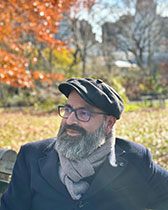
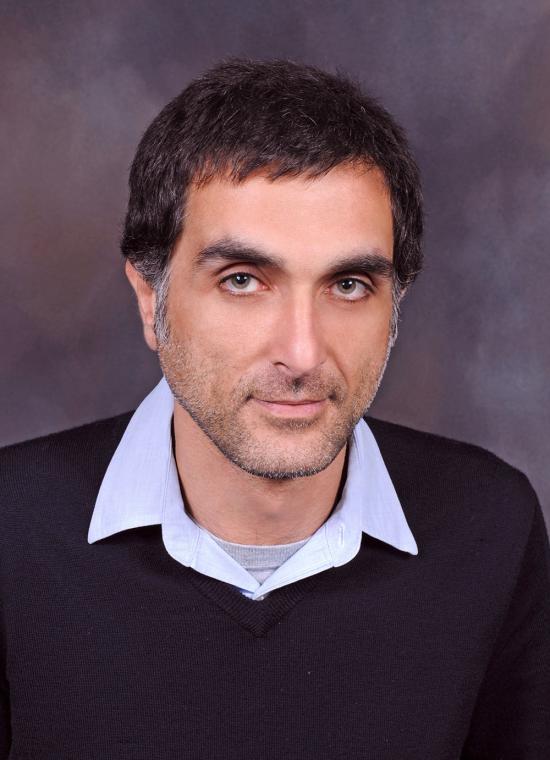
Engseng Ho is a Professor of Cultural Anthropology and former Professor of History at Duke University's Trinity College of Arts & Sciences since 2008. His work focuses on Arab/Muslim diasporas across the Indian Ocean, global transregional dynamics, and historical interactions between empires and local societies. Education: PhD (2000), MA (1990) in Anthropology from University of Chicago; BA (1986) from Stanford University. Research interests include mobility studies, transregional legal frameworks, and the intersection of Islam with imperial and postcolonial contexts. Notable projects involve Inter-Asia collaborations and studies on China-Africa relations, oil economies, and Malay sovereignty. Recent grants include funding from the National Science Foundation for research on refugees, Azerbaijan's oil-driven geopolitics, and a global religion dissertation fellowship program. Teaching spans courses on imperialism, mobility, global culture, and anthropological theory. His expertise spans Africa, India, Indonesia, and Yemen.
Kären Wigen is the Frances and Charles Field Professor in History at Stanford University, specializing in Japanese history and the history of cartography. She holds a Ph.D. in Geography from the University of California, Berkeley (1990). Her research spans: Historical geography of East Asia Early modern Japanese regional economies Geographies of the imagination Transnational maritime histories Critical cartography and spatial analysis Her publications include eight major works from 1992-2025 analyzing spatial transformations in Japan and global metageography, with recent projects focusing on temporal dimensions in cartographic representation. She co-edited Seascapes (2007) and Cartographic Japan (2016), and serves as Director of Stanford’s Mellon Fellowship of Scholars in the Humanities since 2022.
Ayesha Jalal is a distinguished Professor of History at Tufts University's School of Arts and Sciences and holds a joint appointment at The Fletcher School of Law and Diplomacy. She currently serves as the Mary Richardson Professor and directs the Center for South Asian and Indian Ocean Studies. With a career spanning over three decades, Professor Jalal has established herself as a leading scholar in South Asian history, particularly focusing on Pakistan studies, the partition of India, and Muslim political thought in the region. Professor Jalal's academic journey began with a double major in History and Political Science from Wellesley College in 1978. She then pursued doctoral studies at the University of Cambridge, earning her PhD in History in 1983. Her early career included prestigious fellowships at Trinity College, Cambridge (1980-84), the Centre of South Asian Studies (1984-87), the Woodrow Wilson Center for International Scholars (1985-86), and the Harvard Academy for International and Area Studies (1988-90). Professor Jalal's research primarily centers on South Asian history with special emphasis on Pakistan, the partition of India, and Muslim political thought. Her work explores the complex interplay between religious identity, nationalism, and state formation in the region. She has made significant contributions to understanding democratic development in Pakistan, sectarian dynamics in South Asia, and the historical connections between the Indian subcontinent and the wider Indian Ocean world. Her recent scholarship has focused on 'Oceanic Islam,' examining transregional Muslim networks and universalist aspirations that transcended colonial boundaries. Professor Jalal's extensive publication record demonstrates a consistent focus on South Asian political history, with particular attention to Pakistan's formation and development. Her recent works show a progression from studies of partition and state formation toward broader examinations of Muslim intellectual history and transregional connections. The 2020-2024 publications reveal a sophisticated engagement with themes of democratic erosion, sectarianism, and the historical roots of contemporary political challenges in South Asia, while also exploring more cultural and religious dimensions through works on Muslim enlightened thought and oceanic connections. Patrus Bukhari Award for the best English language book, The Pity of Partition , Academy of Letters, Government of Pakistan (2015) Britannica Book of the Year recognition (2015) MacArthur Fellowship (1998-2003) As an educator, Professor Jalal has mentored numerous graduate students through thesis supervision and directed research projects. Her teaching portfolio includes courses on Modern South Asia, Contemporary South Asia, Islam and the West, and specialized seminars on South Asian history. She has taught at several prestigious institutions including the University of Wisconsin-Madison, Columbia University, and Harvard University before joining Tufts in 1999. In her role as Director of the Center for South Asian and Indian Ocean Studies, she has fostered interdisciplinary research and provided guidance to emerging scholars in the field. Professor Jalal directs the Center for South Asian and Indian Ocean Studies at Tufts University, which serves as a hub for interdisciplinary research on South Asia and its connections to the wider Indian Ocean world. The center facilitates collaborative projects, hosts visiting scholars, and organizes events that bridge historical, political, and cultural perspectives on the region. Under her leadership, the center has become a prominent institution for South Asian studies, promoting dialogue between academic research and contemporary policy issues.
University of California, Los AngelesUnited States
Sanjay Subrahmanyam is Distinguished Professor of History and Irving & Jean Stone Endowed Chair in Social Sciences at UCLA's Department of History. A globally recognized historian of the early modern period (15th-18th centuries), he previously held prestigious positions at the Collège de France (2013-2021), University of Oxford (2002-2004), and Ecole des Hautes Etudes en Sciences Sociales in Paris (1995-2002). He founded UCLA's Center for India and South Asia (2005-2011) and maintains significant academic engagement in France through media appearances and lectures. His educational background includes: M.A. in Economics (First Rank with Gold Medal), Delhi School of Economics (1982) Ph.D. in Economic History, Delhi School of Economics (1987) Honorary D.Litt., University of Calcutta (2015) Doctorat honoris causa, Université catholique de Louvain (2017) Subrahmanyam's research revolutionized global historical methodology through his pioneering concept of 'connected histories,' which challenges Eurocentric periodization and emphasizes horizontal connections across regions. His work spans South Asian political culture, Indian Ocean trade networks, Iberian imperial systems, and Mughal court dynamics, consistently integrating multilingual archives and visual sources. He demonstrates exceptional mastery in synthesizing Portuguese, Spanish, Persian, Tamil, and Sanskrit materials to reconstruct non-Western perspectives on early modern globalization. His recent publications reveal intensified focus on transcultural encounters, maritime archaeology, and the material dimensions of empire. Works like Across the Green Sea (2024) and Mirrors of Empire (2026) showcase his shift toward analyzing ego-documents and visual culture to explore identity formation in frontier zones. The consistent thread remains his critique of civilizational boundaries and emphasis on fluid cultural exchanges across the Indian Ocean world. His scientific recognition includes: Infosys Humanities Prize (2012) Dan David Prize for History (2019) Prix International de l'Histoire (2020) Fellowship in American Academy of Arts and Sciences (2009) Corresponding Fellowship in British Academy (2016) Guggenheim Fellowship (2011-12) Subrahmanyam has mentored nine doctoral students to completion, maintaining active collaborations with Muzaffar Alam (University of Chicago), Velcheru Narayana Rao (University of Wisconsin), and David Shulman (Hebrew University). His editorial leadership includes co-editing The Cambridge World History (2015) and serving over a decade as Joint Managing Editor of the Indian Economic and Social History Review . He currently directs major international projects on Indo-Persian travel writing and Mughal intellectual networks. Though not leading a traditional laboratory, he coordinates the 'Connected Histories' research initiative across UCLA, Collège de France, and University of Chicago, fostering interdisciplinary teams examining early modern knowledge circulation. His public engagement includes regular contributions to French media (France 24, France Info) and curated exhibitions like the Codex Casanatense project.
Prita Meier is an Associate Professor of Art History at New York University's College of Arts & Science , affiliated with the Department of Art History & the Institute of Fine Arts. Her work bridges African art history, Indian Ocean world studies, and global modernity frameworks. Education: Ph.D. (2007) in History of Art, Harvard University M.A. (2000) in History of Art, University of Iowa B.A. (1996) in Art History, University of Florida Research Interests focus on the visual and architectural cultures of Africa, particularly Swahili Coast port cities, exploring globalization's cultural dimensions, Islamic art, and photography histories. Her work interrogates spatial-temporal dynamics in African modernity and colonial art frameworks. Scientific Awards include CASVA Senior Fellowship, NEH Implementation Grant (with Allyson Purpura), Mellon Collaborative Grant (with Kenny Cupers), Clark Art Institute Residential Fellowship, and Andrew W. Mellon Postdoctoral Fellowship. Notably, she declined the National Humanities Center Fellowship and Stanford Humanities Fellows Program. Publications highlight Indian Ocean trade networks, Swahili Coast architecture, and photography's global circulation. Recent works (2020-2017) examine infrastructure as identity, oceanic materiality, and itinerant art historiography. Earlier articles (2016-2009) analyze porcelain trade, modernist discontents, and Swahili funerary practices. Contact: spm9@nyu.edu | 100 Washington Square East, New York, NY 10003
Fahad Ahmad Bishara is an Associate Professor at the University of Virginia , specializing in the economic and legal history of the Indian Ocean and Islamic world . His work bridges global capitalism, international law, and historical narratives of mobility. Key Books: A Sea of Debt (Cambridge, 2017) and Monsoon Voyagers (UC Press, forthcoming) Awards: Hurst Prize, Jerry Bentley Prize, Peter Gonville Stein Book Award Research Focus: Explores debt, legal systems, and trade through microhistories of ships and merchant families, with recent interests in narrative scales and conceptualizations of law in global history. Academic Collaborations: Co-authored works with Nandini Chatterjee, Hollian Wint, and others, emphasizing Persianate and Indian Ocean interconnections. Scientific Awards: J. Willard Hurst Prize (Law and Society Association) Jerry Bentley Prize (World History Association) Peter Gonville Stein Book Award (American Society for Legal History)
Jodie Marshall is a Lecturer in the Department of History at Washington State University, affiliated with the Roots of Contemporary Issues program. She holds a PhD from Michigan State University and dual BA/MA degrees from the University of Vermont. Her research focuses on African History, particularly East Africa’s connections to the Western Indian Ocean world. Key interests include global migration dynamics, gender studies, and maritime cultural environments. Dr. Marshall’s current book project examines working-class migration between Zanzibar and Oman over two centuries, emphasizing marginalized voices through oral histories. Her recent scholarship explores how post-colonial upheavals like the Zanzibar Revolution restricted mobility for working-class women. No academic awards are explicitly listed, though her work reflects significant scholarly contribution. Teaching and advising details are not detailed in the provided text. She contributes to interdisciplinary initiatives within the College of Arts and Sciences, though specific grants or lab affiliations are not mentioned.
University of California , Santa Barbara (UCSB)United States
Utathya Chattopadhyaya is an Assistant Professor in the Department of History at the University of California, Santa Barbara, specializing in Modern South Asian and British Imperial History with intersecting interests in the Indian Ocean World, Global History, and Commodity History. His research combines critical materialist and anti-imperial frameworks to analyze colonial agrarian frontiers, intoxicant commodities, and social dynamics of caste, class, and gender. He teaches undergraduate and graduate courses including commodity histories, South Asian public culture, and historical methods. Ph.D., University of Illinois, Urbana-Champaign (2018) His recent publications focus on cannabis regulation, colonial political economy, and multispecies entanglements in imperial contexts. He has received prestigious fellowships from the American Council of Learned Societies, UC Humanities Division, and the Mellon Foundation. Chattopadhyaya co-teaches interdisciplinary courses on topics such as race, colonialism, and cannabis history, contributing to emerging scholarship in Science, Technology, and Society (STS) and decolonial studies. Chattopadhyaya's research clusters around British imperialism's material impacts, particularly in eastern Bengal's agrarian transformations and intoxicant commodity systems. His work synthesizes historical methods with critical plant studies and gender analysis, producing innovative insights into colonial governance and resistance. He actively engages with graduate students in comparative history and Indian Ocean World studies. "Ganja and the Godhead" (2024) - Colonial cosmologies and cannabis "Colonial Capitalism" (2024) - Economic structures of empire "Bodies that Cohere" (2023) - Gender analysis in colonial contexts Key awards include the Margaret T. Getman Service to Students Award (2024), Regents Humanities Fellowship (2022-23), and ACLS Fellowship (2021-22). His scholarly activities intersect with research clusters in Science, Technology and Society; Race, Blackness and Abolition; and Global Antiquity.
Michael Christopher Low is an Assistant Professor of History and Director of the Middle East Center at the University of Utah. He specializes in late Ottoman Empire, Arabian Peninsula history, Indian Ocean World studies, and environmental history. His research focuses on the intersections of empire, environment, and global networks, particularly through the lens of the Hajj pilgrimage and water infrastructure in the Middle East. Low earned his Ph.D. in History from Columbia University (2015). Before joining Utah, he was an Assistant Professor at Iowa State University (2015–2022). His major work, *Imperial Mecca: Ottoman Arabia and the Indian Ocean Hajj* (2020), won the Middle East Studies Association’s Albert Hourani Book Award and explores Ottoman modernization and global health dynamics in the Hijaz region. He is currently working on a new book project, *Saltwater Kingdoms*, examining desalination’s environmental and energy impacts in Arabia. Key affiliations include the Environmental Humanities Program (as Research Professor, 2023–2025), NYU Abu Dhabi (Senior Humanities Fellow, 2020–2021), and Koç University (Visiting Fellowship, 2016). He serves as Series Editor for *Transregional Middle Easts* and on editorial boards for journals like *Journal of Global History*. Awards include the Alice Hamilton Prize (2016) for environmental history, and grants from Columbia University, the Social Sciences and Humanities Research Council, and the William Lind Foundation. His research spans Ottoman public health policies, colonial Hajj logistics, and the hydraulic history of the Saudi state.
Jim Sykes is an Associate Professor of Music at the University of Pennsylvania's School of Arts & Sciences. His research focuses on ethnomusicology, sound studies, and the cultural histories of the Indian Ocean world. He specializes in examining sonic practices across Afro-Asiatic seascapes, colonial surveillance systems, and postcolonial music theory. His work bridges disciplines like anthropology, history, and cultural studies, emphasizing decolonial methodologies. Recent scholarship explores governmental acoustic surveillance in maritime contexts, the politics of area studies, and the role of music in labor and value systems. He has contributed to rethinking sound studies through global south perspectives, including projects on sonic cartography and indigenous acoustic knowledge systems. Sykes has published extensively on topics such as Sri Lankan post-war musical generosity, Dalit liberation theology through Tamil folk music, and colonial sound regulations in British Ceylon. His interdisciplinary approach addresses intersections between sound, power, and cultural memory in contexts ranging from Southeast Asia to the Indian Ocean trade networks.
Hsueh-man Shen is the Director of Masters Studies and Ehrenkranz Associate Professor in World Art at New York University’s Institute of Fine Arts. She holds a D.Phil. from Oxford University in Archaeology, an M.A. in Art History from National Taiwan University, and an LL.B. in Law from the same institution. Her research focuses on medieval Chinese art and archaeology, particularly how cross-cultural exchanges shaped artistic practices through translation, replication, and hybridization. She has curated major exhibitions such as Gilded Splendor: Treasures of China’s Liao Empire (2006) and contributed to the Cave Temples of Dunhuang project (2016), emphasizing Silk Road cultural networks. Her current book project explores maritime activities’ impact on Buddhist art during the 10th–14th centuries. Shen’s work bridges art history, archaeology, and material culture studies, addressing topics like relic deposits, shipwrecks, and cross-cultural curatorial practices. She has held prestigious fellowships, including the Leiden University Hulsewé-Waznieski Professorship (2019) and a Wissenschaftskolleg zu Berlin residency (2008–2009). Education: D.Phil., Archaeology, University of Oxford M.A., Art History, National Taiwan University LL.B., Law, National Taiwan University Her research interests include Buddhist art’s transformation across dynasties, the role of replication in devotion, and maritime trade’s influence on cultural boundaries. She teaches courses such as Colors in the Visual Culture of Medieval China and Shipwrecks and the ‘Other’ Silk Road , integrating theoretical and material perspectives. Shen’s awards reflect her global academic contributions, including the EURIAS Senior Fellowship (2018–2019) and Progress 100 Visiting Professorship at Kyushu University (2017). Her publications span exhibition catalogues, monographs like Authentic Replicas: Buddhist Art in Medieval China (2019), and peer-reviewed articles analyzing Silk Road networks, Liao dynasty funerary practices, and cross-cultural material exchanges.
John Brobst is an Associate Professor in the Department of History and International Studies at Ohio University's College of Arts and Sciences. His academic work centers on modern imperial and strategic history, with a focus on the British Empire, maritime power, and intelligence affairs. Education: Ph.D. in History, University of Texas at Austin M.A. in History, University of Texas at Austin B.A. in History and Geography, University of Kansas His research explores the intersections of geopolitics, grand strategy, and naval history, particularly in the Indian Ocean region during the 20th century. He has published on topics including the Great Game, Cold War maritime competition, and British imperial decline. His book The Future of the Great Game examines post-colonial defense strategies in Asia, and he continues to work on a new project analyzing great power rivalry and maritime strategy during the Cold War. His recent publications reflect a consistent focus on strategic geography, naval limitations, and international security dynamics, especially in South and Southwest Asia. These works span journals such as Geopolitics , Middle Eastern Studies , and The Journal of Military History , demonstrating interdisciplinary engagement across history, political science, and strategic studies. Dr. Brobst teaches undergraduate courses including History of Sea Power since 1890 , Secret Intelligence: Great Game to Five Eyes , and Decline and Fall of the British Empire , reflecting his expertise in maritime empires, intelligence history, and global power transitions. He has contributed articles and reviews to several academic journals, including Commonwealth and Comparative Politics , Orbis , and edited volumes on European-American relations in the Middle East. While no formal awards or fellowships are listed, his sustained scholarly output indicates active participation in the academic community. Dr. Brobst advises students in historical research and international studies, though specific advisees are not named. He is currently working on a book project examining Cold War maritime strategy in the Indian Ocean, signaling continued scholarly productivity. He is affiliated with no named research labs or teams, but his work aligns closely with strategic and imperial history research communities.
University of Massachusetts DartmouthUnited States
Anupama Arora, PhD is a Professor in the English & Communication department at the University of Massachusetts Dartmouth. Her academic work spans postcolonial literature, Bollywood studies, and transnational feminist theory, with a focus on South Asian diasporic narratives. Taught courses: Postcolonial Literature (ENL 331), Creating Global Community (HON 203) Co-editor: Journal of Feminist Scholarship Former editorial board member: Tulsa Studies in Women’s Literature (2020-2023) Research centers on postcolonial literature , Bollywood's cultural impact , and global feminist discourse . Her publications analyze neoliberalism in Indian cinema, decolonizing narratives, and caste dynamics in contemporary media. Recent articles explore themes of migration, cultural hybridity, and gender representation. Scientific Awards: 2020 Scholar of the Year Award Provost’s Best Practices Award for Teaching with Technology (2011, 2014) Robert G. Darst Honors Program Service Award (2016-17) Affiliated with the Center for Women, Gender & Sexuality. Served as assistant editor at Oxford University Press (1997-1999) and works with literary criticism journals like Quarterly Review of Film and Video . Her article keywords reflect interdisciplinary engagement with cultural theory, gender studies, and historical analysis.
Rajeev Kinra is an Associate Professor of History at Northwestern University, specializing in early modern South Asian cultural history with a focus on Mughal and early British Empires. He holds a Ph.D. from the University of Chicago (2008). His research integrates Persian, Hindi-Urdu, and Sanskrit sources to explore themes of civility, cosmopolitanism, and cultural modernity. He directs Northwestern’s Asian Studies Program (2015-18) and co-directs the Global Humanities Initiative. Notable publications include Writing Self, Writing Empire (2015), analyzing the Mughal state secretary Chandar Bhan Brahman. Education: Ph.D., University of Chicago, 2008. Research interests emphasize South Asian and global history, particularly Indo-Persian literary and intellectual cultures, Mughal governance, and comparative philology. Awards include an NEH fellowship and a Buffett Institute grant for global humanities projects. Teaching focuses on early modern India and modern South Asia, with courses on global history and the Indian Ocean world. Affiliations include the Buffett Institute, Asian Languages and Cultures, and the South Asian American Digital Archive (SAADA).
Arash Khazeni is Professor of History, Chair of the History Department, and Coordinator of Middle Eastern Studies at Pomona College, where he has been a faculty member since 2010. He holds a Ph.D. in History from Yale University and specializes in the imperial, environmental, and borderland histories of the modern Middle East, South Asia, and the Indian Ocean. Ph.D., Yale University M.A., Yale University B.A., University of Wisconsin, Madison His research explores the margins of empires and the interconnected histories of the Indo-Persian world, blending environmental history with world-historical perspectives. He investigates how societies on the periphery—such as tribal communities and pastoralists—interacted with imperial structures and shaped transregional exchanges. His approach is influenced by E.P. Thompson’s 'history from below' and engages with postcolonial and Marxist frameworks. His publications reveal a consistent focus on global trade, cultural mobility, and human-environment interactions, particularly in arid and frontier zones. Themes such as the turquoise trade, equestrian pastoralism, and Indo-Persian travel writing demonstrate his interdisciplinary reach across economic, cultural, and environmental history. Recipient of the Middle East Studies Association Houshang Pourshariati Book Award Balzan Keddie Fellowship, UCLA Huntington Library, Andrew W. Mellon Foundation Short Term Research Fellowship Khazeni advises on interdisciplinary scholarship and has co-edited thematic volumes on trade in the Persianate world. His academic leadership includes directing the Middle Eastern Studies program and teaching courses on Gunpowder Empires, Environmental Histories, and the Indian Ocean World. He has no known active grants listed, but his fellowships reflect sustained research support. He is deeply involved in shaping curricula that connect global regions and historical methodologies. His work is associated with intellectual communities focused on world history and environmental humanities, though no formal lab or research team is mentioned.


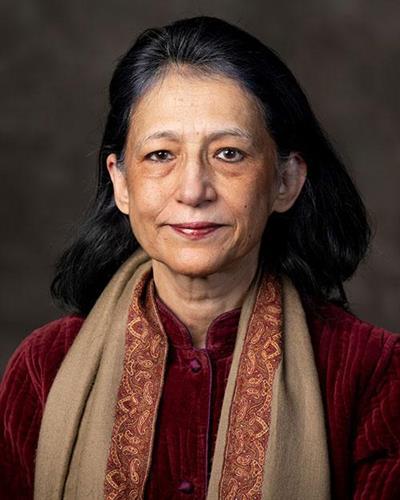


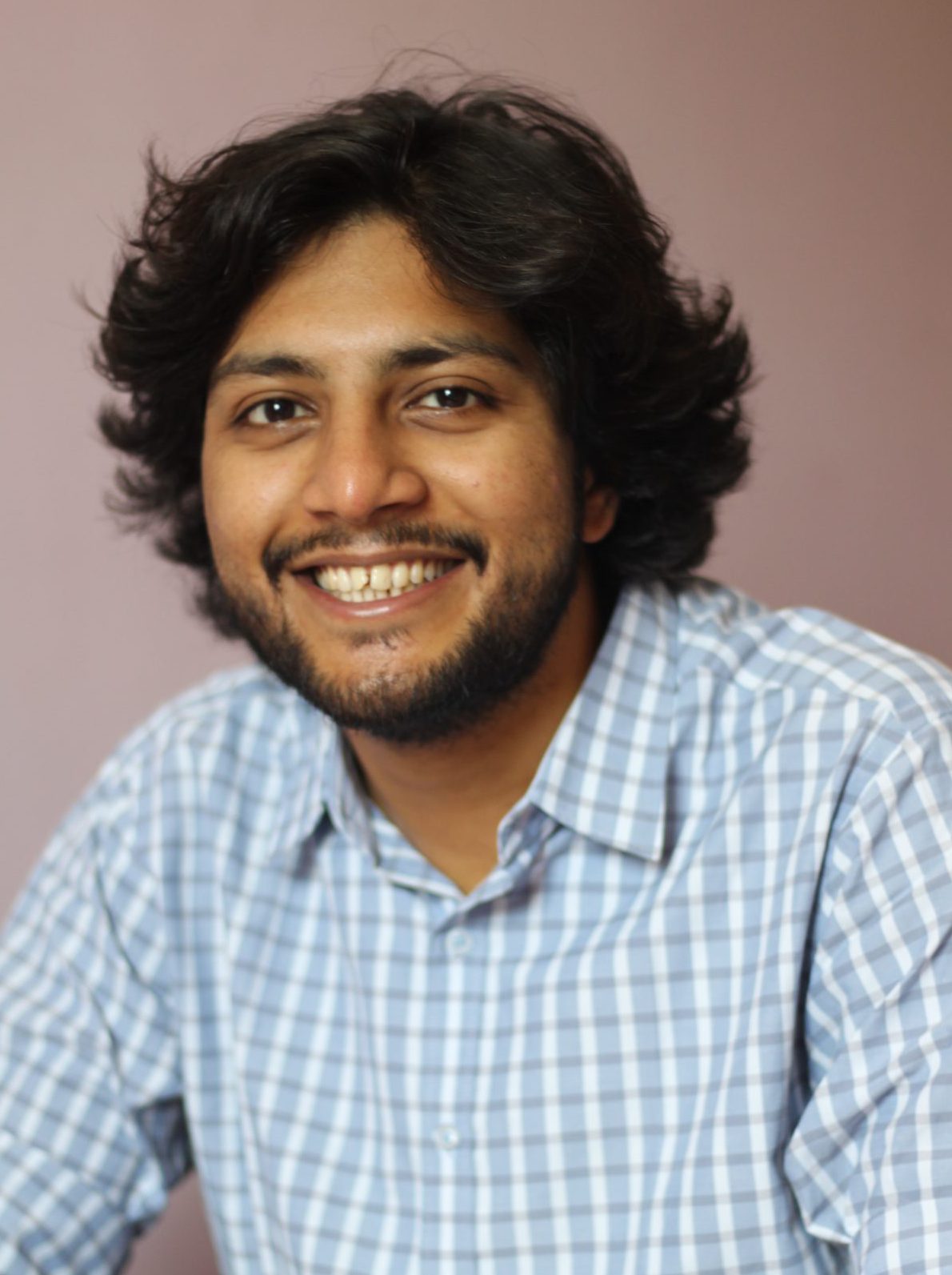
/prod01/production-cdn-pxl/media/umassdartmouth/profiles/arts-and-sciences/english/Anupama-Arora.jpg)