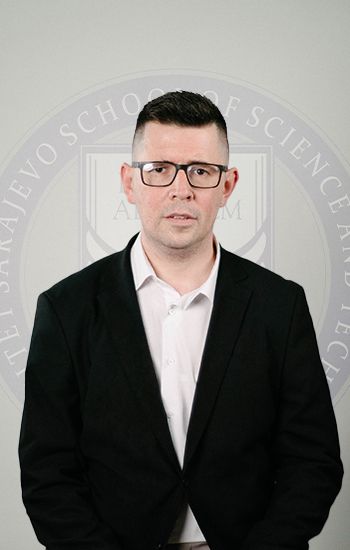
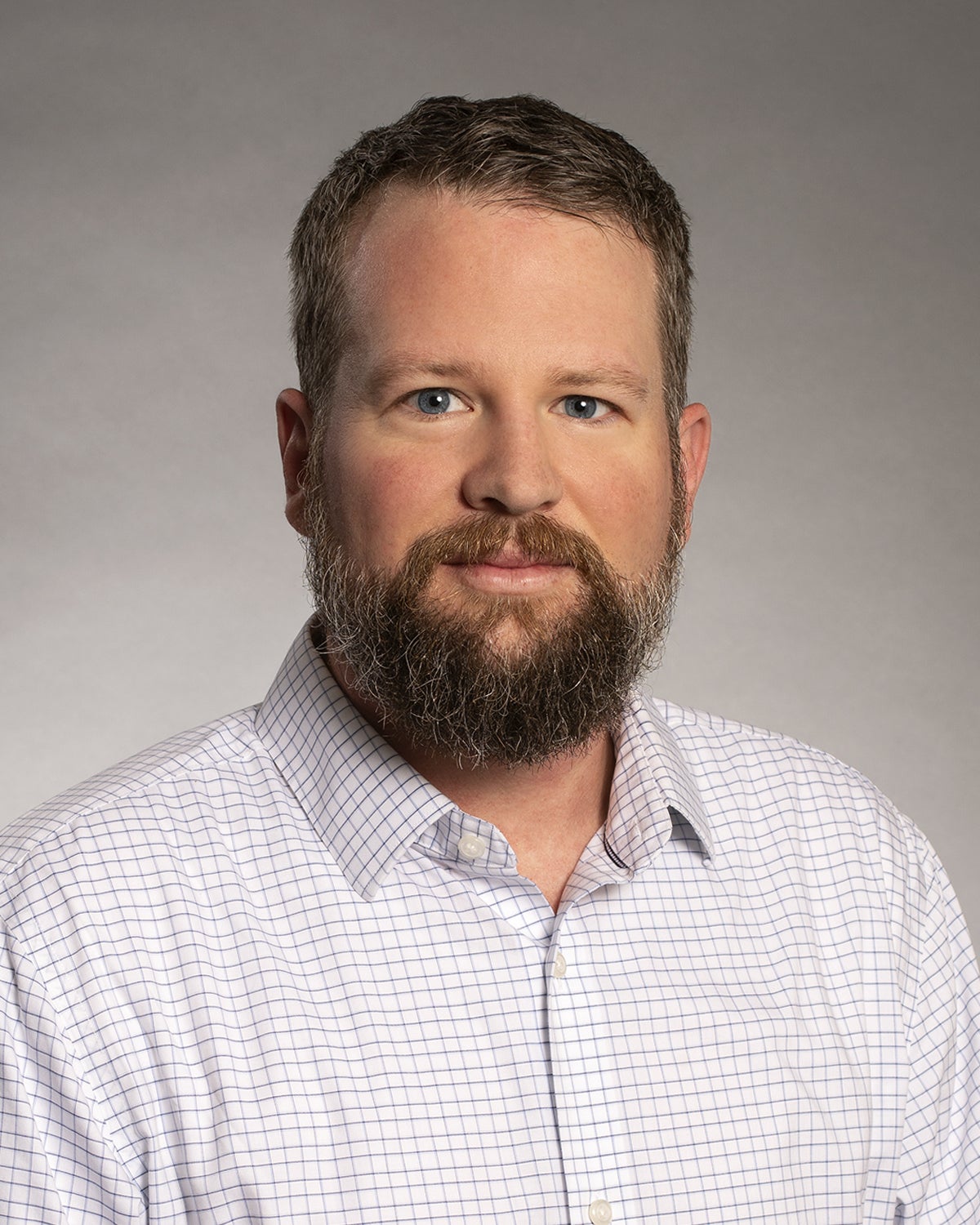
Davor Trlin, PhD is an Associate Professor at the Department of Political Science and International Relations at Sarajevo School of Science and Technology (SSST). His academic focus aligns with the department's core disciplines, emphasizing political systems, international relations frameworks, and contemporary governance challenges. While no specific research projects or awards are detailed in the provided text, his role as an Associate Professor suggests involvement in teaching, curriculum development, and academic leadership within the department. No listed publications or grants are visible in the current data, though this may reflect incomplete profile information.
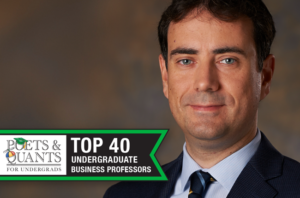
Laurence Ales is an Associate Professor of Economics at the Tepper School of Business, Carnegie Mellon University, where he has been teaching since 2008. He holds a PhD in Economics from the University of Minnesota and an undergraduate degree in Physics from the University of Rome, Tor Vergata. He teaches courses in macroeconomics, including 'Emerging Markets' for undergraduates and 'Global Economics' for MBAs, and is recognized for his innovative teaching methods, such as using Twitter to engage students with real-time economic news. University: Carnegie Mellon University School: Tepper School of Business Department: Economics Academic Rank: Associate Professor Since: 2008 His research focuses on macroeconomic policy, technological change, labor markets, innovation, and taxation. He has published in top journals including The American Economic Review , with recent work on generative AI, automation, innovation tournaments, and optimal taxation. His interdisciplinary approach integrates modeling with data analytics, reflecting his physics background. His recent publications (2021–2024) highlight a strong focus on how technological change—particularly automation and AI—affects labor demand, task structure, and income distribution. He also investigates innovation mechanisms such as crowdsourcing and tournaments, as well as optimal tax policies in the presence of discrete choices and income-generating behavior. University-wide Teaching Award, Carnegie Mellon University Ales advises on policy responses to regional economic shocks and the evolution of manufacturing. He values student engagement and has been praised for transforming macroeconomics education. He emphasizes excitement in learning as a key to academic success and is known for his dynamic classroom presence. He collaborates across campus to study manufacturing trends and their policy implications, advocating for tighter integration between business and other academic disciplines. He leads no named lab or team in the text but partners with other campus units on research. His future goals include maintaining his passion for research and teaching over the next decade.
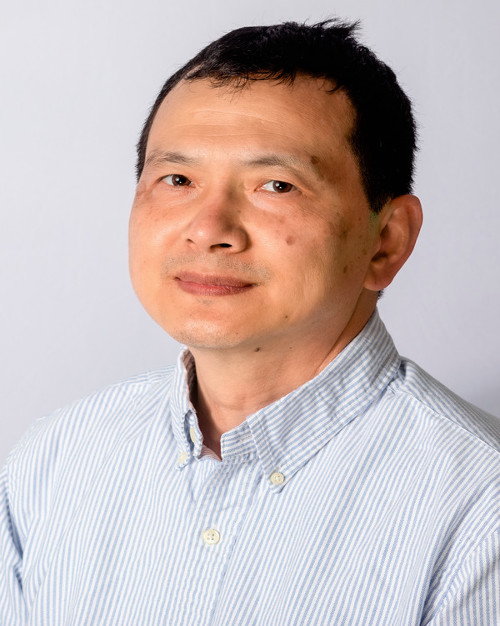
Dr. Li Chen is a Professor in the Department of Computer Science and Information Technology at the University of the District of Columbia (UDC), affiliated with the School of Engineering and Applied Sciences. He specializes in discrete geometry, digital geometry, AI, and data science. Previously held the ACM Distinguished Speaker title (2015-2021). His research focuses on algorithm design, topological data analysis, and quantum computing education. Education: Ph.D. in Computer Science, University of Bedfordshire, UK M.Sc. in Computer Science, Utah State University B.Sc. in Computer Science, Wuhan University, China Research Interests: Dr. Chen’s work spans discrete geometry (e.g., digital surfaces, topological invariants), AI applications, data science methodologies, and algorithmic solutions for geometric problems. His contributions include foundational texts on mathematical problems in data science and innovations in quantum computing education. Publications Trends: Recent work emphasizes algorithmic approaches to topological challenges, AI limitations (e.g., image segmentation), and quantum computing pedagogy. Earlier research includes digital geometry surveys and medical imaging applications. Awards: ACM Distinguished Speaker (2015-2021) Teaching & Grants: Teaches Advanced Machine Learning, Introduction to Quantum Computing, and Algorithm Design. His grants and lab activities are not explicitly listed but implied through his extensive publication record. Labs/Teams: No specific lab affiliations mentioned, but collaborations on digital geometry and data science projects are evident from his work.
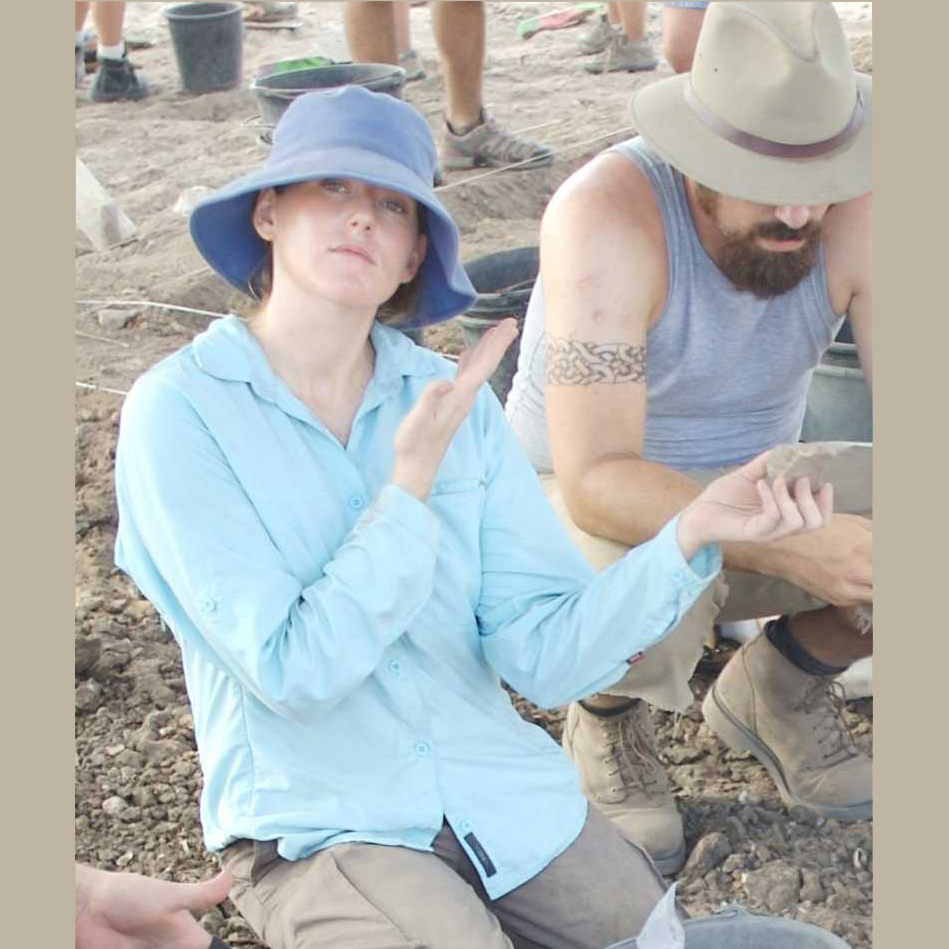
S. Rebecca Martin is an Associate Professor of Greek Art and Archaeology at Boston University's College of Arts and Sciences. Her research focuses on Greek and Phoenician art history, with a particular emphasis on cross-cultural exchange and material culture studies. She co-directs the Tel Dor excavations in Israel, exploring topics such as domestic practices, urban development, and maritime interaction. Prof. Martin holds a B.A. from Smith College and a Ph.D. in Archaeology from the University of California, Berkeley. Her publications include The Art of Contact: Comparative Approaches to Greek and Phoenician Art (2017) and a co-edited volume on incomplete ancient objects ( The Tiny and the Fragmented , 2018). Current projects include a book on the origins of the Greek herm and ongoing analysis of Tel Dor's archaeological layers. Her research interests span Hellenistic-Roman domestic architecture, Persian period urbanism, and theoretical frameworks for understanding fragmented or miniature artifacts. She has published extensively on Phoenician-Greek cultural interactions, Persian period reoccupation strategies, and the socio-political dynamics of ancient Mediterranean cities. Prof. Martin's work integrates field excavation data with interdisciplinary theoretical approaches, emphasizing how material culture reveals broader cultural, economic, and religious patterns. She regularly publishes excavation reports from Tel Dor and contributes to debates on methodological frameworks in archaeology.
Jill Jegerski is an Associate Professor in the Departments of Spanish and Portuguese and Linguistics at the University of Illinois at Urbana-Champaign. Her research focuses on second language acquisition, bilingualism, and psycholinguistic methods, with a specialization in Spanish as a heritage language and heritage speaker processing. Jegerski holds a Ph.D. from the University of Illinois at Chicago, alongside an M.A. and B.S. from the same institution and University of Illinois at Urbana-Champaign, respectively. Her work employs experimental techniques like self-paced reading, eye-tracking, and ERPs to investigate real-time language processing. Key themes include verb morphology, syntactic case marking, and relative clause attachment in heritage and L2 Spanish speakers. Jegerski has collaborated on studies exploring the psycholinguistics of heritage languages, including contributions to the Cambridge Handbook of Heritage Languages and Linguistics (2022). Her publications analyze how heritage speakers process morphosyntactic features like differential object marking and subjunctive mood, often contrasting their performance with monolingual and advanced L2 learners. Jegerski’s research highlights the cognitive mechanisms underlying bilingual language representation and the impact of language attrition or incomplete acquisition in heritage contexts. Jegerski frequently presents invited talks on heritage language processing, case marking, and experimental methods in psycholinguistics. Her work bridges theoretical SLA frameworks (e.g., Krashen’s input hypothesis) with empirical evidence from real-time processing experiments, offering insights into both linguistic competence and communicative proficiency.
Maria Feychting is a leading researcher at Karolinska Institutet, specializing in cancer epidemiology and causal inference. Her work leverages large-scale population registries and cohort studies across Sweden and Nordic countries to investigate risk factors for cancer, diabetes, and neurodevelopmental disorders. She employs advanced methodologies like target trial emulation and g-formula analysis to address causal questions in observational data. Her research interests span: Cancer Epidemiology : Focus on pediatric cancers, survivorship, and environmental triggers. Causal Inference : Methodological innovations for real-world evidence. Neuroepidemiology : Epilepsy and brain tumor risk studies. Diabetes & Metabolic Disorders : Genetic and perinatal determinants. Environmental Health : Mobile phone radiation and disease risk. Recent publications (2023–2025) demonstrate trends in: Population-based cohort designs using Nordic registries. Integration of genetic, perinatal, and environmental factors in disease etiology. Focus on COVID-19 impacts in vulnerable populations (e.g., cancer survivors). She has no listed awards, students, or contact details in the provided text.
Dr. Jia Liu is a Professor and Chair of the Department of Mathematics and Statistics at the University of West Florida, within the Hal Marcus College of Science and Engineering. She has been a key academic figure at UWF since 2006, leading both research and departmental initiatives in computational and applied mathematics. Her educational background includes a Ph.D. in Mathematics from Emory University, funded by the National Science Foundation, focusing on preconditioned Krylov subspace methods for incompressible flow problems. She earned her M.S. and B.A. in Mathematics from Central China Normal University, where her bachelor's thesis received the highest honor. Dr. Liu's research lies at the intersection of numerical linear algebra, scientific computing, and interdisciplinary applications. Her primary interests include: Numerical solvers for large sparse linear systems Krylov subspace iterative methods Preconditioning techniques Applications to Navier-Stokes and optimization problems Geometric and topological analysis of ellipsoids Complex networks and community detection via spectral clustering Machine learning for disease prediction and biological modeling The trends in her publications reflect a consistent focus on robust numerical algorithms with applications across fluid dynamics, network science, and biomedical modeling. Her work emphasizes both theoretical development and practical implementation in high-performance computing environments. Dr. Liu has served as an editor and editorial board member for several peer-reviewed journals and regularly reviews submissions. While specific awards are not listed, her sustained publication record in prestigious venues such as SIAM Journal on Scientific Computing and Journal of Biological Dynamics underscores her scholarly impact. As department chair and professor, she plays a central role in academic advising, curriculum development, and research mentorship. She teaches core courses including Differential Equations, Numerical Analysis, and Real Analysis, contributing significantly to both undergraduate and graduate education. Her leadership extends to managing research grants and fostering collaborations across disciplines. Though no formal lab name is mentioned, her research activities suggest involvement with computational modeling groups, likely associated with applied mathematics and data science initiatives at UWF. Her ongoing work continues to advance numerical methods for complex systems in science and engineering.
Olga Mula is a researcher at Eindhoven University of Technology (TU Eindhoven) in the Netherlands specializing in optimal transport theory, Wasserstein spaces, and model reduction techniques for partial differential equations. Her work bridges theoretical mathematics with practical applications in state estimation and inverse problems. Her research interests focus on Optimal Transport , Wasserstein Spaces , Model Reduction , and Numerical Analysis of PDEs . She develops algorithms for state estimation in metric spaces, particularly focusing on the Wasserstein space of probability measures. Her work includes developing reduced models using barycentric approximation, analyzing convergence properties, and addressing challenges in sensor placement for optimal data acquisition. Her recent publications demonstrate significant contributions to understanding how to build efficient reduced models in Wasserstein spaces for both forward and inverse problems. She has developed theoretical frameworks for state estimation algorithms, analyzed their performance in terms of Kolmogorov widths, and created practical implementations using sparse Wasserstein barycenters. Her work spans pure mathematical theory to applications in image processing and PDE-constrained optimization. Her scientific contributions include: Development of piecewise-affine algorithms for state estimation Nonlinear model reduction on metric spaces for conservative PDEs Sparse approximation using Wasserstein barycenters Applications to shape reconstruction and line completion Theoretical analysis of approximation rates in Wasserstein spaces She collaborates extensively with leading researchers in the field including Cohen, Dahmen, Feydy, and Rai. Her work demonstrates both theoretical depth and practical relevance, connecting abstract mathematical concepts to real-world problems in data assimilation and inverse modeling.
Katalin Balogné Bérces is a Professor at the Catholic University of Ružomberok , Department of English Language and Literature since 2019. She previously held academic positions at Pázmány Péter Catholic University (PPCU), ELTE, and Károli Gáspár University in Budapest, with guest lecturing roles at the University of Edinburgh and Babeş-Bolyai University. Education : MA (1998) and PhD (2006, summa cum laude ) in English Linguistics from ELTE, Budapest; thesis published as Strict CV Phonology and the English Cross-Word Puzzle (2008). Research Interests : Focus on English phonology , particularly syllable structure, consonantal processes, laryngeal subsystems (voice vs. aspiration), and their historical emergence through language contact. Key contributions include modeling hybrid laryngeal systems in Northern English dialects and cross-morphemic palatalisation in Basque. Article Trends show her work spans theoretical phonology, cross-linguistic analysis (Basque, English, Italian), and applied linguistics in pronunciation teaching. Collaborative projects include Wiley-Blackwell Companion to Phonology (2023–2024) and OTKA Project 'Laryngeal patterns in synchrony and diachrony' (2022–2026). Scientific Awards : Dean’s Award for Teaching Excellence (2021) ESSE Book and Resource Grant (2024) State Stipend for PhD (1998–2001) Eötvös Scholarships (2001, 2003) Advising & Grants : Supervising Erika Sajtós and Noémi Gyurka in the PPCU Thematic Excellence Program . Principal investigator in the Visegrad Fund project on Kathleen E. Dubs. Collaborations with teams at SOAS, Tromsø, Memorial University, and the University of Edinburgh.
Sasha Stoikov is a Research Fellow at Cornell University's Financial Engineering program within the College of Engineering, based in Manhattan. His work bridges quantitative finance theory and practical market applications, focusing on high-frequency trading systems and market microstructure dynamics. His academic foundation includes: B.S. in Mathematics from the Massachusetts Institute of Technology (1997) M.S. in Mathematics from the University of Wisconsin, Madison (2000) Ph.D. in Mathematics from The University of Texas at Austin (2005) Stoikov's research centers on market microstructure, examining how market incompleteness affects optimal trading strategies for stocks and options. He investigates volatility modeling, limit order book mechanics, and market-making techniques, emphasizing real-world applicability in electronic markets. His teaching philosophy prioritizes engagement through humor and challenging problems to transform technical mathematics into accessible learning experiences. Analysis of his publications reveals consistent innovation in high-frequency trading frameworks, with recurring themes in order book event impact, liquidity forecasting, and inventory risk management. His work demonstrates strong interdisciplinary connections between stochastic mathematics, financial econometrics, and algorithmic implementation. Notable recognitions include: Outstanding Teaching Award in the Masters of Engineering Program (ORIE, Cornell University), 2007 Morgan Stanley Equity Market Microstructure Research Grant, 2007 VIGRE Fellow in Mathematics (University of Texas), 2002 Frank Gerth III Teaching Excellence Award, 2000 Stoikov combines academic rigor with industry expertise, having served as VP in Cantor Fitzgerald's High Frequency Trading group and as a consultant for Morgan Stanley and Galleon Group. His Morgan Stanley research grant directly supported market microstructure investigations, while his teaching roles at Columbia's IEOR department and NYU's Courant Institute demonstrate commitment to quantitative education. His research operates at the intersection of Cornell's Financial Engineering program and Wall Street practice, though specific laboratory affiliations are not detailed in the source material.
Dr. Matt Williamson is an Assistant Professor at Boise State University's Human-Environment Systems Research Center. His work focuses on integrating ecological and social dimensions to address conservation challenges in the American West. Ph.D. in Ecology (Integrative Ecology Emphasis) from University of California, Davis M.Sc. and B.Sc. in Wildlife Biology from Colorado State University Research spans climate change impacts, wildlife connectivity, and social-ecological dynamics. Key projects include modeling conservation behavior, analyzing adaptive capacity, and developing spatial frameworks for landscape-scale conservation. Recent publications examine climate extremes' effects on grassland wildlife, cheatgrass invasion drivers, and human-wildlife coexistence. His work emphasizes interdisciplinary approaches combining ecological data with human behavior. National Science Foundation Graduate Research Fellow Switzer Foundation Environmental Fellow Gloria Barron Wilderness Scholar Center for Large Landscape Conservation Fellow
Alessio Ishizaka is a Professor in Decision Analysis at the University of Portsmouth's Department of Information Systems, Supply Chain Management & Decision Support within the Faculty of Business and Law. He previously served as Head of Department (2019-2022) and Deputy Director of the Centre of Operational Research and Logistics. He has held positions at the University of Exeter, University of York, and Audencia Grande Ecole de Management Nantes, with visiting professorships in Italy, France, and Germany. PhD from University of Basel (Switzerland) His research focuses on Multi-criteria Decision Analysis , Supply Chain Management , and Decision Support Systems . Recent work includes applications of fuzzy VIKORSort for pandemic logistics, hybrid BWM-TOPSIS models for sustainable manufacturing, and blockchain integration for decarbonization in industry 4.0. He authored the seminal textbook Multicriteria Decision Analysis: Methods and Software and has been involved in numerous European-funded research initiatives. His collaborative projects span healthcare logistics, agricultural sustainability, and technological risk assessment. As a methodological innovator, he has advanced PROMETHEE-GAIA visualization frameworks, developed consensual group decision-making approaches, and optimized sorting methodologies for complex systems including academic researcher classification and medical emergency location planning.
Michele Coscia is an Associate Professor in the Department of Computer Science at the IT University of Copenhagen (ITU), where he conducts research at the intersection of network science, digital humanities, and data analytics. He leads the NERDS research group and supervises PhD students and postdoctoral researchers working on financial crime detection, archaeological networks, and work environment modeling. PhD in Computer Science, University of Pisa (2012) Former researcher at the Center for International Development (CID), Harvard University (6 years) Visiting researcher at Barabási Lab, Northeastern University His research focuses on developing and applying network science methodologies such as noise-corrected backboning , node attribute analysis , and network variance to study complex systems. His work spans diverse domains including: Archaeology : Inferring social and biological relationships from material culture at Neolithic sites like Çatalhöyük. Cultural Analytics : Mapping Italian music networks, analyzing Wikipedia’s gender bias, and studying ideological polarization on social media. Social Media Dynamics : Investigating meritocracy vs. topocracy, intolerance feedback loops, and information virality on platforms like Reddit and Twitter. Sports Analytics : Analyzing predictability trends in team sports and the impact of economic systems on league competitiveness. His publications appear in high-impact journals such as Science Advances , EPJ Data Science , and Applied Network Science . He is the author of The Atlas for the Aspiring Network Scientist , a comprehensive open-access textbook now in its second edition, which covers graph theory, machine learning on graphs, and statistical foundations of network analysis. Recent trends in his work show a growing emphasis on interdisciplinary applications of network science, particularly in archaeology and cultural studies, often in collaboration with institutions such as Aarhus University and the National Research Center for Work Environment. His research consistently promotes open science, with datasets and code publicly shared. Co-PI on a Villum Synergy project applying network analysis to Roman Empire archaeological data Active contributor to the CUDAN (Cultural Data Analytics) community Developing methods for uncertain and incomplete network data Michele Coscia’s work demonstrates a strong commitment to methodological innovation and real-world impact across the humanities, social sciences, and computational domains.
Anton Schick is a Bartle Professor in the Department of Mathematics and Statistics at Binghamton University. His research focuses on advanced statistical methodologies, including large sample theory, semiparametric and nonparametric models, and efficient inference for complex data structures like Markov chains and stochastic processes. Education: Ph.D. from Michigan State University His work addresses statistical challenges in handling incomplete data, curve estimation, and U-statistics. Recent publications emphasize empirical likelihood methods for Markov chains, density estimation for linear and nonlinear processes, and robust regression techniques under missing data scenarios. The articles highlight his expertise in time series analysis, nonparametric regression, and statistical inference. Key themes include efficiency of estimators, convergence properties of density estimators, and applications of empirical likelihood to martingales and autoregressive models.
Peter Lakner is an Associate Professor in the Department of Information, Operations, and Management Sciences at the Leonard N. Stern School of Business, New York University. He has been a faculty member at Stern since 1989, teaching courses in statistics, stochastic processes, and financial modeling. Education: Ph.D. in Statistics, Columbia University, 1989 M.A. in Mathematics, Eötvös Loránd University, Budapest, 1980 B.A. in Mathematics, Eötvös Loránd University, Budapest, 1978 His research centers on mathematical finance and stochastic modeling, with a focus on stochastic processes, optimization, and their applications in financial markets. Key areas include option pricing, portfolio optimization, and control problems under partial information. His work integrates deep probabilistic analysis with practical financial engineering challenges. The recent publications reflect a strong trend in stochastic control, reflected diffusions, and high-frequency financial modeling. Topics include limit order books, optimal cash management, and the behavior of reflected Brownian motion in constrained domains. These works demonstrate consistent collaboration with leading researchers in operations research and probability. Scientific Awards: No awards listed in the provided text. Professor Lakner has advised several students, though specific names are not provided in the text. His research has been supported by academic grants implied through publication in top journals, though specific grant details are not mentioned. He is a core member of the IOMS group at Stern, contributing to both theoretical and applied research in operations and statistics. Labs and Research Teams: While no formal lab is mentioned, he is associated with research in stochastic modeling and financial systems, likely collaborating within the IOMS division and with external researchers in probability and finance.