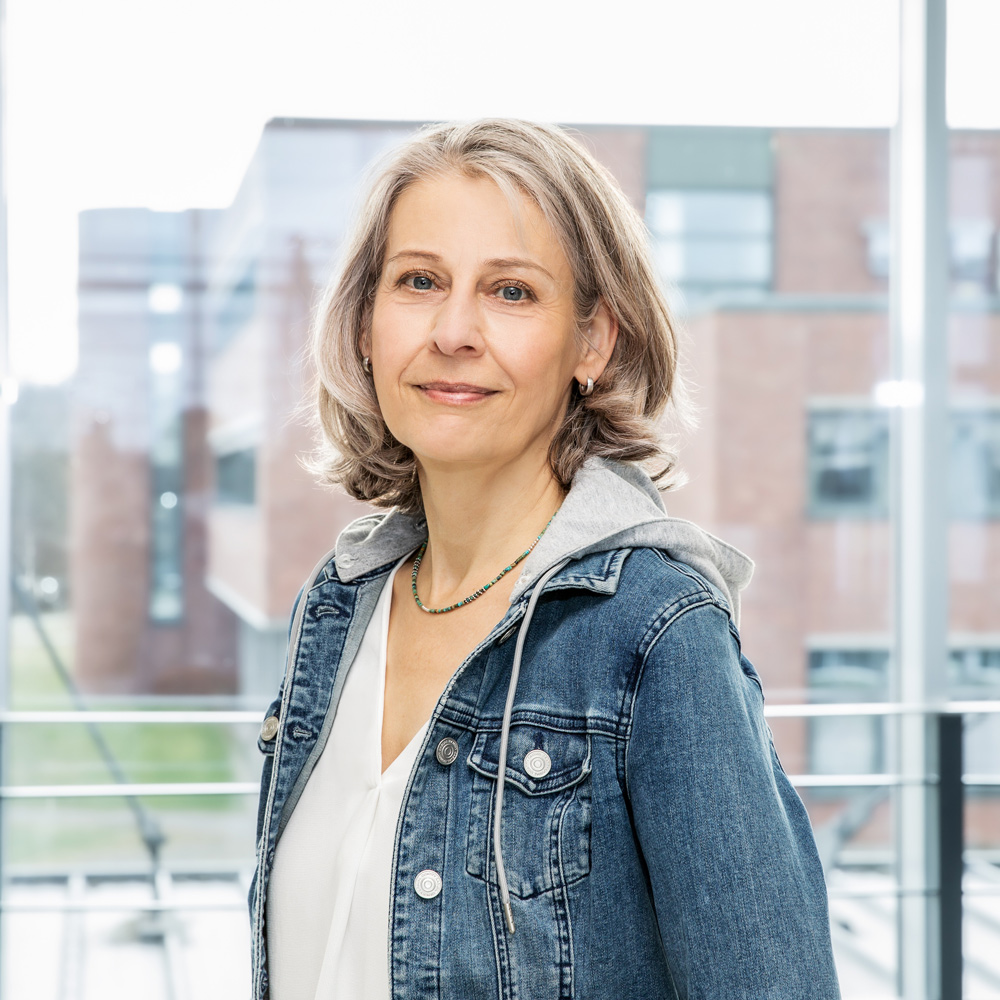
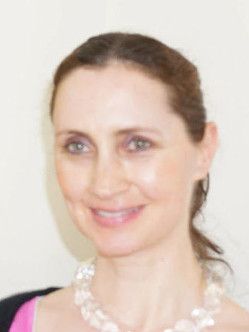
Prof. Dr. Eva Spies is a Professor for the Study of Religion with Focus on Africa at the University of Bayreuth within the Faculty of Humanities & Social Sciences . She holds a PhD in Cultural Anthropology from the University of Mainz and leads the Research Section Moralities in the Africa Multiple Cluster of Excellence (EXC 2052). Key Roles : Principal Investigator, Bayreuth International Graduate School of African Studies (BIGSAS) Vice Dean of Research Co-founder, German Association for the Study of Religion's Africa working group Research Interests span religious plurality, development cooperation, and transformative practices. She coined the concept of religious engineering to analyze how religious resources shape social/political worlds. Regional expertise in Niger/West Africa and Madagascar/Indian Ocean , with focus on: South-South mission Religion and pandemic response Intercultural hermeneutics Epistemological conflicts Material culture in development Projects : Africa Multiple Cluster of Excellence (2025): "Religious engineering. The making of moralities, development and religion in Niger" Humboldt Research Hub (2021): "Fighting pandemics with religion?" (with Moi University and University of Zimbabwe) Education : PhD in Cultural Anthropology, University of Mainz
Marisol De La Cadena is a Professor in the Department of Anthropology at the University of California, Davis, with affiliations in Science and Technology Studies (STS). Her work bridges anthropology, political theory, and environmental thought, focusing on ontological divergence and multispecies relations in Latin America, particularly in Peru and Colombia. Department: Department of Anthropology School: College of Letters and Science University: University of California, Davis Email: mdelac@ucdavis.edu Office: Young Hall 315 Her research centers on the intersection of modern politics and non-modern or ahistorical ontologies, especially through what she calls "ontological openings." Drawing from deep ethnographic engagement with Quechua-speaking interlocutors in the Andes, she explores how earth-beings, humans, and nonhumans co-constitute worlds that exceed Western categories. Her theoretical contributions challenge conventional boundaries between nature and culture, history and timelessness, and politics and cosmology. Her recent fieldwork in Colombia examines human-cow relations on cattle ranches and in veterinary schools, situating these practices within broader ecological crises and post-conflict transitions. Her publications reveal a consistent interest in how ethnographic concepts function as both empirical observations and theoretical tools. The body of her work, including key articles like "Uncommoning Nature" and "Runa: Human but not only," reflects a deep commitment to rethinking anthropological method and theory. Her research trends emphasize ontological politics, multispecies ethnography, and the decolonization of knowledge, contributing significantly to contemporary debates in STS and anthropology. Her scientific honors include: John Simon Guggenheim Memorial Foundation Fellow (2008) Lewis H. Morgan Lecture Series Invited Speaker, University of Rochester (2011) Invited Researcher, Center for Advanced Studies, Norwegian Academy of Sciences (2015) Guest Speaker, Mellon-Sawyer Seminar, University of Cape Town (2010) She has been principal investigator on several major grants, including the John E. Sawyer Mellon-Sawyer Seminar on the Comparative Study of Cultures (2012–2016), a Wenner-Gren Conference Support Grant (2009–2010), and multiple research fellowships from the Guggenheim, Wenner-Gren, and American Philosophical Societies. These grants have enabled collaborative, transdisciplinary research on cosmopolitics, indigeneity, and the anthropology of worlds. She is affiliated with research initiatives such as the Sawyer Seminar on the Comparative Study of Cultures and contributes to global academic networks in anthropology and STS. Her work fosters dialogue between indigenous thought, continental philosophy, and ethnographic practice, creating spaces for alternative modes of knowing and being.
Anna Delin is a Full Professor at KTH Royal Institute of Technology since 2011, leading research on magnetic and quantum phenomena in materials. She heads the WISE research school (wise-materials.org) and served as Deputy Head of the School of Engineering Sciences (SCI) from 2018–2022. Her expertise spans condensed matter physics, with a focus on nanomagnetism, skyrmions, spin-lattice couplings, and topological materials. Education: PhD in Condensed Matter Physics from Uppsala University (1998). Key awards include Naturvetarpriset (1998), Royal Swedish Academy of Sciences Research Fellowship (2007), Thuréus Prize (2018), and Edlundska Prize (2024). She has held visiting roles at ICTP, Los Alamos National Lab, and the Fritz Haber Institute. Research interests include magnetic skyrmions, magnonics, spintronics, and ultrafast demagnetization. Recent publications focus on spin-lattice dynamics, topological materials, and quantum analogs of classical magnetic models. Her work bridges theory and experiment, with contributions to tools like SpinView for computational magnetism analysis. Teaching includes roles as examiner for the Degree Project in Applied Physics and teacher for Sustainable Development in Engineering Physics. She actively participates in materials design initiatives and semantic data processing for big research data. Lab affiliations include her own research group at KTH and collaborations through WISE. Current projects explore skyrmion stabilization, magnon entanglement, and quantum spin systems, with implications for next-generation spintronic devices.
Henrik Andersson is an Associate Professor and researcher in Practical Philosophy at the Department of Philosophy, Lund University, within the Faculty of Humanities and Theology. He is also an affiliated researcher at the Birgit Rausing Centre for Medical Humanities (BRCMH). His academic career includes a postdoctoral fellowship at Lund University and the University of Colorado, and prior work at the Institute for Futures Studies on the project 'Population and the Sustainable Development Goals: An Ethical Evaluation.' Andersson's research focuses on value theory and applied ethics, with particular expertise in incomparability, semantic vagueness, and ethical evaluation of population policies. His fingerprint shows strong engagement with concepts of indeterminacy, incommensurability, vagueness, and ethics across multiple domains. His recent scholarly output demonstrates a clear trend toward addressing contemporary ethical challenges related to food systems, population policies, and moral progress. The articles show increasing engagement with practical applications of philosophical theory to real-world problems, particularly in the areas of sustainable development and technological innovation. Oscar II Scholarship for best humanities dissertation at Lund University (2017) Zapffe award (2024) Andersson has led and participated in significant research projects including 'Non-Determinate Trade-offs in Ethics' (active) and 'Value Relations' (completed dissertation project). He actively organizes academic events such as the Value Theory Seminar Series and Value Incommensurability workshops, demonstrating leadership in his field. His collaborative work spans multiple institutions and disciplinary boundaries, reflecting his commitment to interdisciplinary approaches to philosophical problems. Andersson maintains an active presence in both academic and public discourse, with publications ranging from peer-reviewed journal articles to newspaper contributions addressing ethical dimensions of contemporary issues.
Dr. Julieta Chaparro-Buitrago is a Wellcome Trust Early Career Fellow in the Department of Sociology at the University of Cambridge, specializing in decolonial approaches to reproductive justice across Latin America. Her work bridges anthropology, gender studies, and environmental sociology through critical examinations of colonial power structures. Her educational foundation includes a PhD from the University of Massachusetts Amherst, where she received the Oriol Pi-Sunyer Dissertation Prize and multiple research awards recognizing her groundbreaking work on forced sterilization in Peru. Chaparro-Buitrago's research centers on how colonial legacies and extractive industries shape reproductive experiences of indigenous and peasant women. She develops innovative frameworks like Reproductive Extractivism to analyze connections between land exploitation, environmental contamination, and bodily sovereignty, challenging Western-centric reproductive rights paradigms through decolonial feminist methodologies. Her publication trajectory reveals expanding scope from Peru-focused ethnography to transnational comparisons (US, China) and environmental dimensions, consistently centering peasant epistemologies while critiquing state violence and repro-normative hierarchies. Her scientific recognition includes: Wellcome Trust Early Career Award (2022) Oriol Pi-Sunyer Dissertation Prize (2021) Armelagos-Swedlund Graduate Research Award (2018) Richard B. Woodbury Award (2015) Pre-Dissertation Research Award (2013) Her Wellcome-funded project on reproduction in Peru's extractive zones drives interdisciplinary collaboration with Cambridge Reproduction and the Cambridge Lactation Network, generating policy interventions for environmental reproductive justice amid climate crisis. She actively shapes discourse through the Cambridge Reproduction Forum and Reading Group, fostering cross-departmental dialogue on decolonizing reproduction research while mentoring emerging scholars in critical feminist methodologies.
Pierre Legrand is a Visiting Professor of Law at the Pritzker School of Law, Northwestern University . He also teaches at the Université Panthéon-Sorbonne and has held visiting professorships at institutions including the University of Uppsala, Georgetown University Law Center, and National University of Singapore. His work spans comparative law scholarship, legal theory, and cross-cultural jurisprudence. His educational background includes advanced degrees from prestigious institutions: PhD in Law, Université Panthéon-Sorbonne PhD in Law, Lancaster University MLitt in Comparative Legal Reasoning, University of Oxford (Rhodes Scholar) DEA in Law, Université Panthéon-Sorbonne LLB and BCL, McGill University Legrand's research critically examines the theoretical foundations of comparative law, focusing on concepts like cultural incommensurability, legal translatability, and the philosophical challenges of cross-jurisdictional analysis. His scholarship draws on postmodern philosophy, including Derrida and Heidegger, to challenge conventional legal methodologies. Scientific awards and honors include: Rhodes Scholarship 2017 Special Issue of the American Journal of Comparative Law dedicated to his critical scholarship
John O'Neill is the Hallsworth Chair in Political Economy and Philosophy at The University of Manchester. He directs the Political Economy Institute and the MA in Political Economy, and holds roles in the Society and Environment Research Group and the Centre for Democracy and Elections. His research focuses on political economy, environmental policy ethics, and the philosophy of science. He has contributed to UK and EU environmental policy projects and edited journals like New Political Economy and Historical Materialism. Education includes prior professorships at Lancaster University, Sussex University, and the University of Wales. His work addresses topics like environmental sustainability, pluralism in policy design, and the ethics of economic systems. Recent publications explore incommensurability in environmental planning, ecological pluralism, and biodiversity economics. He has supervised doctoral research on topics ranging from philosophy and economics to the ethics of micro-finance and sustainability. His projects include the Green Infrastructure to Promote Health and Wellbeing in Aging Populations and ClimateJust impact evaluations. He actively engages with the UN Sustainable Development Goals, particularly those related to environmental sustainability and equity.
Eija Vinnari is a Professor at the Faculty of Management and Business , Tampere University. Her work bridges Accounting , Financial Management , and Sustainability , with a unique focus on non-human animals in corporate and public contexts. Research Interests: Critical accounting, sustainability, corporate social responsibility, actor-network theory applications, and animal ethics in accounting systems. Key Collaborations: EU Horizon 2020 projects, Agenda2030 implementation in Finland, and Nordic CSR research networks. Article Trends span nonprofit accountability , cultural sustainability , animal inclusion in CSR , Finnish public sector performance , and critical theory in accounting . Her work often integrates ORCID profiles with interdisciplinary approaches. Grants & Projects include contributions to the EU Horizon 2020 MULTI-ACT initiative and Agenda2030 sustainability frameworks. She co-leads the Research Group on Sustainability and Critical Accounting and the Research Group on Public Financial Management .
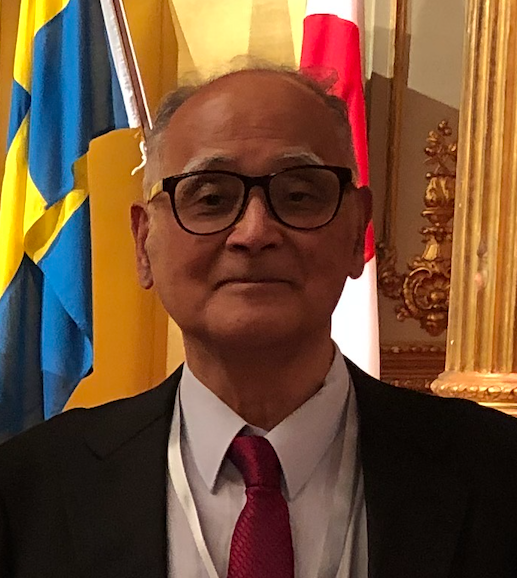
Prof. Osamu Terasaki is a leading expert in electron microscopy and structural chemistry, currently serving as Professor and Director of the Centre for High-Resolution Electron Microscopy at ShanghaiTech University, China since 2017. Previously, he held academic roles at Stockholm University (Professor and Head of Structural Chemistry, 2003-2010), KAIST (Invited Guest Professor, 2009-2017), UC Berkeley (Visiting Professor, 2014-2017), and Tohoku University (Assistant to Associate Professor, 1967-2002). Education: B.Sc. in Physics, Tohoku University, Japan (1965) M.Sc. in Physics, Tohoku University, Japan (1967) DSc in Physics, Tohoku University, Japan (1982) Research Interests focus on advanced electron microscopy techniques to solve complex structural problems in nanoporous materials. His work includes groundbreaking contributions to electron dynamical scattering, zeolite characterization, and the development of Gas Adsorption Crystallography for determining adsorbate distributions in nanoporous crystals. He pioneered electron microscopy methodologies for Metal-Organic Frameworks (MOFs) and Covalent-Organic Frameworks (COFs). Scientific Contributions extend to establishing world-leading electron microscopy centers at Stockholm University, KAIST, and ShanghaiTech University. These facilities have advanced the application of state-of-the-art instrumentation to analyze defects, fine structures, and quantum-confined cluster-crystals in microporous materials. Scientific Awards and Honors include: Dual Donald W. Breck Awards (2007, 2019) Humboldt Research Award (2008) Daiwa Adrian Prize (1996) Magnolia Silver Award (2018) Honorary Memberships in the Scandinavian Electron Microscopy Society (2010) and Japan Association of Zeolites (2014) International Collaborations span institutions in Sweden, South Korea, the U.S., and China, reflecting his global impact in structural science and electron microscopy.
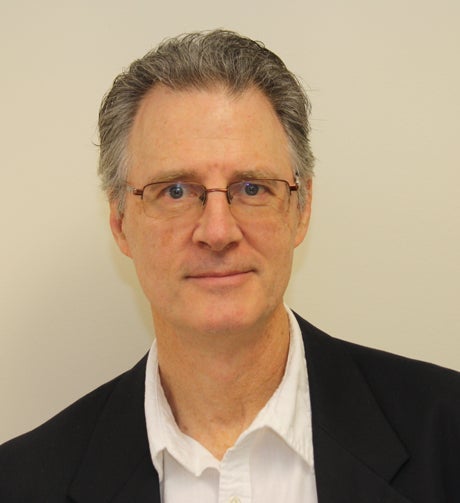
Randy Harris is a Professor in the Department of English Language and Literature at the University of Waterloo, with a cross-appointment to the David Cheriton School of Computer Science. His career spans over three decades, focusing on the intersection of rhetoric , cognitive science , and computational linguistics . He holds a PhD in Communication and Rhetoric from Rensselaer Polytechnic Institute, with postdoctoral experience at the University of Alberta. Education : PhD (Rensselaer), MSc (Rensselaer, Alberta), MA (Dalhousie), BA (Queen's) Research Interests : Cognitive Rhetoric, Computational Rhetoric, Rhetorical Figures, Construction Grammar, Rhetoric of Science, and Neurocognitive Stylistics. His work explores how rhetorical figures like chiasmus and antimetabole reflect brain structure and cognitive processing. Recent projects involve building the Rhetoricon , a collocational database of rhetorical figures, and investigating their role in large language models . He has received numerous awards, including the University of Waterloo Arts Award for Excellence in Research (2023) and Fellow of the Royal Society of Canada (2022) . Harris has supervised graduate students in professional communication , linguistics , and science writing . His grants include NSERC Discovery Horizon (2024-2029) and multiple SSHRC grants for Computational Rhetoric and Rhetorical Figure Ontology . He actively organizes interdisciplinary workshops like Computing Figures and contributes to media discussions on language, AI, and rhetoric.
Malte Laurens Kampschulte serves as Assistant Professor at the Department of Mathematical Analysis, Faculty of Mathematics and Physics, Charles University in Prague. He leads research within S. Schwarzacher's fluid structure interaction group and the OP JAK project FerrMion, following his role as Substitute Professor at the University of Leipzig during Summer 2024. His academic credentials include: B.Sc in Mathematics (2009) and Computer Science (2010) from RWTH Aachen M.Sc in Mathematics (2012) from RWTH Aachen Ph.D. in Mathematics (2018) with thesis "Gradient flows and a generalized Wasserstein distance in the space of Cartesian currents" Dr. Kampschulte's research centers on fluid structure interaction, calculus of variations, partial differential equations, and geometric measure theory. His work examines variational aspects of Eulerian-Lagrangian frameworks, relaxation methods for generalized solutions, topological invariants in PDEs, and current transport on manifolds. This integrated approach bridges theoretical analysis with physical applications in continuum mechanics. Analysis of his 2023-2024 publications reveals concentrated focus on three-dimensional fluid-structure systems with viscoelastic solids, compressible fluids, and self-collision phenomena. Key contributions include global weak solution frameworks for contact problems, variational approaches to hyperbolic evolutions, and regularity analysis for free surface dynamics—demonstrating both mathematical rigor and physical relevance. As Principal Investigator for the PRIMUS grant "Qualitative and quantitative Analysis for non-linear non-uniformly elliptic models" (previously held by Anna Balci), he oversees active research funding while mentoring through an open PostDoc position. His leadership extends to the FerrMion project where he develops mathematical frameworks for fluid-matter interactions. Based in the Department of Mathematical Analysis at Charles University, Dr. Kampschulte collaborates within S. Schwarzacher's research group to advance mathematical understanding of fluid-structure systems through both theoretical innovation and computational modeling.
Tao Jiang is a Professor of Religion and Philosophy at Rutgers University. He serves as Director of the Rutgers Center for Chinese Studies and co-chairs the Neo-Confucian Studies Seminar at Columbia University. His academic work bridges classical Chinese philosophy, Mahāyāna Buddhist thought, and cross-cultural analysis. Education: Ph.D. from Temple University Service: Former chair of the Religion Department (2010-2016, 2020-2023); co-founder of the Rutgers Workshop on Chinese Philosophy Research spans comparative philosophy , Buddhist psychology , and political thought . He explores intersections between Chinese and Western philosophy, focusing on concepts like subliminal mind and virtue ethics. His 15 most recent articles reflect trends in cross-cultural dialogue, particularly between Buddhist/Yogācāra traditions and Western philosophy (2012-2025). Topics range from Zhuangzi's freedom theories to Linji's Chan Buddhism and Nagārjuna's metaphysics. Awards include: Honorable Mention, Joseph Levenson Prize (2023) Active in academic leadership, Jiang serves on editorial boards of Dao , Journal of Buddhist Philosophy , and Neo-Confucian Studies . Contact: tjiang@rutgers.edu
M. Beatrice Fazi is an Associate Professor in Digital Humanities at the School of Media, Arts and Humanities , University of Sussex. Her work bridges philosophy, computation, and digital culture, focusing on the ontological and epistemological implications of technoscience. She has authored the monograph Contingent Computation (2018) and contributes extensively to debates on AI, algorithmic thought, and computational aesthetics. Research Focus: Philosophy of computation, media theory, generative AI, and digital humanities. Key Projects: Investigating abstraction in AI, explainability in deep learning, and synthesis in large language models. Grants & Awards: British Academy/Leverhulme Grant (2017-2018) Fellow, Higher Education Academy Collaborations: Affiliated with the Sussex Digital Humanities Lab , Digital Theory Lab (NYU) , and Antikythera (Berggruen Institute) . She has held visiting roles at New York University and the Center for Advanced Internet Studies.
Jin Siyan is a Professor of Chinese Literature in the Department of Oriental Studies at the University of Artois, France, where she has been teaching since 2006. She serves as co-director of the research axis 'Études transculturelles: Occident et Orient: l'imaginaire de l'autre, Identité, réception et critique' and is a full member of the 'Textes et cultures' Research Center. Her academic career spans multiple prestigious institutions across France and China. Her educational background includes: Doctorat ès Lettres Modernes from Université de Paris-Sorbonne (Paris IV) in 1992 Habilitation to Direct Research in Literature and Languages from Jean Moulin University Lyon 3 in 2005 Maîtrise de langue et littérature françaises from Université de Pékin in 1984 Licence ès lettres from Université de Pékin (1978-1982) Jin Siyan's research focuses on transcultural studies between China and the West, with particular emphasis on the three historical encounters between Chinese and Western civilizations. Her work explores the modern history of Chinese literary theory, examining subjectivity in contemporary Chinese writing, Chinese feminine writing, and the complex relationship between language consciousness and identity. She has conducted groundbreaking research on the history of literary reception between China and France, and has pioneered studies on cultural transfers, particularly the translation of Buddhist sacred texts in 5th century China and its impact on the formation of classical Chinese language and poetics. Her work on the Wenxin Diaolong (The Literary Mind and the Carving of Dragons) by Liu Xie represents a major contribution to understanding classical Chinese literary theory. Her extensive publication record includes 14 monographs (7 in Chinese, 7 in French), 21 edited volumes, 10 literary works, 19 translations, and over 90 scholarly articles. Her recent research focuses on transcultural methodology, Buddhist text translation, and the relationship between Chinese poetics and Western literary theory. She has supervised 14 doctoral theses and 4 cotutelle theses covering topics in literary criticism, reception theory, and Chinese women's literature. As an active academic, Jin Siyan has participated in 168 scientific events (including 101 international conferences, 25 study days, and 42 doctoral seminars), organizing 30 of these events herself. She co-directs the journal 'Dialogue Transculturel' and the 'Espace transculturel' book series, fostering scholarly exchange between Chinese and Western academic communities.
Professor Gabrielle McIntire is a faculty member in the Department of English Language and Literature at Queen’s University, within the Faculty of Arts and Science. She specializes in British and American literary modernism (1890-1945), with particular focus on poetry, poetics, eco-criticism, psychoanalytic theory, and theories of memory, desire, and the sacred. Education: PhD from Cornell University. She has held SSHRC grants including a Standard Research Grant at Queen’s and a Postdoctoral Fellowship at the University of Toronto. Notable fellowships include residencies at Banff Centre for the Arts and Holywell Manor, Balliol College, Oxford. Research Interests: Modernist poetry and prose Eco-critical approaches to literature Memory and desire in modernist texts Sacred narratives in literary modernism Psychoanalytic criticism Awards: W.J. Barnes Award for Distinguished Teaching (2004) Clark Award for Distinguished Teaching (Cornell University, 2002) SSHRC grants (2008-2012, 2023-2028) Editorial Roles: Editorial board member of Woolf Studies Annual , T.S. Eliot Studies Annual , Twentieth-Century Literature , and The A-Line . Creative Work: Published poetry collections include Unbound (2021) and numerous journal contributions. Her creative writing explores ecological themes, mysticism, and human experience. Teaching: Taught at Cornell University and the T.S. Eliot International Summer School. Known for innovative pedagogy recognized through teaching awards.