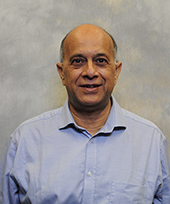
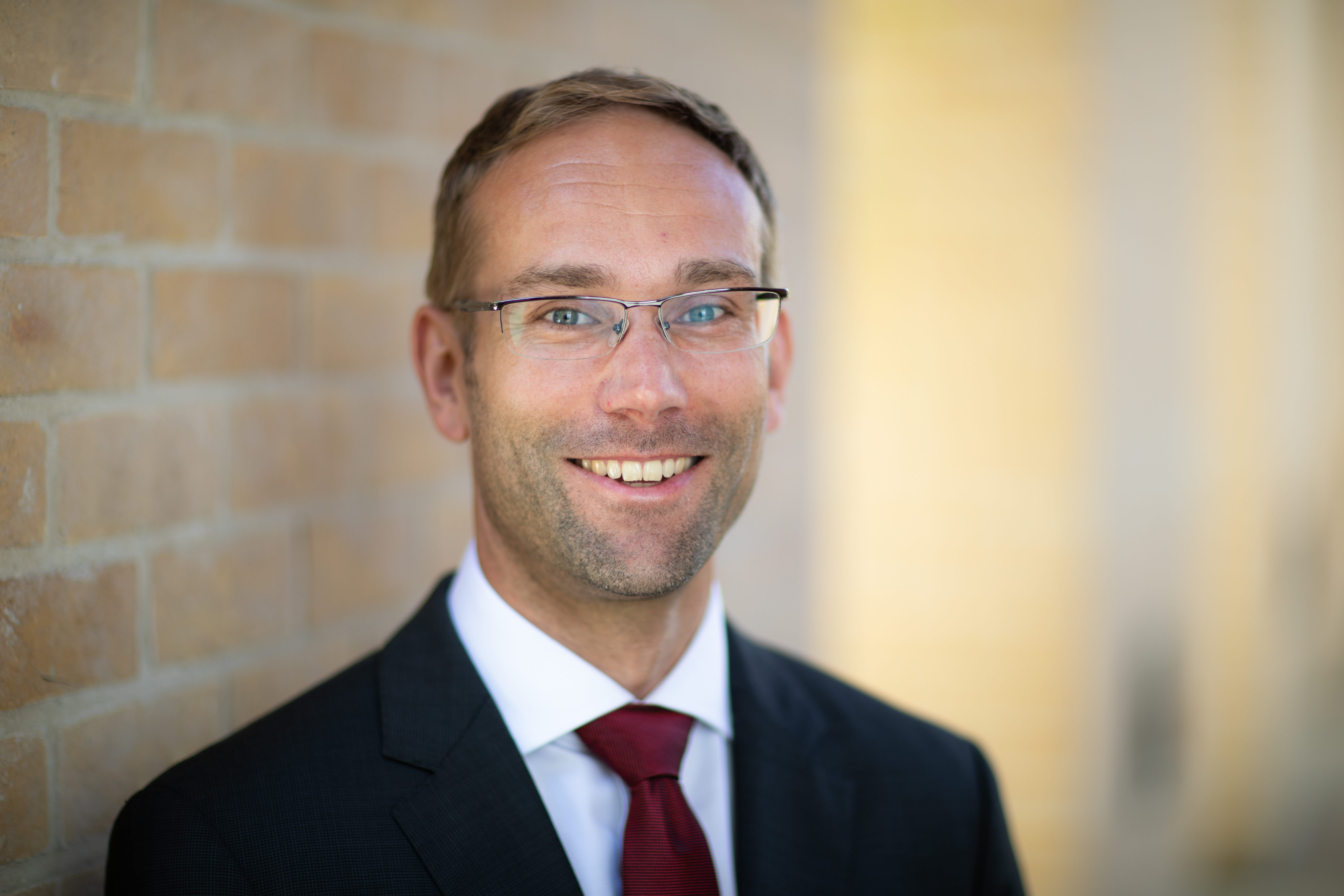
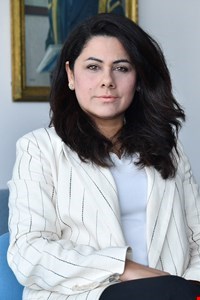
Yusuf Sayed is a Professor of Education at the University of Cambridge 's Faculty of Education. His expertise spans global education policy, equity, inclusion, and social justice, with over 40 years of international experience as a scholar, policy practitioner, and education rights activist. He holds qualifications including a PhD in Comparative Education and Policy from the University of Bristol and an MBA from the University of Brighton. Former roles include Professor at the University of Sussex, South African Research Chair in Teacher Education, and Founding Director of the Centre for International Teacher Education (CITE) at CPUT, South Africa. Professional memberships: Visiting Professor at Sussex, Honorary Professor at CITE, Editorial Board Member of key journals, and active in BAICE, CESI, SACHES, and SAERA. His research focuses on equity in education systems , particularly in the Global South, analyzing barriers to social and cognitive justice. Key areas include teacher education, public-private partnerships, inclusive pedagogy, and decolonizing education. Current projects address teacher pedagogy in South Africa, equity in PPP schooling, and the role of international development agencies. Yusuf has authored/co-authored over 20 books and 200+ academic works, engaging with diverse contexts across Africa, Asia, and beyond. His work critiques policy implementation gaps and advocates for marginalized voices in educational decision-making. Advising & Grants: Supervised over 40 doctoral students to completion, currently guiding postgraduates on education governance and policy. Teaches MPhil modules on globalization and education, and leads the Research Methods program. Labs/Teams: Affiliated with the Research in Education, Assessment, and Learning (REAL) Centre at Cambridge and the Centre for International Teacher Education (CITE).
Alis Oancea is Professor of Philosophy of Education and Research Policy at the University of Oxford's Department of Education, part of the Social Sciences Division. She holds additional roles including ESRC Centre for Global Higher Education Deputy Director and Social Sciences Division Advocate for Responsible Engagement. With dual doctoral degrees (DPhil from Oxford and PhD from Bucharest), she also received a Doctor Honoris Causa from University of the West Timisoara. Her research focuses on meta-research, research policy, and higher education governance. Key areas include research assessment frameworks, impact measurement, ethics, open knowledge practices, and teacher education. She co-edited the 2024 Handbook of Meta-Research and leads international studies on research cultures and policies. Education: DPhil (Oxford), PhD (Buc), DipLATHE (Oxford), Dhc (UWT) Roles: Director of Research (2016-20), REF2021 Coordinator, ESRC CGHE Deputy Director Leadership: Over 30 funded projects including the RKEEI initiative and BERA Observatory Her 150+ publications span research policy, impact evaluation, and education systems. Awards include FAcSS Fellowship and numerous international advisory roles across Europe and Norway. Advises on global education reforms and chairs panels for EU, UK, and Nordic research councils. Current doctoral supervision focuses on research policy, higher education systems, and teacher education innovations. Active in editorial roles for Oxford Review of Education and Review of Education .
Profile Roles and Affiliations: Michael Smets is a Professor of Management at the Saïd Business School, University of Oxford. He is also a Research Fellow at Green Templeton College and a member of the Centre for Professional Service Firms. His academic contributions span institutional theory, practice theory, and strategic management. Education: Bachelor’s equivalent in Business and Economics, Cologne University, Germany MSc in Management Research, Saïd Business School DPhil in Management, Saïd Business School Postdoctoral Researcher at Saïd Business School and University of Alberta’s School of Management Research Interests: Michael’s work examines professional service firms (PSFs) through three core lenses: Global Operations: Internationalisation challenges in law, consulting, and reinsurance firms, with a focus on institutional complexity and regulatory systems. Innovation & Career Systems: How evolving career structures in PSFs can simultaneously drive innovation and address work-life balance demands. Recent studies highlight ambidextrous career paths and their strategic leverage. Methodological Innovation: Pioneering video- and team-ethnography to capture micro-level organisational practices. His ‘fly on the wall’ study at Lloyd’s of London is a landmark in this domain. Academic & Industry Impact: His research has been translated into industry-relevant outputs, including reports for the reinsurance sector and handbooks for legal firms. The 2013 ESRC Award for Outstanding Impact in Business recognises this translational work. Academically, he has received the 2012 Academy of Management Journal Best Article Award and multiple best paper awards. Teaching & Executive Education: Michael teaches strategic management, innovation, and business development in executive programmes for Commerzbank, Deloitte, and other global firms. He is Programme Director for the Oxford Leading Professional Service Firms Programme, emphasizing interactive, case-study driven pedagogy. His teaching philosophy prioritises critical thinking over rigid models, as he states: ‘It is critical to understand under which circumstances which models work, and which ones don’t.’ Labs & Collaborations: Affiliated with the Centre for Professional Service Firms and the Oxford Initiative on Rethinking Performance. He collaborates with institutions like Cass Business School and Aston Business School on ethnographic studies. His work also intersects with the Insurance Institute of London and the International Bar Association for practitioner-focused outputs.
Dr. Hakan Karaosman is an Associate Professor at Cardiff Business School, Cardiff University, and a globally recognized expert in supply chain sustainability, particularly in fashion and textiles. He serves as Chief Scientist at FReSCH (Fashion's Responsible Supply Chain Hub), a UN-recognized, EU-awarded action research project hosted by University College Dublin, and holds visiting positions at University College Dublin and Politecnico di Milano. He is Chair of the Union of Concerned Researchers in Fashion (UCRF) and an advisory board member for Remake and other sustainability initiatives. His research focuses on just transition, decarbonization, social equity, and sustainable operations in fashion supply chains. He has authored numerous influential publications in top journals such as the International Journal of Operations & Production Management , and his 2025 paper 'For the many not the few: Introducing just transition for supply chain management' was among the most downloaded in its journal. His work emphasizes systemic change, stakeholder inclusion, and action research, bridging academia and industry. Hakan’s recent publications reflect a strong thematic focus on justice, equity, and systemic transformation in fashion. Key trends include critiquing greenwashing, advocating for supplier inclusion in climate action, analyzing the social dimensions of decarbonization, and promoting just transition frameworks. His research consistently addresses power imbalances, labor rights, and the need for inclusive, people-centered sustainability strategies. His scientific honors include the Financial Times Responsible Business Education Award (2025), the Cardiff University Celebrating Excellence Award for Sustainability (2023), and being named a Sustainability Thought Leader in the Vogue Business 100 Innovators (2023). He also received a prestigious Marie Skłodowska-Curie Individual Fellowship from the European Union. He is actively involved in postgraduate supervision and has delivered teaching on supply chain management and sustainability. His academic service includes roles as Area Editor for Operations Management Journals and editorial board member for several leading journals. He frequently collaborates with international organizations, including the UN, NGOs, and fashion companies, and is a sought-after keynote speaker at global events such as the Financial Times, TEDx, and the Global Fashion Summit. Hakan leads FReSCH, an international research hub focused on responsible fashion supply chains. He is also a founder and key organizer of initiatives like the Next Generation Assembly and A New Awareness, fostering collaboration among researchers, students, and industry stakeholders to drive systemic change in the fashion industry.
Dr. Hilary Cremin is the Head of the Faculty of Education at the University of Cambridge and holds the rank of Professor. Her work centers on peace education, conflict transformation, and innovative methodologies such as photo-voice, poetry, and autoethnography. She chairs the Cambridge Peace Education Research Group (CPERG), which promotes research and practice in peace education through seminars and online resources. Her research explores the intersection of education and peacebuilding, emphasizing ethical and embodied approaches to conflict resolution in schools and communities. Education : PhD in Education, University of Leicester PGCE, University of Oxford (Wolfson College) BA (Hons) in French and European Literature, University of Warwick Research Interests : Hilary’s work addresses global challenges in education and peacebuilding, including: Developing transrational approaches to peace education Reducing epistemic violence through reflexive methodologies Empowering youth through restorative justice and civic pedagogy Exploring embodiment and arts-based practices in educational research Awards : Fellow of the Royal Society of Arts Leadership and Service : In addition to her academic role, Hilary serves as Chair of the Degree Committee in the Faculty of Education and has extensive experience as a mediator and educational consultant. She has collaborated with schools, communities, and international organizations to advance conflict transformation and peacebuilding initiatives. Labs/Teams : Cambridge Peace Education Research Group (CPERG) — fostering global dialogue and practical resources for peace education researchers and practitioners.
Nina Vollenbroker serves as Associate Professor of Architecture and Director of the Architectural Design PhD programme at University College London's Bartlett School of Architecture. A registered architect in the UK (ARB) and Germany (Architektenkammer NRW), she also acts as editor for Architectural Research Quarterly since 2020 and serves on the Society of Architectural Historians’ advisory committee on accessibility. Her educational background includes a PhD in Architectural History from UCL, along with multiple UCL degrees: Master of Architecture (2005), Certificate (2004), Master of Science (2002), Diploma (2001), and Bachelor of Architecture from Oxford Brookes University (1997). Vollenbroker's research centers on the intersection of deafness, disability, and architectural design, challenging normative spatial paradigms through historical and contemporary lenses. Her current Paul Mellon Centre-funded project "Hide and Speak" examines the first purpose-built deaf schools in 19th-century Britain, revealing how architecture actively shaped cultural understandings of deafness. She extends this work through "Deafening Architectural Modernism," which re-evaluates Adolf Loos's contributions through the lens of his hearing loss, demonstrating how sensory experience fundamentally informs spatial design. Her broader research encompasses migration studies, gendered domestic spaces, and critical examinations of architectural exclusion. Her recent publications span architectural history, disability studies, and material culture, with significant contributions to edited volumes on deafness in architecture (University of Illinois Press, 2025), mobile home-making (Brill, 2025), and the American West (Routledge, 2025). These works consistently demonstrate her methodological approach of centering marginalized perspectives within architectural discourse. Wilhelm Award from Pioneer America Society for outstanding research in material cultures studies Paul Mellon Centre Mid-Career Fellowship Royal Institute of British Architects Research Award British Academy Research Fund Award Vollenbroker supervises doctoral students in architectural design while securing major research funding from bodies including the Arts and Humanities Research Council, British Academy, and Royal Institute of British Architects. Her international collaborations include work with the Lebanese NGO Biladi on migration studies and knowledge-exchange programs funded by The Council for British Research in the Levant. She regularly convenes major conference sessions, including at the Society of Architectural Historians and Architectural Humanities Research Association conferences, and presents at institutions worldwide including Columbia University, Yale University, and Heidelberg University. Her research group actively engages with disability advocacy organizations and architectural practitioners to translate historical insights into contemporary inclusive design practices, particularly through her editorial work on special journal issues addressing disability and architecture.
Professor Richard Bolden is a Professor of Leadership and Management at the Bristol Business School, University of the West of England (UWE), where he also directs the Bristol Leadership and Change Centre. His career includes over a decade at the University of Exeter Business School and experience as a consultant, research psychologist, and software developer. He holds a PhD, MA, and BSc. His research focuses on distributed leadership, leadership development in complex systems, and cross-sector partnerships. Key areas include leadership in higher education, healthcare, and public services, with emphasis on paradoxes, complexity, and inclusion. He has published extensively, including a 2023 second edition of Exploring Leadership (Oxford University Press) and serves as Associate Editor of the Leadership journal. Prof. Bolden leads leadership modules for UWE's EMBA and clinical practitioner programs. His funded projects involve organizations like the NHS Leadership Academy and Singapore Civil Service College. Awards include Fellowship with the International Leadership Association. His work bridges academic theory and practical application, addressing systemic challenges through collaborative, inclusive leadership frameworks. Current interests include post-pandemic academic leadership and the 'great resignation' impact.
Dr. Asieh Hosseini Tabaghdehi is a Senior Lecturer in Strategy & Business Economy at Brunel Business School, Brunel University of London. She serves as Programme Lead for the BSc International Business Programme and Trade2Grow Executive Education Programme. Additionally, she is Impact Lead at the Brunel Centre for AI: Social and Digital Innovation, where she leads the capability area in the Future of Work. Dr. Tabaghdehi is also an economist and social impact advisor for the independent NGO, Social Innovation Movement. Dr. Tabaghdehi earned her PhD in Economics and Finance (2008) and MSc in International Money, Finance, and Investment (2015), both from Brunel University London. She also holds a BA in Theoretical Economics from University of Mazandaran. She completed the Postgraduate Certificate in Academic Practice and is a Fellow of the Higher Education Academy. Dr. Tabaghdehi is internationally recognized for her research on digital transformation, with particular expertise in the ethical integration of artificial intelligence and digital technologies. Her work focuses on how emerging technologies shape industries, labor markets, and society, with emphasis on enhancing SME growth through technological innovation. She explores applications across critical sectors including social care, supply chain management, and environmental sustainability. A central theme in her research is smart data governance, ensuring ethical, transparent, and responsible use of data in decision-making processes. Her research portfolio demonstrates a consistent focus on the intersection of technology, ethics, and business strategy. She has developed frameworks like the Digital Business Auditing Framework, which has been adopted internationally for smart city initiatives. Her work connects academic research with practical policy applications, as evidenced by her presentations as oral and written evidence to the House of Commons Select Committee. Her publications span AI ethics, digital footprint implications, fertility economics, and healthcare cost analysis, showing interdisciplinary breadth while maintaining thematic coherence around digital transformation's societal impact. Scientific Awards and Recognition Semi-finalist: Research Impact Award at Brunel University London, 2023 Staff Award: Exceptional in Collegiality and Supportive to Colleagues at Brunel University London, 2022 Exceptional Performance at Regents University London, 2018-19 Staff Award in Teaching, Learning and Assessment at Regents University London, 2016 Best Lecturer Award at London Brunel International College, 2014 Best Lecturer Award at London Brunel International College, 2013 Dr. Tabaghdehi actively supervises PhD students researching areas including Smart Data Governance, Ethical AI Governance, Digital Innovation Impact, Responsible AI Adoption Strategies, Sustainability, and Future of Labour Market. She has secured research funding from multiple sources including the Economic & Social Research Council (ESRC), Brunel University London, and Brunel Business School. Her current projects include research on AI Adoption and Governance, Youth digital addiction, Algorithm Reliability Framework, and SMEs digital footprints. She has also co-designed the "Digital Adoption" module for the UK Government's Help to Grow Management program, demonstrating the practical application of her research. As a member of multiple professional organizations, Dr. Tabaghdehi serves as an associate practitioner at Social Value International, associate member of the Big Innovation Centre, and member of the All-Party Parliamentary Group on AI. She is also a member of the ESRC Review College, British Academy of Management Review College, and Energy Institute UK, contributing to the broader academic and policy communities through these roles.
Dr Zoe M Harris is a Senior Lecturer and Director of the Centre for Environment and Sustainability at the University of Surrey. She specializes in sustainable land use, bioenergy systems, and vertical farming technologies. Her research focuses on minimizing environmental impacts while enhancing food and energy provision, particularly through projects like the Taeda Tech Project (aeroponic biomass cultivation) and VF-UKFSR (vertical farming resilience). She leads the Bioenergy, Land Use and Agri-Innovation Group and holds roles in international committees like the IEA Bioenergy Executive (Head of Communications). Her work spans interdisciplinary collaborations, policy advising, and science communication, including training scientists in theatre-based communication. She also champions diversity in energy research through the IVUGER network. Education: BSc Biology and PhD from the University of Southampton. Previous Roles: Research Fellow at Imperial College London, Science Officer at DEFRA, Policy Adviser at BEIS/DfT. Key Projects: Taeda Tech (£4m), Social Enterprise Food Systems, Serious Games for Energy Solutions. Teaching: Director of Practitioner Doctorate in Sustainability; Fellow of HEA; course leader for Global Sustainability, Earth System Science, and Low Carbon Transitions. Labs/Teams: Leads the Bioenergy, Land Use and Agri-Innovation Group; collaborates with industry and academia on aeroponics, biomass, and circular economy. Awards: Fellow of the Higher Education Academy (FHEA); grants from UKERC, DecarboN8, and BEIS. Her research bridges climate science, ecology, and socio-economic factors, addressing global challenges like BECCS deployment, biodiversity loss, and gender equity in STEM.
Dr. Jackie Cameron is a Lecturer and Deputy Programme Leader of the BA (Hons) Marketing with Digital Media at Edinburgh Napier University's Business School. With a PhD from the University of Stirling and industry experience in digital media/marketing across China, Europe, and Africa, she integrates academic expertise with practical insights. Her work focuses on digital marketing strategy, content marketing, and AI-era pedagogy. Education: PhD (Stirling), MA (Nottingham), BJRN (Rhodes), FHEA Her research explores human behavior in digital ecosystems, AI-driven content creation tools, and pedagogical innovations in assessment policies. Google Scholar publications highlight equity in deadline extensions, conscientious branding, and digital transformation. Recent lectures and workshops (e.g., BINUS Business School 2024) address AI integration in education. She contributes to conferences like the Global Brand Conference and serves as external examiner for MA/MSc programs at LIBF, Bournemouth, and Salford Universities. Active in scholarship of learning and teaching, she supervises research students across levels and locations (UK, Vietnam), convenes postgraduate modules, and develops research tools for media practitioners.
Alexandra Cox is an Associate Professor of Criminology at the University of Reading, serving as Programme Director for the BSc in Criminology. She holds a Ph.D. in Criminology from the University of Cambridge and a Yale undergraduate degree. Previously, she was a Senior Lecturer at the University of Essex, Assistant Professor at SUNY New Paltz, and Research Scholar at Yale Law School. Her research focuses on socio-legal dynamics of punitiveness, criminal justice institutions, youth justice, and racial inequities. She has authored/co-edited books like Trapped in a Vice and The Palgrave International Handbook of Youth Imprisonment , and her work has been published in journals such as Punishment and Society and Social & Legal Studies . Dr. Cox collaborates with organizations like Reprieve, the Howard League, and the Centre for Justice Innovation on projects addressing race and criminal justice policy. She has received awards including the American Society of Criminology Book Award and fellowships from the Gates Cambridge Trust and Soros Justice Advocacy. Her research emphasizes intersectional analysis, decarceration strategies, and the impact of systemic racism within criminal justice systems. Her recent publications explore topics such as Black fatherhood in youth justice, probation officer perspectives on systemic legitimacy, and racial disparities in youth diversion programs. She actively advises Ph.D. students researching criminological and socio-legal issues, with a focus on frontline workers, juvenile confinement, and racial justice.
Dr. Salma Raheem is a Lecturer in Human Resource Management and Organisational Behaviour at the University of Liverpool Management School. She holds a PhD from the London School of Economics and Political Science (LSE) Department of Management. Previously, she served as an Academic Advisor for LSE's second-year BSc Management students, an LSE Fellow, and an elected member of the LSE Students' Union, earning the Outstanding Contribution Award. Her research focuses on multiculturalism, leadership in diverse teams, and inclusive organisational cultures, particularly in multinational corporations (MNCs) in emerging economies like the Middle East. She employs mixed-methods approaches and has published in journals such as the Journal of International Business Studies . Education: PhD in Management from LSE (Department of Management). Research interests span multicultural individuals' impact on team productivity, cross-cultural management, identity dynamics, and talent management strategies. Her work bridges academic theory with practical implications for international HRM and leadership development. Teaching includes modules like ULMS115: The New Professional and ULMS550: Human Resource Management: Academic and Practitioner Perspectives . She is a Fellow of The Higher Education Academy, UK, and has received multiple teaching awards. Awards: Class Teaching Excellence Award (2018-19) British Journal of Industrial Relations Teaching Fellowship (2014-15) Her research has explored the role of multicultural individuals in enhancing team cohesion and productivity, with implications for MNCs in regions like the Middle East. She collaborates with the Centre for Organisational and Employee Wellbeing, focusing on workplace dynamics and inclusion.
Professor Charlotte Clarke is a faculty member in the Department of Sociology at Durham University and serves as Executive Director of the Wolfson Research Institute for Health and Wellbeing . Her research focuses on dementia care, aging, risk management, and technology-enabled education , with recent work examining cognitive frailty interventions, participatory care models, and cross-cultural caregiving dynamics in China. Key research areas: Dementia care, aging, social engagement, technology-enabled education, risk management Selected recent collaborations: CREST psychosocial intervention feasibility studies, Delphi consensus on cognitive frailty, participatory action research for post-diagnostic support Her publications span high-impact journals like Frontiers in Aging Neuroscience and Dementia . She supervises postgraduate researcher Jiaxi Li and collaborates with multidisciplinary experts globally. Current projects include policy briefs on air pollution’s impact on brain health and aging in the North reports.
Dr. Laura Winter is a Reader in Education and Counselling Psychology at the Manchester Institute of Education, University of Manchester. She holds roles as School Director of Equality, Diversity, and Inclusion (EDI) and previously served as Associate Director for EDI and Programme Director for the Doctorate in Counselling Psychology. Her research focuses on social justice, education, and wellbeing, with particular attention to welfare policy impacts on schools and marginalized communities. She is a Chartered Psychologist with the BPS and Fellow of the Higher Education Academy, and leads initiatives like the BPS Division's Social Justice Networking Group. Her research interests include the intersections of social justice and psychological practice, political influences on therapy, and the role of psychologists in advocating for systemic change. Notable works include editing the SAGE Handbook of Counselling and Psychotherapy and co-authoring the Handbook for Social Justice in Psychological Therapies . Recent studies address adolescent mental health, austerity's effects on schools, and policy advocacy in psychological training programs. Awards: Fellow of the Higher Education Academy Professional Roles: BPS Training Committee Deputy Chair, BPS Division Leadership Key Projects: Co-produced research on adolescent well-being, policy analysis of welfare reforms Her teaching emphasizes social justice in counselling psychology, with modules on oppression, discrimination, and reflective practice. She supervises doctoral research on inequality and education, fostering a generation of socially conscious psychologists.
Dr. Shobana Nair Partington serves as Head of the Department for Operations, Technology, Events, and Hospitality Management at Manchester Metropolitan University's triple-accredited Business School, leading a team of 60 academic staff serving over 2,000 students. With over 20 years of academic leadership experience, she also holds strategic university roles as Academic Co-Chair for the Race Equality Charter and Academic Co-Director for Accreditation. Her international teaching engagements span Switzerland, Bulgaria, and Malaysia, reflecting her global perspective on business education. Her educational foundation includes a Master's degree in Economics from the University of Leeds, funded by a Foreign and Commonwealth Office scholarship, and doctoral research at Manchester Metropolitan University supported by the Low Pay Commission. These qualifications underpin her evidence-based approach to labor market analysis. Shobana's research centers on systemic inequalities in hospitality employment, with particular focus on pay practices, working conditions, and minimum wage impacts. Her work bridges economic theory and practical industry applications, examining how structural factors shape employee experiences in service sectors. She integrates psychological safety frameworks with innovation studies to develop actionable insights for organizational change. Analysis of her publication trajectory reveals persistent themes in hospitality labor economics, with evolving emphasis from foundational minimum wage studies toward contemporary investigations of psychological safety and innovation. Her research consistently connects policy implications with operational realities in hotels, cruise ships, and tourism enterprises. Her scholarly contributions have been recognized through: Senior Fellowship of the Higher Education Academy Fellowship of the Institute of Professional Development As an academic supervisor, she has guided six PhD candidates to completion on topics ranging from hotel information systems to tourist transport experiences. Her department drives innovation through the Digital & Technology Solutions degree apprenticeship and applied research initiatives that help businesses adapt to technological disruption. She actively serves on the Chartered Association of Business Schools' Learning, Teaching and Student Experience Committee and as a Senator for the Institute of Professional Development. The department operates as a dynamic hub for industry-engaged scholarship, with faculty from diverse nationalities developing curricula that integrate digital fluency, data analytics, and creative problem-solving. Their research directly informs sector practices while addressing critical challenges like student award gaps and workplace inclusion through the Race Equality Charter framework.