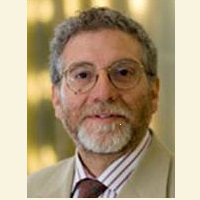
Linda Katehi is a Professor of Electrical & Computer Engineering and Materials Science & Engineering at Texas A&M University, holding the O'Donnell Foundation Chair II. She is a Member of the National Academy of Engineering and American Academy of Arts and Sciences. Her research focuses on advanced electromagnetic systems, MEMS devices, and embedded intelligent sensors. Katehi earned her Ph.D. in Electrical Engineering from UCLA (1984), with prior degrees from UCLA and the National Technical University of Athens. Education: Ph.D., Electrical Engineering, UCLA (1984) M.S., Electrical Engineering, UCLA (1981) B.S., Electrical and Mechanical Engineering, National Technical University of Athens (1977) Research Interests: Katehi pioneers innovations in microwave circuits, MEMS-based reconfigurable systems, terahertz technology, and neuromorphic sensors. Her work emphasizes integrating artificial intelligence into hardware for adaptive sensing platforms. Recent projects include flexible electronics, time-domain system analysis, and sustainability in urban infrastructure. Awards & Recognition: Ramo Simon Founder’s Award (2015) Charter Fellow, National Academy of Inventors (2013) Leading Women in STEM Award (2012) Rudy E. Henning Mentoring Award (IEEE, 2011) Lab & Teams: Directs the Intelligent Electromagnetic Sensors Lab (IEMSL), advancing embodied intelligence in electronics. Her team develops AI-embedded sensors and reconfigurable systems for applications in healthcare, communications, and environmental monitoring. Collaborates across disciplines to address global sustainability and equity challenges.
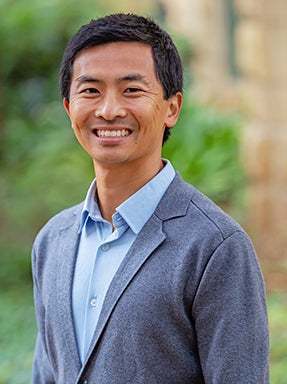
Jeff Huang is an Associate Professor in the Department of Computer Science & Engineering at Texas A&M University, affiliated with the College of Engineering. His research focuses on software engineering, programming languages, concurrency, and runtime verification, with notable contributions to static analysis, race detection, and vulnerability mitigation in concurrent systems. Education: Postdoc, Computer Science, University of Illinois at Urbana-Champaign (2013-2014) Ph.D., Computer Science, Hong Kong University of Science and Technology (2012) B.E., Electrical Engineering, National University of Defense Technology, China (2008) Research Interests: Huang's work bridges theoretical foundations and practical applications in concurrency debugging, static analysis tools, and cybersecurity for smart contracts. He emphasizes scalable solutions for pointer analysis, race detection, and vulnerability detection in distributed systems and blockchain technologies. Recent Trends in Publications: His recent work explores AI-driven program execution (e.g., SGLang), blockchain security (e.g., Smart Contract analysis), and dynamic/static analysis techniques for memory safety. These studies underscore advancements in automated tools for securing concurrent and distributed systems. Awards: 2023 ACM SIGSOFT Distinguished Paper Award 2019 DARPA Young Faculty Award 2016 NSF CAREER Award 2013 ACM SIGSOFT Outstanding Doctoral Dissertation Award Advising & Grants: Huang has advised PhD students including Bozhen Liu and Peiming Liu, who have contributed to OpenMP race detection and pointer analysis tools. His grants include NSF awards for pointer analysis as a service and DARPA funding for young faculty research. Labs & Teams: He leads the O2 Lab, focused on concurrency verification and cybersecurity, collaborating with industry partners like Coderrect Inc. and DOE on scalable static analysis frameworks.
Dr. Lum Kit Meng is an Associate Professor at the School of Civil and Environmental Engineering, NTU, Singapore. His expertise spans Transportation Engineering, Urban Planning, and Traffic Management. He holds First Class Honors in Civil Engineering (NUS), a Master’s in Industrial Engineering (NUS), and a PhD in Transportation Engineering. Dr. Lum teaches undergraduate/postgraduate courses in Civil Engineering, Maritime Studies, and Logistics, and develops training programs for professionals. His research focuses on urban mobility, active mobility infrastructure, and traffic safety, with over 60 publications. He has provided consultancy services to public/private sectors, emphasizing data-driven analysis. Key research areas include pedestrian behavior, cycling facility design, and shared space dynamics. Recent studies explore 'keep left' regulations, e-scooter speed attitudes, and red-light camera impacts using simulation and VR techniques. His work bridges theoretical models (e.g., cellular automata) with practical infrastructure solutions. No awards or grants are explicitly listed, but his extensive publications and consultancy highlight industry-academic collaboration. He advises on transportation systems with a focus on Singapore’s urban challenges.
Dr. Jonathan Liebenau is an Associate Professor (Reader) in Technology Management at the London School of Economics (LSE), part of the Department of Management. He also holds a visiting professorship at Columbia University’s Graduate School of Business and School of Engineering. His expertise spans technology management, innovation policy, and the socio-economic impacts of information systems in developing countries. He has authored/co-authored over 70 publications and advised global organizations such as Dell, IBM, and the UK Office of Science and Innovation. Education: PhD in History and Sociology of Science (University of Pennsylvania, 1981), BA in Science Policy (University of Rochester, 1976). His career includes roles at the Smithsonian Institution, Boston University, and academic leadership roles at LSE. Research focuses on technology policy, telecommunications, and the role of digital infrastructure in development. He leads LSE Tech, a research group exploring internet economics and policy. Notable work includes studies on payment systems modernization, blockchain regulation, and the economic implications of cloud computing in emerging economies. Advisory roles include membership on boards at Istanbul Bilgi University and the American University in Cairo. He has supervised numerous PhD students researching topics like ICT in Sub-Saharan Africa, banking innovation in Thailand, and DSS applications in national debt management. His recent articles address global technological competition with China, urban mobility policy, and fintech innovation mechanisms. He emphasizes interdisciplinary approaches to understanding how technology shapes economic development and regulatory frameworks.
Cristian Román-Palacios is an Assistant Professor in the Department of Ecology and Evolutionary Biology at the University of Arizona, where he also serves as Coordinator and Advisor for the Master of Science in Data Science (MSDS) and Master of Science in Information Systems (MSIS) programs. He is a core faculty member in Artificial Intelligence and Machine Learning, Data Management, Analysis and Visualization, and Environmental, Health and Biological Sciences. Education: PhD in Ecology and Evolutionary Biology, University of Arizona (2020) BS in Biology, Universidad del Valle, Colombia (2015) His research lies at the intersection of phylogenetics, biodiversity modeling, and machine learning, focusing on large-scale biodiversity patterns, the impacts of climate change on species survival, and the development of statistical tools for paleoclimatic reconstructions. He employs computational and data-intensive methods to explore evolutionary and ecological questions across diverse taxa. His recent publications (2024–2025) demonstrate a strong trend toward interdisciplinary research, combining computational biology, geochemistry, climate science, and open-source software development. Key themes include biodiversity informatics (e.g., Animal Culture Database), paleoclimatic modeling (e.g., clumped isotope thermometry), reproducibility in science, and tools for collaborative research (e.g., LabOps, SSARP). His work increasingly integrates data science with biological and environmental applications. Scientific Contributions: Published over 25 peer-reviewed papers, many as first author Research featured in Science News, Popular Science, CNN, USA Today Developed open-source tools: phruta , treedata.table , SSARP , LabOps Cristian advises graduate students through the infosci-msadvise@arizona.edu email and Calendly appointments. He was previously a staff researcher at UCLA’s Tripati Lab. He leads initiatives such as the Southwest Center on Resilience for Climate Change and Health and promotes inclusive, collaborative science through online toolkits and leadership ecosystems aimed at addressing climate and social inequities. His lab, the Román-Palacios Lab, and involvement with the Data Diversity Lab reflect his commitment to open, reproducible, and equitable research practices in data-intensive biology.
Jennifer Gahee Kim is an Assistant Professor in the School of Interactive Computing at Georgia Institute of Technology. She holds a Ph.D. in Computer Science from the University of Illinois at Urbana-Champaign and an M.S. from Georgia Tech. Her research focuses on Human-Computer Interaction (HCI), Digital Health, and Neurodiversity, aiming to design technologies that promote inclusivity, empathy, and advocacy, particularly for neurodiverse populations. Key projects include Workplace Playbook VR for autism support, BEDA (Behavioral and External Data Analysis tool), and co-design initiatives for neurodivergent individuals. Education: Ph.D. in Computer Science (UIUC), M.S. in Computer Science (Georgia Tech) Research Themes: Neurodiversity advocacy, healthcare technologies, and collaborative systems design Teaching: Courses in Personal Health Informatics and Human-Computer Interaction Her work emphasizes co-design methodologies and ethical technology integration, with notable contributions to VR-based training systems and sensor data analytics tools. Collaborations include projects with behavioral scientists and healthcare practitioners to bridge gaps between technology and real-world needs.
Sotirios K. Goudos is a Professor at the Department of Physics, Aristotle University of Thessaloniki (AUTH), Greece, and Director of the ELEDIA@AUTH lab within the ELEDIA Research Center Network. His research focuses on antenna design, evolutionary algorithms, wireless communications, machine learning, and IoT applications. He holds a B.Sc. in Physics (1991), M.Sc. in Electronics (1994), Ph.D. in Physics (2001), and additional qualifications in Information Systems and Electrical Engineering. Prof. Goudos is a Senior Member of IEEE and serves as Editor-in-Chief of the Telecom open access journal (MDPI) and Associate Editor for IEEE Transactions on Antennas and Propagation, IEEE Access, and IEEE Open Journal of the Communication Society. He has organized multiple special issues in journals like EURASIP Journal on Wireless Communications and Networking and has authored/edited books on antennas and AI in networks. His awards include multiple IEEE Access Outstanding Associate Editor recognitions (2019–2023) and inclusion in Stanford University's top 2% scientists list (2020–2024). He teaches courses on telecommunications, Java programming, and microwave systems, and has supervised over two dozen master's students since 2009. His work spans antenna optimization, AI-driven communications, and IoT security, with contributions to 5G/6G, RIS systems, and smart agriculture. Prof. Goudos actively contributes to IEEE Greece Section leadership roles, including Secretary (2022) and Vice-Chair (2023–2024). His labs and teams focus on ELEDIA's research in electromagnetics, optimization, and AI applications.
Dr. Benjamin Xie is an Assistant Professor joining the Department of Computer Science at the University of Denver's Ritchie School of Engineering and Computer Science in fall 2025. He is currently a Postdoctoral Fellow at Stanford University, jointly affiliated with the Human-Computer Interaction Group and the Graduate School of Education. His research focuses on designing equitable and critical human-data interactions in educational and environmental justice contexts. PhD in Information Science, University of Washington (2022) MEng in Computer Science, Massachusetts Institute of Technology (2016) BS in Computer Science, Massachusetts Institute of Technology (2015) Dr. Xie’s research lies at the intersection of computing education, human-computer interaction, and AI ethics. He investigates how to make computing education more inclusive, ethical, and critical. His work emphasizes participatory design, co-designing curricula with educators, and developing tools that scaffold AI literacy for high school students. He also explores how data can be used to promote equity in large-scale computing courses and environmental justice initiatives. His recent publications highlight a strong trajectory in AI and computing education, including benchmarking LLMs in CS assessments, co-designing AI curricula with teachers, and developing tools like Prompty to foster critical engagement with generative AI. His work consistently addresses ethical implications and equity considerations in technology education. Dr. Xie has been recognized with prestigious awards, including: National Science Foundation (NSF) Graduate Research Fellowship Embedded Ethics Fellow at Stanford’s Institute for Human-Centered AI and McCoy Center for Ethics in Society He actively mentors students and collaborates with K–12 educators and community organizations. While formal advisees are not listed, he welcomes student inquiries and is building his research group at the University of Denver. His future work will continue to bridge technical innovation with social impact, particularly in democratizing access to AI and data literacy. Dr. Xie leads projects on environmental data justice, AI literacy tools, and equitable computing education. He collaborates with teams at Stanford and will establish a research lab at the University of Denver focused on critical and equitable human-data interactions.
Mitchel Langford is a Professor and Co-Director of the Wales Institute of Socio-Economic Research and Data (WISERD). He holds an academic position within the Faculty of Computing, Engineering and Science, focusing on spatial analysis, geoinformatics, and computational geography. His research spans over 35 years, emphasizing geographical accessibility, dasymetric mapping, and software engineering solutions for spatial problems. Langford earned his first degree in Physical Geography and Geology, followed by a PhD in software development for palynology using FORTRAN. He has extensive teaching experience in software engineering (C#, SQL, Python) and geoinformatics (PostgreSQL/PostGIS, web mapping). His key research contributions include pioneering work in dasymetric areal interpolation and multi-modal accessibility modeling, notably the Enhanced Two-Step Floating Catchment Area (E2SFCA) method. He has published over 119 peer-reviewed articles and consulted for international organizations like CIAT. Notable awards include the 2019 Impact Awards for contributions to spatial accessibility research. Current projects include investigating accessibility to public services (transport, healthcare, childcare) using GIS and multi-modal transport networks. Langford is also involved in policy-oriented research, contributing to Welsh Senedd inquiries on banking and healthcare access. His software engineering skills enable bespoke solutions for spatial analysis, emphasizing modern languages like Python and JavaScript.
Janarthanan Rajendran is an Assistant Professor and the Sexton Chair in Reinforcement Learning at the Faculty of Computer Science, Dalhousie University, in Halifax, Nova Scotia, Canada. He is actively involved in research, teaching, and mentoring, with a focus on deep reinforcement learning and its applications in complex, dynamic environments. Education: Postdoctoral Fellow, Mila Quebec AI Institute and University of Montreal, Canada (2023) PhD in Computer Science and Engineering (AI stream), University of Michigan, Ann Arbor, USA (2021) MTech and BTech in Electrical Engineering, Indian Institute of Technology Madras, India (2016) His research focuses on enabling machines to learn through interaction, with core interests in deep reinforcement learning, model-based RL, multi-agent systems, transfer learning, and applications in materials science and economics. He also explores the integration of large language models and foundation models into reinforcement learning frameworks. His work emphasizes adaptivity, lifelong learning, and societal implications of AI. The most recent publications show a strong trend in advancing cooperative multi-agent systems, developing adaptive and memory-efficient RL methods, and applying RL to real-world challenges such as crystal design and dynamic pricing. His research bridges theoretical innovation with practical application, often in interdisciplinary contexts. Scientific Awards: Sexton Chair in Reinforcement Learning Dr. Rajendran is actively involved in mentoring graduate students and fostering an inclusive research environment. He is currently recruiting PhD and MCS students at Dalhousie University. He has no formal grants listed in the text, but his research chair and active publication record suggest strong funding support. He is also engaged in the broader AI community, having organized and participated in major conferences such as the Atlantic Canada AI Summit and NeurIPS. Labs and Research Groups: He leads a research group focused on deep reinforcement learning at Dalhousie University, working on topics including model-based RL, off-policy learning, and leveraging external knowledge sources. The group emphasizes inclusivity and supports underrepresented groups in computer science research.
Selina Heppell is a Professor and Department Head in the Department of Fisheries, Wildlife, and Conservation Sciences at Oregon State University, College of Agricultural Sciences. She holds an adjunct appointment and is based in Nash Hall, Corvallis, OR. Her research focuses on marine ecology, conservation biology, and fisheries science, particularly on long-lived marine species such as sea turtles, sharks, sturgeon, and rockfish. She leads the Heppell Lab, which conducts interdisciplinary research across global ecosystems. Education: BSc in Zoology, University of Washington (1991) MSc in Zoology, North Carolina State University (1993) PhD in Zoology, Duke University (1998) Her research interests center on population ecology, climate change impacts, habitat assessment, and human perturbations on marine species. She uses computer models and simulations to guide conservation and management policy, with a focus on recovery strategies for threatened species. Her lab integrates biological organization levels—from cells to ecosystems—in rigorous conservation science. The 15 most recent publications reflect a strong emphasis on sea turtle ecology, fisheries modeling, marine protected areas, and interdisciplinary conservation. Key themes include climate effects on sex ratios, growth modeling, telemetry studies, and policy-relevant science for fisheries and marine species management. Scientific Awards and Honors: President, Faculty Senate, OSU (2021) Aldo Leopold Leadership Program Scholar (2006) Roy G. Arnold Leadership Award (2017) Fishery Worker of the Year, Oregon AFS (2016) Multiple awards for student advising and teaching excellence Editorial roles at Ecological Applications and ESA She has mentored 8 PhD and 14 MSc students. She teaches courses including FW 320 (Intro Pop Dyn), FW 520 (Ecology and Mgmt of Marine Fishes), and FW 524 (Stock Assess Fish Mgrs). She has received grants and led projects with NOAA, USFWS, and the Lenfest Ocean Program. She collaborates internationally and with Indigenous communities, emphasizing inclusive science. The Heppell Lab fosters collaborative, enthusiastic science, with members working from Oregon to the Caribbean and beyond. The lab addresses local to global conservation challenges, emphasizing applied research and policy engagement.
Stephanie Jordan is an Assistant Professor in the Department of Information and Media at Michigan State University, holding a courtesy appointment. Their work bridges science and technology studies, environmental justice, and human-computer interaction, with a focus on ethical and equitable scientific infrastructures in ocean and climate sciences. Stephanie Jordan's research explores the intersection of technology, labor, and social justice, particularly in large-scale scientific data systems. They are deeply committed to intersectionality, anti-harassment, and inclusive design practices. Their methodological approach emphasizes co-design, community engagement, and participatory ethnography in collaboration with scientists and public stakeholders. Jordan’s academic background includes a BA from Rutgers University and a PhD from Cornell University. Their dissertation, The Instrumented Ocean: How Sensors, Satellites and Seafloor-Walking Robots Changed What It Means to Study the Sea , examines the sociotechnical transformations in ocean science. They have contributed to foundational projects such as U.S. ocean observatories, nuclear test ban treaty research, astrobiology initiatives, and polar remote sensing studies. Stephanie Jordan is a founding board member of the Labor Tech Research Network and has provided professional service to the National Science Foundation, NASA, the Society for the Social Studies of Science (4S), and top-tier HCI conferences (CHI, DIS, CSCW). At MSU, they co-founded the Queerpocene Ecofeminist Research Group and have led multiple Diversity, Equity, and Inclusion (DEI) initiatives. They have advised numerous graduate students across PhD and Master’s programs in Information and Media, Health & Risk Communication, and Marine Resource Management. Courses taught include Qualitative Methods, Digital Footprints, Usability, and special topics on Cyborgs and AI, reflecting their interdisciplinary pedagogical approach.
Ivana Kockar is a Reader in the Department of Electronic and Electrical Engineering at the University of Strathclyde, within the Faculty of Engineering. She is affiliated with the Institute for Energy and Environment and leads research on the integration of Distributed Energy Resources (DERs) into power systems, focusing on optimization, market design, and policy analysis. PhD, McGill University, 2004 Her research interests include active network management, TSO-DSO coordination, agent-based modeling, Multi-Criteria Decision Analysis (MCDA), and virtual power plants. She develops tools to support the transition to low-carbon power systems and improve grid flexibility through demand participation and energy storage. The recent publications highlight a strong trend in analyzing DSO risk, flexibility markets, and human behavior in energy planning. Her work increasingly integrates socio-technical dimensions, examining how corporate and individual behaviors impact grid operations. There is also a consistent focus on business models for virtual power plants and the economic impacts of forecasting accuracy, indicating a blend of technical and market-oriented research. Outstanding Engineer Award, 2024 Best Innovation Project, December 2015 Special Issue inclusion, International Journal of Electrical Power and Energy Systems, 2008 She has supervised multiple PhD and MSc students and is Principal Investigator on several major research projects, including EPSRC-funded doctoral training and industrial knowledge exchange initiatives. Her work is supported by grants from EPSRC, Ofgem, and energy companies such as SSEN and Scottish Power. She actively collaborates with Management Science colleagues and contributes to policy development. She leads a research team at the Institute for Energy and Environment, working closely with industry partners and international research consortia such as the EU Horizon 2020 SmartNet project. Her team applies advanced computational methods, including high-performance computing and agent-based simulations, to real-world energy challenges.
Samuel Severance is an Assistant Professor in the Center for Science Teaching & Learning (CSTL) at Northern Arizona University (NAU), where he contributes to STEM education research and teacher development. His work is centered on improving science and computational thinking instruction through project-based learning and research-practice partnerships. His research interests include: Project-Based Learning (PBL) Computational Thinking (CT) in K-12 education Equity and inclusion in STEM Teacher learning and professional development Curriculum design aligned with NGSS Multilingual and culturally diverse learners His recent publications reflect a strong focus on integrating making, computing, and cultural relevance into science education. He emphasizes design principles for equitable access and has contributed to major educational frameworks and encyclopedias. His work is frequently published in leading venues such as Studies in Science Education and the International Conference of the Learning Sciences . Notable scientific contributions include: Advancing PBL and NGSS alignment Designing CT instruction for multilingual learners Strengthening research-practice partnerships in teacher education Centering cultural assets in STEM for immigrant communities While no formal list of awards is provided, his high-impact publications and collaborations suggest recognition in the learning sciences community. He is actively involved in mentoring and likely advises graduate students, though specific names are not listed. His research is supported through collaborative grants and partnerships focused on improving STEM teaching and learning in diverse contexts. Samuel Severance is affiliated with research networks focused on learning sciences and computational thinking, collaborating with leading scholars such as Joseph Krajcik and Emily Miller. His work is part of a broader effort to transform science education through innovation, equity, and practical application.
Daniel Dörler is a Senior Scientist at the Institute of Zoology, University of Natural Resources and Life Sciences, Vienna (BOKU), where he has been employed since 2019. His academic background includes a doctorate in Natural Resources and Life Sciences from BOKU and studies in Biology/Zoology from the University of Vienna. He is a leading figure in the Austrian and European citizen science movement, with a focus on biodiversity, road ecology, and public engagement in science. Institution: University of Natural Resources and Life Sciences, Vienna (BOKU) Department: Institute of Zoology Position: Senior Scientist (wissenschaftlicher Mitarbeiter) Email: daniel.doerler@boku.ac.at ORCID: 0000-0003-2056-4084 Daniel Dörler’s research interests center on citizen science, biodiversity monitoring, and ecological research, particularly in urban and road environments. He investigates the role of public participation in data collection for scientific research and conservation, with a focus on roadkill and amphibian populations. His work bridges ecology, social science, and science communication, emphasizing the transformative potential of citizen science for both science and society. He is deeply involved in methodological development, quality criteria, and the scalability of citizen science projects. His recent publications demonstrate a strong trend towards the integration of technology, policy, and community engagement in citizen science. Works such as automated species detection for anurans, roadkill hotspot analysis, and the development of scalability toolkits highlight a move towards data-driven, policy-relevant, and ethically sound citizen science. The articles consistently focus on practical applications, project design, and the societal impact of participatory research, spanning sub-fields like conservation biology, bioacoustics, and science policy. Daniel Dörler has received numerous scientific awards, reflecting his excellence in research, teaching, and public outreach: 2023: Ars Docendi Award for excellent teaching, Honorary Mention for the Roadkill project (EU Citizen Science Prize), and multiple awards for co-supervised Master’s theses. 2022: Sustainability Award from Austrian Federal Ministries. 2017: BOKU Sustainability Prize and recognition as a Pioneer of Open Innovation in Science. 2018: Nomination for the National Animal Welfare Prize. Dörler is a principal investigator and project leader on numerous research grants from the European Commission, Austrian Science Fund (FWF), and national agencies. He is a key figure in the Citizen Science Network Austria and the platform "Österreich forscht." He frequently presents at international conferences, contributes to policy discussions, and mentors students. His collaborative work with Florian Heigl and others has established a robust network for citizen science in Austria and beyond. Daniel Dörler is a core member of the Citizen Science Network Austria and leads multiple projects such as "Leading Lights," "STEM education," and "Explore Research from East to West in Austria." He is also deeply involved in the "Roadkill" project and the "AmphiBiom" initiative for amphibian conservation. His work fosters a collaborative environment that brings together researchers, citizens, and policymakers to address pressing environmental challenges.