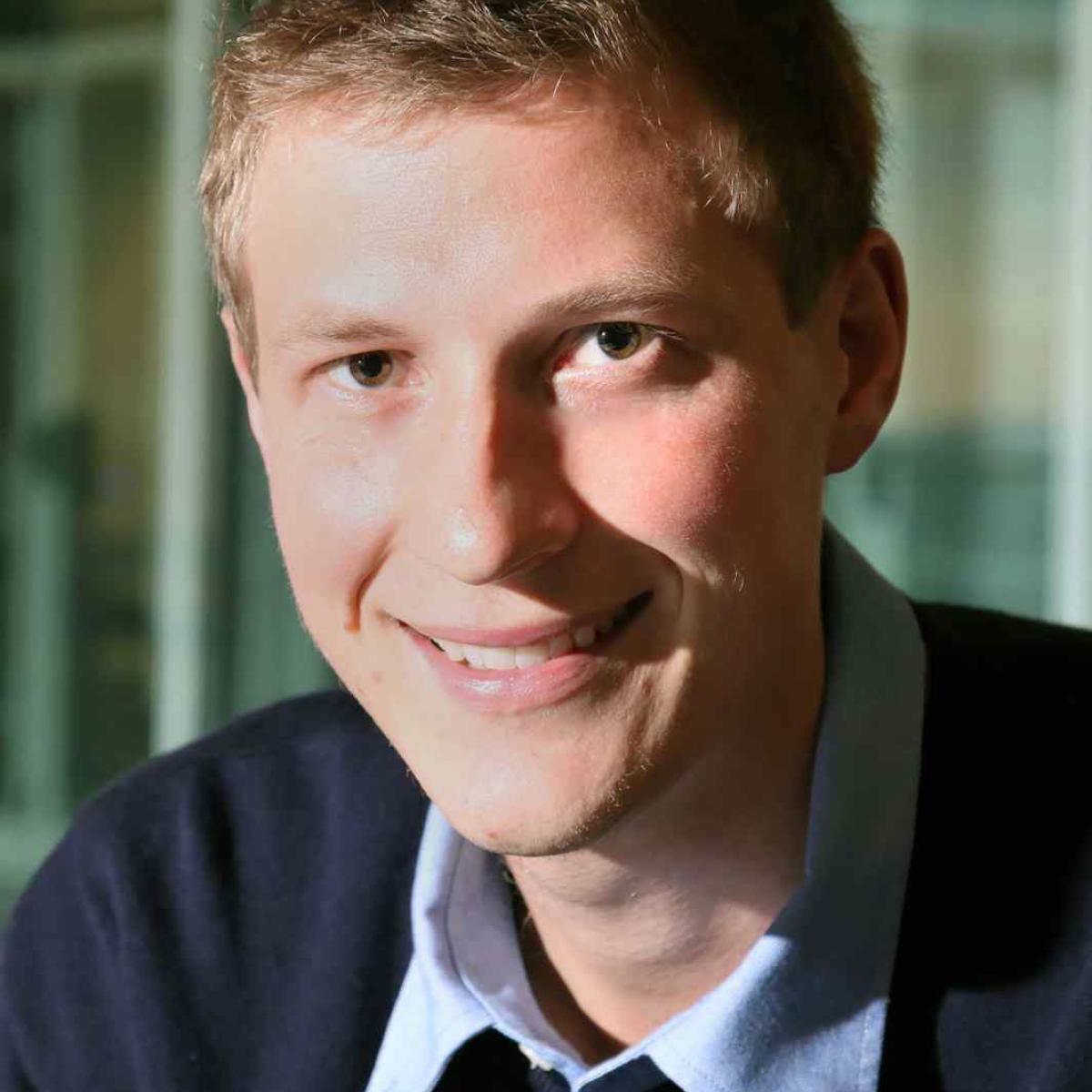
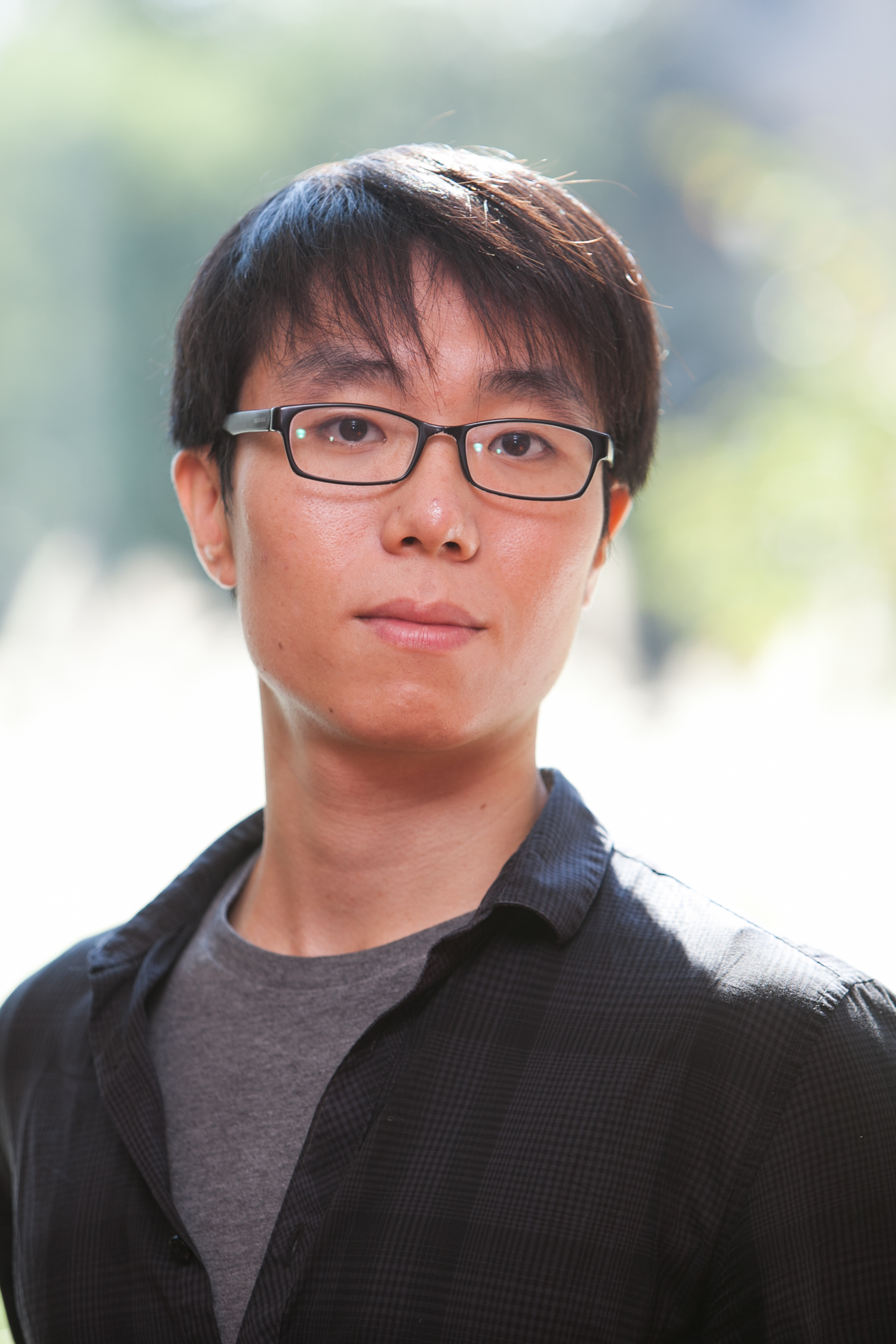
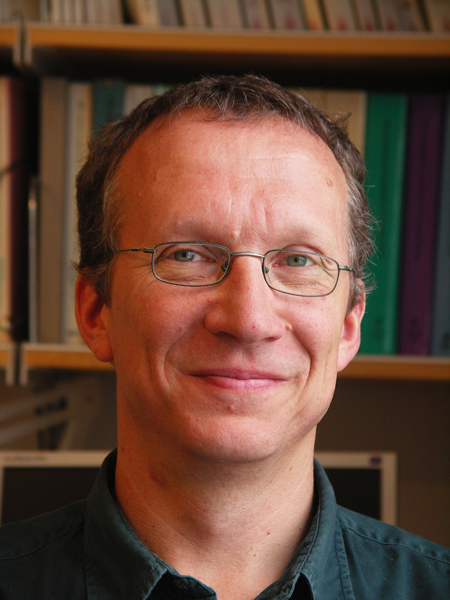
Ola Svensson is an Associate Professor at the School of Computer and Communication Sciences , EPFL. His research spans approximation algorithms, combinatorial optimization, computational complexity, and scheduling. He holds an ERC Consolidator Grant (2023–) and previously received an ERC Starting Grant (2014–2019) and SNF grant (2019–2023). Education: PhD in Computer Science from IDSIA, Università della Svizzera italiana (2009) M.Sc. from Uppsala University (2005) Research Focus: Svensson develops novel techniques for NP-hard problems, with emphasis on primal-dual methods, LP/SDP hierarchies, and hardness proofs. His work applies to clustering, scheduling, network design, and submodular optimization. Publications: His 15 most recent works (2018–2021) focus on learning-augmented algorithms, robust optimization, and improved approximations for clustering/TSP. Key trends include integration of ML with classical algorithms and quasi-polynomial methods for combinatorial problems. Awards: Best Paper Awards at FOCS (2011, 2017) and STOC (2018) I&C Teaching Award at EPFL Advising & Grants: He advises 6 current PhD students and graduated 8 others. Major grants include ERC Starting Grant 'OptApprox' (€1.4M) and ERC Consolidator Grant 'POTCO' (€2M). Teaching: Leads courses in Advanced Algorithms, Computational Complexity, and Approximation Algorithms. He developed pedagogical frameworks for scribe notes and project-based learning in theoretical computer science.
Euiwoong Lee is an Assistant Professor in the Computer Science and Engineering Division at the University of Michigan. He holds a PhD from Carnegie Mellon University, advised by Venkatesan Guruswami, and has held postdoctoral positions at New York University and the Simons Institute for the Theory of Computing. His research focuses on approximation algorithms, hardness of approximation, and parameterized complexity. **Education:** PhD in Computer Science, Carnegie Mellon University (2017), advised by Venkatesan Guruswami Postdoctoral Fellowships: NYU (2017–2020), Simons Institute (2017–2020) **Research Interests:** Approximation Algorithms & Hardness of Approximation Convex Hierarchies (e.g., Sum-of-Squares) Clustering Algorithms (e.g., Correlation Clustering) Parameterized Complexity Facility Location & Metric Optimization **Awards:** Edmund M. Clarke Doctoral Dissertation Award (2017) Simons Award for Graduate Students in Theoretical Computer Science **Advising & Grants:** PhD Students: Anthony Della Pella, Aditya Anand, Amatya Sharma, Ian DeHaan Co-organizes the Michigan Theory Seminar **Labs/Teams:** Collaborates with researchers in approximation algorithms, optimization, and theoretical computer science at the University of Michigan and beyond.
Venkatesan Guruswami is a Chancellor's Professor in the Department of EECS and a Senior Scientist at the Simons Institute for the Theory of Computing at UC Berkeley . He also holds a Professor position in the Department of Mathematics . His academic journey began with a B.Tech in Computer Science from the Indian Institute of Technology, Madras (1997) , followed by a Ph.D. in Computer Science from the Massachusetts Institute of Technology (2001) . After a Miller Research Fellowship at UC Berkeley (2001–02), he held faculty roles at the University of Washington and Carnegie Mellon University before returning to UC Berkeley in January 2022. Education : B.Tech, IIT Madras (1997) Ph.D., MIT (2001) Professional Affiliations : Chancellor's Professor, UC Berkeley (EECS) Senior Scientist & Interim Director, Simons Institute Professor, UC Berkeley (Mathematics) Guruswami's research spans multiple domains within Theoretical Computer Science , focusing on Error-Correcting Codes , Approximation Algorithms , Randomness in Computing , Probabilistically Checkable Proofs , and Computational Complexity . His groundbreaking work in List Decoding has enabled codes with minimal redundancy for correcting worst-case errors, while recent advancements include Polar Codes , Deletion-Correcting Codes , and Constraint Satisfaction Problems . He has also contributed to Quantum Coding Theory , Locally Recoverable Codes , and Approximation Hardness in various computational contexts. His publications reflect a deep engagement with interdisciplinary topics. Key trends include: Quantum Information Theory : Quantum LDPC codes, transversal gates, and quantum storage. Algebraic Coding : Reed-Solomon codes, AG codes, and polynomial-based constructions. Computational Complexity : Hardness of approximation, CSPs, and parameterized intractability. Data Transmission : Polar codes, deletion channels, and feedback mechanisms. Algorithmic Techniques : Spectral methods, semirandom models, and Lasserre hierarchy applications. Guruswami has received numerous accolades, including the Simons Investigator Award , Presburger Award , Packard Fellowship , Sloan Research Fellowship , ACM Doctoral Dissertation Award , and the IEEE Information Theory Society Paper Award . He is an ACM Fellow (2017) and IEEE Fellow (2019) , with recent honors like the Guggenheim Fellowship (2023) and AMS Fellow (2023) . As an advisor, he has mentored over 25 PhD and postdoctoral researchers , including Atri Rudra , Prasad Raghavendra , and Peter Manohar , whose work has won awards like the Edmund M. Clarke Doctoral Dissertation Award and CRA Outstanding Undergraduate Researcher Award . His research is supported by grants from the National Science Foundation , Packard Foundation , and Sloan Foundation . He also serves as Editor-in-Chief of the Journal of the ACM and holds leadership roles in IEEE and arXiv moderation. Guruswami is actively involved in Simons Institute programs and co-organized workshops on Coded Computation and Information Theory . His work bridges theoretical advancements with practical applications in Cloud Storage , Quantum Computing , and Group Testing , including pandemic-era contributions like AC-DC: Amplification Curve Diagnostics for SARS-CoV-2 .
Venkatesan Guruswami is a Chancellor's Professor in the Department of Electrical Engineering and Computer Sciences and Professor in the Department of Mathematics at the University of California, Berkeley. He previously served as faculty at Carnegie Mellon University for 13 years and held a Miller Research Fellowship at UC Berkeley. His research focuses on Theoretical Computer Science , particularly in Error-Correcting Codes , Approximation Algorithms , Quantum Computing , and Hardness of Approximation . Guruswami has made groundbreaking contributions to list decoding and quantum code constructions, with works featured in Science Magazine and the Journal of the ACM (where he serves as Editor-in-Chief). Education : B.Tech (1997, IIT Madras), Ph.D. (2001, MIT), Miller Research Fellowship (2001-02, UC Berkeley) Research Areas : Theory of error-correcting codes, approximation algorithms, pseudorandomness, probabilistically checkable proofs, and quantum coding theory Guruswami's recent work explores quantum LDPC codes , parameterized inapproximability , and stream decodable codes . He has received prestigious awards including the NSF CAREER award , David and Lucile Packard Fellowship , and Sloan Research Fellowship . His advising spans a wide range of students and postdocs, with notable contributions to coding theory and computational complexity .
Aviad Rubinstein is an Assistant Professor of Computer Science at Stanford University, specializing in theoretical computer science with a focus on algorithms, complexity, and game theory. He has taught courses such as Design and Analysis of Algorithms (CS161), Incentives in Computer Science (CS269i), and Topics in Intractability (CS354). His research interests include approximation algorithms, computational complexity, and fair division, with notable work on envy-free cake-cutting and prophet inequalities. He advises several PhD students including Joshua Brakensiek and Ruiquan Gao, and mentors postdocs like Soheil Behnezhad. His undergraduate mentoring includes students from Tsinghua and Berkeley. Rubinstein has received the Kalai Prize from the Game Theory Society and a FOCS Best Paper Award for his work on inapproximability of Nash equilibria. Rubinstein co-authored Algorithms for Toddlers with Mary Wootters, a book simplifying computational concepts for younger audiences. He also organizes workshops on topics like fine-grained complexity and early career mentoring in computer science. Beyond academia, he consults part-time for the blockchain startup Lava. His research frequently bridges theoretical foundations with practical implications, such as developing algorithms with real-world applications in auctions, mechanism design, and optimization under constraints.
John Wright is an Assistant Professor in the Department of Electrical Engineering and Computer Sciences at the University of California, Berkeley. His research centers on theoretical computer science with a focus on quantum computing, specifically quantum state learning, quantum complexity theory, property testing, and approximation algorithms. He is affiliated with the Simons Institute for the Theory of Computing. Education includes a Ph.D. in Computer Science from Carnegie Mellon University (2016), advised by Ryan O'Donnell, and a B.Sc. in Computer Science from the University of Texas at Austin. Research interests span quantum complexity, interactive proofs (e.g., MIP* = RE), quantum algorithms, and foundational aspects of quantum computation. His work bridges computer science, physics, and mathematics, with emphasis on understanding computational limits through quantum paradigms. Publications primarily explore quantum complexity, algorithms, and verification, with recent trends including quantum cryptography, tomography, and hardness proofs. Articles frequently involve collaborations with researchers like Thomas Vidick, Henry Yuen, and Ryan O'Donnell. Awards include the IEEE CS TCPAMI Young Researcher Award (2015). Teaching covers graduate and undergraduate courses such as CS 170 (Efficient Algorithms and Intractable Problems) and CS 294 (Quantum Complexity Theory). He advises students in quantum computing research and collaborates extensively across institutions. Labs/teams include the Quantum Computing group at UC Berkeley, with ties to the Simons Institute. Research support is managed by Amy Frithsen.
Johan Håstad is a Full Professor in the Department of Computer Science at the Royal Institute of Technology (KTH), Sweden, since 1992. Previously, he held academic positions at KTH and the Massachusetts Institute of Technology (MIT) as a Postdoctoral Fellow (1986-1987). His work lies at the intersection of theoretical computer science and mathematics, with foundational contributions to computational complexity theory, cryptography, and approximation algorithms. Ph.D. in Mathematics from MIT (1986) Member of the Royal Swedish Academy of Sciences (2001) Knuth Prize laureate (2018) for breakthroughs in optimization, cryptography, parallel computing, and complexity theory Research Focus: Johan Håstad's research has fundamentally shaped computational complexity theory, particularly in understanding the limits of efficient computation and approximation. His work on probabilistically checkable proofs (PCPs) and hardness of approximation has had a profound impact on theoretical computer science, influencing areas like cryptography and parallel computing. He is known for developing Håstad's switching lemma and establishing strong inapproximability results for NP-hard problems. Scientific Recognition: ACM Doctoral Dissertation Award (1986) Gödel Prize (1994, 2011) Chester Carlson Research Prize (1990) Göran Gustafsson Prize (1999) Knuth Prize (2018)
Caterina VIOLA is a theoretical computer scientist and mathematician currently serving as a Fixed-term Assistant Professor (RTDA) at the Department of Mathematics and Computer Science of the University of Catania . Her research focuses on quantum algorithms for text processing, computational complexity, and constraint satisfaction problems within the National Center for HPC, Big Data and Quantum Computing project. Education: Master's in Mathematics from University of Catania (Erasmus exchange at Universidad de Granada); Doctor rerum naturalium in Mathematics from Technische Universitaet Dresden Her research bridges theoretical computer science and mathematics, with a particular emphasis on approximation algorithms, inapproximability, and numerical semigroups. She has previously worked at the University of Oxford as a post-doctoral researcher and tutor, followed by a post-doc position at Charles University in Prague. Recent publications highlight her work on linear programming relaxations for constraint satisfaction problems, submodular functions, and numerical semigroup analysis. Current teaching responsibilities include Laboratorio di Algoritmi for Computer Science undergraduates and Informatica for Communication Sciences and Languages students. As a Senior Associate Post-doctoral Researcher at Oxford and post-doc at Charles University in Prague, she has developed expertise in mathematical foundations of computational optimization and their practical implementations.
Professor Melanie Schmidt is a faculty member in the Department of Computer Science at Heinrich-Heine-Universität Düsseldorf, where she leads the Algorithms and Data Structures research group. Previously, she was affiliated with the University of Bonn's Institute of Computer Science, where she completed her PhD under Prof. Dr. Heiko Röglin and headed a subgroup on "clustering for big data" within his research group. Current Position: Professor at Heinrich-Heine-Universität Düsseldorf Previous Position: Researcher and lecturer at University of Bonn PhD Advisor: Prof. Dr. Heiko Röglin Her research focuses on geometric data analysis, particularly k-means clustering in data streams, combinatorial optimization, and approximation algorithms. Her work bridges theoretical computer science with practical applications in big data processing. She has made significant contributions to understanding the theoretical foundations of clustering algorithms while developing efficient implementations for real-world applications. Professor Schmidt's publication record shows a consistent evolution from theoretical analysis of k-means to practical implementations for big data environments. Her recent work explores fairness in clustering, privacy-preserving techniques, and efficient algorithms for high-dimensional data. She has published in top-tier conferences including SODA, ICALP, ESA, and ITCS, demonstrating both theoretical rigor and practical relevance. Best Student Paper Award at ESA 2012 (joint work with Martin Groß, Jan-Philipp W. Kappmeier, and Daniel Schmidt) She actively supervises numerous Master's and Bachelor's students, with current advisees including Lena Carta, Lukas Drexler, and Anna Arutyunova. Her research group includes members such as Anja Rey, Julian Wargalla, and Annika Hennes. She teaches advanced courses in algorithms and data structures, with a focus on randomized algorithms and efficient algorithm design for big data problems. Professor Schmidt leads the Algorithms and Data Structures research group at Heinrich-Heine-Universität Düsseldorf, which focuses on developing and analyzing efficient algorithms for fundamental computational problems, with particular emphasis on clustering, geometric data analysis, and big data applications.
Johan Håstad is a Professor at the Department of Mathematics, School of Engineering Sciences, KTH Royal Institute of Technology. His research focuses on theoretical computer science, particularly algorithms, computational complexity, approximation algorithms, and cryptography. He is funded by the Knut and Alice Wallenberg Foundation through project grants and the Wallenberg AI, Autonomous Systems and Software Program (WASP). External Funding: Knut and Alice Wallenberg Foundation, WASP Editorial Roles: Theory of Computing, TheoretiCS Professional Activities: Cyber Defense Center, Royal Swedish Academy of Sciences (former chairman) Research Interests : • Algorithms and Complexity • Circuit Complexity • Approximation Algorithms • Quantum Computing and Cryptography Scientific Awards : Knut and Alice Wallenberg Foundation Support Labs and Teams : • Involved in KTH's Cyber Defense Center • Editor for key journals in theoretical computer science
Argyrios Deligkas serves as a Senior Lecturer in the Department of Computer Science at Royal Holloway, University of London, where he is affiliated with both the Centre for Intelligent Systems and the Centre for Reliable Machine Learning. His research profile highlights extensive contributions to theoretical computer science with practical economic applications, maintaining active collaboration networks across international institutions. His core research focuses on Algorithmic Game Theory and Mechanism Design , particularly examining computational aspects of equilibrium concepts, fair division protocols, and complexity barriers in multi-agent systems. Recent work investigates the PPA complexity class's limitations, envy-free allocation criteria (EF1/EFX), and strategic behavior in facility location games, demonstrating how theoretical computer science frameworks can resolve economic modeling challenges. Analysis of his 2024-2025 publications reveals a concentrated effort on computational hardness in fair division (e.g., pizza-sharing problems) and equilibrium approximation, with methodologies spanning combinatorial optimization, randomized algorithms, and complexity theory. These works consistently bridge theoretical guarantees with real-world applicability in resource allocation systems. As Principal Investigator for the EPSRC-funded NAfANE project (2024-2026), he leads research into novel approximation techniques for Nash equilibria. While specific advisees aren't listed in the source material, his senior lecturer role implies active supervision of postgraduate researchers within Royal Holloway's computer science ecosystem. His institutional affiliations with the Centre for Intelligent Systems and Centre for Reliable Machine Learning position him at the forefront of trustworthy AI development, where theoretical foundations directly inform robust machine learning system design.
Ashutosh Rai is an Assistant Professor in the Department of Mathematics at the Indian Institute of Technology Delhi (IIT Delhi). He previously served as an Assistant Professor in the Computer Science Department at IIIT Delhi. His academic journey includes postdoctoral research at Charles University in Prague and the Hong Kong Polytechnic University. He completed his PhD and Master’s at the Institute of Mathematical Sciences (IMSc), Chennai, under the supervision of Prof. Saket Saurabh and Prof. Venkatesh Raman. His research focuses on Theoretical Computer Science, especially parameterized algorithms, fixed-parameter tractability, kernelization, and the complexity of NP-complete problems. His work bridges classical and parameterized complexity, exploring hardness and algorithmic solutions. The 15 most recent publications highlight consistent contributions to parameterized complexity, graph editing, coloring, and optimization problems. His research spans journals like Algorithmica , SIAM Journal on Discrete Mathematics , and Theoretical Computer Science , and top conferences including ICALP, IPEC, ESA, and MFCS. Key themes include kernelization, approximation in parameterized settings, and structural graph problems. He has taught courses such as Analysis and Design of Algorithms, Theory of Computation, Parameterized Algorithms, Operating Systems, and Combinatorics at IIT Delhi, IIIT Delhi, and Charles University. He has also mentored students and collaborated extensively with leading researchers in the field. Email: ashutosh.rai@maths.iitd.ac.in
Per Austrin is a Lecturer at the Royal Institute of Technology (KTH) in the Department of Theoretical Computer Science. He has been actively involved in teaching courses such as Algorithms and Complexity (DD2352) , Advanced Algorithms (DD2440) , and Problem Solving and Programming Under Pressure (DD2458) , serving as examiner and course coordinator for several programs. His research focuses on the foundations of computational complexity, approximation algorithms, and cryptographic barriers. Key areas include hardness of approximation for constraint satisfaction problems (CSPs), combinatorial optimization, and theoretical limits in cryptography and coding theory. His work often intersects with probabilistic methods and quantum computing challenges. Recent publications highlight his contributions to understanding lower bounds in optimization problems, inapproximability thresholds, and complexity in structured combinatorial problems. Detailed information about his work can be found on his personal website: Per Austrin's Website .
Themistoklis Melissourgos is a Lecturer (Assistant Professor) in the School of Computer Science and Electronic Engineering at the University of Essex. He is a member of the Artificial Intelligence research group and the Centre for Computational Finance and Economic Agents. Prior to joining Essex, he held postdoctoral positions at TU Munich in the Operations Research group under Prof. Andreas S. Schulz, and at the University of Liverpool. PhD in Computer Science, University of Liverpool (supervised by Prof. Paul Spirakis) BSc in Electrical and Computer Engineering, University of Patras His research lies at the intersection of Theoretical Computer Science and Economics , with a primary focus on Algorithmic Game Theory and Computational Social Choice . He investigates the computational complexity of problems in these domains and develops exact and approximation algorithms. His work often addresses fundamental questions in market equilibria, fair division, and strategic computation. The recent publications of Dr. Melissourgos span top-tier conferences such as FOCS , STOC , ICALP , AAAI , and AAMAS . A clear trend in his work is the establishment of strong inapproximability results for problems in computational economics and game theory, particularly within complexity classes like PPAD and PPA. His research on the Pure-Circuit problem and consensus halving has provided foundational hardness results. He also explores applications in computational finance, such as optimizing trading strategies with genetic algorithms. Scientific Service: Program Committees: AAMAS 2025, ECAI 2024/2025, SAGT 2022/2023/2025, IJCAI 2021-2024, AAAI 2020/2023-2025 Reviewer: For numerous top conferences (STOC, FOCS, SODA, etc.) and journals (JACM, SICOMP, etc.) Organizing: SAGT 2016, MFCS 2018; Co-organized seminars on Complexity of Total Search Problems and Fair Division at TU Munich Dr. Melissourgos has an active teaching record, having served as a Teaching Assistant and Instructor at the University of Liverpool for courses in algorithms, AI, and computational game theory. At the University of Essex, he is a Module Supervisor for courses in quantitative finance and financial engineering. He has not been awarded any specific scientific prizes mentioned in the text, and there is no information about research grants. He has not published a list of advisees, suggesting he may be early in his faculty career. He is actively involved in his research community and contributes significantly to the academic service of his field.
Hairong (Helen) Zhao is a full-time Professor of Computer Science and Graduate Advisor at Purdue University Northwest's Department of Computer Science. Her research focuses on using interdisciplinary methods from computer science, mathematics, and statistics to solve complex decision-making problems in areas such as resource allocation, manufacturing, and production scheduling. She holds a Ph.D. in Computer Science from New Jersey Institute of Technology, an M.S. from Beijing University of Posts and Telecommunications, and a B.S. from Taiyuan University of Technology. Research Interests: Dr. Zhao specializes in Combinatorial Optimization, Sequence and Scheduling, Operations Research, and Algorithm Design. Her work bridges theoretical foundations with practical applications, addressing challenges in scheduling algorithms, approximation methods, and computational complexity. Publications Overview: Her recent publications span journals like Omega, European Journal of Operational Research, and IEEE Transactions on Computers, reflecting her expertise in scheduling optimization, machine availability constraints, and fault-tolerant systems. Her work also includes contributions to real-time scheduling and industrial process optimization in sectors like steel manufacturing. Contact: hairong@pnw.edu | Hammond Campus, CLO 366