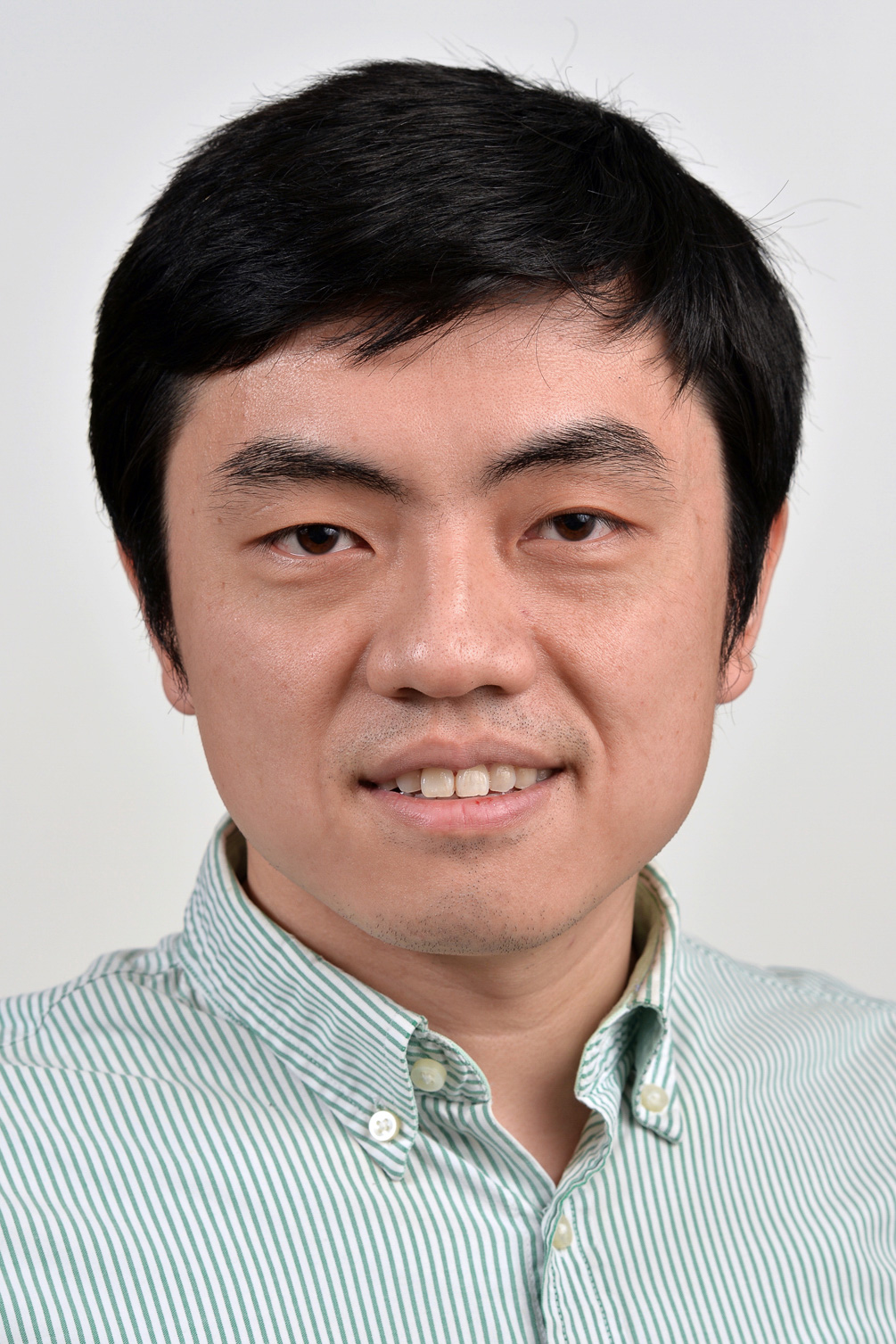
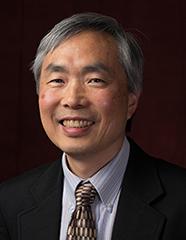
Andreas Emil Feldmann is a Senior Lecturer at the Department of Computer Science, University of Sheffield (United Kingdom) since 2023. Previously, he served as Associate Professor (2015-2023) and Assistant Professor (until 2022) at the Department of Applied Mathematics (KAM) at Charles University in Prague, Czechia. His academic journey includes postdoctoral positions at SZTAKI (Hungarian Academy of Sciences, 2015-2016) and the University of Waterloo (2012-2015), and doctoral studies at ETH Zurich (2008-2012). He holds a diploma from RWTH Aachen (2000-2008) and participated in an Erasmus program at Chalmers University (2004-2005). His research focuses on parameterized and approximation algorithms, with contributions to combinatorial optimization and graph theory. He has organized major workshops such as the Parameterized Approximation Algorithms Workshop (PAAW) in 2019 and 2022, and serves on program committees for conferences like ICALP, IPEC, and WAOA. Notably, he received a teaching excellence award from Charles University in 2022. Feldmann is deeply involved in advancing algorithmic theory, particularly at the intersection of approximation and parameterized complexity. His recent work includes talks on bidirected Steiner networks and inapproximability results for k-center problems. He actively contributes to the academic community through organizing events and peer-review roles.
Silvia Butti is a Senior Research Associate in the Department of Computer Science at the University of Oxford, where she also holds a Junior Research Fellowship at Lady Margaret Hall. She specializes in theoretical computer science, focusing on constraint satisfaction problems (CSPs), algebraic methods, approximation algorithms, and computational complexity. Her research bridges theoretical foundations with applications in distributed computing and combinatorial optimization. She earned her PhD from Universitat Pompeu Fabra (Barcelona, Spain) in 2022, supervised by Victor Dalmau, and holds an MSc in Mathematics and Foundations of Computer Science from the University of Oxford (2018) and a BSc in Mathematics from University College London (2017). Her academic journey is supported by prestigious fellowships, including the INPhINIT “la Caixa” and Marie Skłodowska-Curie Actions. Her research interests include the algebraic analysis of CSPs, inapproximability, and the interplay between hierarchies like Sherali-Adams and Weisfeiler-Leman invariants. She actively contributes to conferences such as LICS, MFCS, and CP, and has published extensively on topics ranging from promise problems to distributed algorithms. Dr. Butti teaches courses on computational complexity, combinatorial optimization, and probability and computing at the University of Oxford. She is committed to science communication, engaging with outreach initiatives like Maths Fest, the Royal Institution Masterclasses, and the UNIQ Summer School. Her work is funded by the UKRI-ERC grant NAASP, focusing on new approaches to approximability of satisfiable problems.
Parinya Chalermsook is a Professor of Algorithms at the University of Sheffield, affiliated with the Foundations of Computation Group in the Department of Computer Science, Faculty of Engineering. He also holds a visiting associate professor position at Aalto University, Finland. His research focuses on theoretical computer science, particularly the interplay between algorithms and mathematical optimization, with strong interests in extremal combinatorics and their applications in TCS. His work spans parameterized complexity, approximation algorithms, computational complexity, and discrete optimization. The recent articles and talks highlight a strong trend in fine-grained and parameterized computational geometry, graph algorithms, and the synergy between continuous and discrete optimization. His research is deeply theoretical, often bridging mathematical disciplines with algorithmic challenges. Simons-Berkeley Research Fellowship (2017) ERC Starting Grant (~1.4M Euro, 2017–2024) Academy of Finland Research Fellowship (~900K EUR, 2017–2022) He has supervised numerous PhD students and hosted postdoctoral fellows, fostering a vibrant research group. His research has been supported by major grants from the European Research Council and the Academy of Finland. He actively contributes to the academic community through program committees (e.g., STOC, SODA, ICALP) and organizing workshops at Dagstuhl and Hausdorff Institute. He is a key member of the Foundations of Computation Group at Sheffield and has previously contributed to the TCS communities at Aalto University and Max Planck Institute for Informatics.
Heng Guo is an Associate Professor in Algorithms and Complexity at the School of Informatics, University of Edinburgh. He leads the ERC starting grant project New Approaches to Counting and Sampling (NACS), which runs from 2021 to 2026. Previously, he has worked and studied at Berkeley, London, Madison, and Beijing. His research lies at the intersection of theoretical computer science, combinatorics, and statistical physics. Guo's research focuses on algorithms from a complexity perspective, particularly computational counting and sampling. He is renowned for his work on the Lovász local lemma, Markov chain Monte Carlo methods, phase transitions in computational complexity, and complexity classifications. His approach often involves discovering unseen links between different areas of theoretical computer science. Key contributions include confirming a conjecture of Gorodezky and Pak through partial rejection sampling, establishing rapid mixing for Swendsen-Wang dynamics, and developing a polynomial-time approximation algorithm for all-terminal network reliability. His publication record shows a strong trajectory of impactful research in top venues including FOCS, STOC, SODA, J. ACM, and SIAM Journal on Computing. His work on the all-terminal network reliability problem won the Best Paper Award at ICALP 2018. Guo has organized several significant workshops including JerrumFest 2025, MCMC 2.0 (Shonan seminar), and a STOC 2020 workshop on new frontiers of approximate counting. These events highlight his leadership role in the theoretical computer science community. Best Paper Award at ICALP 2018 EATCS Distinguished Dissertation Award 2016 Guo has advised several PhD students including Giorgos Mousa, Jiaheng Wang, and Graham Freifeld, and mentored postdocs such as Weiming Feng, Vishvajeet Nagargoje, and Konrad Anand. His ERC grant supports multiple research associates working on counting and sampling problems. He has taught courses including Computational Complexity, Randomness and Computation, and Algorithmic Game Theory at the University of Edinburgh.
Dr. Miroslav Chlebik is an Associate Professor in Mathematics at the School of Mathematical and Physical Sciences , University of Sussex, UK, since August 2007. He previously held positions as a Research Associate at the Max Planck Institute for Mathematics in the Sciences (2001–2007) and as a Lecturer in Mathematics at Comenius University, Bratislava (1988–2001). His academic credentials include a PhD in Mathematics (CSc) from the Academy of Sciences, Prague, and a RNDr degree in Mathematics from Charles University, Prague. PhD in Mathematics (CSc), Academy of Sciences, Prague RNDr in Mathematics, Charles University, Prague Miroslav Chlebik's research spans nonlinear partial differential equations , calculus of variations , and geometric measure theory , with significant contributions to combinatorial optimization and computational complexity . His work includes rigorous analysis of blow-up phenomena in PDEs and foundational studies on the inapproximability of NP-hard problems like the Travelling Salesman Problem and Steiner Tree Problem . His 15 most recent publications (2023–2012) demonstrate two major research threads: (1) Blow-up analysis in parabolic equations , focusing on rate estimates and boundary condition effects, and (2) Approximation hardness in combinatorial optimization, particularly through weighted amplifiers and graph theory. These works were published in journals such as Nonlinear Analysis: Theory, Methods and Applications , Theoretical Computer Science , and Journal of Combinatorial Optimization . Professional activities include: External REF Assessor for Swansea University (2023–2027) in Analysis and PDEs Editorial Board Member of Acta Mathematica Universitatis Comenianae since 1992 His teaching interests include Topology and Advanced Analysis (Autumn term) and Dynamical Systems (Spring term), reflecting his analytical expertise.
Dr John Fearnley serves as a Lecturer in the Department of Computer Science within the School of Engineering and Physical Sciences. He actively coordinates undergraduate modules including Automated Trading Project (COMP396) and Programming Language Paradigms (COMP105) , demonstrating core teaching responsibilities in theoretical computer science. His research focuses on Algorithmic Game Theory, Verification, and Computational Complexity , with particular emphasis on equilibrium computation, fixed-point problems, and complexity barriers in economic models. Recent work investigates inapproximability results for PPAD/PPA complexity classes and structural properties of monotone contractions. Analysis of his 2024-2025 publications reveals consistent exploration of computational boundaries in game-theoretic models, with co-authored works appearing in premier venues like STOC and SIAM Journal on Computing. Key themes include tight inapproximability for market equilibria, structural analysis of linear complementarity problems, and complexity-theoretic barriers in fixed-point computation. ENGINEERING & PHYSICAL SCIENCES RESEARCH COUNCIL: New Techniques for Resolving Boundary Problems in Total Search (Jan 2023 - Dec 2025) ENGINEERING & PHYSICAL SCIENCES RESEARCH COUNCIL: Solving Parity Games in Theory and Practice (Aug 2017 - Sep 2021) Dr Fearnley supervises advanced research projects including doctoral theses on optimization strategies for materials discovery experiments, while maintaining active collaborations with leading researchers in computational economics and theoretical computer science.
Vijay Bhattiprolu serves as an Assistant Professor in the Department of Combinatorics & Optimization at the University of Waterloo, where his research bridges theoretical computer science and advanced mathematical disciplines. His work focuses on fundamental questions in computational complexity and optimization theory, with significant implications for algorithm design and analysis. Dr. Bhattiprolu's academic journey includes a Ph.D. from Carnegie Mellon University (2019) under Venkat Guruswami, a postdoctoral fellowship at Princeton University and the Institute for Advanced Study (2019-2022) as part of the Simons Collaboration on Algorithms and Geometry, and undergraduate studies at the University of Illinois at Urbana-Champaign (2014) with research mentorship from Sariel Har-Peled and Mahesh Viswanathan. Ph.D. in Computer Science, Carnegie Mellon University (2014-2019) Postdoc, Princeton University / Institute for Advanced Study (2019-2022) B.Sc., University of Illinois at Urbana-Champaign (2011-2014) His research program centers on approximation algorithms, hardness of approximation, and their deep connections to functional analysis and convex geometry. Key themes include polynomial maximization over convex sets, spectral theory, asymptotic convex geometry, and sum of squares methods, with applications to fundamental optimization problems. This interdisciplinary approach leverages mathematical tools to establish tight bounds on computational efficiency and develop novel algorithmic frameworks. Dr. Bhattiprolu's publication record reveals consistent contributions to theoretical foundations of optimization, particularly in matrix norm approximation, quadratic form maximization, and geometric methods in algorithm design. His work frequently appears in premier venues including STOC, FOCS, and SICOMP, demonstrating sustained impact on understanding computational limits and advancing approximation techniques. He currently mentors three graduate students: Yang Xiao (Ph.D., co-advised with Chaitanya Swamy), Jacob Skitsko (Ph.D., co-advised with Kostya Pashkovich), and Martin Liu (Masters). His teaching portfolio includes advanced courses in approximation algorithms (CO759) and core optimization theory (CO250, CO370), reflecting his commitment to training the next generation of theoretical computer scientists.
Yoshio Okamoto is a Professor at the Department of Computer and Network Engineering, Graduate School of Informatics and Engineering, at The University of Electro-Communications in Tokyo, Japan. He has held this position since April 2017, after serving as an Associate Professor at the same institution from April 2012 to March 2017. Prior to his appointment at the University of Electro-Communications, he held academic positions at Tokyo Institute of Technology, Japan Advanced Institute of Science and Technology, and Toyohashi University of Technology. His educational background includes: Bachelor of Systems Science from The University of Tokyo (1999) Master of Systems Science from The University of Tokyo (2001) Doctor of Theoretical Science from ETH Zurich (2005) Professor Okamoto's research spans several interconnected areas in theoretical computer science and discrete mathematics. His primary interests include Discrete and Computational Geometry, Graph Algorithms, Combinatorial Optimization and Polyhedral Combinatorics, Discrete Mathematics and Combinatorics, and Game Theory. His work often explores the interplay between these fields, developing theoretical foundations with practical algorithmic implications. He has made significant contributions to understanding the structural properties of geometric and combinatorial objects, as well as designing efficient algorithms for related problems. His recent publications demonstrate a continued focus on fundamental problems in discrete mathematics and theoretical computer science, with increasing applications in quantum computing, fair division, and reconfiguration problems. His work often appears in top-tier journals such as ACM Transactions on Algorithms, Algorithmica, and Theoretical Computer Science, reflecting his standing in the theoretical computer science community. Professor Okamoto has received several prestigious awards recognizing his contributions to the field: IPSJ-CS Outstanding Achievement and Contribution Award (January 2024) Research Award from The Operations Research Society of Japan (September 2020) Best Review Paper Award (with colleagues) from Japan Society for Software and Technology (September 2014) Research Encourage Award from The Operations Research Society of Japan (September 2012) 8th EATCS/LA Presentation Award (February 2010) Editors' Choice 2003 from Discrete Applied Mathematics (September 2004) As an educator, Professor Okamoto has taught numerous courses at The University of Electro-Communications since 2012, including Discrete Mathematics, Graphs and Networks, Discrete Mathematical Engineering, and Foundations of Discrete Optimization. He has served as an editor for multiple prestigious journals including Graphs and Combinatorics (Managing Editor since 2020), Acta Informatica, Journal of Computational Geometry, and Journal of Graph Algorithms and Applications. His extensive service on program committees for major conferences in theoretical computer science demonstrates his active engagement with the research community. Professor Okamoto leads a research laboratory at The University of Electro-Communications, where his team explores fundamental questions in discrete mathematics and theoretical computer science. The lab maintains strong connections with researchers worldwide, as evidenced by his numerous international collaborations. His research has been supported through various channels, including Japan Society for the Promotion of Science grants, and he has served as a reviewer for international funding agencies including the Swiss National Science Foundation and The Netherlands Organization for Scientific Research.
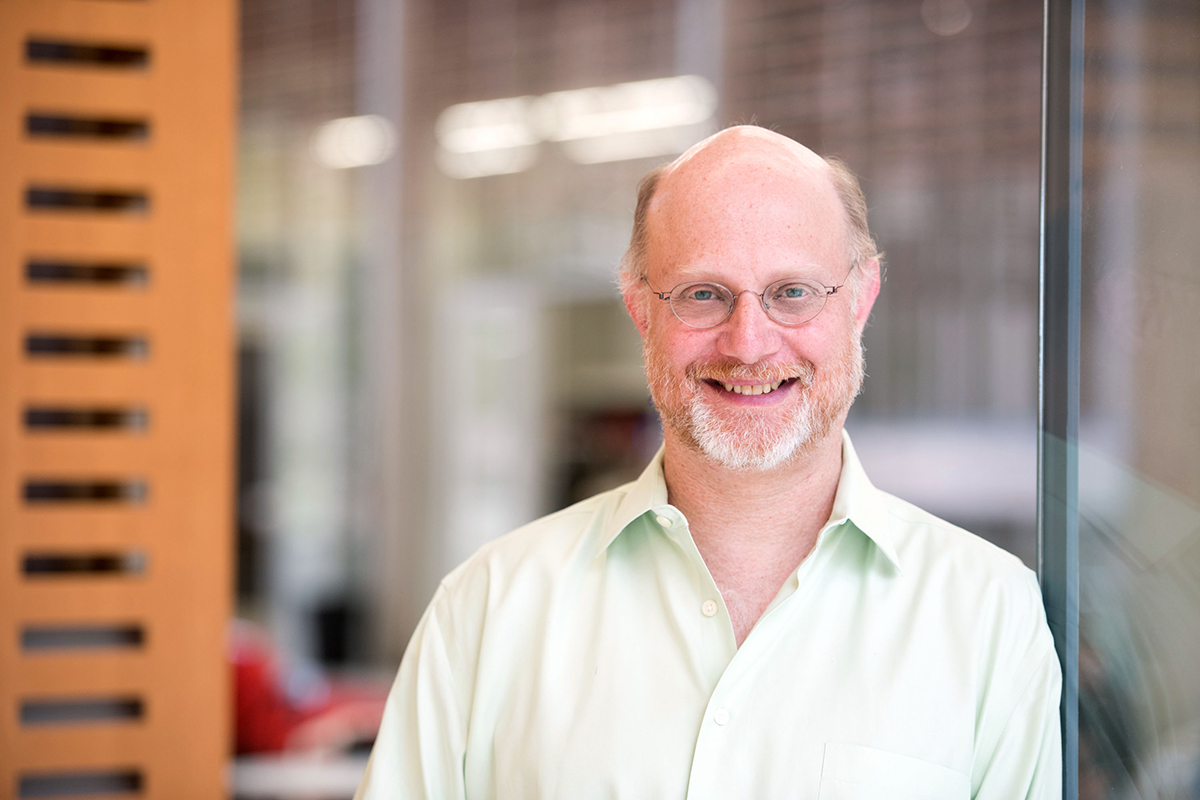
David Zuckerman is a Professor in the Department of Computer Science at the University of Texas at Austin, holding an Endowed Professorship. He earned an A.B. in Mathematics from Harvard University (1987) and a Ph.D. in Computer Science from UC Berkeley (1991). His research focuses on pseudorandomness, computational complexity, and their applications, particularly randomness extractors. He has held postdoctoral positions at MIT, Hebrew University, and visiting roles at institutions like the Institute for Advanced Study. His major awards include the 2025 Gödel Prize and the 2024 National Academy of Sciences Michael and Sheila Held Prize for his groundbreaking work on two-source extractors. He has advised numerous students, including Eshan Chattopadhyay, Raghu Meka, and Abhishek Bhowmick, who have achieved notable academic and industry roles. Zuckerman’s research explores the role of randomness in computing, with contributions to coding theory, cryptography, and distributed computing. His work on two-source extractors solved a long-standing open problem, enhancing both theoretical computer science and Ramsey Theory. He has also contributed to practical applications like pseudorandom generators and robust randomized algorithms. Current students include Gautam Chandrasekaran, Michael Jaber, and Vinayak Kumar. His career includes organizing major workshops like DavidFest (2025) and lecturing globally on topics like spectral graph theory and pseudorandomness. Key contributions span over 30 years, with impactful papers in STOC, FOCS, and the Annals of Mathematics.
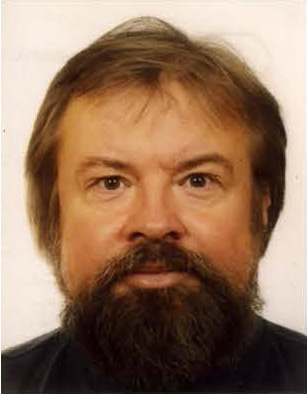
Marek M. Karpinski is a Chair Professor of Computer Science at the University of Bonn and a founding member of the Hausdorff Center for Mathematics . He has held visiting or professorial positions at institutions such as Princeton University, Carnegie-Mellon University, and the University of Edinburgh. His affiliations also include the B-IT Research School on Applied Informatics and the Lab for Foundations of Computing . His research spans efficient algorithms , combinatorial optimization , computational complexity , randomized approximation techniques , and applications in network design , quantum computation , and molecular biology . Recent work focuses on approximation hardness for NP-hard problems, graph algorithms , and algebraic computational complexity . His scientific contributions include polynomial time approximation schemes for dense NP-hard problems and key publications in randomized algorithms , VC dimension , and network optimization . He has advised numerous researchers and received honors such as the Humboldt Research Award and the Max Planck Research Prize .
Janka Chlebikova is a Senior Lecturer and Associate Head (Partnerships) in the School of Computing at the University of Portsmouth. She holds a PhD from Comenius University in Bratislava, where she also served as an Associate Professor. Previously, she conducted research at Christian-Albrechts-Universität zu Kiel and collaborated with institutions like the University of Copenhagen and Université Paris Dauphine. Her primary research interests include combinatorial optimization (focusing on approximation algorithms and hardness), graph theory, and educational software for discrete mathematics. Her work spans theoretical contributions to algorithm design, particularly in scheduling, vehicle routing, and graph partitioning problems. Notable projects include studies on anonymization in social networks and approximation hardness of NP-hard problems. She is affiliated with the Portsmouth AI and Data Science Centre, reflecting her interdisciplinary approach to computational challenges. Key research areas include the Travelling Salesman Problem, Dial-A-Ride scheduling, and structural graph analysis. Her publications address inapproximability results, optimization under constraints, and graph-theoretic applications in social networks. Chlebikova actively supervises PhD students and contributes to advancing educational tools in discrete mathematics.
Marc-Antoine Weisser is a researcher with a focus on network optimization, algorithm design, and graph theory. His work spans telecommunications, electrical networks, and computational complexity. He has contributed to studies on inter-domain network hierarchies, optical network optimization, and combinatorial problems such as Steiner trees and bin packing. Weisser's research often involves developing polynomial and approximation algorithms for real-world network challenges. Key research areas: Network topology analysis, algorithmic design for resource allocation, and optimization in electrical/optical networks His publications highlight contributions to congestion avoidance mechanisms, optical ring networks, and inter-domain routing architectures. Weisser collaborates frequently with institutions like the University of ... [university name missing in source text].
Jin-Yi Cai is a Professor in the Computer Sciences Department at the University of Wisconsin - Madison. He holds the Rajiv & Ritu Batra Chair in Computer Science and has authored over 100 research papers. His academic journey includes a Ph.D. from Cornell University in 1986 and faculty positions at Yale, Princeton, and SUNY Buffalo. Education: Fudan University (class of 77), Cornell University (Ph.D., 1986) Previous Institutions: Yale University (1986-1989), Princeton University (1989-1993), SUNY Buffalo (1993-2000) His research focuses on computational complexity theory, algorithms, and theoretical computer science. He has explored lattice problems, graph homomorphisms, and holographic algorithms. The 15 most recent publications highlight advancements in constraint satisfaction problems, planar graphs, and dichotomy theorems, reflecting his deep engagement with complexity classification. Scientific Awards: Presidential Young Investigator Award (1990) Alfred P. Sloan Fellowship (1994) Guggenheim Fellowship (1998) Morningside Silver Medal (2004) Humboldt Research Award ACM Fellow AAAS Fellow AMS Fellow Foreign Member of Academia Europaea Gödel Prize Fulkerson Prize He serves as Editor for several journals, including the Journal of Computer and Systems Sciences and Computational Complexity . His work bridges foundational theoretical research with practical algorithmic applications, influencing both academia and industry.
Amey Bhangale is an Assistant Professor in the Department of Computer Science and Engineering at the University of California, Riverside. Prior to this, he held positions as a post-doctoral fellow at the Weizmann Institute of Science under Irit Dinur and a research fellowship at the Simons Institute. His research focuses on Approximation Algorithms , Probabilistically Checkable Proofs , Hardness of Approximation , and Analysis of Boolean Functions . Research Trends His recent work explores inapproximability bounds for constraint satisfaction problems, parallel repetition theorems, and additive combinatorics in finite fields. Notable collaborations include Subhash Khot, Dor Minzer, and Yang P. Liu. Teaching CS219: Advanced Algorithms (2025) CS141: Intermediate Data Structures and Algorithms (2024) CS218: Design and Analysis of Algorithms (2023) CS215: Theory of Computations (2021-2023)