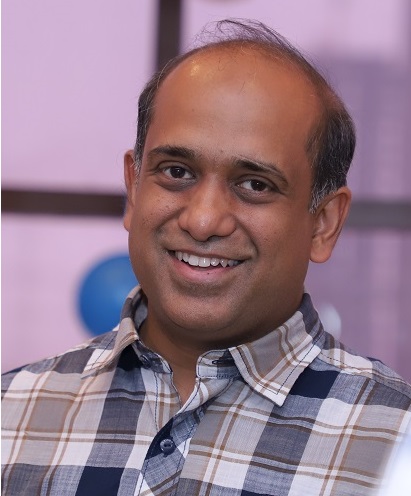
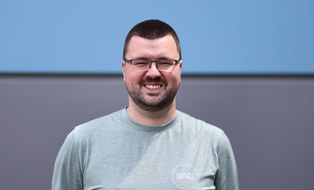
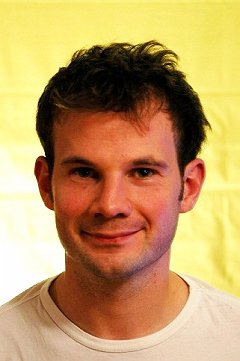
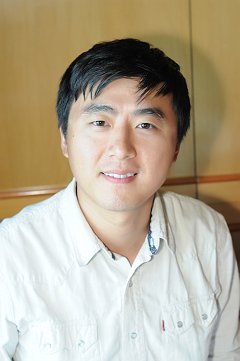
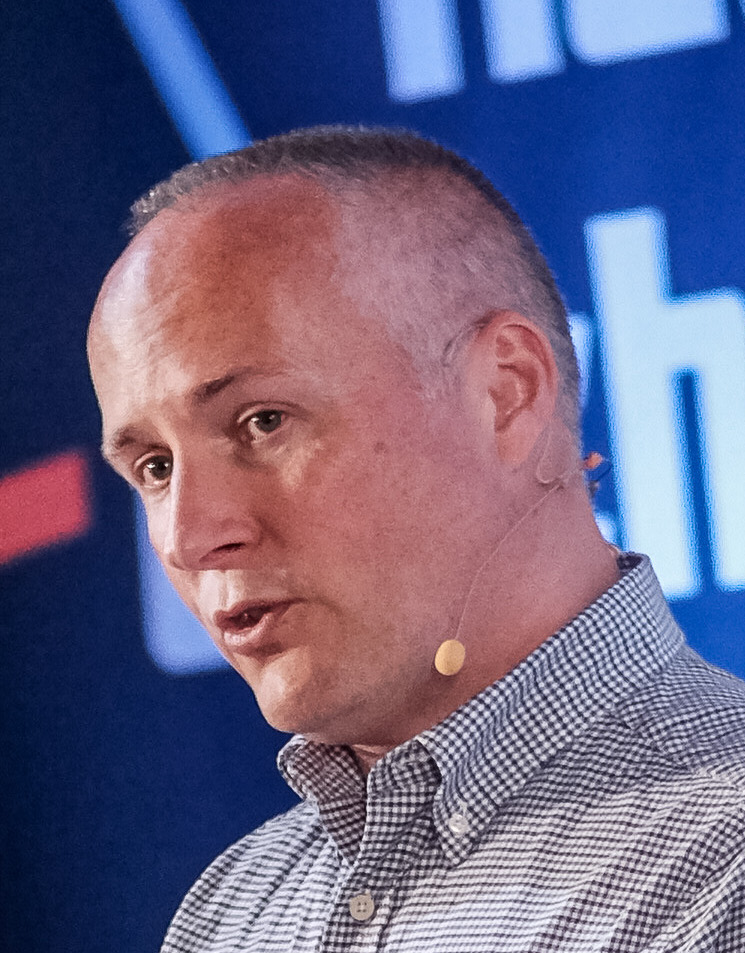
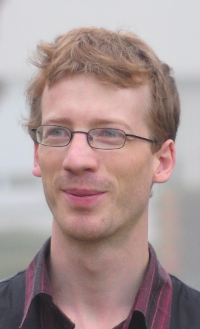
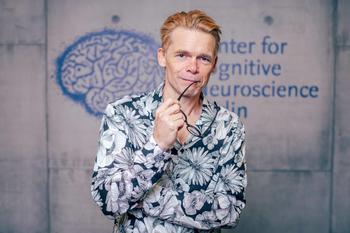
Sam Tobin-Hochstadt is an Assistant Professor at the School of Informatics & Computing, Indiana University, with a focus on programming languages and systems. He is affiliated with the Department of Computer Science and actively contributes to the Racket and JavaScript language ecosystems. Research: Design and implementation of programming systems, particularly languages enabling software evolution (e.g., Racket, Typed Racket, JavaScript). Teaching: Courses like C211, P632, and honors sections of CS 2510. Collaborations: Mozilla Research, Sun Labs Programming Language Research Group. His research spans gradual typing , DSL implementation , compiler design , and parallel programming , with recent work on build systems and probabilistic programming. While specific scientific awards aren't listed, his contributions to PLDI, POPL, and other program committees highlight his field prominence. He mentors Ph.D. students at Indiana University and has organized academic events like IFL 2014. Personal interests include Ultimate and outdoor activities, alongside his wife Katie Edmonds' post-doc work in chemistry.
Michalis Kokologiannakis is an assistant professor at ETH Zurich . He holds a PhD from Max Planck Institute for Software Systems (MPI-SWS) and an MEng from the National Technical University of Athens (NTUA) . His research focuses on programming languages , compilers , and software verification , particularly automated verification and testing of concurrent programming algorithms and weak memory models in modern microprocessors. Recent publications highlight advancements in model checking for weak memory models, dynamic partial order reduction , and stateless verification techniques applied to C/C++ programs and Linux kernel mechanisms like Read-Copy-Update (RCU).
Brooke Foucault Welles is a Professor of Communication Studies and the Senior Associate Dean for Research and Partnerships at Northeastern University's College of Arts, Media and Design. She founded the Communication, Media, and Marginalization (CoMMLab) and co-authored the award-winning book #HashtagActivism: Networks of Race and Gender Justice (MIT Press, 2020). Her research focuses on computational social science, digital activism, and communication power dynamics. PhD in Media, Technology and Society from Northwestern University MS and BS in Communication from Cornell University Her work examines: Network structures in social movements like #MeToo and #Ferguson Racial and gender justice in digital spaces Open source community leadership Health information diffusion Civic engagement in youth digital activism Recent publications address: Computational methods for analyzing social dynamics Political polarization in health discourse Harmful content detection models Information loss in communication networks Scientific recognition includes: Excellence in Teaching Award (2017) Best Paper Honorable Mention (CSCW 2019) Best Reviewer Award (ASIS&T 2023) Finalist, 2021 Research Prize in Public Interest Communications She mentors a diverse lab team and collaborates across disciplines to address: Structural inequities in digital platforms Community resilience through network analysis Open source software governance
Hugo Gimbert is a Researcher at the LaBRI (Laboratoire Bordelais de Recherche en Informatique) within the Méthodes Formelles Team . His work bridges computational theory and practical applications, focusing on algorithmic game theory, stochastic processes, and formal methods in computer science. Research interests include: Decidability problems in distributed and stochastic games Partial observation in multi-player systems Cooperation and competition in bridging scenarios Social choice theory implementation Precision farming automation Probabilistic logics and humanoid robot control via MDPs Advising roles: PhD advisor for Soumyajit Paul, Edon Kelmendi, Quentin Rouxel, and Ludovic Hofer PhD co-advisor for Simon Mauras Former advisor for Youssouf Oualhadj Key projects: Stamina - Stabilisation monoids and regular language analysis Marmotte - CNRS committee digitalization platform Rhoban System - Real-time robotics for agriculture and soccer Parcoursup - Algorithmic college admission system for French government
Amit Kumar is a Professor in the Department of Computer Science and Engineering at Indian Institute of Technology Delhi . He teaches several core and advanced courses including Mathematical Programming (COL 756) , Advanced Algorithms (COL 758) , Approximation Algorithms (COL 754) , Introduction to Automata and Theory of Computation (COL 352) , Design and Analysis of Algorithms (COL 351) , Data Structures (COL 106) , Discrete Mathematics (COL 202) , and Numerical Analysis and Scientific Computing (COL 726) . His office is located in Room 417, Bharti Building, and he uses email amitk@cse.iitd.ac.in for communication. His research lies primarily in combinatorial optimization and online algorithms , with recent work focusing on clustering problems with side constraints, understanding biases in evaluation processes, and online allocation with additional constraints. He has made significant contributions to approximation algorithms, stochastic optimization, and fairness in algorithmic systems. His research interests span theoretical foundations and practical applications in algorithm design. The recent publications (2023–2025) reflect a strong trend in fairness-aware algorithms , learning-augmented online algorithms , and advanced clustering techniques . The work spans top-tier venues such as STOC, FOCS, SODA, ICML, and NeurIPS, indicating high impact and interdisciplinary reach. Topics include bias in evaluation, fair service allocation, consensus clustering, and robust sorting, showing a shift toward socially aware and data-driven algorithmic solutions. Scientific Awards: Best paper award at International Symposium on Algorithms and Computation (ISAAC), 2023 Advising and Grants: While specific students and grants are not listed in the provided texts, Amit Kumar has supervised or co-supervised numerous publications with junior collaborators, suggesting active mentoring. His extensive collaboration network (e.g., with Anupam Gupta, Debmalya Panigrahi, Ragesh Jaiswal) indicates leadership in research projects and likely involvement in funded grants, though specific grant details are not mentioned. Labs and Teams: No specific lab or research group name is mentioned in the provided materials. However, his frequent collaborations and supervision of research projects suggest he is part of or leads a research team in theoretical computer science and algorithms at IIT Delhi.
Benjamin Max serves as a Group leader at Dresden University of Technology specializing in semiconductor processes, devices, and integration. His research focuses on resistive and ferroelectric switching effects in HfO 2 /HZO-based devices, neuromorphic computing architectures, and monolithic 3D semiconductor integration. He teaches core undergraduate Electrical Engineering courses including ET1 (Basics of Electrical Engineering), ET2 (Electrical and Magnetic Fields), ET3 (Dynamic Networks), plus specialized seminars in Memory Technology and Semiconductor Technology. His primary research domains include: Neuromorphic computing using HZO-based ferroelectric tunnel junctions (FTJs) for spiking neural networks (STDP, depression/potentiation) Memristive crossbar arrays with functionalized NbO x /AlO x gate oxides Bi-layer FTJ and RRAM/FeRAM capacitor development Monolithic 3D integration of IGZO-based metal oxide semiconductors Quantum-dot flash memory (QD-Flash) systems Dr. Max's experimental expertise spans thin-film deposition (PVD, CVD, ALD), wet chemistry processing, lithography, and advanced electrical characterization including pulsed I-V/C-V measurements, ferroelectric hysteresis testing, and temperature-dependent transport analysis. His team employs scanning probe microscopy (AFM/PFM) for nanoscale material characterization within semiconductor device development workflows.
Philippa Gardner is a Professor in the Department of Computing at Imperial College London, holding a UK Research and Innovation Established Career Fellowship (2018–2023). She leads the Research Institute on Verified Trustworthy Software Systems (VeTSS, 2017–2023) and is renowned for her work on program specification and verification, particularly in concurrent separation logics and the development of the Gillian platform for symbolic analysis of real-world languages like C and JavaScript. PhD from the University of Edinburgh (1992), supervised by Professor Gordon Plotkin FRS. EPSRC Advanced Fellowship at Cambridge (1998), followed by a lectureship at Imperial (2001) and promotion to Professor (2009). Her research bridges program verification, symbolic execution, and bi-abduction, focusing on robust mechanised language specifications. She has pioneered library specifications for JavaScript and WebAssembly, emphasizing environment robustness and scalable compositional reasoning. The Gillian platform unifies classical symbolic execution, separation-logic verification, and bi-abduction-based testing. Philippa has received prestigious awards, including the Royal Academy of Engineering Fellowship (2020), President and Rector’s Award for Teaching (2013), and Microsoft Research — Royal Academy of Engineering Senior Fellowship (2005–2009). She has secured significant grants from Amazon, Facebook, EPSRC, and GCHQ for projects like Gillian and JSVerify. She actively supervises PhD students and teaches the Scalable Software Verification course. As General Chair of POPL ’24 and organizer of the Isaac Newton Institute’s Verified Software program (2022), she shapes academic discourse. Her editorial roles and conference committee memberships further underscore her influence in programming languages and formal methods.
Alastair F. Donaldson is a Professor in the Department of Computing at Imperial College London, where he leads the Multicore Programming Group. His academic career spans positions as a Visiting Researcher at Microsoft Research Redmond, a Postdoctoral Research Fellow at the University of Oxford, a Research Engineer at Codeplay Software Ltd., and PhD studies at the University of Glasgow. Notably, he served as Director of GraphicsFuzz, an Imperial College spinout acquired by Google in 2018, demonstrating significant industry impact from his academic research. Donaldson's research focuses on Programming Languages, Compilers, Verification, Testing, and Multicore Programming, with particular expertise in randomized testing methodologies for compilers and program analyzers. His work bridges theoretical computer science with practical software engineering applications, developing innovative techniques like metamorphic testing for graphics shader compilers and systematic approaches for testing memory persistency models. His research output shows consistent progression toward increasingly sophisticated testing frameworks for verification-aware languages and GPU programming interfaces. Analysis of his 15 most recent publications reveals a strong trend toward applying fuzzing and randomized testing techniques to increasingly complex systems, including zero-knowledge proof circuits, large language models for code generation, and WebGPU APIs. His work consistently addresses the challenge of verifying correctness in systems where traditional testing approaches fall short, with growing emphasis on industrial deployment of compiler testing techniques. Throughout his career, Donaldson has maintained exceptional service to the academic community, serving on program committees and as chair for numerous prestigious conferences including SPLASH, PLDI, POPL, ECOOP, and ISSTA. His leadership roles have included Program Chair for ECOOP and General Chair for PLDI, reflecting his standing within the programming languages research community. As an advisor and mentor, Donaldson has contributed to the PLMW (Programming Languages Mentoring Workshop) with talks on 'The Lean Researcher' and 'Hacks to Compensate for Lack of Novelty in Programming Languages Research,' demonstrating his commitment to nurturing the next generation of researchers. His work on integrating compiler fuzzing into continuous integration pipelines represents significant practical impact on software development practices.
Harry Xu is a Professor in the Computer Science Department at the University of California, Los Angeles (UCLA), with a research focus on computer systems spanning programming languages, compilers, runtime/operating systems, distributed systems, and computer architecture. Prior to UCLA, he was an Associate Professor at UC Irvine (UCI). His current work centers on infrastructures for future cloud computing (user-defined clouds) and scalable, cost-effective AI/ML systems. Education : Ph.D. in Computer Science and Engineering from Ohio State University (2011) His research has pioneered techniques for combating software bloat, optimizing data analytics through programming language innovations, and developing systems like Yak GC, VQPy, and Niijima. He co-founded BreezeML, a startup for GenAI risk management, and has held visiting roles at Microsoft Research and IBM Watson Research Center. Recent publications include work on resource-disaggregated datacenters, cloud computing fault tolerance, and ML system scalability, presented at top venues like SOSP, OSDI, and NSDI. He has advised numerous Ph.D. and M.S. students, many of whom now hold academic or industry roles. Awards : 2018 Dahl-Nygaard Junior Prize, ACM Distinguished Scientist Harry actively contributes to academic service as a committee member and co-chair at conferences like PLDI, SPLASH, and VMCAI. He maintains the VQPy project and other open-source systems.
Graham Hutton is a Professor of Computer Science at the University of Nottingham , where he leads the Functional Programming Lab and serves as Director of the Midlands Graduate School . He co-founded the Quotient Haskell project and maintains key roles in Journal of Functional Programming editorial work and Haskell Foundation governance. Co-leader, Functional Programming Lab (2008–date) Director, Midlands Graduate School (2023–date) ACM Distinguished Scientist Principal investigator for £912k EPSRC project (2024–2027) His research focuses on mathematical approaches to program construction , particularly through functional languages like Haskell and Agda . He develops techniques for compiler correctness , type system design , and program optimization , with recent work on quotient polymorphism and denotational cost models . Key article themes include: Compiler derivation from formal semantics Effect handling in functional languages Graph-based code generation over traditional tree structures Quotient type systems with SMT solver integration Concurrency semantics using choice trees Operational improvement with parametric polymorphism Scientific awards include: ACM Distinguished Scientist (2013) Best Paper & Best Student Paper (2018) EPSRC funding for compiler correctness projects He advises current PhD students in compiler calculation and memory safety , while maintaining extensive educational contributions through his widely-used textbook Programming in Haskell and open course materials.
Thibaut Balabonski is an Assistant Professor of computer science at Paris-Saclay University, affiliated with the Formal Methods Lab. His research focuses on programming languages, operational semantics, type systems, lambda calculus, and concurrency, with notable work on formal verification of mobile robot swarms and functional programming optimizations. Published key works on strong call-by-need calculus (LMCS, 2023), weak optimality in lambda calculus (ICFP'13), and separation logic for permission-based languages (TOPLAS, 2016). Co-authored educational books for high school and preparatory classes, including Digital and Computer Science series. Teaching includes object-oriented programming , compilation , and lambda calculus courses at L2, M1, and M2 levels. Labs & Teams : Formal Methods Lab (LMF), CNRS, with collaborations in Coq formalization (Pactole framework) and concurrency theory.
Gregor M. Hörzer is a Research Fellow at the Institute of Cognitive Science, University of Osnabrück, Germany, where he also serves as Coordinator of Bachelors' and Masters' Cognitive Science programs and Dean of Studies. Previously, he was Scientific Coordinator for the DFG-funded research training group "Situated Cognition" (2021-2023) and held a substitute professorship (2020) at the same institute. His dual PhD background bridges computational neuroscience and analytic philosophy. Education: PhD in Philosophy (Cognitive Science), University of Osnabrück (2018, summa cum laude) PhD in Computer Science, Graz University of Technology (2011) Master's in Philosophy, University of Graz (2014, with distinction) Master's in Telematics (Information and Computer Engineering), Graz University of Technology (2008, with distinction) Bachelor's in Telematics, Graz University of Technology (2006) Hörzer's research is grounded in analytic philosophy, with Metaphysics of Mind and Physicalism as core focuses. He critically examines the mind-body problem and phenomenal consciousness, arguing against eliminative materialism's ability to account for subjective experience. In philosophy of science, he investigates metaphysics of mechanisms within new mechanist explanation frameworks, particularly regarding biologically inspired learning processes. His early computational neuroscience work informs current interdisciplinary approaches to consciousness and cognition. His publications demonstrate a consistent trajectory in philosophy of mind, highlighted by the 2015 article analyzing Sandro Nannini's cognitive naturalism. The work challenges analogies between relativity physics and consciousness theory, emphasizing the irreducibility of phenomenal feel—a theme expanded in his 2020 book "Understanding Physicalism". Scientific Awards: Wolfgang Stegmüller Award (2022) from the German Society for Analytic Philosophy (GAP) for "Understanding Physicalism" Advising and Grants: While no individual PhD students are listed, Hörzer oversees academic guidance as Dean of Studies for Cognitive Science programs. His grant leadership includes coordinating the DFG-funded "Situated Cognition" research training group (2021-2023), facilitating doctoral training across Osnabrück and Bochum universities. This role involved structuring interdisciplinary research projects and supervision frameworks. Labs and Teams: Hörzer collaborates within the Institute of Cognitive Science's interdisciplinary ecosystem and is an associated member of Osnabrück's Institute for Philosophy. His past neurophysiological work involved cross-institutional teams, including the Max Planck Institute for Biological Cybernetics in Tübingen analyzing macaque monkey working memory data. Current team involvement centers on the "Situated Cognition" research group and Cognitive Science program coordination.
Felix Blankenburg is Professor and Chair of the Neurocomputation and Neuroimaging Unit at the Department of Education and Psychology, Freie Universität Berlin. His research investigates neural mechanisms of perception, cognition, and action using multimodal neuroimaging (fMRI, EEG) and neurostimulation (TMS, tDCS), with emphasis on somatosensory processing, sensory attenuation, and perceptual decision-making within virtual reality environments. His primary research focuses on cognitive neuroscience and neuroimaging, exploring how the brain processes tactile information, integrates multisensory cues, and generates conscious perception. Key areas include Bayesian models of sensory prediction, neural correlates of working memory for tactile stimuli, cross-modal influences (e.g., language on touch), and computational mechanisms of perceptual decisions. His work bridges experimental neuroscience with theoretical frameworks like active inference. Recent publications (2023-2025) reveal strong trends in multimodal integration methodologies, predictive coding applications in somatosensation, and clinical translation through neurostimulation. He pioneers concurrent TMS-fMRI and virtual reality paradigms to probe causal brain mechanisms, with growing emphasis on therapeutic applications for mental health as evidenced by the PREACT research unit. Professor Blankenburg supervises PhD students including: Gianluigi Giannini Guido Caccialupi Jona Förster He serves as principal investigator for the DFG-funded Research Unit 5187 PREACT, developing neuroimaging biomarkers to predict psychotherapy response in non-respondent patients through fMRI-based signatures. The Neurocomputation and Neuroimaging Unit, under his leadership, integrates computational modeling with empirical neuroscience. The team comprises postdocs, PhD students, and research staff collaborating on projects spanning tactile perception, decision neuroscience, and clinical applications of neuroimaging.
Frank Kammer is a researcher at the Technical University of Central Hesse , actively engaged in teaching and research projects. He co-leads the RegioTainment platform with Biebertal municipality and contributes to the SEA Project , an open C++ library for space-efficient algorithms. Teaching : Database Systems (CS1020), Software Engineering (CS1023), Efficient Algorithms (CS2353), Artificial Intelligence (CS2364/WK1613), etc. Research : Focuses on space-efficient graph algorithms, temporal graph exploration, and algorithm engineering. His work addresses computational challenges in huge datasets and memory-constrained devices , with applications in planar graph encoding, vertex separators, and student feedback systems. Advising : Supervised theses on topics including data-driven analytics platforms, low-code integration, cloud orchestration, and AI-optimized marketing campaigns. Collaboration : Works with students like Max Stephan, Timon Pellekoorne, and Johannes Meintrup on algorithm implementation and educational tools. Projects like RegioTainment emphasize digital community networking to preserve rural culture while embracing modernity.
Professor Nikolaus Weiskopf serves as Managing Director of the Department of Neurophysics at the Max Planck Institute for Human Cognitive and Brain Sciences (MPI-CBS) in Leipzig, Germany. With over 230 journal articles and numerous conference presentations, he is a leading authority in quantitative MRI techniques for studying brain microstructure in vivo. Dr. Weiskopf specializes in developing advanced MRI methods that provide non-invasive histological information about brain tissue. His research focuses on: Quantitative multi-parameter mapping (MPM) for in vivo histology High-resolution imaging of cortical layers and columns Spinal cord microstructure imaging Applications of ultra-high field (7T) MRI Neurodegenerative disease biomarkers His recent publications reveal a strong emphasis on pushing MRI technology to achieve microscopic-level insights about brain organization. His work bridges basic neuroscience with clinical applications, particularly in spinal cord injury and neurodegenerative conditions like Alzheimer's disease. Through correlative MRI-histology studies, his team establishes the biological basis of MRI signals, transforming quantitative MRI into a powerful tool for in vivo histology. Dr. Weiskopf leads the ERC-funded hMRI project focused on non-invasive in vivo histology of the brain and contributes significantly to the NISCI clinical trial investigating Nogo-A antibodies for spinal cord injury recovery. His laboratory develops and shares important neuroimaging tools including the hMRI toolbox for quantitative MRI analysis, which has been widely adopted by the research community.