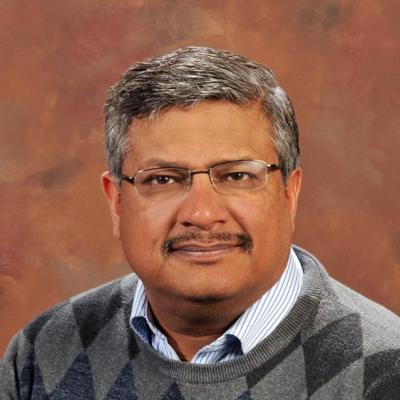
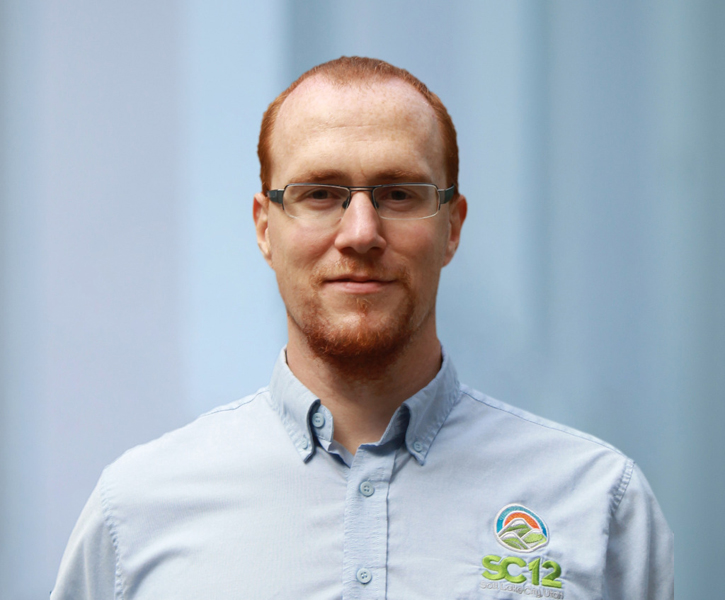
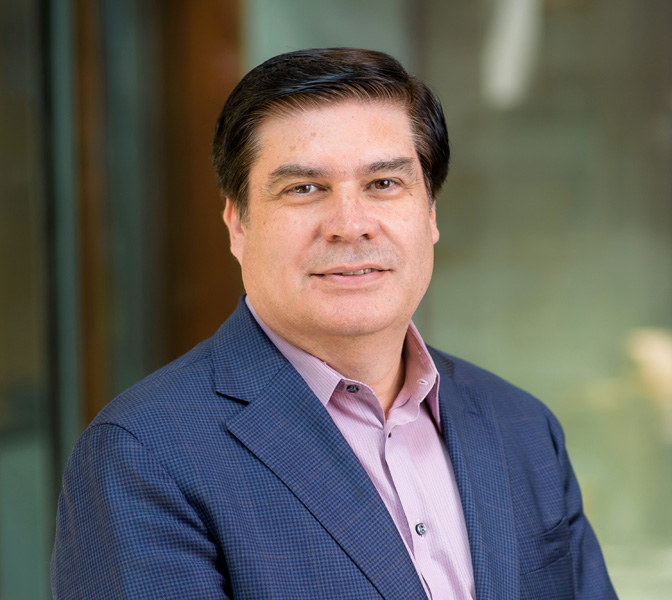
Gagan Agrawal is the UGA Foundation Professorship in Computing and a Professor at the School of Computing, University of Georgia. He serves as Director of the School and is affiliated with the Franklin College of Arts & Sciences. Agrawal holds a PhD and MS in Computer Science from the University of Maryland (1994-1996). His research focuses on high-performance computing, parallel algorithms, compiler optimization for deep learning, GPU acceleration, and interdisciplinary applications in health informatics. Notable contributions include frameworks like ForensiBlock (blockchain for data forensics) and DELITE (tensorized instruction compilation). Agrawal has secured over $2.5M in NSF grants for projects addressing extreme-scale computing challenges. Recent grants include: SHF: Small: Memory Hierarchy Optimizations Meet Transformers (MITTEN) ($600K, 2024-2027) DELITE compilation system for deep learning models ($600K, 2023-2026) Publications span parallel computing methodologies, cybersecurity frameworks, and health outcomes analysis. His work on social determinants of health in cancer survival has been systematically reviewed in top-tier medical journals. Agrawal leads UGA's computing initiatives, emphasizing interdisciplinary research and student mentorship in HPC and AI domains.
Torsten Hoefler is a Full Professor of Computer Science at ETH Zurich, Switzerland, with an adjunct appointment in Electrical Engineering. He previously held roles at the National Center for Supercomputing Applications (University of Illinois at Urbana-Champaign) and Indiana University. Full Professor of Computer Science, ETH Zurich (2020–present) Adjunct Professor of Electrical Engineering, ETH Zurich (2020–present) Member at Large, ACM SIGHPC Executive Committee (2013–present) Leadership roles in the MPI Forum and Blue Waters project His research focuses on performance-centric system design , with emphasis on scalable networking, parallel programming models, and performance modeling. Key contributions include the Slim Fly network topology, Data-Centric Python framework, and innovations in parallel graph computations and RDMA-based systems. Recent publications span topics like LLM training networks , quantization geometry , chiplet interconnects , and AI-driven climate modeling , reflecting his interdisciplinary approach combining HPC, AI, and hardware-software co-design. ACM Gordon Bell Prize (2019) ERC Consolidator Grant (2020) IEEE TCSC Award for Excellence (2019) SIAM SIAG/SC Junior Scientist Prize (2012) Latsis Prize of ETH Zurich (2015) He has received multiple best paper awards at top conferences (SC10, SC13, SC14, SC19, IPDPS'15, HPDC'15, OOPSLA'16) and contributed to MPI-3 standardization.
Johan Redström is a Professor of Design at the Umeå Institute of Design (UID), part of Umeå University. He has led UID's PhD program and research strategy since 2012 and served as its Rector from 2015 to 2018. His academic journey spans philosophy, electronic music, and design, with a PhD in philosophy and a focus on design research since 2001. Current roles include adjunct professorships at the University of Borås and the Royal Academy of Fine Arts. Research interests center on experimental design practices, sustainable development, and critical theory. He explores how design can address post-industrial challenges through prototyping new practices, questioning foundational concepts like 'form' in dynamic processes. Major projects include the UmArts Art & AI initiative (2023-2028) and 'Designing Democratic Digital Futures,' focusing on algorithmic accountability and contestation. Teaching emphasizes PhD-level design research, including courses on research methodologies, philosophy of design, and design history. He currently supervises 8 PhD students. Notable research outputs include 2024 publications on more-than-human design, AI ethics, and decolonial design frameworks. His work bridges theory and practice, advocating for socially engaged and ethically mindful design. Key contributions include rethinking 'Terms of Service' through design interventions and exploring hauntology in AI systems. UID's interdisciplinary environment supports his mission to advance design as a critical and transformative discipline.
Horacio Dante Espinosa is the James N. and Nancy J. Farley Professor in Manufacturing and Entrepreneurship at Northwestern University's McCormick School of Engineering, holding the rank of Professor in Mechanical Engineering. He also directs the Theoretical and Applied Mechanics Program and the Micro and Nano Mechanics Lab. His research spans bioinspired materials, single-cell analysis, and multiscale experimentation, with a focus on nanoelectronics and energy harvesting. Espinosa earned his Ph.D. in Applied Mechanics from Brown University and has held academic roles at Purdue University and Harvard University. He leads interdisciplinary teams exploring metamaterials, cell engineering, and advanced fabrication techniques. His honors include the Prager Medal (2019) and multiple fellowships. Espinosa's lab combines experimental and computational methods, with capabilities in nanomechanical testing and biological assay development. Education: Ph.D. in Applied Mechanics (Brown University, 1992), M.Sc. in Structural Engineering (Polytechnic of Milan, 1987), Civil Engineering (Northeastern National University, Argentina, 1981) Key Roles: Director of iCET (2015–2018), Faculty Director of NUFAB (2013–2015), Visiting Professorships at Stanford and Harvard Labs: Micro and Nano Mechanics Lab focuses on biomaterials, metamaterials, and single-cell manipulation with advanced microscopy and electroporation systems Grants/Awards: NSF-CAREER Award, ONR Young Investigator Award, and leadership roles in professional societies His research bridges mechanics, materials science, and biology, with applications in healthcare technologies and advanced materials. Current projects include phononic crystal studies, Kirigami engineering, and high-throughput electroporation platforms for cell analysis.
Quanxi Jia is a SUNY Distinguished Professor, Empire Innovation Professor, and National Grid Professor of Materials Research at the University at Buffalo. He holds appointments in the Department of Materials Design and Innovation within the School of Engineering and Applied Sciences and serves as Scientific Director of the New York State Center of Excellence in Materials Informatics (CMI). Education: PhD in Electrical and Computer Engineering, University at Buffalo, 1991 MS in Electronic Engineering, Jiaotong University, Xian, China, 1985 BS in Electronic Engineering, Jiaotong University, Xian, China, 1982 Research Focus: Jia's work centers on advanced electronic and energy materials, particularly epitaxial thin films and heterostructures. His research investigates processing-structure-property relationships, monolithic integration of functional materials, and superconductors for quantum/energy applications. Key methodologies include pulsed laser deposition and polymer-assisted techniques, with emphasis on oxide heterostructures , memristive devices , and multiferroic systems for next-generation electronics. Publication Trends: Recent publications (2023-2025) reveal dominant focus on neuromorphic computing via resistive switching devices (58% of sampled works), superconducting thin films for quantum applications (20%), and strain-engineered oxide heterostructures (22%). His group pioneers HfO 2 -based artificial neurons, NbN superconducting films on CMOS platforms, and multiferroic membranes, demonstrating strong industry-academia translation potential. Scientific Recognition: Fellow of Los Alamos National Laboratory Fellow of Materials Research Society (MRS) Fellow of American Physical Society (APS) Fellow of American Ceramic Society (ACerS) Fellow of AAAS Fellow of IEEE Fellow of National Academy of Inventors (NAI) Leadership & Infrastructure: As CMI Scientific Director, Jia oversees New York's flagship materials informatics initiative integrating AI with experimental materials science. His prior directorship of DOE's Center for Integrated Nanotechnologies (Los Alamos/Sandia) established expertise in national lab collaboration. The group maintains 50+ U.S. patents and 500+ publications, with current work targeting quantum device integration and sustainable neuromorphic hardware. Research Ecosystem: The CMI hub connects Jia's team with industry partners (including National Grid) and national labs, facilitating rapid prototyping of energy materials. Current thrusts include machine learning-guided ferroelectric design, CMOS-compatible superconductors, and recyclable perovskite sensors, positioning the group at the semiconductor-energy nexus.
Roie Levin is an Assistant Professor at Rutgers University's Department of Computer Science. He received his PhD in Algorithms, Combinatorics and Optimization from Carnegie Mellon University in 2022, advised by Anupam Gupta. Prior to that, he worked at the Allen Institute for Artificial Intelligence (2015-2017) and earned dual BSc degrees in Computer Science/Applied Mathematics and Mathematics from Brown University (2015). Before joining Rutgers, he was a Fulbright Postdoctoral Fellow at Tel Aviv University under Niv Buchbinder. Current Role: Assistant Professor in Computer Science Academic Training: PhD (2022) CMU, BSc (2015) Brown University Postdoctoral: Fulbright Fellow at Tel Aviv University Levin's research focuses on approximation algorithms for uncertain environments (online/dynamic/streaming models) and submodular function optimization. His work spans theoretical foundations and practical implementations across distributed systems, geometric constraints, and reinforcement learning paradigms. Teaching includes graduate and undergraduate algorithms courses (CS 344, CS 513) with emphasis on problem-solving techniques, computational complexity, and modern algorithmic trends. His publications showcase expertise in online algorithms, submodular optimization, and approximation theory with applications in clustering, caching, and machine learning. The 2025 articles demonstrate continued exploration of online consistency and contention resolution, while 2023-2024 works focus on submodular optimization under uncertainty and dynamic environments. Earlier publications (2015-2017) cover semantic parsing, geometric approximation, and planar graph optimization. Fulbright Postdoctoral Fellow Levin's research connects theoretical guarantees with practical implementations, bridging classical algorithm design with modern machine learning applications. His recent work explores primal-dual methods in online settings and robust subspace approximation techniques for streaming data environments.
Emmanuel Baccelli is a Professor for "Open and Secure IoT Ecosystem" at Freie Universität Berlin since September 2019, holding a joint position with Inria and the Einstein Center Digital Future (ECDF). He is also a scientific researcher at Inria since 2007 and co-founder/coordinator of the RIOT open source operating system for IoT devices since 2013. His research focuses on the intersection of low-power protocols, deeply embedded open source software, and security in the Internet of Things (IoT) ecosystem. Baccelli emphasizes the critical trade-off between energy efficiency and security in IoT systems, advocating for privacy-by-design principles and open specifications. His work addresses how users can maintain control over their systems and data in an increasingly connected world. Baccelli's publications demonstrate a clear progression toward secure, efficient IoT systems with recent work focusing on secure firmware updates, TinyML deployment, and privacy-preserving protocols. His research spans from foundational networking protocols to practical implementations for constrained devices, with a consistent emphasis on open source solutions and security-by-design. Baccelli completed his PhD in 2006 at École Polytechnique in Paris on "Routing and Mobility in Large Packet-Based Networks" and received his habilitation from Université Pierre et Marie Curie in 2012. He previously served as a Guest Professor at Freie Universität Berlin in 2013-2014 with a DAAD Grant. His professional activities include significant contributions to IETF standards, particularly RFCs related to routing protocols for low-power networks. Baccelli's research has practical applications across multiple domains including healthcare, smart agriculture, and industrial IoT systems, where security and energy efficiency are paramount concerns.
Paul R. Adams is a Professor in the Department of Neurobiology and Behavior at Stony Brook University's Renaissance School of Medicine. He joined Stony Brook in 1981 as an Associate Professor and was promoted to Professor in 1984, following prior faculty service at the University of Texas (1977-1981). His educational background includes a B.A. in Physiology and Pharmacology from Cambridge University (1968) and a Ph.D. in Pharmacology from London University (1974). Professor Adams' research centers on computational neuroscience , investigating how synaptic modifications underlying learning are compromised by crosstalk between densely packed synapses. His pioneering Synaptic Darwinism theory proposes evolutionary mechanisms for cortical learning, including "Hebbian proofreading" where layer 6 neurons detect and correct learning errors. He further explores how inter-brain communication networks overcome individual learning failures through information sharing. His publication trajectory reveals consistent focus on mathematical modeling of neural plasticity, evolving from foundational Synaptic Darwinism concepts (1997-2002) to recent work on crosstalk minimization (2013-2014). Key themes include Hebbian learning constraints, cortical circuitry reinterpretation, and theoretical solutions to neural network limitations. Notable honors include the MacArthur Foundation Prize (1986), election as Fellow of the Royal Society (1991), and Howard Hughes Medical Institute Investigatorship (1987-1995). Professor Adams leads theoretical neuroscience research through the Kalypso Mind/Brain Center, collaborating with Research Assistant Professor Kingsley Cox. His HHMI-funded work has influenced understanding of cortical function relevant to autism, schizophrenia, and epilepsy. He serves on editorial boards including Frontiers in Neural Circuits . The Synaptic Darwinism project maintains active investigation into cerebral cortex principles, exploring implications for both neurological disorders and fundamental questions about consciousness.
Nicholas Wright serves as the NERSC Chief Architect and Advanced Technologies Group Lead at Lawrence Berkeley National Laboratory's National Energy Research Scientific Computing Center (NERSC) since 2009. He holds a PhD in Chemistry from the University of Durham, United Kingdom. Role: Focuses on evaluating emerging technologies for scientific computing Key Contributions: Chief architect for NERSC-10 procurement (2026), optimized Perlmutter machine architecture His research explores performance analysis of HPC applications and architectural evaluation for future technologies. Recent publications address: GPU frequency optimization using DNN-based models FPGA acceleration for HPC workloads Quantum computing cost scaling Disaggregated memory system evaluation Scientific workflow characterization Scientific awards include: Co-investigator on SDCI HPC Improvement grant (2007-2012) His work bridges computer architecture and energy-efficient computing through rigorous performance modeling and technology evaluation for NERSC's diverse scientific users.
Alvin Cheung is an Associate Professor in the Computer Science Division at UC Berkeley's EECS department. He is affiliated with the Data Systems and Foundations group, Programming Systems group, Sky Lab, and SLICE Lab, and serves as a faculty affiliate at the Berkeley Institute for Data Science. He advises the Data Science Discovery Program and provides technical guidance to industry partners. His research spans data management, programming languages, and scalable software systems, with emphasis on helping users process large datasets efficiently. Key innovations include verified lifting (applying formal methods and ML to infer program properties) and systems for optimizing database-backed applications and geospatial analytics. Recent work explores LLM-driven code optimization and transpilation techniques. His publications (2023-2025) show strong trends in ML-enhanced systems, verified compilation, and data management tools. Articles frequently integrate formal methods, program synthesis, and hardware-aware optimizations across domains like databases, distributed computing, and HCI. Scientific Awards: ACSIC Rock Star Award (2025) Dahl-Nygaard Junior Prize (2024) VLDB Early Career Research Contribution Award (2023) IEEE TCDE Rising Star Award (2020) Sloan Fellowship (2019) NSF CAREER Award (2017) 20+ additional honors Advising & Grants: He mentors PhD/MS students (e.g., Lily Liu at OpenAI, Chenglong Wang at Microsoft Research). Research is funded by: NSF DOE ONR ARO Intel Notable grants include ONR Young Investigator Award and ARO Early Career Program Award. Labs & Teams: Leads projects in Berkeley's Data Systems/Programming Systems groups and collaborates with Sky Lab/SLICE Lab. Manages labs focused on verified compilation (e.g., Tenspiler) and data infrastructure (e.g., Spatialyze).
Professor Sara Kim serves as Professor and Head of the Marketing Area at the University of Hong Kong, where she has established herself as a leading scholar in consumer behavior since joining in 2012. Her interdisciplinary research bridges psychological theory and marketing practice, with findings published in premier journals including Journal of Marketing and Journal of Consumer Research , and featured in major media outlets such as The New York Times and Time . Her academic credentials include: Ph.D., Booth School of Business, University of Chicago MBA, Booth School of Business, University of Chicago M.S., KAIST Business School, Korea B.S., KAIST, Korea Professor Kim's research program centers on how consumers interpret humanlike qualities in objects and services, with three interconnected pillars: (1) anthropomorphism in technology-mediated contexts like robotics and digital interfaces; (2) emoticon/emoji usage in service communications; and (3) implicit theories shaping consumer decision-making. Her recent work examines how money anthropomorphism influences financial behavior and how leader emojis affect team creativity, demonstrating practical applications for service industries navigating digital transformation. Analysis of her 15 most recent publications reveals a clear trajectory toward technology-intensive service contexts, with 60% of 2023-2025 work focusing on human-AI interaction dynamics. Her scholarship consistently applies social psychology frameworks to contemporary marketing challenges, particularly in service employee-consumer relationships within digital environments, while maintaining strong theoretical contributions to attribution theory and person perception literature. Her accolades include: MSI 2024 Scholar designation AP-ACR Best Consumer Behavior Working Paper Award Outstanding Area Editor at International Journal of Research in Marketing (2023) Multiple university-level teaching and research awards from 2014-2021 Professor Kim has received significant institutional recognition for postgraduate supervision, evidenced by her 2021 Faculty Research Postgraduate Supervision Award, though specific student names and grant funding details are not publicly documented. Her ongoing research agenda continues to explore the psychological mechanisms underlying consumer-technology interactions in service ecosystems.
David M. Smith is a Professor in the Department of Psychology at Cornell University, affiliated with the College of Arts and Sciences. His research focuses on neural systems underlying learning and memory in rodents, employing techniques like neuronal recording, optogenetics, and chemogenetics. He directs the Laboratory of Neurobiology of Memory and Learning, investigating how brain regions contribute to memory formation and retrieval. Academic interests include Neuroscience, Behavioral Neuroscience, and Cognitive Neuroscience. He teaches courses such as PSYCH 4230/6230 on hippocampal function and navigation, and supervises undergraduate and graduate research projects. Notable contributions include studies on retrosplenial cortex roles in spatial navigation and olfactory memory mechanisms. His work integrates experimental and computational approaches, as seen in collaborations leveraging machine learning for clinical prediction (e.g., post-surgical complications). Despite no explicitly listed awards, his research has been highlighted in Cornell’s ‘New Frontier Grants’ initiative for innovative interdisciplinary efforts.
Ana Bumber is a Doctor of English Studies currently serving as an ATER (temporary teaching and research associate) at Université Paul Sabatier Toulouse 3, assigned to IUT A. She is affiliated with the Department of Chemical Engineering Process Engineering, though her academic work is firmly rooted in English literature and language pedagogy. Her dual research focus bridges the humanities and technology, particularly in AI applications for language education and the literary artistry of Vladimir Nabokov. Her research interests include Artificial Intelligence in Language Teaching , generative AI tools , automatically generated subtitles , and intermediality in Vladimir Nabokov’s work . She explores how AI influences second language acquisition and investigates Nabokov’s intricate use of visual and sensory elements in literature. Her work often intersects digital pedagogy with modernist literary analysis. The recent trends in her publications show a strong emphasis on AI in education , particularly tools like HeyGEN for influencing L2 motivation, and the evaluation of AI-generated captions in ESP contexts. Simultaneously, she continues to publish on Nabokov’s aesthetic empiricism, train imagery, nature writing, and portraiture, reflecting a sustained scholarly engagement with modernist intermediality. Scientific Affiliations and Service: Member, French Vladimir Nabokov Society (SFVN) – also on the board (CA) Member, International Vladimir Nabokov Society (IVNS) Member, European Association for Computer Assisted Language Learning (EUROCALL) Member, Modern Language Association (MLA) Member, Society for Modernist Studies (SEM) Organizing member, Pedagogical Exchange Days (Lairdil) Webmaster team member for academic website Ana Bumber is actively involved in academic mentoring and pedagogical innovation, though no formal advisees are listed. She has organized pedagogical events and contributed to curriculum development through active learning strategies such as 'Job Dating' and peer feedback workshops. She has not received any explicitly mentioned grants or scientific awards in the provided text. Her work is supported through institutional affiliations and collaborative research networks, particularly in Nabokov studies and AI-enhanced language teaching. She participates in interdisciplinary seminars such as the EFELIA-ANITI cycle on AI and Humanities, indicating a strong commitment to bridging technological and humanistic scholarship.
Baishakhi Ray is an Associate Professor of Computer Science at Columbia University, working at the intersection of AI, Software Engineering, and Security. She received her Ph.D. from the University of Texas, Austin, and has established herself as a leading researcher in applying artificial intelligence to software engineering challenges. Her educational background includes a Ph.D. from the University of Texas, Austin, which provided the foundation for her research career at the forefront of AI and software engineering. Dr. Ray's research focuses on leveraging artificial intelligence to solve fundamental challenges in software engineering and security. Her work spans multiple areas including code generation with large language models, vulnerability detection, software testing, and program analysis. She has pioneered approaches that combine deep learning with traditional software engineering techniques to create more robust, secure, and efficient software development processes. Her research has practical implications for improving code quality, enhancing software security, and accelerating development cycles through AI assistance. Her recent work demonstrates a strong emphasis on semantic-aware code generation, execution reasoning, and addressing hallucinations in code language models. She has also made significant contributions to evaluating the functionality and security of AI-generated code, identifying critical challenges in the practical adoption of AI for software development. Dr. Ray has received numerous prestigious awards recognizing her contributions to the field: IEEE TCSE Rising Star NSF CAREER award IBM faculty award VMware Faculty award Distinguished Paper awards at FSE'17, ASE'22, and ISSTA'23 ICSME Most Influential Paper award Publications featured in CACM Research Highlights As an Amazon Visiting Academic and active participant in major software engineering conferences, Dr. Ray has established herself as a thought leader in AI for software engineering. Her research has been widely covered in trade media, indicating its relevance and impact on industry practices. She has mentored numerous students through their research and has been instrumental in shaping the next generation of researchers in this interdisciplinary field. Her work demonstrates a consistent focus on bridging theoretical advances with practical applications, ensuring that her research has tangible benefits for the software development community. The trajectory of her publications shows an evolving research agenda that has successfully adapted to the rapidly changing landscape of AI and its applications to software engineering.
Jingling Xue is a Scientia Professor at the School of Computer Science and Engineering at the University of New South Wales (UNSW) in Sydney, Australia. As an IEEE Fellow of the Computer Society, he leads the Programming Languages and Compilers research group, focusing on practical applications of compiler optimization and program analysis techniques. His work bridges theoretical foundations with real-world software systems, particularly in developing open-source tools for large-scale program analysis. Professor Xue received his B.Eng and M.Eng degrees from Tsinghua University in 1984 and 1987, respectively, followed by a PhD from the University of Edinburgh in 1992. His academic journey has established him as a leading figure in programming languages and compiler technology. Xue's research spans programming languages, compiler technology, and program analysis with emphasis on practical relevance. His current projects include compiler techniques for improving parallelism and locality, pointer/alias analysis for million-line-scale programs, and static/dynamic analysis for detecting bugs and security vulnerabilities in real-world applications like web browsers and Android apps. His group actively develops open-source tools to support scientific replicability and reproducibility in these areas. His recent publications demonstrate a strong focus on applying program analysis techniques to modern challenges including AI compilers, homomorphic encryption, security vulnerability detection, and graph processing systems. The work shows evolution from traditional compiler optimization to addressing emerging domains like privacy-preserving computation and deep learning systems while maintaining rigorous theoretical foundations. Scientific Awards: Best Paper Award at CGO'13 Best Paper Award at CGO'16 Distinguished Paper Award at ECOOP'16 Distinguished Paper Award at ICSE'18 Distinguished Paper Award at ISSTA'19 Distinguished Paper Award at ASE'19 Distinguished Artifact Award at ISSTA'23 Best Artifact Award at FSE'23 Distinguished Paper Award at ASE'23 Test-of-Time Award at CGO'21 Professor Xue has successfully supervised 30 PhD students to completion, many of whom now work as professors or researchers in academia and industry. He has served as Program Chair for major conferences including LCTES'13, CC'18, CGO'20, and General Chair for LCTES'20. His group currently focuses on memory safety in Rust, smart contract analysis, AI compilers, compilation for privacy-preserving computation, and adversarial attacks in deep learning. The Programming Languages and Compilers group maintains strong connections with industry partners, translating theoretical advances into practical tools for real-world software development challenges. Their work on pointer analysis, memory safety, and compiler optimizations continues to influence both academic research and industrial practice.