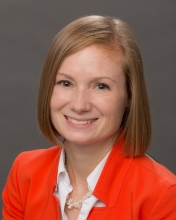
Emily Hammer is an Assistant Professor in the Department of Near Eastern Languages and Civilizations at the University of Pennsylvania. Her research focuses on archaeology, anthropology, and digital humanities, with a particular emphasis on ancient land use patterns, pastoralism, and remote sensing techniques in archaeological studies. She employs interdisciplinary approaches to explore human-environment interactions in prehistoric and historic societies, including studies of urbanism, water management, and socio-ecological systems. Her work integrates satellite imagery and GIS technologies to analyze ancient landscapes, such as the Mesopotamian cities of Ur and Lagash. Recent projects include global land-use synthesis for climate modeling and critical re-evaluations of nomadic narratives in Central Asia. Emily has contributed to international initiatives like PAGES LandCover6k, aiming to harmonize archaeological data for environmental research. Key themes in her publications include the emergence of pastoralism, urban hydrology, and the application of declassified satellite imagery in archaeology. While no awards are explicitly listed, her contributions highlight innovative methodologies in historical geography and archaeological science.
John F. Roddick is a Professor affiliated with Flinders University in South Australia. His research focuses on data mining, database systems, and temporal databases, with significant contributions to association rule mining, schema evolution, and privacy-preserving techniques. He has collaborated extensively with researchers like Shu-Chuan Chu and Jeng-Shyang Pan, producing over 138 publications across journals and conferences. Key contributions include work on schema versioning, temporal vacuuming in databases, and algorithms for wireless sensor networks. His research extends to image processing, biometrics, and swarm intelligence, with notable applications in traffic prediction and secure communication systems. He has edited conference proceedings and contributed to encyclopedic entries on database systems and data warehousing. Roddick's work often bridges theoretical foundations with practical applications, emphasizing interdisciplinary approaches to data management challenges. His publications span venues such as IEEE Transactions on Knowledge and Data Engineering, Data & Knowledge Engineering, and the Journal of Network and Intelligence.
Anderson M. Winkler is a Clinical Assistant Professor in Psychiatry at Yale School of Medicine. His research focuses on developing high-throughput imaging phenotypes for psychiatric genetics and associated statistical methods. He holds a DPhil from the University of Oxford in Clinical Neurosciences (2017) and an MD from Universidade Federal do Paraná (2005). Winkler's work spans clinical neuroimaging, pediatric mental health, and neurodevelopmental disorders. He has collaborated extensively with researchers such as Keith Hawkins, Michael Stevens, and Godfrey Pearlson. Education: DPhil, University of Oxford, Clinical Neurosciences (2017) PhD, Université de Liège, Biomedical and Pharmaceutical Sciences (2017) MD, Universidade Federal do Paraná (2005) Postdoctoral training at Yale University and University of Texas Health Science Center His research interests include functional connectivity in psychiatric disorders, neuroimaging methodologies, and translational neuroscience. Recent work explores resilience mechanisms in combat veterans, neural correlates of infant novelty distress, and structural-functional brain network dynamics across adolescence. Winkler is a key contributor to international consortia like ENIGMA-Anxiety, advancing machine learning approaches in mental health diagnostics. Publications span high-impact journals such as Biological Psychiatry , Nature Communications , and NeuroImage , reflecting his interdisciplinary approach to bridging clinical psychiatry with neuroimaging innovation.
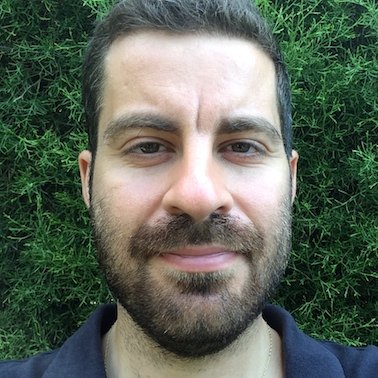
Dr. Andrey Sobolev is a PostDoc researcher at the Faculty of Biology, Ludwig Maximilian University of Munich, affiliated with the Benedikt Grothe Research Group. His work focuses on neurophysiological data management, electrophysiological data handling, and neural systems analysis. Key contributions include developing the Neo Python library for electrophysiology data handling and the G-Node Python Client for reproducible research workflows. Research interests span computational neuroscience, data management systems, and behavioral paradigms in freely moving animals. Notable publications include studies on hippocampal ensemble remapping under sensory conflicts (2021), the Sensory Island Task behavioral paradigm (2020), and metadata standards in neurophysiology (2016). Technical contributions include creating integrated platforms for electrophysiological data storage (2014) and foundational database systems for biomedical applications (2011). Collaborates widely with neuroscientists and software engineers to advance open science practices in neuroscience research.
Cynthia A. Bouton is a Professor in the Department of Women's and Gender Studies at Texas A&M University. She specializes in early modern and Revolutionary Europe, with a focus on the Atlantic World and its interconnected histories. Her research examines how inequities in subsistence access, shaped by class, gender, race, and colonial dynamics, influenced societal responses to suffering and social violence. Education: Ph.D., State University of New York at Binghamton, 1985. Research Interests: Atlantic World, French History, European Women and Gender Studies, European Social History, Revolutions, and Digital Humanities. She explores themes such as staple food production, marketplace interactions, colonial policies, and the cultural and political dimensions of food security. Her work bridges historical analysis with collaborative digital projects, such as aggregating data on food riots across the Atlantic World. Publications reflect a sustained focus on food-related social conflicts, including studies on the 1775 French subsistence crisis and 19th-century French social violence. These works analyze how food shortages intersected with gender, class, and colonialism in shaping societal resilience and unrest. Scientific Awards: None explicitly mentioned in the provided texts. Advising/Grants: No student advisees or grant details are listed. She contributes to an international Digital Humanities Project on social conflict, aggregating datasets from the 17th century to the French Revolution era. Labs/Teams: Active in an international collaborative Digital Humanities Project focused on creating a global database of food riots and social conflict.
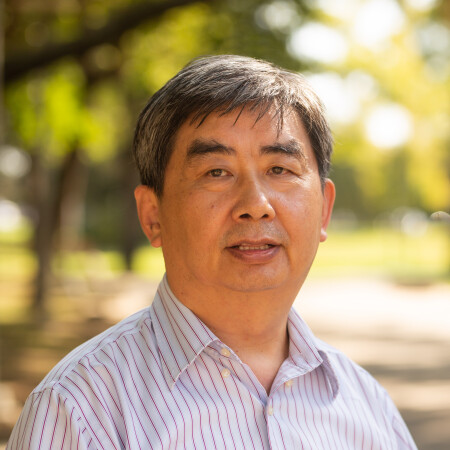
Michael Zhang is the Cecil H. and Ida Green Distinguished Chair of Systems Biology Science and a Professor in the Department of Biological Sciences at The University of Texas at Dallas (UT Dallas). He directs the Center for Systems Biology and holds affiliations with Bioengineering and Mathematics. His research integrates mathematical and computational methods to study genome organization, gene regulatory networks, and epigenetic mechanisms, with applications in cancer and developmental biology. Education: Ph.D. in Statistical Physics, Rutgers University (1987) B.S. in Mechanical Engineering, University of Science and Technology of China (1981) Research Interests: Zhang's lab focuses on decoding eukaryotic genome functionality, including chromatin architecture, transcriptional/post-transcriptional regulation (e.g., splicing), and gene expression networks. Key areas include 3D genome modeling, spatial omics, and machine learning applications in genomics. His work aims to bridge computational models with wet-lab validation to impact precision medicine. Publication Trends: His recent articles emphasize 3D genome organization, spatial transcriptomics, cancer genomics, and single-cell multi-omics integration. Techniques like CRISPR-based chromatin capture (CAPTURE) and AI-driven data analysis are frequently deployed to explore chromatin dynamics and disease mechanisms. Awards & Funding: Cecil H. and Ida Green Distinguished Chair endowment NIH and CPRIT grants supporting genomic and systems biology research Lab & Collaborations: He leads the Computational Biology Laboratory, developing tools like ChIPr and SODB for chromatin and spatial omics analysis. Collaborations include UT Southwestern, Cold Spring Harbor Laboratory, and Tsinghua University.
Haris Volos is an Assistant Professor in the Department of Informatics at the University of Cyprus . He holds a Ph.D. in Computer Science from the University of Wisconsin-Madison (2012), following B.E.E. degrees from the National Technical University of Athens (2005). Before academia, he worked at Hewlett Packard Labs (2013–2018) and Google (2018–2019). His research focuses on Computer Architecture , Operating Systems , and Data Storage and Processing , with recent work on energy-efficient CPU architectures, disaggregated memory systems, and persistent memory frameworks. Education: B.E.E. (2005), National Technical University of Athens M.Sc. (2007), University of Wisconsin-Madison Ph.D. (2012), University of Wisconsin-Madison Key Research Themes: Energy-efficient CPU core idle-state architectures Disaggregated memory protection and replication Persistent memory systems and transactional memory Big data processing over hybrid memory tiers Recent Contributions: His work includes frameworks like Panthera for holistic memory management and AgileWatts for energy-proportional servers. He also pioneered systems like HOPS (Hands-off Persistence System) for persistent memory. Labs/Teams: Active in the university's informatics research clusters, focusing on hardware-software co-design and scalable data systems.
Prof. Hubertus Kohle holds the Chair of Medieval and Modern Art History at Ludwig Maximilian University of Munich. His research focuses on 18th-19th century art, Classical Modernism, media studies, and digital art history. He studied art history, philosophy, and related disciplines in Bonn, Paris, and Florence, earning a doctorate (1986) and habilitation (1996). He co-edits the journal sehepunkte since 2001 and authored seminal works on digital art history. He also serves as a Senior Fellow at the Centre for Advanced Study in Münster, addressing cultural goods in digital transformation. His work pioneers digitization’s role in redefining art historical practices and museum futures. Education: Studies in Art History, Philosophy, Romance Studies, History, and Urban Planning at Universities of Bonn, Paris, and Florence Doctorate (1986): Denis Diderot’s concept of art Habilitation (1996): Adolph Menzel’s Friedrichbilder Research Interests: Bridging historical art studies with digital methodologies, emphasizing media theory, cultural heritage digitization, and the evolution of visual culture in modern societies. His recent works explore digital museums as adaptive memory institutions and computational approaches to image analysis. Publications: Highlighting his leadership in digital art history, his books like Computer, Art and Art History (2003) and Digital Image Science (2013) establish frameworks for integrating technology into traditional art scholarship. His 2018 work Digital Museums critiques and reimagines museum infrastructure in the digital age. Affiliations: Combines his professorship with senior fellow roles, fostering interdisciplinary dialogue on cultural access in digital contexts. No specific grants or advising data is provided in texts. Labs/Teams: Active in the Centre for Advanced Study’s research group on cultural goods in digital transformation, collaborating on exhibitions like Re:Set: From Slide to Database and workshops on FAIR access ontologies.
Christina Williamson is an Associate Professor in Ancient History at the University of Groningen's Faculty of Arts. Her academic career includes roles as Program Coordinator for the BA History program and Editor-in-Chief of Pharos . She specializes in spatial analyses of ancient urban development, focusing on Hellenistic Asia Minor, with expertise in digital history, network theory, and ritual performance. Education: PhD in Archaeology and Ancient History (University of Groningen, 2012) MA in Mediterranean Archaeology (University of Groningen, 1992) BA in History (Wheaton College, USA, 1992) BS in Information Technology (1998) and BFA in Painting (1988) Research Interests: Her work examines festivals as networks shaping Hellenistic globalization, using interdisciplinary methods like deep-mapping and spatial analysis. Key projects include the Connecting the Greeks initiative (NWO-funded) and Deep-Mapping Sanctuaries , exploring how festivals linked cities across the Mediterranean. Recent publications focus on urban ritual practices and the biographies of sacred spaces. Publications Overview: Williamson's articles address topics like Hellenistic fortifications, sanctuary biographies, and ritual's role in collective identity. Her work bridges archaeology and urban studies, emphasizing how spaces reflect both elite and communal narratives. Awards & Grants: NWO Open Competition Grant (2018) Max-Weber-Kolleg Fellowship (2019-2023) NWO Rubicon Grant (2013) Advising & Grants: Supervises PhD students on topics like regional festival networks (A. Wiznura) and Roman anchoring in festival systems (R. van Vliet). Leads projects funded by NWO and OIKOS, fostering collaborations across Europe. Labs/Teams: Coordinates the CRASIS Network on Time and Temporalities, the Cultural Interactions in the Ancient World research group, and the Connected Contests database project.
Jeroen Deploige is a Full Professor of Medieval History at Ghent University's Department of History within the Faculty of Arts and Philosophy. He serves as Head of the History Department and acts as promoter-spokesperson of the Pirenne Consortium for Medieval Studies, an interdisciplinary research consortium funded by Ghent University. His academic career spans several decades with continuous scholarly contributions to medieval studies. Deploige specializes in the cultural history of Northwestern Europe between the tenth and fifteenth centuries, with particular focus on the perception and performance of social identities in the High Middle Ages. His research combines documentary, narrative and literary sources with methods from philology, narratology and discourse analysis. Key research areas include new urban groups, religious community formation, chivalry, narrative traditions, memory practices, emotions, visionary experiences, and material culture within religious contexts. He has developed significant expertise in Digital Humanities through database projects like Narrative Sources (2009) and Diplomata Belgica (2015), and serves as Ghent University's representative in the Time Machine Organisation. His recent publications demonstrate consistent scholarly output across multiple subfields of medieval studies, with particular emphasis on authorship, hagiography, urban history, and religious culture of the Low Countries. The publications reveal a strong interdisciplinary approach that bridges historical, literary, and digital methodologies. His work shows particular interest in how narratives shape social identities and how religious communities construct meaning through textual and material practices. Fellow of the Flemish Academic Centre for Science and the Arts at the Royal Academy in Brussels (2012) Fellow of the Belgian Historical Institute in Rome (2016) Visiting Scholar in Medieval Studies at Wesleyan University (2016) Member of the Belgian Commission royale d'Histoire/Koninklijke Commissie voor Geschiedenis Deploige has supervised numerous PhD students to completion, including Jeroen De Gussem (2019), Dinah Wouters (2019), Stefan Meysman (2016), Sara Moens (2014), and Bas Diemel (2011). His teaching portfolio includes courses on Medieval History, Public History, Narratology, and Historical Anthropology. He maintains active engagement with cultural heritage institutions as scientific advisor to the Teseum in Tongeren and as member of the advisory board of Museum Ten Duinen in Koksijde. His research projects frequently involve interdisciplinary collaboration across multiple European institutions, reflecting his commitment to advancing medieval studies through both traditional scholarship and innovative digital methodologies.
Dr Beata Anna Maksymiuk serves as a Senior Lecturer at the Department of Intangible Cultural Heritage, Institute of Culture Studies, Faculty of Languages, Literatures and Cultures, Maria Curie-Skłodowska University. Her career spans from long-term contributions to the Ethnolinguistic Archive of the Polish Philology Institute (UMCS) to current research on cultural traditions. Specializes in documenting and analyzing Eastern borderland cultural practices Member of editorial teams for Polska Pieśń i Muzyka Ludowa series (Volumes 4-6) Collaborator in interdisciplinary projects with Polish Academy of Sciences and ethnographic museums Her research focuses on cultural preservation through ethnographic fieldwork, particularly examining wedding customs across temporal and spatial dimensions in Poland. Key areas include: Ritual structures in południowe Podlasie (Southern Podlasie) Symbolism in folk culture practices Intangible heritage documentation methods Oral tradition transmission mechanisms Evolution of cultural borderland identities Function of music in ethnographic contexts Recent publications analyze wedding feasts (2020-2021), chwesta rituals (2024), and gender roles (2025), maintaining continuity with her award-winning dissertation on wedding practices at cultural borderlands. Collaborations span institutions like Instytut Sztuki PAN and Muzeum Kultury Ludowej. Her research methodology emphasizes: Combining archival materials with contemporary fieldwork Comparative analysis of traditional and modern practices Interdisciplinary approaches to cultural texts Digitization and preservation of ethnographic data
Dr. Eleonora Kirwiel serves as a Lecturer at the Department of Political Thought and Political Communication within the Faculty of Political Science and Journalism at Maria Curie-Skłodowska University (UMCS), Lublin, Poland. Currently active in the 2024/2025 academic year, she holds physical office hours in room 5.23 (Thursdays 10:00-11:00) and virtual consultations via Microsoft Teams (Fridays 8:30-9:30), focusing on teaching and research in political science with emphasis on Central and Eastern Europe. Her academic foundation includes graduation from UMCS's Faculty of Political Science and a PhD in Political Science (Humanistic Sciences), establishing her expertise in regional political dynamics. Graduate, Faculty of Political Science, Maria Curie-Skłodowska University PhD in Political Science (Humanistic Sciences) Kirwiel's research critically examines socio-political life across Central and Eastern European nations, with dedicated studies on Poland, Russia, Ukraine, and Belarus. She pioneers work in border studies , analyzing historical geopolitics of Poland's North-Eastern borderlands (1918-1939), while her investigations into political thought span interwar sovereignty concepts, communist-era PRL dynamics, and emigration-period ideologies. Her scholarship on historical memory explores how collective remembrance shapes contemporary political narratives, particularly regarding Russian representations in Polish media and public opinion from the 19th century to modern times. Her publication trajectory reveals persistent engagement with Central and Eastern European political evolution. Early works establish foundations in interwar borderland politics (2011), while subsequent edited volumes deepen analysis of Polish-Russian relations through historical memory (2012), PRL socio-political structures (2013), and security theory (2014). Later contributions examine digital-era political thought (2015) and culminate in her 2024 study of Polish political ideas during 1939-1990 emigration. Thematic consistency appears across all works, with recurring focus on geopolitical identity, historical legacy, and cross-cultural perception. No scientific awards are documented in available sources. Her professional recognition manifests through active society memberships: Polish Political Science Association European Rural History Organization (EURHO) People's Scientific and Cultural Society As a Lecturer, Kirwiel mentors students through courses like Recent History of Poland and Historical Memory in Politics, though specific advisees aren't listed. Her 23 publications and ministerial score of 737 demonstrate substantial research output. The university database indicates an h-index of 1 from Google Scholar citations, reflecting emerging scholarly impact. While grant details remain unmentioned, her collaborative edited volumes suggest institutional research funding. Operating within UMCS's Department of Political Thought and Political Communication, she collaborates closely with colleagues E. Maj, E. Podgajna, and J. Gryz. Her EURHO membership connects her to rural history research networks, while the People's Scientific and Cultural Society affiliation indicates community engagement. Current office location at ul. Głęboka 45 (room 5.23) serves as her academic base for ongoing investigations into emigration-era political thought and memory politics.
Tara S. Wood is a Lecturer in the Department of History within the College of Arts and Humanities at Clemson University. She holds a PhD from Arizona State University (2008) and a Master of Library Science from Indiana University (2017), reflecting her dual expertise in historical scholarship and rare books librarianship. Her research centers on European history, particularly the British Isles between 1000 and 1500, with a focus on print culture, the history of the book, and gender. She employs innovative digital methods such as network analysis and textual analysis algorithms to uncover women's contributions to the early modern London book trade and to analyze printed funeral sermons of seventeenth-century women. Dr. Wood's recent work demonstrates a strong trend toward interdisciplinary digital humanities, merging traditional archival research with computational tools. Her publications span encyclopedia entries on Renaissance women and collaborative digital archives, reflecting both scholarly rigor and public engagement. National Endowment for the Humanities Institute Fellow, 'Early Modern Digital Agendas Institute', Folger Shakespeare Library (2017 & 2018) She teaches courses on medieval Europe, England, witchcraft and heresy, and women’s history. Her co-editorship of the Salem Witchcraft Trials Documentary Archive highlights her commitment to accessible scholarship and digital preservation. While no formal advising of graduate students is listed, her leadership in major digital projects suggests mentorship and collaborative research roles. Dr. Wood is actively involved in digital scholarship and is affiliated with archival and library-based research initiatives, particularly through her work at the Strom Thurmond Institute and collaborations with institutions like the University of Virginia and the Folger Shakespeare Library.
Dr. Maciej Brosz is a Lecturer at the University of Gdańsk’s Faculty of Social Sciences, Department of Sociology of Sport and Health. His work bridges sociology, urban studies, and qualitative research methodologies. Research Interests: Quality of life and socio-spatial conditioning Computer-assisted qualitative data analysis (CAQDAS) using NVivo Domestic space management and cultural practices Urban revitalization and youth studies Senior volunteering and social participation Article Trends: His publications focus on qualitative sociology, urban transformations, housing practices, and societal engagement with sport and aging. He emphasizes methodological innovation and socio-cultural analysis of contemporary issues. Professional Activities: Active in conferences on topics ranging from grounded theory to social practices, with presentations on ice sailing communities, housing sociology, and urban cultural dynamics.
Daniel O'Keeffe is a Senior Lecturer in Computer Science at the Department of Computer Science, Royal Holloway University of London (RHUL). He is affiliated with the Centre for Programming Languages and Systems (CPLS) and the Systems and Software Security Lab (S3Lab). PhD from University of Cambridge Computer Laboratory Post-doctoral research at Imperial College London Industry experience in financial software engineering His research spans distributed systems, security, databases, and networking, with a focus on cloud computing security and blockchain security. Recent work explores performance-security trade-offs in proof-of-stake blockchains under the Revoke project. Key research projects include SecureCloud (cloud security for critical infrastructure), ITA-DSM (edge computing stream processing), SeReCa (secure hardware for cloud protection), and CloudSafetyNet (data leakage monitoring). Current projects receive funding from the Engineering and Physical Sciences Research Council (EPSRC) and the Ethereum Foundation. Scientific Awards : ERA Track - Best Paper Award at SANER 2024 Grants : REDONDA: EPSRC-funded project on Byzantine State-Machine Replication for blockchain (2024-2027) Consensus-layer mitigations for validator ransomware attacks: Ethereum Foundation grant (2022-2023) Labs & Groups : Centre for Programming Languages and Systems (CPLS) Systems and Software Security Lab (S3Lab) OPERA group (University of Cambridge) LSDS group (Imperial College London)