Akash Lal is a Partner Researcher at Microsoft Research India, focusing on programming languages, concurrency, verification, and AI applications in software engineering. His work bridges formal methods with practical tools like Coyote and Corral for concurrent system reliability. PhD from University of Wisconsin-Madison (2009), advised by Thomas Reps Key research areas: LLM-driven memory safety (2024-2025) Concurrency testing frameworks (Coyote, P#) Smart contracts verification (Celestial) CodeQL-based resource leak detection His 15 most recent publications span 2021-2025, emphasizing LLM integration for verification, concurrency analysis, and systems research. Notable trends include industrial-strength concurrency testing (TACAS 2023), ML-driven documentation (ASE 2023), and Rust/ML pipeline safety (ICSE 2025). Major awards: CAV Award (2023) for context-bounded analysis EASST Best Paper (2023) for Coyote ACM Distinguished Paper (OOPSLA 2021) ACM Distinguished Artifact (OOPSLA 2020) Best Paper (FMCAD 2020) Advisees: 18 researchers including Ankush Das (CMU), Samvid Dharanikota (CMU), and Nausheen Mohammed (Leuven)
Markus Goldstein is a Professor of Computer Science and Data Science at Ulm University of Applied Sciences (THU), where he also serves as Head of the Institute of Computer Science. His office is located in room Q229 at Albert-Einstein-Allee 53-55 in Ulm, Germany, and he can be reached at +49 731 96537-418 or Markus.Goldstein@thu.de. Professor Goldstein's primary research focuses on machine learning, deep learning, data mining, anomaly detection, and data science with noSQL databases. His work bridges theoretical foundations with practical applications, particularly in unsupervised anomaly detection methods and their implementation across various domains including security systems and big data analytics. His research program demonstrates consistent contributions to developing efficient algorithms for outlier detection and evaluation frameworks for comparing different approaches. His publication record shows a clear research trajectory focused on unsupervised anomaly detection, with recent emphasis on explainability in outlier detection systems (2023), comparative evaluations of algorithms (2016, 2015), and practical applications in security contexts (2013-2014). His work spans both theoretical contributions (such as FastLOF algorithm development in 2012) and applied research (including document authentication and DDoS mitigation). As an educator, Professor Goldstein teaches Programming in Java (I and II), Introduction to Computer Science, Databases, Machine Learning, Data Warehousing NoSQL and Big Data, and Advanced Machine Learning at the Master's level. He maintains regular office hours on Wednesdays at 2:00 PM with registration via email, and actively encourages student engagement through final papers and projects in his research areas.
Thomas Lange is a Professor of Art History at the Institute for Fine Arts and Art History of the University of Hildesheim . His academic career spans institutions including the University of Giessen (DFG-funded graduate and postdoctoral work), University of Amsterdam (assistant professor, 2003-2008), and his current W3 professorship since 2008. His research bridges art history, philosophy, and media theory , focusing on the history and theory of images in modernity (1800–present), with special attention to romantic visual culture , art and science intersections , and photography . He has authored foundational texts on Philipp Otto Runge , Blinky Palermo , and visual knowledge production . Education : MA in Art History (1991, Giessen), PhD (1997, Giessen), Habilitation (2007, University of Giessen) Key Research Areas : Image theory, modernity, romanticism, art-science dialogues, photography, cultural memory, and visualization of time. Recent Publications : 2021 article on Runge and natural science; 2020 essays on nocturnal imagery and time visualization; 2018 entries on historiographic methodologies. Awards : State of Hesse graduate scholarship (1991); DFG postdoctoral fellowship (1997-1999). Collaborative Projects : Co-edited What's the Use? Constellations of Art, History, and Knowledge (2016); organized workshops with institutions like Van Abbemuseum and University of Amsterdam. Teaching : Integrates theory and practice, emphasizing precise visual analysis and its cultural-historical implications.
Ingo Helmich is an Assistant Professor in Exercise Science at the Institute for Movement Therapy and Movement-Oriented Prevention and Rehabilitation at German Sport University Cologne. His research focuses on motor behavior in sports, traumatic brain injury, and nonverbal communication in athletes. Specializes in Functional Near-Infrared Spectroscopy (fNIRS) to study brain functions in sports contexts. Pioneering work on concussions in Paralympic sports and their behavioral consequences. Investigates emotional gestures and cognitive load in tennis athletes through movement analysis. Develops databases for sports-related brain injuries and collaborates with neurology and psychiatry departments. Recent research trends include analyzing head acceleration in Para swimming, postconcussive symptoms, and nonverbal behavior in athletes with disabilities. His work spans both clinical and sports science disciplines. Helmich has secured funding from internal and third-party sources, including projects on movement therapy, brain injury diagnostics, and emotion recognition in sports. He has contributed to media discussions on head impacts in football and skateboarding, as well as spontaneous head movements in tennis winners and losers.
Adam Doupé is a full professor at Arizona State University, specializing in cybersecurity and software security. His research focuses on automated vulnerability analysis, phishing detection, binary decompilation, and security in web technologies. Key research areas include: Cybersecurity Software Security Phishing and Fraud Detection Binary Analysis Automated Vulnerability Discovery His recent work explores large-scale phishing mitigation using machine learning (e.g., ScamNet), improving binary decompilation techniques (e.g., SAILR), and analyzing fraud browser detection via fingerprints. Trends show a strong emphasis on practical security tools, human-centric security analysis, and firmware vulnerability discovery. While no specific awards or grants are listed in the DBLP data, Doupé actively contributes to security education through frameworks like SENSAI and CTF-as-a-service. He collaborates extensively with researchers such as Yan Shoshitaishvili, Ruoyu Wang, and Tiffany Bao.
Prof. Dr. rer. nat. Knut Verbarg is a faculty member at Stralsund University of Applied Sciences, specializing in Business Informatics . His work focuses on databases, ERP systems, and IT-supported project management. He teaches courses such as Business Informatics , Databases I/II , and In-Memory Computing , with direct contact via email at Knut.Verbarg@hochschule-stralsund.de.
Benjamin Wollmer is a Researcher at the Visual Systems (VSIS) department within the Faculty of Mathematics, Informatics and Natural Sciences at the University of Hamburg. He is actively involved in research projects such as Baqend and HADeS , focusing on web performance optimization and scalable data management. Research Focus : Web Engineering, Performance Optimization, Polyglot Data Management Key Publications : Explored delta encoding for web compression, scalable test data generation, and caching strategies Teaching : Supervised 15+ theses on topics including real-time databases and client-side performance
Wolfram Wingerath is a Professor for Data Science at the University of Oldenburg (since 2022) and previously served as Head of Data Engineering & Research at Baqend GmbH (2018-2022). He earned his PhD in Computer Science (2019) from the University of Hamburg, focusing on scalable push-based real-time query systems (InvaliDB). His research interests include: Real-time databases and stream processing NoSQL and polystore systems Web performance optimization Probabilistic data management Cloud computing and distributed systems Key publication trends show expertise in real-time data architectures, caching mechanisms, and performance engineering. Notable collaborations include Benjamin Wollmer and Felix Gessert . He has advised 49+ student theses and served on PC committees for ICDE, VLDB, and EDBT. His editorial roles include membership on Datenbank-Spektrum and organizing the BTW 2025 Data Science Challenge .
Annie Liu serves as Professor of Computer Science at Stony Brook University, holding a PhD from Cornell University alongside prior degrees from Peking and Tsinghua Universities. Her research centers on systematic methods for language and algorithm design, with emphasis on optimization frameworks applicable across critical computing domains. Her educational credentials include: BS in Computer Science from Peking University MEng in Computer Science from Tsinghua University PhD in Computer Science from Cornell University Liu’s research program investigates systematic analysis and transformation techniques for design optimization, particularly through incrementalization—the discrete counterpart of calculus differentiation. Her work spans optimizing compilers , interactive environments , database systems , distributed computing , and security , with projects addressing modeling, verification, code generation, and testing for real-time systems, semantic Web, and big data applications. The Design and Analysis Research Laboratory she directs bridges theoretical foundations with practical implementations. Analysis of her 2012-2025 publications reveals an evolution from foundational distributed algorithm design toward unifying frameworks for solver semantics and assurance. Key trends include increasing integration of incremental computation principles across compiler optimizations, database queries, and distributed system reliability. Her scientific recognition includes: State University of New York Chancellor’s Award for Excellence in Scholarship and Creative Activities Professor Liu has delivered over 100 international talks and maintains active conference leadership, serving on program committees for POPL, PEPM, and SPLASH through 2026. While specific grant details aren’t provided, her sustained involvement in high-impact venues like PADL and LPOP demonstrates significant research influence. She directs the Design and Analysis Research Laboratory where interdisciplinary teams advance optimization methodologies for emerging computational challenges.
Michael Drews is an Assistant Professor of Geothermal Technologies at the Technical University of Munich (TUM), where he leads research on deep geothermal energy systems. He is also a Core Member of the Munich Institute of Integrated Materials, Energy and Process Engineering (MEP) and the World Stress Map Project. His academic roles include Chair of the Admission Board for B.Sc. Geosciences and Study Advisor for B.Sc. Geosciences at TUM. Dr. Drews graduated as a Diplom Geologist from the University of Mainz in 2008 and earned his PhD from Newcastle University (UK) in 2012 with research focused on stress and pressure-dependent behavior of fine-grained sediments. Prior to joining TUM in 2019, he worked as a global subject matter expert for pore pressure prediction in the petroleum industry in Houston and as a senior researcher in geomechanics at Friedrich-Alexander University in Erlangen, Germany. His research primarily focuses on deep geothermal energy, particularly on the analysis, prediction, and monitoring of pressures and stresses in the upper 6 km of the Earth's crust. Dr. Drews combines techniques from various disciplines including drilling engineering and geophysics to minimize drilling, exploration, and production-related risks of deep geothermal energy projects. His current regional focus is on the Bavarian part of the North Alpine Foreland Basin, Germany's most active deep geothermal province. Analysis of Dr. Drews' recent publications reveals a strong emphasis on geomechanical modeling, pore pressure analysis, and stress field characterization in geothermal systems. His work spans multiple disciplines including geomechanics, geophysics, hydrogeology, and energy engineering, with particular attention to risk assessment and mitigation in geothermal drilling operations. Many of his studies focus on the North Alpine Foreland Basin, where he has developed detailed models of lithologically differentiated stress gradients, pore pressure systems, and sediment compaction. Dr. Drews has received recognition for his work through numerous publications in high-impact journals and presentations at major international conferences. His research has been instrumental in developing the Bavarian Pressure Map and advancing the understanding of geomechanical factors affecting geothermal energy production. As an educator, Dr. Drews serves as Study Advisor for B.Sc. Geosciences and is involved in the M.Sc. Programme "GeoThermics/GeoEnergy" at TUM. He has supervised numerous students who have co-authored publications with him, particularly in the areas of pore pressure analysis, stress field modeling, and geothermal system characterization. His research group has secured funding for multiple projects including Geothermal Alliance Bavaria (GAB), GoEffective, World Pressure Map, PHYSALIS, GeoChance, BORIS, and Memory CHeck. Dr. Drews leads the Assistant Professorship of Geothermal Technologies research team, which includes several doctoral researchers and postdoctoral fellows working on various aspects of geothermal energy systems. The team collaborates closely with industry partners and other academic institutions to advance the field of deep geothermal energy.
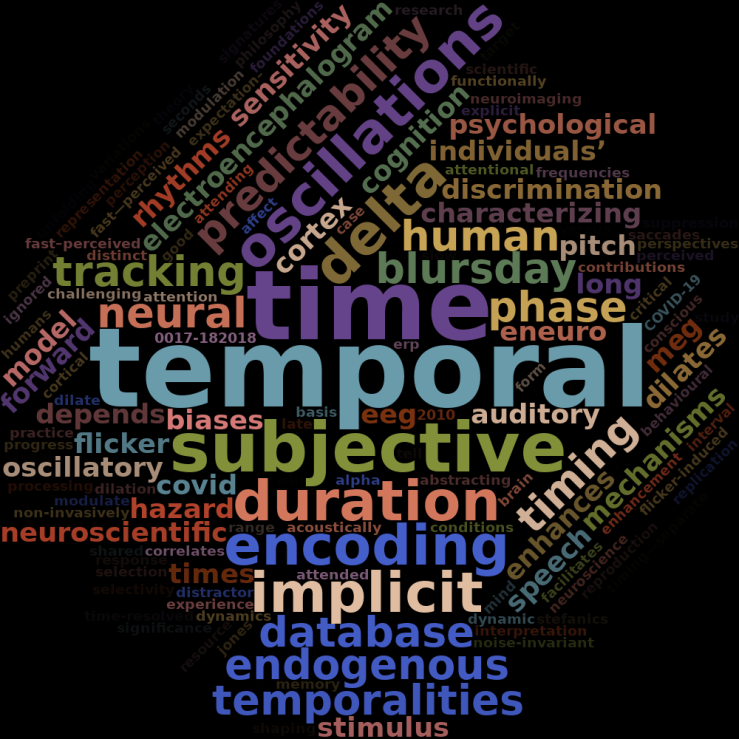
Sophie Herbst is a Research Fellow at CEA, focusing on implicit timing mechanisms and their role in auditory processing. Her work employs Bayesian models to analyze how temporal predictions derived from sensory input statistics enhance hearing. Methods: Psychophysics, Computational Modelling, EEG, MEG Funding: ANR JCJC WHEN project investigating temporal predictions in audition Contact: sophie.herbst@cea.fr Research Interests: Her work bridges auditory neuroscience and cognitive psychology, emphasizing neural oscillations like delta and alpha waves in temporal prediction. She explores how these mechanisms interact with sensory analysis to optimize auditory perception. Article Trends: Recent publications highlight cross-modal temporal processing, neural oscillation dynamics (delta, alpha), and applications of MEG/EEG in decoding subjective time perception . Her studies often integrate behavioral paradigms (e.g., gap detection) with neuroimaging. Advising and Grants: She actively recruits Master’s students for the ANR-funded WHEN project, which examines endogenous temporal prediction representations and their auditory functional consequences.
Prof. Dr. Marc Rittberger serves as Deputy Managing Director of the Leibniz Institute for Research and Information in Education (DIPF) since April 2025, concurrently holding a Professorship for Information Management at DIPF and Darmstadt University of Applied Sciences since 2005. His institutional leadership spans multiple directorial roles including Managing Director (2008-2012) and current oversight of the Education Information Center. Rittberger's research focuses on open science infrastructure development , digital educational architectures , and information management systems . His work examines practical implementations of Open Educational Resources (OER), bibliographic database optimization for systematic reviews, and metadata standards for distributed learning environments. Recent publications demonstrate growing emphasis on AI-driven knowledge graphs and machine learning applications in scholarly communication. Analysis of his 15 most recent publications reveals consistent engagement with Open Science implementation challenges Systematic review methodology in educational research Teacher practices in digital resource sharing Quality metrics for research infrastructures His work bridges theoretical informatics with practical educational applications, particularly in K-12 digital transformation contexts. Rittberger actively shapes research policy through key committee roles including: Spokesperson of Leibniz Association's Open Science Strategy Forum (since 2023) Deputy Spokesperson of Standing Commission for Scientific Infrastructure Facilities (since 2024) Former Scientific Advisory Board positions at GESIS, ZBW, and Know Center His academic supervision extends through leadership in major research initiatives including Digi-EBF (Digitalization in Education), ABIBA (reducing educational barriers), and EduArc (digital educational architectures). Current projects emphasize open scholarship quantification, AI-based search infrastructures, and internationalization of educational research infrastructures.
Prof. Johann-Christoph Freytag is a faculty member at the Institute of Computer Science within Humboldt University of Berlin's Faculty of Mathematics and Natural Sciences. His academic profile demonstrates a unique interdisciplinary approach bridging core computer science with environmental research, particularly focused on Arctic systems and climate change analysis. His research spans multiple domains: Advanced database systems and query optimization techniques Data privacy frameworks for cooperative systems and safety applications Big data analytics for environmental monitoring Graph theory applications in landscape analysis Age-depth modeling for paleoenvironmental studies Computer vision approaches to permafrost monitoring Analysis of Prof. Freytag's recent publications reveals a strategic research trajectory that increasingly integrates computational methods with environmental science. His work shows consistent contributions to database theory while expanding into climate-related applications, particularly through projects involving Arctic lake systems, permafrost dynamics, and tundra landscapes. This interdisciplinary approach demonstrates how database technologies can address complex environmental challenges. Prof. Freytag has been actively involved in the German database research community, including participation in organizing the BTW (Database Systems for Business, Technology and Web) conference series, which represents a significant contribution to academic community building in his field.
Dr. Sen Zhao is a Professor at Chongqing University of Posts and Telecommunications, School of Computer Science, Department of Network Engineering. His research spans machine learning applications for network security, protocol analysis, and computational fluid dynamics with biomedical applications. His primary research interests include Machine Learning, Network Security, Protocol Analysis, Computational Fluid Dynamics, Fault Diagnosis, Optimization Algorithms, and Biomedical Engineering. Dr. Zhao has developed innovative approaches for binary protocol reversing using deep learning with knowledge-driven augmentation, multi-modal contrastive learning for vulnerability code representation, and reputation incentive schemes for edge tampering detection. Analysis of his recent publications (2021-2025) reveals a strong focus on applying deep learning techniques to network security challenges, with particular emphasis on protocol analysis, device fingerprinting, and secure query processing. His work bridges theoretical machine learning advances with practical security applications in networking and IoT environments. The interdisciplinary nature of his research is evident in his computational fluid dynamics work applied to biomedical problems. Dr. Zhao has mentored numerous students including Jiayuan Li, Zhen Wang, Bo Sun, Yi Zhao, and Haoyu Bin, who appear as first authors on significant publications. His collaborative network includes prominent researchers like Hongsong Zhu, Limin Sun, and Maya R. Gupta across multiple institutions.
Prof. Dr. Bianca Wittmann holds the position of Professor of Psychology at the University of Giessen, Germany, within the Faculty of Psychology and Sports Science and the Department of Psychology . Her research focuses on episodic memory , value-based decision making , novelty processing , and the neural mechanisms underlying motivational events. She has held academic roles since 2003, including postdoctoral fellowships at the Helen Wills Neuroscience Institute (UC Berkeley, USA) and University College London (UK), and a PhD from the University of Magdeburg (2005). Education PhD in Psychology, University of Magdeburg (2003–2005) Biology Degree, University of Tübingen (1998–2003) Research Themes Neurobiological basis of reward and punishment processing Role of novelty in memory formation Interactions between motivation and memory systems Neuroimaging studies of striatal and hippocampal activity Key Contributions Developed the Motivational Objects in Natural Scenes (MONS) database Explored the impact of dopamine genetics on memory Investigated neural correlates of boredom and decision-making Her teaching includes courses like Neurobiology of Motivation and Memory (PSY-MA-PFM-04) and Biological Psychology (PSY-BA-PM-07). Professional contact details: Office Building F, Room 21a; Email: bianca.wittmann@psychol.uni-giessen.de.