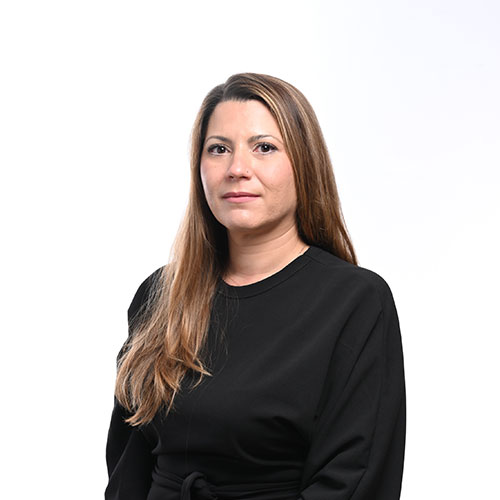
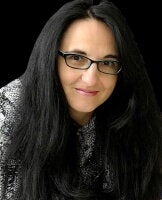
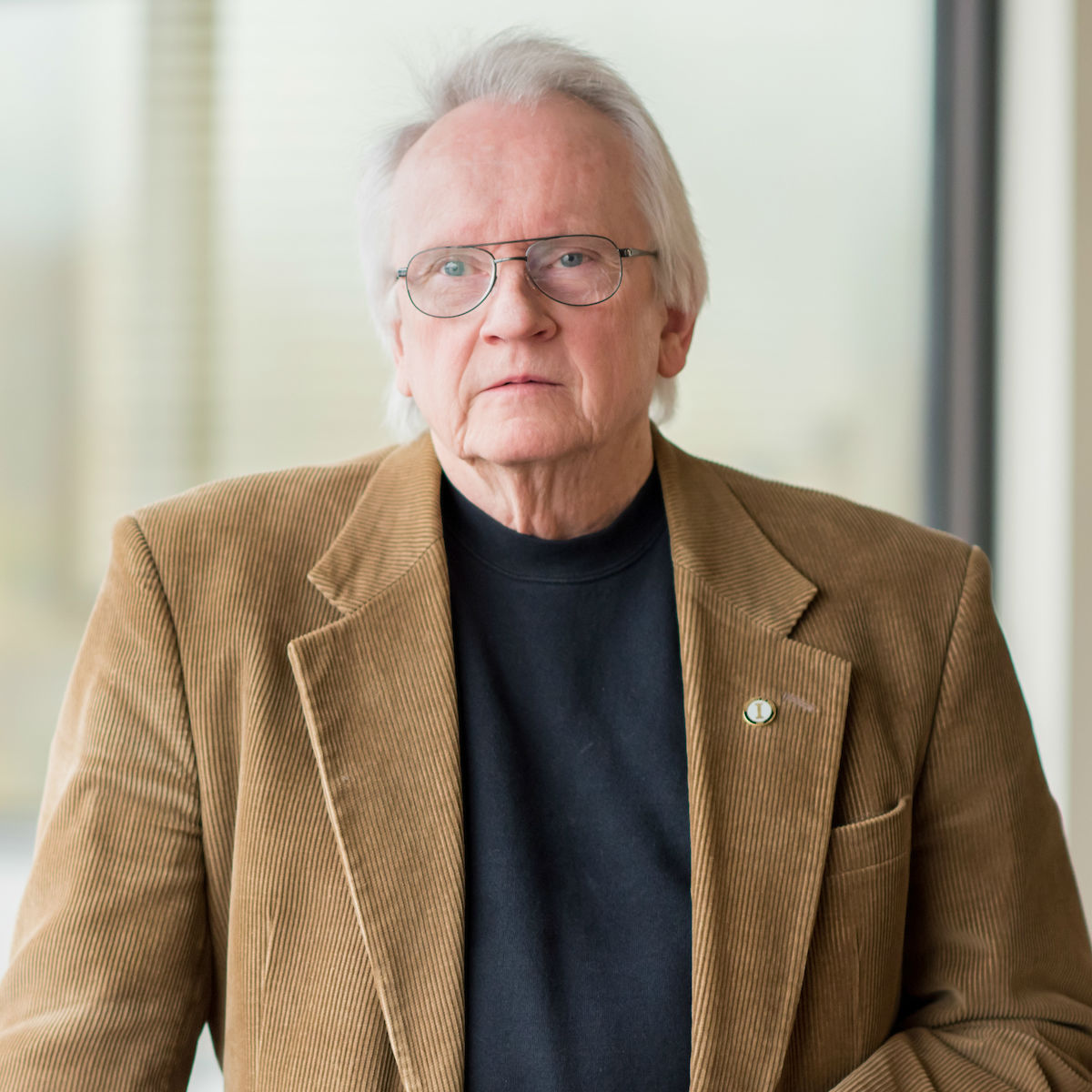
Şebnem Yalçın is an Associate Professor at the Department of Foreign Language Education, Faculty of Education, Boğaziçi University. Her research focuses on second language acquisition, content-based instruction, and cognitive factors influencing language learning. She holds a Ph.D. from the Ontario Institute for Studies in Education (University of Toronto), with prior degrees from Boğaziçi University. Her work explores language aptitude, working memory, and instructional methods in EFL contexts. Notable projects include examining the role of working memory in defining foreign language aptitude and validating language aptitude tests. She has presented at major conferences such as EUROSLA and AAAL, addressing topics like grammatical complexity, identity in learning, and curriculum design. Yalçın has received grants from Boğaziçi University and the Social Sciences and Humanities Research Council of Canada. Her teaching focuses on TESOL methodology, language awareness, and research skills. She has organized national and international academic events, contributing to professional development in applied linguistics and foreign language education.
Patrick Rebuschat is a Professor of Linguistics and Cognitive Science at Lancaster University, serving as Director of Internationalization in the Faculty of Arts and Social Sciences. He holds additional roles as Distinguished International Professor at the University of Tübingen and Director of the Heritage Language 2 Consortium (HL2C). He co-directs the Lancaster Language Learning Lab (4L) and coordinates the NOVA Lancaster partnership. His research focuses on the cognitive mechanisms underlying language learning, emphasizing implicit learning, statistical learning, heritage language bilingualism, and second language acquisition. He received his PhD from the University of Cambridge and BA from the University of Lisbon, with prior teaching stints at institutions like Harvard and Georgetown University. Research interests include studying how the mind and brain process novel languages, particularly through implicit and statistical learning paradigms. Key topics include individual differences in learning, explicit knowledge’s impact on implicit learning, and the role of frequency in acquisition. His work bridges experimental psychology, computational modeling, and applied linguistics. Recent publications highlight advancements in understanding cross-situational learning, heritage language dynamics, and statistical learning across ages. His collaborative projects, such as HL2C and NOVA Lancaster, aim to advance multilingualism research and education. Supervision focuses on six core questions addressing learning mechanisms, measurement, and neural representation of language knowledge. Rebuschat’s affiliations include leadership roles in research groups like SLLAT and participation in global initiatives like the Camões Institute Chair for Multilingualism. His outreach efforts, such as Native Explorers, promote science and multilingualism among diverse communities.
Professor Peter Walla is an Honorary Professor at the School of Psychology, Newcastle University. His academic career spans roles such as Head of the Biological Psychology Unit at the University of Vienna and Deputy Head of the Institute for Clinical, Biological and Differential Psychology. He holds habilitations in Cognitive Neurobiology (Medical University of Vienna) and Biological Psychology (University of Vienna). His research focuses on subconscious information processing, affective neuroscience, and neuroimaging techniques like EEG, MEG, and fMRI. Collaborations include work with experts in engineering, medicine, and international institutions. Education: PhD in Neuroscience from Vienna University (1998), postdoctoral training at institutions including the University of Melbourne and Howard Florey Institute. Professional roles include editorial board memberships for journals like Brain Sciences and Frontiers in Psychoanalysis and Neuropsychoanalysis. Research interests emphasize subconscious cognitive processes, emotion, memory, and olfaction. His studies explore discrepancies between explicit responses and physiological measures, using methods like startle reflex modulation and ERP analysis. He investigates topics such as brand attitude conditioning, social perception, and the neural basis of self-awareness. Key findings include evidence of subconscious processing differences in legal expertise and neural correlates of social media overuse. Grants and supervision details are extensive but not explicitly listed here. Collaborations include projects on urban space perception with engineering faculty and neuroimaging studies on emotion ownership with international teams. His lab, Freud CanBeLab, explores social neuroscience and digital media impacts.
Todd A. Kahan is a Professor of Psychology at Bates College, specializing in cognitive processes such as visual perception, attention, memory, and language. His research explores the interplay between these functions, focusing on paradigms like object substitution masking, attentional capture, and semantic priming. He holds a B.S. from Syracuse University (1992) and a Ph.D. in Cognitive Psychology from the University at Albany, SUNY (1998). Education: B.S. Psychology, Syracuse University, 1992 Ph.D. Cognitive Psychology, University at Albany, SUNY, 1998 Professor Kahan’s research interests include understanding how attention, perception, and memory interact in tasks like word recognition and visual scene processing. His work often employs experimental paradigms to disentangle these cognitive processes, such as studying how masks affect target perception or how working memory influences attentional modulation. He has received notable awards including the James McKeen Cattell Fund Fellowship (2014–2015) and the Charles F. and Evelyn M. Phillips Faculty Fellowship (2007). He is an Associate Editor of Attention, Perception, & Psychophysics and a Contributing Editor of Journal of Experimental Psychology: Human Perception and Performance . His teaching spans courses like Cognitive Psychology, Sensation and Perception, and Research Methodology. He has advised numerous Bates students on projects, contributing to over 15 publications since 2013. His lab focuses on visual cognition and attentional mechanisms, bridging theoretical and applied research in cognitive science.
Maciej Kościelniak, Ph.D., is an Assistant Professor and Head of the Department of Social and Cross-Cultural Psychology at the Faculty of Psychology and Law in Poznań, SWPS University. His academic affiliations include the Institute of Psychology, the Interdisciplinary Center for Applied Cognitive Studies, and the Center for Research on Improving Decision Making. His research focuses on social psychology, behavioral economics, and decision-making processes, particularly exploring topics like examination dishonesty, age-related cognitive performance, and organizational conflict management. He teaches courses in social psychology, academic skills (including IT), research methodology, and advanced statistics. His work bridges theoretical insights with practical applications, such as career coaching for professional development and analyzing pandemic impacts on societal values. Key research interests include the psychological correlates of cheating behaviors, the influence of environmental factors on ethical decisions, and generational shifts in religiosity and human values. He leads interdisciplinary projects investigating complex decision-making mechanisms and the role of cognitive aging. His contributions span both Polish and international research, addressing real-world issues through empirical and theoretical frameworks. Collaborative research centers include the Interdisciplinary Center for Applied Cognitive Studies (ICACS) and the Center for Research on Improving Decision Making, where he explores applied cognitive solutions and decision support systems. His publications reflect a commitment to understanding behavioral nuances across diverse contexts, from classroom ethics to urban well-being and pandemic-related psychological shifts.
Antigone Kyrousi is a faculty member at the School of Business and Economics, Department of Marketing and Business Administration, American College of Greece. She teaches undergraduate courses in marketing and marketing communications, and postgraduate courses in advertising strategy. Her research focuses on advertising, marketing communications, consumer behavior, and luxury brands. She has received EU funding for research and distinctions for academic papers, with publications in journals like Journal of Business Research and International Journal of Advertising . Her work also includes co-authoring textbooks on advertising and presenting at international conferences. Education: BSc, Marketing & Communication (Athens University of Economics and Business); MBA and PhD (Athens University of Economics and Business). Research interests emphasize luxury advertising, consumer psychology, and integrated marketing communication strategies. Recent work explores pandemic impacts on consumer behavior, brand opposition dynamics, and the role of arts in luxury branding. Awards include recognition for research papers and EU-funded projects. Advising and Grants: While no advisees are listed, her research has been supported by EU grants. Her contributions to marketing education and luxury industry studies are notable. She actively participates in academic conferences, enhancing scholarly discourse in her field.
Dr. Li-Ann Leow is a Lecturer in Psychology at Edith Cowan University’s School of Arts and Humanities, specializing in cognitive neuroscience of motor learning and motor control. She teaches PSY2105 - Psychology of Personality and Individual Differences and PSY1210 - Biopsychology, Sensation and Perception . Dr. Leow is a member of the Australian Cognitive Neuroscience Society, Australian Brain Stimulation Society, and Society for Neuroscience. Her research focuses on sensorimotor adaptation mechanisms, dopamine’s role in learning, and neurostimulation techniques like tDCS. Key themes include implicit vs. explicit motor learning, the impact of auditory cues on movement, and neurochemical modulation of decision-making. Recent grants include the 2025 Edith Cowan University Early-Mid Career Researcher Grant (A$39,780) investigating ageing and sensorimotor adaptation. Dr. Leow has supervised two completed research projects as an associate supervisor: Implicit motor learning to perturbed visual and auditory feedback and The effect of aerobic exercise on brain-derived neurotrophic factor in stroke patients . Her work bridges clinical and cognitive neuroscience, with publications in journals like Journal of Neuroscience , Neuroscience , and Experimental Brain Research .
Professor Michael Page is a cognitive psychologist at the University of Hertfordshire's Department of Psychology, Sport and Geography. He holds a full-time appointment in the School of Life and Medical Sciences and leads the Centre for Research in Psychology and Sports. His primary research focuses on human memory mechanisms (specifically serial recall and Hebb effects) and pro-environmental behavior change initiatives like the Cube Project (cubeproject.org.uk). He has been active in over 12 research projects since 2001, including prominent collaborations on green hydrogen economy models and carbon footprint reduction strategies. Teaching emphases include cognitive psychology with special focus on memory systems. Notable projects include: Political Economy of Green Hydrogen (2025-2026) Discrimination Models for Data Analysis (2018-2026) Cube Project QB3 (2016-present) Research contributions span 47 peer-reviewed publications since 1994. Key areas of exploration include connectionist modeling of memory processes, dyslexia-related phonological deficits, and behavioral interventions for sustainability. Public engagement includes stand-up comedy performances on psychology topics and speaking engagements at major environmental events. Current initiatives involve low-carbon housing solutions through QB3 prototype development and interdisciplinary work with Belgian researchers on memory mechanisms. His work bridges theoretical cognitive science with practical applications in environmental policy and education.
Sanda Monica Dolcos is a Research Assistant Professor in the Department of Psychology and the Neuroscience Program at the University of Illinois at Urbana-Champaign. She serves as co-director of the Dolcos Lab (D Lab) , a research group affiliated with the Beckman Institute for Advanced Science & Technology . Her work integrates fMRI , ERP , and behavioral methods to investigate affective, cognitive, and clinical neuroscience. Research Assistant Professor, Psychology Department Research Assistant Professor, Neuroscience Program Affiliate, Center for Social & Behavioral Science Research Interests focus on: Neural correlates of emotion-cognition interactions in health and clinical populations (e.g., depression, PTSD). Individual differences in emotion regulation and their neural basis across adulthood. Sex and personality-related variations in cognitive and affective aging . Neural mechanisms of emotional well-being and resilience. Publications (2025-2018) span topics including: Opposing effects of arousal on memory Cognitive flexibility measurement Sex differences in mental health crises Emotion regulation during aging Neural substrates of emotional source memory Her work frequently explores fMRI , eye-tracking , and electrophysiological approaches. Lab Collaborations include partnerships with Duke University's Center for Cognitive Neuroscience , Yale University's Department of Psychology , and clinical researchers studying mood disorders. The lab has produced over 150 publications and developed open-access video protocols for neuroimaging experiments.
Richard Reardon is a Professor in the Department of Psychology & Communication at the University of Idaho, part of the College of Letters, Arts and Social Sciences. He is based at the Coeur d'Alene Center and serves as Director of the Organizational Sciences Program. He teaches courses including Introductory Psychology, Human Relations in the Workplace, Systems and Projects, and Methods and Analysis in Organizational Sciences. Reardon earned his Ph.D. in Social Psychology with a co-major in Complex Processes from the University of Georgia in 1981, an M.S. in Experimental Psychology from the same institution in 1978, and an A.B. in Psychology and Anthropology from the University of North Carolina at Chapel Hill in 1973. Prior to joining the University of Idaho in 1998, he spent 18 years on the faculty at the University of Oklahoma. He held administrative roles including Associate Dean for Outreach in Northern Idaho and Interim Associate Vice President and North Idaho Center CEO, returning to full-time faculty in 2017. His research focuses on social cognition, deception, organizational systems, memory generation effects, source monitoring, persuasion, and math resistance . His work explores how people judge reality, the psychological impact of deception on deceivers, leadership disappointment, and the cognitive benefits of self-generated learning. He has also investigated gender differences in manipulation tactics and achievement motivation in students. His recent publications span topics from deceptive communication to mass media psychology and memory effects. These works reflect a consistent interest in cognitive and social mechanisms underlying behavior, with applications in education, organizational design, and communication. Effects of deception on the deceiver (2018) When are we most disappointed by our leaders? (2013) A psychology of mass communication (2001) Implicit achievement motives and test anxiety (1998) Gender and manipulation in relationships (1996) Self-generated product information memory (1996) Self-concept and reality judgments (1995) Reardon has secured major external funding for projects in curriculum development, disabilities evaluation, vaping awareness, and gamification. He has collaborated with colleagues such as S. Meier, T. Thorsteinson, and J. Beeston. His current research includes the gamification of energy use feedback, video speed-watching effects on memory, and using isomorphic games to reduce math resistance. He has been teaching Introductory Psychology for over three decades in large lectures, small honors classes, and online formats since 2002. He is actively involved in educational outreach and innovation, contributing to both undergraduate and graduate programs in psychology and organizational sciences. His interdisciplinary approach integrates cognitive, social, and organizational psychology to address real-world problems.
Anthony Galt Greenwald is a prominent social psychologist and Professor of Psychology at the University of Washington, where he has been on faculty since 1986. He received his B.A. from Yale University in 1959, followed by an M.A. (1961) and Ph.D. (1963) from Harvard University. After completing his doctoral studies, he held a postdoctoral fellowship at the Educational Testing Service from 1963 to 1965. Greenwald is best known for developing the Implicit Association Test (IAT), a revolutionary method for measuring unconscious biases and implicit attitudes. His research has fundamentally changed how psychologists understand the relationship between conscious and unconscious cognition, particularly in the areas of prejudice, stereotypes, and self-esteem. He co-founded Project Implicit in 1998, a non-profit organization dedicated to research and education about implicit social cognition that has collected data from millions of participants worldwide. His work demonstrates that people can hold implicit biases that operate outside of conscious awareness or control, challenging traditional views of prejudice. This finding has significant implications for understanding discrimination across numerous domains including healthcare, education, legal contexts, and organizational settings. Greenwald's publications show a consistent focus on methodological rigor, with recent work addressing statistical practices, data transparency, and practical applications of implicit bias research. Greenwald's most influential publications include 'Measuring individual differences in implicit cognition: the implicit association test' (1998), 'Implicit social cognition: attitudes, self-esteem, and stereotypes' (1995), and the popular book 'Blindspot: Hidden Biases of Good People' (2013) co-authored with Mahzarin Banaji. His ongoing research continues to refine implicit bias measurement techniques and explore potential remedies for implicit bias. Greenwald has received numerous accolades for his work, including the Distinguished Scientific Contribution Award from the American Psychological Association. His research has been cited tens of thousands of times, making him one of the most influential psychologists of his generation. He remains active in research and continues to mentor students at the University of Washington.