Professor Sarah Bekessy is a leading interdisciplinary conservation scientist at RMIT University's School of Global, Urban and Social Studies (GUSS). She leads the ICON Science research group, focusing on urban biodiversity conservation, human behavior in conservation, and nature-positive urban design. Her work integrates ecological modeling, social sciences, and policy to address biodiversity challenges. She holds an ARC Future Fellowship (2014-2020) and has secured over AUD 12 million in research funding. Her research interests include biodiversity-sensitive urban design (BSUD), conservation psychology, and spatial conservation planning. Key contributions include the BSUD protocol adopted by governments and developers worldwide, and co-developing methodologies for the UN Cities with Nature program. She advises organizations such as WWF, Bush Heritage Australia, and the Living Building Challenge. Prof. Bekessy has authored highly cited papers (H-index 50) in journals like Conservation Biology and Nature Communications. Awards include the RMIT Media Star Award (2022/23) and the City of Melbourne Design Challenge (2020). She is engaged in teaching, supervising 8 postdocs and 8 postgraduates, and actively contributes to conservation policy through roles like Lead Councillor of The Biodiversity Council. Her research spans urban ecology, threatened species management, and environmental decision-making, with a focus on bridging science and practice. Recent projects include investigating nature-based solutions for loneliness reduction and sustainable coffee systems. She emphasizes 'everyday nature' experiences in cities and advocates for measurable 'nature-positive' development frameworks.
Eric Masanet is a Professor and Mellichamp Chair in Sustainability Science for Emerging Technologies at the University of California, Santa Barbara (UCSB), holding a courtesy appointment in the Department of Mechanical Engineering. He leads the Bren School's Industrial Sustainability Analysis Laboratory, focusing on decarbonizing industrial and IT sectors while advancing equity and sustainability. His research spans energy system analysis, climate mitigation, and sustainable manufacturing. Education: Ph.D. in Mechanical Engineering from UC Berkeley, with M.S. and B.S. degrees from Northwestern University and the University of Wisconsin-Madison, respectively. Research interests include data center sustainability, industrial decarbonization, and the intersection of technology and climate policy. He has contributed to the IPCC's Sixth Assessment Report, advised the U.S. White House, and serves on the DOE's Industrial Technology Innovation Advisory Committee. Notable achievements include authoring the U.S. Data Center Energy Usage Report and leading the Resources, Conservation, and Recycling journal as former Editor-in-Chief. His work bridges academia with policy, influencing international energy and climate strategies. Advising and grants: Supervises PhD students (e.g., Jaxon Stuhr) and postdocs (Antoine Merlo, Jason Ye) in decarbonization research. Collaborates with Lawrence Berkeley National Laboratory and international organizations like the IEA. Labs/Teams: Directs the Industrial Sustainability Analysis Laboratory, advancing models for low-carbon industrial and IT systems.
Role & Affiliations: Dana Burde is an Associate Professor and Director of International Education at New York University's Steinhardt School of Culture, Education, and Human Development. She holds affiliated faculty positions at NYU’s Wilf Family Department of Politics, Robert F. Wagner School of Public Service, and Columbia University’s Saltzman Institute of War and Peace Studies. Her work bridges education policy, conflict studies, and humanitarian aid effectiveness. Education: PhD in Comparative Education and Political Science (Columbia University), Master’s in Educational Administration/International Education (Harvard University), BA in English Literature (Oberlin College). Research Focus: Examines the intersection of education and political violence, particularly in conflict zones like Afghanistan and Pakistan. Her studies emphasize community-based schooling, NGO impact, and policy-driven solutions to reduce conflict through equitable education access. Recent projects include analyzing learning outcomes in transitioning Afghan schools and youth aspirations in Kenya and Pakistan. Key Achievements: Awarded the 2017 Grawemeyer Award for her seminal book Schools for Conflict or for Peace in Afghanistan , which critiques foreign education aid in conflict zones. Her research has been funded by $8.4 million in grants from institutions like the Spencer Foundation and USAID. Grants & Funding: Major funders include the Spencer Foundation, National Science Foundation, U.S. Institute of Peace, and Danish International Aid Agency. Her work prioritizes scalable, evidence-based interventions in fragile states.
Professor Edward Palmer is a faculty member in the School of Education at the University of Adelaide, serving as Director of the Unit of Digital Education and Training and Acting Deputy Head of School. His research focuses on technology's role in education and training, particularly in virtual/extended realities, AI-driven assessment, and personalized learning approaches. He has secured over $3 million in funding from government and industry partners, with projects addressing AI ethics, VR applications in medical training, and MOOC design. Education & Roles: Holds academic leadership positions and directs digital education initiatives. Research: Investigates AI in education, VR for situational awareness, and innovative assessment methods. Active in collaborative projects with industry and defense sectors. Grants & Funding: Secured significant grants for ventures in AI ethics, VR training simulations, and digital health hubs. Labs/Teams: Leads the Unit of Digital Learning and Society, collaborating with postdocs like Daniel Lee on AI and VR projects. His work emphasizes practical applications, such as medical procedure training in VR and adaptive learning systems. He mentors HDR students and postdocs in AI-driven training scenarios and digital education innovation.
Christina Hertel is an Assistant Professor of Entrepreneurship and Director of the Geneva Responsible Entrepreneurship Center (GREC) at the University of Geneva (UNIGE). She holds a PhD from the Technical University of Munich (TUM School of Management) and completed a postdoctoral fellowship at the École Polytechnique Fédérale de Lausanne (EPFL). Her research focuses on the intersection of entrepreneurship, sustainability, and collective action, particularly exploring community-based approaches for sustainable local development and impact measurement for responsible businesses. Christina leads a Swiss National Science Foundation-funded research project on community entrepreneurship and civic wealth creation. Her work bridges academic research with practical applications, collaborating with startups, incubators, and policymakers to design strategies that enhance economic, social, and environmental impact. She aims to establish Geneva and UNIGE as global hubs for responsible entrepreneurship. In teaching, she emphasizes experiential learning, designing courses that empower students to tackle real-world challenges. She organizes GREC events to foster student engagement in responsible entrepreneurship. Her research has been published in top journals like the Journal of Business Venturing and Academy of Management Discoveries, and she actively presents at international conferences such as the Academy of Management Annual Meeting and Social Entrepreneurship Conference. Key initiatives include developing frameworks for community resourcefulness in new ventures and advancing standards for responsible entrepreneurship. Her contributions span academic publications, policy engagement, and educational programs, all aligned with fostering sustainable and impactful business practices.
Prof. Nicola Breugst is a Professor of Entrepreneurial Behavior at the TUM School of Management, Technical University of Munich. Her research focuses on the psychological dimensions of entrepreneurship, particularly the interplay between founders' thought processes, emotions, and their social/environmental contexts. She explores how entrepreneurial teams influence decision-making, employee motivation, and venture success. Her work challenges the 'lone entrepreneur' myth, emphasizing systemic interactions between founders and their ecosystems. Education: B.A. in Psychology from Ludwig Maximilian University of Munich; Ph.D. in Entrepreneurship from Friedrich Schiller University Jena. Professional Experience: Held academic roles at the University of Duisburg-Essen, Max Planck Institute for Economics, Indiana University Kelley School of Business, and National University of Singapore. Research Interests: Entrepreneurial cognition, team dynamics, equity distribution, founder relationships, and the socio-economic factors shaping new ventures. Notable contributions include studies on trust in teams, envy's role in performance, and pivoting strategies in uncertain markets. Awards: 2022 Teaching Excellence Award (TUM School of Management), 2020 Best Paper in Entrepreneurial Cognition (Academy of Management), and multiple recognitions for mentorship and scholarly contributions. Grants/Advising: Extensive supervision of doctoral students (2018 award), with research supported by international collaborations. Active in entrepreneurial education and cross-cultural studies.
Hannes Schammann is Professor of Political Science with a focus on migration policy at the University of Hildesheim , where he leads the Migration Policy Research Group since 2018. His work bridges academic research and practical implementation through the Research and Transfer Center for Migration Policy , addressing migration, integration, and refugee policy challenges. In January 2025, he joined the German Council of Experts on Integration and Migration (SVR) as a scientific advisor. Research Focus: Schammann specializes in local authorities' scope for action in refugee-related migration, national migration policy analysis, and educational integration aspects. He co-authored the textbook Migration Policy (2021) and contributes to international journals like Journal of Refugee Studies and Journal of Ethnic and Migration Studies . Key Projects: He leads third-party funded initiatives including Match'In (algorithmic asylum seeker distribution), SOLDISK (solidarity discourses in migration), Country.Home.Future (rural integration), When Mayors Make Migration Policy (municipal EU influence). Expert Engagements: Schammann serves on editorial boards including Zeitschrift für Flucht- und Flüchtlingsforschung , and participates in advisory roles for institutions like the German Federal Ministry for Family Affairs and Robert Bosch Foundation . He also engages in public discourse through media appearances in Deutschlandfunk , ARD , and SWR regarding migration challenges.
Dr. Brad Nakamura is Professor and Director of the Center for Cognitive Behavioral Therapy (C-CCBT) at the University of Hawai‘i at Mānoa. With over 15 years of continuous service to the university, he focuses on improving youth mental health through integration of scientific research with community practice. His career demonstrates strong commitment to Hawai‘i's youth mental health systems. PhD in Clinical Psychology (2007) MA in Psychology (2004) BA in Psychology (2000) His research program addresses two key areas: 1) dissemination and implementation of evidence-based practices (EBPs) in youth mental health services, and 2) developmental psychopathology of anxiety disorders in children and adolescents. Recent publications focus on strength-based assessment tools like SEEDS, Ohio Scales validation, and implementation strategies for EBPs in public mental health systems. Current research trends show particular attention to: Telehealth adaptation and telepresence optimization Measurement feedback systems in schools Implementation context analysis Strengths-based assessment development Community-academic partnerships Cultural adaptation of mental health tools Dr. Nakamura actively advises trainees and leads multiple funded initiatives including: $582,550 (2024-2025) Hawaii Department of Education contract $1,757,063 (2024-2025) Department of Health grant Long-running Faculty Travel Fund recipient He serves as principal investigator for statewide mental health assessment and training programs, and co-investigator for psychological assessment training initiatives. His lab collaborates with the Center for Cognitive Behavior Therapy to develop practice element frameworks and implementation ontologies that standardize youth mental health care delivery across Hawaii.
Lynn Blewett is a Professor in the Division of Health Policy & Management at the University of Minnesota's School of Public Health. She serves as the Director of the State Health Access Data Assistance Center (SHADAC), a research and policy center funded by the Robert Wood Johnson Foundation that supports state efforts to monitor and evaluate programs to increase access and coverage. PhD in Health Services Research, Policy and Administration, School of Public Health, University of Minnesota MA in Public Affairs, Hubert H. Humphrey School of Public Affairs, University of Minnesota BA in Psychology, University of Wisconsin Dr. Blewett's research focuses on health care policy and access to care, with expertise in health disparities, Medicaid/CHIP, immigrant health, survey research, and international health systems. As an advocate for information access, she helped bring a Census Research Data Center to the University of Minnesota, which is the only RDC with a health services and policy focus. Her work bridges academic research with practical policy applications at the state level. Analysis of Dr. Blewett's publications reveals a consistent focus on health insurance coverage, access to care, and state-level health policy implementation. Her research spans methodological approaches including survey research, policy analysis, and data resource development. Recent work has increasingly addressed the impacts of the COVID-19 pandemic on healthcare access and material hardship, while maintaining her longstanding focus on underinsurance, Medicaid policy, and state health policy monitoring systems. Dr. Blewett directs SHADAC, which provides high-level access to federal surveys for state policymakers. Her work has been instrumental in developing state capacity to monitor health coverage and access. While specific awards aren't listed in the available information, her leadership of a major Robert Wood Johnson Foundation-funded center indicates significant recognition in her field. As Director of SHADAC, Dr. Blewett leads a team focused on supporting state efforts to monitor and evaluate health access and coverage programs. Her work involves collaborating with state policymakers, researchers, and advocates to translate data into actionable policy insights. The Census Research Data Center she helped establish at the University of Minnesota serves as a critical resource for health services and policy researchers requiring access to restricted federal data.
Dr. Caitlin Wilson is a Senior Paramedic Research Fellow at the University of Hertfordshire's School of Health and Social Work, affiliated with the Centre for Applied Clinical, Health and Care Research (CACHE). Her research focuses on improving ambulance service practices through feedback mechanisms, staff wellbeing, and patient safety initiatives. Education: PhD in Psychology (2019–2023) Current Roles: Senior Paramedic Research Fellow (NHS - Yorkshire Ambulance Service NHS Trust, 2022–present); Associate Editor, British Paramedic Journal (2021–present) Wilson’s research spans clinical education frameworks, public health conversations in ambulance services, and prehospital analgesia optimization. Her recent projects include PRE-IMPACT (2023–2026) and AS USUAL (2023–2026), addressing health inequalities and pediatric trauma care. She has published extensively in paramedic science, focusing on ventilation monitoring, overdose management, and feedback systems. Key collaborations include partnerships with Yorkshire Ambulance Service NHS Trust, with network connections in clinical research, public health, and emergency medicine. Her awards include a PhD in Psychology and editorial roles advancing paramedic literature.
Barak Ariel is a Professor of Experimental Criminology at the Institute of Criminology, University of Cambridge. He holds a PhD in Criminology from Hebrew University of Jerusalem, an LLM (Hebrew University), LLB (Academic Centre of Law & Business), MA in Criminology (Hebrew University), and BA in Psychology (University of New York). Since 2008, he has been affiliated with the Jerry Lee Centre of Experimental Criminology and teaches on the MSt in Applied Criminology and Police Management. Academic Rank: Professor of Experimental Criminology Key Affiliations: University of Cambridge, Jerry Lee Centre of Experimental Criminology Education: PhD, LLM, MA, LLB, BA Dr. Ariel specializes in experimental criminology, evidence-based policing, and the role of technology in crime prevention. His research focuses on evaluating policing strategies through randomized controlled trials (RCTs), particularly in areas such as body-worn cameras, domestic abuse hotspots, and interventions to reduce violence against women. He has advised police departments and governments across the UK, USA, Latin America, and Europe. His recent publications highlight trends in global crime dynamics, the impact of police interventions on offender behavior, and the use of machine learning for crime forecasting. These works span subfields including hot spots policing, procedural justice, victim-offender overlaps, and network analysis of organized crime. Scientific Awards : Academy of Experimental Criminology Young Experimental Scholar Award European Society of Criminology Young Criminologist Award Fellow of the Division of Experimental Criminology As Chair of the Division of Experimental Criminology (2019–2021), Dr. Ariel has contributed to advancing methodological rigor in criminological research. He has conducted extensive evaluations of police-led interventions, including trials on body-worn cameras, victim communication strategies, and data-driven approaches to domestic homicide prevention. His work bridges academic research with practical policing reforms, emphasizing the importance of empirical evidence in criminal justice policy.
Professor Atilla Ansal is a distinguished academic in Civil Engineering at Özyeğin University's School of Engineering, where he has served as a full-time professor since March 2012 and previously as the Founding Chair of the Civil Engineering Department from 2012-2019. With an extensive career spanning over five decades, Professor Ansal has held prominent positions at Istanbul Technical University, Bogaziçi University's Kandilli Observatory and Earthquake Research Institute, and has served as a visiting professor at numerous international institutions including Northwestern University, University of California, and Tokyo University. Northwestern University, 1978 (Doctorate) Civil Engineering, Istanbul Technical University, 1969 (Master's) Civil Engineering, Istanbul Technical University, 1969 (Bachelor's) Professor Ansal's research focuses on Earthquake Geotechnical Engineering, Soil Dynamics, Seismic Hazard Analysis, Landslide hazard analysis, Seismic Microzonation, and Laboratory and In-Situ Testing of Soil Properties. His work has significantly advanced our understanding of soil behavior under seismic loading, site response analysis, and seismic microzonation methodologies. His research has direct applications in urban planning, earthquake risk mitigation, and performance-based seismic design. Professor Ansal has pioneered approaches to site-specific earthquake characterization and developed methodologies for seismic microzonation that have been implemented in numerous Turkish cities and adopted internationally. His extensive publication record demonstrates consistent contributions to earthquake engineering, with recent work focusing on probabilistic seismic microzonation, 2D basin effects, site-specific response analysis, and performance-based design approaches. His research shows a clear evolution from fundamental soil behavior studies to practical applications in urban risk assessment and mitigation. 7th Prof.N.Ambraseys Lecturer (2024), European Association for Earthquake Engineering 15th Nonveiller Lecturer (2017), Croatian Geotechnical Society Third Prof.Dr. Rıfat Yarar Lecturer (2015), Turkish Civil Engineers Association Third Ord.Prof.Dr. Hamdi Peynircioglu Lecturer (1988) Professor Ansal has advised 15 PhD students and 27 Master's students, shaping the next generation of earthquake engineers. His leadership extends to editorial roles as Editor-in-Chief of the Springer journal 'Bulletin of Earthquake Engineering' since 2002 and Editor-in-Chief for the Springer book series on 'Geotechnical, Geological and Earthquake Engineering'. He served as Secretary General (1994-2014), President (2014-2018), and Vice President (2018-2022) of the European Association for Earthquake Engineering, significantly influencing the field internationally. His work has been supported by numerous grants from Turkish government agencies, international organizations including UNESCO, and collaborative research projects across Europe. Professor Ansal has been instrumental in establishing geotechnical monitoring systems in Istanbul, including vertical arrays for site response analysis. His leadership in the 'Earthquake Master Plan for Istanbul' and 'Seismic Microzonation for Municipalities' projects has created critical infrastructure for earthquake risk management in Turkey's most populous city. His work with GeoIst, Geotechnical Earthquake Engineering and Consultancy Inc. has translated academic research into practical engineering solutions for seismic risk mitigation.
Alex John London is the K&L Gates Professor of Ethics and Computational Technologies at Carnegie Mellon University, where he also serves as co-lead of the K&L Gates Initiative in Ethics and Computational Technologies, Director of the Center for Ethics and Policy, and Chief Ethicist at the Block Center for Technology and Society. His work spans multiple institutions, including affiliations with the Center for Bioethics and Health Law at the University of Pittsburgh. Dr. London earned his Ph.D. in Philosophy from the University of Virginia, followed by a post-doctoral fellowship at the University of Minnesota's Center for Bioethics. He joined Carnegie Mellon University in 2000 and has established himself as a leading scholar in ethics at the intersection of technology, medicine, and policy. His academic journey includes being a Visiting Scholar at Harvard University's Program in Ethics and Health. Professor London's research spans ethical and policy issues surrounding novel technologies in medicine, biotechnology and artificial intelligence, methodological issues in theoretical and practical ethics, and cross-national issues of justice and fairness. His work in AI ethics critically examines structural obstacles to safe and effective technologies, challenges conventional notions of algorithmic bias, and questions requirements for explainability in medical contexts. His foundational work on clinical equipoise and the 'integrative approach' to risk assessment has shaped research ethics guidelines globally. He has made significant contributions to international research ethics, particularly regarding justice, responsiveness to host community health needs, and post-trial access. Professor London's scholarly output demonstrates a trajectory toward addressing the ethical challenges of emerging technologies, with increasing focus on justice-led approaches to AI innovation, accountability frameworks, and the sociotechnical dimensions of healthcare AI systems. His work increasingly addresses how AI can be designed to respect human dignity while navigating complex ethical terrain in healthcare settings. New Directions Fellowship from the Andrew W. Mellon Foundation (2005, 2010) Hastings Center Fellow (2011) Elliott Dunlap Smith Award for Distinguished Teaching (2016) Distinguished Service Award from the American Society of Bioethics and Humanities (2017) As an educator, Professor London teaches courses on ethical theory, bioethics, ethics and AI, and research ethics. His influential textbook 'Ethical Issues in Modern Medicine' (8th edition) is one of the most widely used resources in medical ethics education. His book 'For the Common Good: Philosophical Foundations of Research Ethics' (2022) provides a comprehensive framework for understanding research ethics as serving the common good. Professor London has advised numerous students and mentored early-career researchers in bioethics and technology ethics. His policy work extends to multiple national and international organizations including the World Health Organization Expert Group on Ethics and Governance of AI, the National Academy of Medicine Action Collaborative, and the U.S. National Science Advisory Board for Biosecurity. Professor London leads several significant research initiatives, including serving as co-leader of the ethics core for the NSF AI Institute for Collaborative Assistance and Responsive Interaction for Networked Groups (AI-CARING). His Center for Ethics and Policy at CMU serves as a hub for interdisciplinary research addressing pressing ethical challenges in technology and healthcare. He is actively involved in shaping policy through his membership on the steering committee of the AAAI/ACM Conference on Artificial Intelligence, Ethics and Society (AIES) and his co-chair role in the U.S. National Academies planning committee on computational modeling of biological agents.
Lisa Wills serves as Assistant Professor of Computer Science at Duke University's Trinity College of Arts & Sciences and holds a joint appointment in Electrical and Computer Engineering at the Pratt School of Engineering since 2019. Her research bridges computer architecture and domain-specific applications, with a focus on hardware acceleration for computationally intensive fields. Dr. Wills earned her Ph.D. from Columbia University in 2014. Her academic journey reflects a deep commitment to advancing hardware-software co-design methodologies for real-world computational challenges. Her research centers on developing efficient hardware accelerators for big data analytics, particularly in genomics, graph processing, and database systems. She pioneers frameworks that simplify accelerator deployment while tackling critical bottlenecks in genomic data analysis, protein structure prediction, and privacy-preserving computing. Current work focuses on hardware-aware machine learning systems and energy-efficient architectures for emerging AI applications. Analysis of her publication record reveals a clear trajectory: from foundational work in database processing units (2014-2016) to specialized genomic accelerators (2019-2021), then evolving toward ML-enhanced design automation (2022-2023) and cutting-edge architectural abstractions (2024-2025). Her research consistently targets the intersection of hardware efficiency and domain-specific computational demands, with increasing emphasis on AI/ML workloads. Google ML and Systems Junior Faculty Award (2025) Dr. Wills actively mentors doctoral students including Chris Kjellqvist (lead architect of Beethoven accelerator framework), Mason Ma (PyTFHE FHE framework), and Mansi Choudhary (COCOSSim accelerator simulator). Her research is supported by significant grants including the NSF AI Institute: Athena ($20M, 2021-2027), Meta-funded ProSE accelerator project (2023-2026), and NSF CAREER award (2021-2026), totaling over $25M in active funding. She directs the APEX Lab (Application-driven Programmable Efficient Accelerated Systems), which develops open-source frameworks like Beethoven for FPGA/ASIC accelerator deployment and focuses on lowering barriers for non-hardware researchers to leverage custom acceleration in genomics, AI, and big data applications.
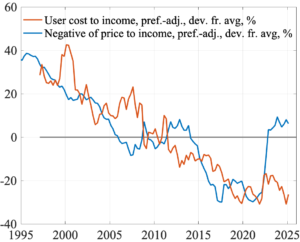
Lars E.O. Svensson is a Professor at the Department of Economics, Stockholm School of Economics (SSE) , specializing in monetary policy, financial economics, and macroeconomic stability. His work critically examines household debt sustainability, mortgage market regulations, and central bank transparency. He has contributed extensively to policy debates in Sweden through särskilt yttrande (special comments) and media engagements. His recent research focuses on the valuation of Swedish housing markets , challenging traditional indicators like price-to-income ratios by emphasizing user-cost metrics. He also investigates the relationship between household debt and consumption behavior during financial crises, debunking the debt-overhang hypothesis in the UK and Australia. Key themes include financial stability , debt-financed overspending , and macroprudential policy design . Notable publications include "Is Swedish Household Debt Too High?" (2025), "Are Swedish House Prices Too High?" (2025), and "Monetary Mystique" (2022). His work appears in NBER Working Papers , CEPR Discussion Papers , and journals like the American Economic Review . Despite frequent policy commentary, no explicit scientific awards are listed in the provided texts.