Professor Tirthankar Roy holds the position of Professor of Economic History at the London School of Economics and Political Science (LSE). His expertise spans South Asian economic history, global historical dynamics, environmental history, and the legacies of colonial empires. He teaches courses such as EH307 (Economic History of South Asia, 1600–2000) and EH404 (India and the World Economy). His research interrogates long-term patterns in Indian capitalism, the interplay between climatic conditions and economic change, and the persistence of colonial legal frameworks in modern India. Key contributions include Monsoon Economies: India’s History in a Changing Climate and co-authored works like Law and the Economy in Colonial India and its sequel. His recent book Water and Development: The Troubled Economic History of the Arid Tropics examines water resource management in arid regions. He actively engages with public discourse via social media, countering historical myths about colonialism with evidence-based scholarship. Research interests include the economic development of South Asia, global historical comparisons, environmental determinants of economic activity, and the socio-political dimensions of colonial legal systems. His work bridges historical analysis with contemporary policy debates, emphasizing the need for evidence-based understanding of historical processes.
Role & Affiliations: Dana Burde is an Associate Professor and Director of International Education at New York University's Steinhardt School of Culture, Education, and Human Development. She holds affiliated faculty positions at NYU’s Wilf Family Department of Politics, Robert F. Wagner School of Public Service, and Columbia University’s Saltzman Institute of War and Peace Studies. Her work bridges education policy, conflict studies, and humanitarian aid effectiveness. Education: PhD in Comparative Education and Political Science (Columbia University), Master’s in Educational Administration/International Education (Harvard University), BA in English Literature (Oberlin College). Research Focus: Examines the intersection of education and political violence, particularly in conflict zones like Afghanistan and Pakistan. Her studies emphasize community-based schooling, NGO impact, and policy-driven solutions to reduce conflict through equitable education access. Recent projects include analyzing learning outcomes in transitioning Afghan schools and youth aspirations in Kenya and Pakistan. Key Achievements: Awarded the 2017 Grawemeyer Award for her seminal book Schools for Conflict or for Peace in Afghanistan , which critiques foreign education aid in conflict zones. Her research has been funded by $8.4 million in grants from institutions like the Spencer Foundation and USAID. Grants & Funding: Major funders include the Spencer Foundation, National Science Foundation, U.S. Institute of Peace, and Danish International Aid Agency. Her work prioritizes scalable, evidence-based interventions in fragile states.
Abraham L. Newman is a Professor at the Edmund A. Walsh School of Foreign Service and the Government Department at Georgetown University, where he also serves as Director of the BMW Center for German and European Studies. His work bridges political science, international relations, and global regulatory studies, with a focus on the intersection of economic interdependence and political power. PhD in Political Science – University of California, Berkeley MA in Political Science – University of California, Berkeley MA in International Relations – Stanford University BA in International Relations – Stanford University His research centers on globalization, data privacy, financial regulation, and weaponized interdependence . He investigates how transnational networks, particularly in finance and digital infrastructure, are leveraged for geopolitical advantage. His work emphasizes the evolving role of private actors, regulatory institutions, and technological change in shaping international order. Analysis of his recent publications reveals a strong focus on economic statecraft, digital sovereignty, AI governance, and transatlantic regulatory dynamics . Themes such as financial sanctions, data privacy enforcement, and the weaponization of global networks recur across his scholarship, reflecting a cohesive research agenda on power in an interconnected world. While no specific scientific awards are listed in the provided text, his publications in top journals like Science , Nature , International Organization , and World Politics indicate significant scholarly recognition. He has advised or collaborated on major research projects related to transnational regulation, GDPR implementation, and global financial governance . Although no specific grants are listed, his leadership of the BMW Center suggests involvement in externally funded research initiatives. He has also edited or contributed to collaborative academic volumes across institutions such as Princeton and Rice Universities. His leadership of the BMW Center for German and European Studies places him at the center of a research team focused on transatlantic relations, EU policy, and comparative political economy. This center likely supports a network of scholars, students, and visiting researchers engaged in European and global governance studies.
Karl-Erik Årzén is Professor and Head of the Department of Control Engineering at Lund University's Faculty of Engineering. He is also Co-director of the Wallenberg AI, Autonomous Systems and Software Program (WASP) and a key member of ELLIIT, the excellence center in information technology. His roles include leadership in AI and digitalization profile areas at both LTH and Lund University. His research lies at the intersection of control engineering and computer science, with a focus on cyber-physical systems, real-time systems, embedded control, and resource management in cloud and edge computing environments. He has pioneered methods for predictable performance in cloud applications and dynamic resource allocation using control-theoretic approaches. The recent publications highlight a strong trend in control over the cloud and edge, real-time scheduling co-design, distributed camera systems, and reinforcement learning for auto-scaling. Key topics include model predictive control, LQG-based scheduling, bandwidth allocation, and robustness in cyber-physical systems. The work spans theoretical control design and practical implementation in distributed systems. His scientific awards include multiple Best Paper Awards from IEEE and ACM conferences in 2018, 2016, and 2004, recognizing excellence in autonomic computing, edge computing, and real-time systems. Best Paper Award, IEEE International Conference on Autonomic Computing, 2018 Best Paper Award, IEEE International Conference on Edge Computing (EDGE), July 2018 Best Paper Award - RTNS 2016 Best Paper Award - RTCSA 2004 Årzén has supervised over 20 PhD students, including Mikael Johansson, Anton Cervin, Yang Xu, and Per Skarin, and currently supervises Ahmed Al Bayati and Max Nyberg Carlsson. His grant portfolio includes major projects such as WASP, AORTA (VINNOVA), and ELLIIT's 'Robust and Secure Control over the Cloud'. He has also contributed to innovation through tools like TrueTime and Jitterbug. He leads the RobotLab LTH initiative and is involved in the Nordic University Hub on Industrial Internet of Things (HI2OT). His work bridges academia and industry, with collaborations on adaptive control, cloud-native systems, and autonomous robotics.
Professor Edward Palmer is a faculty member in the School of Education at the University of Adelaide, serving as Director of the Unit of Digital Education and Training and Acting Deputy Head of School. His research focuses on technology's role in education and training, particularly in virtual/extended realities, AI-driven assessment, and personalized learning approaches. He has secured over $3 million in funding from government and industry partners, with projects addressing AI ethics, VR applications in medical training, and MOOC design. Education & Roles: Holds academic leadership positions and directs digital education initiatives. Research: Investigates AI in education, VR for situational awareness, and innovative assessment methods. Active in collaborative projects with industry and defense sectors. Grants & Funding: Secured significant grants for ventures in AI ethics, VR training simulations, and digital health hubs. Labs/Teams: Leads the Unit of Digital Learning and Society, collaborating with postdocs like Daniel Lee on AI and VR projects. His work emphasizes practical applications, such as medical procedure training in VR and adaptive learning systems. He mentors HDR students and postdocs in AI-driven training scenarios and digital education innovation.
Dr Nicola Fearn is a Lecturer in the Discipline of Occupational Therapy at the Sydney School of Health Sciences, Faculty of Medicine and Health, The University of Sydney. Since joining in 2024, she has integrated 19 years of clinical experience in Australian and UK acute hospital, rehabilitation, and community settings with her research on cancer rehabilitation and lymphedema management. She maintains active clinical practice as an accredited lymphoedema therapist. Her educational background includes: Occupational Therapy qualification (2005) PhD in breast lymphoedema assessment, incidence, and risk factors following breast cancer treatment (2022) Dr Fearn's research program addresses critical gaps in cancer survivorship through four interconnected pillars: cancer rehabilitation focusing on long-term quality of life; lymphoedema management (particularly breast-related); neurological upper limb rehabilitation for stroke and brain injury; and implementation science to translate evidence into clinical practice. Her work consistently emphasizes patient-centered approaches and interdisciplinary collaboration. Analysis of her 11 publications since 2022 reveals dominant themes in constraint-induced movement therapy for stroke rehabilitation (60% of output) and breast lymphoedema quantification/management (30%), with strong methodological diversity spanning systematic reviews, qualitative studies, feasibility trials, and telehealth adaptations. Key trends include integration of behavior change frameworks (Theoretical Domains Framework, COM-B model) and growing emphasis on health equity for diverse populations. Dr Fearn actively supervises HDR students interested in cancer survivorship and evidence implementation, and has secured the 2024 FMH Start-up Scheme grant. Current projects include SURPASS (patient-centered survivorship care), DIVERSE (supportive care for diverse backgrounds), ReCITE (remote constraint-induced therapy), and telehealth validation studies for rehabilitation assessments. As a member of the Australasian Lymphology Association, she collaborates with St Vincent's Health Network teams across oncology, neurology, and rehabilitation services to develop clinically relevant interventions that address both physical and psychosocial aspects of survivorship and neurological recovery.
Luís B. Elvas is an Assistant Professor at ISCTE-University Institute of Lisbon's Department of Social and Business Sciences (SINTRA) and a Research Assistant at ISTAR-Iscte Research Center. He holds qualifications including a Technical Specialization in TensorFlow for AI (Coursera, 2021) and certifications in IoT/Blockchain from ISCTE and cybersecurity from Palo Alto Networks. His research spans artificial intelligence, healthcare informatics, smart cities, and blockchain, with applied work in medical imaging, data sharing, and urban analytics. Research interests include: Healthcare AI : Developing deep learning models for cardiac diagnostics, medical imaging analysis, and blockchain-based health data systems Smart Cities : Implementing IoT solutions for urban mobility optimization, disaster management, and sustainable transportation Data Science : Creating predictive analytics frameworks for clinical decision support and urban planning His publications demonstrate a strong focus on AI-driven healthcare solutions (67% of recent works) and smart city technologies (33%), with emerging interests in blockchain and NLP. Research consistently targets real-world applications in clinical settings and urban environments. Awards: Award for best internship, Order of Engineers (2022) Distinction for best internship, Order of Engineers (2021) He leads/contributes to multiple EU research consortia including AMR-EDUCare (antimicrobial resistance education), NEEM (e-health in Nepal), and Blockchain.PT. Coordinates the IEEE Computational Intelligence Society Student Branch Chapter at ISCTE and developed the ManagiDiTH master's program in digital health transformation.
Mike Rosulek is a Professor at Oregon State University's School of Electrical Engineering and Computer Science. He is a leading expert in cryptographic protocols for secure computation, with a focus on practical applications of garbled circuits, oblivious transfer, and private set intersection. His work bridges theoretical and applied cryptography, and he has authored the textbook The Joy of Cryptography , set for a revised print edition by MIT Press in December 2025. Research Interests Secure Multi-Party Computation Garbled Circuit Optimization Private Set Intersection Malicious Adversary Resistance Cryptographic Primitives Post-Quantum Security Rosulek has mentored numerous PhD and Master's students, including Ni Trieu , Lawrence Roy , and Jaspal Singh . His research is supported by grants from the NSF, Google, and Visa Research. Notable achievements include best paper honorable mentions at Crypto 2021 and the development of the first practical garbled neural networks. Scientific Awards NSF CAREER Award Google Faculty Research Award Visa Research Faculty Award Rosulek actively contributes to the cryptographic community through program committee roles at top conferences and co-organizing workshops like CFAIL. He also maintains an annotated bibliography of secure computation research and provides mentorship materials for graduate students.
Professor Jorge E. Viñuales is the Harold Samuel Chair of Law and Environmental Policy at the University of Cambridge. He founded the Cambridge Centre for Environment, Energy and Natural Resource Governance (C-EENRG) and holds affiliations with the University of Cambridge Conservation Research Institute . His academic roles include directing PhD programs, three MPhil programs, and serving as head of research. His research focuses on international environmental law , energy law , and investment law . Recent work explores climate policy , energy transition economics , and resource governance through complex systems modeling. His interdisciplinary research with C-EENRG colleagues has been published in Nature Climate Change , Global Environmental Change , and Climate Policy . Notable scientific recognition includes the Choice Outstanding Academic Title 2021 for his co-edited volume on the UN Friendly Relations Declaration. He serves as Chairman of the Compliance Committee of the UN-ECE/WHO-Europe Protocol on Water and Health, and as co-General Editor of the ICSID Reports (CUP) and Cambridge Studies on Environment, Energy and Natural Resources Governance (CUP).
Lisa Wills serves as Assistant Professor of Computer Science at Duke University's Trinity College of Arts & Sciences and holds a joint appointment in Electrical and Computer Engineering at the Pratt School of Engineering since 2019. Her research bridges computer architecture and domain-specific applications, with a focus on hardware acceleration for computationally intensive fields. Dr. Wills earned her Ph.D. from Columbia University in 2014. Her academic journey reflects a deep commitment to advancing hardware-software co-design methodologies for real-world computational challenges. Her research centers on developing efficient hardware accelerators for big data analytics, particularly in genomics, graph processing, and database systems. She pioneers frameworks that simplify accelerator deployment while tackling critical bottlenecks in genomic data analysis, protein structure prediction, and privacy-preserving computing. Current work focuses on hardware-aware machine learning systems and energy-efficient architectures for emerging AI applications. Analysis of her publication record reveals a clear trajectory: from foundational work in database processing units (2014-2016) to specialized genomic accelerators (2019-2021), then evolving toward ML-enhanced design automation (2022-2023) and cutting-edge architectural abstractions (2024-2025). Her research consistently targets the intersection of hardware efficiency and domain-specific computational demands, with increasing emphasis on AI/ML workloads. Google ML and Systems Junior Faculty Award (2025) Dr. Wills actively mentors doctoral students including Chris Kjellqvist (lead architect of Beethoven accelerator framework), Mason Ma (PyTFHE FHE framework), and Mansi Choudhary (COCOSSim accelerator simulator). Her research is supported by significant grants including the NSF AI Institute: Athena ($20M, 2021-2027), Meta-funded ProSE accelerator project (2023-2026), and NSF CAREER award (2021-2026), totaling over $25M in active funding. She directs the APEX Lab (Application-driven Programmable Efficient Accelerated Systems), which develops open-source frameworks like Beethoven for FPGA/ASIC accelerator deployment and focuses on lowering barriers for non-hardware researchers to leverage custom acceleration in genomics, AI, and big data applications.
Prof. Dr. Estela Suarez is a Professor of High Performance Computing at the Institute for Computer Science, University of Bonn (W2 in the Jülich Model) and Joint Lead of the Division "Novel System Architecture Design" at the Jülich Supercomputing Centre (JSC), Forschungszentrum Jülich GmbH. She also leads the Research Group "Next Generation Architectures and Prototypes" at JSC and serves as Spokesperson of Helmholtz Information Program 1, Topic 2. Currently on sabbatical during the 2024/2025 and 2025 academic years, she remains active in research leadership roles. 2010: PhD in Physics from University of Geneva, Switzerland 2004: Master in Physics, Specialization in Astrophysics, University Complutense of Madrid, Spain Professor Suarez specializes in high performance computing with particular expertise in heterogeneous HPC system architectures and modular supercomputing architecture (MSA). Her research spans hardware prototyping and evaluation, system software development, operational data analysis, and co-design methodologies. She has pioneered approaches to address hardware heterogeneity through system-wide orchestration of diverse computing resources, enabling more efficient scientific computing across multiple domains. Her work bridges theoretical computer architecture with practical implementation challenges in exascale computing environments, focusing on real-world applications that require specialized hardware configurations. Professor Suarez's publication record shows a clear evolution from foundational work on the DEEP project (2016) through the development of modular supercomputing concepts (2019-2021) to current applications across diverse scientific domains (2022-2024). Her recent publications demonstrate how modular architectures can be effectively applied to climate modeling, neuroscience simulations, quantum chemistry calculations, and other computationally intensive fields. This trend highlights her focus on practical implementation challenges and the growing importance of adaptable computing architectures in modern scientific research. 2023/2024 Lehrpreis der Universität Bonn: UniBonn teaching award Professor Suarez has secured significant research funding through major projects including NUMERIQS (Projects A05, B02, and Z02), European Processor Initiative (EPI), DEEP-SEA (Software for Exascale Architectures), IFCES2 (optimization of simulation algorithms for exascale supercomputers), and AIDAS (virtual laboratory between Forschungszentrum Jülich and CEA on AI and data analytics). While currently not accepting new students due to sabbatical, she has previously mentored graduate students in high performance computing techniques and has delivered numerous invited lectures at international conferences. Professor Suarez leads the "Next Generation Architectures and Prototypes" research group at JSC and serves as Joint Lead of the "Novel System Architecture Design" division. She chairs the Research and Innovation Advisory Group (RIAG) from EuroHPC Joint Undertaking since 2024. Her work involves close collaboration with international research teams on advancing supercomputing architectures, including contributions to the University of Bonn's new HPC system "Marvin" which ranks on both the TOP500 and GREEN500 lists.
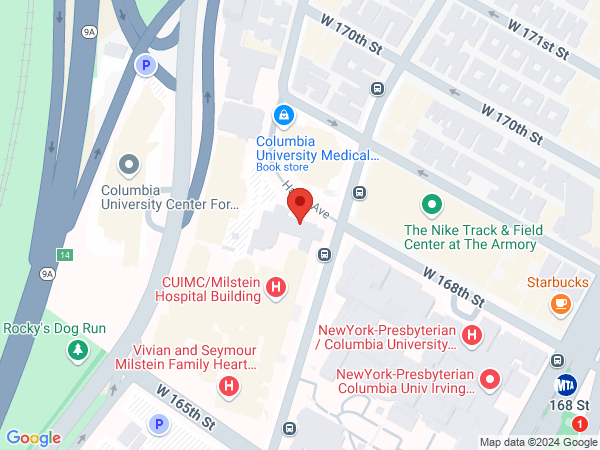
Dr. Kiran T. Thakur serves as the Herbert Irving Associate Professor of Neurology at Columbia University Irving Medical Center and practices as an inpatient neurologist at NewYork-Presbyterian/CUIMC. Her clinical expertise spans neuroinfectious diseases, neuroimmunology, emergency neurology, and global health, with active clinical and research engagements across eight countries in Africa, Southeast Asia, and the Caribbean. She holds leadership roles including Neurology Clerkship Director at Perdana University Graduate School of Medicine (Malaysia) and serves as a neurology consultant for the World Health Organization. Her educational background includes an MD from Tufts University School of Medicine (2008), internship at Johns Hopkins Hospital's Osler Medical Service, neurology residency at Harvard's Brigham & Women's Hospital (where she served as chief resident), and fellowship in neuroinfectious disease/neuroimmunology at Johns Hopkins Hospital. She is additionally pursuing a Master of Science in clinical trials at the London School of Tropical Medicine and Hygiene. Dr. Thakur's research program focuses on improving detection and management of neuroinfectious diseases in hospital settings, with particular emphasis on vulnerable populations including HIV-positive individuals and immigrants. Her work integrates clinical, translational, and implementation science approaches to address cerebral malaria, tuberculous meningitis, Zika-related complications, and SARS-CoV-2 neurological outcomes. Current projects investigate novel diagnostics for infectious meningoencephalitis, risk factors for neuroinvasive infections, and therapeutic strategies for viral encephalitis. Analysis of her 15 most recent publications reveals consistent focus on neuroinfectious disease epidemiology (particularly in resource-limited settings), diagnostic challenges in immunocompromised patients, and global health implementation strategies. Her work prominently features Zika virus complications, tuberculous meningitis management, and CNS infections in travelers, reflecting her dual expertise in tropical medicine and neuroimmunology. Scientific recognition includes: Lewis P. Rowland Teaching Award (Columbia University, 2016) CDC Nakona Citation Award (2014) Dr. Thakur directs the NIH NINDS K23-funded study on pathogen identification in neurological infections (2018-2023) and leads Columbia's post-doctoral neuroinfectious disease fellowship for physician-scientists from low/middle-income countries. Her research program receives support from the NIH, World Federation of Neurology, and American Academy of Neurology, with implementation studies conducted in collaboration with WHO, PAHO, and CDC. The Thakur Laboratory at Columbia's Neurological Institute coordinates international research networks across Malawi, Vietnam, Bangladesh, Uganda, and the Dominican Republic. Her team conducts clinical trials on antimicrobial dosing, develops diagnostic algorithms for resource-limited settings, and implements training programs to build neuroinfectious disease capacity in underserved regions, with current emphasis on SARS-CoV-2 neurological sequelae and tropical disease management.
Abolfazl Asudeh is an Associate Professor in the Department of Computer Science at the University of Illinois Chicago and director of the Innovative Data Exploration Laboratory (InDeX Lab) . He is a Senior Member of ACM and IEEE , serving as Associate Editor for IEEE Transactions on Knowledge and Data Engineering , VLDB Ambassador , and VLDB Endowment Liaison to NSF . His research focuses on Algorithm Design for Data and AI problems , emphasizing efficient, accurate, and responsible solutions through Approximation Algorithms , Randomized Methods , and Computational Geometry . Recent work explores LLM optimization ( Needle ), fair data structures ( FairHash ), and responsible AI frameworks ( Chameleon ). Scientific awards include Communications of the ACM Research Highlight Google Research Scholar Award SIGMOD 2019 Research Highlight Best of VLDB 2020 SIGMOD 2017 Reproducibility Award Grants: NSF IIS-2348919 (2024-2027): Fairness-aware Data Structures NSF IIS-2107290 (2021-2024): Collaborative Fairness Research The InDeX Lab develops systems like Needle (image retrieval) and RSR (matrix multiplication). His work integrates fairness , reliability , and computational efficiency across data structures , LLMs , and responsible AI implementations.
Sebastian U. Stich is a tenured Professor at CISPA Helmholtz Center for Information Security and a member of the European Lab for Learning and Intelligent Systems (ELLIS). His research focuses on optimization for machine learning, collaborative learning (distributed, federated, and decentralized methods), efficient optimization techniques, adaptive stochastic methods, and privacy/security in machine learning. Recent appointments include ERC Consolidator Grant 2024 for the CollectiveMinds project. Key contributions in federated/decentralized learning, uncertainty estimation, and communication-efficient optimization. Active in workshop organization, including the Optimization for Machine Learning workshop at NeurIPS 2024. Teaching modern optimization methods at Saarland University (2023-2025). His work has been recognized with awards such as the Google Research Scholar Award (2023) and Meta Privacy-Enhancing Technologies Award (2022) . His research group includes postdocs Dr. Anton Rodomanov and Dr. Rotem Mulayoff, and PhD students Xiaowen Jiang and Yuan Gao.
Thomas Greenough serves as the Head of International Academic Development at The Glasgow School of Art (GSA), providing academic leadership in internationalisation initiatives since returning to the institution as staff in 2013. A GSA graduate himself (Fine Art, 1993), he bridges institutional history with contemporary global academic strategy. His educational background: Bachelor of Fine Art, The Glasgow School of Art (1993) Greenough's research centers on transforming international higher education through: Strategic academic partnership development across continents Design and implementation of collaborative educational programmes In-country delivery models for creative education Academic relationship-based international recruitment Research and knowledge exchange frameworks As a PGR supervisor, Greenough mentors students exploring internationalisation of creative pedagogy while leveraging his leadership role to secure partnership-driven research funding and collaborative projects that enhance GSA's global footprint.