Mads Leth Jakobsen is an Associate Professor at the Department of Political Science , Aarhus University, specializing in Public Leadership , Leadership Development , and Bureaucracy and Debureaucratization . He serves as a member of the King Frederik Center for Public Leadership management team, focusing on leadership for public value creation and handling complex social challenges like the climate crisis. Academic Rank: Associate Professor Primary Research: Public Leadership, Distributed Leadership, Climate Governance Teaching: Public Leadership and Governance on political science programs Key Projects: Public Value Leadership (2022), Distributed Leadership (2012-2016) His research explores paradox leadership , organizational responses to climate challenges, and leadership credibility. Recent publications examine municipal climate strategies, bureaucratic dynamics, and leadership development frameworks. He emphasizes the interplay between leadership practices and employee outcomes in public sector organizations. Scientific awards and student supervision details are not listed in the available information. His articles highlight a strong focus on reconciling performance regimes with organizational learning, leadership credibility, and innovative governance models in public sector contexts.
Ditte Alexandra Winther-Lindqvist is a Professor at the Danish Institute of Education (Aarhus University), specializing in Educational Psychology. Her work focuses on early childhood education, pedagogy of care, play theory, and grief psychology, with a strong emphasis on sustainability and ethical practices in educational settings. Research Interests: Ethics of care, pedagogy, children's wellbeing, play dynamics, grief in educational contexts, and sustainable development goals. Projects: Leads the UNESCO CHAIR initiative 'Supporting Early Years Care and Education' (2022–2027) and contributes to 'Strengthening pedagogical care in daycare institutions' (2024–2027). Scientific Awards: Recipient of the 2023 Award for best practice in School-Based Family Counseling for ‘Green transition and Worldcare in ECEC’. Collaborations: Active in international networks, including the International Society for Theoretical Psychology (ISTP) and the International Play Association, Denmark.
Stephen Alstrup is a Professor in the Algorithms and Complexity section at the Department of Computer Science (DIKU), University of Copenhagen, Faculty of Science. His research bridges theoretical computer science with practical applications in modern computational challenges. His primary research interests include: Algorithm design and analysis Graph algorithms and data structures Big Data processing techniques Streaming algorithms and Internet distribution Theoretical foundations with practical implementations Alstrup's work demonstrates how theoretical algorithm research can lead to real-world applications, as evidenced by his development of Octoshape technology for large-scale Internet streaming. His research spans from fundamental theoretical problems to applications in Big Data, cloud computing, and information retrieval systems. He has published extensively with 93 research outputs including journal articles, conference proceedings, and books. His recent work focuses on graph spanners, semantic hashing, recommendation systems, and universal graph structures, showing continued productivity in theoretical computer science. Alstrup actively engages with industry and media, contributing to discussions about Big Data applications, technology innovation, and how businesses can collaborate with universities to access cutting-edge knowledge and funding opportunities. His work has been featured in 10 media contributions discussing practical applications of algorithms in education, municipal IT projects, and business innovation.
Ciprian Cimpan is an Associate Professor at the Department of Green Technology (IGT), University of Southern Denmark, and a key member of the SDU Climate Cluster and SDU Life Cycle Engineering. His research focuses on Circular Economy , Industrial Ecology , Waste and Resources Management , and Life Cycle Assessment , with a strong emphasis on sustainable growth and resource efficiency. Postdoctoral Fellow, Norwegian University of Science and Technology (2019–2021) His recent publications highlight applications of LCA in evaluating additive manufacturing , plastic packaging , and critical material recycling within green transition contexts. He also investigates systemic challenges in textile waste , ICT product obsolescence , and rebound effects in reuse practices . Scientific awards include the DANROAD Prize (2025) for innovative drug recycling. He supervises PhD student Bubinek R. and teaches courses on Eco-efficient Engineering , Waste Management , and Solid Waste Processing .
Carsten Greve serves as Professor of Public Management and Governance and Head of the Department of Organization at Copenhagen Business School (CBS), where he maintains an office in room KIL/14.A-4.75 with contact number +4538153598. His academic leadership extends to directing departmental operations while maintaining an active research profile focused on the intersection of public sector management and private sector collaboration. At CBS, he teaches core courses including Leading Reform and Change for the Master of Public Governance program and Strategic Public Management Across the Public Sector , shaping the next generation of public sector leaders. Greve's research program centers on four interconnected domains: public management and governance systems, public management reform trajectories, public-private partnership frameworks, and market-based governance mechanisms. His work critically examines how privatization processes transform public service delivery, particularly in Nordic contexts where traditional welfare state models confront market-oriented reforms. Through comparative analyses of infrastructure projects and elderly care systems, he investigates the tension between efficiency-driven market mechanisms and democratic accountability requirements in public administration. His scholarship consistently bridges theoretical frameworks with Danish policy implementation challenges, especially in healthcare and transportation sectors. Recent publications reveal evolving research trajectories toward regulatory capitalism frameworks and agile governance models, with the 2025 Research Handbook on Privatisation synthesizing global privatization debates while the 2023 Handbook on Strategic Public Management advances collaborative governance approaches. His article corpus demonstrates increasing focus on temporal dimensions of reform implementation, risk allocation in complex partnerships, and the adaptation of public management practices in digitally transforming administrations. The recurrent Nordic case studies highlight distinctive administrative traditions navigating privatization pressures while maintaining public value commitments. No scientific awards or formal honors are documented in the available materials. Greve's supervisory record includes 10 successfully completed PhD dissertations at CBS, though specific student names and dissertation topics remain unlisted. His research activities generate substantial external engagement through presentations at national institutions including Rigsrevisionen (National Audit Office), Aalborg University, and Danske Professionshøjskoler, alongside international contributions to European Union policy reports. While grant funding details are unspecified, his prolific publication output across edited volumes, book chapters, and peer-reviewed journals indicates sustained research productivity.
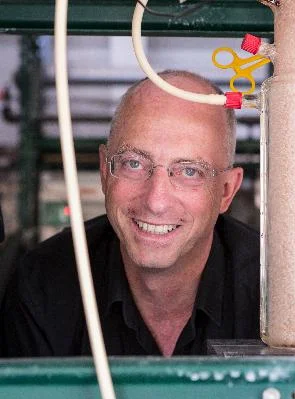
Mark van Loosdrecht is a Full Professor of Environmental Biotechnology at Delft University of Technology (The Netherlands). He holds academic ranks including Prof.dr.ir. and is affiliated with the Faculty of Applied Sciences and the Department of Environmental Biotechnology. His research focuses on biofilm processes, nutrient conversion, and wastewater treatment innovations such as the Anammox, Nereda, and BCFS processes. He has pioneered technologies for resource recovery and sustainable water treatment. Dr. van Loosdrecht has published over 700 scientific papers, holds 15 patents, and supervised over 50 PhD students. He is Editor-in-Chief of Water Research , a member of prestigious academies (KNAW, AcTI, NAE), and has received major awards including the Stockholm Water Prize and Lee Kuan Yew Water Prize. His work integrates scientific discovery with practical process development, addressing global environmental challenges. Education: MSc/PhD from Wageningen University. Active roles include leadership in the International Water Association (IWA) and editorial boards. Key achievements include the development of full-scale processes like Nereda aerobic granular sludge technology. He has been knighted in the Order of the Dutch Lion and recognized with the Beijing Great Wall Friendship Award. Research interests emphasize microbial ecology, bioremediation, and sustainable engineering solutions. His contributions span from fundamental microbiology to industrial-scale process implementation, with a focus on circular economy principles in water management.
John Rand is a Professor in Development Economics at the Department of Economics, University of Copenhagen, where he has been employed since 2021. He previously served as Professor (mso) at the Faculty of Social Sciences (2015-2020) and Faculty of Science (2011-2014), Associate Professor (2008-2011), and Assistant Research Professor (2005-2008) at the same institution. He is currently Vice-chair of The Consultative Research Committee for Development Research (FFU) and co-director of the Development Economics Research Group (DERG). Professor Rand's research focuses primarily on development economics, with specific expertise in applied econometrics, impact measurement, industrial economics, and interdisciplinary methods. His work spans topics including climate-smart agriculture, economic policy in developing countries, trade and productivity, and governance issues. He leads multiple externally funded research projects including 'Energy transition and climate-smart agriculture in Vietnam', 'Economic Research and Policy Making in Kenya', and 'Sedentarization and climate change resilience in Nigeria'. His extensive publication record shows a strong focus on empirical research in developing countries, particularly in Africa and Southeast Asia. His recent work demonstrates consistent attention to practical policy implications, with a growing emphasis on climate change adaptation, resource allocation efficiency, and the intersection of economic development with environmental sustainability. His research often employs rigorous quantitative methods to address real-world development challenges. Professor Rand is actively involved in several research networks including the Copenhagen Center for Disaster Research (COPE) as part of the steering group and the UCPH Migration Research Platform. He serves as Head of Studies for Global Development and teaches Development Economics (BA) and Theories, Facts and Current Issues (MSc Global Development). He has presented his research at numerous international conferences including UNU WIDER conferences, Nordic Conference in Development Economics, and various country-specific development forums. His work has been referenced in policy sources and picked up by news outlets, indicating its relevance to current development debates.
Troels Schultz Larsen is an Associate Professor in the Department of Social Sciences and Business at Roskilde University, specializing in Social Dynamics and Change. With a PhD and MSc in Public Administration, he has been with Roskilde University since 2005, progressing from PhD fellow to his current position as Associate Professor since 2014. His work focuses on urban sociology, territorial stigmatization, and the dynamics of marginalized urban areas within the Danish welfare state context. Dr. Schultz Larsen's academic journey includes: 2014-Present: Associate Professor, Department of Social Sciences and Business, Roskilde University 2009-2014: Assistant Professor/Post-Doc, Department of Society and Globalization, Roskilde University 2005-2009: PhD Fellow, Department of Society and Globalization, Roskilde University 1998-2005: MSc (Public Administration equivalent), Department of Social Science, Roskilde University Identifying his theoretical position as "Historically-Specific Praxis-Theory," Dr. Schultz Larsen draws inspiration from Bourdieu, Wacquant, Gramsci, and other critical theorists. His research spans urban sociology, territorial stigmatization, welfare state dynamics, and public innovation. He examines how marginalized urban areas are produced and maintained through intersecting social, economic, and political processes, with particular attention to the Danish context and its "ghetto list" policies. His work challenges simplistic interpretations of urban marginality, emphasizing the complex interplay between housing markets, labor markets, education systems, and family structures in reproducing spatial inequalities. Dr. Schultz Larsen's recent publications reveal a deepening focus on territorial stigmatization as both a theoretical concept and practical policy issue. His 2024-2025 work, including the book "Fragmenting Cities: The State, Territorial Stigmatization and Urban Marginality," develops a comprehensive framework for understanding how state policies actively produce spatial inequalities. He critically analyzes Denmark's controversial "ghetto list" policy, demonstrating how such classifications function as mechanisms of dehumanization and social exclusion. His research increasingly adopts comparative perspectives, connecting Danish urban marginality to broader European and global patterns of spatial inequality. Dr. Schultz Larsen's scholarly contributions include: Active participation in major research projects including EU-HORIZON24's RURALITIC Membership in the Royal Danish Academy (2025-2027) Extensive media engagement on urban policy issues With over 15 years of teaching experience at Roskilde University, Dr. Schultz Larsen has supervised numerous student projects across social sciences, politics, and public administration. His supervision spans diverse topics including urban policy, social integration, housing, labor market policies, and public innovation. He has been involved in several significant research grants, most notably as a participant in the CLIPS project (Collaborative Innovation in the Public Sector), a major multi-institutional collaboration examining innovation in public services. His current research includes the EU-HORIZON24 project RURALITIC and the BOSID project on housing stigmatization in Denmark. Dr. Schultz Larsen is actively involved in research networks focused on urban marginality and territorial stigmatization. He collaborates closely with Dr. Katrine Nørgaard Delica on multiple projects and publications, including their forthcoming book "Fragmenting Cities." His work with the North Seeland Police Department on the "TRYK Politi" initiative represents a significant practice-oriented research partnership examining citizen engagement in crime prevention. As a member of the Royal Danish Academy (2025-2027), he contributes to national scholarly discussions on urban policy and social governance.
Pernille Bjørn is a Professor in Computer Supported Cooperative Work (CSCW) at the Department of Computer Science , University of Copenhagen (DIKU), where she has been since May 2015. Her research investigates collaborative work practices to design cooperative technologies, focusing on domains like healthcare, global software development, startup companies, and digital fabrication. Faculty of Science, University of Copenhagen Human-Centred Computing Section Research Interests : Bjørn’s work spans CSCW , Human-Computer Interaction , and Digital Fabrication , with applications in healthcare systems, cross-cultural software development, and inclusive technology design. She explores collaborative virtual reality training, FemTech, and crisis computing. ACM Distinguished Member (2024) Publications : Published in top venues like ACM Transactions on Computer-Human Interaction , CSCW , and CHI , her recent work examines hybrid work asymmetry, neurodiverse accessibility, and art-driven collaborative research.
Niels Martin Larsen is an Associate Professor at the Aarhus School of Architecture, affiliated with Research Laboratory 2: Technology, Building Cultures and Settlement. He holds a PhD in algorithmic design and has been part of academic staff since 2009. His roles include teaching and research in technology-driven architectural design. Education and Career: PhD student at Aarhus School of Architecture (2009–present) Master's and Bachelor's teaching assistant (2002–2008) Worked at architectural firms including Stuff Aps and 3XNielsen A/S (1999–2008) Graduated from Aarhus School of Architecture (1992–1998) with an internship at Enrique Miralles in Barcelona (1996) Research Interests: Focus on technology and digital design , including algorithmic design, architectural geometry, and sustainable materials. Recent work explores building reuse, digital fabrication, and timber structures. His projects bridge computational methods with practical architectural applications. Awards: 2012: Best Paper Award at Advances In Architectural Geometry for 'Engineering of complex geometry' Grants and Projects: Key roles in projects like 'Recycling on the Land Register' (2023–2025) and 'Material Imagination: Reconnecting with the Matter of Architecture' (2017–2021). Collaborates on Nordic networks for digital fabrication and timber innovation. Labs/Teams: Active in Research Laboratory 2, focusing on technology-driven solutions for building cultures and habitation.
Kim Bjerge serves as Associate Professor and Group Leader in Aarhus University's Department of Electrical and Computer Engineering, specializing in computer vision and machine learning applications for ecological monitoring. His research bridges engineering and environmental science to develop innovative solutions for insect biodiversity assessment and sustainable agriculture. His core research interests include computer vision, deep learning, and edge computing systems for real-world ecological monitoring. Dr. Bjerge develops time-lapse camera pipelines and deep learning models specifically for insect population tracking in natural environments, with emphasis on agricultural applications like black soldier fly farming and biodiversity conservation. His work integrates signal processing techniques with biological data to create field-deployable monitoring systems. Recent publications reveal a strong trend toward practical implementations of computer vision in entomology, particularly focusing on edge processing for camera traps, automated trait prediction in insect farming, and biodiversity monitoring systems. Key research areas include nocturnal insect monitoring, floral environment analysis, and developing specialized datasets like AMI for insect identification in wild settings. He leads multiple significant research projects funded through competitive grants: MAMBO: Modern Approaches to Monitoring Biodiversity (2022-2026) FLYgene: Sustainable Insect Production for Livestock Feed (2022-2026) Automatisk monitering af nataktive insekter: Automatic nocturnal insect monitoring (2024-2029) Pilotprojekt for automatisk registrering af invasive plantearter: Invasive species monitoring (2020-2021) As head of the Signal Processing and Machine Learning research group, Dr. Bjerge directs interdisciplinary teams developing computer vision solutions for biological monitoring systems. His laboratory focuses on creating robust field-deployable technologies including scanner-based arthropod imaging systems, time-lapse camera networks for floral environments, and edge AI processors for real-time insect monitoring in agricultural settings.
Kristian Sevdari is a Postdoctoral Researcher at the Department of Wind and Energy Systems, Technical University of Denmark (DTU). He was born in Kucove, Albania, in 1995, and holds a B.Sc in electrical engineering from the Polytechnic University of Tirana (2016), an M.Sc from UiT Norges arktiske universitet, Norway (2020), and a Ph.D. from DTU (February 2024). Since 2020, he has been working at DTU on multiple projects including Solar-Move, AHEAD, FLOW, EV4EU, ACDC, and FUSE. His research focuses on renewable energy integration and electric vehicle grid integration, with specific expertise in vehicle-to-grid systems, power system dynamics and stability, prosumers and flexible demand, wind power integration, and smart grid technologies. His work contributes to UN Sustainable Development Goals related to sustainable energy and climate action. Dr. Sevdari's recent publications demonstrate a strong trend toward solving practical challenges in EV-grid integration, with emphasis on bidirectional charging technologies, harmonics analysis, battery second-life applications, and smart charging strategies for residential and urban environments. His research bridges theoretical control approaches with experimental validation across multiple European contexts. Best paper award at 2024 IEEE Transportation Electrification Conference & Expo Best paper award of the IEEE PES ISGT-Europe 2021 conference As a supervisor, he has guided multiple Master's theses on topics including telematics integration for EV cost reduction, open charge point protocol implementation, vehicle-to-grid testing, and compatibility testing for EV ecosystems. He is actively involved in the IEEE PES Task Force on electric vehicle grid integration and IEA Task 53, and is the founder of IEEE REST conferences, Qendra SUSALB, and EkoVolt.
Elham Ramin is a Researcher at the Department of Chemical and Biochemical Engineering at the Technical University of Denmark (DTU), affiliated with the Center for Energy Resources Engineering (CERE) and the Process and Systems Engineering Centre (PROSYS). Her work contributes to multiple UN Sustainable Development Goals, particularly in clean water and sanitation, affordable and clean energy, and industry innovation. Dr. Ramin completed her PhD at DTU (2010-2014) with research focused on modeling water quality in sewer-WWTP systems. Her academic journey demonstrates a strong foundation in environmental process engineering with applications to real-world water treatment challenges. Her research interests span wastewater treatment optimization, Power-to-X applications for water resource recovery, industrial symbiosis in water management, and biomanufacturing process modeling. She specializes in computational fluid dynamics, activated sludge modeling, and one-dimensional simulation models for wastewater treatment plants. Her work bridges environmental engineering with sustainable resource management, focusing on practical solutions for water-energy nexus challenges. Analysis of her recent publications reveals a strong trend toward integrating sustainable energy solutions with water treatment processes, particularly Power-to-X technologies. Her research portfolio shows increasing focus on digitalization of water resource recovery facilities and cross-sectoral industrial symbiosis for optimal resource utilization. The work demonstrates strong interdisciplinary connections between environmental engineering, chemical process modeling, and sustainable development. Dr. Ramin has participated in significant research projects including ERASE (Evaluation of Resource recovery Alternatives in South African water) and GECKO (Green and Circular Innovation for Kenyan Companies), demonstrating international collaboration and application of research to diverse water management contexts. Her work has generated substantial academic interest with multiple publications receiving significant downloads and reader engagement on platforms like Mendeley. She is actively involved with research centers including CERE and PROSYS at DTU, contributing to interdisciplinary teams focused on energy resource engineering and process systems optimization. Her collaborations extend to pharmaceutical industry applications, particularly in vaccine manufacturing development and digital twin implementation for bioprocesses.
Wiebke Meesenburg is an Assistant Professor in the Department of Civil and Mechanical Engineering at the Technical University of Denmark (DTU), specializing in Thermal Energy. She is actively involved in research on large-scale heat pump systems, district heating integration, and digital twin applications for energy optimization. Her research focuses on sustainable thermal energy systems, particularly the design, monitoring, and optimization of heat pumps in district heating networks. Key areas include dynamic modeling, real-time adaptation, fouling mitigation, and the integration of renewable energy sources. She contributes to advancing energy efficiency and sustainability in urban infrastructure. The recent publications highlight a strong trend toward digitalization and optimization of thermal systems, with an emphasis on model-based monitoring, digital twins, and operation scheduling using advanced algorithms. Her work bridges mechanical engineering, energy systems, and computational modeling to improve system performance and reliability. She has supervised PhD research and contributed to major projects such as the implementation of digital twins for heat pump systems and EnergyLab Nordhavn. Collaborations involve key figures in energy research at DTU, including Professor Brian Elmegaard. While no formal awards are listed, her active participation in conferences and project leadership demonstrates recognition in her field. Wiebke Meesenburg has been involved in organizing and presenting at international events, including the 35th International Conference on Efficiency, Cost, Optimization, Simulation and Environmental Impact of Energy Systems and workshops on Modelica and flexible heat supply. Her work is embedded in interdisciplinary teams focused on future energy infrastructures and smart urban energy systems.
Stephen Carney is a Professor (MSO) in Educational Studies at Roskilde University's Department of Humanities and Technology, where he has been based for over 20 years. An Australian by birth, he directs his research toward educational policy and comparative education. He serves as a key member of the Learning, Education and Pedagogy (LEAP) Research Center for Problem-Oriented Project Learning and previously served as head of studies for the University's Global Humanities bachelor program from 2018-2024. Carney earned his Doctor of Philosophy in Educational Studies from the University of Oxford in 2001, following a Master of Science in Educational Governance from the same institution in 1993. His academic journey began with a Master of Arts in Interdisciplinary Studies from UNSW Australia in 1990 and a Bachelor of Economics from The Australian National University in 1986. His research focuses on policy issues in higher education and schooling systems globally, with particular emphasis on university governance in Denmark and Europe, and school reform in the global south (primarily Nepal, India and western China). Carney has employed both policy analysis and ethnographic methods in his work. In recent years, he has explored methodological issues in education, particularly performative strategies for presenting schooling experiences. He served as president of the Comparative Education Society in Europe (CESE) from 2016-2022, demonstrating his significant standing in the international academic community. Analysis of Carney's recent publications reveals a consistent focus on comparative education, educational policy in a globalized world, and methodological innovations. His work frequently addresses the intersection of educational policy with cultural contexts, particularly examining how global educational trends are adapted in different national settings. A notable recent trend shows increasing attention to indigenous perspectives, reconciliation processes, and southern epistemologies in educational research. Book of the year (Shortlist): Globalization and Education Special Interest Group, Comparative and International Education Society, US (2022) George Bereday Prize for Most outstanding scholarly article published in the Comparative Education Review (2012) George Bereday Prize for Most outstanding scholarly article published in the Comparative Education Review (2009) Carney has served as principal investigator or participant in numerous research projects, including long-term initiatives on micro-credit financed entrepreneurial activities for women in Tanzania, local responses to global education reforms in Nepali primary schools, and comparative studies across Denmark, China and Zambia. His academic citizenship extends to review panels for new Master's programs and academic appointment committees. As an active researcher, he maintains collaborations across multiple countries and has recently engaged as a visiting researcher at the University of Modena Reggio Emilia.