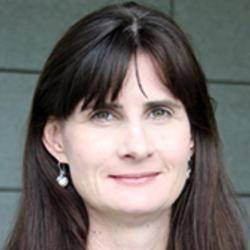
Vania Ceccato is a Professor at the Academy of Police Work, University of Borås, specializing in environmental criminology and situational crime prevention. She leads the international Nätverket Säkraplatser network, fostering collaboration between academia and practice for sustainable safety. Her research bridges urban design, rural criminology, and transit security, with a focus on inclusive safety measures. Her recent publications include studies on transit worker safety in Stockholm’s metro resilient urban design for climate and crime prevention LGBTQI+ safety in transportation rural-urban shooting patterns innovative survey methodologies Her work aligns with United Nations SDGs 9, 11, and 13, emphasizing how environmental criminology can drive sustainable, equitable urban development.
Matti Minkkinen is a Docent at the Turku School of Economics (University of Turku) and a Postdoctoral Researcher in Information Systems Science at the Department of Management and Entrepreneurship. His work bridges futures studies with ethics, privacy, and socio-technical systems in digital transformation. Recent roles focus on responsible AI governance and foresight methodologies. University: University of Turku School: Turku School of Economics Department: Department of Management and Entrepreneurship His research explores how digital technologies reshape organizational practices, emphasizing Futures Consciousness as a human capacity. Key themes include responsible AI , privacy protection , and causal layered analysis in scenario planning. Publications highlight ethical governance frameworks and EU policy debates. Recent articles address generative AI ethics , ML system integration , and AI auditing across journals like Communications of the Association for Information Systems and Information and Management . Topics cluster around socio-technical systems, digital ethics, and institutional adaptation to AI. Teaching and editorial roles include co-curating student research collections at Finland Futures Research Centre. No explicit scientific awards are listed, but his work contributes to foresight theory and practice.
Kathleen Liddell is the Herschel Smith Senior Lecturer of Intellectual Property Law at the University of Cambridge, where she serves as the Founding Director of the Cambridge Centre for Law, Medicine and Life Sciences and is a member of the Cambridge Centre for IP and Information Law. She holds degrees including a D.Phil from Oxford, LLB (hons) and BSc from Melbourne, and an MBioeth from Monash. With experience in both academic and practical legal settings, including private practice and public sector legal services for a health department, Dr. Liddell brings a comprehensive perspective to her interdisciplinary work at the intersection of law, medicine, and technology. Dr. Liddell's educational background reflects her interdisciplinary approach: D.Phil in Law from the University of Oxford, focusing on regulation of controversial genetic technologies in morally pluralist societies LLB (hons) and BSc from the University of Melbourne MBioeth from Monash University Her research focuses on health, medicine and society, with particular emphasis on intellectual property frameworks that govern medical innovation. Dr. Liddell examines how intellectual property rights both help and hinder the translation of medical discoveries into effective clinical treatments, and how these frameworks could be modified to be more effective and just. She leads international collaborations investigating intellectual property law across five key areas of bioinnovation: pharmaceutical repurposing, antibiotics, biologics, rare diseases, and machine-learning based precision medicine. Her work also addresses legal challenges in pre-mortem interventions for organ transplantation, regulatory gaps in healthcare, and the application of theoretical insights from regulatory and political theory to biomedical controversies. Dr. Liddell employs diverse legal methodologies including statutory and case law analysis, normative analysis drawing on moral philosophy, regulatory theory, empirical investigations (interviews, surveys, patent mapping), and expert meetings. She has made significant contributions to understanding the impact of patent law on life sciences innovation, particularly regarding genetic technologies, precision medicine, and diagnostic tools. Her notable scientific contributions include: Principal investigator for a major research project on intellectual property rights, precision medicine and genomic medicine (2015-2018) International collaborations on intellectual property law in bioinnovation Empirical studies on the impact of patent law on medical innovation Research on regulatory frameworks for emerging health technologies Analysis of legal implications for organ transplantation and antimicrobial resistance Dr. Liddell actively supervises research theses at all levels, including PhD students, and teaches across various courses including Law and Ethics of Medicine, Law, Medicine and Life Sciences, Intellectual Property, and the Law PhD Research Methodologies course. She also serves as a Senior Fellow at the University of Melbourne, teaching 'Law and Emerging Health Technologies.' Her research has significant practical applications, informing policy development in areas such as: Intellectual property frameworks for medical innovation Regulation of diagnostics and pharmaceuticals Legal aspects of precision medicine and genomic medicine Machine learning applications in healthcare Stem cell and regenerative medicine Gene editing technologies
Joseph G. Allen is an Associate Professor at Harvard T.H. Chan School of Public Health, where he directs the Harvard Healthy Buildings Program and serves as Deputy Director of the Harvard Education and Research Center for Occupational Safety & Health . He holds leadership roles in major public health initiatives including as Commissioner for The Lancet COVID-19 Commission and Scientific Advisor to the White House (2022-2024). His work bridges environmental health, building science, and public policy to advance human health in indoor environments. Education: D.Sc. in Exposure Assessment, Environmental Epidemiology & Biostatistics – Boston University MPH in Environmental Health – Boston University BS in Biology – Boston College Certified Industrial Hygienist (CIH) Research Focus: Dr. Allen's work centers on indoor environmental quality and its impact on human health. His research examines: 1) Airborne pathogen transmission mitigation strategies, 2) Chemical exposure pathways in built environments, 3) Climate-resilient building design, and 4) Global health equity in environmental interventions. His studies employ field measurements, computational modeling, and epidemiological approaches to develop evidence-based building standards. Publications: His recent 15 publications demonstrate consistent focus on air quality interventions, chemical exposure assessment, and health-focused building design. Key themes include pandemic-responsive ventilation standards, PFAS contamination mitigation, global health equity in environmental interventions, and technological innovations in exposure monitoring. His work appears in both scientific journals and policy-oriented outlets like Harvard Business Review. Awards & Leadership: Scientific Advisor to White House & Massachusetts Governor Chair of Lancet COVID-19 Task Force for Safe Work/Schools/Travel Co-Chair of Harvard Sustainability Committee's 2050 Subcommittee Program Direction: As Director of the Harvard Healthy Buildings Program, Dr. Allen leads interdisciplinary research translating building science into public health practice. The program collaborates with governments and industries worldwide to implement health-focused building standards and exposure reduction strategies.
Professor Pilar Fernandez-Ibanez is a distinguished Professor in Environmental Engineering at Ulster University's School of Engineering. She previously served as Head of Group at Plataforma Solar de Almería of CIEMAT in Spain before joining Ulster University. Her academic career spans multiple institutions across Spain and the UK, with a strong focus on solving global water challenges. She holds a PhD in Applied Physics (2004) and a Bachelor's degree in Theoretical Physics (1994), both from the University of Granada. Her professional journey includes significant roles at CIEMAT as Research Assistant, Research Fellow, Senior Researcher, and ultimately Head of Group. Professor Fernandez-Ibanez's research primarily focuses on low-cost technologies for water purification, photochemical and advanced oxidation processes for removing microbiological pathogens and hazardous chemical contaminants, and decentralized technologies for drinking water in developing communities. Her work directly contributes to UN Sustainable Development Goals related to clean water and sanitation. Her extensive publication record includes 182 peer-reviewed articles with an h-index of 60 and over 12,000 citations. Her research output demonstrates consistent growth and impact, with recent publications focusing on household-based water disinfection systems, UVC-LED radiation efficacy, and nanomechanical biosensing technologies. Member of the Royal Irish Academy (2024) Fellow of the Institute of Physics-UK and Ireland Fellow of the Higher Education Academy-UK Distinguished Research Awards 2021 University Champion Top 2% of scientists most-cited worldwide (2019) Finalist in the WISE awards 2019 on gender balance in STEM Professor Fernandez-Ibanez has secured substantial research funding, including serving as Principal Investigator on two H2020 projects (REWATERGY and PANIWATER) and a Royal Society International Collaboration Award. She is currently involved in multiple active projects including the AHRC-funded Green Transition Ecosystem and SAFEWATER initiatives. She also serves as Regional Editor for Europe of the Journal of Photochemistry & Photobiology and associate editor for the Journal of Environmental Chemical Engineering. She actively participates in international collaborations, serving as Ireland's representative to the International Union of Pure and Applied Physics (IUPAP) committee on physics for development. Her research group at Ulster University focuses on developing practical water treatment solutions with real-world impact, particularly for underserved communities.
Christian Weber serves as a Senior Lecturer & Researcher at the Institute of Business Information Technology within the Zurich University of Applied Sciences (ZHAW) School of Management and Law. He directs the CAS Cyber Security program and contributes to the ZHAW Digital Health Lab, focusing on sustainable digital ecosystems and security frameworks. His educational background includes an Executive MBA in General and Entrepreneurial Management from Johannes Gutenberg-Universität Mainz/McCombs School of Business and a Dipl.-Ing in Industrial Electronics & Electrical Power Engineering from RheinMain University of Applied Sciences. His continuing education spans numerous certifications in AI, sustainability, and digital health from institutions including Hasso Plattner Institute. Weber's research centers on sustainable smart solutions for digital ecosystems, including digital health, ambient assisted living, and smart environments. His work explores computer-supported cooperative working scenarios, applications of open source systems in SMEs, and data protection, cybersecurity, compliance, and forensics as enablers for digital ecosystems. His teaching portfolio spans multiple modules in IT Security, Emerging Technologies, IoT-Data Streaming & Analytics, and Digital Transformation across BSc and MSc Business Informatics programs. His recent publications demonstrate strong interdisciplinary connections between cybersecurity, digital health, and organizational transformation, with particular emphasis on practical applications in real-world settings. His work bridges technical implementations with organizational and societal impacts of digital technologies. Best Paper Award at SMART 2018 for "Citizens as Sensors" research "Educate to lead" award from Soroptimist International Europe for STEM outreach Weber's professional experience combines academic leadership with industry expertise, having served as Managing Director of the Cisco Networking Academy since 2012 and holding previous positions as Administrative Professor and Lecturer at University of Applied Sciences Braunschweig/Wolfenbüttel. His industry background includes executive roles as CIO/CTO and IT management consulting. He contributes to the ZHAW Digital Health Lab and has led projects including the ZHAW Digital Culture Assessment and Digital Health Hackathon, focusing on practical implementations of digital health solutions and organizational transformation.
Dr Ben Bailey is a Lecturer at the University of Newcastle's School of Health Sciences , specializing in Speech Pathology and Developmental Disability research. His work focuses on leveraging Virtual Reality (VR) and Augmented Reality (AR) to enhance communication development in children with Autism Spectrum Disorder (ASD) and other neurodevelopmental conditions . Key Affiliations: University of Newcastle (2020–Present), Flinders University (2020–2023), University of Technology Sydney (2019–2020) Education: Doctor of Philosophy (University of Sydney), Bachelor of Speech Pathology (University of Newcastle) His research explores interdisciplinary practice to co-design literacy instruction and digital interventions (VR/AR) for children with Down syndrome , cerebral palsy , and ASD . Notable projects include the DISCOVR VR prototype and InterPlay AR application . He has supervised PhD and Honours students on topics like Vocabulary Development in ASD and Communication Skills in Kindergarten . Publications span telepractice literacy , eye-tracking , and cross-cultural autism studies in Indigenous Australian communities. Current Teaching: Course coordinator for Language, Literacy and Hearing and Research Review at the University of Newcastle (2024).
Kalle Lyytinen is the Iris S. Wolstein Professor of Management Design and Distinguished University Professor at Case Western Reserve University's Weatherhead School of Management, where he also serves as Faculty Director of the Doctor of Business Administration Program. He is a Professor in the Department of Design & Innovation. Lyytinen received his PhD in 1986 from the University of Jyvaskyla, Finland, following an Econ Lic (1982) and MS (1978) from the same institution. He was initially appointed to Case Western Reserve University in 2001. Lyytinen's research focuses on digital innovations and how they shape organizations and industries. His work helps organizations identify, absorb, manage, implement and transform through digital innovations. His specific research areas include the content and logic of digital innovation, digital innovation regimes and infrastructures, organizing processes of digital innovation, and how digital technology shapes engineering and design practices. He has also studied the adoption of new technologies, particularly mobile technologies, new collaboration forms enabled by technologies, and methods for determining large-scale system requirements. With over 450 publications in prestigious journals including Information Systems Research, Management Information Systems Quarterly, and Organization Science, he is among the top five scholars in the information system field by citations (51,000, h-index 100). Lyytinen's recent publications demonstrate his continued leadership in the digital innovation space, with research spanning digital platforms, technical debt, software complexity, and socio-technical systems. His work consistently bridges theoretical frameworks with practical applications across multiple industries and contexts. Distinguished University Professor 2017 Case Western Reserve University Honorary Doctorate 2017 Lappeenranta University of Technology, Finland Enduring Research Impact Award 2016 Weatherhead School of Management Honorary Doctorate 2016 Copenhagen Business School LEO Award 2013 Association for Information Systems Best Paper Awards from AIS (ICIS), HICSS and AoM (OCIS) Lyytinen has served as Vice President for the Association for Information Systems, Senior Editor for Information Systems Research, and Editor-in-Chief for the Journal of the Association for Information Systems. He has held editorial board positions in all major information systems and several organization theory and management journals. His global academic engagements include positions at London School of Economics, Erasmus University, University of Sorbonne, LUISS University, University of Cape Town, Copenhagen Business School, City University of Hong Kong, Auckland University School of Business, Umea University, Aalto University, and Oslo University.
Professor Rochelle C Dreyfuss of the University of Cambridge, Faculty of Law, is a leading scholar in intellectual property law with a focus on international dimensions of patenting, trade secrets, and access to medicines. Her work bridges legal theory with practical implications for global innovation policy. Key research areas: TRIPS Agreement implementation Genetic material patenting Transnational IP dispute resolution Business method patent economics Trade secrecy and national security Global health policy impacts Her recent publications examine: Post-Brexit IP frameworks (2018) Experimental use defense in biotech (2017) Specialized patent adjudication (2017) Max Planck IP principles (2013) DNA patenting ethics (2013) Contact: Squire Law Library , Cambridge CB3 9DZ
Weina Li Chen serves as a Clinical Assistant Professor within the Education Division of Pepperdine University's Graduate School of Education and Psychology, teaching courses in the Master of Arts in Teaching English to Speakers of Other Languages (MA TESOL) and Master of Science in Leadership programs. With approximately ten years of teaching experience across diverse educational settings, she brings practitioner expertise to her academic role while maintaining active engagement in professional development and program design. Her academic credentials include: Ph.D. from Pepperdine University M.A. from Pepperdine University M.A. from University of York, England B.A. from Heilongjiang University, China Dr. Chen's research focuses on educational technologies and innovative learning design , with specialized expertise in online/hybrid learning environments, world language acquisition (particularly English as a Second Language), and teacher leadership development. She investigates how digital tools can enhance student engagement, social presence, and language proficiency through practical applications. Her work bridges academic research with classroom implementation, frequently resulting in practitioner workshops and conference presentations that translate theoretical concepts into actionable teaching strategies for language educators. Analysis of her 14 publications (2019-2023) reveals consistent emphasis on technology-mediated language learning. She explores platforms like Flip, Canva, and WeChat to create interactive communities and support speaking practice, with recurring themes including social-emotional learning integration and digital storytelling. Her research demonstrates a practitioner-scholar approach, targeting both pre-service and in-service teachers through workshops that address real-world classroom challenges in language education. As an educational leader, Dr. Chen founded and served as president of CABE Mandarin, an organization promoting Mandarin language education. She has designed multiple language programs for schools and universities, demonstrating commitment to expanding language learning opportunities. While specific grant funding details and student advisee names are not documented in available materials, her conference presentations and program development initiatives indicate active community engagement and professional contribution to the fields of TESOL and educational technology.
Nina Huang is a Professor in the Business Technology Department at the Miami Herbert Business School, University of Miami. Her research spans the intersection of information systems, digital platforms, and human behavior in online environments. Her primary research interests include Human-AI Interaction, Online Education and Knowledge Exchange, Online Matching Platforms, Online Healthcare, Future of Work, Social Media Analytics, Digital Commerce, and Online Content Platforms. Dr. Huang employs experimental methods to investigate how digital design features impact user behavior across various online contexts including dating platforms, labor markets, e-commerce, and healthcare systems. Analysis of Dr. Huang's recent publications reveals a strong focus on human-centered design of digital platforms, with particular attention to temporal cues in online learning, privacy-enhancing designs in social platforms, AI implementation in customer service, and information disclosure mechanisms in matching markets. Her work consistently combines rigorous experimental methodologies with practical implications for platform design. Dr. Huang's research has been published in top-tier information systems and operations management journals including Information Systems Research, MIS Quarterly, and Production and Operations Management. Her work demonstrates a pattern of impactful field experiments conducted in partnership with real-world platforms across multiple industries.
Associate Professor Yibeltal Assefa Alemu is a researcher at the School of Public Health , University of Queensland, specializing in Global Health Systems . He has over 15 years of experience in health systems research, disease control programs, and policy development, with a focus on Universal Health Coverage (UHC) and Global Health Security . Before joining UQ in 2016, he held leadership roles in Ethiopia, including Deputy Director General of the Ethiopian Public Health Institute and Director of Planning, Monitoring and Evaluation at the Federal HIV/AIDS Prevention and Control Office. Education : MD (Addis Ababa University), MSc (Institute of Tropical Medicine, Belgium), PhD (Free University of Brussels VUB) Research Interests His research centers on strengthening health systems to achieve UHC and health security, with a focus on: Health systems and Primary Health Care Equity in disease control programs (e.g., HIV/AIDS, TB) Digital health technologies for multimorbidity management Knowledge translation into policy and practice Global health guidelines and implementation science Recent Publications His 2025 articles analyze multidisciplinary approaches to Ethiopia’s health extension program, equity in HIV/AIDS policy, and the economic trade-offs of global health security. Earlier works (2024) examine maternal/neonatal care coverage, cancer disparities, and digital health strategies. These studies span sub-Saharan Africa and Iran, addressing vertical and horizontal health system interactions. Supervision He supervises PhD students on topics including HIV/AIDS epidemiology in South Sudan , equitable vaccine access , and climate-resilient health systems , with completed projects on cervical cancer elimination in Ethiopia and HIV service equity.
Professor Irwin Nazareth serves as Professor of Primary Care and Population Science at University College London's Department of Primary Care & Population Health. He previously held leadership roles including Head of Department (2006-2015) and Director of the MRC General Practice Research Framework (2005-2012), and currently directs the PRIMENT Clinical Trials Unit. His work bridges clinical practice, research, and education in primary care settings. His research spans mental health in primary care , with specific focus on depression, anxiety, psychosis, addiction disorders, and unexplained medical symptoms. Methodologically, he specializes in designing complex intervention trials and analyzing big data from clinical databases. His work extends internationally across Europe, South America, Africa, and South Asia, with significant projects in India. Nazareth's recent publications reveal strong trends in functional neurological disorders (particularly Physio4FMD trials), epilepsy dietary interventions (KIWE trials), and digital health solutions for tobacco cessation. His work consistently combines clinical neurology, mental health, and innovative trial methodologies with practical primary care applications. As an educator, he supervises doctoral students in Primary Care and Mental Health, teaches clinical medicine to medical students, and provides continuing education for GPs. He also leads Commonwealth Fellowship programs training healthcare professionals from Africa, India, Southeast Asia, and the Caribbean. Secured major funding from MRC, Wellcome Trust, Cancer Research UK, European Commission, and NIHR Extensive international collaborations across multiple continents Focus on implementation of research findings into clinical practice Expertise in complex intervention trials and big data analysis
David Kaufman serves as a Clinical Associate Professor in the Department of Health Informatics at the School of Health Professions, SUNY Downstate Health Sciences University, a position held since 2020. Previously, he was Associate Professor at Arizona State University's Department of Biomedical Informatics, Associate Research Scientist at Columbia University, and Lecturer at UC Berkeley's Graduate School of Education. Educational background: Bachelor's degree in Psychology from McGill University Master's degree in Educational Psychology from McGill University PhD in Educational Psychology from McGill University With 20+ years of expertise, Dr. Kaufman specializes in human factors evaluation of health technologies. His research integrates cognitive science with clinical informatics to optimize EHR-mediated workflows, enhance eHealth literacy across diverse patient populations, and develop consumer-facing health IT solutions. Key projects include evaluations of computerized provider order entry systems, diabetes telemedicine platforms, and emergency management systems during the COVID-19 pandemic, with recent collaborations involving the Mayo Clinic. Professional recognition: Fellow of the American College of Medical Informatics (FACMI) Dr. Kaufman maintains active academic partnerships including a Visiting Professorship at the University of Victoria. His work bridges theoretical human-computer interaction research with practical implementations in clinical settings, focusing on usability challenges for low-literacy patient populations and clinician workflow integration.
Professor Marilyn Lennon is a leading academic in the Department of Computer and Information Sciences at the University of Strathclyde , holding the title of Professor in Digital Health and Care. She founded and directs the Digital Health and Wellness Group (DHaWG) , focusing on multidisciplinary research for designing, evaluating, and implementing digital technologies that enhance individual and population health and wellbeing. First class BSc in Psychology (University of Glasgow, 1998) PhD in Computing Science (University of Glasgow, 2002) Postgraduate diploma in academic practice (Fellow of Higher Education Academy) With over two decades of experience in Human-Computer Interaction (HCI) , usability, and user-centered design, her research spans wearable and mobile technologies for home healthcare, including remote monitoring (predictive falls monitoring), remote diagnosis (colon capsule technology evaluations), and smart home solutions for social care. She specializes in addressing technical and social barriers to real-world health technology implementation, emphasizing robust yet rapid evaluation methods. Recent publications highlight her work in 3D healthcare visualization, telehealth implementation, and medication management systems. Her research combines lab-based usability testing with real-world ('in the wild') evaluations of technologies like smart home systems and telehealth solutions. Key trends include cross-disciplinary collaboration, accessibility for sensory-impaired individuals, and AI-driven healthcare innovations. Scientific Awards MyCity: Glasgow - Gamechanger Award (Gold Medal) 2025 Images of Research 2025 Shortlist Emerald Outstanding Paper Award 2013 Best Paper Award (most replicable scientific paper) 2013 As course director for the Masters in Digital Health Systems , she has supervised 5 PhD students (2 completed) and over 100 honors projects. Current projects include the No Need to Fall initiative funded by the Health Foundation (£400k) and the PREMIO project co-creating clinical trials in advanced breast cancer. She maintains active collaborations with NHS, charities, and international institutions like the University of Waterloo.