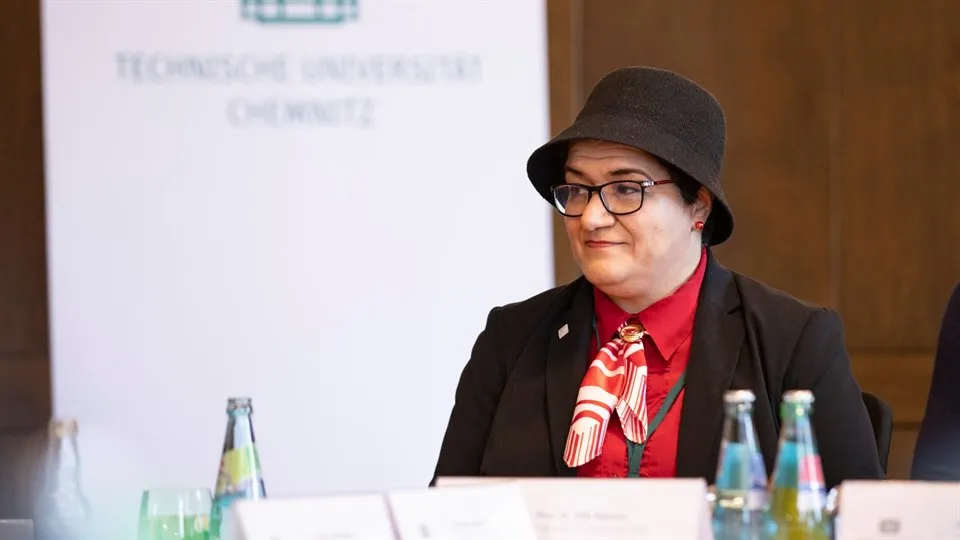
Prof. Olfa Kanoun is a Visiting Professor at Mid Sweden University's Department of Electronics, affiliated with the STC Research Centre. She specializes in embedded measurement systems, focusing on sensor technologies, energy harvesting, and impedance spectroscopy. Her research spans battery diagnosis, bio-impedance applications, and flexible nanocomposite sensors for force, temperature, and humidity measurements. She holds a PhD from the University of the Bundeswehr Munich (2001) and has been a professor at TU Chemnitz since 2007. A senior IEEE member, she co-founded the International Multi-Conference on Systems, Signals, and Devices (SSD) and initiated the International Workshop on Impedance Spectroscopy (IWIS). She leads the Autonomous Sensor Systems research group, advancing energy-efficient embedded sensor systems. Her honors include a 2015 award from Tunisia’s Ministry of Social Affairs. She actively contributes to IEEE’s Instrumentation and Measurement Society and chairs the Technical Committee on Nanotechnology in Instrumentation and Measurement (TC 34).
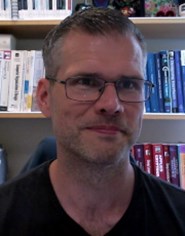
Tommy Löfstedt is an Associate Professor at Umeå University , affiliated with the Department of Computing Science and the Department of Mathematics and Mathematical Statistics. His research focuses on machine learning , computer vision , and medical image analysis , with applications in life sciences, radiation therapy, and biomedical imaging. He leads multiple research projects, including AI-driven delineation in radiation therapy, quantitative MRI for radiotherapy, and machine learning for plant nutrient uptake. Current research emphasizes structured regularization methods to improve model interpretability and robustness. Key applications include medical image segmentation , Alzheimer's classification , and uncertainty estimation in MRI . Recent publications highlight his work on morphological regularization , adversarial attack mitigation , and multi-task learning in medical imaging contexts. His projects span 2022–2026 with funding for pediatric oncology automation and gynecological cancer staging. Affiliated with both computing and mathematical departments, he bridges algorithm development with applied mathematical frameworks in medical and life science domains.
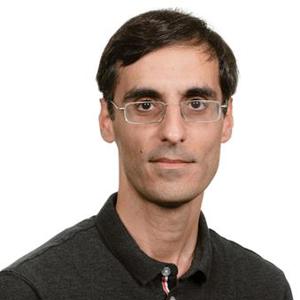
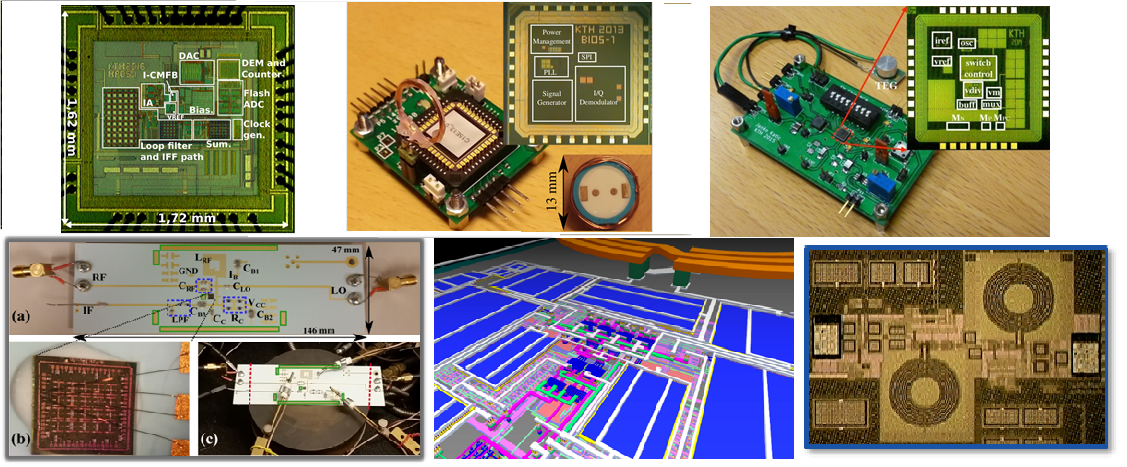
Alireza Saberkari is an Associate Professor and Docent at Linköping University, affiliated with the Department of Electrical Engineering and the Division of Electronics and Computer Engineering (ELDA). His work bridges analog, digital, and mixed-signal electronics with applications in biomedical systems, wireless power, and energy-efficient integrated circuits. Research Interests: His research spans low-power analog and mixed-signal IC design, energy harvesting, RF circuits, and the miniaturization of Nuclear Magnetic Resonance (NMR) systems for portable spectroscopy. He is actively involved in developing integrated solutions for wireless cell fluorescence detection and intelligent surfaces for mid-range wireless power transfer. Recent Publication Trends: His recent publications (2024–2025) emphasize circuit-level innovations in switched-capacitor amplifiers, RF-DC rectifiers, and NMR front-ends, reflecting a strong focus on energy efficiency, integration, and system co-design for portable and biomedical applications. Scientific Projects: Nuclear Magnetic Resonance (NMR) Miniaturization for Spectroscopy (VR, 2023–2026) Efficient Mid-Range Wireless Power Transfer with Intelligent Surfaces (EMPTIS, ELLIIT, 2023–2027) ENGINED - Efficient Organic Energy Module (Vinnova, Phase I, 2023–2024) Micrometer-Scale Wireless Cell Fluorescence Detection Device (SSF Med-X, 2020–2024) Advising and Grants: While no formal students are listed, his leadership in multiple externally funded projects indicates active supervision and mentorship. He has secured funding from major Swedish research agencies including VR, ELLIIT, Vinnova, and SSF, demonstrating strong grant acquisition and collaborative research capabilities. Labs and Research Teams: He is a core member of the Electronics and Computer Engineering (ELDA) division at Linköping University, contributing to a multidisciplinary team focused on advancing electronics for real-world applications in healthcare, energy, and communication systems.
Jing Li is a Staff Scientist at Stockholm University's Department of Chemistry, leading operations at the MACAL Soft Matter Characterization Lab and Surface Analysis Core. She holds two PhDs in Physical Chemistry (Xiamen University, China) and Surface Science (KTH Royal Institute of Technology, Sweden), with postdoctoral experience at University of Alberta and Swedish University of Agricultural Sciences (SLU). Her interdisciplinary research bridges electrochemistry, atomic force microscopy (AFM), and bio-based nanomaterials. PhD in Physical Chemistry (2004-2010), Xiamen University PhD in Surface Science (2011-2015), KTH Royal Institute of Technology Postdoctoral Fellow, University of Alberta (2010-2011) Researcher, Swedish University of Agricultural Sciences (2016, 2017-2018, 2020) Guest Researcher, BOKU Vienna (2017-2018) Research Focus: Development of advanced AFM methodologies for nanoscale surface science, electrochemistry of conductive nanomaterials, and functionalization of cellulosic composites. She investigates corrosion mechanisms through in situ electrochemical-AFM, with applications in water treatment membranes and renewable energy systems. Her work employs quantitative force mapping and nanomechanical analysis of bio-based materials. Scientific Leadership: Manages MACAL's multimode AFM, DMA, tensile testing, and gas adsorption analyzers. Teaching responsibilities include two advanced courses: Introduction into AFM (KZ41005) and Introduction into Dynamic Mechanical Analysis (KZ41021) , emphasizing practical data acquisition and interpretation.
Ana Rusu is a Professor and leader of the Mixed-Signal Integrated Circuits and Systems Group at the Division of Electronics and Embedded Systems, Department of Electrical Engineering, KTH Royal Institute of Technology. She holds a Docent title from KTH and has been at the university since 2001. Her research focuses on energy-efficient circuits, biomedical applications, and emerging technologies like graphene and SiC. She has supervised numerous PhD students and led major projects such as AIsing (VR-funded) and Implantable Bioimpedance Spectrometer (SSF-funded). Education: Diploma Engineer (M.S.) from Technical University of Iasi (1983), PhD from Technical University of Cluj-Napoca (1998), Docent in Circuit Theory (KTH, 2006). She previously served as Director of Doctoral Education at the School of ICT (2013–2017) and Vice-Dean at EECS (2018–2022). Research interests include energy harvesting, spintronics-CMOS integration, and Ising Machines. Her work spans over 150 peer-reviewed publications and includes awards like the T-NANO Best Paper (2020) and ISCAS Best Paper (2023). She has advised 16+ PhD graduates and actively contributes to academic governance and education.
Saul Rodriguez Duenas is a Professor at the Division of Electronics and Embedded Systems, part of the School of Electrical Engineering and Computer Science (EECS) at KTH Royal Institute of Technology in Stockholm, Sweden. Previously, he held an Associate Professor position at KTH. He obtained his B.Sc. in Electrical Engineering from the Army Polytechnic School (ESPE) in Ecuador, followed by M.Sc. and Ph.D. degrees in System-on-Chip Design and Electronic and Computer Systems from KTH. He also holds a Docent title in Integrated Devices and Circuits from KTH. His research focuses on low-power RF, analog/mixed-signal ICs for wireless applications, biomedical systems, and energy harvesting. He is the founder of ElinTronics AB, a consulting firm specializing in embedded systems and mixed-signal ASICs. Rodriguez teaches multiple courses at KTH, including Analog Electronics, Analog Integrated Circuits, and RF Integrated Circuit Design. His work spans over 90 publications in peer-reviewed journals and conferences, with a strong emphasis on biomedical circuits, energy-efficient systems, and sensor technologies. He has contributed to patents in implantable sensors and health monitoring systems.
Vincent Desmaris is a Researcher at Chalmers University of Technology, where he is part of the Advanced Receiver Development (GARD) unit. He specializes in developing and manufacturing microwave and terahertz components for cryogenic receiver systems. Desmaris also serves as the primary supervisor for doctoral students focusing on superconducting materials and components. His academic background includes an MSc in Materials Science from INSA-Lyon (1999) and a PhD in Microwave Electronics from Chalmers University of Technology (2006). He joined GARD immediately after completing his doctorate. Desmaris's research centers on advanced technologies for submillimeter-wave applications. Key areas include superconducting devices, terahertz component design, nanostructured energy storage systems, and cryogenic instrumentation. His work directly supports astronomical projects like ALMA and APEX telescopes through innovations in receiver technology. Recent publications (2022-2025) demonstrate strong focus on: Wideband terahertz waveguide components (OMTs, hybrids, transitions) GaN HEMTs and superconducting Nb devices for low-noise cryogenic systems Ultra-high-density capacitors using carbon nanostructures Novel fabrication methods for metallic micromachined substrates He has contributed to instrumentation projects including SEPIA heterodyne receivers and the Heterodyne Receiver for Origins (HERO) space telescope concept. As main doctoral supervisor in GARD, he mentors students in superconducting materials research but specific student names are not disclosed.
Esat Pehlivan is a Research Fellow at Uppsala University's Department of Physics and Astronomy, affiliated with the FREIA Laboratory. He also holds a Research Engineer position at the Intendanturorganisation within the Ångström Laboratory. His work focuses on electrochromic materials and thin films for energy-efficient applications. University of Uppsala, Department of Physics and Astronomy Ångström Laboratory, Intendanturorganisation FREIA Laboratory, Accelerator Research His research explores electrochromism, impedance spectroscopy, and thin-film durability. Recent publications emphasize polymer electrolytes with nanoparticles, transition metal oxides, and Li/K ion dynamics in electrochemical systems. Key applications include smart windows and energy-efficient fenestration. Key collaborations span materials science, electrochemistry, and accelerator development. Patents reference his work on electrochromic devices, with significant Mendeley readership across publications.
Göran Johansson is a Professor of Applied Quantum Physics at Chalmers University of Technology in Gothenburg, Sweden. Since January 1, 2025, he has served as the director of the Wallenberg Centre for Quantum Technology, a major research initiative spanning from 2018 to 2030. His academic career is centered on quantum physics research with a focus on both fundamental phenomena and practical quantum technology applications. Professor Johansson's research spans quantum physics, quantum technology, and quantum computing. He investigates fundamental quantum mechanical effects such as the dynamic Casimir effect, which describes photon generation from vacuum when a mirror accelerates at relativistic speeds. His applied research focuses on building quantum computers that leverage quantum superposition and entanglement to solve problems beyond the reach of classical supercomputers, with potential applications in drug discovery, artificial intelligence, and optimization problems like traffic planning. His work bridges theoretical quantum physics with practical implementation in superconducting circuits. An analysis of his recent publications reveals a strong focus on quantum computing hardware, particularly superconducting qubits and quantum processors. His research addresses key challenges in quantum computing including decoherence, quantum gate fidelity, quantum error correction, and quantum state engineering. There's a clear progression toward more complex quantum systems, with recent work exploring multi-qubit gates, quantum algorithms for practical applications, and integration of quantum processors. His publications consistently appear in top physics journals including Physical Review Letters, Physical Review A/B, and npj Quantum Information. Professor Johansson has received two significant awards for his contributions to quantum physics: Edlund Prize 2016 from the Royal Swedish Academy of Sciences Albert Wallin Science Prize 2015 from the Royal Society of Science and Letters in Gothenburg He leads or participates in multiple major research projects including the Wallenberg Centre for Quantum Technology (2018-2030), Quantum Networks with Delay and High-Impedance Transmission Lines (2022-2025), Quantum Information with Microwaves and Surface Acoustic Waves (2018-2021), and Quantum Plasmonics (2017-2022). These projects involve collaborations with numerous researchers across Chalmers and with external partners, supported by funding from the Swedish Research Council (VR) and the Knut and Alice Wallenberg Foundation. As director of the Wallenberg Centre for Quantum Technology, Professor Johansson oversees one of Sweden's largest quantum research initiatives, which includes a broad team of researchers working on quantum computing, quantum communication, and quantum sensing. His research group focuses on superconducting quantum circuits, exploring both fundamental quantum phenomena and practical implementations for quantum information processing. The group works extensively with microwave quantum optics and has made significant contributions to the understanding and manipulation of quantum states in superconducting systems.
Ingemar Lundström is a distinguished Professor at Linköping University, Sweden, with an extensive research portfolio spanning sensor technology, optical sensing, and biomedical applications. With over 619 publications and 26,413 citations, his work has significantly impacted the field of chemical and biosensors. His research spans multiple disciplines including physics, engineering, and biomedical sciences, focusing on the development of innovative sensing technologies. Lundström's primary research interests encompass Surface Plasmon Resonance , Nanoplasmonics , Electronic Tongue Systems , and Biosensors . His work has pioneered the development of optical sensor arrays using porphyrins and pH indicators for diverse applications from water quality monitoring to biomedical diagnostics. A significant portion of his research focuses on Computer Screen Photoassisted Technology (CSPT), which leverages ubiquitous computer hardware for chemical analysis, reducing costs and increasing accessibility of sensor systems. Analysis of his recent publications reveals a strong focus on nanoplasmonic sensors for biomedical applications, particularly in the detection of IgG aggregates during monoclonal antibody production. His work bridges fundamental physics with practical engineering solutions, with applications spanning environmental monitoring, biopharmaceutical production, and clinical diagnostics. Lundström has also contributed significantly to pharmacological research, particularly regarding calmangafodipir and its superoxide dismutase mimetic properties. Extensive publication record with high impact (h-index 85) Pioneering work in optical sensor arrays and electronic tongue systems Development of affordable sensing technologies using ubiquitous hardware Significant contributions to nanoplasmonics and biosensor development Interdisciplinary research bridging physics, engineering, and biomedical applications Lundström's research group has developed innovative approaches for real-time monitoring in bioproduction processes, particularly for monoclonal antibody purification. His work on the Computer Screen Photoassisted Technique has enabled the creation of low-cost, accessible sensor systems that can be integrated with existing telecommunication infrastructure. While specific grant information isn't provided in the source material, his extensive publication record across numerous high-impact journals suggests substantial research funding support throughout his career.
Jan R Svensson is a Research Fellow at Chalmers University of Technology and Hitachi Energy Research in Västerås, specializing in materials science for energy conversion systems. His work focuses on high-temperature corrosion behavior of alloys used in solid oxide fuel cells (SOFCs), particularly interconnect materials operating under dual-atmosphere conditions. Research interests include: High-temperature oxidation and nitridation mechanisms of ferritic and austenitic stainless steels Dual-atmosphere corrosion in SOFC interconnects Development of hydrogen-barrier and cerium/cobalt-based protective coatings Chromium evaporation mitigation strategies Electrical properties of oxide scales and coated systems Microstructural evolution during high-temperature exposure His recent publications (2022-2025) demonstrate concentrated research on degradation mechanisms in SOFC interconnects, with emphasis on the role of hydrogen, water vapor, and temperature gradients. Key contributions include innovative methods for measuring area specific resistance, comparative studies of chromia- versus alumina-forming alloys, and optimization of coating thickness for improved oxidation resistance. His work bridges fundamental corrosion science with practical energy applications.
Ramon Bragós is the Associate Dean of Academic Innovation at the Technical University of Catalonia (UPC) in Barcelona, Spain. He lectures at Telecom BCN, the university's School of Telecommunications Engineering, and actively contributes to academic leadership and innovation initiatives such as the CDIO program. His research focuses on applying electrical impedance spectroscopy to biomedical engineering challenges, particularly in medical imaging and healthcare technology. As a core academic leader, Bragós oversees academic innovation strategies at UPC while maintaining teaching responsibilities. His work bridges engineering education reform and cutting-edge biomedical research, emphasizing practical applications of electrical engineering principles in healthcare contexts. Notably, he is involved in advancing UPC's CDIO (Conceive-Design-Implement-Operate) program, which integrates hands-on project-based learning into engineering curricula. Though no specific grants or awards are documented here, his role reflects sustained contributions to both engineering education and biomedical innovation. His affiliation with the Sotsdirlabs workspace (implied by email domain) suggests involvement in interdisciplinary research teams focused on lab-based biomedical engineering projects.
Pablo Giménez-Gómez is a researcher at Stockholm University's Department of Chemistry, specializing in microfluidic lab-on-a-chip devices for biomedical and environmental applications. With a PhD in Electrochemistry from the Autonomous University of Barcelona (2017) and extensive postdoctoral experience across Europe, he secures competitive grants and leads R&D projects with total budget of €1.1M. Chemical Engineer (2009, University of Murcia) Master in Occupational Health & Safety (2010, Bureau Veritas) Master in Electrochemistry (2011, Polytechnic University of Cartagena) PhD in Electrochemistry (2017, Autonomous University of Barcelona) His research focuses on: Microfabricated electrochemical transducers , Biofunctionalization techniques , Integrated biosensing systems , and Technological transfer in analytical chemistry . Recent projects include a DVD-readable opto-electrochemical Lab-on-a-Disc for obesity management and paper-based analytical devices for environmental monitoring. Publications demonstrate expertise in: Microfluidic extraction-quantification integration , Optical-microfluidic coupling , and Biocompatible sensor design . He has authored 34 publications including 24 peer-reviewed journal articles and 8 conference papers, with 1 licensed patent. 2023: First author on fiber-optic tissue stretch monitoring 2025: Developed cafetière-based soil nutrient PAD 2023: Created DIC quantification PAD for freshwater 2019-2025: Ongoing contributions to diabetes monitoring and environmental sensing Active in both fundamental research through his work with Nicole Pamme's group and applied technology development via industry contracts. His teaching includes Analytical Chemistry Basic Course (VT24).