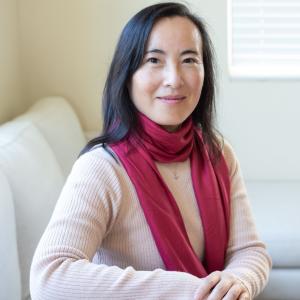
Sangyoo Lee is an Assistant Professor of Education and Child Development at the Munroe-Meyer Institute, University of Nebraska Medical Center (UNMC) , and an Affiliated Researcher at the Center for Benefit-Cost Studies of Education (CBCSE) at the University of Pennsylvania Graduate School of Education. She holds a Ph.D. and M.P.P. in Public Affairs-Public Policy from the University of Minnesota, alongside a B.A. in Economics from the same institution. Formerly a Postdoctoral Researcher at UPenn CBCSE (2021–2023) Demography Predoctoral Trainee at Minnesota Population Center (2017–2020) Her research focuses on early childhood interventions , immigrant children’s academic trajectories , and policy evaluation , with a focus on socio-economically disadvantaged groups. Key projects include: Cost-effectiveness analysis of early childhood programs for refugee children in the Middle East/South Asia Longitudinal study of early life conditions (birth–age 5) on educational outcomes Evaluation of the Child-Parent Center (CPC) program in urban districts She explores themes such as implementation fidelity in scaled programs and the immigrant paradox in educational success.
Dr. Qing Zhou is a Professor of Psychology at the University of California, Berkeley, and Director of the Culture and Family Study Lab. He received his Ph.D. from Arizona State University and specializes in understanding how cultural context, family dynamics, and temperament influence children's socio-emotional, academic, and executive function development, with a focus on immigrant families. Key research interests include: Developmental psychopathology Temperament and emotion regulation Family socialization and parenting Impact of bilingualism on child development Cultural values and migration effects on adjustment His work employs multi-method approaches, including questionnaires, behavioral observations, and neuropsychological testing, with ongoing projects like the NICHD-funded longitudinal study on dual language learners and the Chau Hoi Shuen Foundation-supported grandparent involvement research. Collaborations include scholars at UC-Davis, UC-Merced, Wellesley College, and institutions in France and Taiwan. Dr. Zhou has trained numerous students, including current doctoral candidates Xinyi Chen, Erika Roach, and Christopher Gys, as well as alumni at institutions like Harvard, Stanford, and UCSF. His lab's publications emphasize cross-cultural comparisons, longitudinal designs, and intervention implications for immigrant youth.
Amanda Jensen-Doss is a Professor and Director of Clinical Training in the Department of Psychology at the University of Miami's College of Arts and Sciences. Her work focuses on improving mental health care for children and adolescents through evidence-based practices, particularly in community settings. She leads the Child Implementation and Effectiveness Lab (CIELO Lab), which emphasizes translating research into clinical practice. Her research interests include measurement-based care (MBC), trauma-informed treatments, and implementation science. She has extensively studied clinician training, consultation strategies, and the role of data in optimizing youth psychotherapy outcomes. Key areas of focus include unaccompanied migrant children, adolescent treatment engagement, and therapist fidelity to evidence-based protocols. Dr. Jensen-Doss collaborates with community agencies to scale up evidence-based practices (EBPs), addressing barriers like funding and clinician self-efficacy. Her work bridges academic research with real-world clinical challenges, emphasizing pragmatic solutions to enhance mental health service delivery. She has contributed to national initiatives on MBC and EBP sustainability, and her lab provides resources for clinicians via platforms like shinyDLRs diagnostic tool. Notable grants and projects include the COMET study (Community Study of Outcome Monitoring for Emotional Disorders in Teens), which evaluates transdiagnostic treatments, and a focus on modular therapy approaches for anxiety, trauma, and conduct problems in schools. She advocates for clinician training models that balance expert consultation with cost-effectiveness. Her lab’s CIELO Lab website highlights ongoing projects on family support protocols for internalizing disorders and podcasts to improve health literacy. She is active in editorial roles, emphasizing methodological rigor and translational research in youth mental health.
Amy Sato is a Professor in the Department of Psychological Sciences at Kent State University , where she directs the Pediatric Health & Stress Laboratory . Her research focuses on child and adolescent obesity, eating behaviors, and pediatric weight management interventions, emphasizing family influences, stress responses, and food insecurity in at-risk populations. She collaborates with Akron Children’s Hospital on clinical studies and has received funding from the National Institutes of Health (NIH) . Education: Ph.D. in Psychology from the University of Wisconsin-Milwaukee (2009) Research Interests include: Biobehavioral responses to stress in obesity pathways Family dynamics in pediatric weight management Food insecurity among low-income youth Development of novel behavioral interventions Immigration and acculturation factors in child health Technology applications in health behavior monitoring Recent publications highlight interdisciplinary approaches to stress-obesity linkages, family-based interventions, and health disparities. She mentors graduate students in clinical and health psychology, with a focus on translational research. Her work has been recognized with the Paper of the Year award from Stress and Health (2014).
Jeffrey M. Timberlake serves as Professor of Sociology and Director of Graduate Studies in the Department of Sociology at the University of Cincinnati. His academic career centers on population dynamics, urban structures, and racial inequality, employing rigorous quantitative methodologies to examine systemic patterns across American metropolitan areas. His leadership in graduate education shapes emerging scholars in sociological research. Dr. Timberlake's educational foundation includes: PhD in Sociology from the University of Chicago (2003) MS in Sociology from the University of Wisconsin-Madison (1998) BA in Social Sciences from the University of Michigan-Ann Arbor (1991) His research program investigates the sociology of population, urban sociology, race and ethnicity, and quantitative methods. Recent work analyzes racial residential segregation, housing discrimination, children's exposure to neighborhood poverty and violence, and demographic shifts from 1970-2020. His publications reveal consistent focus on spatial inequality, ethnoracial dynamics, and policy impacts in housing markets. Analysis of his 15 most recent publications shows dominant themes in residential segregation measurement, racial steering mechanisms, and urban demographic change. Methodologically, he combines longitudinal data analysis with spatial statistics to document evolving patterns of inequality, particularly examining how neighborhood contexts shape life outcomes across racial groups. As Principal Investigator, Dr. Timberlake manages multiple active grants: CDC IPA Agreement w/ NIOSH (2021-2022): $50,000 federal grant Ohio Department of Medicaid Assessment Survey (2022): $45,210 state grant Ohio State University sub-award (2022): $45,210 higher education grant Medicaid Assessment Survey Year Two (2022-2023): $78,904 federal award Medicaid Assessment Survey Years Three-Four (2023-2025): $106,736 state grant and $59,107 federal award His research program demonstrates sustained federal and state funding for empirical studies of housing markets and population dynamics, with current work focused on Ohio Medicaid assessment systems.
Dr. Kyrah K. Brown is an Associate Professor in the Department of Kinesiology at the University of Texas at Arlington's College of Nursing and Health Innovation. As a health equity researcher and community psychologist, her work focuses on participatory approaches to address structural determinants of Black women's cardiovascular and reproductive health across the lifespan. Her education includes: PhD in Psychology (Community Psychology) from Wichita State University (2014) MA in Psychology (Community Psychology) from Wichita State University (2012) BA in Psychology from Spelman College (2010) Dr. Brown leads interdisciplinary research on gendered racism and colorism, employing community-based participatory methods to investigate healthcare disparities. Her current projects examine systemic factors influencing maternal morbidity and diabetes management among minority populations. Her publications predominantly explore healthcare inequities through mixed-methods approaches, with recent work emphasizing: Community-centered interventions for maternal health Digital health adoption in minority communities Policy impacts on rural healthcare access Intersectional analysis of chronic disease management Scientific awards recognizing her contributions include: Samuel Hughes Professorship for health equity research Reby Cary Faculty Excellence Award for African American faculty leadership Early Career Award from the Society for Community Research and Action She mentors graduate students and postdoctoral researchers through the Young Children Are Researchers (YCAR) project and directs community partnerships with the Tarrant County Birth Equity Collaborative. Major grants include NIH-funded projects developing system dynamics models to reduce maternal morbidity disparities ($1.8M). She leads research teams across seven European countries for the CHILD-UP project on migrant children's integration.
Dolores Acevedo-Garcia serves as Adjunct Professor and Samuel F. and Rose B. Gingold Professor of Human Development and Social Policy at Brandeis University's Heller School for Social Policy and Management, where she directs the Institute for Child, Youth and Family Policy. Her work bridges academic research and policy implementation to address systemic health inequities through rigorous analysis of social determinants and policy interventions. Her educational foundation includes a B.A. in Public Administration from El Colegio de México (Colmex), followed by an M.P.A.-U.R.P. and Ph.D. in Public Policy with Demography concentration from Princeton University, establishing her interdisciplinary expertise in social policy and population health. Research focuses on racial/ethnic health equity through examination of residential segregation, neighborhood inequality, and immigrant adaptation pathways, with special attention to child health and wellbeing. Her work evaluates how housing policies, anti-poverty initiatives, and immigrant-focused legislation can reduce disparities, particularly for children with special needs. This integrates social determinants of health frameworks with actionable social policy solutions across education, healthcare, and housing sectors. Publications demonstrate consistent emphasis on policy-relevant health equity research, exemplified by her highly cited 2008 Health Affairs article analyzing geographic and racial disparities in child health outcomes, which established methodological approaches for measuring equity across multiple opportunity domains. Major recognitions include: Charles Westoff Prize for Demographic Research (1996) Harvard Mentoring Award (2003) Harvard Teaching Excellence Citation (2008) Top 20 most-read Health Affairs paper (2008-2009) She directs the $2M+ diversitydatakids.org initiative funded by W.K. Kellogg and Robert Wood Johnson Foundations, and currently leads the UnidosUS collaboration on immigrant children's safety net access (W.T. Grant/Spencer Foundations). Her National Academies service includes the landmark child poverty reduction committee (2017-2019) and pandemic recovery initiative (2020-2021), demonstrating sustained policy influence through federal advisory roles. The Institute for Child, Youth and Family Policy operates as her primary research hub, housing diversitydatakids.org and coordinating multi-institutional teams including National Institute of Child Health and Human Development researchers, HUD analysts, and MacArthur Foundation collaborators on the Housing and Children's Healthy Development Study.
Samuel Fishman serves as Assistant Professor of Sociology at Baylor University, joining the department in 2023 after completing a postdoctoral associate position at Duke University and two years of non-academic work in social science consulting and federal service. His academic credentials include: Ph.D. in Sociology from the University of North Carolina at Chapel Hill (2019) M.A. in Sociology from the University of North Carolina at Chapel Hill (2015) B.A. in Sociology and History from Hope College (2013) Dr. Fishman's research program investigates economic stratification and population health through quantitative methods, with particular focus on intergenerational determinants of educational outcomes, racial/ethnic inequities in infant health, and the education-adult health nexus. His current work examines socioeconomic dimensions of the opioid crisis, employing large-scale demographic datasets to uncover structural drivers of health disparities across the life course. His publication record reveals consistent thematic focus across top-tier journals including American Journal of Sociology and Social Science Research , with recurring emphasis on educational inequality, mortality patterns, and health disparities. Methodologically, his work demonstrates sophisticated application of quantitative techniques to complex social phenomena. Scientific recognition: No awards or fellowships are documented in available sources. Regarding academic mentorship and funding, the provided materials contain no information about doctoral advisees, grant awards, or research team composition. Similarly, no laboratory facilities or collaborative research centers are mentioned in connection with his work.
Gigliana Melzi is a Professor of Applied Psychology at New York University’s Steinhardt School of Culture, Education, and Human Development. She holds affiliations with the Center for Latin American and Caribbean Studies and the Latinx Project. As Director of the Culture, Families, and Early Development Lab, her research emphasizes culturally responsive practices in early childhood education, focusing on bilingual and immigrant Latine/x families. Dr. Melzi earned her undergraduate degree in Spanish Literature and Psychology from Clark University and her PhD in Developmental Psychology from Boston University. Her work investigates how cultural and linguistic practices in families influence children’s learning, particularly in STEM and literacy domains. She collaborates closely with Latine/x communities and educational institutions to bridge home and school contexts, advocating for systemic equity in education. Her research highlights family engagement strategies, spatial language in bilingual households, and the role of storytelling in science learning. Funded by organizations like the National Science Foundation and the Spencer Foundation, her projects address disparities faced by marginalized communities. Key areas of exploration include family math talk, code-switching in narratives, and culturally grounded teacher practices. Dr. Melzi’s contributions span over 50 peer-reviewed articles and collaborative grants. Her work is published in journals like Child Development and Developmental Psychology , emphasizing both theoretical advancements and practical applications for early childhood educators.
Susan Averett is a Professor in the Economics Department, specializing in gender economics and health economics. She joined the faculty in 1991 and teaches courses such as Fundamentals of Econometrics and Women and the Economy. Her research explores intersections between gender, health, and policy, with notable publications in journals like the Review of Economics and Statistics and Journal of Health Economics . A co-author of over 50 scholarly articles and co-editor of The Oxford Handbook of Women and the Economy , she also serves as co-editor of Economics and Human Biology . Dr. Averett holds a Ph.D. and M.A. in Economics from the University of Colorado and a B.S. in Economics from Colorado State University. Her work frequently addresses topics such as the gender wage gap, childcare tax credits, and immigration policies. Media outlets including the Wall Street Journal and Vox have featured her research findings. Her research interests include the economic impacts of public policies on health outcomes, labor market dynamics, and social equity. Notable projects have examined the effects of minimum wage laws on immigrant children’s health, the long-term consequences of China’s one-child policy, and the relationship between obesity and labor market performance. As an educator, she contributes to interdisciplinary programs like Women’s, Gender, and Sexuality Studies via courses such as Gender and Economics. Her textbook Women and the Economy: Family, Work, and Pay remains a foundational resource in the field.
University of California, Los AngelesUnited States
Carlos Santos is Associate Professor of Social Welfare at UCLA's Luskin School of Public Affairs. He holds a PhD in Developmental Psychology from New York University, a Master of Education from Harvard University, and a BA from New York University. His research examines identity development among Latinx youth through intersectional frameworks, exploring how ethnic-racial, gender, and sexual identities influence developmental outcomes in contexts ranging from peer networks to immigration policy environments. Research interests include: Ethnic-racial identity development in adolescence Gender and sexual identity formation Impact of structural discrimination on mental health Immigration policy effects on youth development Intersectional approaches to identity research Peer influence and social network dynamics His publications primarily focus on developmental psychology and social welfare, with recent work examining longitudinal patterns of identity formation, social network analysis of peer influences, and measurement validation for gender expression attitudes. Methodological approaches frequently incorporate mixed methods and longitudinal designs to capture developmental trajectories. Awards and honors: Multiple early career achievement awards from national professional associations Member of the National Academy of Sciences' Forum on Children's Well-Being Principal grant reviewer for US Dept of Education/IES Former Associate Editor of Journal of Adolescent Research His research has been funded by the National Science Foundation and National Institutes of Health, supporting investigations into peer network effects on ethnic-racial identity and the developmental impacts of exclusionary immigration policies. He co-edited 'Studying Ethnic Identity: Methodological and Conceptual Approaches Across Disciplines' (APA Press, 2015).
Dr. Zheng Zhou is a Professor of Psychology at St. John's College of Liberal Arts and Sciences, St. John's University. She holds a Ph.D. in School Psychology from Columbia University (1996), and her academic career includes significant contributions to cross-cultural educational psychology. Dr. Zhou is a Fulbright Scholar and Fellow of APA Division 16, recognized as one of the top 15 contributors to School Psychology literature. She serves as an Associate Editor for School Psychology International and has held leadership roles in professional organizations like the Board of Scientific Affairs (BSA). Education: Ph.D. 1996, Columbia University, School Psychology M.Phil. 1995, Columbia University, School Psychology M.S. 1989, Tulane University, School Psychology B.A. 1982, Suzhou University, China, English Research Focus: Dr. Zhou’s work centers on cross-cultural studies in mathematics education, particularly comparing U.S. and Chinese pedagogical approaches. Her research also addresses school adjustment of Asian-American youth and cultural competence in counseling. Key areas include children’s mathematical reasoning, bilingual education, and the psychosocial adaptation of immigrant adolescents. Publications Trends: Her articles consistently explore cultural differences in cognitive development and educational practices, with a focus on fractions, relational concepts, and cross-cultural comparisons in math instruction. Recent work emphasizes bridging Western and Eastern pedagogical strategies to enhance global educational outcomes. Awards & Recognition: Fulbright Scholar Fellow of APA Division 16 Top 15 contributor to School Psychology literature Multiple Faculty Recognition Awards from St. John’s University Advising & Leadership: Dr. Zhou advises students in graduate programs like Psycholinguistics of Bilingualism and Cross-Cultural Psychology. She has guest-edited special issues on topics such as Psychological and Educational Needs of Children in Asia and Culture and Psychology: Fulbright Psychologists and Educators in China . Her service includes roles as Chair of Division 16’s Committee on Ethnic Minority Affairs and liaison to the BSA.
Comfort B. Asanbe is a Professor of Psychology and Chair of the Psychology Department at the College of Staten Island, part of the City University of New York (CUNY) system. She is a licensed psychologist in New York State and serves as a representative of the American Psychological Association (APA) at the United Nations with designation to the Department of Global Communication. Dr. Asanbe also holds a research fellowship at the University of Pretoria, South Africa, and volunteers with the New York City Medical Reserve Corps. Dr. Asanbe earned her PhD from Tennessee State University, with additional graduate degrees (MA and Med) from Austin Peay State University, and her BA from the University of Ilorin in Nigeria. Her international academic background informs her cross-cultural research perspective. Her research focuses on three interconnected themes: identifying factors threatening children's psychological health (particularly related to parental drug use), studying pre-and post-natal drug environments and child outcomes, and assessing psychological health and coping resources of orphans and vulnerable children due to parental HIV/AIDS. Dr. Asanbe has made significant contributions to understanding at-risk children in rural and difficult-to-reach communities, addressing a gap in existing literature. Her work bridges clinical psychology, public health, and international development, with particular attention to low-resource settings in Africa. Analysis of Dr. Asanbe's recent publications reveals a consistent focus on vulnerable children in challenging circumstances, with increasing emphasis on HIV/AIDS impact in rural South Africa. Her research demonstrates a methodological progression from studying drug-affected communities in rural Tennessee to international work in Africa, showing adaptability in addressing similar psychological challenges in different cultural contexts. The publications span multiple disciplines including clinical psychology, developmental psychology, cross-cultural psychology, and public health. Dr. Asanbe has served in numerous leadership roles including as Co-Chair of the 2021 Psychology Day at the UN event with participants from 97 countries, member of the CSI Foundation Board of Directors, and Chair of the Soroptimist International Live Your Dream Scholarship Committee. She has presented her research at international conferences across multiple continents and has served on various boards and committees addressing mental health, HIV/AIDS, and community development. She directs the Psychological Assessment Lab at CSI (located in 4S-110), which focuses on mental health and psychological functioning with emphasis on externalizing behaviors, internalizing behaviors, addiction, and adaptive functioning. The lab provides training for students interested in applied psychology and has conducted research on the impact of COVID-19 on immigrant college students.
Vanessa Delgado is an Assistant Professor of Sociology at Washington State University (WSU). She holds a Ph.D. in Sociology from the University of California, Irvine (2022). Her research focuses on Latino/a families’ experiences with immigration policies, educational trajectories, and family dynamics in socio-politically restrictive environments. Key areas include immigrant integration, children’s roles in families, and the impact of legal status on socio-economic outcomes. Dr. Delgado employs qualitative methods to explore how immigrant families navigate punitive policies. Her work has been published in journals like Law & Policy , Journal of Latinos and Education , and Sociological Forum . She is currently completing a book manuscript examining how Latino/a children of immigrants influence family integration processes. Her research trends emphasize the intersection of legal status, family obligations, and educational systems. Articles often highlight marginalized groups’ resilience strategies, such as undocumented youth acting as legal brokers or younger siblings shaping siblings’ academic paths. These studies underscore structural barriers faced by Latino/a communities and advocate for policy reforms in education and immigration. Dr. Delgado has no listed awards but actively engages in policy-oriented research. Her advising and grants focus on campus support systems for immigrant students. She is affiliated with WSU’s sociology department and contributes to interdisciplinary discussions on immigration and education equity.
Daphne A. Henry is an Assistant Professor at the University of Pittsburgh, specializing in child development and educational equity. Her research focuses on intersections of race/ethnicity, socioeconomic status (SES), and family dynamics on children’s academic and socioemotional outcomes. She employs mixed-methods approaches, including large-scale data analysis and qualitative studies. Henry’s work emphasizes policy-relevant insights into reducing disparities in early development and long-term well-being. Her education includes a Ph.D. from the University of Pittsburgh. She has received prestigious awards such as the National Academy of Education/Spencer Foundation Postdoctoral Fellowship (2022) and the NSF Graduate Research Fellowship (2012–2015). Her lab investigates topics like parental beliefs, structural inequities, and resilience during crises like the COVID-19 pandemic. Key Research Areas: Racial inequities in education, family resilience, and SES disparities in child development Methodological Toolkit: Statistical analysis, qualitative data, mixed-methods Henry’s recent work explores how socioeconomic and racial factors shape academic achievement gaps and the role of parental practices in mitigating risks. She has published extensively on topics like racial stereotypes, critical consciousness, and family well-being during crises. Awards: Over six major fellowships and awards spanning 2012–2022 Grants: Not explicitly listed but implied through research focus She advises graduate students and is affiliated with the Learning Research and Development Center (LRDC) at the University of Pittsburgh.