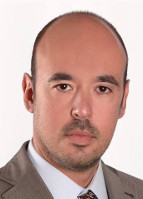
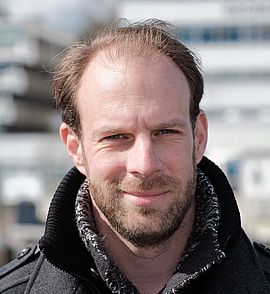
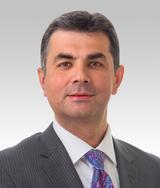
Professor Will Shu at the Department of Biomedical Engineering , University of Strathclyde, is a leading expert in 3D bioprinting and biofabrication technologies. His research focuses on creating functional tissue constructs using microfluidic systems , hydrogels , and nanoparticle engineering , with applications in bone repair , cardiovascular models , and infectious disease treatment . Key research areas: 3D Bioprinting , Biomaterials , Microfluidics , Tissue Engineering , Biomechanics Notable innovations: degradable DNA biolubricants , self-healing triboelectric nanogenerators , carbon dots for bone infection His 2025-2023 publications demonstrate expertise in fluorescence-based nanometrology , precision cancer surgery simulation , and biofilm modeling . Current work includes digital twin surgery and biofabrication standardization . Scientific Awards : Recipient of 11 unspecified prizes (including Scopus citations and policy references ) As an active PhD supervisor , he leads projects in bioprinting , tissue regeneration , and medical device development , evidenced by 99 research outputs and 25 projects listed on Scopus.
Denny Yu is an Associate Professor at the Edwardson School of Industrial Engineering, Purdue University. His work bridges human factors, neuroergonomics, and healthcare safety through advanced sensor systems and AI. Primary Affiliation : Edwardson School of Industrial Engineering, Purdue University Research Themes : Surgical ergonomics, autonomous vehicle human factors, cognitive workload assessment, multimodal physiological sensing Dr. Yu's research focuses on neuroergonomics and human-robot interaction , particularly in surgical and transportation contexts. His team develops sensor-based systems for workload monitoring, including: EEG-eye tracking fusion for situation awareness Wearable exoskeletons for surgical posture support Computer vision tools for lifting task risk analysis Smart infusion pump usability frameworks AI-driven surgical coaching systems Recent publications emphasize deep learning applications in soft tissue deformation estimation and real-time adaptive systems for robotic surgery augmentation. His work spans both occupational health (veterinary surgeons, airport workers) and medical device innovation domains.
Dr. Almila Akdag is an Assistant Professor in Human-Centered Computing at Utrecht University's Faculty of Science, Department of Information and Computing Sciences. As a Digital Humanities scholar with expertise spanning new media analysis, bibliometrics, and information visualization, she combines qualitative and quantitative methods to study humanities and social data. Research Focus Her interdisciplinary research bridges: Digital Humanities : Computational analysis of cultural artifacts including paintings, poetry, and oral histories Human-Centered AI : Developing empathetic and accessible AI systems Trauma Informatics : Analyzing breathing patterns in oral histories of trauma survivors Cultural Analytics : Studying art communities and online creative platforms Following the 2023 Turkey/Syria earthquake, she is creating an oral history archive to document collective memory of the disaster, with particular focus on Turkish, Kurdish and Syrian diaspora experiences. Awards and Recognition NWO VENI laureate for 'deviantArt: Mapping the Alternative Art World' project Co-initiator of Mellon Grant: 'Tools for Analysis and Visualization of Large Image/Video Collections for Humanities' Leadership and Service Workgroup leader of 'Visual Media and Interactivity' for DARIAH-EU Founding member of International Society for Knowledge Organization (ISKO LC Low Countries Chapter)
Stavros Vologiannidis serves as an Assistant Professor in the Department of Informatics, Computer and Telecommunications Engineering at the International University of Greece. His academic career spans both teaching and research in control theory, robotics, and machine learning applications. Previously, he was associated with the Mathematics Department at Aristotle University of Thessaloniki where he completed his education and conducted postdoctoral research. Education: B.Sc. in Mathematics from Aristotle University of Thessaloniki (1997) Ph.D. in Control Theory from Aristotle University of Thessaloniki (2005) with dissertation titled 'ALGEBRAIC-POLYONYMICAL COMPUTING METHODS IN CONTROL THEORY' Dr. Vologiannidis' research focuses on Classical and Intelligent Control Theory, Robotics, and Machine Learning, with particular expertise in polynomial matrices and automatic control systems. His work bridges theoretical mathematics with practical engineering applications, especially in educational robotics and industrial control systems. He has developed several educational platforms including EUROPA, a ROS-based educational robot for teaching sensor integration and data acquisition. His publication record shows a clear evolution from theoretical control systems research toward applied machine learning and educational technology. Recent work demonstrates increasing focus on practical applications of AI in education, urban feature recognition, industrial monitoring, and robotics education across multiple educational levels from middle school through university. His research combines mathematical rigor with real-world implementation. Scientific Recognition: Excellence Scholarship in the 'Excellence Scholarships 2010' program of the Research Committee Total citations exceeding 250 with Scopus H-index of 9 Dr. Vologiannidis has secured numerous research grants and led multiple projects including 'Rapid Earthquake Damage Assessment Consortium – REDACt', 'Predictive Maintenance 4.0', and 'Development of computational methods for optimization of eigenvalue assignment problems'. He has collaborated extensively with institutions across Europe including UTIA Foundation in Prague and has participated in EU-funded projects like GALENOS and GN4-1 GÉANT Research and Education Networking. His laboratory work centers around the EUROPA educational robotics platform and the StreetScouting urban feature detection system, both of which integrate hardware, software, and educational applications. These projects demonstrate his commitment to translating theoretical research into practical educational and industrial tools.
Prof. Dr. Georgia Salanti serves as Associate Professor in Biostatistics and Epidemiology and Head of the Evidence Synthesis Methods Research Group at the Institute of Social and Preventive Medicine (ISPM) , University of Bern, Switzerland. Previously, she held academic positions at the University of Ioannina School of Medicine (Greece) from 2006–2015 and postdoctoral/research associate roles at MRC Biostatistics Unit (UK) and Technical University of Munich (Germany). Research Focus: Statistical modeling for evidence synthesis, methodology of systematic reviews, publication bias, network meta-analysis, and applications to mental health. Key Applications: Major depressive disorder, schizophrenia, antipsychotic drugs, stroke with atrial fibrillation, PTSD, and pharmacological interventions. Recent Publications emphasize network meta-analysis advancements, dose-response modeling (e.g., aripiprazole, antidepressants), and real-world clinical questions via projects like the MHCOVID Initiative . Her work spans 2003–2025 with over 289 PubMed-indexed articles. Collaborations: ELAN Investigators, Cochrane Network, MRC Biostatistics Unit, CIBIO (Spain).
Bertrand VIGNERON is a Professor at the French School of Public Health (EHESP), teaching in the Institute of Management. His career spans biomedical engineering leadership roles at CH Elbeuf (1999-2015) and contractual engineering at CHU Amiens (1997-1999). He specializes in medical logistics, information systems, and project management, with a focus on Agile methodologies. Education: General Engineering Diploma (ENIB, 1996), Specialized Master's in Biomedical Equipment (UTC/EHESP, 1997), EEA License (University of Lille, 1993) Research interests include hospital technical platforms (operating rooms, imaging), healthcare information systems, medical supply chain optimization, and health safety protocols. He has developed international training programs in medical logistics across Ivory Coast, Congo, Algeria, Lebanon, Mongolia, and Vietnam. Key publications cover topics such as business intelligence in healthcare, endoscope sterilization, and radiology equipment digitalization. He has also contributed to national biomedical engineering guidelines and delivered oral presentations at major French medical engineering conferences.
Professor Rainer Kiko is a Heisenberg Professor and Make Our Planet Great Again Laureate at GEOMAR Helmholtz Centre for Ocean Research Kiel, where he leads research in Marine Biogeochemistry. His work focuses on understanding how global change impacts marine life distribution and activity, with significant implications for oceanic oxygen dynamics, nutrient cycles, and carbon dioxide transfer from the atmosphere to the deep sea. Kiko's research integrates augmented image observations that combine autonomous camera and environmental sensor systems with state-of-the-art artificial intelligence solutions and ecophysiological approaches to study zooplankton and detrital particle dynamics in a changing ocean. His primary research areas include marine carbon cycling, oxygen minimum zones, zooplankton dynamics, and the development of imaging technologies for marine observations. He leads several major projects including Imaging Marine life in an Ocean of Change (IOChange) funded by the Heisenberg Program of the German Research Foundation, and the Tropical Atlantic Deoxygenation project as part of the Make Our Planet Great Again initiative. His recent publications reveal a strong focus on marine particle dynamics, carbon export mechanisms, and the role of zooplankton in biogeochemical cycles, with particular attention to oxygen minimum zones and the impacts of climate change on marine ecosystems. Kiko employs advanced imaging technologies and machine learning approaches to address fundamental questions about the biological pump and ocean carbon sequestration. Among his notable recognitions are the prestigious Heisenberg Professorship from the German Research Foundation and the Make Our Planet Great Again Laureate award. His work has been published in high-impact journals including Nature Geoscience, Nature Communications, and Global Biogeochemical Cycles. Kiko mentors several researchers including Dr. Joelle Habib (Postdoc at Laboratoire d'Océanographie de Villefranche), Dr. Xiangyu Weng (Machine Vision specialist), Simon-Martin Schröder (computer scientist), and Claudeilton "Claus" Santana (PhD student). His research group develops innovative approaches combining deep learning, in situ imaging, and citizen science to resolve marine ecological questions across multiple scales.
Lynn D. Wilson, MD, MPH, FASTRO serves as Professor of Therapeutic Radiology and Dermatology at Yale School of Medicine, where he holds multiple leadership positions including Executive Vice Chairman of Therapeutic Radiology, Deputy Chief Medical Officer for Radiation Oncology Services at Yale Cancer Center and Smilow Cancer Hospital, Director of Clinical Affairs, and Associate Director of the Residency Training Program. As a board-certified radiation oncologist, he specializes in treating cutaneous lymphoma and breast cancer patients at Smilow Cancer Hospital at Yale New Haven. Dr. Wilson's research program focuses on outcomes and treatment-related factors for patients with cutaneous lymphoma, lung and breast cancers. His work has revealed significant disparities in clinical outcomes for cutaneous lymphoma based on race, prompting further investigation into potential causes and solutions. He has developed expertise in specialized techniques including total skin electron beam therapy, which Yale has established as a major national program with international recognition. His laboratory work spans radiation biology, treatment optimization, and health services research related to radiation oncology practice patterns. Analysis of Dr. Wilson's recent publications (2017-2021) reveals three major research themes: (1) cutaneous lymphoma treatment outcomes and health disparities, (2) breast cancer radiotherapy techniques (particularly deep inspiration breath hold and proton therapy), and (3) radiation oncology workforce and education patterns. His work consistently appears in high-impact journals including the International Journal of Radiation Oncology • Biology • Physics, Journal of Investigative Dermatology, and Journal of the National Comprehensive Cancer Network. America's Top Doctors for Cancer (2005-2018) America's Top Doctors (2007-2018) ASTRO Annual Meeting and Program Scientific Committee Chairman (2014) Top Doctors: New York Metro Area (2014) New York Magazine Best Doctors (2014) Dr. Wilson serves on the board of trustees for the American Board of Radiology and is a member of the American Society for Radiation Oncology board of directors. His leadership extends to chairing the Department of Therapeutic Radiology Quality Improvement Committee and serving on Yale Medicine's Operations Committee and Practice Operations and Standards Committee. He has mentored numerous residents and fellows through Yale's Radiation Oncology Residency Program and SRS/SBRT Fellowship program, with research collaborations spanning multiple departments including Dermatology, Medical Physics, and Radiobiology. Yale's Total Skin Electron Beam Therapy program, which Dr. Wilson leads, represents a major national resource for cutaneous lymphoma patients, combining clinical expertise with ongoing research to advance treatment approaches for this rare condition. His work bridges clinical care, research innovation, and educational leadership within the radiation oncology field.
Jose Luis Cantero Lorente is a University Professor in the Department of Physiology, Anatomy and Cell Biology at Pablo de Olavide University, specializing in neuroscience with a primary focus on Alzheimer's disease and neurodegenerative disorders. His work bridges electrophysiology, neuroimaging, and biomarker discovery to understand cognitive decline in aging. Education: Doctorate from the University of Seville (1999) with thesis: "Electrophysiological characterization of alpha activity in three states of brain activation in human subjects: relaxed wakefulness, drowsiness and REM phase", supervised by Dr. Carlos María Gómez González. Research Interests: Dr. Cantero Lorente's research spans Alzheimer's Disease , Neuroscience , and Biomarkers , with emphasis on early detection mechanisms through salivary, blood, and CSF analysis. He investigates sleep-memory interactions , metabolic drivers of neurodegeneration (e.g., insulin resistance), and neuroinflammatory pathways using multimodal approaches including proteomics, lipidomics, and functional MRI. His pioneering work established salivary lactoferrin as a diagnostic tool for Alzheimer's. Publication Trends: His 2022-2025 publications reveal a strategic shift toward multimodal biomarker integration , combining amyloid-beta, tau, and metabolic markers for early Alzheimer's detection. Key themes include Parkinson's disease proteomics (e.g., candesartan neuroprotection), herpes virus-amyloid links in aging, and intracortical myelin alterations as precursors to cognitive decline. Recent work increasingly incorporates machine learning for database analysis and explores angiotensin-based neuroprotective strategies. Scientific Awards: No awards were specified in the source material. Advising and Grants: He supervises doctoral candidates in the Biotechnology, Biomedicine and Health Sciences program at Pablo de Olavide University, specifically guiding the "Early Detection of Alzheimer's Disease" track. His research is supported by Spain's PAIDI framework (Health Science and Techniques), with projects focusing on interdisciplinary audiological databases and neural network alterations in mild cognitive impairment. Labs and Teams: As leader of the LNF Functional Neuroscience research group, he directs studies on electrophysiological correlates of cognitive decline, utilizing EEG, MRI, and molecular techniques to map structural-functional brain changes in Alzheimer's progression. The group collaborates extensively on national initiatives for biomarker validation in neurodegenerative diseases.
Professor Alan Penn is a leading academic at University College London's The Bartlett School of Architecture , where he holds the title of Professor in Architectural and Urban Computing. He previously served as Dean of the Bartlett Faculty of the Built Environment from 2009 to 2019 and has been instrumental in establishing Space Syntax Ltd , a UCL knowledge transfer spin-out company. His affiliations include membership in the Space Syntax Laboratory, board membership of UCL Consultants Ltd, and trustee status at Shakespeare North Trust. Education: BSc (1978), Dip Arch (1980), MSc (1983) - all from University College London Alan Penn’s research investigates how spatial design influences social and economic behaviors through innovative space syntax methodologies . Key areas include: Agent-based simulations of human behavior Spatio-temporal representations of built environments Urban spatial network analysis Urban sustainability across multiple dimensions Cognitive markers in architectural design Historical urban growth modeling His recent publications demonstrate a strong focus on computational urbanism, evolutionary city patterns, and behavioral architecture. Research trends show interdisciplinary approaches combining architectural theory with: Machine learning applications Network science analysis Behavioral psychology insights Historical GIS techniques Complex systems modeling Public health considerations Scientific recognition includes: HEFCE Business Fellowship (2001-2005) KTP SE Region Award (2010) Multiple UCL Enterprise awards ‘Spirit of Enterprise’ Award (2008) As Principal Investigator he leads the £5m EPSRC-funded Urban Dynamics Lab , demonstrating sustained research excellence. His work extends to public engagement through: Shakespeare North Trust educational theatre development Media appearances (New Scientist, Slashdot) Public policy contributions
Dr. Adin-Cristian Andrei is a Professor in the Department of Biostatistics and Informatics at Northwestern University Feinberg School of Medicine. He maintains strong affiliations with the Center for Diabetes and Metabolism, Institute for Augmented Intelligence in Medicine, and the Northwestern University Clinical and Translational Sciences Institute (NUCATS). Dr. Andrei's educational background includes: BS from University of Bucharest (1998) MS from Michigan State University (2000) PhD from University of Michigan (2005) As a biostatistician and data scientist, Dr. Andrei specializes in applying machine learning and computationally-intensive methods to large-scale medical research. His methodological expertise encompasses propensity score-based causal inference, nonparametric survival analysis, recurrent event modeling, health-related quality-of-life assessments, and hierarchical Bayesian approaches to multiple testing problems. His work bridges statistical theory with practical clinical applications across diverse medical specialties. His recent publications demonstrate strong interdisciplinary collaboration, particularly in cardiology, oncology, and critical care medicine, with emphasis on developing sophisticated analytical approaches to complex clinical questions using real-world health data. Dr. Andrei has received multiple teaching honors including: IPHAM PPH Teacher of the Year Award Finalist (2020) IPHAM PPH Teaching Excellence Award (2019) Top Performance Award from the Journal of Thoracic and Cardiovascular Surgery editorial board (2017) He serves in significant editorial roles including Associate Statistical Editor for the Journal of Respiratory and Critical Care Medicine and Statistician for the Journal of the American College of Surgeons. Dr. Andrei previously chaired the 2019 Joint Statistical Meetings and represents the Statistical Learning and Data Science section on the American Statistical Association Council of Sections. His professional memberships span both statistical and computing disciplines, including the International Society for Clinical Biostatistics, Association for Computing Machinery, and American Statistical Association, reflecting his interdisciplinary approach to medical data science.
Dr. Sirojan Tharmakulasingam serves as a Lecturer and Research and Development Coordinator at the Signals, Information & Machine Intelligence lab within the Faculty of Engineering at the University of New South Wales (UNSW) Sydney. His work bridges theoretical machine learning with practical applications in edge computing and high-performance systems. His research spans multiple cutting-edge domains including machine learning, artificial intelligence, data science, edge computing, and high-performance computing. Dr. Tharmakulasingam specializes in developing next-generation inference models by integrating machine learning, signal processing, mathematical modeling, and computing across diverse data types including images, video, audio, and quantum molecular data. His work has significant implications for scientific computing, telecommunications, and healthcare applications. Analysis of his publication trends reveals a strong focus on practical AI implementations, with increasing emphasis on edge computing solutions, quantum applications, and energy-efficient models. His recent work demonstrates progression from foundational machine learning techniques toward specialized applications in scientific computing and real-time systems. Dr. Tharmakulasingam holds a Doctor of Philosophy from UNSW Sydney and a Bachelor of Science of Engineering from the University of Moratuwa in Sri Lanka. His academic journey reflects a strong foundation in both theoretical and applied engineering principles. As Research and Development Coordinator for the Signals, Information & Machine Intelligence lab, he oversees critical research infrastructure and collaborations. His work location in Room 447 of the EE&T Building (G17) places him at the heart of UNSW's engineering research ecosystem, with access to the Mark Wainwright Analytical Centre's extensive facilities.
Prof. Thomas H. Kolbe serves as Chair of Geoinformatics at the Technical University of Munich (TUM), where he leads research in spatial, temporal, and semantic modeling of urban environments. His work focuses on developing foundational frameworks for 3D/4D city models, digital twins, and smart city applications through international standardization efforts including CityGML and IndoorGML. His research spans virtual city modeling, urban system simulation, and GIS integration with emerging technologies. Current projects emphasize AI-driven urban scenario generation, semantic streetspace modeling, and IoT integration in digital twin ecosystems. Recent publications demonstrate strong interdisciplinary connections between computer vision, urban planning, and geospatial data science, with particular emphasis on practical implementations of 3D city models for sustainability challenges. Prof. Kolbe actively contributes to professional organizations including the Round Table GIS eV (as Chairman since 2013) and the Munich Data Science Institute (as core member since 2021). His leadership extends to the Leonhard Obermeyer Center for digital methods in the built environment and the Hans Eisenmann Forum for agricultural sciences. His work bridges theoretical geoinformatics with practical urban applications through numerous collaborative projects with municipal governments and industry partners.
Kate White serves as an Assistant Professor in the Department of Chemistry at the University of Southern California's Dornsife College of Letters, Arts and Sciences, with cross-appointment in Quantitative and Computational Biology. Affiliated with the Bridge Institute, she pioneers experimental and computational tools to bridge structural biology and physiology through multi-scale approaches spanning atomic to cellular resolutions. Education: Ph.D. in Pharmacology, University of North Carolina – Chapel Hill (2014) Research Focus: Her laboratory investigates insulin hormone processing and maturation mechanisms in pancreatic β-cells, employing chemical biology, multi-modal imaging, biophysics, and computational modeling to study peptide hormone secretion. Defects in these processes underlie mental disorders (depression, bipolar) and metabolic diseases (diabetes). Current work defines signaling pathways for hormone maturation, examines inter-organelle communication, characterizes cellular subtypes, and develops community-based modeling tools. Publication Trends: Recent work (2022-2024) demonstrates heavy reliance on soft X-ray tomography and cryo-electron tomography for cellular mapping, combined with dielectrophoresis separation techniques and computational modeling. Key themes include insulin vesicle maturation, beta cell structural heterogeneity during pregnancy, and organelle interaction quantification. Laboratory Structure: The Kate White Lab operates through four integrated research thrusts: (1) signaling pathway characterization for peptide maturation, (2) inter-organelle communication biochemistry, (3) cellular/organelle subtype analysis in secretory cells, and (4) development of next-generation cellular modeling infrastructure for scientific communities.
Jonathan Voersaa Wenshøj is an academic researcher at the Department of Computer Science, University of Copenhagen. He contributes to the Machine Learning section's activities spanning theoretical foundations and applications in diverse domains like information retrieval, medical data analysis, remote sensing, sustainability, and biological modeling. The section participates in the SCIENCE AI Centre and collaborates with initiatives like TreeSense for global tree resource analysis. His research intersects machine learning with quantum computing, medical informatics, and sustainability. Recent publications highlight applications in environmental monitoring, healthcare diagnostics, and energy-efficient AI systems. The department provides advanced compute resources including a powerful cluster for intensive machine learning tasks. This researcher's work appears in diverse machine learning domains, with recent publications addressing quantum-inspired architectures, explainable AI in medical imaging, and sustainable computing practices. The section actively hosts events including seminars, conferences, and PhD defences related to machine learning advancements.