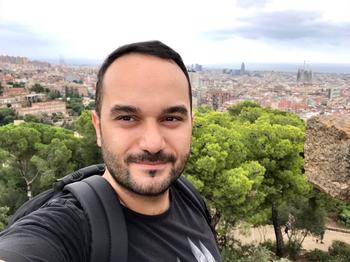
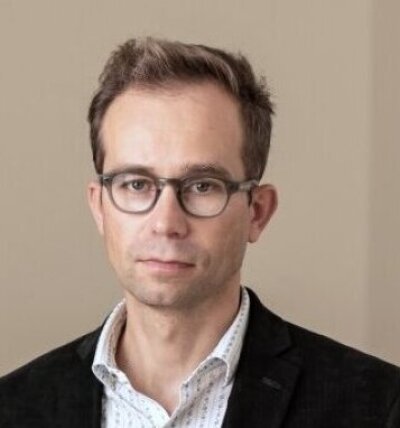
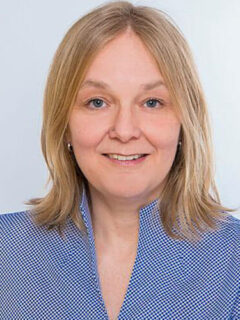
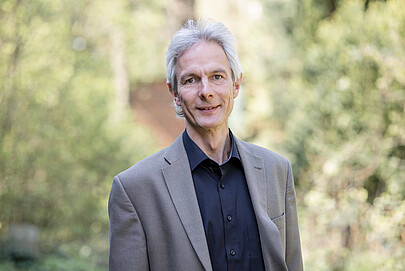
Muhammed-Ugur Karagülle is a Researcher at the Institute of Computer Science, Department of Databases and Information Systems at Freie Universität Berlin. His work focuses on developing AI-driven healthcare solutions and information systems for medical and veterinary applications. He is affiliated with the university's research group specializing in databases and information systems, contributing to advanced projects such as AINA, SurgeRate, and mHealthAtlas. Research interests include medical informatics, mobile health (mHealth) platforms, veterinary diagnostics systems, and AI integration in healthcare workflows. His projects address challenges in disease diagnosis (e.g., schistosomiasis), surgical performance evaluation, and regulatory frameworks for digital health applications. Key contributions include the design of HaLowNet (a WiFi-based emergency healthcare system), the PRECOSE grayscale conversion method for medical scoring boards, and collaborative platforms like mHealthAtlas for evaluating mHealth applications. His work emphasizes interdisciplinary collaboration and human-centered design principles. Currently, he is involved in projects such as XRay2Model, mCIS.vet (mobile clinical information systems for veterinary medicine), and process optimization for digital health applications. Office hours are held weekly, requiring prior email registration.
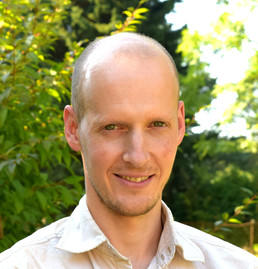
Prof. Daniel Göhring is a professor in the Department of Computer Science at the Free University of Berlin, leading the Autonomous Cars Lab and part of the Dahlem Center for Machine Learning and Robotics. His research emphasizes robotic perception, object tracking, and real-time planning under computational constraints, with a focus on autonomous vehicles and cooperative systems. Education: Bachelor's/Master's in Robotics (exact program unspecified) PhD in Computer Science at Humboldt University Berlin Postdoctoral Research at International Computer Science Institute (ICSI), Berkeley, CA Research Interests: Daniel's work integrates machine learning and sensor technologies like LiDAR and cameras to address challenges in autonomous driving. Key areas include SLAM algorithms, trajectory prediction, cooperative perception, and real-time systems. He explores how limited sensor data and computational resources can be optimized for dynamic traffic environments. Grants and Projects: Leader of the Autonomous Cars Lab Involved in EU-funded projects such as H2020 HIVEOPOLIS and KIS-M (AI-based mobility systems) Past projects include CRTX (recycling optimization), Open.Make (open hardware), RoboFish (biological swarm analysis), and SAFARI Awards: Best Poster Award at IAAS Workshop 2024 Best Paper Award at ICAIR-CACRE 2019 Teaching: He has taught courses such as Image Processing, Robotics, and Advanced Robotics. Recent semesters include modules on self-supervised learning, autonomous vehicle research, and continuous learning software projects. Labs and Teams: Daniel heads the Autonomous Cars Lab and collaborates with the BioRobotics Lab, focusing on interdisciplinary projects like 'Robots Communicating with Fish' and 'Open Hardware for FAIR Robotics.'
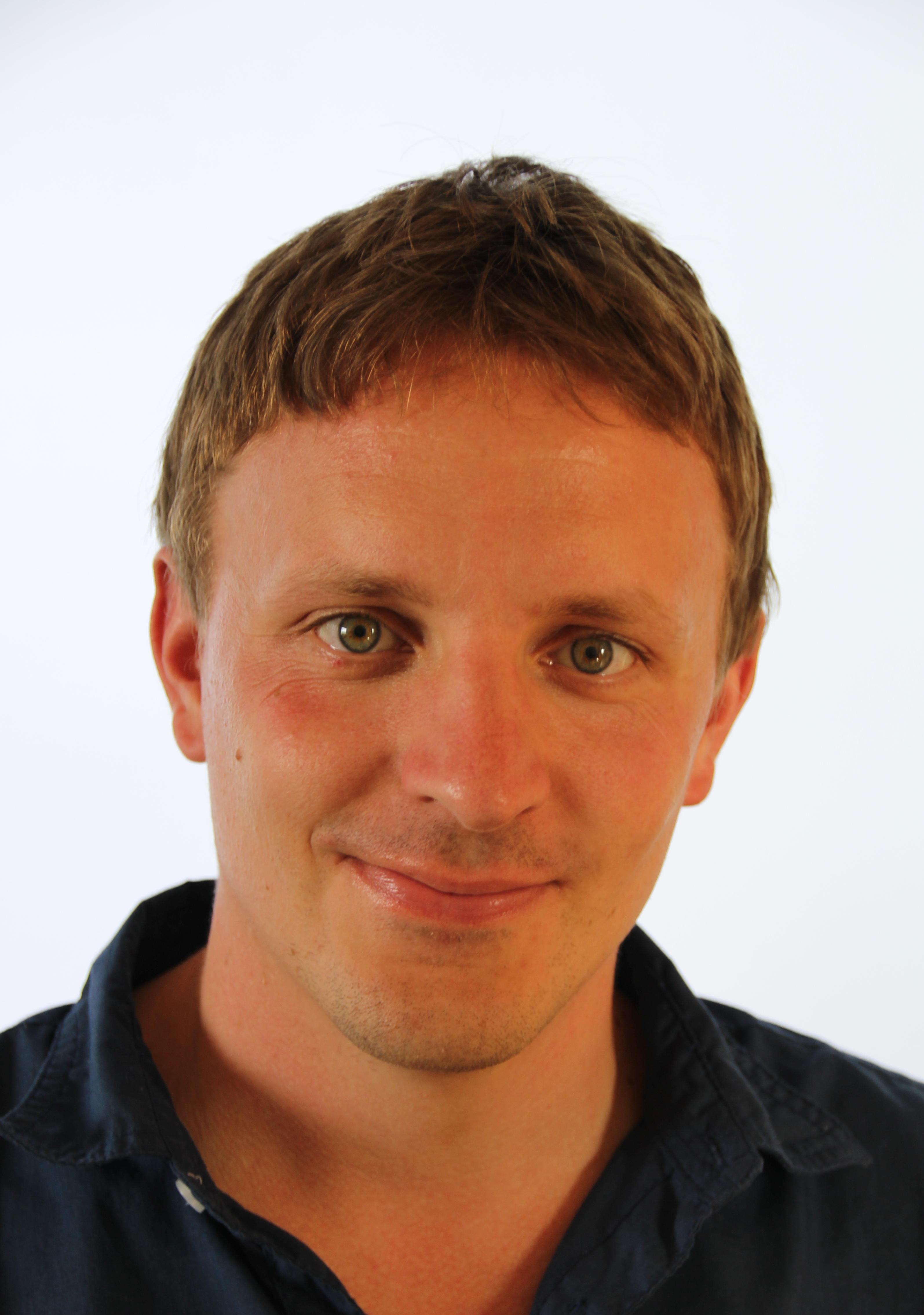
Markus Hehn is a Researcher at the Chair of High Frequency Engineering within the Department of Electrical Engineering, Electronics and Information Technology (EEI) at Friedrich-Alexander-University Erlangen-Nuremberg. He holds a Dr.-Ing. (PhD) in Electrical Engineering, awarded with 'sehr gut' in November 2021. His work focuses on hardware design and signal processing for indoor positioning systems, including radar systems, low-frequency magnetic field localization, inertial navigation, and RFID technologies. Education: 2004-2007: Training as an Electronics Technician for Automation Technology 2008-2010: State-Certified Electrical Engineering Degree from Erlangen Technical College 2011-2014: B.Sc. in Electrical Engineering, Electronics, and Information Technology (FAU) 2014-2016: M.Sc. (with distinction) in the same field (FAU) Research interests span hardware development, radar systems, and signal processing for indoor navigation. Recent work emphasizes sequential sampling impulse radar, synthetic aperture imaging, and Kalman filter-based synchronization in networked systems. Collaborations include projects on UHF-RFID localization for mobile robots and 5G/6G antenna arrays. Labs/Teams: Active in the Institute of Microwaves and Photonics (LHFT) and the Chair of High Frequency Engineering. Seeks students for theses in hardware/circuit design, signal processing, and system design.
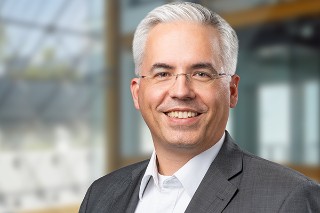
Lakhmi C. Jain is a distinguished academic affiliated with the University of South Australia. They specialize in Artificial Intelligence, Neural Networks, Fuzzy Logic, and Intelligent Systems, with a focus on applications in robotics, data mining, and biomedical engineering. Their work often bridges theoretical advancements and practical implementations, contributing to fields like computational intelligence, decision-making systems, and multi-agent frameworks. As an editor for multiple journals, including the International Journal of Intelligent Decision Technologies, Jain has significantly shaped academic discourse in AI and related domains. Roles: Editor-in-Chief for several journals, researcher in AI and computational intelligence. Affiliations: University of South Australia. Research interests include neural networks, fuzzy logic systems, and their applications in robotics, biomedical signal processing, and smart technologies. Their publications emphasize interdisciplinary approaches to solving complex problems in engineering and computer science. Articles highlight contributions to multi-agent systems, decision support systems, and risk assessment models, reflecting a commitment to both theoretical rigor and practical relevance. Despite extensive contributions, no specific awards or student advisees are explicitly documented in the provided data.
Jochen Schiewe is a Researcher specializing in geovisualization, GIS, and spatial uncertainty analysis, with a career spanning over two decades. His work bridges cartography, urban planning, and computational methods. Key Affiliations: University of Hanover (PhD), ISPRS community, EuroVA workshop Research Focus: Geovisualization techniques, uncertainty quantification, smart cities, and historical map analysis His 2024 publication introduces agent-based approaches for preserving spatial patterns in urban data. Earlier works examine sound maps for data representation, land cover change analysis, and interactive GIS for public participation. Schiewe's scholarly contributions emphasize human-computer interaction and cognitive aspects of mapping . He has served as editor for special issues on smart city solutions and collaborated with leading experts in GIS and visualization.
Yike Ma is an active Associate Professor in the Department of Computer Science at the University of Science and Technology of China (USTC), School of Computer Science and Technology. With a prolific publication record spanning from 2011 to 2025, Ma has established expertise in computer vision with specializations in panoramic/spherical image processing, light field imaging, and applications in agricultural robotics and autonomous driving systems. Ma maintains a strong collaborative network, primarily with Feng Dai, Qiang Zhao, Yongdong Zhang, and Yucheng Zhang, producing numerous high-impact publications in top venues including CVPR, IJCAI, IEEE Transactions, and NeurIPS. University: University of Science and Technology of China (USTC) School: School of Computer Science and Technology Department: Department of Computer Science Research Focus: Computer Vision, Panoramic Imaging, Agricultural Robotics Ma's research interests center on advanced computer vision techniques, particularly for spherical and panoramic imagery, with significant contributions to oriented object detection, semantic segmentation, and light field processing. Recent work demonstrates increasing focus on agricultural robotics applications and autonomous driving systems, showing interdisciplinary expansion of core computer vision expertise. The research employs sophisticated deep learning approaches while addressing practical challenges in real-world applications. Analysis of Ma's 15 most recent publications reveals a clear progression toward practical applications of computer vision research, with growing emphasis on agricultural robotics (4 publications) and autonomous driving systems (3 publications), while maintaining strong foundational work in spherical/panoramic image processing (5 publications). The research demonstrates technical sophistication in handling boundary discontinuity problems, topology reasoning, and space-time perceptive clues, with increasing integration of large language models and generative AI techniques in recent work. While no specific awards are documented in the available publication records, Ma's consistent presence in top-tier conferences and journals including CVPR, IJCAI, and IEEE Transactions indicates recognition within the computer vision and AI research communities. The publication record shows steady output with increasing impact, particularly in the last five years. Ma's collaborative network is extensive, with primary collaborations through the University of Science and Technology of China. The research appears well-supported through projects in agricultural robotics and autonomous systems, though specific grant details aren't visible in the publication metadata. Ma has advised numerous graduate students as evidenced by authorship patterns where Ma appears as senior author on papers with junior researchers as first authors.
Prof. Dr. Jörn Kohlhammer is an Honorary Professor at TU Darmstadt and Head of the Information Visualization and Visual Analytics department at Fraunhofer Institute for Computer Graphics Research IGD. His work focuses on decision-oriented visualization using semantics, visual business analytics, and applications in medical data analysis, internet security, and industrial sectors. He holds a PhD from TU Darmstadt (2005) and has authored over 50 publications in journals and conferences like IEEE VAST and EuroVis. Education: B.Sc./M.Sc. in Computer Science with Business Administration Minor (1993-1999), Ludwig-Maximilians-Universität München Research Interests: Context-dependent visualization solutions Medical data analysis and cohort visualization Decision support systems Visual analytics for cybersecurity and network traffic Professional Activities: Regular member of program committees for IEEE VAST, EuroVis Reviewer for journals/conferences including IEEE Transactions on Visualization and Computer Graphics Co-chair of IEEE VAST (2009) and founder of EuroVA (2010) Labs/Teams: Leads Fraunhofer IGD's Information Visualization & Visual Analytics group Projects: ATHENA, CorASiV (health authority support), SoBigData (social big data analytics)
Prof. Dr. Sören Urbansky is a historian specializing in East European and Sino-Russian relations , currently holding the Chair of Eastern European History at Ruhr University Bochum . He combines his expertise on the Russian Empire, Soviet Union, and China with a focus on border studies migration infrastructural history racial dynamics . His research spans imperial history , geopolitics , and transnational Cold War interactions , particularly in Eastern Europe and Asia. Recent publications include works on the Sino-Russian border , diplomatic ties , and cultural narratives . Scientific recognition includes Central Eurasian Studies Society Book Award (2022) Klaus-Mehnert-Preis (2015) Best Dissertation Prize, University of Konstanz (2014) .
Prof. Vasileios Angelidakis is a Professor at Friedrich-Alexander-Universität Erlangen-Nürnberg (FAU), specializing in Discrete Element Method (DEM) modeling, granular materials, and particle dynamics. His research focuses on numerical simulations of particulate systems, including particle shape characterization, DEM framework comparisons, and applications in additive manufacturing, railway ballast, and material science. He has collaborated internationally, contributing to open-source DEM software like MercuryDPM and Yade, and has published extensively on topics such as clump dynamics, thermal-particle interactions, and global benchmark studies on granular behavior. He has also worked on seismic engineering, analyzing structural responses to earthquake-induced ground motion. Education: PhD in Engineering (Newcastle University, 2022), MSc in Structural Engineering (National Technical University of Athens, 2016), Diploma in Civil Engineering (National Technical University of Athens, 2014). Research Interests: DEM modeling, particle shape effects, granular flow, computational mechanics, additive manufacturing processes, and seismic structural analysis. Publications highlight his work on open-source frameworks, particle morphology analysis, and validation studies across disciplines. His contributions include algorithms for rotational motion integration and tools like CLUMP and SHAPE for particle representation.
Prof. Dr. Frauke Liers holds the Professorship of Optimization under Uncertainty & Data Analysis at the Department of Data Science (DDS), Friedrich-Alexander-University Erlangen-Nürnberg. Her research focuses on robust and distributionally robust optimization, mathematical programming, and applications in energy systems, healthcare logistics, and quantum computing. Email: frauke.liers@fau.de ResearchGate: Frauke Liers Research Interests span optimization under uncertainty, data-driven mathematical programming, and interdisciplinary applications. Key areas include: Distributionally robust optimization with scenario reduction and chance constraints Quantum computing optimization for gate routing and noise suppression Energy system modeling (photovoltaics, gas networks, electricity networks) Healthcare logistics (patient transport scheduling under uncertainty) Nanoparticle technology and chemical process optimization Recent Publications emphasize: Advancements in quantum circuit optimization (2025) Explainable optimization methods (2024) Robust approaches for particle precipitation control (2024) Dynamic trajectory optimization (2023) Time-expanded models for network flows (2022)
Prof. Clemens Walther is a Professor at the Institute of Radioecology and Radiation Protection within the Faculty of Mathematics and Physics at Leibniz University Hannover. His research focuses on trace detection of radionuclides, disposal of high-level radioactive waste, and the physical/chemical speciation of actinides. He leads major projects funded by the German Federal Ministry of Education and Research (BMBF), including investigations into plutonium colloid formation, radionuclide transfer in humans, and biological waste remediation. Key research areas include: Actinide colloids and environmental transport mechanisms Nuclear forensics of Chernobyl-derived particles using advanced mass spectrometry Radiation protection strategies for nuclear medicine (e.g., 99 Mo production) Phytoremediation of heavy metals and radionuclides Prof. Walther collaborates with international teams on projects like SOLARIS (laser-based radionuclide detection) and TRAVARIS (plant-microbe interactions in radionuclide uptake). His work bridges analytical chemistry, environmental science, and nuclear technology, with a focus on practical solutions for radiation safety and waste management.
Prof. Dr. Manfred Lein is a Professor at the Institute of Theoretical Physics within the Faculty of Mathematics and Physics at Leibniz University Hannover. He holds key roles including Dean of Studies in the Faculty and membership in the Executive Board of the Institute. His research focuses on ultrafast quantum phenomena, strong-field ionization, and high-order harmonic generation (HHG), with contributions to attosecond science and machine learning applications in quantum systems. His work bridges theoretical modeling and experimental techniques, including the use of bicircular attoclocks and neural networks for molecular imaging. Positions: Dean of Studies (Faculty of Mathematics and Physics), Executive Board Member (Institute of Theoretical Physics), Professor Contact: manfred.lein@itp.uni-hannover.de | +49 511 762 3291 Lab: Group website: lein group Research interests emphasize electron dynamics in strong laser fields, molecular structure retrieval via HHG, and ultrafast processes. His articles highlight advancements in attosecond timing, Coulomb effects, and quantum control using THz and bicircular fields.
Dr. Nina Gehrer is a Post-Doc researcher in the Department of Psychology at the University of Tübingen, affiliated with the Faculty of Science and the Clinical Psychology and Psychotherapy research group. Her work is centered on understanding cognitive and perceptual mechanisms underlying psychopathy and body image disturbances, using advanced eye-tracking methodologies. Her research interests include: Body dissatisfaction and body image interventions Attention biases and social information processing Eye tracking in clinical populations Psychopathy and antisocial behavior Emotion recognition and gaze behavior Cognitive mechanisms in violent offenders The recent publications (2017–2022) reflect a strong focus on eye movement patterns in psychopathy, emotion processing in epilepsy, multisensory perception, and methodological innovations in gaze analysis. Her work frequently involves incarcerated populations and employs both experimental and clinical paradigms. Collaborations with researchers like M. Schönenberg, A. Jusyte, and A.T. Duchowski highlight interdisciplinary and international research efforts. Scientific awards and honors are not mentioned in the provided text. Dr. Gehrer has been actively involved in research since her PhD (2015–2020) and completed a psychiatric internship (2021–2022) as part of her psychotherapy training. There is no mention of grant leadership or student advising in the available data. She is based at Schleichstraße 4, Room 4.407, Tübingen.
Christian Heck is an Assistant Professor for Aesthetics and New Technologies at the Academy of Media Arts Cologne (KHM), where he has worked since 2017. His academic background includes a Master of Arts from the Berlin University of the Arts (2015) and a Diploma in Media Arts from the Academy of Fine Arts Munich (2012). Research Interests: Peace research, AI ethics, adversarial hacking, code literature, natural language processing, generative systems, and the militarization of digital technologies. Key Themes: Focus on algorithmic critique (especially neural networks), aesthetic research in cultural/peace work, and the societal impacts of technologies like IT security, weaponized drones, and autonomous weapon systems. His recent publications and talks address: AI-driven warfare and pre-emptive security policies Civil clauses in academia to prevent dual-use exploitation Cyberpeace strategies and artistic resistance Ethical implications of language models in military contexts He collaborates with organizations like the Forum InformatikerInnen für Frieden (FIfF), Science4Peace , and Arbeitskreis gegen bewaffnete Drohnen . His work connects artistic methods with peace activism, emphasizing civil society's role in reclaiming technological sovereignty.
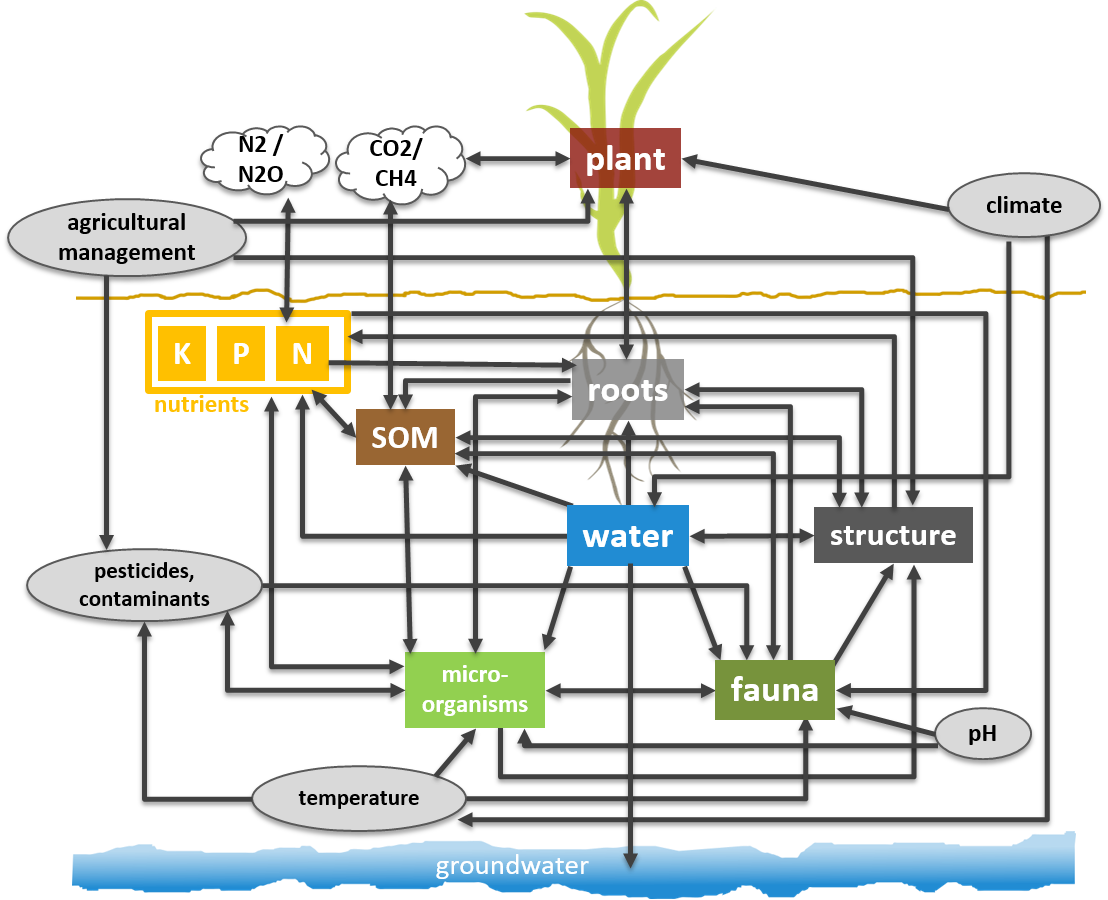
Ulrich Weller is a researcher at the Department of Soil System Science within the Helmholtz Centre for Environmental Research – UFZ . His work focuses on soil hydrology, rhizosphere dynamics, and land use planning, with a strong emphasis on computational modeling and geospatial analysis. Institution: Helmholtz Centre for Environmental Research – UFZ Department: Soil System Science Key Collaborators: Prof. Dr. Hans-Jörg Vogel, Dr. Steffen Schlüter, Dr. Doris Vetterlein Research Interests Dr. Weller’s research spans soil physics, root-soil interactions, and sustainable land management. He employs advanced imaging techniques (e.g., X-ray tomography) and computational models to study soil structure, water infiltration, and rhizosphere processes. His work in West Africa (Benin/Niger) integrates SOTER-based land evaluation with geospatial data fusion for climate-resilient agricultural planning. Scientific Contributions His publications highlight interdisciplinary trends: 2018: Systematic soil function modeling 2017: X-ray imaging of soil water dynamics 2007: Landscape-scale clay content mapping via electromagnetic induction 2002: Land use planning in Southern Benin These studies bridge soil physics, plant ecology, and environmental data science, often leveraging machine learning and geostatistical methods.