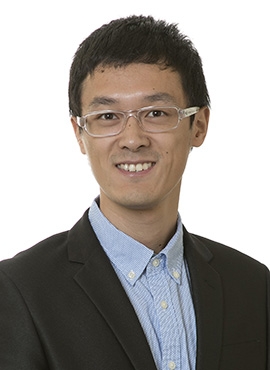
Dr. Erik Linstead is an Associate Professor and Senior Associate Dean at Chapman University, affiliated with the Fowler School of Engineering, School of Pharmacy, and George L. Argyros College of Business and Economics. His expertise spans Machine Learning, GPU Programming, Autism Spectrum Disorder, Assistive Technologies, Predictive Analytics, and Virtual Reality. Education: Bachelor of Science, Chapman University Master of Science, Stanford University Ph.D., University of California, Irvine Dr. Linstead's research integrates machine learning with diverse domains, including autism treatment, environmental monitoring, and software engineering. His recent publications focus on coral reef health, land surface temperature trends, and embedded machine learning systems. His scholarly work includes collaborations in remote sensing, medical informatics, and neurodiversity support. Articles highlight his interdisciplinary approach, applying AI to ecological challenges (e.g., Red Sea coral reefs, Nile Basin droughts) and human-centered technologies (e.g., VR therapy for autism, medication adherence analysis).
Dr. Kevin Gee is a Professor in the School of Education at the University of California, Davis, specializing in the School Organization & Educational Policy emphasis area. He serves as Director of the School Policy, Research, and Action (SPARC) Center and is a Faculty Research Affiliate with the Center for Poverty & Inequality Research. As a 2020-25 Chancellor's Fellow, Dr. Gee leads research initiatives focused on vulnerable youth populations and educational policy impacts. His work bridges education, public health, and social welfare systems to address structural inequities affecting children's development and academic success. Dr. Gee's educational background includes: Ed.D., Harvard Graduate School of Education, Quantitative Policy Analysis in Education (2010) Ed.M., Harvard Graduate School of Education, International Education Policy (2006) M.P.I.A., University of California, San Diego, Pacific & International Affairs (cum laude, 2004) B.A., University of California, Berkeley, City & Regional Planning (magna cum laude, 1994) Dr. Gee's research centers on the critical intersection between health and education systems, examining how schooling can influence children's well-being. He investigates policies addressing adverse childhood experiences including bullying, food insecurity, abuse, and neglect. His work employs rigorous quantitative methods including Hierarchical Linear Modeling, longitudinal analysis, and experimental/quasi-experimental designs. Dr. Gee focuses particularly on vulnerable populations such as children with disabilities, Asian American and Pacific Islander youth, and those involved in the child welfare system, seeking data-driven solutions to educational inequities. Analysis of Dr. Gee's recent publications reveals a strong focus on educational equity, with particular attention to vulnerable student populations. His work spans school absenteeism patterns, bullying and hate speech against AAPI youth, food insecurity impacts, and health-related educational outcomes. The research demonstrates increasing interdisciplinary collaboration, particularly with public health researchers, and shows a growing emphasis on pandemic-related educational disruptions and their disproportionate impacts on marginalized communities. Dr. Gee's notable scientific awards include: National Academy of Education (NAEd)/Spencer Postdoctoral Fellowship (2015) Foundation for Child Development (FCD) Young Scholars Program Award (2014-2017) UC Davis Hellman Fellowship (2015-2016) Chancellor's Fellowship (2020-2021) Outstanding Faculty Award, Asian Pacific American UC-Systemwide Alliance (2023) Distinguished Visiting Scholar, Advanced Research Collaborative, CUNY (2022) Dr. Gee serves as Principal Investigator for multiple significant grants, including the Heising-Simons Foundation project on districtwide family engagement strategies and chronic absenteeism (2024-2026), and the UC Davis SEED funding for research on how Asian American and Pacific Islander youth confront bullying. He also serves as Co-Investigator on the AAPI Data Grant examining school climate influences on bullying experiences. His grant portfolio demonstrates strong interdisciplinary collaboration, particularly between education and public health researchers, with a consistent focus on generating actionable insights for educational policymakers and practitioners. As Director of the School Policy, Research, and Action (SPARC) Center at UC Davis, Dr. Gee leads a research team focused on generating data-informed insights about underserved and overlooked youth in educational policy. The center's work specifically supports Asian American and Pacific Islander youth who have experienced bullying, children with chronic absenteeism, and child welfare-involved youth who have experienced maltreatment. The SPARC Center collaborates with various California school districts and state agencies to translate research into practical policy recommendations and implementation strategies.
Dr. Stella Pytharouli is a Senior Lecturer in Civil and Environmental Engineering at the University of Strathclyde. With over 20 years of expertise in structural and ground deformation monitoring/analysis, her research focuses on subsurface characterization and slope instability early warning systems through microseismic monitoring, geodetic technologies, and machine learning integration. MEng (2002) - University of Patras MSc (2004) - University of Patras PhD (2007) - University of Patras Her research combines advanced signal processing with geodetic monitoring (terrestrial/aerial) to develop AI-driven solutions for UK landslide sites. Key areas include: Microseismic monitoring of weak seismic events Geometric and kinematic analysis of ground deformations Integration of geotechnical data with machine learning Climate change impact on slope stability Low-cost sensor development for environmental monitoring Recent publications highlight her work on AI-based seismic classification models, tiltmeter applications, and 3D reconstruction techniques. Her group includes 4 PhD students and 1 postdoc. Scientific recognitions include: Geophysical Research Letters front cover selection (2011) EOS Research Spotlight (2019) Lampadarios Prize from Academy of Athens (2009) TOPCON Award for young researchers (2008) As Director of Postgraduate Research (2020-present), she supervises PhD students and teaches land surveying modules. Current projects address slope stability analysis, climate change correlations, and seismic data automation.
Tim Murphy is a Professor in the Department of Psychiatry at the University of British Columbia's Faculty of Medicine. He holds a B.Sc. from Saint Mary's College (1984), Ph.D. from Johns Hopkins University (1989), and completed postdoctoral training at Johns Hopkins (1994). He is a Full Member of the Djavad Mowafaghian Centre for Brain Health and leads UBC's Dynamic Brain Circuits in Health and Disease research cluster. His research focuses on understanding brain circuit reorganization after stroke using advanced neuroimaging techniques. Key areas include: In vivo imaging of synaptic interactions and sensorimotor processing Optogenetic brain mapping and neuroplasticity mechanisms Development of automated imaging/stimulation tools for neurological disorders Mouse models of stroke, depression, and autism Synthetic data approaches for behavioral analysis Dr. Murphy's recent publications demonstrate strong focus on developing novel neurotechnologies, including mesoscale imaging systems, 3D calibration tools, and synthetic biomarkers. His work integrates neuroscience with biomedical engineering and computational approaches. He leads an active laboratory developing open-source neuroscience hardware and software. The lab participates in the Canadian Neurophotonics Platform and has created innovative tools like the Diesel2P mesoscope and automated home-cage imaging systems.
T.J.C. van Terwisga is a Professor at the Ship Hydromechanics and Structures department of Delft University of Technology (Faculty of Mechanical, Maritime and Materials Engineering). His research focuses on cavitation phenomena, vortical flows, and microbubble dynamics, with applications in ship hydrodynamics and marine technology. PhD in Mechanical Engineering (specialization in cavitation physics) Editorial Board Member: The Journal of Ocean Technology (2006–present) Research Interests : Cavitation inception and erosion mechanisms Air lubrication systems for ship drag reduction Underwater shipping noise propagation Bubble dynamics in vortical flows Experimental fluid mechanics Hydrofoil performance optimization Scientific Contributions : Developed advanced calibration methods for microbubble measurement systems Investigated air lubrication regime transitions under varying flow conditions Studied cavitation onset in counter-rotating vortex flows Explored bubble capture mechanisms in vortical flows Contributed to underwater soundscape modeling for maritime operations Editorial Roles : Editor, The Journal of Ocean Technology (2006–present) Editor, The Journal of Ocean Technology (2009–present)
Professor Cynthia H.Y. Fu is a leading researcher in the Department of Psychology & Human Development at the University of East London's School of Childhood and Social Care. She serves as an Honorary Consultant Psychiatrist at the South London and Maudsley NHS Foundation Trust and holds a Visiting Professor position at the Centre for Affective Disorders, King's College London. Her research focuses on identifying brain regions affected by depression and how they change with various treatments including talking therapies, antidepressant medication, and neurostimulation techniques like transcranial direct current stimulation (tDCS). Professor Fu pioneered work demonstrating that neural activation patterns during sad facial processing can accurately diagnose depression in individual patients and predict treatment response. Her research has direct translational potential in developing biomarkers for diagnosis and prognosis based on brain imaging. Professor Fu's work spans multiple disciplines including affective neuroscience, computational psychiatry, and neuromodulation. Her recent publications reveal strong trends in applying machine learning to neuroimaging data for depression classification, investigating home-based tDCS treatment protocols, and exploring the relationship between physiological markers and psychological states in real-world contexts like driving and commuting. British Association for Psychopharmacology Award National Alliance for Research in Schizophrenia and Depression (Brain & Behavior Research Foundation) Award Professor Fu has secured significant research funding from major organizations including the Medical Research Council, Wellcome Trust, GlaxoSmithKline, and Eli Lilly. Her work regularly appears in top-tier journals and is consistently cited among the most influential publications in psychiatry. She leads research investigating how brain responses can predict individual treatment responses, potentially enabling personalized depression treatment approaches. Her laboratory focuses on multimodal neuroimaging approaches combined with machine learning to identify neural signatures of depression and treatment response. Current projects include home-based tDCS treatment protocols with remote supervision, biomarker development for predicting antidepressant response, and computational approaches to understanding stress responses in everyday contexts.
Samuel McDermott is an Associate Teaching Professor at the Department of Chemical Engineering and Biotechnology , University of Cambridge. He serves as the Sensor CDT Programme Manager , focusing on interdisciplinary research in healthcare, biotechnology, and open-source hardware. His research spans machine learning applications in medical imaging , laboratory automation , and web-of-things (WoT) integration for scientific equipment. Recent work emphasizes federated learning in healthcare, blood cell morphology classification, and low-cost diagnostic tools. Key article trends include: deep diffusion models for malaria detection , open-source microscopy platforms like OpenFlexure, and AI-driven clinical data generalization . His projects often combine 3D-printed hardware and IoT-enabled laboratory systems .
Dr. Gloria Roberts is a Research Fellow at the Black Dog Institute, affiliated with the University of New South Wales' Faculty of Medicine, School of Psychiatry. Her research focuses on identifying predictors of bipolar disorder development in high-risk populations, with particular emphasis on neural mechanisms of executive functioning and emotional processing. Location: Black Dog Institute, Hospital Road, Prince of Wales Hospital, Randwick NSW 2031 Contact: +61 2 9382 8324 | ORCID: https://orcid.org/0000-0002-1966-5120 Education Background: B.Sc in Applied Psychology (University College Cork, Ireland, 2002) M.Sc in Neuropharmacology (National University of Ireland Galway, Ireland, 2003) Diploma in Statistics (Trinity College Dublin, Ireland, 2006) PhD in Neuroscience (Trinity College Dublin, Ireland, 2008) Dr. Roberts' research program centers on the neural basis of emotional dysregulation characteristic of mood disorders, employing structural and functional Magnetic Resonance Imaging as her primary research tool. Her work integrates advanced neuroimaging analysis techniques including diffusion tensor imaging tractography, dynamic causal modeling, graph theory, and machine learning approaches. She maintains active collaborations with Queensland Institute of Medical Research (Brisbane), Neuroscience Research Australia (Sydney), and the Centre for Healthy Brain Ageing (Sydney). Analysis of Dr. Roberts' publication record (94 journal articles, 2 book chapters, 25 conference papers) reveals a consistent research trajectory focused on neurocognitive patterns in bipolar disorder. Her recent work increasingly incorporates machine learning techniques to identify predictive biomarkers, with a growing emphasis on longitudinal studies tracking high-risk populations. The interdisciplinary nature of her research bridges neuroscience, psychiatry, and computational methods to address fundamental questions about mood disorder development. Scientific Contributions: Extensive publication record across multiple formats (journal articles, book chapters, conference presentations) Development of innovative neuroimaging analysis techniques for bipolar disorder research Establishment of multi-institutional collaborations across Australia Integration of machine learning approaches with traditional neuroimaging methods Dr. Roberts actively mentors junior researchers and contributes to the broader scientific community through peer review activities and participation in research networks focused on mood disorders. Her work has significant implications for early intervention strategies and the development of novel therapeutic approaches for bipolar disorder.
Florian Leiser is a Professor at the Chair of Information Infrastructures (led by Prof. Dr. Ali Sunyaev) at Technical University of Munich's Heilbronn campus. His research focuses on human-AI collaboration, privacy-preserving algorithms, and explainability in machine learning systems. Current research areas include Hybrid Intelligence, Human-centered Generative AI (LLMs), Federated Learning, and Health Information Systems Recent publications demonstrate expertise in Explainable AI for medical imaging LLM hallucination detection Federated learning architectures Human-in-the-loop systems Healthcare data applications He contributes to teaching through Human-Centered Artifact Design courses Collaborative teaching roles in machine learning Supervising student projects
Professor Dingxuan Zhou is a distinguished academic serving as Professor and Head of School of Mathematics and Statistics at The University of Sydney, joining the institution on August 29, 2022. He is also a member of The Net Zero Institute and has held significant editorial positions, including editor-in-chief of the journal "Analysis and Application" of "Mathematical Foundations of Computing" and serving on the editorial boards of over ten international journals. Educational Background: BSc in Mathematics from Zhejiang University, China (1988) PhD in Mathematics from Zhejiang University, China (1991) Professor Zhou's research spans learning theory, neural networks, wavelet analysis, and approximation theory, with his current focus on the theory of deep learning. His work aligns with the Faculty of Science Research Strengths in Complex Systems, Precision and Digital Health, Data and Decisions, and National Security. His research demonstrates a consistent progression from foundational mathematical theory to cutting-edge applications in machine learning and artificial intelligence, with particular emphasis on understanding the theoretical underpinnings of neural networks and deep learning systems. His extensive publication record reveals a strong trend toward distributed learning frameworks, approximation theory for neural networks, and the mathematical foundations of deep learning. Recent work focuses on federated learning, transformers, physics-informed neural networks, and the theoretical analysis of over-parameterized networks, reflecting the evolving landscape of machine learning research with increasing emphasis on theoretical guarantees and practical applications. Scientific Awards: Humboldt Research Fellowship (1993) Fund for Distinguished Young Scholars from the National Science Foundation of China (2005) Highly-cited Researcher by Thomson Reuters/Clarivate Analytics (2014-17) World's Top 2% Scientist by Stanford University (2021, 2022, 2023) Professor Zhou has demonstrated exceptional leadership in research and mentorship, having conducted over 40 research grants as Principal Investigator, supervised more than 20 PhD students, and co-organized over 20 international conferences. His collaborative approach is evident in his extensive co-authorship network across multiple institutions globally. He has also served in significant administrative roles including Head of Department of Mathematics (2006-12), Associate Dean of School of Data Science (2018-22), and Director of the Liu Bie Ju Centre for Mathematical Sciences (2019-22) at City University of Hong Kong.
Luka Radic is a Researcher in the Machine Learning Section at the Department of Computer Science, University of Copenhagen. His work bridges theoretical and applied research in machine learning, with a focus on quantum machine learning , large language models , and fairness in AI systems.
Minshuo Chen is an Assistant Professor in the Department of Industrial Engineering and Management Sciences at Northwestern University. He previously served as an Associated Research Scholar in the ECE department at Princeton University, collaborating with Prof. Mengdi Wang. His research focuses on developing methodologies and theoretical foundations in generative AI, reinforcement learning, and optimization. He holds a Ph.D. from Georgia Tech (supervised by Prof. Tuo Zhao and Wenjing Liao), a Master's from UCLA, and a Bachelor's from Zhejiang University. Key research areas include diffusion models for distribution estimation, foundations of learning (approximation and optimization), and reinforcement learning applications in complex systems. He has presented at major conferences like INFORMS 2024 and NeurIPS 2023, and serves as an area chair for NeurIPS 2023. His recent work emphasizes theoretical guarantees for diffusion models, including statistical rates and optimization perspectives. He has received awards such as the ARC-TRIAD Student Fellowship and William S. Green Fellowship. Collaborations include studies on POMDPs, policy evaluation, and manifold learning.
Dr. Wenjing Jia is an Associate Professor at the University of Technology Sydney (UTS), affiliated with the School of Electrical and Data Engineering within the Faculty of Engineering and IT. She holds a PhD in Computing Sciences (UTS, 2007), Master's in Communications and Information Systems (Fuzhou University, 2002), and a Bachelor's in Communications Engineering (Jilin University, 1999). Her research focuses on image analysis, computer vision, and AI applications in healthcare, transport, and defense. Key areas include text detection in challenging environments, medical image super-resolution, and crowd surveillance systems. She leads projects with industry partnerships, securing over $900K in funding. Dr. Jia is also a recognized educator with 12+ years of teaching experience, specializing in internetworking subjects. She organizes international conferences (e.g., ICDAR2019, TrustCom-2017) and serves as a Cisco Certified Instructor Trainer. Awards include the Science and Technology Award and a finalist spot in the Cisco Women in IT Academia Award. Education: PhD in Computing Sciences, UTS (2007) MSc in Communications and Information Systems, Fuzhou University (2002) BEng in Communications Engineering, Jilin University (1999) Research Highlights: Developed algorithms for low-light text detection and medical image enhancement Advanced crowd counting and violence detection in surveillance systems Contributions to OCT image super-resolution and LiDAR point cloud analysis Teaching & Leadership: Lead CI of Teaching & Learning grants Legal Main Contact for UTS Cisco Networking Academy Deputy Head - Teaching and Learning (secondee) Awards: Excellent Thesis Award, Science and Technology Award (2019), and recognition in Women in IT Academia. Her work bridges academia and industry, with over 130 publications and active roles in conference organization and technology transfer.
Lillian Lee is a Professor of Computer Science at Cornell University, affiliated with the College of Computing and Information Science. Her research bridges natural language processing (NLP) and social interaction, focusing on how computational methods can analyze and facilitate socially embedded processes. She co-developed the course “Natural Language Processing and Social Interaction” and leads the Cornell NLP Group. Her work spans sentiment analysis, computational social science, and multimodal interaction, with notable contributions to understanding language features in persuasion, online debate dynamics, and humor comprehension. Key research interests include analyzing digital traces of social interaction, evaluating AI systems through human-centered criteria, and exploring the interplay between language structure and societal influence. Recent projects examine pivotal moments in mental health counseling, cross-cultural historical narratives on Wikipedia, and the role of wording in message propagation. Awards: ACM Fellow, ACL Distinguished Service Award (2021), Test of Time Award, Fellow of the Association for Computational Linguistics Labs/Teams: Member of the Cornell Natural Language Processing Group Advising: Mentored numerous students whose work has driven impactful projects in NLP and computational social science
Charles Gillan is a Senior Lecturer at Queen's University Belfast's School of Electronics, Electrical Engineering and Computer Science, affiliated with the High Performance and Distributed Computing department and the Institute of Electronics, Communications & Information Technology. His research bridges HPC systems, AI applications in healthcare, and computational physics. Key projects include managing ICU patient care via neural networks, exascale-ready mathematical packages, and edge computing architectures. Research interests focus on high-performance computing (HPC), quantum computing, real-time data analytics, and electron-molecule scattering simulations. Notable contributions include developing microserver architectures for edge analytics and advancing AI-driven clinical decision support systems. Gillan has collaborated on interdisciplinary projects like food authenticity testing using spectroscopy and improving ventilator management in intensive care units. Publications span AI in healthcare, HPC system design, and computational methods for physics problems. He has secured funding for initiatives such as the KTP partnership with Foods Connected Ltd and the HANDHELD olfactory detection project. Gillan's work emphasizes practical applications of advanced computing across healthcare, engineering, and cybersecurity domains.