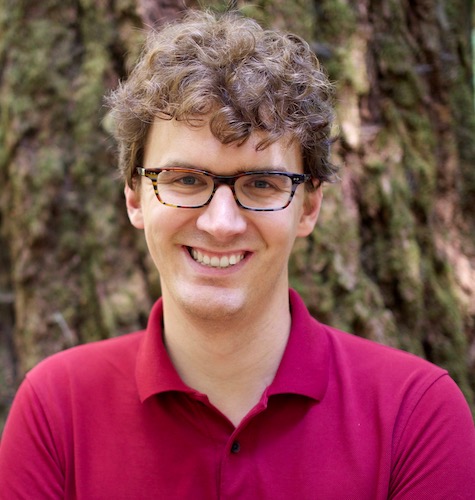
Carl Vondrick is an Associate Professor of Computer Science at Columbia University. He leads the Perception and Robotics research group focused on creating intelligent systems that understand and interact with the physical world through vision and robotics. His work emphasizes interpretable models, multimodal learning, and robustness. Education: PhD in Computer Science from MIT (2017), advised by Antonio Torralba BS in Computer Science from UC Irvine (2011), advised by Deva Ramanan Research Interests: Generative models for physical intelligence Interpretable machine learning Robotics and embodied AI Large-scale video understanding AI for scientific discovery Article Trends: Recent work focuses on neuro-symbolic methods , generative AI safety , and robot learning . Notable contributions include DIFFusion for subtle visual learning, DiSciPLE for scientific discovery, and differentiable robot rendering frameworks. Awards: 2024 PAMI Young Researcher Award 2021 NSF CAREER Award Advising & Grants: Current PhD students (9) and former advisees (4). Active grants from NSF, DARPA, Toyota Research Institute, and Amazon. Program chairs for ICLR 2025/2026. Labs/Teams: Leads Columbia's Perception Lab and collaborates with industry partners like Google, Cruise, and TRI.
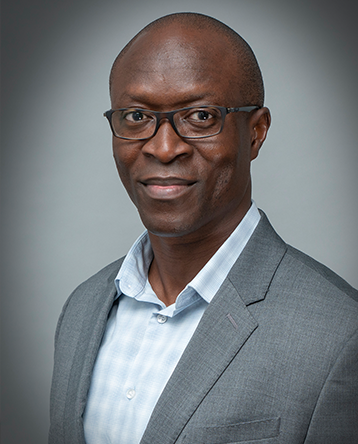
Conrad Tucker is a Professor of Mechanical Engineering at Carnegie Mellon University (CMU) and Director of CMU-Africa, with courtesy appointments in Machine Learning, Robotics, and Biomedical Engineering. He serves as Associate Dean for International Affairs (Africa) and holds an endowed Trustee Professorship. His research focuses on AI-driven systems design, data mining, cybersecurity, and education innovation, with grants from NSF, DARPA, and the Gates Foundation. Education: Ph.D. in Industrial & Systems Engineering, University of Illinois, 2011 MBA in Business Administration, University of Illinois, 2009 M.S. in Industrial & Systems Engineering, University of Illinois, 2007 B.S. in Mechanical Engineering, Rose-Hulman Institute of Technology, 2004 Research Interests: Dr. Tucker’s work bridges AI, engineering design, and societal impact. Key areas include: AI/ML for security and privacy Optimization of additive manufacturing AI applications in healthcare and education Data-driven product innovation His lab, AiPEX, develops ML methods for personalized design solutions and addresses challenges like deepfake detection in education. Grants & Awards: Endowed Trustee Professorship (CMU, 2023) NAE Frontiers of Engineering Education Advisory Committee (2016–present) Over $10M in grants from NSF, AFOSR, DARPA, and others Labs & Collaborations: Leads the AiPEX Lab, advancing AI in product design and cybersecurity. Collaborates with institutions globally, including the African Engineering and Technology Network (Afretec), to promote STEM education and digital infrastructure in Africa.
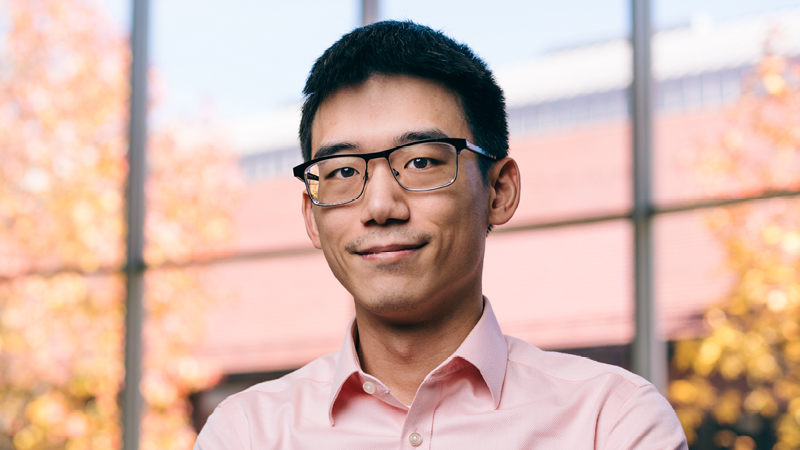
Derek Nowrouzezahrai is a Full Professor at McGill University's Faculty of Engineering, holding positions in the Department of Electrical & Computer Engineering, Desautels Faculty of Management (Associate), and School of Computer Science (Associate). He holds prestigious chairs including the CIFAR AI Chair and Mila-Ubisoft AI Chair. His research focuses on simulating physics for machine learning, Monte Carlo methods, light transport editing, and fluid simulation. Recent work includes neural implicit models, differentiable rendering, and reinforcement learning applications. He has supervised over 40 students across PhD, MSc, and undergraduate levels. Awards include the Best Paper Honourable Mention and CGF Cover Image Competition wins. His courses cover numerical methods, realistic image synthesis, and advanced computer graphics. Research contributions span 150+ publications with a focus on rendering, simulation, and AI integration. Research Interests: Physics-Based Simulation : Fluid dynamics, light transport, and material modeling Machine Learning Integration : Neural rendering, inverse problems, and generative models Real-Time Graphics : Efficient algorithms for global illumination and interactive visualization Multi-Agent Systems : Reinforcement learning for coordinated behavior Scientific Achievements: Developed scalable rendering techniques like Virtual Ray Lights and gradient-domain photon estimation Pioneered differentiable simulation frameworks for system identification Contributed to open-source datasets like Kubric for computer vision research Lab & Team: Leads a research group focusing on visual computing, with collaborations across computer science, engineering, and AI disciplines. Current focus areas include neural implicit representations and AI-driven physics simulations.
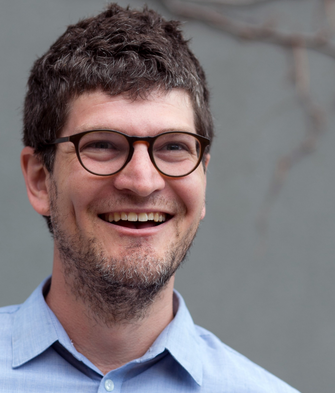
Raymond A. Yeh is an Assistant Professor in the Department of Computer Science at Purdue University since Fall 2022. Previously, he was a Research Assistant Professor at Toyota Technological Institute at Chicago (TTIC) and completed his PhD in Electrical Engineering at the University of Illinois at Urbana-Champaign (UIUC) in 2021. His research focuses on machine learning and computer vision, particularly in developing algorithms for effective and explainable models across audio, vision, language, and multi-agent systems. Education: Ph.D., Electrical Engineering, UIUC (2021) M.S., Electrical Engineering, UIUC (2016) B.S., Electrical Engineering, UIUC (2014) Research Interests: His work bridges machine learning and computer vision, emphasizing equivariance in neural networks, robustness, and scalable algorithms. Key areas include: Generative models (diffusion models, inpainting) Equivariant deep learning architectures Multi-modal reasoning (vision-language) 3D reconstruction and simulation Recent Contributions: Recent work includes model immunization techniques, scale-equivariant networks, and novel datasets like Tree-D Fusion. His publications span top venues (CVPR, NeurIPS, ECCV) with 4,551 total citations (h-index 18 as of 2025). Awards: Google PhD Fellowship (2018) Best Paper Runner-up at CVPR Workshop (2024) National Science Foundation (NSF) Grant (2024) Purdue Seed for Success Award (2024) Teaching: Courses include Introduction to AI, Computer Vision with Deep Learning, and Foundations of Deep Learning. Student evaluations consistently score above 4.5/5.0. Labs: Leads the Purdue Vision and Learning Lab, focusing on advancing AI through robust, interpretable models with practical real-world applications.
Prof. Rüdiger Westermann is a full Professor leading the Chair of Computer Graphics and Visualization at the Technische Universität München (TUM). His academic career includes roles at RWTH Aachen University (2001–2003) and research stays at Caltech and the University of Utah. He holds a doctorate from the University of Dortmund (1996) and has conducted foundational work in practical computer science, focusing on computer graphics, scientific visualization, and real-time numerical simulation. His research emphasizes algorithm development for interactive data exploration and physical simulation, particularly leveraging many-core architectures. Key research areas include volume visualization, multi-scale finite element simulation, and hierarchical data representation. Recent contributions involve stress-guided 3D design optimization, Bayesian imaging techniques, and GPU-accelerated visualization tools. His work bridges theoretical advancements with practical applications in meteorology, materials science, and medical visualization. Prof. Westermann’s academic journey includes a postdoctoral position under Prof. T. Ertl at Erlangen-Nuremberg (1998–2001) and prior research at GMD St. Augustin (1992–1997). He is actively involved in developing visualization tools for ensemble weather forecasts (e.g., Met. 3D) and structural design optimization for additive manufacturing. His publications span high-impact venues like IEEE Transactions on Visualization and Computer Graphics, emphasizing real-world applicability of visualization and simulation techniques. His research group at TUM collaborates on projects such as the Alpine benchmark for PDE emulators and GPU-based algorithms for large-scale data processing. Current efforts focus on neural fields for ensemble visualization, adaptive sampling techniques, and Bayesian methods for radio interferometry imaging.
Prof. Adriano Mancini is an Associate Professor at the Department of Information Engineering, University of Marche Polytechnic (UNIVPM), Italy. His research focuses on AI-driven solutions in computer vision, remote sensing, and IoT applications. He leads projects in precision agriculture, environmental monitoring, and smart retail systems, leveraging deep learning and edge computing technologies. Current work includes neural rendering for fashion design, vegetation recovery assessment via drones, and AI-based predictive maintenance for infrastructure. His research integrates interdisciplinary approaches across computer science, engineering, and environmental sciences. Notable projects involve UAV-based vegetation mapping, wastewater sensor forecasting, and ethical frameworks for AI in remote sensing. He collaborates on EU-funded initiatives like 4IPLAY for infrastructure inspection and WATERBALANCE for water resource management. Prof. Mancini's lab develops real-world applications such as automated mussel farming monitoring, retail robot navigation, and blockchain-integrated quality assurance systems. He advises on AI ethics and standards for maritime sustainability and low-carbon operations. His work bridges academic innovation with industrial needs through collaborations with industries like plastics manufacturing and smart retail environments.
Ana Serrano is an Associate Professor at the Universidad de Zaragoza, affiliated with the Graphics & Imaging Lab in the College of Engineering. Her research lies at the intersection of visual computing, perceptual modeling, and virtual reality, with a focus on improving user experience through perceptually-driven tools for content creation. Her research interests span computational imaging, material appearance perception and editing, virtual reality, and crossmodal perception. She investigates how human perceptual systems can inform the design of more effective and immersive visual technologies, particularly in VR environments. Her work integrates psychophysics, machine learning, and computer graphics to develop models of attention, saliency, and appearance perception. The recent publications (2023–2025) reflect a strong trend in perceptual modeling in immersive environments, with a focus on audiovisual integration, saliency prediction (AViSal360, SAL3D), HDR rendering (Cinematic Gaussians), and material appearance (gloss prediction). Many works combine deep learning with human perception studies, often validated through user experiments. There is a consistent emphasis on real-world applicability in VR content creation and cinematic VR. Eurographics 2020 PhD Award Eurographics 2023 Young Researcher Award VGTC VR 2024 Significant New Researcher Award Adobe Research Fellowship (Honorable Mention, 2017) NVIDIA Graduate Fellowship (2018) Ana Serrano actively supervises PhD and Master’s students and has taught courses such as Virtual Reality and Computational Imaging. She has secured research funding from ERC and national grants. She serves on editorial boards of Computer Graphics Forum , ACM Transactions on Applied Perception , and Computers & Graphics , and has chaired major conferences including Eurographics 2023 Tutorials and SAP 2022. She leads the Graphics & Imaging Lab, which conducts interdisciplinary research combining computer graphics, perception, and machine learning.
Alexei Efros is a Professor in the Electrical Engineering and Computer Sciences Department at UC Berkeley's College of Engineering, where he holds the Howard Friesen Professorship. He is a leading researcher in computer vision and computer graphics, with a focus on data-driven techniques and self-supervised learning. His work bridges the intersection of vision and graphics, leveraging large quantities of unlabeled visual data to tackle complex problems. Dr. Efros received his PhD from UC Berkeley in 2003 and joined the Berkeley faculty in 2013 after spending a decade at Carnegie Mellon University. He has also held affiliations with École Normale Supérieure/INRIA and the University of Oxford. His research group is part of the Berkeley Artificial Intelligence Research Lab (BAIR). His research interests span computer vision, computer graphics, artificial intelligence, and machine learning, with particular emphasis on data-driven approaches, self-supervised learning, computational photography, and visual data mining. Efros has pioneered numerous techniques in image synthesis, scene understanding, and visual representation learning that have shaped modern computer vision research. An analysis of his recent publications reveals a strong focus on generative models, particularly diffusion models and their applications; interpretability of vision-language models like CLIP; 3D scene understanding and reconstruction; and the application of self-supervised techniques to video and spatial reasoning problems. His work continues to push boundaries in how machines understand and generate visual content. Among his numerous accolades are the ACM Prize in Computing (2016), multiple Helmholtz Test-of-Time Prizes, the SIGGRAPH Significant New Researcher Award, Sloan and Guggenheim Fellowships, and teaching awards including the Jim and Donna Gray Award for Excellence in Undergraduate Teaching (2023). Professor Efros has mentored an impressive cohort of students who have gone on to prominent positions in academia and industry, including faculty positions at CMU, TTIC, Stanford, and research scientist roles at OpenAI, Google DeepMind, and Anthropic. His teaching includes core computer vision courses at both undergraduate and graduate levels.
Jürgen Singer is a Professor of Visual Computing at Harz University of Applied Sciences, coordinating the Media Informatics degree program. His academic career spans over two decades, including prior roles as Professor of Computer Graphics, Animation, and Virtual Reality (2006-2015) and senior research positions at institutions like MIT and the University of Texas. Education: PhD in Mathematics (1995), University of Houston Diploma in Theoretical Physics (1988), Friedrich-Alexander University Erlangen-Nuremberg Research Interests focus on visual computing, encompassing image processing, computer graphics, virtual reality, and machine learning. He explores applications in game development, 3D rendering, and web technologies, particularly emphasizing procedural generation, AI integration, and real-time visualization. Teaching Contributions include core courses in Java programming, software tools (Git, Docker, Jenkins), mathematics for computer graphics, and advanced topics like concurrency and distributed programming. His supervised theses reflect ongoing innovation in DevOps, metaverse content creation, and accessibility in UI design. Scientific Awards are not explicitly mentioned in the provided text. Labs & Teams: While specific lab details aren't provided, his work with student theses indicates collaboration in media informatics, game development, and visualization research groups.
Daniel Ruijters is a part-time Full Professor in the Electronic Systems department at Eindhoven University of Technology (TU/e), specializing in data-driven value-based healthcare for image-guided therapy. His research develops intelligent systems that optimize data utilization in minimally invasive treatments, translating population datasets to individual patient care. He simultaneously serves as a Principal Scientist at Philips Healthcare, where he has worked since 2001, developing clinical prototypes for image-guided interventions. Education Engineering degree from University of Technology Aachen, Germany (2001) Master's research at École Nationale Supérieure des Télécommunications (ENST), ParisTech, France PhD from TU/e and KU Leuven (2010) on multi-modal image fusion Research Focus Ruijters' work integrates medical imaging, deep learning, and computational modeling to advance image-guided interventions. His research spans GPU-accelerated image processing, angiography-based diagnostics, computational fluid dynamics for vascular analysis, and AI-driven detection systems for neurovascular procedures. This includes developing real-time tracking methods and personalized treatment approaches using large-scale clinical datasets. Projects & Initiatives He leads the PERSEUS project (2023-2029) focusing on patient-centered healthcare optimization through data science. His work contributes to UN Sustainable Development Goals through improved medical technology accessibility. Academic Contributions Ruijters teaches courses in DSP fundamentals, medical image analysis, and signal processing. His 90+ publications demonstrate consistent output since 2003, with recent emphasis on deep learning applications in angiography and computational hemodynamics.
Andrei C. Jalba is an Assistant Professor in the Department of Mathematics and Computer Science at Eindhoven University of Technology (TU/e), specializing in Visualization and Visual Analytics. His research spans computer graphics, geometric processing, and visualization techniques with significant applications in medical imaging, simulation systems, and real-time graphics. Research Expertise Dr. Jalba's research fingerprint reveals strong specialization in curve skeletonization (95%), diffusion tensor analysis, point cloud processing (64%), and graphics hardware acceleration (59%). His work focuses on developing advanced algorithms for skeletonization, regularization techniques, and geometric processing with applications across multiple domains. His research intersects computer vision, medical diagnostics, and computational fluid dynamics, demonstrating practical implementations in MRI data processing, fire safety simulations, and interactive visualization systems. The integration of physics-based approaches with computational techniques represents a significant thread throughout his publication history. Publication Trends Dr. Jalba's recent publications show a clear progression from fundamental geometric algorithms to practical applications in medical imaging and real-time systems. His 2023 work on volumetric light transport demonstrates continued innovation in rendering techniques, while his 2021 eye tracking research shows expansion into AI applications. The consistent theme across his work is the development of efficient computational methods for complex visualization problems. Academic Contributions Teaching: Computer Graphics (since 2012), Seminar Visualization (since 2015), Simulation in Computer Graphics (since 2015) Supervision: 48 research projects across visualization and computer graphics topics Research Output: 68 publications with over 1,100 citations according to Scopus His work contributes to UN Sustainable Development Goals through applications in medical diagnostics, safety engineering, and computational science, though specific goals are not detailed in the available information.
Xiaoming Liu is a Professor at Michigan State University with extensive contributions to computer vision and biometrics. His research spans face recognition, 3D reconstruction, image forgery detection, and adversarial machine learning, with over 300 publications from 1999 to 2025. His primary research interests include Computer Vision , Biometrics , and Adversarial Machine Learning . Liu's work focuses on developing robust systems for face recognition at scale, detecting image manipulations, and creating 3D reconstruction techniques. Recent projects include SapiensID for human recognition, FRCSyn for synthetic face recognition, and proactive watermarking schemes. Liu's publication trends show increasing focus on multi-modal biometrics (combining face, body, and gait), image forgery detection using hierarchical approaches, and adversarial defense mechanisms . His 2023-2025 work emphasizes synthetic data applications and physics-driven recognition systems. Liu has mentored numerous students including Feng Liu, Minchul Kim, and Xiao Guo, who frequently co-author his papers. His research has been supported by grants enabling projects like FarSight (long-range biometrics) and ProMark (proactive watermarking). He leads research in biometrics security and computer vision, with recent work focusing on ethical AI applications and robust recognition systems. His team develops tools for detecting deepfakes and improving recognition in challenging conditions.
Alec Jacobson is an Associate Professor in the Department of Computer Science at the University of Toronto, with a courtesy appointment in Mathematics. He holds the Canada Research Chair in Geometry Processing and serves as a Senior Research Scientist at Adobe Research Toronto. Located at the Bahen Centre, he leads research in computer graphics and geometry processing as part of the Dynamic Graphics Project lab. His research focuses on Geometry Processing , Discrete Differential Geometry , and Computer Graphics , with applications in 3D reconstruction, computational fabrication, and neural representations. Key areas include mesh processing algorithms, physics-based simulation, and differentiable rendering techniques that bridge theoretical foundations with practical implementations. Recent publications demonstrate strong trends in neural field optimizations, robust 3D reconstruction, and physics simulation. His team frequently combines machine learning with geometric methods to solve challenging inverse problems in computer vision and graphics, with consistent innovation in computational efficiency and mathematical foundations. Scientific Awards: Canada Research Chair in Geometry Processing AXL Faculty Fellow Best Paper Honourable Mention (SGP 2024) Best Paper Award (SIGGRAPH 2022) Test of Time Award (SIGGRAPH 2024) He leads the Third Space research group advising numerous graduate students and postdocs. Current research infrastructure includes collaborations with the Vector Institute and Adobe Research, supported by grants focused on geometric algorithms and neural representations.
Deng Cai is a Professor at Zhejiang University's College of Computer Science, working in the State Key Laboratory of CAD&CG in Hangzhou, China. He also maintains an affiliation with Tencent AI Lab, demonstrating his strong connection between academic research and industry applications in artificial intelligence. His academic background includes a PhD from the University of Illinois at Urbana-Champaign, Department of Computer Science (2009). Professor Cai's research spans multiple domains within artificial intelligence, with particular emphasis on computer vision, deep learning, and their applications. His work shows strong focus on 3D object detection, lane detection for autonomous vehicles, and the application of large language models to various vision tasks. He has made significant contributions to traffic forecasting, trajectory prediction, and CAD generation systems. His recent work increasingly integrates large language models with computer vision tasks, demonstrating the evolving nature of his research interests toward multimodal AI systems. The trajectory of Professor Cai's publications reveals a clear progression from foundational computer vision and machine learning research toward increasingly complex and applied systems. His work shows strong emphasis on practical applications in autonomous driving, with numerous papers on 3D object detection, lane detection, and trajectory prediction. More recently, his research has expanded to include generative models for CAD systems and video customization, often leveraging large language models in innovative ways. The consistent publication output across top-tier venues including CVPR, ICCV, AAAI, and NeurIPS demonstrates sustained research productivity and impact. Professor Cai has established significant research collaborations, particularly with Xiaofei He (161 joint publications), Haifeng Liu (50), Zhou Zhao (42), Wenxiao Wang (41), and Binbin Lin (39). His work appears across diverse publication venues including IEEE Transactions on Pattern Analysis and Machine Intelligence, IEEE Transactions on Image Processing, and proceedings of major AI conferences. The breadth of his publication venues reflects the interdisciplinary nature of his research spanning theoretical machine learning to applied computer vision systems. Professor Cai leads research activities within Zhejiang University's College of Computer Science, particularly focusing on the State Key Laboratory of CAD&CG. His work bridges academic research with practical industry applications through his affiliation with Tencent AI Lab. The laboratory environment supports research in computer vision, machine learning, and their applications to real-world problems in autonomous systems, content generation, and intelligent transportation.
James Hays is affiliated with Brown University . His research spans Computer Vision , Robotics , 3D Reconstruction , and Image Synthesis . His recent work focuses on 3D Object Detection (e.g., CoRL 2024 ), Semantic Scene Flow (e.g., ICLR 2024 ), and Multimodal Image Generation (e.g., CVPR 2024 ). He has contributed to datasets like ContactDB and ContactPose for robotic grasp analysis. Key trends in his publications include 3D Perception , Efficient Neural Architectures , and Cross-modal Learning for autonomous systems. While no explicit scientific awards are listed, his work is frequently published in top-tier venues like CVPR , ECCV , and CoRR .