Milos GalicView profile
Professor
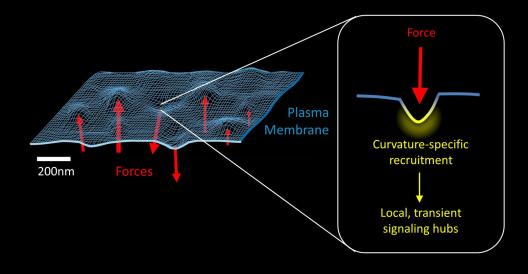
Milos Galic is a University Professor at the Institute of Medical Physics and Biophysics at the University of Münster, Germany, where he leads the Galic Lab: Nanoforces in Cells. He is actively involved in the "Cells in Motion" cluster of excellence and serves as a supervisor in the CiM-IMPRS Graduate Programme. His research spans multiple collaborative projects including CRC 1348 and CRC 1450. Dr. Galic's educational background includes: 1996-2002: Studies in Biology at the University of Zürich, Switzerland 2002-2007: PhD in Neurobiology at the University of Basel, Switzerland (summa cum laude) 2007-2012: Postdoctoral Fellow in Chemical & Systems Biology at Stanford University, USA 2012-2013: Research Associate in Chemical & Systems Biology at Stanford University, USA Dr. Galic's research focuses on understanding how curvature-dependent self-organization impacts single and collective cell dynamics. His work investigates how mechanical forces applied to cellular membranes cause deformations that trigger enrichment of curvature-sensitive proteins and lipids, forming transient signaling hubs. This mechano-chemical signal translation is crucial for cell architecture (particularly neuronal arborization), directionality and speed of cell migration, and collective cell behavior. His lab employs an interdisciplinary approach combining cell and neurobiology with biophysics, nanofabrication, and computational analysis of microscopic images. His recent publications reveal a consistent focus on membrane curvature, protein-membrane interactions, and how mechanical forces are translated into biochemical signals. The work spans from fundamental biophysical principles to applications in neuronal development and cell migration. His research has increasingly incorporated advanced microscopy techniques including lattice light-sheet microscopy, correlative light-electron microscopy, and super-resolution microscopy. As a mentor, Dr. Galic supervises students in the CiM-IMPRS Graduate Programme and has guided numerous PhD projects focused on spatio-temporal analysis of curvature-dependent protein/membrane interactions, analysis of curvature-dependent regulation of actin-based forces, and investigation of curvature-dependent regulation of neuronal architecture. Dr. Galic's lab, the Galic Lab: Nanoforces in Cells, is part of the Multiscale Imaging Centre at the University of Münster. The lab employs cellular model systems (neurons, immune cells, and vascular cells) and biomimetic approaches to study how curvature-induced signaling circuits form and function. The team uses advanced microscopy techniques, quantitative image analysis, nanomaterials, biophysical approaches, and numerical modeling to uncover the core principles through which curvature-dependent self-organization regulates cellular physiology and development in health and disease.