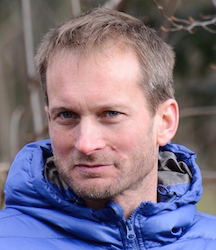
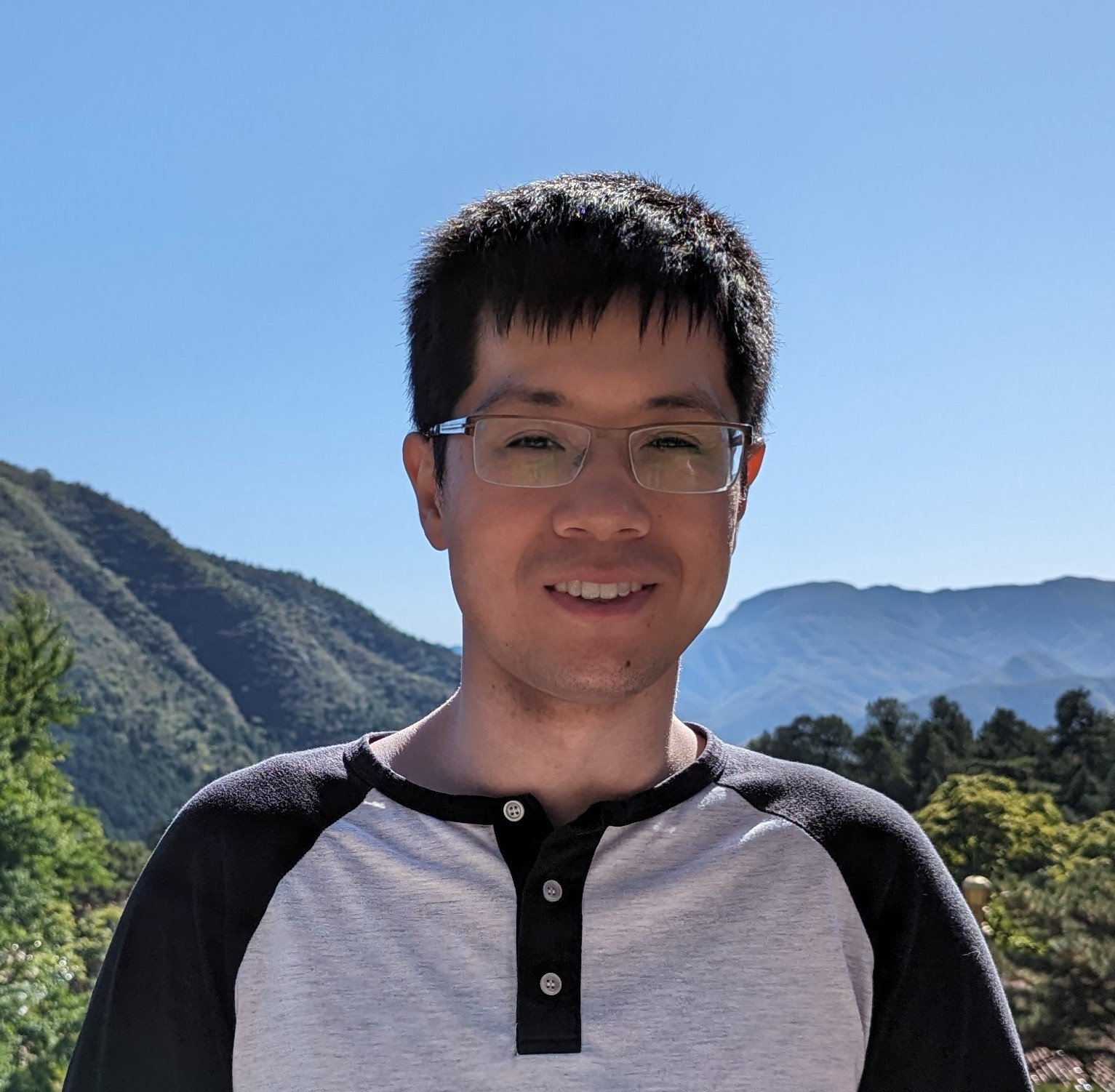
Carl Vondrick is a Professor in the Department of Computer Science at Columbia University. His research focuses on creating robust and versatile perception systems that leverage video and interaction with the natural world, with applications in 3D reconstruction, visual question answering, and robot manipulation. Former research scientist at Google Visiting researcher at Cruise Education: PhD (2017) from MIT, advised by Antonio Torralba BS (2011) from UC Irvine, advised by Deva Ramanan His research explores multimodal approaches for cross-task and cross-modal transfer, scene dynamics, audiovisual perception, interpretable models, and spatial awareness systems. The lab emphasizes zero-shot generalization and neuro-symbolic methods while addressing safety and robustness in AI systems. Key publication trends include: 2025: Video generation for robotics 2024: Differentiable rendering and cross-modal reasoning 2023: Robust perception and 3D modeling Scientific Awards: 2024 PAMI Young Researcher Award 2021 NSF CAREER Award Teaching Roles: Teaching Computer Vision II (2021-2025), Computer Vision I (2018-2019), and Representation Learning (2020-2022). Advising: Advises 8 current PhD students and has mentored 5 graduated students now at institutions like MBZUAI and UMD. The lab recruits 1-2 PhD students annually through Columbia’s PhD program. Grants and Collaborations: Funded by NSF, DARPA, Toyota Research Institute, Amazon Research, and Google.
Pascal Frossard is a Full Professor at the Department of Electrical Engineering in the School of Engineering (STI) at EPFL, with a courtesy appointment in the School of Computer and Communication Sciences. He founded and directs the LTS4 laboratory since 2003, co-leads the EPFL AI Center and Swiss Data Science Center, and serves as Associate Dean for Research at STI. Research Focus: Machine Learning, Graph Signal Processing, AI Applications in Healthcare, Computer Vision Academic Leadership: IEEE Fellow, ELLIS Fellow, Conference Chair roles Key Projects: Digital Pathology for Oncology, Cardiac Digital Twins, Robust Machine Learning Research Interests: His work bridges signal processing, machine learning, and applied mathematics, emphasizing biomedical applications. Recent research includes adversarial robustness in classifiers, network representation learning, and 360-degree video analysis. Scientific Awards: IEEE Fellow ELLIS Fellow Leadership in IEEE technical committees Advising & Grants: Supervised 20+ PhD students and postdocs. Secured major grants from PHRT, Hasler Foundation, FNS-Sinergia, Armasuisse, Google, and Cisco.
Geoffrey E. Hinton is a distinguished Professor in the Department of Computer Science at the University of Toronto. He is renowned for his foundational contributions to machine learning, particularly in the development of deep learning and neural networks. His research focuses on understanding learning processes in both artificial and biological systems, with key contributions including Boltzmann machines, backpropagation, and deep belief networks. He teaches advanced machine learning courses such as CSC2535, emphasizing topics like graphical models, variational inference, and deep learning architectures. His work has been published extensively in top journals and conferences, with recent papers exploring forward-forward algorithms, analog diffusion models, and scalable neural network training methods. Hinton has advised numerous PhD and master's students and collaborates with institutions like Vector Institute. He is a central figure in the global AI community, regularly presenting at conferences (e.g., 2023 talks on CBS 60 Minutes, BBC, and PBS). His lab focuses on advancing machine learning theory and applications, addressing challenges in vision, language, and generative models.
Derek W Hoiem is a Professor in the Siebel School for Computing and Data Science at the University of Illinois Urbana-Champaign, where he has been a faculty member since 2009. His research focuses on computer vision and related areas, and he is also the co-founder and Chief Science Officer of Reconstruct, an AI-based construction technology company. His educational background includes: PhD in Robotics, Carnegie Mellon University (2007) Beckman Postdoctoral Fellowship (2008) Prof. Hoiem's research spans computer vision, with a focus on object recognition, scene understanding, and graphics. His work also extends to mobile robotics and 3D scene reconstruction. He has made significant contributions in areas such as visual recognition, 3D modeling, and the application of computer vision in construction monitoring. His recent publications (2023-2025) demonstrate a strong focus on advancing multimodal understanding, particularly in region-based representations, 3D vision, and neural radiance fields. There is a clear trend towards integrating language and vision, improving efficiency in neural networks, and applying computer vision to real-world problems such as construction progress monitoring. His scientific awards and honors are extensive and include: IEEE Fellow (2022) University Scholar (2022) Koendrink Prize (2022) Dean's Award for Excellence in Research, Associate Professor (2021) Campus Distinguished Promotion Award (2015) Best Paper Award: IEEE Winter Conference on Applications in Computer Vision (WACV) (2015) CW Gear Junior Faculty Award (2014) IEEE PAMI Young Researcher Award (2014) Dean's Award for Excellence in Research, Assistant Professor (2014) Sloan Research Fellowship (2013) Intel Early Career Faculty Honor Program Award (2012) NSF CAREER Award (2011) ACM Doctoral Dissertation Award, Honorable Mention (2008) Carnegie Mellon University SCS Distinguished Dissertation Award (2008) Best Paper Award: IEEE Computer Vision and Pattern Recognition (CVPR) (2006) Prof. Hoiem has secured significant research funding, including an NSF CAREER award and an Intel Early Career Faculty award. He is also actively involved in technology transfer, having co-founded Reconstruct where he serves as Chief Science Officer. His teaching excellence is reflected in multiple "List of Teachers Ranked as Excellent" awards spanning from 2010 to 2021. Prof. Hoiem leads a research group at UIUC focused on computer vision and 3D scene understanding. Additionally, he co-founded and serves as Chief Science Officer at Reconstruct, which develops AI-based solutions for construction monitoring.
Daniel W. Bliss is a Professor in the School of Electrical, Computer and Energy Engineering at Arizona State University and Director of ASU's Center for Wireless Information Systems and Computational Architectures (WISCA). With over $50 million in research funding as principal investigator from organizations including DARPA, ONR, Google, and Airbus, his work bridges theoretical foundations with practical implementations across multiple domains of wireless systems. Dr. Bliss received his educational foundation with a B.S.E.E. from Arizona State University (1989), followed by M.S. and Ph.D. degrees in Physics from the University of California-San Diego (1995, 1997). His academic journey includes significant industry experience at General Dynamics (1989-1993) and MIT Lincoln Laboratory (1997-2012) before joining ASU. His research program focuses on advanced wireless systems spanning radar, communications, precision positioning, computational architectures, and medical monitoring applications. Bliss employs information theory, estimation theory, and signal processing to develop novel system concepts with disruptive capabilities. Current research emphasizes RF convergence, integrated sensing and communications, and anticipatory medical analytics using wireless technologies, with particular focus on extracting physiological data from radar signals. Analysis of recent publications reveals a strong trend toward integrated sensing and communications systems, particularly utilizing mmWave and radar technologies for medical monitoring applications. His work increasingly bridges traditional communications and radar domains while expanding into physiological monitoring, demonstrating a clear trajectory toward convergence of wireless technologies for healthcare applications and remote vital sign detection. Dr. Bliss has received significant recognition for his contributions: Fellow of the IEEE (2015) 2021 IEEE Warren D. White Award for Excellence in Radar Engineering 2016-2017 Top 5% Teaching Award at ASU 2017 ASU Fulton Engineering Exemplar Faculty As a dedicated mentor, Dr. Bliss has supervised numerous graduate students through successful dissertation and thesis defenses across both PhD and Master's programs. His research portfolio includes substantial funding from diverse sources with over $50 million secured as principal investigator. Current projects include the $17M DARPA DASH project focused on advanced software-reconfigurable heterogeneous SoCs for next-generation RF systems, and multiple initiatives in contactless vital sign monitoring using radar technologies. Dr. Bliss leads the BLISS Lab and serves as director of WISCA, fostering interdisciplinary research in wireless systems. His team includes researchers working on distributed coherent systems, MIMO radar, RF convergence, and medical monitoring applications, with recent successes including the Making Waves team that tied for first place in the Air Force Spark Tank challenge. He has founded two startup companies: DASH Tech Integrated Circuits Company and the Big Little Sensor Company, focusing on high-performance embedded processing and small-scale radar physiological monitoring, respectively.
Prof. Matthias Nießner is a Professor at the Technical University of Munich , where he leads the Visual Computing Lab . Prior to this, he held a Visiting Assistant Professor position at Stanford University . His work bridges computer vision , graphics , and machine learning , focusing on 3D reconstruction , semantic scene understanding , and AI-driven video synthesis . Prof. Nießner has published over 150 works in top venues like SIGGRAPH , CVPR , and ECCV , with several receiving best paper awards (SIGCHI’14, HPG’15, SPG’18, SIGGRAPH’16 Emerging Tech). His research has garnered international media attention, including features in the New York Times , Wall Street Journal , and MIT Technological Review , as well as TV demonstrations (e.g., Jimmy Kimmel Live for Face2Face technology). Awards : TUM-IAS Rudolph Moessbauer Fellowship (2017–ongoing) Google Faculty Award (2017) Nvidia Professor Partnership Award (2018) ERC Starting Grant (2018, €1.5M) Eurographics Young Researcher Award (2019) Research Trends : 3D Gaussian Splatting for real-time rendering Neural Radiance Fields (NeRF) with mesh supervision Audio-driven facial animation via diffusion models Latent space diffusion for 3D scenes Self-supervised and zero-shot methods for 3D and image analysis As a co-founder and director of Synthesia Inc. , he drives democratization of synthetic media. His YouTube channel has over 5 million views, reflecting his impact beyond academia.
Karthik R. Narasimhan is a Professor at Princeton University's School of Engineering and Applied Science in the Department of Computer Science. Previously, he earned his PhD from MIT under Regina Barzilay and served as a visiting research scientist at OpenAI during 2017-18. His research focuses on the intersection of language and decision-making, building autonomous agents that learn from both experience and human knowledge. His research spans multiple high-impact areas including language agents (Text-DQN, CALM, ReAct, Tree of Thoughts), reinforcement learning (h-DQN, Multi-Objective RL), and AI safety (Toxicity in ChatGPT, DataMUX). He has developed critical datasets and benchmarks such as WebShop, InterCode, SWE-bench, and SILG that have become standard evaluation tools in the field. Current work emphasizes agent capabilities, software engineering automation, and multimodal interaction. His publication trends show strong focus on practical agent deployment (SWE-agent, Tree of Thoughts), safety evaluation (Probing AI Safety), and efficiency improvements (DataMUX). Recent work increasingly addresses real-world challenges in software engineering, security, and human-AI collaboration through rigorous benchmarking. Co-author of foundational GPT (2018) paper Key developer of Text-DQN (2015), CALM (2020), ReAct (2022), Tree of Thoughts (2023) Creator of influential benchmarks: WebShop (2022), SWE-bench (2023), InterCode (2023) He actively advises students through Princeton's computer science program, with research supported by multiple grants focused on autonomous agent development and language-based decision systems. His GitHub repositories (nlp-datasets, text-world-player) demonstrate strong community engagement in open-source research tools. Current projects include advancing language agent capabilities through Reflexion (2023) and Tree of Thoughts (2023) frameworks while addressing critical safety and efficiency challenges.
Yonatan Bisk is an Assistant Professor at Carnegie Mellon University within the Language Technologies Institute (with courtesy appointment in Robotics Institute). His research bridges Natural Language Processing , Robotics , and Embodied AI , focusing on language grounding, theory of mind, and multimodal interaction. Education : Ph.D. in Computer Science from University of Illinois at Urbana-Champaign Postdoctoral Experience : USC ISI, University of Washington, Allen Institute for AI Industry Appointments : Microsoft Research, Meta AI His research emphasizes embodied language systems and social intelligence in AI . Recent projects include WebArena for autonomous agents, SOTOPIA for social reasoning, and HomeRobot for open-vocabulary manipulation. He leads the REAL Center (Robotics, Embodied AI, and Learning) to foster interdisciplinary collaboration. Key scientific awards include selection for the DARPA ISAT Study Group (2024). He teaches courses like "Talking to Robots" and "Multimodal Machine Learning" while serving as area chair/editor across NLP, Robotics, and ML communities.
Georgia Gkioxari is an Assistant Professor in the Division of Computing and Mathematical Sciences at Caltech , with a part-time affiliation at Meta AI . Her work focuses on extending visual perception models through advanced 2D and 3D representation learning, spatial reasoning, and generative models. Education: Not explicitly mentioned in the text Research interests span 3D perception , spatial reasoning , and vision-language integration , with projects like Visual Agentic AI for Spatial Reasoning and Token-by-Token Multimodal Alignment . Her publications emphasize 3D object detection , reconstruction , and generative modeling techniques including diffusion models and transformers . Scientific recognition includes the Meta LLM Evaluation Research Grant , Okawa Research Grant , Google Faculty Scholar Award 2024 , and Amazon Research Award . She teaches courses like Large Language & Vision Models (EE/CS 148) and Learning & 3D (CS 101) at Caltech. Labs & Teams: Leads Glab with members including Ilona Demler, Ziqi Ma, and Damiano Marsili
Thomas Hacker is a Professor in the Department of Computer and Information Technology at Purdue Polytechnic Institute, Purdue University. His research focuses on cloud computing, high-performance computing, operating systems, computer networking, and cyber infrastructure . He holds a Ph.D. and M.S. in Computer Science & Engineering from the University of Michigan, along with dual B.S. degrees in Computer Science and Physics from Oakland University. Education: PhD (Computer Science & Engineering), University of Michigan (2004) MS (Computer Science & Engineering), University of Michigan (1993) BS (Computer Science, Mathematics Minor), Oakland University (1989) BS (Physics), Oakland University (1989) Dr. Hacker's research spans cloud and grid computing, operating systems, and distributed systems , with applications in earthquake engineering data systems and AI-driven infrastructure analysis. His recent work explores extended layer 2 networking for bare-metal provisioning ( 2023 IEEE Cloud Summit ) and machine-supported bridge inspection using artificial intelligence ( Transportation Research Record, 2023 ). Notable scientific contributions include 15+ publications on topics like cyberinfrastructure for earthquake engineering, container-based virtualization, and data-intensive systems. His work has been recognized with awards such as the NSF CAREER Award (2010) and multiple Purdue Seed for Success Awards . Key Scientific Awards: NSF CAREER Award (2010) Purdue Seed for Success Awards (2008-2013) ASEE Information Systems Division Best Paper Award (2012) College of Technology Outstanding Faculty in Discovery Award (2010) He has held leadership roles at Purdue, including Department Head (2018-2021) and Interim Department Head (2011-2016) . His career spans academic positions at Indiana University, University of Michigan, and industry roles at Storage Technology Corporation.
Julian McAuley is a Professor in the Department of Computer Science and Engineering at the University of California, San Diego's Jacobs School of Engineering. His research spans recommender systems, machine learning, natural language processing, music information retrieval, and multimodal learning. He maintains an active research group with numerous PhD students and postdocs working on cutting-edge AI problems. His research interests focus on developing advanced algorithms for personalized recommendation systems, with particular emphasis on sequential recommendation, multimodal learning, and integrating large language models with traditional recommendation approaches. His work bridges the gap between theoretical machine learning and practical applications across multiple domains including e-commerce, music, and healthcare. McAuley has published extensively in top-tier conferences including NeurIPS, ICML, KDD, SIGIR, and ACL, with his most recent work exploring the intersection of large language models and recommendation systems. His publications reveal a strong trend toward multimodal approaches that combine text, vision, and audio for more comprehensive understanding and recommendation. He has received significant research funding from major technology companies including Google, Amazon, Facebook, Adobe, and Samsung, as well as government agencies like the National Science Foundation and Department of Defense. His work has practical applications across multiple industries, with a focus on improving user experience through better personalization. McAuley advises numerous PhD students who have gone on to successful careers at leading technology companies and academic institutions. His former students include Wang-Cheng Kang and Jianmo Ni at Google DeepMind, Chris Donahue and Zachary Lipton as assistant professors at CMU, and Ruining He at Google Deepmind.
Ranjay Krishna is an Assistant Professor at the Paul G. Allen School of Computer Science & Engineering at the University of Washington, where he co-directs the RAIVN lab and leads the computer vision team at the Allen Institute for AI (Ai2). His research intersects computer vision , natural language processing , robotics , and human-computer interaction . PhD in Computer Science from Stanford University (2021) Bachelor's and Master's degrees from Stanford and Cornell His work has received best paper , outstanding paper , and orals at top conferences like CVPR, ACL, CSCW, NeurIPS, UIST, and ECCV. Media outlets including Science , Forbes , and PBS NOVA have covered his research. He has been supported by grants from Google , Apple , NFS , and others. Ranjay advises a diverse group of 15 PhD and postdoctoral researchers , including Jieyu Zhang, Benlin Liu, and Cheng-Yu Hsieh. His teams have developed benchmarks like MemoryBench and The Colosseum , and his PathFinder framework achieved 74% accuracy in skin melanoma diagnosis—surpassing human experts by 9%. Notable contributions include: Perception Tokens for visual reasoning in MLMs SAM2Act for robotic manipulation with memory Synthetic Visual Genome dataset with 5.6M relationships
Wenhu Chen is an Assistant Professor at the University of Waterloo's Computer Science Department and a CIFAR AI Chair at the Vector Institute. He also holds a part-time role as a Senior Research Scientist at Google DeepMind (20% allocation). His research focuses on natural language processing, deep learning, and multimodal reasoning, with contributions to models like MAmmoTH, OpenCoderInterpreter, and VISTA. He received awards including the Canada CIFAR AI Chair (2022) and the UCSB CS Outstanding Dissertation Award (2021). Education: PhD in Computer Science from the University of California, Santa Barbara (under William Wang and Xifeng Yan). Research interests include complex reasoning, controllable GenAI, and multimodal benchmarks like MEGABench and MMMU. Grants include CIFAR AI Chair Funding (2022-2027), NSERC Discovery Fund (2023-2028), and multiple NRC Canada grants. He directs the TIGER Lab, advancing generative models in text, images, videos, and music. Recent talks include presentations on multimodal reasoning at Apple and NeurIPS workshops.
Professor Peter F. Driessen is a faculty member in the Department of Electrical and Computer Engineering at the University of Victoria, with a cross-appointment in the School of Music. He holds a BSc and PhD from the University of Victoria and is a Professional Engineer (PEng). His research focuses on communication systems, signal processing, control, and interdisciplinary projects in computer music and wireless technologies. Key areas include audio/video signal processing, radio propagation, sound recording, and multimedia systems. He leads the University of Victoria Propagation Laboratory, which explores radio wave propagation and Amateur radio integration with engineering education. His work spans theoretical research and applied projects like ECOSat satellite systems, software-defined radio (SDR), and innovative musical instruments such as the Radio Drum. He supervises undergraduate and graduate projects in these domains through ELEC 499 courses. Notable contributions include the APEGBC Editorial Board Award for Best Paper (2002) and patents in wireless networking and signal processing. His teaching includes courses in signal analysis and electromagnetics, and he collaborates on interdisciplinary programs like the Music/Computer Science degree. Education: BSc in Electrical Engineering, University of Victoria PhD in Electrical Engineering, University of Victoria Research Interests: Audio and video signal processing for music and media Software-defined radio and Amateur radio technologies Satellite communication and ground station development Gesture-based interfaces and musical instrument design Error mitigation in streaming audio/video Optical and microwave-photonic systems Labs & Collaborations: Propagation Laboratory (radio wave research) UVic Experimental Radio Group (Amateur radio club) UVic Satellite Design Team (ECOSat projects) UVic Centre for Aerospace Research Grants & Awards: APEGBC Editorial Board Award (2002) Multiple US patents in wireless systems and signal processing
Paola Cascante-Bonilla is an Assistant Professor in the Department of Computer Science at Stony Brook University, with expertise in computer vision, natural language processing, and embodied AI. Her research focuses on developing systems for compositional reasoning, common-sense inference, and trustworthy AI using vision-language models, while addressing cultural bias and explainability challenges.