Jennifer Nelson is an Associate Professor in Art History at the University of Delaware’s College of Arts & Sciences. Their research focuses on early modern European art and its global intersections, with expertise in Renaissance studies, art-science interactions, and transimperial cultural dynamics. Nelson holds a PhD from Yale University, an MFA in Poetry from New York University, and advanced degrees from the Courtauld Institute and Harvard College. Education: PhD (Yale), MFA (NYU), MA (Courtauld Institute), AB (Harvard) Current research includes a book project analyzing 16th-century cultural production at border sites across Southeast Asia, New Spain, and Europe. Notable publications include Disharmony of the Spheres (2019), which won the 2021 Historians of British Art Prize, and a forthcoming poetry collection On the Way to the Paintings of Forest Robberies (2024 Ottoline Prize). Grants and fellowships include support from Harvard’s Radcliffe Institute, the National Endowment for the Humanities, and the Clark Art Institute. Their work bridges art history with literary and cultural studies, emphasizing global perspectives.
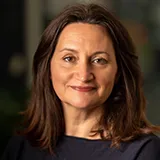
Fatima Aziz is an Assistant Professor in the Department of Communication, Media and Culture at The American University of Paris (AUP) . She is affiliated with the Center for Media, Communication & Global Change (MCGC) since 2024 and the Centre de Recherches sur les Arts et le Langage (CRAL/EHESS) since 2023. Prior to her current role, she was a member of the editorial committee for the French blog Culture Visuelle (2010–2014) and affiliated with the Association of Internet Researchers (AoIR) in 2014–2015. Education: PhD in Visual Cultures, École des Hautes Études en Sciences Sociales, Paris (2023) Master of Arts (Master Recherche) in Information and Communication Sciences, Université Paris-Ouest Nanterre-La Défense, Paris (2008) Research Interests: Aziz’s work focuses on Visual Generative Media , Text-to-Image models , and Algorithmic identity , with a critical lens on how digital platforms mediate identity and social interaction. Her research includes studies on fame, influence, and privacy in social media, such as Facebook , Instagram , and TikTok . She explores the intersections of visual culture, digital anthropology, and ethical frameworks for online data usage. Teaching & Research Contributions: Aziz has taught courses such as Global Digital Cultures , Visual Culture, Theory & Communication , and Topics: Digital Anthropology , reflecting her expertise in media and digital studies. Her conference presentations include discussions on the Visual Culture of War , Algorithmic Mediation , and Participatory Politics in Digital Spaces . Advising & Grants: No specific advising or grant information is explicitly listed in the texts. However, she is involved in research labs and centers, contributing to initiatives like the Civic Media Lab and the MCGC . Labs/Teams: Faculty affiliate at the MCGC (since 2024) and CRAL/EHESS (since 2023). Active in the Civic Media Lab through graduate seminars and workshops on digital ethnography and media ethics.
PD Dr. Jens Wolff is a German theologian and researcher at the Faculty of Theology, University of Rostock . His work bridges image theory , cultural hermeneutics , and negative theology , with a focus on Lutheran theology and its intersections with literature and art . Education : Studied at Eberhard-Karls-Universität Tübingen, Martin-Luther-Universität Halle/Wittenberg, Ludwig-Maximilians-Universität München. Academic Timeline : 1995–1998 Heidelberg Academy researcher, 1998–2002 assistant at Münster's Faculty, 2003 PhD, 2005 ordained pastor, 2009–2012 DFG project on Sigmund von Birken, 2012–2015 DFG project on Image Theory, 2015 habilitation. Wolff's research explores image and media theory through theological lenses, interrogating figurative knowledge , religious rhetoric , and intercultural hermeneutics . His work connects Baroque literature (e.g., Klopstock, Hamann) with contemporary philological and deconstructive methods , examining tensions between sacralization and secularization . His recent publications analyze the word of God as performative polysemy in Lutheran thought, death and utopia in Stefan Andres' work, and iconic anthropology in Reformation contexts. He co-edited the two-volume Bild und Tod (2016), a foundational text on image-death relations. Awards: Martin-Luther-Preis für den akademischen Nachwuchs (2005) for his dissertation on Metapher und Kreuz . Wolff's advising and collaborative work focus on interdisciplinary image studies , including DFG-funded projects and symposia like the Image and Sound conference (2014). He maintains links to institutions in Bratislava , Frankfurt , and Brazil .
Julie Dorsey is the Frederick W. Beinecke Professor of Computer Science at Yale University, where she teaches computer graphics. She joined Yale in 2002 after holding tenured positions at MIT in both the Department of Electrical Engineering and Computer Science and the School of Architecture. She earned undergraduate degrees in architecture and graduate degrees in computer science from Cornell University. Research Areas: Photorealistic image synthesis Material and texture modeling Interactive visualization of complex scenes Sketch-based design interfaces Acoustical and lighting design algorithms Recent Article Trends focus on AI-driven graphics techniques, 3D hair modeling, depth sensing, and cultural heritage preservation. These works reflect her interdisciplinary approach bridging computer science, art, and physics. Scientific Awards: MIT Edgerton Faculty Achievement Award NSF Career Award Alfred P. Sloan Research Fellowship Radcliffe Institute Fellowship (2010-11) Whitney Humanities Center Fellowship (2010-12) Editorial Contributions: She serves as Editor-in-Chief of ACM Transactions on Graphics and has held editorial roles at Computers and Graphics, Foundations and Trends in Computer Graphics and Vision, and SIGGRAPH 2006 Papers Chair. Labs & Collaborations: Leads Yale's Computer Graphics Group, contributes to interdisciplinary projects at the intersection of computing and the arts, and collaborates with researchers in biomedical and industrial AI applications.
Elizabeth J. Marsh is a Professor of Psychology and Neuroscience at Duke University and a Faculty Network Member of the Duke Institute for Brain Sciences . Her work bridges cognitive psychology, neuroscience, and education, with a focus on memory accuracy, misinformation, and aging. Education: Ph.D., Stanford University (1999) B.A., Drew University (1994) Research Interests: Marsh investigates how memory can be both accurate and erroneous, exploring questions like why people misremember facts, how fiction influences memory, and how aging affects decision-making and belief formation. Her work intersects with social psychology , developmental psychology , and educational psychology . Scientific Awards: Langford Lecture Award (2010) Grants & Funding: Aging and Finding Information: Using Google vs. Relying on Other People (2015–2025) Effects of Aging on Episodic Memory-Dependent Decision Making (2018–2025) When are pictures worth a thousand words? Debunking misinformation with images (2022–2023) Advancing Artificial Intelligence for the Naval Domain (2018–2023) Leveraging Older Adults' Social Goals to Improve Memory and Strategy Use (2018–2020) Exploring the potential of essay testing for improving memory and learning (2013–2019) Courses Taught: PSY 990: Special Readings in Psychology PSY 765S: Psychology and Neuroscience Grant Writing PSY 755: Research Practicum PSY 724S: Survey of Current Topics in Psychology and Neuroscience II PSY 723S: Survey of Current Topics in Psychology and Neuroscience I PSY 102: Cognitive Psychology: Introduction and Survey NEUROSCI 755: Interdisciplinary Program in Cognitive Neuroscience (IPCN) Independent Research Rotation
Dr. Eva Cetinic is a DSI Bridge Postdoc Fellow at the University of Zurich, conducting research at the intersection of deep learning, explainable AI, and digital art and humanities. Previously, she held postdoctoral positions at Durham University and the Center for Digital Visual Studies at the University of Zurich, and worked as a Professional Associate and Postdoc at the Rudjer Boskovic Institute in Croatia from 2015 to 2021. Her educational background includes: PhD in Computer Science, University of Zagreb (2019) Dr. Cetinic's research focuses on computational image understanding and multimodal learning for visual art and culture, investigating how text-image models encode socio-cultural patterns and impact artistic creation. Her work critically examines ethical and societal implications of AI while bridging computer science, digital humanities, and art history through interdisciplinary methodologies. Her publication trends (2019-2025) reveal concentrated analysis of generative AI's cultural impact, particularly text-to-image systems. She systematically investigates bias propagation (gender, cultural), user interaction dynamics, and creative processes while developing technical frameworks for art analysis - moving beyond technical capabilities to address real-world implications in artistic and cultural contexts. She currently leads the UZH-funded project 'From Hype to Reality: Artificial Intelligence in the Study of Art and Culture' in collaboration with the University of Cambridge, establishing cross-institutional frameworks for responsible AI adoption. Her research methodology emphasizes practical implementation within humanities workflows through international networks like DARIAH. As a DSI Bridge Postdoc Fellow, Dr. Cetinic operates within the University of Zurich's Digital Society Initiative ecosystem, connecting computational research with the Center for Digital Visual Studies and global digital humanities infrastructures to examine AI's transformative role in cultural production and interpretation.
Professor Rachel Kerr is a leading scholar in the Department of War Studies at King’s College London, specializing in transitional justice, international criminal law, and the role of art in post-conflict reconciliation. She co-convenes the War Crimes Research Group and leads the Visual and Embodied Methodologies Network , focusing on intersectional gendered violence. Education: PhD and MA in War Studies from King’s College London; BA in International History and Politics from University of Leeds Research: Explores judicial intervention in the ICTY, Sierra Leone Court, and UK war crime allegations in Iraq; current work bridges art with peacebuilding in Bosnia, Canada, and South Africa Teaching: Courses on Conflict, Rights, and Justice; International Law and the Use of Force; War and Genocide Her AHRC-funded research project Art and Reconciliation: Conflict, Culture and Community (2016-2021) produced interdisciplinary insights into creative peacebuilding. She also leads ESRC research on visual methodologies for gendered violence studies. Awards: Elected to International Institute for Strategic Studies (2001) Elected to Royal Institute for International Affairs (2001) Recent publications analyze art’s role in Bosnian reconciliation, digital data in transitional justice, and Canada’s reconciliation processes. She supervises PhD research on topics spanning UK war crimes, post-conflict education, and atrocity prevention.
Markus König is a Professor of Informatics in Civil Engineering at Ruhr University Bochum, where he has been researching and teaching since October 2009. His work focuses on Building Information Modeling (BIM), digital construction technologies, and civil engineering informatics, with significant contributions to the development and implementation of digital methods in German construction industry. Dr. König earned his degree in civil engineering with a focus on applied computer science at Leibniz University Hannover, where he also completed his doctorate on cooperative building planning at the Institute for Building Informatics. He subsequently held a junior professorship for Theoretical Methods of Project Management at Bauhaus University Weimar before joining Ruhr University Bochum. His research spans multiple cutting-edge areas including Building Information Modeling (BIM), construction process simulation, tunneling informatics, infrastructure asset management, and the application of artificial intelligence and computer vision in civil engineering. As chair of the Building Informatics Working Group from 2012-2016, he played a key role in developing the first national BIM curriculum for German universities and serves as editor of the book 'Building Information Modeling: Technological Foundations and Industrial Practice.' Analysis of his recent publications reveals a strong trend toward semantic technologies, digital twins, automated compliance checking, and the integration of AI in construction processes. His work increasingly focuses on information containers, ontology development, and the application of large language models to infrastructure data, reflecting the evolving landscape of digital construction. Dr. König's significant contributions to digital construction have been recognized with prestigious awards: Lower Saxony-Bremen Construction Industry Award (2017) for 'services in the development and introduction of digital construction in Germany' Konrad Zuse Medal (2020) While specific details about his advising and grant activities aren't explicitly mentioned in the provided text, his extensive publication record with numerous co-authors suggests active supervision of doctoral students and research staff. His involvement in multiple collaborative research projects is evident from his publication history. At Ruhr University Bochum, Professor König leads a research group focused on civil engineering informatics, with particular emphasis on BIM, digital construction technologies, and their application across the building lifecycle. His team appears to work at the intersection of computer science and civil engineering, developing innovative solutions for construction process optimization, infrastructure management, and digital transformation of the AEC industry.
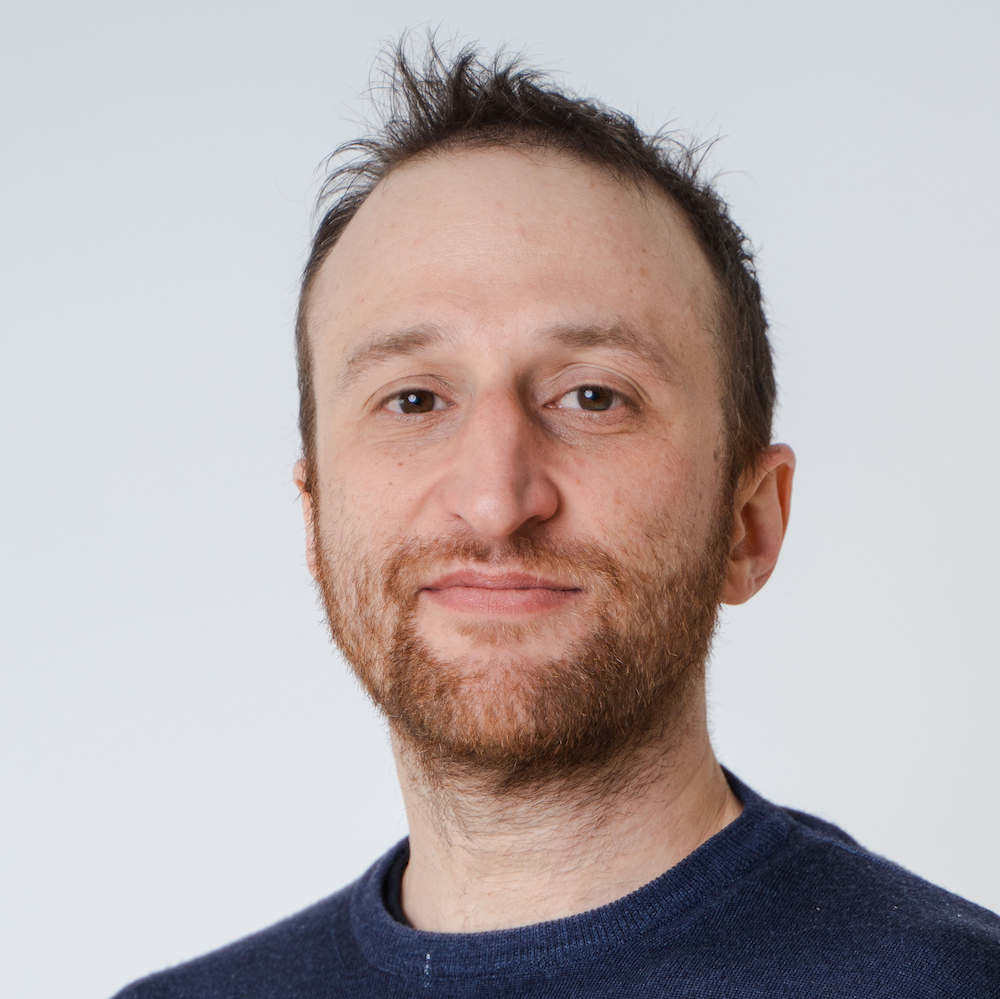
Brian Magerko is Professor of Digital Media in the School of Literature, Media, and Communication at Georgia Institute of Technology , where he also serves as Director of Graduate Studies for the Digital Media program and holds an adjunct appointment in the School of Interactive Computing . He directs the Expressive Machinery Lab and has led over $20 million in federally funded research at the intersection of cognition, computation, and creativity. Education Ph.D. Computer Science and Engineering, University of Michigan (2006) M.S. Computer Science and Engineering, University of Michigan (2001) B.S. Cognitive Science (minor Computer Science & Jazz Performance), Carnegie Mellon University (1999) Research Interests Dr. Magerko’s scholarship integrates cognitive science , AI , and computational media to investigate three core themes: (1) social and creative collaboration between humans and AI; (2) design of interactive narrative, music, and arts-based computational experiences; and (3) inclusive STEAM education that leverages personal expression—most notably through the widely-adopted EarSketch platform, which engages learners in computer science via music remixing and coding. Publication Trends Recent publications (2022-2025) reveal a surge in work on generative and co-creative AI systems , AI literacy frameworks , and accessible computing education . Studies span dance improvisation agents (LuminAI), inclusive design for blind and visually-impaired learners, and large-scale evaluations of creativity and learning outcomes in EarSketch classrooms across the United States. Awards & Honors Methods Paper Recognition, ACM CSCW 2022 Best Paper Award, ACM Creativity & Cognition 2021 & 2017 Ivan Allen College Researcher of the Year 2018 NCWIT Engagement Excellence Award 2017 Multiple Best Student Paper Awards (AIED 2021, ICCCI 2021) CETL Thank-a-Teacher Award 2008 Grants & Advising Dr. Magerko has served as PI or Co-PI on numerous NSF, NEA, and private foundation grants totaling more than $20 million. His projects fund interdisciplinary teams of graduate and undergraduate students, post-docs, and external collaborators, producing open-source software, museum installations, and K-12 curricula. Labs & Teams As head of the Expressive Machinery Lab , he mentors researchers creating AI partners for dance, drawing, music, and storytelling. The lab’s artifacts have been exhibited at the Smithsonian, ArtScience Museum Singapore, MoogFest, and other international venues.
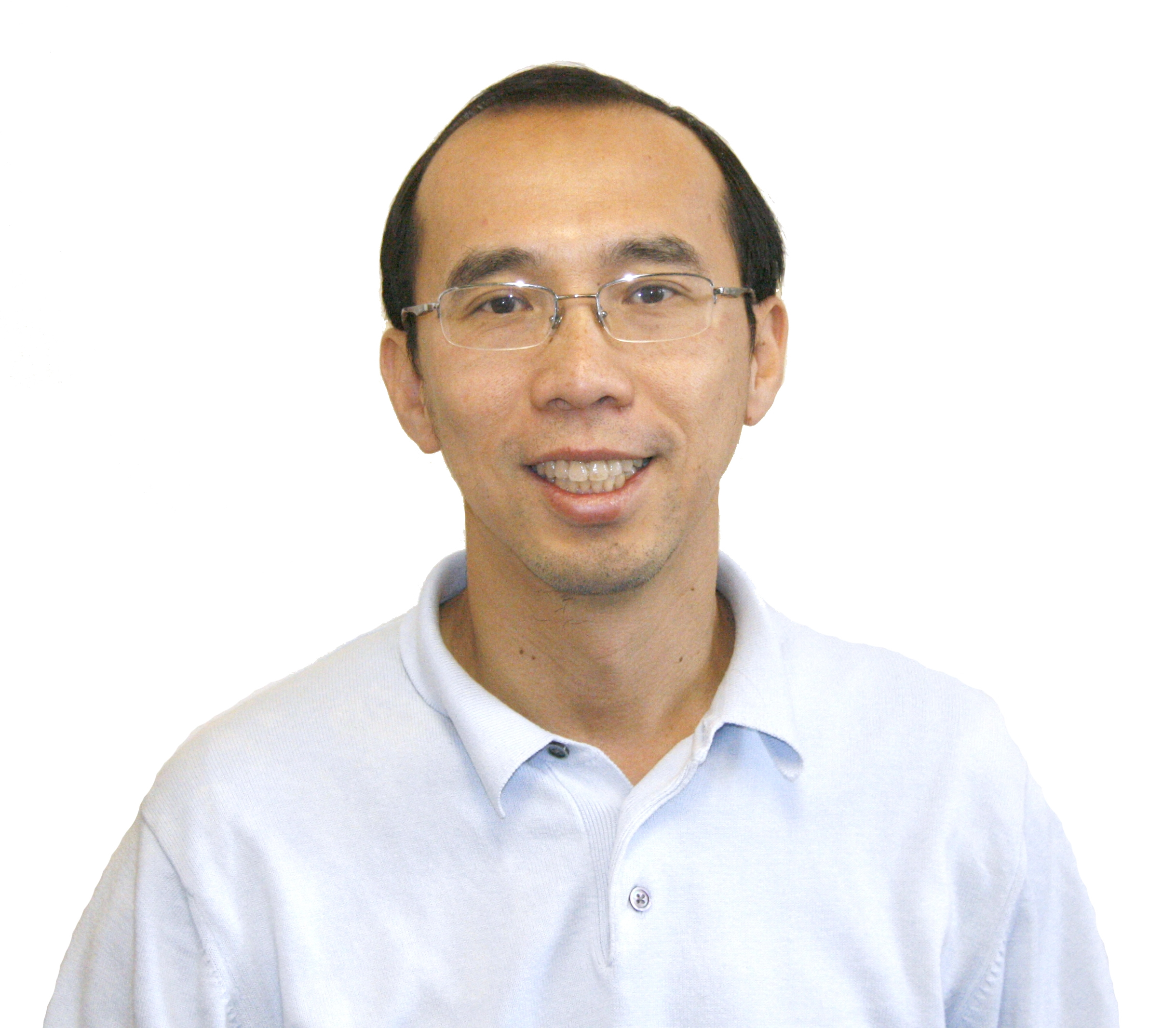
Raymond T. Ng is a Professor of Computer Science at the University of British Columbia (UBC) and serves as Director of the Data Science Institute . In addition, he is the part-time Chief Informatics Officer at the PROOF Centre of Excellence for the Prevention of Organ Failures located at St Paul’s Hospital. Since 2016 he has held the prestigious Canada Research Chair in Data Science and Analytics. Education B.Sc. (Hons.) Computer Science, University of British Columbia, 1986 M.Math. Computer Science, University of Waterloo, 1988 Ph.D. Computer Science, University of Maryland, College Park, 1992 Research Interests Professor Ng’s research lies at the intersection of data mining , text mining , health informatics , sensor analytics , and databases . Over the past decade he has focused on two major domains: Genomics & Biomarker Discovery: Developing multi-omics biomarker panels for heart, lung and kidney transplant rejection and COPD exacerbations using transcriptomics, proteomics and metabolomics data. Natural Language Processing: Mining and summarizing conversational text such as emails, blogs and meeting transcripts to generate structured metadata and actionable insights. Scientific Awards Canada Research Chair in Data Science and Analytics (2016-2026) Best Paper Award, ACM SIGMOD 2004 Best Paper Award, ACM SIGKDD 2001 Selected among Best Papers of VLDB ’99 & ’98 Governor General’s Gold Medal, UBC (1986) Research Funding & Leadership Since joining UBC in 1992, Professor Ng has continuously secured major peer-reviewed funding from NSERC, CIHR, Genome Canada, CFI, MITACS and industry partners (Google, IBM, SAP). He leads or co-leads several large-scale initiatives: HEARTBiT multi-marker blood test for cardiac transplant rejection (CIHR 2018-2021) MERIDIAN ocean acoustic data infrastructure (CFI 2018-2021) Pan-Canadian Early Detection of Lung Cancer (Terry Fox 2018-2021) Business Intelligence Network (NSERC 2009-2014) Multiple Genome Canada programs on biomarker translation (2004-2018) Laboratories & Teams Professor Ng directs the Data Science Institute and works closely with the Natural Language Processing Research Group . At the PROOF Centre he heads a multidisciplinary team of statisticians, computer scientists and clinicians advancing computational biomarker pipelines from discovery to clinical implementation.
Paolo Rota is a tenure-track Assistant Professor at the University of Trento, affiliated with the Department of Information Engineering and Computer Science (DISI) and the Center for Mind/Brain Sciences (CIMeC). His research lies at the intersection of computer vision, machine learning, and multimodal AI, with a strong emphasis on vision-language models and activity recognition. His research interests include zero-shot action recognition, temporal action localization, open-world recognition, and person image synthesis. He explores how large multimodal models can be leveraged for practical applications in video analytics and industrial AI, often developing training-free or source-free adaptation methods that improve model generalization. Recent publications show a consistent trend in utilizing large vision-language models (e.g., CLIP, LMMs) for tasks such as image classification, domain adaptation, and action recognition, emphasizing simplicity, zero-shot capabilities, and real-world applicability. His work frequently appears in top venues including CVPR, NeurIPS, ICCV, and ICIAP. He actively mentors PhD students including Benedetta Liberatori, Jiaqi Liu, Yan Shu, Shiyao Xu, and Alessandro Conti, often co-advising with faculty such as Elisa Ricci and Nicu Sebe. He also contributes to teaching, including delivering lectures on machine learning for the MSc in Data Science program. He co-founded Mountain Maps, a startup using AI to enhance outdoor navigation and mountain exploration. His work bridges academic research and practical innovation, aiming to increase the real-world impact of AI systems.
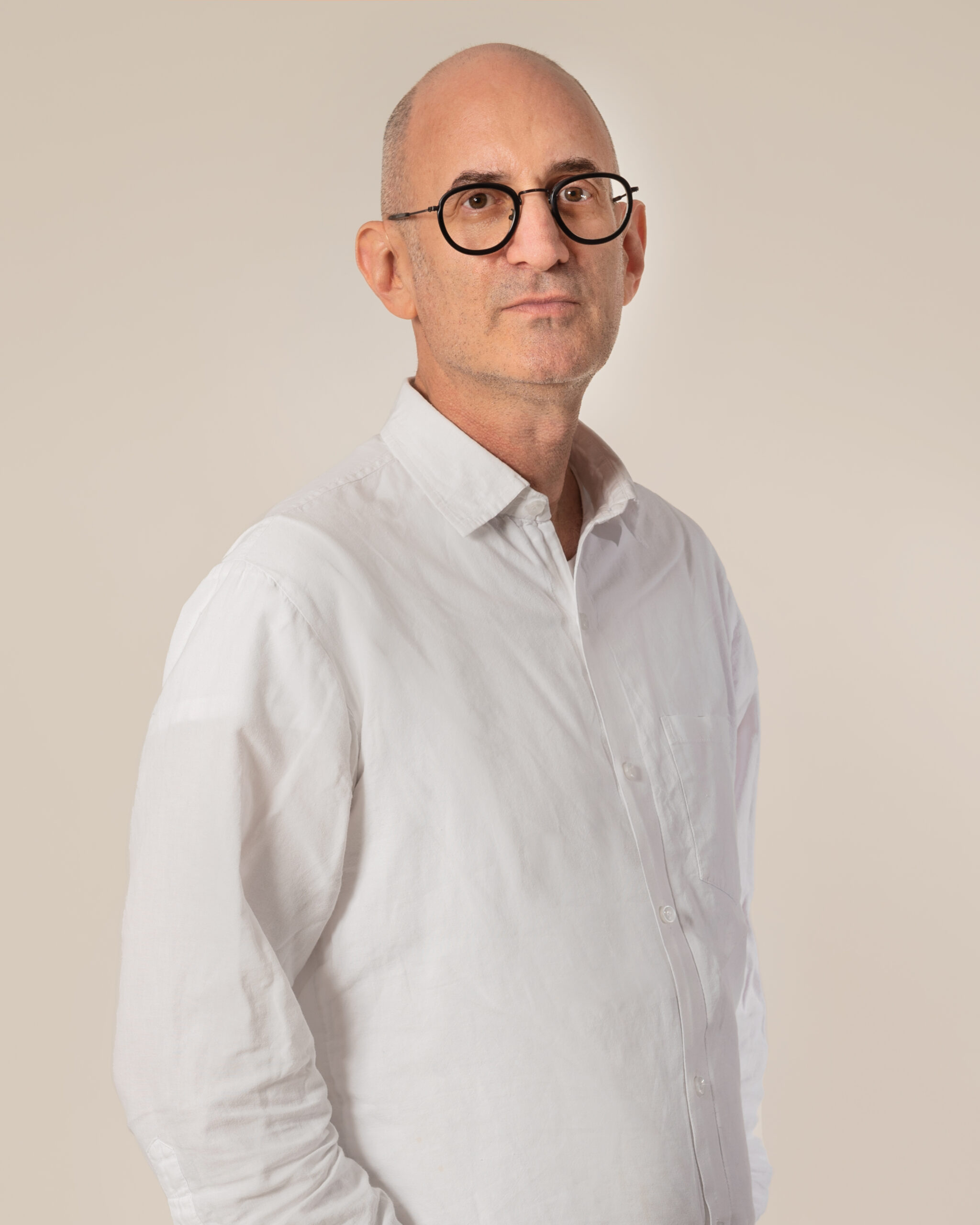
Univ.-Prof. Dr. Marc Siegel has been Professor of Film Studies at Johannes Gutenberg University Mainz since October 2020. He is based at the Institute for Film, Theatre, Media and Cultural Studies and also serves as artistic director of ZOOM – Labor Ludwig Schönherr . In parallel, he works as a freelance curator for international film festivals, museums and galleries, and is a founding member of the Berlin-based artist collective CHEAP . Education & Qualification: Although the provided text does not enumerate earlier degrees, Siegel’s title “Dr.” and his appointment as “Universitäts-Professor” indicate the completion of doctoral and post-doctoral qualifications. Research Interests: Siegel’s scholarship is situated at the intersection of queer studies , experimental film , and moving-image art/performance . He interrogates how cinema and related media articulate questions of sexuality, gender, race and anti-Semitism, often employing archival, curatorial and critical methods to foreground marginalized histories and aesthetics. His forthcoming monograph A Gossip of Images (Duke University Press) crystallizes these concerns. Publications & Trends: Across more than two decades Siegel has produced a consistent body of work that re-reads canonical avant-gardists (Warhol, Jack Smith, Werner Schroeter) and contemporary queer media alike. Recent essays expand into digital dissemination, camp temporalities, and the politics of ageing bodies, evidencing a trajectory from close textual analysis toward broader cultural critique. Scientific Awards & Distinctions: Member, Academy of the Arts of the World , Cologne Advisory Board, Forum Expanded , Berlinale Principal Investigator, AHRC-UK funded project “Serge Daney and Queer Cinephilia” (2018-2021) Research Grants & Collaborative Projects: DFG Graduate School “Configurations of Film” (GRK 2279), Goethe University Frankfurt am Main – associate researcher Swiss National Science Foundation project “Moving in Every Direction” , Lucerne University of Applied Sciences and Arts – associate researcher Laboratories & Teams: As artistic director of ZOOM – Labor Ludwig Schönherr Siegel mentors experimental media practices; he also co-founded the artist collective CHEAP , which produces queer interventions in urban and digital space.
Professor Emil Lupu is a Professor of Computer Systems at the Department of Computing , Imperial College London. He leads the Resilient Information Systems Security Group and serves as Co-Director of the National Research Institute in Trustworthy Inter-Connected Cyber-Physical Systems (RITICS) . As a Security Science Fellow at Imperial’s Institute for Security Science and Technology, his work bridges academic research with real-world security challenges. Education: PhD in Computing, Imperial College London (1994–1998) His research focuses on security and resilience of cyber-physical systems (CPS) , with emphasis on defending against data spoofing attacks , adversarial machine learning , and IoT vulnerabilities . He pioneered the Ponder policy systems for access control and the Self-Managed Cell framework for autonomic computing, and developed Bayesian Attack Graphs for scalable risk assessment in CPS. Recent publications highlight trends in adversarial robustness (2025–2022), including LIDAR spoofing defense for autonomous vehicles, LLM security , and attack graph analysis for IoT. His work explores the intersection of safety and security , applying model-checking to identify adversarial threats in train control, microgrids, and aviation systems. Scientific Awards: Security Science Fellowship, Imperial College London (2011–present) As co-founder of the PETRAS National Centre of Excellence in IoT Cybersecurity (2016–2021), he advanced security methodologies for interconnected systems. His collaborations with institutions like the Cyber Security Body of Knowledge (CyBoK) demonstrate his leadership in shaping cybersecurity research standards. Current projects include the RITICS Institute , focusing on trustworthy cyber-physical systems, and exploring generative AI for security poisoning with practical defenses against adversarial ML.
Dr. Mario Slugan serves as Senior Lecturer in Film Studies at Queen Mary University of London's School of Languages, Linguistics and Film. His research bridges film studies, philosophy, and German studies with emphasis on theoretical frameworks, historical analysis, and cross-disciplinary methodologies. Slugan's research focuses on film philosophy and film theory , particularly examining fiction/non-fiction distinctions, early cinema practices, and montage aesthetics. His work explores German cinema , Eastern European film traditions , and techniques of visual immersion from Hale's Tours to VR, demonstrating how philosophical aesthetics informs cinematic experience across historical periods. Analysis of his recent publications reveals consistent exploration of fictional frameworks in non-fiction contexts and historical epistemology of cinematic forms . His work shows increasing engagement with pandemic-era film genres while maintaining core interests in German and Eastern European cinemas, with empirical approaches complementing philosophical inquiry. His scholarly contributions have earned significant recognition: 2021 BAFTSS Best Monograph Award (Second Place) for 'Fiction and Imagination in Early Cinema' 2022 BAFTSS Best Edited Volume Award (Third Place) for 'The Fiction/Nonfiction Distinction' 2023 BAFTSS Best Edited Volume Award (Second Place) for 'New Perspectives on Early Cinema History' 2017 BAFTSS Best Journal Article Award (Third Place) Fellowship in the Society for Cognitive Studies of the Moving Image Slugan currently supervises five PhD candidates examining Hitchcock's legacy, post-war German cinema, intersemiotic translation, Iranian avant-garde, and immersive museum theory. As Co-Investigator on the Croatian Science Foundation's 'Aesthetic Education through Narrative Art' project (2021-2026), he explores intersections of narrative art, philosophy, and educational practice while securing continuous research funding through international collaborations.
Carsten Strathausen is a Professor of German and English at the University of Missouri's College of Arts and Science. He holds appointments in both the Departments of German and English, bridging interdisciplinary research and teaching. His work spans literary theory, visual culture, digital humanities, and bioaesthetics, with a focus on Kafka adaptations and evolutionary theory's influence on aesthetics. Research Interests: Dr. Strathausen’s interdisciplinary research explores the interplay of science, art, and media. Central themes include the word-image relationship in literature, posthumanism, and the digital humanities. His current projects include a global database analyzing Kafka adaptations (Adapting Kafka) and a monograph on Kafka’s adaptations through evolutionary and media frameworks. Earlier works like Bioaesthetics and The Look of Things established his reputation in interdisciplinary cultural studies. Teaching: In German studies, he teaches graduate seminars on 20th-century literature and Kafka. In English, he offers courses on contemporary literary theory, posthumanism, and digital humanities. He also mentors undergraduate and graduate students in digital humanities research. Collaborations: Collaborations include work with Dr. Verena Kick on the Adapting Kafka project. His research often intersects with film, visual arts, and science studies, reflecting his commitment to cross-disciplinary inquiry.