Andreas B. KilcherView profile
Professor
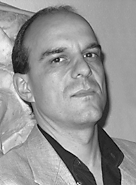
Andreas B. Kilcher is a Full Professor of Literature and Cultural Studies at the Department of Humanities, Social and Political Sciences (D-GESS) at ETH Zurich since June 2008. He serves as Deputy Head of the Department and holds multiple leadership positions including Head of the Doctoral Committee of the D-GESS and Director of Studies at MAGPW since 2018. Born in Basel in 1963, Kilcher studied German, history, and philosophy in Basel and Munich. He completed his doctorate at the University of Basel after fellowships at the Hebrew University in Jerusalem. He habilitated at the University of Münster and served as a professor at the University of Tübingen before joining ETH Zurich. His academic credentials include visiting professorships at Hebrew University (2009), Princeton University (2011), and Stanford University (2014). Professor Kilcher's research focuses on Literary and Cultural Studies , with specialized expertise in Jewish literary and cultural history , Kabbalah and esoteric research , and the history of knowledge . His work bridges literary analysis with cultural, religious, and intellectual history, exploring intersections between Jewish thought and broader European intellectual traditions. His recent publications demonstrate consistent focus on German-Jewish intellectual history, examining figures like Thomas Mann, Walter Benjamin, Joseph Roth, and Sigmund Freud through literary criticism, religious philosophy, and cultural analysis. His work often explores relationships between science and literature, religious thought and modernity, and textual criticism and intellectual resistance. President of the Board of Trustees of the Thomas Mann Archive (ETH) President of the European Society for the Study of Western Esotericism (ESSWE) Representative on the Board of Trustees of the Language Center (ETH/UZH) Director of the Center for the History of Knowledge 2014-2016 (ETH/UZH) Member of the Society for European-Jewish Literary Research He teaches courses including 'Science and Fiction,' 'Theories of Wit: From Rhetoric to Psychoanalysis,' and advanced colloquia in literary studies, reflecting his interdisciplinary approach connecting literature with philosophy, psychology, and cultural history.