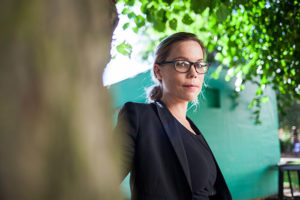
Charlotta KrispinssonView profile
Senior Lecturer
Charlotta Krispinsson is a Senior Lecturer in Art History at Umeå University, Sweden. She specializes in 17th-century art and visual culture with a focus on copying practices, portraiture, and the use of prints in Northern Europe. Previously, she held positions at Södertörn University, Uppsala University, and completed a postdoctoral fellowship at Humboldt University in Berlin funded by the Swedish Research Council. Her educational background includes a PhD in Art History from Stockholm University (2016) with a dissertation on national portrait collections and late 19th- and early 20th-century art historical writings on early modern portraiture. She has also been a research fellow at the Rubenianum in Antwerp (2023). Krispinsson's research centers on how prints functioned as vehicles for artistic transmission in 17th-century Sweden and Norway, examining how painters like Gottfried Hendtzschel and Elias Fiigenschoug used prints after Rubens' designs for church commissions. Her work challenges traditional art historical narratives by highlighting the importance of copying practices rather than originality in peripheral European contexts. Her recent publications demonstrate a clear trajectory from her doctoral work on portrait collections toward increasingly specific studies of copying practices in Northern European art. She examines how prints after Rubens were used as templates for religious paintings in Norwegian churches, revealing how artistic production functioned in regions distant from major artistic centers. Postdoctoral Fellowship funded by Swedish Research Council (Vetenskapsrådet) Krispinsson has presented her research at numerous international conferences including NORDIK meetings across Scandinavia. She teaches art history at multiple Swedish universities and has been actively involved in conference organization, particularly sessions on pre-modern art histories of migration and exchange. Her current research continues to explore the widespread use of prints as models for painting in seventeenth-century Sweden.