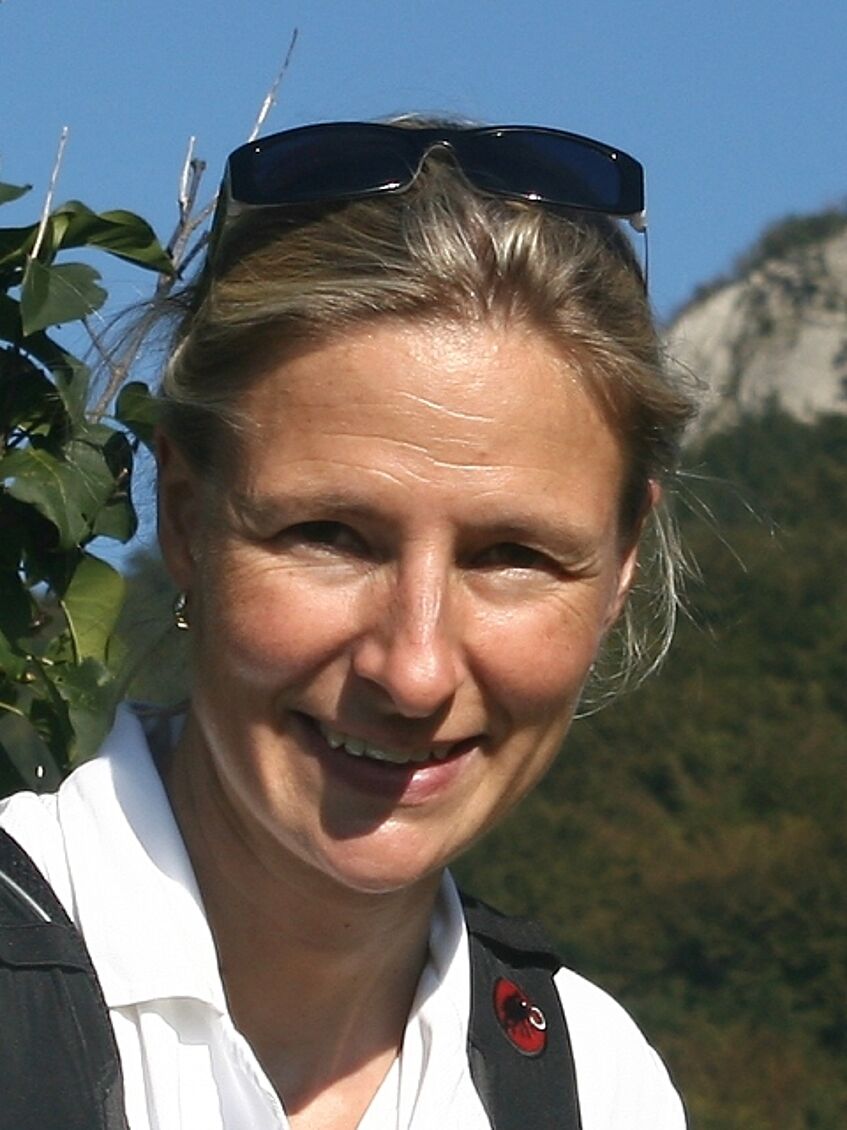
Claudia Plant is a Professor in the Faculty of Computer Science , leading the Research Group Data Mining and Machine Learning . Her research focuses on clustering algorithms, data mining, and machine learning applications in areas like biomedical data, wind energy, and causality inference. She has contributed to projects such as Knowledge-infused Deep Learning for Natural Language Processing (2020–2028) and Hybrid Computational Sciences (2021–2021). Plant has authored over 160 publications, with recent work emphasizing deep learning, anomaly detection, and GPU-optimized algorithms. She actively engages in academic activities, including talks on clustering methods and interdisciplinary projects like Governing Algorithms: The Politics of Data and Decision-Making . Her research interests span clustering algorithms , graph neural networks , causality discovery , and ethical digital transformation . Notable projects include causal analysis of wind farm dynamics and AI-enhanced education tools. Plant’s work bridges computational methods with societal challenges, such as empowering marginalized communities through ethical technology adoption.
Professor Moncef Gabbouj is a distinguished academic and researcher currently serving as Professor of Signal Processing at the Department of Computing Sciences, Faculty of Information Technology and Communication Sciences, Tampere University, Finland. Previously, he held the same position at Tampere University of Technology before the merger in 2019. He has also held visiting professorships at prestigious institutions including Hong Kong University of Technology and Science, University of Southern California, and Purdue University. Ph.D. and MSc. in Electrical Engineering from Purdue University, USA (1989 and 1986) B.Sc. in Electrical Engineering from Oklahoma State University, USA (1985) Prof. Gabbouj's research spans multiple domains within signal and image processing, with a strong focus on machine learning applications. His primary research interests include artificial intelligence, machine learning, Big Data analytics, multimedia content-based analysis, indexing and retrieval, nonlinear signal and image processing, voice conversion, and video processing and coding. His work bridges theoretical advancements with practical applications across various industries, particularly in multimedia communications and biomedical applications. His extensive publication record demonstrates a clear evolution from traditional signal processing techniques toward more sophisticated machine learning and deep learning approaches. Recent work shows increasing focus on convolutional neural networks for various applications including ECG classification, video processing, financial time-series analysis, and image recognition tasks, reflecting the broader trend in the field toward deep learning methodologies while maintaining strong foundations in signal processing theory. IEEE Fellow (2011) Member, Finnish Academy of Science and Letters (2014) Knight, First Class, of the Order of the White Rose of Finland (2006) Nokia Foundation Recognition Award (2005) Nokia Foundation Visiting Professor Award (2012) Finnish Cultural Foundation for Art and Science Award (2017) TUT Foundation Grand Award (2015) Prof. Gabbouj has supervised 64 doctoral and 72 Master's theses, demonstrating his significant contribution to academic mentoring. His research has been supported by substantial funding, including research grants totaling 8.5 million Euro (2001-2015). He has served as Academy of Finland Professor during 2011-2015 and has been involved in numerous EU research projects including Horizon, ESPRIT, HCM, IST, COST, Tempus and Erasmus programs. As Editor, Guest Editor or member of the Editorial Board of 6 international scientific journals, he has significantly influenced the academic discourse in his field. He leads the Signal Analysis and Machine Intelligence (SAMI) research group at Tampere University and serves as the Finland Site Director of the NSF IUCRC funded Center for Visual and Decision Informatics. His research unit focuses on applying advanced machine learning techniques to solve complex problems in signal processing, computer vision, and multimedia analytics, with applications ranging from healthcare to multimedia communications and financial analysis.
Markus Vincze is an Associate Professor at the Institute of Automation and Control Engineering (ACIN) at Vienna University of Technology (TU Wien). He founded the Vision for Robotics (V4R) group in 1996 to advance robotic perception, particularly in real-world environments and homes. His work focuses on cognitive computer vision techniques for robotics. Education: Diplom in Mechanical Engineering (1988) and PhD (1993) from TU Wien; M.Sc. (1990) from Rensselaer Polytechnic Institute. V4R coordinates EU projects like ActIPret, robots@home, HOBBIT, and national initiatives like vision@home. Markus has edited a book on Robust Vision with Gregory Hager and authored 62 peer-reviewed journal articles and over 400 reviewed publications. His recent research explores zero-shot 6D pose estimation, sim-to-real transfer, and transparent object detection. Markus has served as program chair for ICRA 2013 and organized HRI 2017 in Vienna. He has advised numerous students and secured grants from the Austrian Academy of Sciences for work at HelpMate Robotics and Yale's Vision Laboratory. The V4R group leads innovations in robotic vision, including frameworks for synthetic data generation (Unrealgensyn), depth completion (CAGT), and educational robotics applications for sustainability. Their work spans household robotics (RH3), agricultural robotics (EdgeSoil), and human-robot collaboration.
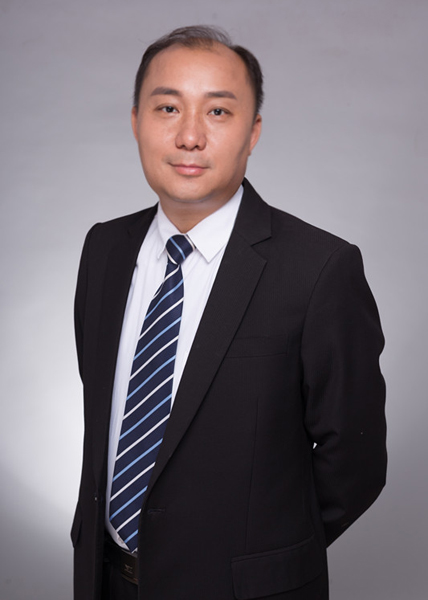
Xiang Bai serves as a Professor at Huazhong University of Science and Technology (HUST) in Wuhan, China, with primary academic affiliation to this institution. Research Interests: Computer Vision (core specialization) Computer Science (broad discipline) Pattern Recognition Image Processing Artificial Intelligence applications His editorial role as Associate Editor for Computer Vision at Frontiers in Computer Science demonstrates active scholarly contribution in visual computing domains. Research output shows significant academic visibility with 853 profile views despite unlisted publications. Advising and Funding: Student supervision records unavailable Grant history not disclosed in source material Laboratory and collaborative team details are not provided in the current academic profile.
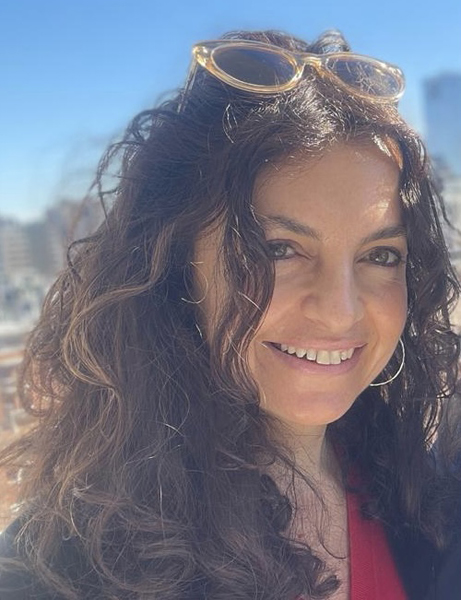
Claudia Lehmann is a University Professor of Film Art & Visual Communication at the Institute for Open Arts, Department of Scenography at Mozarteum University Salzburg. She has been a professor at Mozarteum University since 2019 and previously served as a visiting professor at the Berlin Weissensee Art Academy. As a faculty member, she contributes to the Institute management, teaches as a Teacher, and serves on the Curricular Commission. Dr. Lehmann holds a doctorate in physics (Dr. rer. nat.) with her dissertation "GAUGE COVARIANT MULTISCALE ANALYSIS OF COMPLEX SYSTEMS" published through DESY-Publications in 2004. Her academic journey reflects a unique interdisciplinary trajectory from scientific research to artistic practice. Claudia Lehmann's research interests center around the intersection of art and science, with particular focus on perception, reality, and systemic phenomena. Her work spans documentaries, feature films, music videos, art videos, installations, and performances, constantly searching for new forms and formats. She develops visual concepts, video stage sets, and unique live video performances, often in collaboration with Nicolas Stemann. Through her work, she explores diverse possibilities for new structures, especially in the form of artistic collaboration. Her recent artistic output shows a consistent trend toward interdisciplinary work that blends theater, film, and digital media. Lehmann frequently collaborates with Nicolas Stemann and Konrad Hempel, creating innovative performances that integrate video technology with traditional stagecraft. Her work often addresses social and political themes while experimenting with form and presentation. The Institute for Experimental Affairs (IXA), which she co-founded with Konrad Hempel, serves as a platform for exploring the interfaces between science and art through various projects and research initiatives. Dr. Lehmann has received several prestigious awards for her work: Samsung Smartfilm Award 2013 Shocking Shorts Award 2007 Nomination for German Documentary Film Music Prize 2013 Nomination for Studio Hamburg Young Talent Prize for Best Screenplay As an educator and researcher, Lehmann has developed numerous collaborative projects and performances that have been featured at major international festivals including the Berlin International Film Festival, Leipzig Documentary Film Festival, and various theater festivals. Her work with IXA represents a significant research initiative at the intersection of science and art. Lehmann co-founded the Institute for Experimental Affairs (IXA) with visual artist and composer Konrad Hempel. Through IXA, she conducts research and realizes projects at the interfaces between science and art. Her collaborative work spans theater productions, film projects, and interactive installations that have been presented at venues including the Schauspielhaus Zürich, Münchner Kammerspiele, Opéra Comique Paris, and various international festivals.
Neil Champness is the Norman Haworth Professor of Chemistry at the University of Birmingham. He holds a prestigious academic position following roles at the University of Nottingham, including Professor of Chemical Nanoscience (2004-2020). His research focuses on supramolecular chemistry, crystal engineering, and metal-organic frameworks (MOFs). Champness leads a group pioneering studies on molecular self-assembly, surface chemistry, and functional materials. Education & Career - Began academic career with Teaching Fellowships at the University of Nottingham (1995) and Southampton (1994). - Became Lecturer in Inorganic Chemistry at Nottingham (1998), progressing to Reader (2003) and full Professor (2004). - Currently heads the Champness Group at Birmingham, established in 2021. Research Interests Champness’s work spans: - Design of porous materials (MOFs, HOFs) for gas storage and catalysis. - Surface self-assembly of 2D supramolecular frameworks. - Photoresponsive materials and molecular rotaxanes. - Chemical synthesis under constrained conditions. His group emphasizes interdisciplinary approaches, linking chemistry with materials science and nanotechnology. Awards & Recognition 2019: Elected Fellow of the European Academy of Sciences 2020: EPSRC Established Career Fellowship 2016: Royal Society of Chemistry Surfaces & Interfaces Award 2011: Thomson Reuters Highly Cited Researcher 2006: Corday-Morgan Medal (Royal Society of Chemistry) Advisory Roles & Grants - Editorial roles include Chem, Crystals, and CrystEngComm. - Served on Royal Society panels, Irish Research Council, and IUPAC. - Secured major grants from EPSRC and Royal Society. Labs & Collaborations His Birmingham group collaborates globally, with visiting professorships in Japan, Australia, and Brazil. Research is supported by advanced facilities in crystallography and surface chemistry.
Eitan Tadmor is a Distinguished University Professor at the Department of Mathematics and Institute for Physical Science & Technology at the University of Maryland. He holds the 2024 Chaire d'excellence at Sorbonne University's Fondation Sciences Mathématiques de Paris, and has served as Director of multiple research centers including the Center for Scientific Computation and Mathematical Modeling (2002-2016) and The Sackler Institute of Scientific Computation (1993-1996). Current: University of Maryland (2005-present) Previous: UCLA (1995-2002), Tel-Aviv University (1989-1995), CalTech (1980-1982) His research spans nonlinear conservation laws , entropy-stable schemes , collective dynamics , spectral methods , and multiscale modeling . He pioneered the spectral viscosity method and developed stability criteria for numerical schemes. Recent publications focus on swarm-based optimization , Euler-Poisson equations , and hydrodynamic alignment with over 15000 citations. His work on kinetic formulations and regularizing effects in PDEs has become foundational in computational mathematics. 2022 Norbert Wiener Prize (AMS-SIAM) 2022 Gibbs Lecturer (AMS) 2015 Peter Henrici Prize (SIAM-ETH) 2013-2021 Fellow of AMS/SIAM NSF grants (1999, 2008-2012, 2012-2020) He developed CentPack software for hyperbolic conservation laws and co-authored influential review papers on numerical methods and mathematical modeling. His collaborative work with institutions like IPAM, KI-Net, and ETH-ITS demonstrates international scientific leadership.
Sabine Glasl-Tazreiter is a Lecturer at the University of Vienna's Faculty of Life Sciences , specifically within the Department of Pharmaceutical Sciences and its Division of Pharmacognosy . Her office is located in room 2E 412 on the 4th floor at Josef-Holaubek-Platz 2, Vienna, Austria (1090). Contact details include telephone number +43-1-4277-55207 and email sabine.glasl@univie.ac.at . Principal research focus: Phytochemistry & Biodiscovery Specialization: Secondary metabolites from ethnomedicinally used plants across Europe, Mongolia, and Latin America Key techniques: Isolation of bioactive compounds, structural elucidation, pharmacological evaluation Quality control expertise: Macroscopic/microscopic identification, chemical analytics Recent publications highlight her work in: 2024 - Development of the VOLKSMED Database for Austrian folk medicine wound healing plants 2025 - Advanced mucociliary clearance research in respiratory systems 2023 - Innovations in optoacoustic imaging technology 2019 - Structure-function analysis of phycobiliproteins for medical imaging 2017 - Phytochemical characterization of Latin American antidiabetic plants
Hongbo Jiang is a Distinguished Professor and Vice Dean of the College of Computer Science and Electronic Engineering at Hunan University, China. He holds concurrent roles as Director of the Trusted Systems and Networking Key Laboratory of Hunan Province and Director of the Hunan International Technical Cooperation Base for High-Performance Computing and Distributed Systems. His academic journey includes tenures as a Professor at Huazhong University of Science and Technology and a Hong Kong Scholar Research Fellow at The Chinese University of Hong Kong. Education: PhD in Computer Science (Case Western Reserve University, 2008), B.S./M.S. in Mathematics (Huazhong University of Science and Technology, 2002). Research Interests: Distributed systems, mobile computing, smart sensing, wireless networks, IoT, and edge computing. Ongoing projects include mobile/wireless applications, data science in IoT, and edge computing platforms. His work emphasizes practical implementations such as DriverSonar for driving safety and SmileAuth for biometric authentication. Key Achievements: Elected Member of Academia Europaea (2022), Fellow of AAIA, IET, and BCS. Notable awards include the Wu Wenjun Science and Technology Award (2020) and multiple best paper recognitions. Over 100+ publications in top venues like ACM MobiCom, IEEE/ACM Transactions. Professional Contributions: Editorial roles across 8+ journals including IEEE Transactions on Mobile Computing and ACM Transactions on Sensor Networks. Conference leadership includes co-founding ACM TURC and EAI ICECI. Active in technical committees for INFOCOM, MOBIHOC, and ICDCS. Labs/Teams: Leads research groups focused on networking, IoT, and edge computing. Current openings for PhD/MSc students and PostDoc researchers with strong mathematical and systems backgrounds.
Ljubisa Stankovic is a Full Professor at the University of Montenegro with extensive academic and political experience. He has served as Rector of the University of Montenegro (2003-2008), Member of the National Academy of Sciences and Arts (CANU) since 1996, and Ambassador of Montenegro to the United Kingdom since 2010. As an IEEE Fellow (2012), he has made significant contributions to signal processing research. His research focuses on Signal Processing , particularly Time-Frequency Analysis , Data Processing in Joint Time and Frequency Domain , Analysis of Non-Stationary Signals , and Radar Signal Processing . With about 300 technical papers published (83 in leading international journals, mainly IEEE editions) and several textbooks in Signal Processing, his work has substantially influenced the field. The analysis of his recent publications reveals a consistent focus on advanced time-frequency methods applied to radar systems, non-stationary signal analysis, and emerging applications in machine learning and quantum processing. His research shows evolution from theoretical foundations toward practical implementations in communications, radar, and biomedical applications. His notable scientific achievements include: Member of the National Academy of Sciences and Arts (1996) Highest State award of Montenegro '13. jul' (1997) Fellow of the IEEE (2012) Fulbright fellowship (1984-1985) Alexander von Humboldt fellowship (1997) Volkswagen award grant (2001) Scientific Achievement Award by Montenegrin Academy of Science and Art (1991) Stankovic has held significant editorial positions including Associate Editor for IEEE Transactions on Image Processing, IEEE Signal Processing Letters, and IEEE Transactions on Signal Processing since 2003. He was also a member of the IEEE Signal Processing Society's Technical Committee on Theory and Methods (2002-2008). His research group received a Volkswagen Foundation research grant (2001-2003), demonstrating his ability to secure competitive funding. Beyond academia, he has held prominent political positions including Vice-president of Montenegro (1989-1991) and Member of Yugoslav Parliament (1992-1996).
Elisa Riedo is a tenured Professor of Chemical and Biomolecular Engineering at New York University (NYU) Tandon School of Engineering, with joint appointments as Professor of Physics in NYU’s College of Arts and Science and as affiliated Professor of Mechanical Engineering at Tandon. She serves as Director of Faculty Development at NYU Tandon and has held prior tenured positions at Georgia Tech (2003–2015) and CUNY ASRC (2015–2018). Her academic career spans over two decades, with a Ph.D. in Physics from the University of Milano (2000) and postdoctoral work at EPFL. Her research focuses on nanotechnology , graphene and 2D materials , and thermal scanning probe lithography (tSPL) , with applications in biomedical diagnostics quantum electronics electromagnetic interference shielding mechanical reinforcement of materials She pioneered tSPL for sustainable nanofabrication and discovered diamene—a single-layer diamond structure from graphene under pressure. Her recent work involves transparent infrared electrodes using silver nanowires (2025) and self-organized graphene stacking domains for quantum technologies (2024). She has secured major grants from National Science Foundation , Department of Defense , and Army Research Office . Scientific honors include: 2023 NYU Tandon Excellence in Research Award 2013 American Physical Society Fellow 2005 CREA Innovation Award Membership in the Academy of Europe (2023) She contributes to editorial boards for journals like 2D Materials and Applications and advises companies such as Mirimus Inc. and SwissLitho AG .
Marc Pollefeys is a Full Professor of Computer Science at ETH Zurich and Director of the Microsoft Mixed Reality and AI Zurich Lab. He has held roles such as Visiting Professor at Stanford University (2007) and Assistant/Associate Professor at UNC-Chapel Hill (2002–2009). His research focuses on 3D computer vision, robotics, machine learning, and augmented reality. Education: PhD in Computer Science from KU Leuven (1999), followed by postdoctoral research there until 2002. He transitioned to academic roles at UNC-Chapel Hill before joining ETH Zurich in 2007. Research interests include 3D reconstruction, visual localization, SLAM, and applications in archaeology, urban modeling, and robotics. Notable projects include real-time 3D scanning, city-scale reconstruction, and autonomous vision-based drones. Key awards include ACM Fellow (2022), IEEE Fellow (2012), and ERC Starting Grant (2008). He advises numerous PhD students and collaborates with institutions like Google and Microsoft. Labs and teams: Leads the Computer Vision and Geometry (CVG) lab at ETH Zurich and directs the Microsoft Mixed Reality and AI Lab. His work bridges academia and industry, focusing on perception for mixed reality and autonomous systems.
Brian Horsak is a Professor and Head of the Center for Digital Health and Social Innovation at Fachhochschule Steyr. He holds an endowed professorship in Applied Biomechanics and Rehabilitation Research, focusing on integrating advanced technologies like VR/AR, machine learning, and wearable devices into clinical gait analysis and motor rehabilitation. His roles include leading the Institute of Health Sciences and contributing to the Department of Health Sciences and Media and Digital Technologies. Education: Dr. rer. nat. (2012, University of Vienna), Habilitation in Kinesiology (2020, University of Vienna), Master's in Sports Science (2002–2008, University of Vienna). Research interests revolve around improving patient care through biomechanical innovations, including musculoskeletal simulations, gait pattern analysis, and rehabilitation technologies. He leads projects like ReMoCap-Lab (motion capture for motor rehabilitation) and chairs the Applied Biomechanics in Rehabilitation Research initiative. Key achievements include the Lower Austria Innovation Prize (2021), multiple best paper awards, and grants for projects like TRUST AI and VReeze. His work bridges clinical practice with digital health solutions, emphasizing explainable AI (XAI) in gait classification and VR-based balance training. Notable contributions include developing the GaitRec dataset and studies on smartphone-based motion capture reliability. He collaborates internationally, publishing widely in Gait & Posture , Scientific Reports , and IEEE journals. Current projects focus on AI-driven gait analysis, musculoskeletal modeling, and XR applications in healthcare.
Professor Thierry Langer is a Full Professor of Pharmaceutical Chemistry at the University of Vienna’s Faculty of Life Sciences (Department of Pharmaceutical Sciences). He leads research in computational drug design, with a focus on pharmacophore modeling, 3D-QSAR analysis, and AI-driven molecular design. His work bridges theoretical and experimental chemistry, addressing targets like viral proteases (e.g., SARS-CoV-2), GABA receptors, and dopamine transporters. Research interests include: Pharmacophore-guided drug discovery for anti-viral and CNS therapies Development of next-generation computational tools (e.g., PharmacoMatch, QPhAR) Protein-ligand interaction modeling using neural networks and graph-based algorithms Recent studies focus on: Inhibitors for herpesvirus nuclear egress complexes, AI-optimized antivirals, and dopamine transporter inhibitors for cognitive enhancement. His lab collaborates on projects like the NeuroDeRisk initiative to de-risk neurotoxic compounds. Publications emphasize drug repurposing, metabolic pathway analysis, and scalable synthesis methods for promising drug candidates.
Professor Robert Eason is a leading academic at the University of Southampton, specializing in photonics and laser technology. His research spans interdisciplinary areas combining Machine Learning , Medical Diagnostics , and Microfluidics . Research Interests : Eason focuses on AI-driven laser applications, including deep learning for phototherapy , autonomous laser machining , and low-cost paper-based diagnostic devices . His work bridges photonics with biomedicine and advanced manufacturing. Recent Publications : His 2025 article in Scientific Reports explores AI simulations for psoriasis treatment, while 2024-2022 works address laser-controlled microfluidics, deep learning in microscopy, and reinforcement learning for laser machining. Supervision : He supervises PhD student Georgia Mourkioti in laser-based research projects. External Roles : Eason has served as a speaker at international conferences including the International Symposium on Laser Precision Microfabrication (2018), LAISER (2019), and Deep Learning for Control of Light-Matter Interactions (2022).