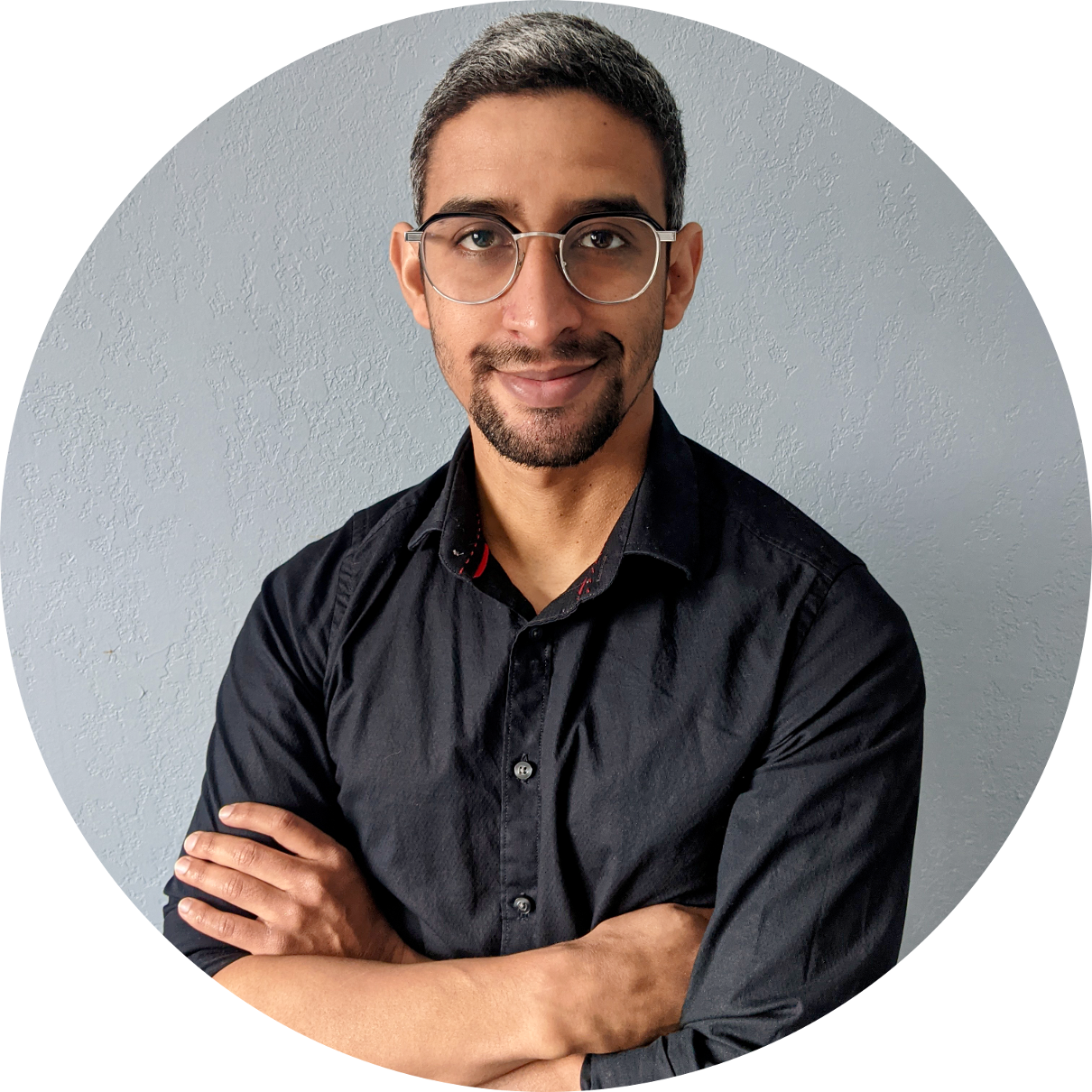
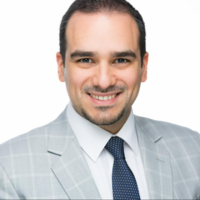
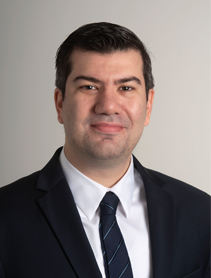
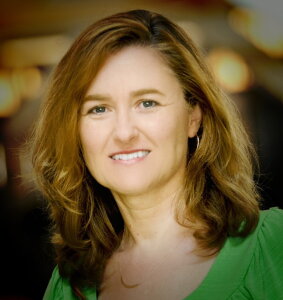
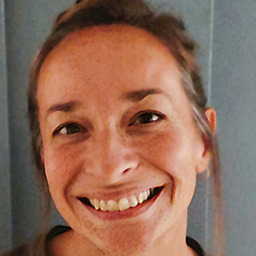
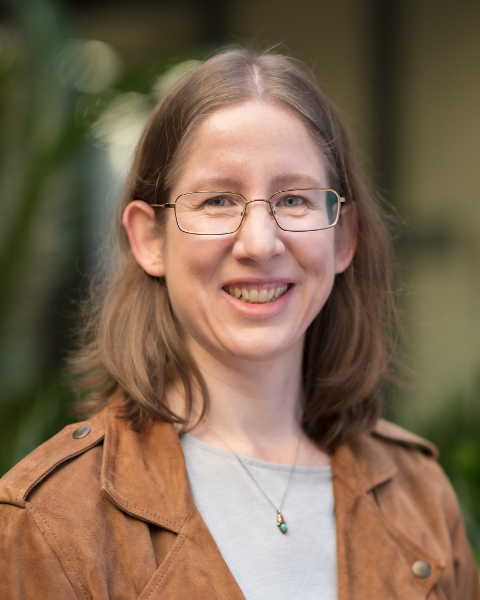
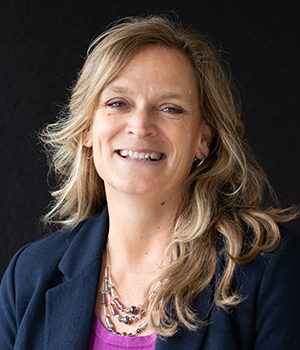
Paul Rosen is an Associate Professor at the University of Utah, affiliated with the Scientific Computing and Imaging Institute and the Kahlert School of Computing. He holds a Ph.D. in Computer Science from Purdue University (2010). Prior to his current role, he was an Assistant/Associate Professor at the University of South Florida (2015–2022) and a Research Assistant Professor at the University of Utah's SCI Institute (2010–2015). Research Focus: Rosen specializes in topology-based visualization techniques, with emphasis on network visualization, uncertainty quantification, and perceptual studies. His work bridges computational methods with human perception, aiming to enhance data understanding through effective visual design. Awards & Recognition: National Science Foundation CAREER Award (2019) Best Paper Awards at PacificVis 2016, IVAPP 2016, and multiple other conferences Honorable Mentions for IEEE VIS and VAST Challenge submissions Leadership: As General Chair of IEEE VIS 2024, Rosen led the planning for this flagship visualization conference, emphasizing community-driven design and in-person collaboration. Education Contributions: His research includes pedagogical innovations, such as predictive modeling for student feedback and peer review analysis in visual literacy courses.
Diego Patiño is an Assistant Professor in the Department of Computer Science and Engineering at the University of Texas at Arlington (UTA), a position he began in September 2024. He earned his Ph.D. in Computer Engineering from the National University of Colombia in 2020, following M.S. and B.S. degrees from the same institution. Prior to joining UTA, he served as a Postdoctoral Fellow at Drexel University and a Postdoctoral Researcher at the GRASP Laboratory, University of Pennsylvania. B.S. in Computer Engineering, National University of Colombia, 2010 M.S. in Computer Engineering, National University of Colombia, 2012 Ph.D. in Computer Engineering, National University of Colombia, 2020 Dr. Patiño's research centers on geometric computer vision and machine learning, with applications in robotics and 3D vision. His primary interests include 3D reconstruction, graph neural networks, symmetry detection, physics-informed machine learning, and reinforcement learning. He develops algorithms that integrate geometric priors and physical constraints into deep learning models to improve robustness and generalization in real-world robotic systems. His recent publications demonstrate a strong trend in leveraging implicit neural representations for 3D shape reconstruction, applying graph neural networks to swarm robotics, and enhancing computer vision tasks with self-supervised and physics-informed learning. Work spans high-impact venues such as IEEE RA-L, ICRA, ICPR, and MICCAI, showing a consistent focus on geometric reasoning, robotic perception, and medical imaging applications. His scientific contributions have been recognized with awards from the UTA Division of Student Affairs for exceptional dedication and positive impact (2024 and 2025). He is actively involved in securing research funding, with multiple grants under review from NSF, Air Force SBIR, and industry partners like Sony. Exceptional dedication and positive impact recognition, UTA Division of Student Affairs (December 9, 2024) Exceptional dedication and positive impact recognition, UTA Division of Student Affairs (April 30, 2025) Dr. Patiño advises and serves on committees for multiple graduate students in computer science and engineering, including doctoral and master’s candidates. He is also leading or co-leading several research grants under review, covering topics such as aerial swarm navigation, neuromorphic sensing, and industrial computer vision. He teaches graduate courses in computer vision and is involved in service roles including PhD admissions and faculty appointments committees. He is affiliated with research initiatives at UTA, including the UTARI Research Institute, where he has presented on geometric modeling and physics-informed learning. His lab focuses on developing next-generation computer vision algorithms for robotics, industrial inspection, and safety-critical systems.
Hamidreza Mahyar is an Assistant Professor at the Faculty of Engineering , McMaster University , and an Associate Member of the Computing and Software department. His academic journey includes postdoctoral work at Boston University and TU Wien , and a Ph.D. in Computer Science from Sharif University of Technology . Research Focus: Mahyar's work bridges machine learning and network science , emphasizing graph neural networks for applications in social networks , recommendation systems , drug discovery , and generative AI . His research spans industrial AI (Industry 4.0 projects at Infineon Technologies), biomedical engineering (organoid morphology analysis), and semiconductor manufacturing (wafermap modeling). Scientific Recognition: McMaster Teaching Merit Award (2022) Vector Scholarship in AI (2023) NSERC USRA Award (2022) Google Cloud Platform for Research Award (2018) Best Paper Selection, Complex Networks (2018) Academic Leadership: He mentors PhD students (Taraneh Ghandi) and MSc students (Reza Namazi, Mohammad Khodadad, Ali Shiraei), while leading AI initiatives at Mind Lab 56 and BrainMaven . Former mentees include industry leaders at Google, Accenture, and ETH Zurich.
Dr. Hakki Erhan Sevil is an Associate Professor in the Department of Intelligent Systems and Robotics at the University of West Florida, within the Hal Marcus College of Science and Engineering. He holds a Ph.D. in Mechanical Engineering from the University of Texas at Arlington and has extensive research experience in robotics, intelligent systems, and autonomous control. His work spans theoretical and applied domains, focusing on resilient and intelligent robotic systems. Ph.D., Mechanical Engineering, University of Texas at Arlington M.S., Mechanical Engineering, Izmir Institute of Technology B.S., Mechanical Engineering, Izmir Institute of Technology Dr. Sevil's research interests lie at the intersection of robotics, artificial intelligence, and control systems. He specializes in autonomous navigation, fault detection and isolation (FDI), multi-agent coordination, computer vision, and bio-inspired computational methods. His work emphasizes real-world implementation in unmanned and self-sustained systems, particularly in challenging environments. His recent publications and projects highlight a strong trend toward intelligent, resilient, and distributed robotic systems. Themes include entropy-based behavior modeling for UAV swarms, assistive robotics for household tasks, post-disaster damage assessment using aerial vision, and advanced guidance for GPS-denied navigation. These reflect a multidisciplinary approach combining machine learning, control theory, and robotics engineering. 2024 Faculty Excellence in Teaching Award, UWF 2024 Faculty Excellence in Undergraduate Research Mentoring Award, UWF DURIP Grant ($478,000) from ONR (with IHMC) USDA Grant ($728,000) with New Mexico State University US Air Force SBIR/STTR Grant ($110,000) with Catalano Aerospace AFWERX Funding for Distributed Behavior Research Dr. Sevil actively mentors Ph.D. and M.S. students and leads the Sevil Research Group, which has secured multiple internal and external grants from NSF, NASA, ARL, ONR, and USDA. He has served as PI and Co-PI on funded projects and advises student teams that have won national awards. His lab, the Intelligent Systems and Robotics Lab, is highlighted in university communications and national challenges. The group collaborates with IHMC, NMSU, and industry partners, fostering innovation in autonomous systems. The Sevil Research Group operates within the Intelligent Systems and Robotics Lab at UWF, conducting cutting-edge research in autonomous navigation, swarm intelligence, and resilient robotics. The lab collaborates with the Institute for Human and Machine Cognition (IHMC), New Mexico State University, and private aerospace firms. It supports student-led projects, participates in national robotics challenges, and maintains active GitHub repositories for open research dissemination.
Diane M Beck is Professor and Head of Psychology at the University of Illinois, with additional affiliations in the Neuroscience Program and Beckman Institute for Advanced Science and Technology. She earned her Ph.D. from the University of California, Berkeley. Her research investigates cognitive processes and neural mechanisms underlying visual perception and attention. Key interests include: Factors determining visual awareness and object representation Neural constraints on simultaneous item processing Attention modulation in visual cortex Efficient processing of natural scenes Roles of statistical regularities in perception Methodologies include fMRI, behavioral experiments, and transcranial magnetic stimulation (TMS). Research publications demonstrate strong emphasis on visual cognition (58%), attention mechanisms (25%), and neural encoding of statistical regularities (17%), with neuroimaging being the primary methodology (72% of recent works). Directs the Attention and Perception Lab, advising 4 current graduate students and 18+ alumni. Major collaborators include Fei-Fei Li (Stanford), Kara Federmeier (Illinois), and Gabriele Gratton (Illinois).
Dr. Benjamin Evans is an Assistant Professor in Computer Science & AI (Informatics) at the University of Sussex , affiliated with the School of Engineering and Informatics . His research integrates computational neuroscience and artificial intelligence, focusing on biologically inspired neural networks. Current Position: Assistant Professor, Department of Informatics, University of Sussex Previous Roles: Research Associate at University of Bristol, University of Exeter, Imperial College London, and University of Oxford Education: DPhil in Computational Neuroscience (University of Oxford), MSc in Intelligent Systems (UCL), BA in Experimental Psychology (Oxford) His research centers on how neural systems self-organize to produce intelligent behavior, studied through both biological and computational modeling. He investigates spiking neural networks , convolutional neural networks , and the role of biological constraints in enhancing AI robustness and human-like perception. He is particularly interested in how spike-based information processing contributes to adaptive cognition in noisy environments. His recent publications reveal a strong trend in evaluating deep neural networks as models of human vision, questioning their biological plausibility while proposing bio-inspired improvements. He also works on optogenetics simulation (e.g., PyRhO platform), developmental biology modeling , and reproducible data science through containerization tools like Docker. His scientific contributions have been recognized through publications in high-impact journals such as Nature Communications , PLoS Computational Biology , and Behavioral and Brain Sciences . EPSRC Grant: "Exploring the multiple loci of learning and computation in simple artificial neural networks" (2023–2024) EPSRC Grant: "Using ant biology and natural environments to enhance models of vision and robot navigation" (2022–2026) Dr. Evans actively contributes to open science through GitHub repositories (e.g., PyRhO, DPE, BioNet) and promotes reproducible research. He has no listed advisees in the provided data, but leads funded research projects involving junior researchers. He is a core member of the Informatics research group at Sussex, contributing to both AI and neuroscience domains.
Sidonie Christophe is a Senior Researcher (Directrice de Recherche, DR1) at UMR LASTIG, a joint research unit of Université Gustave Eiffel, IGN-ENSG, and EIVP. She serves as co-director of the LASTIG laboratory and leads research in geovisualization, map design, and interactive spatial data exploration. She also holds a part-time advisory role (60%) at the French Ministry of Higher Education and Research in the domain of digital technology, environment, climate, and sustainable urban development. PhD in Geographic Information Sciences Senior Researcher, DR1, MTECT Co-Director, LASTIG Laboratory (since 2021) Former Team Leader, GEOVIS (Geovisualization, Interaction, and Immersion) Advisor, Environment and Urban Climate, French Ministry of Higher Education & Research Her research centers on innovative methods for 2D/3D and nD geospatial data visualization, with a focus on enabling spatio-temporal understanding through visual and non-visual spatial thinking. Her work integrates principles from geographic information science, human-computer interaction, and computer graphics. Key areas include urban climate visualization, tactile and augmented reality for accessibility, expressive cartographic rendering, and cognitive aspects of map design. She investigates how aesthetic and semiotic choices impact map comprehension and utility. The 15 most recent publications reflect a strong trend in interactive and accessible geovisualization, particularly for urban and environmental applications. Topics include neural map style transfer, 3D urban climate analysis, tactile maps for the visually impaired, augmented reality in geography, and visual analytics for crisis and climate data. There is a consistent emphasis on user-centered design, interdisciplinary integration, and the development of tools for decision-making under uncertainty. Scientific Recognition and Service: Invited speaker at major conferences (IEEEVIS, AGILE, ICC, CPGIS) Co-organizer of international workshops (e.g., GeoVIS, ISPRS AR/VR sessions) Leader of national research projects (ANR ORACLES, ANR ACTIVmap, ANR ECOCIM) Recipient of international mobility grants (AMICI I-SITE FUTURE) Contributor to national glossaries and research strategy (e.g., French photogrammetry glossary) Advising and Grants: Sidonie Christophe actively supervises PhD students and postdoctoral researchers, including Markie Jiang, Maria-Jesus Lobo, and Alexandre Mielniczek. She leads or participates in multiple funded research projects such as ANR ORACLES (marine flooding visualization), ANR ACTIVmap (tactile 3D maps), and ANR ECOCIM (eco-design of city information models). Her advisory role at the MESR involves shaping national research strategy in digital and environmental sciences. Labs and Research Teams: She is a core member of the GEOVIS team (Geovisualization, Interaction, and Immersion) at LASTIG and previously served as its leader. As co-director of LASTIG, she plays a central role in the leadership and strategic direction of the entire laboratory, which comprises over 100 researchers across four teams: ACTE, GEOVIS, MEIG, and STRUDEL.
Stefan Treue is a Professor and Director at the German Primate Center (DPZ) in Göttingen, Germany, where he heads the Cognitive Neuroscience Laboratory. He is affiliated with the Department of Cognitive Neurosciences and contributes to the Göttingen Graduate School for Neurosciences (GGNB) in programs including Neurosciences (IMPRS), Sensory and Motor Neuroscience, Systems Neuroscience, and Theoretical and Computational Neuroscience. His research focuses on the neural basis of visual perception, particularly how attention modulates sensory processing in the primate brain. Using electrophysiological recordings in macaque monkeys, human psychophysics, and functional brain imaging, his lab investigates attentional mechanisms in cortical area MT, especially in motion processing and perceptual accuracy. Key themes include attentional gain, receptive field dynamics, saccade-locked attention shifts, and multifocal attention. The recent publications reflect a consistent focus on attentional modulation in visual cortex, with a strong emphasis on neurophysiological and behavioral evidence from non-human primates. His work bridges cognitive theory and neural mechanisms, contributing significantly to systems and computational neuroscience. Scientific Awards: None explicitly mentioned in the text. Advising and Grants: Prof. Treue mentors students through the GGNB and IMPRS programs, indicating active graduate student supervision. While specific grants are not listed, his long-standing research program and high-impact publications suggest sustained funding from major research agencies. Labs and Teams: He leads the Cognitive Neuroscience Laboratory at DPZ, a multidisciplinary team employing electrophysiology, psychophysics, and theoretical modeling to study attention and perception in primates.
Krista A. Ehinger is an Associate Professor and co-lead of the AI group at the University of Melbourne's School of Computing and Information Systems. She holds a PhD from MIT and has held postdoctoral positions at York University and Harvard Medical School. Her research focuses on the intersection of human and computer vision, including scene recognition, visual search, and depth perception. Methodologically, she combines Bayesian models, deep learning, and behavioral experiments like eye tracking. Current projects explore AI applications in space systems (e.g., SpIRIT satellite) and ethical implications of workplace surveillance via computer vision. Recent work emphasizes amodal completion (e.g., reconstructing occluded objects) and AI reasoning systems. She collaborates on medical imaging (TCAM-Diff model), autonomous driving (truck speed detection), and 3D reconstruction. Her lab actively engages in open-source tools like the SUN Database for scene understanding. Professional activities include AI ethics discussions and academic service. She advises students on Masters/PhD projects and contributes to conferences like CVPR and NeurIPS.
Caroline A. Jones is a Professor of Art History at MIT's Department of Architecture, specializing in modern and contemporary art with technological dimensions. Her research spans technological production modes, cognitive neuroscience intersections, and global art systems. Academic Affiliation: History, Theory, and Criticism of Architecture and Art Program at MIT Research Focus: Technology's role in art, cognitive perception, systems theory, bio-art, and climate discourse Jones' publications and symposium organization demonstrate her interdisciplinary approach. Key themes include: Postwar artistic technology integration Umwelt theory and interspecies cognition Anthropocene critique through art Cybernetic systems in artistic practice Gut microbiome's role in consciousness understanding Temporal expansion through artistic bio-fiction Her work connects art history with contemporary scientific dialogues through projects like the Seeing/Sounding/Sensing symposium. Awards include prestigious fellowships from National Endowment for the Humanities, Guggenheim Foundation, and Radcliffe Institute. Current research examines cultural evolution, planetary boundaries, and artistic interventions in environmental systems. Jones actively explores how art can challenge human cognitive limitations and foster interspecies symbiosis frameworks.
Gabriele Baratto is an Assistant Professor of Criminology at the Faculty of Law, University of Trento, where he is also a senior researcher in the eCrime research group and a member of the Centre for Security and Crime Sciences (CSSC), a joint initiative with the University of Verona. He teaches courses including Digital Criminology, Transnational Organized Crime, Urban Security, and Financial Crime, and serves as an academic specialist for the UNICRI-UPEACE LL.M. in Cybercrime and Cybersecurity. PhD in International Studies (Criminology), University of Trento (2019, cum laude) Master’s Degree in Law, University of Trento (2013, 110/110 with honors) LL.M. in Cybercrime, Cybersecurity and International Law (cum laude), UNICRI-UPEACE-CSSC Scientific High School Diploma, Giorgio Dal Piaz, Feltre (2006) His research focuses on the intersection of crime and digital society, with expertise in cybercrime, human trafficking, migrant smuggling, hate speech, counterfeit goods, urban security, and financial crime. He investigates how digital technologies transform criminal behaviors and how law enforcement and prevention strategies can adapt. His work emphasizes multidisciplinary approaches combining criminology, law, and information science. Baratto has led and contributed to numerous EU-funded research projects such as qAID (Asset and Interest Disclosure), EU CYBER VAT (VAT fraud), HATEMETER (online anti-Muslim hate), and www.surfandsound.eu (human trafficking). His recent publications and conference presentations explore deepfake pornography, conversational AI for victim support, digital human trafficking, and organized cybercrime. His work bridges academic research with practical policy and law enforcement applications. Best Workshop Presentation 2018, Italian Society of Criminology He has advised government bodies and law enforcement, including the Trento Public Prosecutor, Guardia di Finanza, and EUROPOL. He has delivered guest lectures at universities in Italy, Spain, Switzerland, and the UK, and conducted training for police, public officials, and educators on topics like cyberbullying, human trafficking, and digital crime. He serves as a reviewer for journals such as Trends in Organised Crime and Humanities & Social Sciences Communications , and was a guest editor for a special issue on cybercrime. Baratto is actively involved in public engagement and knowledge transfer, participating in seminars, workshops, and public events on restorative justice, prison reform, and digital risks. Through his startup Intellegit, he applies research to real-world security challenges. His work consistently emphasizes the societal impact of digital crime and the need for innovative, interdisciplinary solutions.
Wendy Huddleston is an Associate Professor in the Department of Physical Therapy at the University of Wisconsin-Milwaukee. Her research focuses on the cortical mechanisms underlying motor selection during visually guided goal-directed behavior, particularly the interaction between visual attention, motor attention, and cognitive neuroscience. She directs the Visuomotor Lab and serves as a mentor in the Rehabilitation Science and Technology graduate programs. She utilizes functional magnetic resonance imaging (fMRI) and psychophysical testing to study sensory processing for movement preparation. Her funded projects include investigations into individual differences in attentional mapping, cross-modal attention mechanisms, and the neurophysiological basis of movement variability. Collaborations extend to the Medical College of Wisconsin and the Center for Imaging Research. Huddleston's professional affiliations include the American Physical Therapy Association, Society for Neuroscience, Center for Imaging Research (MCW), and the Evidence-Based Practice Institute. Her work bridges rehabilitation science, biomechanics, and cognitive neuroscience to advance understanding of sensorimotor integration.
Edna Andrews is the Nancy & Jeffrey Marcus Distinguished Professor of Slavic and Eurasian Studies and Professor of Linguistics and Cultural Anthropology at Duke University. She serves as Director of the Program in Linguistics, Director of Undergraduate Studies in the Linguistics Program, and Director of FOCUS, Duke's signature first-year seminar program. Her interdisciplinary work bridges Slavic studies, linguistics, anthropology, and cognitive neuroscience. Dr. Andrews earned her Ph.D. from Indiana University at Bloomington in 1984 and holds an honorary doctorate from St. Petersburg State University (Russia). Her academic journey has evolved from traditional Slavic linguistics to pioneering work at the intersection of language and brain sciences, reflecting her commitment to interdisciplinary scholarship. Professor Andrews' research focuses on cognitive neuroscience and multilingualism, semiotics (particularly Peircean and Lotmanian theories), and the neural basis of language processing. Her work examines how the brain processes multiple languages, the relationship between music and language cognition, and the semiotic foundations of linguistic structures. She has pioneered longitudinal fMRI studies of second language acquisition, challenging traditional linguistic models that often overlook the multilingual reality of most humans. Her research program has produced significant insights into how multilingualism affects brain structure and function, with implications for education, cognitive aging, and language rehabilitation. Andrews' work uniquely integrates theoretical linguistics with empirical neuroscience, creating a more comprehensive understanding of human language as situated within cultural and biological contexts. University Scholar/Teacher Award (2013) Richard Lublin Teaching Award Through her leadership of the Slavic & Eurasian Language Resource Center and numerous federally-funded grants from the U.S. Department of Education, Professor Andrews has secured significant research funding to advance understanding of language acquisition and multilingualism. Her collaborative approach brings together linguists, neuroscientists, anthropologists, and educators to tackle complex questions about language and the brain. Professor Andrews leads research teams through the Duke Institute for Brain Sciences and has developed innovative programs like Duke Intense Global (DIG), which combines intensive language training with neuroscience research. Her work with the Bass Connections in Brain & Society Research Team fosters interdisciplinary collaboration among students and faculty across multiple departments.
Scott A. Huettel is a Professor in the Department of Psychology and Neuroscience at Duke University, where he also serves as Senior Associate Dean for Research in Trinity College of Arts & Sciences. He holds additional appointments as Professor of Neurobiology and Professor in Psychiatry and Behavioral Sciences. As a Bass Fellow, Huettel leads research in decision neuroscience and neuroeconomics, with affiliations spanning multiple Duke research centers including the Center for Brain Imaging and Analysis, Duke Institute for Brain Sciences, and Center for Cognitive Neuroscience. Huettel's research focuses on the brain mechanisms underlying economic and social decision making. His laboratory uses fMRI to probe brain function, behavioral assays to characterize individual differences, and various physiological methods including eye tracking, pharmacological manipulation, and genetics to link brain and behavior. His work has advanced new analysis methods for fMRI data, including functional connectivity analyses, pattern classification, and combinatoric multivariate approaches. His research spans applications in behavioral economics, consumer decision making, and neuroethics. Huettel's recent publications demonstrate a strong focus on social decision making, risk assessment, and the neural mechanisms of economic choices. His work increasingly integrates computational approaches with traditional neuroimaging to better understand how people process information during decision making. His research has significant implications for understanding financial behavior, health decisions, and social interactions across the lifespan. Education in Neuroimaging Award from the Organization for Human Brain Mapping (2021) 2014 Innovation Award from the Social and Affective Neuroscience Society (2013) Bass Fellow for Excellence in Research and Teaching (2012) Jerry G. and Patricia Crawford Hubbard Professorship at Duke University (2012) Top 5% undergraduate instructor in Arts & Sciences at Duke (2010) Dean's Award for Excellence in Mentoring from Duke University Graduate School (2010) Huettel actively mentors students and has trained numerous postdoctoral and graduate researchers who now lead their own laboratories. He is lead author of the textbook Functional Magnetic Resonance Imaging (3rd edition, 2014) and teaches courses including Fundamentals of Decision Science, Decision Neuroscience, and Neuroethics. His research is supported by multiple grants from NIH and other funding agencies, focusing on mechanisms of social behavior, aging, and neuroimaging technology development. Huettel directs a productive research laboratory that integrates multiple methodologies to investigate decision processes. His team combines fMRI, eye tracking, behavioral testing, and computational modeling to examine how people make economic and social choices. The lab has made significant contributions to understanding how attention, risk, and social context influence decision making across different populations including adolescents, older adults, and clinical populations.
William Seaman is a Professor of Art, Art History & Visual Studies and a Professor of Music at Duke University since 2008. He is a Faculty Network Member of the Duke Institute for Brain Sciences and co-director of the Emergence Lab , focusing on the intersection of art, science, and computational creativity. His career spans institutions like MIT, the University of Wales, and the San Francisco Art Institute, where he earned his Ph.D. in Interactive Art. Education Ph.D., University of Wales (1999) M.S., Massachusetts Institute of Technology (1985) B.A., San Francisco Art Institute (1979) Seaman’s research centers on Recombinant Poetics , a framework for combining and recombining media (image, music, text) in interactive art. His Neosentience work proposes new AI paradigms inspired by human cognition, while his Computational Creativity explores how machines can augment creative processes. He employs game engines, cybernetics, and biomimetic computation to develop systems like the Insight Engine , which fosters cross-disciplinary thinking. His publications and artistic collaborations, including the book Neosentience | The Benevolence Engine and the album s_traits (praised by The New York Times ), reflect his commitment to blending poetic inquiry with scientific rigor. Current projects, such as the Seaman-Rössler Dialogues , examine chaos theory, information science, and physics. Scientific Awards Lifetime Achievement Award, ACM SIGGRAPH (2021) Honorable Mention, Ars Electronica Interactive Art (multiple) Intel Research Gift (3 years) Rockefeller Foundation Visual Arts Award Fulbright Distinguished American Scholar International German Video Art Prize NEA Fellowship Leonardo Award for Excellence Seaman teaches courses like Neosentience: A Potential Future Form of AI and Generative Media Authorship . He has advised research teams through Bass Connections and Computational Media, Arts & Cultures programs. His lab, the Emergence Lab , collaborates with composers, scientists, and technologists to push the boundaries of AI-driven art and education.