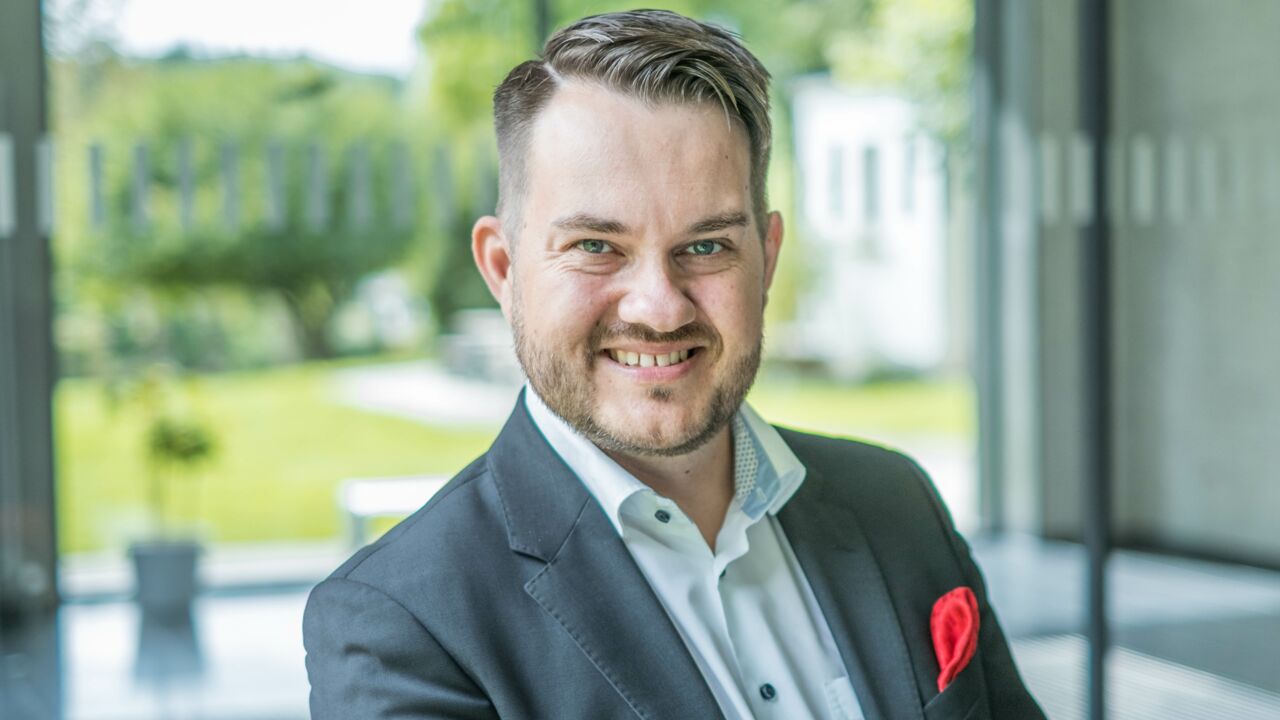
Christian Desrosiers is a Research Professor at the Department of Software Engineering and IT, École de technologie supérieure (ÉTS), with a Ph.D. from Polytechnique Montréal. His research focuses on data mining, machine learning, and computer vision, particularly in medical imaging and optical network analysis. Research Units: Zebra Research Chair in Computer Vision for Industrial Applications, LIVE – Interventional Imaging Laboratory, LIVIA – Imaging, Vision and Artificial Intelligence Laboratory Research Axes: Intelligent and autonomous systems, Health technologies His expertise spans medical image analysis, domain adaptation, and computer vision. Recent publications highlight advancements in 3D point cloud learning, MRI harmonization, domain generalization, and real-time segmentation networks. Scientific awards include the prestigious Zebra Research Chair. He has co-supervised over 30 graduate students in topics ranging from optical network diagnostics to brain imaging and machine learning applications.
Michael Allan is an Associate Professor of Comparative Literature and Cinema Studies at the University of Oregon, with affiliations in Arabic and Middle East Studies. He holds a Ph.D. from UC Berkeley and was a postdoctoral fellow at Columbia University. Education: B.A., Brown University (2000); Ph.D., UC Berkeley (2008). His research bridges textual analysis with social theory, focusing on postcolonial studies, media theory, and the anthropology of secularism. He explores these themes primarily in Africa and the Middle East, integrating methods from anthropology and religion. Key trends across his publications include postcolonial voice dynamics, media ecology, hermeneutics, and intersections of religion, queer theory, and colonial resistance. His work often reimagines traditional literary frameworks through interdisciplinary lenses. Scientific Awards: EUME Fellow (2011-12, 2017-18) Townsend Fellow (2006-07) MLA Prize for a First Book (2016) Allan serves on editorial boards for Comparative Literature , Journal of World Literature , and other journals. He has held leadership roles in the American Comparative Literature Association and Modern Language Association.
Laura T. Perini is an Associate Professor of Philosophy at Pomona College and serves as the Coordinator of the Science, Technology, and Society program. She has been a member of the faculty since 2007 and is on leave during Spring 2026. Her office is located in Pearsons Hall 204, and she can be reached at laura.perini@pomona.edu. Education: Ph.D., University of California, San Diego Master of Arts, University of California, San Diego Master of Arts, University of California, Los Angeles Bachelor of Science, University of California, Los Angeles Laura Perini's research centers on the philosophical analysis of visual representations in science. Her work explores how diagrams, graphs, photographs, and imaging technologies such as MRI contribute to scientific reasoning, education, and public communication. She investigates the epistemic and aesthetic dimensions of scientific visuals, addressing questions about truth, explanation, and confirmation in pictorial forms. Her interdisciplinary approach draws from philosophy of science, philosophy of biology, cognitive science, and aesthetics. Her publications reveal a sustained focus on the role of two-dimensional representations in scientific practice. Key themes include the semiotics of pictures, the cognitive function of diagrams, and the use of visual evidence in theory confirmation. Her work bridges abstract philosophical analysis with concrete examples from biological and medical sciences. Scientific Awards: Philosophy of Science Association prize for best paper published in Philosophy of Science by a recent Ph.D., 2006 Visiting Fellow, Dartmouth College Humanities Institute (2005–2006, Spring 2006) Virginia Tech Humanities Symposium Award, 2006 Fellow, Center for Philosophy of Science, University of Pittsburgh, Fall 2004 Virginia Tech Humanities Summer Stipend, Summer 2004 NEH Summer Institute “Art, Mind, and Cognitive Science”, Summer 2002 Laura Perini has taught a range of courses including Aesthetics, Logic, Philosophy of Science: Historical and Topical Surveys, and Philosophy of Biology. While there is no public information about graduate students she may have advised or research grants she has led, her contributions to the philosophy of scientific representation are significant and widely cited. She has held multiple prestigious fellowships, reflecting the impact and quality of her scholarly work.
Dr Sarah Son is a Senior Lecturer in Korean Studies at the School of Languages, Arts and Societies, University of Sheffield , where she has been a faculty member since 2019. Her work bridges academic research with practical engagement in human rights and cultural analysis. BA from Bond University MA from SOAS, University of London PhD from SOAS, University of London Dr Son's research focuses on identity in international relations , human rights monitoring in North Korea , and pop culture's role in East Asian international relations , with additional work on migration, diaspora, and peace-building. Her interdisciplinary approach combines anthropology, sociology, and history to analyze complex regional politics. Her recent publications explore transitional justice frameworks for North Korea, K-drama's geopolitical narratives , and remote sensing technologies for human rights documentation . These works highlight her expertise in both empirical and theoretical dimensions of East Asian studies.
Dr. Almut Sophia Koepke is a junior research group leader and TUM Junior Fellow at the Technical University of Munich (TUM) and University of Tübingen. She leads the multi-modal learning research group focusing on video understanding through sound, vision, and text integration. University: Technical University of Munich School: TUM School of Computation, Information and Technology Department: Informatics 9 Academic Rank: Researcher Her research spans multi-modal learning, audio-visual foundation models, and cross-modal attention mechanisms. Key themes include: Advancing zero-shot learning through language-guided audio-visual models Developing explainable AI systems via attention pattern translation in VQA Exploring temporal understanding in video-adverb retrieval Building robust multi-modal representations for self-driving applications Recent publications analyze foundation model capabilities in audio-visual tasks (ICCV 2025), temporal reasoning (ACMMM 2024), and cross-modal attention frameworks (ECCV 2022). She co-organizes CVPR workshops on foundation model evaluations and serves as area chair/reviewer for major conferences.
François Goulette is a Professor and Deputy Director of the Computer Science and Systems Engineering Unit (U2IS) at ENSTA Paris, part of Institut Polytechnique de Paris. His research focuses on 3D point cloud processing, LiDAR perception, and autonomous systems within the Robotics Center (CAOR). His primary research interests lie in 3D point cloud processing , LiDAR perception , and autonomous systems . His work spans fundamental algorithm development to practical applications in autonomous driving, cultural heritage digitization, and robotics. He has made significant contributions to domain generalization of LiDAR perception, semantic segmentation of 3D point clouds, and point cloud registration techniques. The analysis of his recent publications reveals a strong focus on domain generalization for LiDAR perception systems, with multiple papers addressing challenges in 3D semantic segmentation across different environments. His work combines multi-scale architectures , unsupervised learning , and dataset creation to advance the state-of-the-art in autonomous systems perception. The research spans both theoretical algorithm development and practical applications in urban environments. François Goulette leads research activities within the Robotics Center (CAOR) at ENSTA Paris. His team develops advanced techniques for 3D environment understanding, with applications in autonomous vehicles, cultural heritage preservation, and industrial robotics. The research combines computer vision, machine learning, and robotics to solve challenging problems in 3D perception and scene understanding.
Sathyanarayanan N. Aakur is an Assistant Professor in the Department of Computer Science and Software Engineering at Auburn University's College of Engineering. Previously, he was an Assistant Professor in the Department of Computer Science at Oklahoma State University. He is an IEEE Senior Member and has received the prestigious NSF CAREER award for his research on multi-modal event understanding. Dr. Aakur received his PhD from the University of South Florida, where he worked with Dr. Sudeep Sarkar in the Computer Vision and Pattern Recognition Group. He also holds a Master's degree in Management Information Systems from the Muma College of Business at the University of South Florida and an undergraduate degree in Electronics and Communication Engineering from Velammal Engineering College, Anna University, India. His research focuses on the intersection of computer vision, natural language processing, and psychology, with the goal of building intelligent agents that understand the visual world beyond simple recognition or captioning. His work encompasses self-supervised predictive learning for video event segmentation, commonsense reasoning to ground perception and prior knowledge, and generative modeling for building knowledge systems. Much of his group's current work focuses on analyzing, modeling, and synthesizing complex video scenes, with applications in agriculture and animal diagnostics. His recent publications demonstrate a strong focus on open-world visual understanding, neurosymbolic reasoning, and multimodal learning. His work spans from fundamental computer vision problems like egocentric action recognition and scene graph generation to applied research in agricultural technology and biomedical informatics. He has successfully published at top-tier conferences including CVPR, ICCV, ECCV, and WACV, as well as in high-impact journals like IEEE TPAMI. NSF CAREER Award (2022) IEEE Senior Member (2024) Dr. Aakur serves as Area Chair for major conferences including CVPR, WACV, ICML, and NeurIPS, and as Associate Editor for Pattern Recognition journal. He has successfully mentored numerous students who have published at top venues in computer vision and machine learning. His research group has received funding from sources including the NSF and USDA for projects related to multimodal time series classification and stress detection in precision agriculture. The lab maintains active collaborations with institutions including the University of South Florida and Florida State University.
Arnab Nandi is a Professor in the Department of Computer Science & Engineering at The Ohio State University. His work bridges human interaction with data infrastructure, focusing on database systems, LLM-augmented analytics, and immersive query interfaces. Education: PhD in Computer Science & Engineering from the University of Michigan Leadership: Co-founder of OHI/O Hackathon Program and STEAM Factory interdisciplinary network Research spans human-in-the-loop data analytics , vibe querying (natural language + gestural interfaces), LLM integration into education, and climate response systems . Key projects include Omni (multimodal exploration), GestureDB , and Icarus (clinical pipelines). Recent publications analyze LLM-driven query stacks (HILDA 2025), video analytics (SIGMOD 2022), and data sunglasses for cognitive limits (HILDA 2025). Awards include NSF CAREER Google Faculty Research Award IEEE TCDE Early Career Award ACM Distinguished Member Advises students in database innovation , with alumni at Amazon, AWS, Roblox, and Meta. Teaches CSE 3241 (Database Systems), CSE 5889 (Software Startups), and CSE 5242 (Advanced Databases).
Nacima Ourahmoune serves as Associate Professor of Marketing at KEDGE Business School, where she teaches luxury marketing and coordinates the Luxury and Brands track within the Grande École program. With over a decade of strategy and marketing consultancy experience, she bridges academic rigor with industry practice in consumer culture research. PhD from ESSEC/IAE Aix-en-Provence Master's in Marketing Research (Paris 1 Sorbonne) MBA in Luxury Branding Grande École Diploma (HEC Paris) Sciences Po Aix degree Her research interrogates consumer culture through branding and behavior lenses, with persistent focus on power dynamics, gender equity, social justice, and bodily experiences. She examines these themes across established and emerging markets, particularly investigating how luxury consumption intersects with feminist theory and decolonial frameworks. Her work challenges conventional marketing paradigms through transformative consumer research methodologies. Analysis of her 15 most recent publications reveals three dominant trajectories: (1) Inclusive and sustainable luxury innovation (25% of output), (2) Gender justice frameworks applied to marketing contexts (40%), and (3) Consumer behavior in culturally specific settings like Algerian women's movements and rural culinary spaces (35%). Her scholarship consistently connects micro-level consumer experiences to macro-level social structures, with increasing emphasis on decolonial perspectives since 2020. Nacima actively shapes marketing discourse through advisory roles with GENMAC, IFPASA American Research Foundation, Ownyourcash.fr (Paris), and WomWork (Algeria)—all organizations advancing women's entrepreneurship. Her media presence in national and international press amplifies research findings to broader audiences, particularly regarding gender equity in luxury markets and post-Arab Spring consumer culture. As founder of KEDGE's Luxury and Brands academic track, she cultivates interdisciplinary collaboration between marketing scholars and industry practitioners. Her leadership extends to feminist academic networks that challenge systemic sexism through research mobilization and curriculum development, reflecting her commitment to transforming both marketing practice and academic institutions.
Prof. Dr. Aaron Leander Haußmann serves as Professor of Business Administration, specializing in Marketing and Sales, at the Baden-Württemberg Cooperative State University (DHBW) Villingen-Schwenningen since July 2021. He concurrently holds the position of Site Representative for the business field at the Center for Advanced Studies (DHBW CAS) since February 2022, demonstrating dual leadership in academic and institutional development. Haußmann earned his Diploma in International Business Administration from Furtwangen University (2008) with a specialization in Marketing and a study period at Tongji University, Shanghai. He completed his doctoral studies externally through the University of Latvia, Riga, and the University of Salzburg Business School (2012-2016), producing the award-winning dissertation The Impact of Brand Images on the Purchasing Behavior of Business-to-Business Market Participants . His research program centers on Business-to-Business marketing dynamics, with emphasis on emotional and rational dimensions of brand perception in organizational contexts. Key investigations include how brand images influence purchasing decisions, the interplay between brand emotions and buying relevance, and strategic management of multi-brand architectures in complex B2B environments. His work bridges theoretical frameworks with practical applications in sales management and marketing automation. Analysis of his 2014-2017 publications reveals consistent focus on B2B brand psychology, demonstrating evolution from foundational studies on brand emotion measurement toward sophisticated examinations of brand portfolio strategy in digital environments. His research trajectory shows increasing complexity in addressing organizational buying behavior through integrated emotional-rational models. Haußmann has received significant recognition including the Award of Research Excellence for his doctoral work and a Best Paper Award for his pioneering research on brand emotions in B2B contexts. Prior to academia, he held progressive executive roles at MTU Friedrichshafen GmbH and Rolls-Royce, accumulating 13 years of industry experience in sales leadership, business development, and strategic management that directly informs his applied research approach. His teaching portfolio spans Marketing, Customer Behavior, Sales Controlling, International Marketing Strategy, and Marketing Case Studies.
Dr. Shabnam Sadeghi Esfahlani is an Associate Professor in Robotics at the School of Engineering and the Built Environment, Anglia Ruskin University , where she serves as Deputy Leader of the BORI research group and leads the Automation & Robotics MSc program. Her interdisciplinary expertise spans mechatronics, artificial intelligence, virtual reality, and serious games , with a focus on applications for rehabilitation, medical training, and autonomous systems . As a Chartered Engineer and Senior Fellow of the Higher Education Academy , she has secured significant funding from Innovate UK, Horizon 2020, and GCRF , with grants exceeding £3 million. Education PhD in Mechanical Engineering, Anglia Ruskin University BSc (First Class) in Statistics & Mathematical Science, Shahid Beheshty University Her research integrates AI with robotics for societal impact, exemplified by the open-source SROBO ground robot and projects like Rehabgame and the Assistive Feeding Robot . She has published over 45 peer-reviewed articles and contributes to academic communities as a journal guest editor and conference organizer . Key collaborations include IET, IMechE, and the Nuffield Foundation as a mentor for young students. Scientific Awards & Recognitions: Chartered Engineer (CEng), Engineering Council UK Senior Fellow (SFHEA), Higher Education Academy Student-Voted 'Made a Difference Award' (2018) Post-Graduate Certificate in Higher Education
Professor Jordan Taylor is affiliated with Princeton University as a faculty member in the Department of Biomedical Engineering within the School of Engineering and Applied Science. His research focuses on unraveling computational processes in motor control and learning, with particular emphasis on interactions between explicit cognitive strategies and implicit motor adaptation during skill acquisition. Taylor leads the Intelligent Performance and Adaptation Laboratory , aiming to develop optimal training protocols for motor rehabilitation post-stroke or disease. Research Interests : Taylor investigates how humans learn motor skills through dual mechanisms of declarative strategy formation and implicit neural adaptation. His work explores the neural systems underlying these processes and their functional consequences, especially in pathological conditions like cerebellar degeneration. Current studies examine working memory constraints, reward modulation of implicit adaptation, and plan-based generalization of motor learning. Publication Trends : Recent articles analyze dual mechanisms in sensorimotor learning, reward-driven adaptation, and contextual influences on motor memory. His computational neuroscience approach combines behavioral experiments, neural imaging, and theoretical modeling to study cognitive-motor interactions across various tasks.
Dr. Colin Palmer is a Visiting Fellow in the School of Psychology at the University of New South Wales (UNSW), where he conducts research on visual perception with a focus on social features of our sensory environment. His work examines how the brain processes elements like eyes, faces, and behaviors of people around us using visual psychophysics, computational modeling, and 3D graphical rendering. Dr. Palmer completed his Ph.D. in 2016 and Bachelor of Behavioural Neuroscience (Honours) in 2009, both at Monash University. His doctoral research explored how neurocognitive models of sensory processing relate to differences in sensory integration and social cognition in autism. His primary research interests center on understanding the perceptual and neural mechanisms underlying our sensitivity to dynamic social cues, particularly eye and head movements. Dr. Palmer investigates how the visual system extracts basic environmental elements (color, shape, motion) and develops a mechanistic understanding of how our experience of the social world arises from nervous system activity. His work has clinical applications for understanding sensory and social difficulties in conditions like autism and schizophrenia. Dr. Palmer's recent publications reveal a consistent focus on social vision, particularly gaze perception, face processing, and animacy detection. His research increasingly incorporates computational modeling approaches to understand visual perception mechanisms. There's a strong emphasis on how lighting and shading affect face and gaze perception, with growing attention to clinical applications for neurodevelopmental conditions. Dr. Palmer has received recognition for his work through several awards: Emerging Investigator Award, Australasian Cognitive Neuroscience Society, 2017 Postdoctoral presentation award, Australasian Cognitive Neuroscience Society, 2016 Dr. Palmer is actively involved in research supervision and teaching. He teaches PSYC 3221 Vision and Brain and is available to supervise research students. His research is supported by significant funding: ARC Discovery Project (2020-2022): "Extracting meaning from motion" ($492,000) ARC Discovery Early Career Researcher Award (2019-2021): "Human sensitivity to the dynamics of other people's eye movements" ($356,000) Experimental Psychology Society Study Visit Grant (2017): "Testing computational theories of autism spectrum disorder in the social domain" (£2,580) Dr. Palmer collaborates extensively with Professor Colin Clifford at UNSW and maintains international collaborations with researchers in the UK and Australia, particularly on projects related to autism spectrum disorders and social cognition.
Xin Li is a Professor in the Department of Electrical and Computer Engineering at Duke University and serves as the Associate Vice Chancellor at Duke Kunshan University. He holds a Ph.D. from Carnegie Mellon University (2005) and has held leadership roles in research consortia like the FCRP Focus Research Center and the Center for Silicon System Implementation (CSSI). His research bridges integrated circuits , machine learning , and cyber-physical systems , with applications in autonomous driving, battery lifetime prediction, and smart buildings. Education : Ph.D., Carnegie Mellon University (2005); M.S., Fudan University (2001); B.S., Fudan University (1998) His work emphasizes robust design methodologies for analog/RF circuits, data-driven predictive modeling , and Bayesian inference for high-dimensional variation spaces. Recent publications focus on generative adversarial networks for circuit design, multi-view imputation for incomplete data, and knowledge-driven autonomous systems . He has received numerous accolades, including the NSF CAREER Award (2012) , IEEE Donald O. Pederson Best Paper Awards (2013, 2016) , and IEEE Fellow (2017) . He has served as Editor for journals like IEEE Transactions on Biomedical Engineering and as Chair for conferences including ISVLSI and CAD/Graphics.
Fengqing Maggie Zhu is an Associate Professor at the Elmore Family School of Electrical and Computer Engineering within Purdue University , West Lafayette campus. Her research spans image processing , video compression , computer vision , and smart health , with notable contributions to learned image compression , 3D reconstruction , and nutrition analysis via computer vision . Educational background: BS in Electrical Engineering, Purdue University (2004) MS in Electrical and Computer Engineering, Purdue University (2006) PhD in Electrical and Computer Engineering, Purdue University (2011) Her work focuses on developing machine learning-based compression techniques for 2D/3D images and videos, with applications in food portion estimation , wearable dietary monitoring , and virtual reality facial expression tracking . She explores structured pruning , mixed precision quantization , and continual learning to create efficient, robust systems for edge-cloud collaboration. The 2025-2024 article collection reveals concentrated efforts in learned image compression (with 8 papers on quantization, pruning, hierarchical VAEs), food-related computer vision (12+ papers on portion estimation, databases, classification), and 3D reconstruction (MetaFood3D dataset, ICP-3DGS algorithm). Emerging themes include privacy-preserving AI for wearable cameras and class-incremental learning frameworks. Contact: zhu0@purdue.edu